
Tenerife Striker Jesús de Miguel Dies at 30 After On-Pitch Collision as Spanish Police Open Manslaughter Inquiry

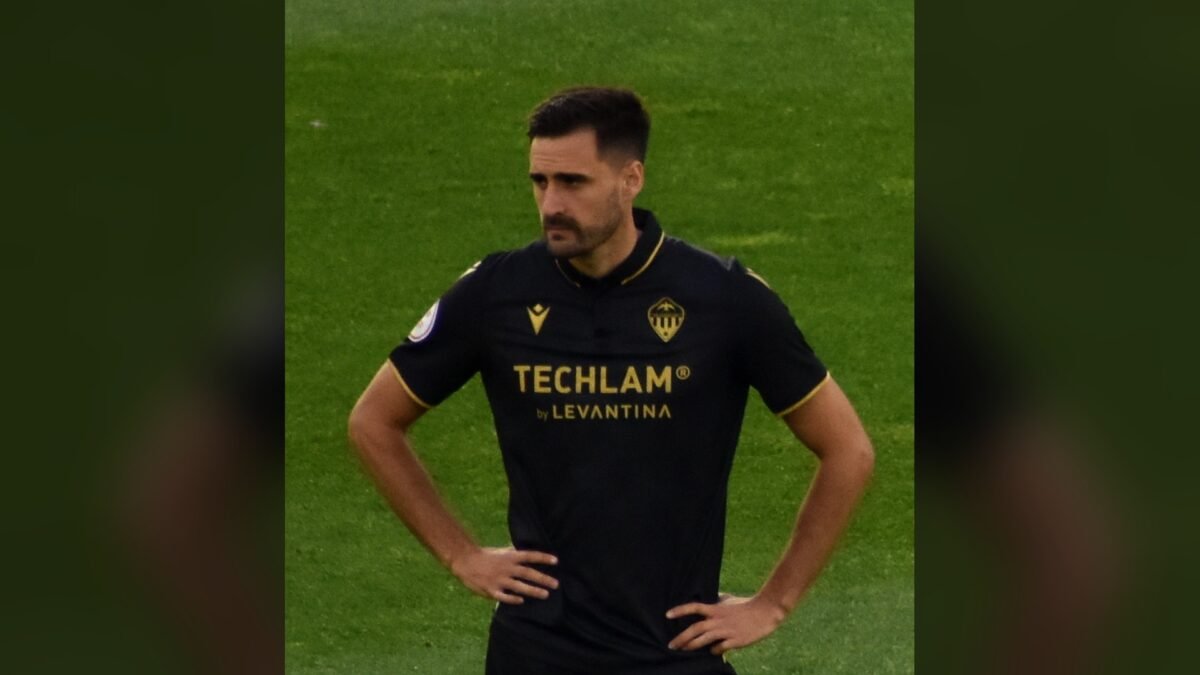
CD Tenerife striker Jesús de Miguel has died at the age of 30 after suffering a cardiac arrest following an on-field collision during a Spanish second-division match, his club announced on Tuesday morning, in a tragedy that has stopped Spanish football and prompted a police investigation into the incident.
De Miguel died at 8am on Tuesday, 3 November, at the University Hospital of Nuestra Señora de Candelaria in Santa Cruz de Tenerife, hours after he was carried motionless from the pitch at the Estadio Heliodoro Rodríguez López during his side’s Segunda División match against FC Andorra on Monday night, according to CD Tenerife.
“Racked with pain, with a lump in our throats and unable to believe that this is true, from CD Tenerife we communicate the tragic passing, this Tuesday, November 3, 2026, at 8:00 a.m., of Jesús de Miguel Alameda,” the club said in a statement.
“There are no words of comfort; there is absolutely nothing that can alleviate this feeling overflowing with sadness. We stand alongside his devastated family, alongside his loved ones, alongside all of the tinerfeñismo that today weeps for this cruel outcome.”
The club added that de Miguel’s family had thanked everyone for the expressions of support received and asked, from the heart, for the utmost respect for their privacy in these terrible moments.
Spain’s National Police have opened an investigation into possible involuntary manslaughter, and prosecutors will be involved in the inquiry, according to Spanish media reports. The High Court of Justice of the Canary Islands told the newspaper El País that any death deemed non-natural requires an investigation under Spanish law. Santa Cruz de Tenerife’s chief prosecutor, José Luis Sánchez-Jáuregui, told the Spanish news agency EFE that criminal proceedings were unlikely, noting that the collision occurred during play, according to the Associated Press.
The Spanish Football Federation, the RFEF, suspended all football scheduled for Tuesday as a mark of respect and solidarity, postponing Copa del Rey and Copa de la Reina matches, and later extended the suspension of its competitions until 6 November, according to talkSPORT. European governing body UEFA announced that all of its matches this week, including the Champions League fixtures involving Spanish clubs, would be preceded by a moment of silence in de Miguel’s memory, according to CNN.
The collision in the closing seconds
The match was locked at 2-2 and seven minutes into stoppage time on Monday night when the incident happened, according to talkSPORT. De Miguel, who had entered the game as a substitute in the 59th minute, chased a long ball into space near the halfway line. FC Andorra goalkeeper Jesús Owono, who had come a long way out of his goal, rushed towards the same ball and crashed into the striker at speed while trying to clear it, according to CNN.
Owono leapt forward with his right knee raised and struck de Miguel violently in the chest, according to reports from the match. De Miguel went down holding his chest and then lay motionless on the pitch as players from both sides looked on in distress, according to CNN. The referee, Manuel Ángel Pérez Hernández, immediately showed Owono a straight red card for using excessive force, and the match was abandoned in the closing minutes as medical staff treated the stricken forward on the field, according to CNN and USA Today.
Owono had begun walking off the pitch after his dismissal but ran back to his opponent after seeing the severity of the injury, according to CNN. He immediately rushed back onto the pitch to help, joined by concerned players from both teams, according to USA Today.
De Miguel suffered a cardiorespiratory arrest immediately after the impact, according to reports from the match. He was resuscitated by paramedics and, according to Spanish media, suffered a cardiac arrest in the ambulance on the way to hospital. He was admitted to the intensive care unit at the University Hospital of Nuestra Señora de Candelaria, where he was said to be stable despite the severity of his condition, but unable to breathe unassisted and unconscious in critical condition, according to CNN and USA Today.
Overnight his neurological condition deteriorated, and on Tuesday morning the club announced he had died, according to CNN. He had never regained consciousness.
A club and an island in mourning
CD Tenerife declared six official days of mourning, suspending all sporting operations, and said it would open its home stadium on Saturday evening so supporters could pay their respects, according to reports from Spain. Club president Felipe Miñambres spoke on Tuesday of a club struggling to comprehend what had happened.
“We are all going through very difficult moments now, of sadness and of not believing what happened,” Miñambres said, according to CNN. “But we’ll go through the mourning all together, and we’ll be with all the people going through this feeling that should make us be more together.”
FC Andorra published a tribute on Tuesday, saying the club was devastated and heartbroken and sending its most sincere condolences to de Miguel’s family, his teammates and friends, and to CD Tenerife. Later on Tuesday, Andorra released a fuller statement saying it had postponed its next scheduled match on Sunday and was in contact with the league and Andorra’s government to offer all collaboration and necessary support during these very difficult times, according to CNN.
Andorra’s statement did not mention Owono by name, but it said: “We are a team, on and off the field. Now more than ever, we must stand together, support each other, and take care of one another.” Owono deactivated his Instagram account as of Tuesday morning, according to CNN.
LaLiga said in a statement: “We wish to express our deep sadness over the tragic passing of Jesús de Miguel Alameda. We share in the grief of his family, his loved ones, and CD Tenerife during these very difficult times. All our affection and support. Rest in peace.” LaLiga president Javier Tebas said he was deeply saddened by the death, adding: “Today, we all share the terrible pain of an irreparable loss. My deepest condolences to his family, loved ones, teammates and the whole club.”
Real Madrid said it would hold a minute of silence ahead of its training session and wanted to express its condolences and care to de Miguel’s family and friends, while Barcelona said it deeply regretted the tragic news, according to CNN. Teams from across Spain and around the world paid tribute, and his former teammate at Unionistas de Salamanca, Fernando Román, posted photographs of his friend on X with the message: “You were more than a friend… I will never forget you… Rest in Peace.”
Ten years to turn professional
De Miguel’s death has cut short a career that was, above all, a story of persistence. Born in Madrid on 21 September 1996, he was never taken into the academy of one of Spain’s great clubs. He came through the youth teams of CDE Lugo Fuenlabrada and CD Leganés, made his senior debut for Leganés’ reserve side in 2015, and then spent the best part of a decade working his way through the lower reaches of Spanish football.
His breakthrough came in 2017 with Internacional de Madrid, where he scored nine goals in 33 matches and helped a modest neighbourhood club win promotion to the third tier. Loan spells at Fuenlabrada and Unión Adarve followed, and at Navalcarnero he scored 12 goals in 29 matches in the 2019-20 season to lead the Madrid side to promotion. In July 2021 he joined Unionistas de Salamanca, scoring 12 goals in his first season, and in January 2023 he moved to CD Castellón, where his career finally took off.
At Castellón he scored six goals in half a season, two of them in decisive promotion matches, and then 16 goals in 35 matches in the 2023-24 campaign as the club won its group and returned to the second division. His professional debut finally arrived on 17 August 2024, when he started for Castellón against Eibar at the age of 27. He finished his time at Castellón with 23 goals in 80 appearances, according to his career record.
On 8 July 2025, de Miguel agreed a three-year deal with Tenerife, who had just been relegated to the third division, running until June 2028. He made an immediate impact, scoring six goals in his first five matches, and finished the campaign with 11 goals as the club returned to the second division at the first attempt. Across his career in Spain’s third tier he made 149 appearances and scored 48 goals, and he played 39 games in the Segunda División, according to his career record. Known to team-mates as “Demi”, the left-footed striker, who stood at about 190 centimetres, built his reputation on strength inside the penalty area, his ability to play with his back to goal and his command of aerial balls.
When he entered the pitch as a substitute in the 59th minute on Monday night, he was, by every account, playing in the prime of his athletic life, in his first season back in professional football with the club he had just helped promote.
Raphinha’s tribute on a night of football
The grief reached the highest level of the game within hours. On Tuesday evening, hours after de Miguel’s death was announced, Barcelona beat Aston Villa 3-0 in the Champions League at Camp Nou, with captain Raphinha scoring twice and Lamine Yamal opening the scoring after seven minutes, according to GeoSuper.
Raphinha, who declined to discuss his own performance in his post-match interview, used the platform instead to send condolences to de Miguel’s family, saying that the evening belonged to them and to Spanish football’s wider community. His two goals made him the most prolific Brazilian goalscorer in Barcelona’s Champions League history, moving past Neymar and Rivaldo, according to reports from the match. Yamal’s goal was his 14th in the competition as a teenager, breaking the record previously held by Real Madrid striker Kylian Mbappé, who had scored 13 as a teenager in the Champions League, according to GeoSuper and TNT Sports.
Barcelona’s win ended Aston Villa’s perfect start to this season’s Champions League and was the club’s first clean sheet in the competition in 18 games, according to match reports, but the result was secondary on a night when Spanish football was in mourning. Unai Emery, the Villa manager, vowed his team would learn from the 3-0 defeat, while captain John McGinn called the match a learning curve, according to ESPN.
Analysis: Why It Matters
A freak collision, not a foul in the usual sense
Football is a contact sport, and collisions happen in almost every match. What makes this one different is not intent but consequence. Nobody who watched the incident has suggested that Owono set out to hurt his opponent. He was a goalkeeper doing what modern goalkeepers are told to do: come off his line, claim a loose ball, protect his goal. The referee’s red card was for excessive force, a judgement about the manner of the challenge, not about malice. Yet a young man is dead, and that dissonance is exactly why the story has shaken Spanish football so deeply.
The police investigation, which sounds alarming in a headline, is in fact the routine working of Spanish law. As the High Court of Justice of the Canary Islands explained, any death deemed non-natural requires an investigation. The chief prosecutor’s early indication that criminal proceedings are unlikely reflects the same point: the law must look, even when everyone involved already understands that this was a sporting accident. The investigation is not an accusation. It is the state doing what it is obliged to do when a person dies in unusual circumstances, and its most likely outcome is a formal finding that no crime was committed.
Still, the existence of the inquiry matters. It forces the sport to confront, in an official forum, the question of where a legitimate challenge ends and a dangerous one begins. Goalkeepers have long enjoyed a degree of latitude when they come for a ball, because they are vulnerable themselves and because the laws protect them in the air. But the latitude has limits, and a knee raised at chest height into an opponent running at full speed is on the wrong side of them. The red card said so in the moment. The wider debate, about whether the laws and their enforcement do enough to deter that kind of challenge, will now have to be had in earnest rather than in the abstract.
The goalkeeper’s impossible position
It would be wrong to tell this story as if it had only one victim. Jesús Owono, the Andorra goalkeeper and an Equatorial Guinea international, is a young professional whose career has been defined in a single night by an outcome he never intended. He ran back onto the pitch to help the man he had collided with. He has deactivated his social media account. His club’s statement, pointedly, was about standing together and taking care of one another.
Football has seen this before. Players involved in fatal or near-fatal incidents on the pitch carry the weight of them for years, whether or not anyone blames them. The sport’s duty of care extends to Owono too: to the counselling and support he will need, to the protection of his privacy while the investigation runs, and to the way he is spoken about when he returns to play. Andorra’s decision to postpone its next match and to stand publicly behind its player is a small but important signal that the club understands this.
There is also a tactical point that should not be lost in the emotion. The modern goalkeeper is asked to be a sweeper, to race 30 or 40 yards from goal to sweep up danger, often at full speed into traffic. It is a role that creates exactly the kind of high-speed, head-on collision that happened on Monday night. Coaches and governing bodies should ask whether the rewards of that aggression are worth the risks, and whether goalkeepers are being coached to protect themselves and their opponents when they leave their area. Owono did what he had been trained to do. The question is whether what he had been trained to do is safe enough.
Ten years to turn professional, and what that means
De Miguel’s career is the part of this story that deserves to be remembered longest. He waited ten years to turn professional. He played on dirt pitches and in front of small crowds, in the third tier and below, for clubs most football fans have never heard of. He scored goals wherever he went, dragged teams to promotion, and kept going when most players in his position would have found another way to make a living.
That is the reality for the overwhelming majority of professional footballers. The game’s wealth and glamour belong to a tiny minority. Below the top flight, in every country, there are thousands of players like de Miguel: late developers, lower-league grafters, men whose careers are built on persistence rather than privilege. When one of them dies on the pitch, the loss is felt most acutely by the clubs and communities that knew him as a person, not a star.
Tenerife’s response has reflected that. Six days of mourning, the stadium opened to supporters, the president speaking of going through the grief together: this is a club that understood its player as part of a community, not as an asset. The tributes from Unionistas and Castellón, the clubs where he made his name, tell the same story. His was not a career measured in transfer fees. It was measured in promotions won, in dressing rooms he improved, and in supporters who will remember the six goals in his first five games for Tenerife long after the statistics fade.
Football’s cardiac-safety reckoning, again
Deaths on the football pitch are rare, but they are not unknown, and each one has changed the sport a little. Sevilla’s Antonio Puerta collapsed during a match against Getafe in August 2007 and died three days later, aged 22. Cameroon midfielder Marc-Vivien Foé collapsed during a Confederations Cup semi-final in June 2003 and died the same day, aged 28. Fiorentina captain Davide Astori died in his sleep from a cardiac arrest in March 2018, aged 31. And in June 2021, Denmark’s Christian Eriksen suffered a cardiac arrest during a European Championship match against Finland and survived only because of immediate CPR and a defibrillator on the pitch — as did Bolton’s Fabrice Muamba in 2012, whose heart stopped for 78 minutes before he was revived.
Those cases drove real change: routine cardiac screening for players, defibrillators at every professional ground, medical teams trained to respond in seconds. De Miguel’s case tests a different part of the system, because the cause was not an undetected heart condition but a blunt impact to the chest. Doctors describe a phenomenon in which a blow to the chest at a vulnerable moment in the heartbeat can trigger a cardiac arrest, and a knee delivered at full speed into a player’s chest is precisely the kind of force that can do it.
No amount of screening can prevent that. What matters is what happens next: how fast the medical team reaches the player, how quickly CPR and defibrillation begin, and how quickly he reaches a hospital. The reports from Monday night say paramedics resuscitated de Miguel and that he was taken straight to intensive care. The fact that he died anyway, despite that response, is a reminder that even the best emergency care has limits when the injury is catastrophic. The sport should still ask whether those limits can be pushed further — whether, for example, the speed and quality of the on-pitch response in second-division matches matches what is available in the top flight, where the cameras and the scrutiny are greatest.
A sport that stopped
Perhaps the most striking thing about the last two days is how completely Spanish football stopped. The federation suspended its competitions. UEFA ordered moments of silence across Europe. Clubs from every division posted tributes. A Champions League captain, on the biggest club stage in the world, refused to talk about his own two goals and spoke instead about a second-division striker most of the watching world had never heard of.
That is football at its best, and it is worth pausing on. The sport is often accused of being a business first and a community second, and often the accusation is fair. But the response to de Miguel’s death has been the opposite of commercial. There was no attempt to play through it, no statement that the show must go on. The show stopped. It stopped because a 30-year-old man who had spent a decade fighting his way into professional football died doing the thing he loved, in front of his own supporters, and because everyone who saw it understood that no fixture list matters more than that.
The grief will fade from the headlines, as it always does. The fixtures will resume, the suspension will lift, and the season will go on. What should not fade is the memory of a player who arrived late and left early, and the questions his death raises about how the sport protects the people who play it.
What to Watch Next
- The police investigation: Spain’s National Police and prosecutors will decide whether the involuntary manslaughter inquiry leads to any proceedings. The chief prosecutor in Santa Cruz de Tenerife has already indicated that criminal proceedings are unlikely, but a formal conclusion is still awaited.
- Tenerife’s mourning and return: The club has declared six days of mourning and will open the Estadio Heliodoro Rodríguez López on Saturday evening for supporters to pay their respects. Its next fixture, and the form of any tribute before it, will be closely watched.
- FC Andorra and Jesús Owono: Andorra has postponed its next match, scheduled for Sunday, and the goalkeeper’s welfare and eventual return to play will be a sensitive matter for the club, the league and the wider game.
- The federation’s review: The RFEF’s suspension runs until 6 November. Whether it leads to any review of medical provision at second-division grounds, or of guidance on goalkeeper challenges, will show whether the sport treats this as a tragedy to mourn or a lesson to learn.
- Tributes across Spanish football: Moments of silence are being observed at UEFA matches this week, and LaLiga fixtures will carry tributes when play resumes. The scale and tone of those tributes will reflect how deeply this loss has been felt beyond Tenerife.
Sources
- CNN: Spanish soccer player Jesús de Miguel dies after on-pitch collision
- USA Today: Tenerife striker Jesús de Miguel dies at 30 after on-field collision
- talkSPORT: Tenerife striker Jesus de Miguel tragically dies after on-field collision
- Wikipedia: Jesús de Miguel — career record
- GeoSuper: Raphinha brace leads Barcelona past Aston Villa in Champions League

About the Author — Abdul Mannan
Related Articles
AFC Postpones 2027 Asian Cup by Almost a Year as War and Houthi Strikes Reach Saudi Arabia
The Asian Football Confederation has moved Asia's biggest football tournament from January 2027 to December 2027, after Houthi…
King Charles’s Former Horse Point Of Law Wins Melbourne Cup as Maher Trains Historic Trifecta
Point Of Law, bred by King Charles III and sold to Australian owners earlier this year, stormed home…
Glenn Maxwell Calls Time on International Cricket as ‘The Big Show’ Bows Out Without a Melbourne Farewell
Glenn Maxwell has retired from international cricket at 38, ending a 14-year career of three World Cup titles…