
Toyota Shares Jump 17% in Biggest One-Day Gain in Almost 40 Years as Carmaker Raises Outlook and Unveils $89 Billion Returns Plan

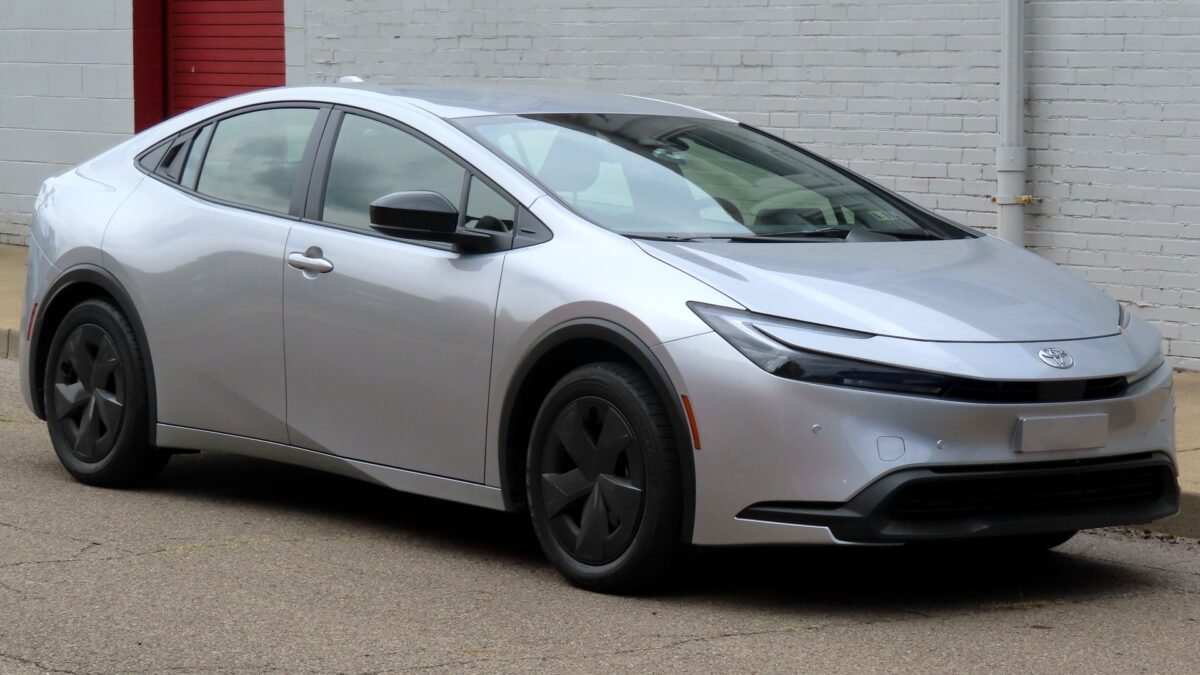
Toyota Motor shares surged 17 per cent in Tokyo on Thursday, their biggest one-day gain in almost 40 years, after the world’s largest carmaker raised its full-year profit forecast and unveiled an $89 billion plan to return cash to shareholders, according to Reuters.
The rally capped a remarkable day for a company that has spent much of the past two years defending a strategy many investors had written off. While technology shares tumbled across Asia and Wall Street in the wake of the United States midterm elections, money rotated into Toyota, the quintessential blue chip, and the market’s verdict was emphatic.
Toyota said it now expects operating profit of 3.9 trillion yen ($24.6 billion) for the financial year ending in March 2027, up 15 per cent from its earlier forecast of 3.4 trillion yen, according to Reuters. The company also announced plans to return as much as 14 trillion yen ($89 billion) to shareholders by March 2031, double the 7 trillion yen it returned over the preceding five years.
The results themselves told a story of a carmaker finally turning a corner after a long stretch of pressure. Operating income for the July-to-September quarter rose 34 per cent to 1.13 trillion yen (about $7.1 billion), Toyota’s first increase in operating profit in six quarters, and well above the 992 billion yen average estimate compiled by Reuters. Revenue for the quarter grew 8.6 per cent to 13.44 trillion yen, supported by a weaker yen and resilient demand for petrol-electric hybrid vehicles, above all in North America.
Net profit for the quarter fell, however, to 759.4 billion yen ($4.8 billion) from 932 billion yen a year earlier, a decline of about 19 per cent, according to the Associated Press. The drop reflected higher costs and slumping sales in China, where Toyota is fighting a price war against domestic electric vehicle makers. For the first half of the financial year as a whole, Toyota reported revenue of 26.96 trillion yen, up 9.5 per cent, operating income of 2.19 trillion yen, up from 2.01 trillion yen, and net income of 2.24 trillion yen, up from 1.77 trillion yen, according to the company’s own announcement.
Toyota also lifted its full-year net income forecast to 3.57 trillion yen from 3.25 trillion yen, and said it expects consolidated vehicle sales of 9.7 million units for the year, slightly above the nearly 9.6 million sold in the previous financial year, according to the Associated Press. Full-year revenue is now forecast at 53.5 trillion yen, a touch lower than the 54 trillion yen previously expected, reflecting weaker conditions in China and flooding in Thailand.
A day when the old economy beat the new one
The scale of the share-price move was the headline, but its context was just as telling. Toyota’s 17 per cent jump came on a day when the Nikkei 225 index itself fell, as investors sold artificial intelligence-related shares after the Democrats swept both chambers of Congress in the midterm elections. Toyota’s American depositary receipts rose 10.2 per cent in morning trading in New York while the S&P 500 was down 2.3 per cent, according to Barron’s.
It was, in other words, a rotation trade in its purest form: out of the speculative and into the tangible. Investors who had spent the week worrying about data-centre regulation, chip demand and the sustainability of the AI spending boom found refuge in a company that makes something you can drive home. Christopher Richter, an autos analyst at CITIC Securities Japan, captured the mood. “It was a decent quarter. There are some automakers so far that have been reporting that had terrible quarters,” he told Reuters. “The fact that they guided upwards and then they had all the shareholder payout stuff, it’s like, ‘wow’.”
The shareholder payout was the second half of the announcement, and arguably the more consequential. Toyota said it would return as much as 14 trillion yen to investors by March 2031, a programme that follows years of pressure from Japanese authorities for companies to improve capital efficiency and lift returns on equity. The plan includes raising the ceiling on share buybacks to 1.3 trillion yen from 1.0 trillion yen, and lifting the interim dividend to 50 yen per share from 45 yen a year earlier.
Toyota’s cash pile, which currently sits at around 9.5 trillion yen, has long frustrated shareholders, Richter told Reuters, adding that the carmaker will need to keep returning more capital to bolster its return on equity. The company said it plans to more than halve its net liquid assets to 7 trillion yen by March 2031 from end-March levels, and to spend at least 22 trillion yen on research and development and capital investment through fiscal 2030.
Hybrids, the bet that refused to die
At the heart of Toyota’s quarter was the hybrid. The company has benefited from its focus on petrol-electric hybrids as fuel costs have surged in the wake of the Iran war, according to Reuters, even as it faces considerable headwinds from competition by Chinese electric vehicle makers. Unlike other traditional car companies that went all-in on electric vehicles and then had to write down billions of dollars in investment when demand for EVs weakened, Toyota has primarily focused on advancing the hybrid technology it popularised with the Prius decades ago.
The numbers bear out the strategy. Electrified vehicles accounted for 55.6 per cent of Toyota’s sales in the first half of the financial year, according to the company’s earnings call. Hybrid retail sales reached 2.45 million units in the first half, up 8.3 per cent year on year, while battery-electric sales grew 127.4 per cent to 231,000 units — rapid growth from a small base. More than half of Toyota’s vehicle sales are now electrified, but only about 5 per cent are all-electric, Barron’s noted.
In the United States, Toyota’s main market, the Camry and RAV4 hybrids were popular, according to the company, and North America returned to profitability in the first half, with regional operating income of 166.1 billion yen, helped by price revisions and a reduced impact from US tariffs. In Japan, the RAV4, bZ4X and Land Cruiser FJ sports utility vehicles were among the better-selling models. Sales also held up in Europe.
The strategy has been key to Toyota’s ability to defend market share in its main market, the United States, despite the threat from fast-moving Chinese EV makers elsewhere, according to Reuters. Toyota sold 4.76 million vehicles in the first fiscal half, down slightly from 4.78 million in the previous year, with the decline driven by weaker demand in China and the situation in the Middle East.
China: the front line Toyota cannot afford to lose
If the quarter had a dark side, it was China. Toyota’s sales in the world’s largest car market fell 12 per cent year on year in the July-to-September quarter, according to company figures, as local electric vehicle manufacturers cut prices aggressively and competition intensified. Higher fuel prices were also hitting consumer sentiment in the highly competitive Chinese market, according to the Associated Press.
Chief Financial Officer Yoichi Miyazaki told a briefing that Toyota was now fighting back in China. “We’ve been able to halt the decline in our market share and are now starting to regain some ground,” he said, according to Reuters. The company said it aims to cut vehicle development lead times in China by 18 months through concurrent development processes at its Lexus Electrified Shanghai facility, starting in September 2027, according to the earnings call transcript.
The challenge is structural as well as cyclical. China is increasingly setting the pace for the rest of the auto industry in everything from production and design to software and robotics, Reuters reported, and Chinese manufacturers are now active across Asia, Europe and Latin America, according to Toyota’s own chief accounting officer, Takanori Azuma. Toyota’s response includes a new robotics business of its own, which will provide robots for manufacturers and other industries and which the company is positioning as a pillar of future growth. Toyota Robotics is to become a company-wide organisation from 1 January 2027, according to the earnings call.
Azuma said the company was offsetting the impact of the situation in the Middle East and a surge in material prices through sales efforts and cost reductions, according to Reuters. Toyota’s finance chief said the company had mitigated the impact of rising raw material prices by optimising its global supply network and maintaining strong sales, the Associated Press reported.
Analysis: Why It Matters
1. The hybrid vindication is now a market fact, not an argument
For years, Toyota’s refusal to go all-electric was treated in much of the financial press as stubbornness, even denial. The company was mocked for clinging to hybrids while rivals announced dates for the end of petrol engines. Thursday’s 17 per cent surge — the biggest single-day gain in almost four decades — is the market’s answer to that argument, and it is hard to overstate how complete the reversal has been. Toyota did not merely survive the electric transition; it profited from the fact that the transition has been slower, messier and more expensive than its champions promised. Fuel prices surged after the Iran war, consumers balked at the price and charging inconvenience of pure electrics, and rivals that had bet everything on battery power found themselves writing down billions. Toyota, which never stopped selling hybrids at scale, was sitting on exactly the product the market wanted. The lesson is not that electric vehicles are finished — Toyota’s own battery-electric sales more than doubled — but that a transition managed in stages beats a leap made on a timetable set by press release. The carmaker’s multi-pathway approach, derided as hedging, now looks like the most disciplined strategy in the industry.
2. A $89 billion promise changes the conversation about Japanese governance
The shareholder returns plan matters beyond Toyota because it is a test case for Japan’s corporate governance reforms. For decades, Japanese giants sat on enormous cash piles, returning little to shareholders and earning low returns on equity. Regulators at the Tokyo Stock Exchange have spent years pushing companies to do better, and Toyota — the country’s most important company — has now answered with the largest capital-return commitment in its history. Doubling returns to 14 trillion yen over five years, halving the net cash pile and committing at least 22 trillion yen to research and investment is a statement that Toyota intends to be both a growth company and a shareholder-friendly one. If it works, it will become the template other Japanese companies are measured against. If it fails — if the cash is spent on buybacks while the China business erodes — it will be cited as proof that financial engineering cannot substitute for product strategy. Either way, the plan raises the stakes for every boardroom in Tokyo.
3. The rotation out of AI is a warning, not just a trade
Toyota’s surge happened on the worst day in years for technology shares, and that coincidence deserves attention. The Nasdaq 100 fell 6.4 per cent on Thursday, its biggest drop since March 2020, wiping out about $2.3 trillion in value, as investors reassessed the AI buildout after the Democratic midterm sweep. Money did not simply leave the market; it moved — into Toyota, into consumer staples, into anything with cash flow and a dividend. That rotation tells us something about the mood of late 2026. The AI story has not collapsed, but the easy phase is over: regulation, power costs, local opposition to data centres and questions about returns on hundreds of billions of dollars of spending are now priced into the trade. Toyota is the beneficiary of that doubt, but it is also a reminder that the market’s enthusiasms are cyclical. The same investors who piled into chipmakers at any price are now paying a premium for a carmaker they ignored for two years. The wise reading is not that Toyota is now a growth stock, but that the market is re-learning to pay for certainty.
4. China remains the question that could undo all of this
Strip away the celebration and Toyota’s biggest problem is unchanged: China. A 12 per cent quarterly sales decline in the world’s largest car market, against domestic rivals who are faster, cheaper and increasingly sophisticated, is not a blip. Toyota says it has halted the market-share decline and is regaining ground, and its plan to cut development times by 18 months through its Shanghai Lexus facility is a serious response. But the structural challenge is daunting. Chinese manufacturers are setting the pace on software, on design cycles and on cost, and they are exporting that advantage across Asia, Europe and Latin America. Toyota’s robotics push — an attempt to turn its factory-automation expertise into a new business — is imaginative, but it is years from paying off. The honest assessment is that Toyota has bought itself time and money with this quarter. Whether it uses that time to fix China will determine whether Thursday’s surge is remembered as a turning point or as a very good day in a difficult decade.
5. The yen, tariffs and fuel prices did as much work as the cars
It would be a mistake to read Toyota’s quarter as a pure product story. Three external forces did much of the heavy lifting: a weak yen, which flatters every yen of overseas profit when it is translated home; lower US tariffs, which eased one of the year’s biggest cost pressures; and surging fuel prices, which made hybrids the rational choice for millions of buyers. Toyota’s full-year forecasts assume an exchange rate of 157 yen to the dollar, and a sharp strengthening of the yen would unwind much of the gain. Tariff policy, too, can change with a single announcement. The company deserves credit for managing these forces well — price revisions, cost reductions and supply-chain optimisation all contributed — but investors should be clear-eyed about how much of the quarter was strategy and how much was weather. The most durable part of the result is the operating leverage: a 34 per cent rise in quarterly operating income on an 8.6 per cent rise in revenue shows a company whose cost base is finally moving in the right direction. That, more than any single tailwind, is what justifies the market’s enthusiasm.
What to Watch Next
- China sales in the December quarter: whether Toyota’s claimed market-share recovery holds through the year-end selling season, and whether its price and product response in China can withstand another round of discounting by domestic EV makers.
- The yen: Toyota’s forecasts rest on an assumption of 157 yen to the dollar. Any sharp move in the currency — in either direction — will move the full-year numbers materially, and the Bank of England’s rate rise on Thursday showed central banks are not done surprising markets.
- US tariff policy: North America returned to profitability partly because tariff impacts eased. Watch whether the new Congress revisits trade policy, and whether Toyota’s pricing power in the US survives a softer consumer.
- The buyback in practice: Toyota raised its buyback ceiling to 1.3 trillion yen, but the pace and timing of purchases — and whether the shares keep their gains — will show whether the $89 billion plan is a genuine commitment or a headline.
- Toyota Robotics: the new company-wide robotics organisation launches on 1 January 2027. Its first products and partnerships will indicate whether this is a real second growth engine or a defensive flourish.
Sources
- Toyota Motor Corporation — TMC Announces April Through September 2026 Financial Results (official press release)
- Reuters — Toyota hikes annual outlook and unveils $89 billion shareholder return plan (via WNCY)
- Associated Press — Toyota raises profit projection for the year as sales hold up (via The Daily Reflector)
- The Motley Fool — Toyota Motor (TM) Q2 2027 Earnings Call Transcript
- Barron’s — Why Toyota Stock Is Up 10%. (Hint: It Has Nothing to Do With EVs or Cars.)
- just-auto — Toyota raises annual profit forecast despite lower sales outlook

About the Author — Abdul Mannan
Related Articles

Remember, Remember the Fifth of November: The Day the AI Bubble Burst
On 5 November 2026 the Nasdaq fell 5.5% in a single day and $2.5 trillion vanished, as the…

Nasdaq Plunges Into Correction as Chip Rout Wipes Out Post-Midterm Rally and Dow Drops More Than 1,000 Points
Wall Street's post-midterm rally lasted barely a day as the Nasdaq plunged into correction territory on Thursday, with…
China Blocks SoftBank’s $5.4 Billion Takeover of ABB’s Robotics Unit in Blow to Son’s Physical AI Ambitions
China has told SoftBank it will not allow its $5.4 billion purchase of ABB's robotics division, ABB confirmed…