
Tanzania Opposition Leader Tundu Lissu Cleared of Treason but Jailed for Four Years Over Incitement

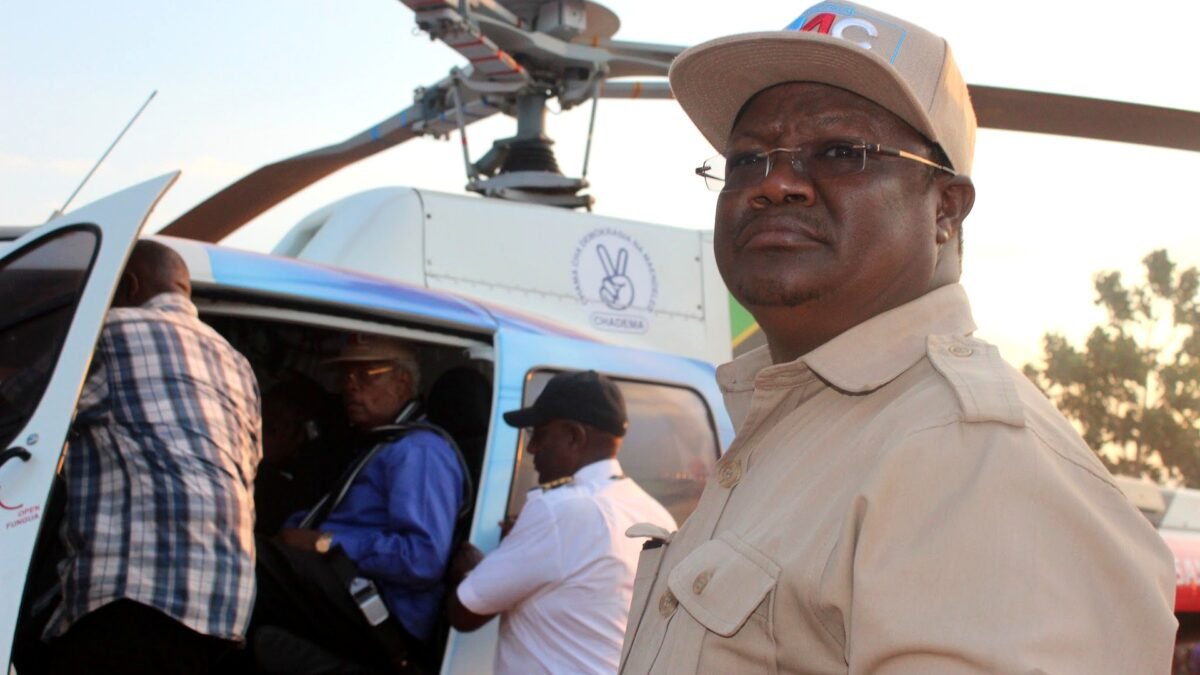
Tanzania’s main opposition leader, Tundu Lissu, was cleared of treason on Friday but sentenced to four years in prison for incitement, in a split verdict that spared him the death penalty yet kept the country’s most prominent government critic behind bars after a trial lasting nearly 19 months.
A three-judge panel of the High Court in Dar es Salaam ruled that prosecutors had failed to prove a key element of the treason charge against the 58-year-old chairman of the opposition party Chadema, but found him guilty of the lesser offence of incitement over remarks he made while campaigning for electoral reform ahead of the country’s disputed 2025 general election, according to Reuters.
The verdict, delivered on Friday, 6 November, brings a dramatic turn to one of the most closely watched political trials in East Africa in years — a case that helped fuel the worst political unrest in Tanzania’s history and drew sustained international scrutiny of President Samia Suluhu Hassan’s government. Lissu, who has been held without bail since his arrest in April 2025, was granted leave to appeal against the conviction at the Court of Appeal, Tanzania’s highest court, according to the BBC.
Treason is among the gravest offences under Tanzanian law and can carry the death penalty, so the acquittal on that count removed the most severe punishment available to the court. The incitement conviction carries a maximum penalty of five years’ imprisonment, a fine, or both, according to State Attorney Nassor Katuga, cited in Kenyan media coverage of the proceedings. In sentencing Lissu to four years, the court noted that it had considered mitigating factors, including that he was a first-time offender and that a fine is ordinarily the preferred option where available, but concluded that imprisonment was warranted in this case, according to the same reports. The sentence was confirmed later on Friday by a Reuters report carried by Devdiscourse.
Lissu has consistently denied the charges and described the prosecution as politically motivated. He pleaded not guilty, arguing during the trial that his speech did not violate any law and that his words had been taken out of context as part of a legitimate campaign for constitutional and electoral change, according to Reuters and the BBC.
The Verdict in Dar es Salaam
The panel that delivered the verdict was led by Justice Dunstan Ndunguru, sitting alongside Justices James Karayemaha and Ferdinand Kiwonde at the High Court’s Dar es Salaam Sub-Registry, according to Kenyan media reports of the proceedings. The judges found that the prosecution had failed to establish an essential element of the treason offence — relating to the intention to threaten or intimidate the government — while concluding that the evidence supported a conviction for incitement under Section 390 of the Penal Code.
The treason charge had been brought under Section 39(2)(d) of Tanzania’s Penal Code, a provision dealing with conduct intended to intimidate the executive, parliament or the judiciary through published material or an overt act. The offence carries the death penalty, although Tanzania has not carried out an execution since 1994, according to Kenyan media.
The ruling was delivered in stages through the day. Early reports from the courtroom said the judges were still delivering their ruling, with the full legal reasoning behind the incitement conviction and the sentence yet to be announced. The four-year sentence was confirmed later in the day, after the court completed its judgment.
Lissu, a lawyer who represented himself throughout much of the trial, told the court that he had not committed any offence. He also said during the proceedings that the incitement charge was one he had heard of for the first time only once the trial was under way, according to the BBC.
The case has been closely monitored by foreign embassies in Dar es Salaam, according to Tanzanian media, and the verdict was awaited across the region as a test of whether Tanzania’s courts would stand apart from the political pressures surrounding the case.
The Speech That Started It All
The prosecution arose from remarks Lissu made on 3 April 2025 at Chadema’s national headquarters in the Mikocheni district of Dar es Salaam, during a meeting with party aspirants, according to Kenyan media reports. He was in the early weeks of a campaign demanding changes to Tanzania’s electoral system under the slogan “No Reforms, No Election”.
Prosecutors told the court that Lissu had urged supporters to “block the election” and to “mobilise rebellion”, and argued that the statements — which were also shared online, including through the Jambo TV platform — were intended to encourage the public to disrupt the October 2025 general election and to threaten the government. They argued that the remarks amounted to treason.
Lissu countered that his words were part of a legitimate political campaign for constitutional and electoral reform, and that prosecutors had taken his statements out of context. He argued that the prosecution had failed to prove that he had committed any crime at all.
The reforms Chadema was demanding were specific and longstanding. They included electoral commissioners appointed independently rather than by the president; police allowing all parties to campaign without intimidation; an end to government-appointed district chiefs acting as returning officers; party agents being able to watch the counting of votes without harassment; and a right to challenge presidential election results in court, according to the BBC.
Lissu was arrested on 9 April 2025 in Mbinga, in the southern Ruvuma Region, shortly after addressing supporters during the electoral reform campaign, according to Kenyan media. He has remained in detention ever since, held without bail at Ukonga Prison in Dar es Salaam.
Shortly after his arrest, Chadema was disqualified from the October 2025 election for refusing to sign an electoral code of conduct, citing concerns about the integrity of the process. The disqualification removed Tanzania’s main opposition party from the ballot entirely.
Nineteen Months Behind Bars
By the time the verdict was delivered, Lissu had spent roughly 19 months in custody — a period that itself became part of the story of the trial. While held on remand at Ukonga Prison, he twice went on hunger strike for brief periods, saying he had been denied access to his lawyers and relatives, according to the BBC. He also complained that guards listened in on consultations with his lawyers that should have been private. The prison authorities denied the claims.
His most recent hunger strike ended in late October, when prison authorities allowed him to meet privately with his lawyers, according to Al Jazeera. The strike had begun after his lawyers were denied entry to the prison where he is being held, according to a statement by Chadema spokesperson Brenda Rupia cited by Al Jazeera.
The long detention without bail drew criticism from human rights groups, who argued that the treason charge was being used to keep a political opponent out of circulation through an election and beyond it. The government has repeatedly denied targeting its opponents and has said it is committed to respecting human rights. It ordered an investigation into reports of abductions in 2024, though no official findings have been made public, according to Al Jazeera.
Last week, Amnesty International accused the government of continuing its crackdown after the election and of using counterterrorism laws to silence critics and instil fear, according to the BBC. The authorities did not respond to a request for comment from the BBC.
The trial also unfolded against a sombre backdrop within Chadema itself. In late October, the party announced seven days of mourning, running from Thursday to 4 November, to mark the anniversary of the 29 October election, according to Al Jazeera.
The Election That Tore Tanzania Apart
To understand why a single speech could carry a charge as grave as treason, it is necessary to understand what happened in Tanzania in October 2025. The general election of 29 October 2025 was followed by widespread protests and a violent security crackdown that left hundreds of people dead and shattered the country’s longstanding reputation as one of Africa’s most stable states.
President Samia Suluhu Hassan, of the long-ruling Chama Cha Mapinduzi (CCM), was declared the winner with about 98 per cent of the vote, a result the opposition dismissed as a mockery of democracy after her two main challengers, including Lissu, were excluded from the race, according to the BBC. Her government has repeatedly insisted the election was fair and transparent.
Reuters described Lissu’s arrest, along with alleged abductions of government critics and Chadema’s disqualification from the vote, as a key driver of the protests that broke out during the elections. “Hundreds died as police opened fire on protesters in multiple cities, undermining the country’s longstanding reputation for stability,” Reuters reported.
A commission appointed by President Samia said in April 2026 that at least 518 people had been killed in the violence, which it blamed on the protesters. Her government denied allegations by human rights groups that the security services used excessive force, according to Reuters. Most of the deaths were attributed to gunshot injuries, according to Kenyan media reporting on the commission’s findings.
Opposition groups have put the death toll far higher — Chadema has claimed about 2,000 deaths — and have demanded an independent investigation, while the government has defended its handling of the unrest. The United Nations said it could not verify the opposition’s figure, according to Al Jazeera.
Samia, 66, has blamed foreigners for the unrest, saying it was part of a plot to overthrow her, and has set up a further commission to identify those behind the violence, according to the BBC. She has also insisted that the election was fair and transparent.
The violence marked a rupture for a country that had long prided itself on peaceful politics. Tanzania, which gained independence in 1961 and united Tanganyika and Zanzibar in 1964, has been dominated since independence by CCM and its predecessor, the Tanganyika African National Union (Tanu). Elections were held regularly, but the ruling party had never lost power — and the 2025 vote was the first in which the main opposition party was barred from the ballot altogether.
A Life in Opposition
Lissu, 58, has long been one of the most outspoken critics of the ruling party. He first became a member of parliament in 2010, representing a constituency near his birthplace of Singida, about 320 kilometres north-west of the capital, Dodoma, according to the BBC. He became Chadema’s national chairman in January 2025 and intensified his demands for electoral reform.
His political career has been marked by personal danger. In September 2017 he narrowly survived an attempt on his life when gunmen opened fire on his vehicle outside his home in Dodoma. He was shot 16 times and needed extensive medical treatment abroad, according to Al Jazeera. Those responsible have never been brought to justice, and the attack forced him to spend years outside the country, according to the BBC.
He returned to contest the 2020 presidential election against the late President John Magufuli, losing in a vote the opposition said was marred by widespread irregularities, and went back into exile before returning in 2023, after Samia lifted a ban on opposition rallies, according to the BBC. He came second in that 2020 presidential election, according to Al Jazeera.
The return was initially read as a sign of renewed openness after years of restrictions under Magufuli, who died in office in 2021. Samia, who succeeded him, initially cultivated an image as a reformer, speaking of reconciliation, resilience, reforms and rebuilding — the so-called “4Rs”. But relations between the government and the opposition deteriorated as the 2025 election approached, and Lissu’s arrest in April 2025 marked the decisive break.
The arc of Lissu’s life — from a young MP to a shooting survivor, exile, presidential candidate and now a convicted prisoner — mirrors the arc of Tanzanian politics itself: a country that once seemed to be opening up, now closing ranks around a ruling party that has held power for more than six decades.
Analysis: Why It Matters
The verdict in Dar es Salaam is the kind of judgment that looks like a compromise from the outside and feels like a defeat to everyone inside the courtroom. Lissu escaped the gallows but not the prison cell. The government secured a conviction but not the treason verdict that would have branded its chief critic a traitor. And Tanzania’s democracy, already badly wounded by the violence of October 2025, has been given another wound to carry — this time inflicted in a courtroom rather than on the streets.
A verdict that splits the difference — and satisfies no one
Split verdicts in political trials are rarely accidents. By acquitting Lissu of treason while convicting him of incitement, the three judges found a middle path between the two outcomes that would have defined the case in the starkest terms. A treason conviction would have confirmed, in the eyes of the world, that Tanzania imprisons its opposition leaders on capital charges for making speeches. A full acquittal would have humiliated a government that staked enormous political capital on the prosecution and would have returned its fiercest critic to the streets within hours.
Instead, the court handed both sides something and neither side everything. Lissu lives, and can appeal. The government has its conviction, and its critic remains in prison. But compromises of this kind rarely settle anything. Chadema will present the four-year sentence as proof that the trial was political from the start — a treason charge that collapsed, replaced at the last moment by a lesser offence the defendant says he had never even heard of until the trial began. The government, meanwhile, will present the incitement conviction as proof that the courts work independently and that Lissu’s words really did cross a legal line. Both readings cannot be true, and the argument between them will now move from the courtroom to the Court of Appeal — and to the court of international opinion.
The death penalty is off the table, but the message is the same
It matters enormously that the treason charge failed. Treason in Tanzania carries the death penalty, and although the country has not carried out an execution since 1994, the charge itself hung over Lissu — and over every opposition politician watching the trial — for 19 months. Its collapse removes the most extreme threat from the case and denies the government the ultimate deterrent against dissent.
But the four-year sentence for incitement delivers much of the same message in quieter language. The offence turns on a speech: words spoken at a party meeting, circulated online, urging supporters to block an election the speaker regarded as rigged. To convict a politician of a crime for telling supporters to resist an election is to draw a line that every opposition movement in Africa will recognise. The line says that challenging the legitimacy of an election is not politics — it is a crime. That is a message with consequences far beyond one man’s prison term, because it tells the next generation of Tanzanian opposition figures exactly how much dissent the state is prepared to tolerate.
Samia’s two faces: reformer abroad, enforcer at home
Few leaders in Africa have enjoyed as dramatic a reversal of international reputation as Samia Suluhu Hassan. When she succeeded John Magufuli in 2021, she was welcomed as a pragmatist who would repair the damage of his authoritarian rule: she lifted the ban on opposition rallies, allowed Lissu to return from exile, and spoke the language of reconciliation. Foreign governments and investors responded warmly, and Tanzania’s image as a stable, investable democracy seemed restored.
The Lissu verdict completes the unravelling of that image. A president who once welcomed her critics home now presides over a government that jailed the opposition leader for 19 months without bail, barred the main opposition party from the ballot, won 98 per cent of the vote in an election its opponents call a mockery, and then watched more than 500 people die in the protests that followed. The further commission she has set up to identify those behind the violence will be read by her critics as an instrument for pursuing the protesters rather than the security forces. The gap between the reformer the world met in 2021 and the enforcer Tanzania has seen since 2025 is now the central fact of her presidency — and it will shape how every foreign government, lender and investor deals with her from here on.
What the trial cost Tanzania — 518 dead and a broken reputation
The numbers in this story are the numbers that will haunt Tanzania longest. At least 518 people killed, according to the president’s own commission — most of them by gunshot. Chadema’s claim of about 2,000 dead, unverified by the United Nations, may never be resolved, but even the official figure is a catastrophe for a country that built its identity on stability. Reuters called the unrest the worst in the country’s history, and the description is not hyperbole: Tanzania had never before seen its security forces open fire on protesters in multiple cities at once.
The reputational cost is inseparable from the human cost. Tanzania’s stability was its calling card — the reason tourists came, investors built, and diplomats held it up as a model for a region scarred by coups and civil wars. That card has now been spent. The Lissu trial, the barred opposition, the 98 per cent victory and the 518 dead form a single story in the minds of the governments and institutions that once praised Tanzania, and it is a story that will take years to rewrite. The verdict does not close that story; it adds a chapter to it.
The opposition’s long road back
For Chadema, the verdict is both a setback and a strange kind of vindication. The treason acquittal gives the party a powerful argument: the state’s gravest charge against its leader collapsed in court. But the four-year sentence means the party’s chairman remains in prison, its organisation is weakened, and its route back to electoral politics is blocked by the same system that disqualified it in 2025.
The appeal to the Court of Appeal is the immediate next step, and it will be watched as closely as the trial itself. But the longer road runs to the next general election, due in 2030. Between now and then, Chadema must rebuild a party that has lost its leader to prison, its place on the ballot, and hundreds of its supporters to the violence of October 2025. Whether it can do so depends on factors largely outside its control: whether the government allows it to organise, whether the electoral rules it challenged are reformed, and whether the international community keeps pressing for the political space that Samia once promised and then withdrew.
What to Watch Next
- The appeal. Lissu has leave to appeal to the Court of Appeal, Tanzania’s highest court. The timing of the appeal, the grounds his lawyers choose, and whether the court agrees to hear it quickly will determine whether he spends the next four years in prison or walks free far sooner.
- How the four years are counted. Lissu has already spent about 19 months in detention without bail. Whether that time counts toward his sentence — and therefore how much longer he must actually serve — is one of the first practical questions the judgment leaves open.
- Chadema’s next move. The party has just completed a week of mourning for the anniversary of the 2025 election. Its leadership, its strategy for the appeal, and its plans for rebuilding an organisation barred from the last ballot will show whether the opposition can regroup or is being dismantled piece by piece.
- The international reaction. Foreign embassies monitored the trial closely, and Amnesty International had already accused the government of using counterterrorism laws to silence critics. Statements from Western governments, the Commonwealth and the African Union in the coming days will signal how much diplomatic pressure Samia now faces.
- Samia’s next steps. The president’s further commission into the post-election violence, and any moves toward the electoral reforms Chadema demanded, will reveal whether the government intends to address the causes of the 2025 crisis — or simply to manage its consequences.
Sources
- Reuters — Tanzanian court clears opposition leader Lissu of treason
- BBC News — Tanzanian opposition leader found guilty of incitement but acquitted of treason
- Reuters via Devdiscourse — Tanzania court sentences opposition leader Lissu to four years in jail for incitement
- KenyaFeed — Tanzanian Opposition Leader Tundu Lissu Acquitted of Treason, Sentenced to Four Years for Incitement
- Vivid Voice News — Tanzania’s Tundu Lissu cleared of treason, convicted of incitement
- Al Jazeera — Tanzania’s jailed opposition leader Tundu Lissu ends brief hunger strike

About the Author — Abdul Mannan
Related Articles
Trump Says Iran War Decision Coming ‘Soon’ as He Weighs New Strikes, Economic Pressure or a Deal
President Donald Trump says he will soon decide whether to resume full-scale war with Iran, weighing new airstrikes,…

Zelensky Says $16 Billion in Promised US Aid Never Arrived as Trump Meets Putin Envoy and Hails Near Ukraine Deal
Volodymyr Zelensky says $16 billion in promised American aid never arrived, as Donald Trump meets Vladimir Putin's envoy…
Paraguay President Santiago Peña Resigns as Ueno Bank Collapse Freezes Millions of Accounts
Santiago Peña resigned as president of Paraguay on Thursday after the collapse of Ueno Bank froze the savings…