
Trump Says Iran War Decision Coming ‘Soon’ as He Weighs New Strikes, Economic Pressure or a Deal

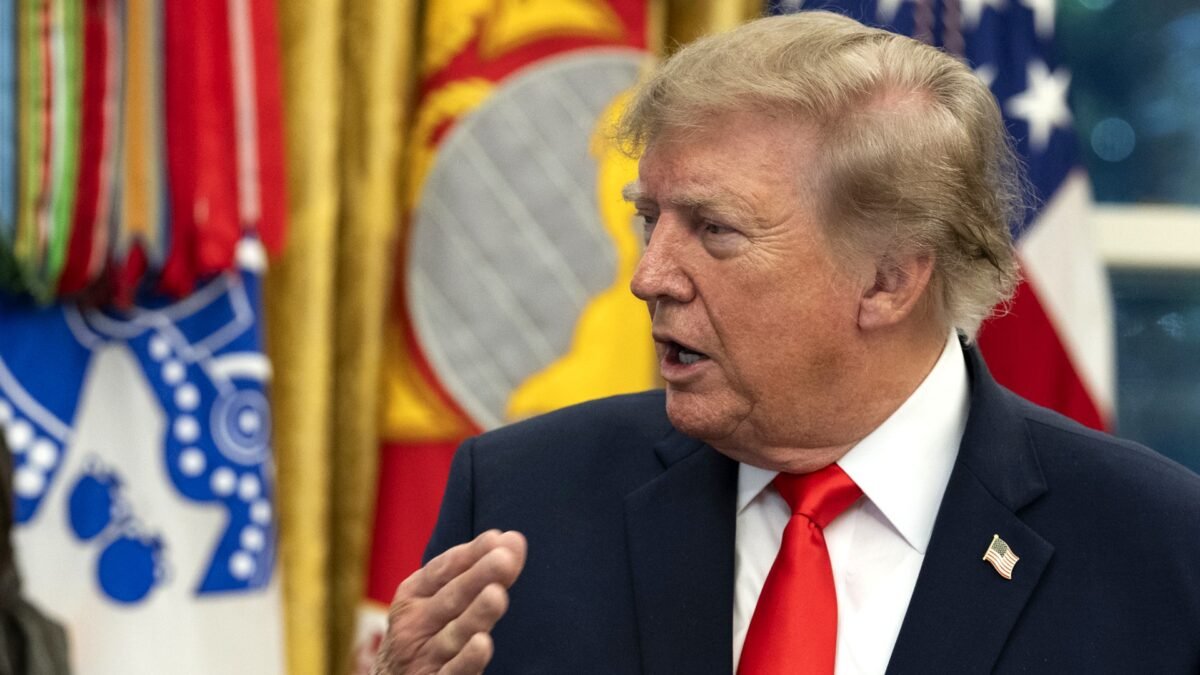
President Donald Trump has said he will soon decide whether to resume full-scale war with Iran, after meeting his national security team for the first time since the midterm elections and weighing three starkly different paths: new airstrikes, tighter economic pressure, or a negotiated settlement that would require significant concessions from Washington.
Speaking to reporters in the Oval Office on Thursday, Mr Trump said a decision was imminent. “Now we will make a decision,” he said, according to Axios. “Do we want to go further” with strikes to ensure Iran’s nuclear programme is dead and that “it will never happen again?” He added: “I would rather not destroy the rest of the country if possible, but maybe I will have to. You’ll know soon enough.”
The meeting, held as part of the president’s weekly intelligence briefing, was the first gathering of his top national security advisers on Iran since voters delivered a sweeping rebuke to his party in Tuesday’s midterm elections, according to two United States officials cited by Axios. The election was widely seen as an inflection point for the war: on 8 October, Mr Trump had said negotiations with Iran were progressing and ruled out military action before the 3 November vote. That commitment has now expired, and the pause it created is over.
For now, the president is considering three options, according to Axios: launch a new round of strikes, continue to strangle Iran’s economy, or cut a deal that includes significant concessions to the Iranians. No decision had been taken by Thursday evening, and no new directive had been issued to the military, a United States official said.
The three options on the table
Each of the three paths carries a different kind of risk, and the president’s own words on Thursday suggested he is still torn between them.
The military option would mean a fresh wave of bombing aimed at finishing what eight months of war have not: the permanent destruction of Iran’s nuclear programme. Mr Trump has repeatedly framed the objective in absolute terms, asking whether the United States should go further with strikes “to ensure Iran’s nuclear programme is dead and that it will never happen again”. But he also struck a notably more hesitant tone than in his earlier threats, when he warned that American forces had yet to begin “destroying what’s left” of Iran and referred to energy infrastructure and bridges as potential targets. On Thursday he spoke of preferring not to destroy “the rest of the country” — and even suggested that rebuilding Iran could take 25 years, according to the ANI news agency.
The second option, continued economic strangulation, is in many ways the status quo: a naval blockade of Iranian ports, sanctions designed to choke off oil revenue, and pressure on Tehran’s remaining trading partners. It avoids the risks of a new bombing campaign but has not, so far, forced Iran to the negotiating table on Washington’s terms — and it carries its own costs, including elevated fuel prices at home, which the ANI report cited as a source of domestic political pressure for the administration ahead of the elections.
The third option, a deal, would require concessions that the president’s own supporters might find hard to swallow. According to Axios, the agreement under discussion would involve “significant concessions” to the Iranians — a phrase that covers a wide range of possibilities, from sanctions relief and the release of frozen funds to an acceptance that some Iranian nuclear infrastructure survives. The fact that such a deal is even on the table, alongside the bombing option, underlines how far the war has moved from the certainties with which it began.
The mediators’ two-day plan
While Mr Trump weighed his options in Washington, diplomacy moved quickly elsewhere. On Thursday there was a flurry of activity, including multiple phone calls between Iran’s Foreign Minister Abbas Araghchi and regional mediators from Qatar, Saudi Arabia, Turkey, the United Arab Emirates, Oman and Egypt, according to Axios.
At the centre of those efforts is a draft proposal, discussed by Qatari mediators with both Tehran and the White House, that would see the two sides take a series of steps over two days to build mutual confidence towards a broader deal, regional sources told Axios. On the first day, the United States would lift its naval blockade and release some of Iran’s frozen funds. In return, Iran would issue an official invitation to the International Atomic Energy Agency to send inspectors to its bombed nuclear sites, based on an agreement reached in Cairo a year ago. On the second day, the Strait of Hormuz would reopen, after which nuclear talks would resume, focusing on Iran’s stockpile of highly enriched uranium.
The proposal is deliberately sequenced to solve the problem that has sunk every previous attempt at a settlement: neither side wants to move first. By breaking the opening moves into small, verifiable steps spread over 48 hours, the mediators hope to build enough trust for the harder negotiation — the future of Iran’s nuclear programme — to begin.
There are signs the idea has traction. Reuters reported that Iran has sent a nuclear proposal to the United States through Qatar, and that Washington is reviewing its contents. Al Jazeera reported that the two sides were close to agreeing on a one-page memorandum to formally end the conflict, citing Reuters and Axios. Under the memorandum described by those reports, Iran would agree not to develop a nuclear weapon and to halt enrichment of uranium for at least 12 years. The United States would lift sanctions and release billions of dollars in frozen Iranian assets, and both sides, which have imposed competing blockades in the Strait of Hormuz, would reopen the critical waterway within 30 days of signing.
But the gap between a draft and a deal remains wide. Iran’s foreign ministry spokesman, Esmaeil Baghaei, said Tehran had yet to provide its formal response to the American proposal and that “the investigation into the exchanged texts is ongoing”, according to Al Jazeera. Iran’s semi-official Tasnim news agency, citing an unnamed source, said the American proposal contained some unacceptable provisions, without specifying which ones. And Mr Trump himself, speaking on Wednesday, said talks had been “very good” and that the war would “be over quickly” — while also threatening to resume bombardment if the talks collapse. “I think it’s got a very good chance of ending, and if it doesn’t end, we have to go back to bombing the hell out of them,” he told PBS, according to Al Jazeera. He added that he was optimistic about reaching an agreement before his scheduled trip to China next week.
Tehran’s seven conditions
If the mediators’ plan is built on small steps and mutual trust, Tehran’s public position is built on the opposite: nothing moves until everything is agreed. That message was delivered in Moscow on Thursday by Major General Mohsen Rezaei, the secretary of Iran’s Supreme National Security Council and a key player in the indirect negotiations with the United States.
General Rezaei met President Vladimir Putin at the Kremlin, days after a call between the two men and proposals by the Russian president to mediate between Washington and Tehran. He told reporters afterwards that he had delivered a message from Iran’s Supreme Leader, Mojtaba Khamenei, and that Mr Putin had condemned the American and Israeli strikes against Iran, including the attacks on its nuclear facilities.
“Russian President Vladimir Putin had forcefully condemned the US and Israel’s military aggression against Iran, including the strikes on Iran’s nuclear facilities,” General Rezaei said, according to the ANI news agency. He added that Mr Putin had offered to make every possible effort to end the conflict. “Mr Putin said he will do everything he can to help bring the war to an end,” he said, according to Iran’s Press TV.
But the core of his message was a warning, not an opening. “We told Mr Putin that we announced seven conditions to the Americans regarding diplomacy, and that until the Americans fulfil our seven conditions, neither the Strait of Hormuz will be opened nor will there be any negotiations,” General Rezaei said after the meeting. Press TV, citing a source, also reported that he had said Tehran did not consider the diplomatic process worthwhile unless all seven conditions were implemented simultaneously.
The seven conditions have not been published in full, but their thrust is clear from what Tehran has demanded throughout the war: the release of frozen funds, the lifting of sanctions, and the end of the naval blockade — the same steps, in effect, that the Qatari mediators’ draft proposes for the first day. The disagreement is therefore not mainly about what should happen, but about the order in which it happens, and who moves first. Washington wants Iran to commit on nuclear issues before sanctions are lifted; Tehran wants sanctions lifted before it commits on anything. That sequencing standoff, described by a United States official to Al Jazeera as the central obstacle — “Iran has indicated they are flexible on the nuclear issues, but the sides still remain apart on the timing of the commitments and who takes which steps first” — is what the two-day plan is designed to break.
One fact gives the talks their urgency. Iran has refused to surrender its roughly 400 kilograms of highly enriched uranium, insisting it is not intended for weapons development, according to Al Jazeera. That stockpile, and what happens to it, is the single most important question in the negotiation — and the reason the mediators’ draft puts it at the centre of the talks that would follow the reopening of the strait.
Moscow steps in
General Rezaei’s visit to the Kremlin was the most visible sign yet that Russia intends to play a direct role in ending a war it did not start but has watched with growing alarm. The two sides also discussed energy cooperation, including plans for gas pipelines connecting Russia and Iran, according to the ANI report. General Rezaei said the proposed pipelines would help Iran address domestic gas shortages and allow it to sell Russian gas to neighbouring countries.
Russia’s interest is not purely diplomatic. A war that disrupts energy supplies through the Strait of Hormuz, through which one-fifth of the world’s oil and gas passed before the war began, according to Al Jazeera, affects every major economy — including Russia’s own customers. And a prolonged American bombing campaign on Iran’s doorstep would put Russian interests in the region, and its relationship with Tehran, under severe strain. Mr Putin’s offer to mediate gives Moscow a claim to relevance in a conflict where it has so far been a bystander, and gives Tehran a powerful backer to point to in its dealings with Washington.
Whether Russia can actually deliver a settlement is another matter. Moscow’s leverage over Washington is limited, and its leverage over Tehran is untested. But the mere fact that Iran’s top security official carried a message from the Supreme Leader to the Kremlin — and that Mr Putin responded by offering to help end the war — suggests that Tehran is keeping its options open, and that it wants Washington to know it has alternatives to dealing directly with the United States.
The military clock
Behind the diplomacy, the military preparations continue. United States Central Command is finalising preparations to potentially resume major combat operations in Iran, though it has not received a new directive from Washington, a United States official told Axios. Senior American officials confirmed to Fox News that key meetings took place at the White House on Wednesday and Thursday.
One signal that the United States plans renewed strikes could be the arrival of a third American Navy aircraft carrier strike group in the Middle East. A United States official said the USS Theodore Roosevelt and its strike group will spend a few days in Singapore starting on Friday for a port call, and that it will not reach Central Command’s area of responsibility before mid-November. That timetable gives the diplomats at least a week — and gives the president a reason to hold his decision until the military pieces are in place.
Another date is being watched closely. Fox News reported that 9 November will bring a new moon over the region, resulting in minimal or no moonlight — an environmental condition considered advantageous for military operations, according to the ANI report. It is the kind of detail that matters only if a decision to strike has already been made, or is close to being made — and its prominence in the reporting underlines how seriously the possibility of renewed bombing is being taken in Washington.
The regional picture is also moving. Iraq’s Prime Minister, Ali Faleh Al-Zaidi, told Mr Trump during a phone call on Thursday that Iraqi territory must not be used to launch attacks against neighbouring countries, according to the ANI report. In a statement posted on X, the Iraqi Prime Minister’s Office said: “Mr Prime Minister affirmed Iraq’s position calling for respect for the sovereignty of states, non-use of its territories as a launchpad for aggression against neighbouring countries.” The message was a reminder that any new American campaign would need the cooperation — or at least the acquiescence — of the countries whose territory, airspace and bases would be involved, and that such cooperation cannot be assumed.
The politics at home
The timing of the decision is not only military and diplomatic. It is also political. The midterm elections, in which Democrats swept both chambers of Congress, were widely read as a verdict on the war as much as on anything else. The conflict has created domestic political pressure for the administration, with elevated fuel costs and declining public approval cited as concerns ahead of the elections, according to the ANI report.
That political context helps explain both the pause and the decision now facing the president. The 8 October commitment not to attack before the elections was, in effect, an admission that the war was a political liability — that voters, already paying more for fuel, would not reward a president who escalated a foreign war in the middle of a campaign. The midterm result, a sweeping defeat for the president’s party, suggests that the pause did not save the Republicans. The question now is whether the lesson Mr Trump draws from that defeat is that the war must be ended quickly, or that it must be won decisively.
His words on Thursday offered evidence for both readings. The threat to “destroy the rest of the country” was the language of escalation. The preference “not to destroy the rest of the country if possible” was the language of a man looking for a way out. The reference to rebuilding Iran taking 25 years was the language of someone who has begun to count the cost of the war he started — and who may be wondering whether the country he has spent eight months bombing can ever be put back together.
The domestic politics of the decision cut both ways. A deal that ends the war would remove the issue from the political agenda — but only if it can be presented as a victory, not a climbdown. A new bombing campaign might be presented as the decisive blow that ends the war — but only if it works, and only if it does not produce the kind of images, casualties and fuel-price spikes that turned voters against the war in the first place. And continued economic pressure, the least dramatic of the three options, is also the least likely to produce a result that can be presented as a success before the political calendar moves on.
Eight months of war: how we got here
The war began on 28 February, according to Al Jazeera, when the United States and Israel launched strikes against Iran. It escalated again in July, and has since settled into a grinding pattern: American and Israeli strikes on Iranian nuclear facilities and military targets, Iranian retaliation, a naval blockade of Iranian ports, and a competing Iranian effort to close the Strait of Hormuz — the narrow waterway through which one-fifth of the world’s oil and gas passed before the war began.
The human and economic costs have mounted steadily. Three ships were reported burning near the Strait of Hormuz early on Thursday, according to CBS News, after Iran rejected Washington’s latest reply in the talks to end the war. The strait’s closure, and the threat of its closure, has kept oil prices elevated and shipping insurers nervous for months. The blockade of Iranian ports has squeezed an economy already weakened by years of sanctions.
Repeated attempts to end the fighting have failed. Mr Trump has repeatedly played up the prospect of an agreement, so far without success, according to Al Jazeera. The two sides remain at odds over a variety of issues, ranging from Iran’s nuclear programme to its control of the Strait of Hormuz. The 14-point plan proposed by Iran last week, and the memorandum now under discussion, are the latest in a series of proposals that have come close to agreement without reaching it — each time foundering on the same question of who moves first.
What has changed since the last round of talks is the political calendar. The midterms are over. The commitment not to attack before the elections has expired. The president is no longer constrained by the fear of what voters will think next Tuesday — but he is constrained, instead, by what they thought last Tuesday. And the military calendar is moving too: the arrival of a third carrier strike group in mid-November, and the new moon on 9 November, give the decision a deadline that diplomacy alone would not impose.
Analysis: Why It Matters
The midterm pause is over — and that changes everything
For a month, the war was fought in the shadow of an election. Mr Trump’s 8 October promise not to attack before the midterms was an extraordinary admission: that the timing of a war could be set by a domestic political calendar. That promise bought a month of relative quiet, but it also created a deadline. The moment the polls closed, the pause expired — and with it, the restraint it imposed. The president’s first national security meeting on Iran since the election, held within 48 hours of the vote, was the clearest possible signal that the pause is over and the decision can no longer be postponed. Whatever Mr Trump decides in the coming days, it will be a decision taken without the excuse of an election to hide behind.
A deal is still the cheapest exit — for both sides
The most striking feature of the current moment is that a deal is genuinely available. The outlines of a settlement — no Iranian nuclear weapon, a long halt to enrichment, sanctions relief, frozen funds released, the strait reopened — have been agreed in principle by both sides, according to the reporting on the memorandum. The obstacle is sequencing, not substance. That is a solvable problem, and the Qatari mediators’ two-day plan is a serious attempt to solve it. The question is whether Mr Trump, who has spent eight months demanding Iran’s unconditional surrender, can accept a deal that gives Tehran something in return — and whether Tehran, which has spent eight months insisting on seven preconditions, can accept a deal that asks it to move first on nuclear inspections. Both sides have more to gain from a deal than from another round of bombing. The tragedy of this war is that both sides have known that for months, and have been unable to act on it.
The Strait is the world’s pressure point
Every path out of this war runs through the Strait of Hormuz, and that is why the strait dominates the negotiation. Before the war, one-fifth of the world’s oil and gas passed through it. Its closure — or even the credible threat of its closure — raises fuel prices everywhere, from Faisalabad to Frankfurt. That gives Iran a weapon it can use without firing a shot: the ability to impose costs on the entire world economy. But it is a weapon with a short shelf life. The longer the strait stays closed, the more the world adapts — finding alternative routes, alternative suppliers, alternative sources of energy. Iran’s leverage is greatest now, while the shock is fresh, and it diminishes with every week the blockade continues. That is why Tehran’s insistence on opening the strait only after its seven conditions are met is a gamble: it trades immediate leverage for a promise of future concessions, and if the promise is not kept, the leverage is gone.
Russia wants a seat at the table
General Rezaei’s visit to the Kremlin was about more than seven conditions. It was a statement that Iran has options beyond Washington — and that Russia intends to be part of whatever settlement emerges. For Mr Putin, the war in Iran is an opportunity: a chance to present Russia as a peacemaker, to deepen its relationship with Tehran, and to gain leverage over energy markets that affect every country in the world. For Tehran, Moscow’s involvement is insurance: a powerful friend to point to if Washington’s terms become unacceptable. But Russia’s mediation also complicates the negotiation. A settlement brokered in Moscow would look very different from one brokered in Doha — and the involvement of a third great power, with its own interests in energy and in the region, makes an already complex negotiation harder, not easier. The question is whether Mr Putin is offering to help end the war, or offering to help Iran survive it.
The carrier sets the real deadline
Diplomats talk about deadlines in weeks and months. Militaries talk about them in days. The USS Theodore Roosevelt’s arrival in the region in mid-November, and the new moon on 9 November, give the president’s decision a timetable that no amount of diplomacy can extend. If Mr Trump wants to strike, he will want the carrier in place — and he will want the darkness of a new moon. If he wants a deal, he will want it before the carrier arrives, because once the military option is fully ready, the pressure to use it becomes harder to resist. The next week is therefore the window in which a deal is most likely — and after which a strike becomes most likely. That is the real significance of the president’s statement that a decision is coming “soon”. The clock is not only political. It is military. And it is running out.
What to Watch Next
- The president’s announcement: Mr Trump said “you’ll know soon enough”. The form of the decision matters as much as its content: a televised address would signal a major escalation or a major deal; a quiet statement would suggest a holding pattern. Watch for whether the announcement comes before or after the USS Theodore Roosevelt reaches Singapore on Friday.
- Tehran’s formal response: Iran’s foreign ministry said it had yet to deliver its response to the American proposal. When that response arrives — and whether it accepts, rejects or amends the two-day confidence-building plan — will determine whether the Qatari mediation has a future.
- The seven conditions: General Rezaei’s conditions have not been published in full. If Tehran releases them, watch for whether they are genuinely preconditions for talks, or a negotiating position that can be traded away. The distinction will tell us whether Iran wants a deal or an excuse.
- The carrier and the moon: The USS Theodore Roosevelt’s port call in Singapore, and the new moon on 9 November, are the two dates that will tell us whether the military option is being prepared for use or held in reserve. A carrier that sails on schedule towards the Gulf is a signal; a carrier that lingers is a different one.
- Fuel prices and the political fallout: The war’s domestic cost — elevated fuel prices and declining public approval — was a factor in the midterm result. If the president chooses escalation, watch for the market reaction and the political response from the newly empowered Democratic Congress, which has already signalled its intention to investigate the conduct of the war.
Sources
- Axios — “Trump meets with national security team, says Iran war decision coming ‘soon'” (full text via Collector)
- ANI via Reporter World News — “Trump weighs fresh Iran strikes as Tehran rules out talks without concessions”
- Axios via Stockbiz — “President Trump is about to decide ‘what move to make’ on Iran”
- Zot News — “Trump says he’ll ‘soon’ decide on resuming all-out war in Iran”
- Particle News — “Trump Says Decision on Iran Action Will Come Soon”
- Al Jazeera — “Trump says war will be ‘over quickly’ as Iran reviews US peace proposal”

About the Author — Abdul Mannan
Related Articles
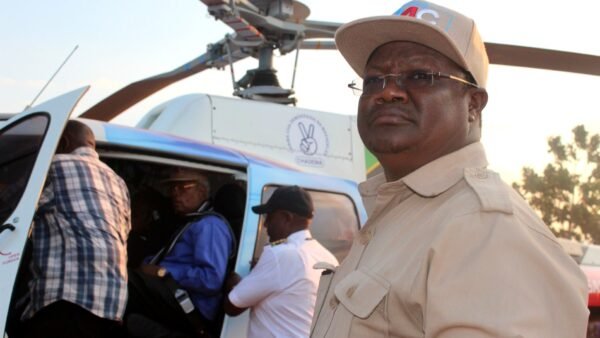
Tanzania Opposition Leader Tundu Lissu Cleared of Treason but Jailed for Four Years Over Incitement
Tanzania's High Court cleared opposition leader Tundu Lissu of treason but sentenced him to four years in prison…

Zelensky Says $16 Billion in Promised US Aid Never Arrived as Trump Meets Putin Envoy and Hails Near Ukraine Deal
Volodymyr Zelensky says $16 billion in promised American aid never arrived, as Donald Trump meets Vladimir Putin's envoy…
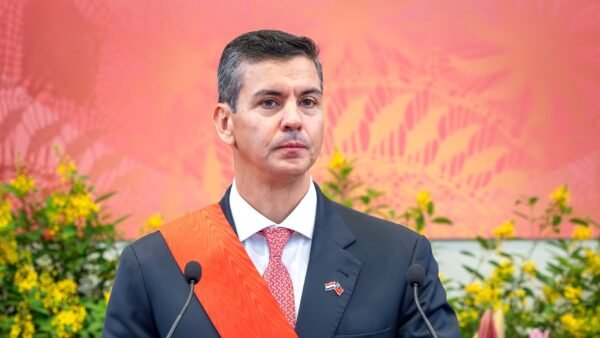
Paraguay President Santiago Peña Resigns as Ueno Bank Collapse Freezes Millions of Accounts
Santiago Peña resigned as president of Paraguay on Thursday after the collapse of Ueno Bank froze the savings…