
Judge Blocks Trump’s 250-Foot Triumphal Arch Within an Hour of Final Approval as President Declares Oval Office a National Monument

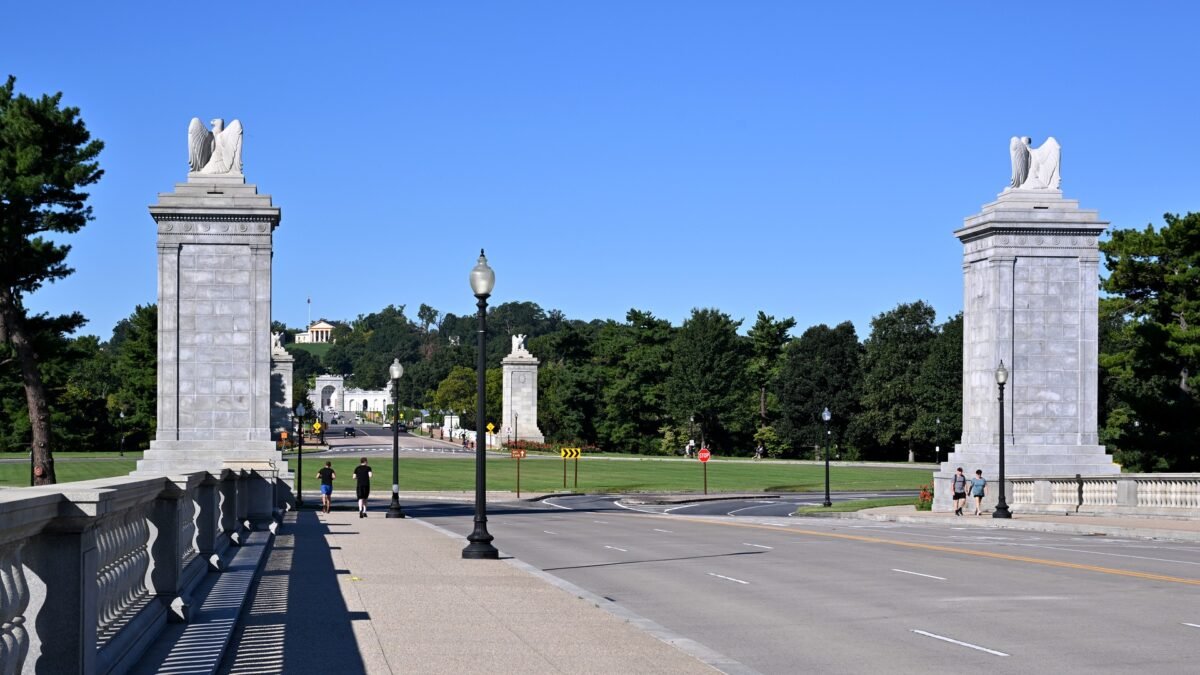
A federal judge has blocked construction of President Donald Trump’s planned 250-foot triumphal arch in Washington, DC, for 14 days — issuing the order within an hour of a federal planning commission giving the project its final approval after a marathon nine-hour hearing.
The National Capital Planning Commission voted 8-4 late on Thursday, 5 November, to approve the arch at Memorial Circle, the traffic circle between Arlington National Cemetery and the Lincoln Memorial. Within the hour, US District Judge Tanya Chutkan granted a temporary restraining order sought by the District of Columbia and Virginia, barring the administration from starting any construction-related work while the courts weigh the legal challenges, according to CNN.
The ruling capped a remarkable day for the president’s campaign to reshape the capital. Hours before the commission’s vote, Trump signed a proclamation declaring the Oval Office and the Cabinet Room national monuments, a move he said would prevent future presidents from substantially altering the rooms he has redecorated in gold. It was, according to several outlets, his first official action since Democrats swept both chambers of Congress in Tuesday’s midterm elections — and the courts answered it, in part, within hours.
The judge’s 33-page decision was unsparing about the government’s case. Chutkan found that “the harm is certain” if construction were allowed to begin, and she picked apart what she described as the administration’s shifting justifications for the project — a celebration of the 250th anniversary of the Declaration of Independence, a century-old congressional act, and, most recently, supposed national security concerns. “These arguments are unavailing,” she wrote, according to The Art Newspaper.
The order blocks, for 14 days, any construction, excavation, demolition, land-disturbing work, utility installation, roadway closures or other activity related to building the arch at Memorial Circle on Columbus Island, according to USA Today. The government must notify every employee, contractor and subcontractor involved that construction-related activity is prohibited, and must file a status report with the court by Monday, 9 November, certifying its compliance.
The approval that lasted less than an hour
The commission’s vote came at the end of a hearing that ran for more than nine hours, during which more than 100 speakers — including public officials, veterans and families of fallen soldiers, many calling in from an all-day protest at Memorial Circle — urged the panel to reject the project. Most of the testimony was excoriating, according to The Art Newspaper, with speaker after speaker accusing the commission of bowing to the president’s wishes.
The National Capital Planning Commission is one of two federal agencies that oversee architectural and design changes in Washington, and its membership is now dominated by Trump administration appointees. Its chairman, Mark Paoletta, also serves as general counsel of the Office of Management and Budget and deputy director of the Consumer Financial Protection Bureau — and, according to The Art Newspaper, he continually presented the government’s legal arguments in favour of building the arch during the hearing.
When a smaller group of non-administration commissioners, led by DC city council chairman Phil Mendelson, moved to delay the vote until December, the commission’s vice chairman, Stuart Levenbach — who also works in the Office of Management and Budget as chief statistician — noted that “the project proponent is under a time constraint and wants the decision today”. No explanation was given for what that time constraint involved, according to The Art Newspaper.
In the end, the vote split along loyalist lines: the eight administration-appointed members voted to approve the arch plans, and four voted against. The final tally was announced at around 10.29pm, according to CNN.
Democratic lawmakers were among those who testified against the project. Representative Don Beyer of Virginia told the commission the arch would “snarl traffic for years, impact the nearby airport, and present even more serious threats to public safety that this commission has refused to acknowledge and grapple with”, according to USA Today. Representative Jared Huffman, the ranking Democrat on the House Natural Resources Committee, said the arch lacks congressional authorisation and goes against the Height of Buildings Act and other preservation laws, and warned that those working to move the project forward “will put themselves at legal risk”.
“I urge all officials and firms involved with this illegal project to consider the legal hazards they may be facing by advancing it because, in case you hadn’t heard, we’ll soon have a new congress that takes the rule of law very seriously,” Huffman said, referring to the outcome of the midterm elections, according to The Art Newspaper.
The administration had made clear it was ready to move fast. The Justice Department had told the court that an initial six to eight months of excavation and foundation work could begin as early as this week, once the Interior Department issued a final decision authorising construction and the National Park Service published the proper notification, according to USA Today and Fast Company. Administration officials had suggested work on the 25-storey-high monument could begin within 24 hours of approval, according to The Sun.
It did not get the chance. According to PEOPLE, which reviewed the court filings, Trump officials told Judge Chutkan at around 11.40pm that they would proceed with the plans — and the judge issued the temporary block minutes later. A White House spokesperson told PEOPLE on Friday: “The White House commends the National Capital Planning Commission’s decision to fully approve President Trump’s historic vision to build a much needed Triumphal Arch in Washington, D.C.” The spokesperson added: “An activist district court thereafter blocked the construction of the project.”
The judge’s order: “The harm is certain”
Chutkan’s order was the latest step in a legal fight that has been building for months. The District of Columbia and Virginia sued the National Park Service and the Department of the Interior on 31 October, seeking to stop construction before it began. Their lawsuit called the project “legally indefensible” and argued that Congress never authorised the monument, according to USA Today.
They were not alone. Three Vietnam War veterans — Michael Lemmon, a former ambassador, and Shaun Byrnes among them — filed suit in February, along with an architectural historian, arguing that the arch would interfere with the views surrounding Arlington National Cemetery, where hundreds of thousands of fallen service members and veterans are buried, according to We Got This Covered and the Washington Sun. Lemmon argued that the monument would compromise the carefully engineered sightline connecting the cemetery and the Lincoln Memorial, a vista designed to symbolise post-Civil War national unification, according to Focus News.
Chutkan consolidated the cases. In her 33-page decision, she found that Virginia and the District of Columbia had shown that the immediacy of the construction would cause real harm to the plaintiffs. “The harm is certain,” she wrote. “Defendants initially notified the court that construction could begin as early as November 5, 2026, if the NCPC approves the project at its meeting that day and the Department of the Interior authorizes construction,” according to Fast Company.
The judge also found that construction would interrupt traffic at a vital artery into the capital for years and result in unknown damage and expense, according to The Art Newspaper. Among the reasons she cited were the project’s potential economic impacts and traffic delays, according to CNN.
There was also an awkward revelation in the filings. The Justice Department had informed Chutkan that a contractor had already done site preparation work on 31 October, apparently without authorisation from the National Park Service, according to the Collie Mail report of the case. The disclosure raised questions about whether the administration had begun moving earth before it had permission to do so — questions the 14-day pause now gives the court time to examine.
The restraining order is temporary. It does not permanently cancel the project, but it puts the administration’s plans on hold for at least two weeks while the court considers the underlying legal challenges, according to Parade. The government must report back to the court on Monday, 9 November, to certify that it has complied — a deadline that falls just four days after the order was issued.
The arch itself: 250 feet of marble, gold and argument
The proposed monument would stand at Memorial Circle, on the traffic circle at the western end of Arlington Memorial Bridge, between Arlington National Cemetery and the Potomac River, directly across from the Lincoln Memorial. At 250 feet — about 76 metres — it would be roughly 80 feet taller than the Arc de Triomphe in Paris, which inspired it, and would rise to nearly the height of the 288-foot US Capitol, according to USA Today.
Trump has compared the project to France’s famous arch, although he believes the American version would be superior. Speaking to reporters on Wednesday, he described his design as “like the Arc de Triomphe, but better, more beautiful actually, much more beautiful”, according to The Daily Bo Snerdley. The elaborate design includes monumental sculptures, a winged Lady Liberty holding a torch with an eternal flame, an observation deck, staircases, elevators and interior spaces.
Some estimates have placed the cost at approximately $100 million, although no final public cost has been established, according to multiple outlets. The administration has estimated the arch could attract anywhere from 2,000 to 22,000 visitors a day, according to the Washington Sun. Above-ground construction would start in May 2027 at the earliest, with the job expected to take 33 to 39 months in total, according to the Collie Mail report.
Trump first proposed the arch last year to mark 250 years of US independence, which the United States celebrated in 2026. He has promoted it as both a landmark and, more recently, a military asset. Speaking on 2 November during an event highlighting improvements to the Lincoln Memorial Reflecting Pool, he said the arch could house drones and snipers. “It’s right smack in the middle of everything, so very important for our military. But from a beautification standpoint, it’ll be the most beautiful arch in the world,” Trump said, according to USA Today.
Last month he went further, announcing on Truth Social that he had agreed to convert the arch into a military complex. “For National Security purposes, I have agreed to convert the magnificent Triumphal Arch, planned since the Civil War Era many years ago, at the Receptive Circle adjoining the Arlington Memorial Bridge, into a top grade Military Complex/Triumphal Arch,” he wrote, according to The Sun.
The national security argument featured prominently in Chutkan’s decision — and not in the government’s favour. The judge noted that the proposed military functions were absent from the original planning documents, and questioned the sudden appearance of the justification, according to The Sun. The plans voted on by the planning commission omit any military infrastructure details, according to the Washington Sun.
The century-old law at the heart of the case
The administration’s central legal argument rests on legislation enacted in 1925, which approved the construction of two slender columns at the end of Arlington Memorial Bridge. Paoletta told the commission that Trump’s arch would fulfil that congressionally approved plan, and that the current design of the bridge “dishonors our veterans and leaves a key monumental gateway to Arlington that Congress authorized incomplete”, according to the Washington Sun.
The problem, as the plaintiffs and the judge see it, is one of scale. The arch as designed is 84 feet taller than the century-old plan contemplated, and a triumphal arch is not two columns. The administration has relied on the 1925 plan as justification despite that difference, according to the Washington Sun. The District of Columbia and Virginia argue that Congress never authorised the monument at all.
The case also turns on the Commemorative Works Act of 1986, which, according to PEOPLE’s account of the court memorandum, “seeks to ensure that commemorative works on federally administered land are ‘appropriately designed, constructed, and located,’ and that they ‘reflect a consensus of the lasting national significance of the subjects involved.'” The plaintiffs argue that a monument to a sitting president’s vision, approved over the objections of more than 100 witnesses and the local governments most affected, fails that test.
Opponents have also pointed to the Height of Buildings Act and other preservation laws, as Huffman did in his testimony. And the veterans’ lawsuit raises a separate, symbolic argument: that the arch would break the sightline between the Lincoln Memorial and Arlington National Cemetery — the axis that the capital’s planners laid out to represent the reunification of the nation after the Civil War. One veteran quoted in coverage put it bluntly: “We reject the vanity, the worship of a single man, over the 400,000 that have earned the right to be remembered.”
Trump has pushed to fast-track the project so that it could be mostly completed before he leaves office in 2028, according to The Art Newspaper. That timetable is now in doubt. Even without the court order, the 33-to-39-month construction schedule would have carried the work well past the end of his presidency; with the legal challenges now set to run through a Democratic-controlled Congress, the timetable looks more uncertain still.
The Oval Office becomes a national monument
On the same day the commission approved the arch, Trump signed a proclamation establishing the Oval Office National Monument under the Antiquities Act, the 1906 law that allows presidents to protect landmarks and sites of historic or scientific interest on federally controlled land. The proclamation covers the Oval Office itself (Room 110), the Outer Oval Office (Rooms 106 and 108) and the Cabinet Room (Room 105), according to Newsmax and Yoopya.
Speaking to reporters in the Oval Office, Trump said the room “will not be allowed to be touched by anybody, destroyed, ripped down by stupid people, in order to build something in a slightly different shape”, according to The Art Newspaper and the Associated Press. “We’re making it a national monument, and it will not be allowed to be touched by anybody,” he said, according to American Bazaar Online.
The proclamation directs the Secretary of the Interior, acting through the National Park Service, to develop a management plan in consultation with the White House Office of Administration, prioritising the rooms’ historic character and architectural integrity. Before any action that would substantially alter or demolish the monument or its essential architectural features, the proclamation requires documentation, review and consideration of alternatives, according to Yoopya and Newsmax.
But the proclamation does considerably less than the president’s rhetoric suggests. Its text explicitly preserves a president’s authority to redecorate the rooms, select furnishings and make ordinary operational or security modifications, provided they do not substantially impair the monument’s historic structure or architectural character. “Nothing in this proclamation shall be construed to restrict the President’s authority to redecorate the monument, select furnishings,” it states, according to Yoopya.
Trump said he intends to seek congressional ratification of the designation, and told reporters that major modifications would require congressional approval — although the signed proclamation contains no such specific requirement, according to Newsmax and Yoopya. The proclamation also says it does not change existing exemptions for the White House under federal historic preservation law, or reduce Congress’s authority over federal property, according to Flash Info. And, as several outlets noted, it does not say whether a future president could change or cancel the designation. Trump himself has reversed national monument designations made by his predecessors, according to the Collie Mail report.
The White House fact sheet said the Oval Office already has National Historic Landmark status but deserves greater recognition as the working heart of the presidency, according to Flash Info. The rooms covered are among the best known in American politics: the Oval Office is where presidents meet world leaders, sign laws and address the nation, while the Outer Oval Office houses the president’s closest aides and the Cabinet Room is where he meets his Cabinet secretaries.
The timing was pointed. The proclamation was Trump’s first official action after his party was swept aside in the midterm elections, according to the Collie Mail report — a president who had just lost both chambers of Congress moving, on the same day, to put his own redecoration of the Oval Office beyond the reach of his successors, and to push through final approval for the monument he hopes will define his legacy.
A president remaking the capital
The arch and the Oval Office proclamation are only the latest chapters in Trump’s campaign to leave his mark on Washington. His efforts include the bulldozing of the historic East Wing of the White House to make room for a 1,000-seat ballroom, a hurried relining of the Reflecting Pool on the National Mall, plans to paint the Eisenhower Executive Office Building white, and an overhaul of the Kennedy Center for the Performing Arts, according to The Art Newspaper and USA Today.
Each project has followed a similar pattern: a grand announcement, fast-tracked approvals from panels staffed with administration loyalists, and legal challenges from local governments, veterans and preservationists. The East Wing demolition drew particular criticism from historians, and the ballroom project — for which Trump held up a model of the arch at a fundraising dinner in October 2025, according to The Sun — has become a symbol, for critics, of a president treating the White House as a personal construction site.
What has changed is the political landscape. On Tuesday, 3 November, Democrats seized control of both the House and the Senate, and the new Congress will take office in January 2027. That changes the arithmetic for every project that still needs money, permits or congressional acquiescence. Huffman’s warning at the hearing — that a new Congress “takes the rule of law very seriously” — was not just rhetoric; it was a statement of the new balance of power.
The midterm result has already begun to reshape the administration. On Friday, Trump announced that Stephen Miller would become White House chief of staff, replacing Susie Wiles — a shake-up reported extensively across the US press. The arch ruling landed in the middle of that churn, and the Oval Office proclamation can be read, in part, as a response to it: a president with two years left in office, a hostile Congress about to be seated, and a legacy he is determined to build in stone before time runs out.
For now, the arch exists only on paper and in the model Trump has shown at fundraising dinners. The site at Memorial Circle remains as it was: a traffic circle, two eagle-topped pylons, and a view across the Potomac to the Lincoln Memorial. Whether it ever becomes the 250-foot monument the president imagines will now be decided, in the first instance, by a court — and the first ruling has gone against him.
Analysis: Why It Matters
A court has put the presidency’s building programme on trial
The 14-day restraining order is narrow — it pauses construction while the court considers the case — but the reasoning in Chutkan’s 33-page decision is broad, and it matters. By finding that “the harm is certain” and dismissing the government’s shifting justifications as “unavailing”, the judge has signalled that the administration’s legal theory for the arch is fragile. The government has now offered three different rationales for the same structure — a 250th-anniversary celebration, a century-old columns authorisation, and a national security complex — and the court has noticed the inconsistency. In litigation, a moving justification is rarely a strong one, and the plaintiffs will return to it at every hearing. The arch case is becoming a test of whether a president can use planning commissions staffed with his own appointees to override the ordinary legal constraints on building in the capital.
The midterms changed the facts on the ground
Nothing about the arch’s legal position changed on Tuesday, 3 November. Everything about its political position did. A project that was already controversial — opposed by more than 100 witnesses at its own approval hearing, by the governments of Virginia and the District of Columbia, and by veterans’ groups — now faces a Congress controlled by the opposition party. That Congress will control appropriations, oversight hearings and, potentially, legislation aimed directly at the project. Huffman’s warning at the hearing was the first shot of that campaign. The Oval Office proclamation, signed on the same day, can be read as the administration’s recognition of the same reality: with a hostile Congress about to be seated, the president is using the tools that do not require Congress — proclamations, planning commissions, executive action — while he still can.
The Oval Office proclamation is weaker than it sounds — and that matters too
Trump’s declaration that the Oval Office “will not be allowed to be touched by anybody” is, on the face of the signed document, an overstatement. The proclamation expressly preserves a successor’s right to redecorate, change furnishings and make operational and security modifications. It requires review before substantial alteration or demolition, but it does not freeze the rooms, does not set a deadline for the management plan, and does not say whether a future president could revoke it. Its real significance is procedural rather than absolute: it creates a paper trail, a management plan and a set of review requirements that a future administration would have to work through — or sweep aside — before changing the rooms. That is a meaningful obstacle, but it is an obstacle of process, not of permanence. And the precedent cuts both ways: Trump himself has reversed his predecessors’ monument designations, which means a future president can point to his own example when deciding what to do with this one.
Monuments are arguments about who a country is
The fiercest opposition to the arch has not been about traffic or cost, although both featured in the court filings. It has been about symbolism. The sightline between the Lincoln Memorial and Arlington National Cemetery was designed as an argument: that a nation torn apart by civil war had been reunified, and that the dead buried on the hill above the Potomac look across the river toward the president who preserved the Union. A 250-foot arch planted in the middle of that axis — taller than the Lincoln Memorial, crowned with a winged Liberty, built at the behest of a sitting president to mark his own era — changes what that vista says. The veterans who sued understood this instinctively, and their language — rejecting “the vanity, the worship of a single man” — framed the case as a contest between two kinds of monument: one that commemorates the dead, and one that celebrates the living. That argument will not be settled by a 14-day restraining order, but it is the argument that will decide, in the end, whether the arch is remembered as a landmark or as an overreach.
The pattern is the story
Consider the sequence of the last two years: the East Wing demolished for a ballroom, the Reflecting Pool relined in haste, the Kennedy Center overhauled, the Eisenhower building slated to be painted white, a triumphal arch fast-tracked through a loyalist planning commission, and now the Oval Office declared a national monument. Individually, each project can be defended as a matter of taste or presidential prerogative. Taken together, they amount to a deliberate programme to remake the physical capital in one president’s image — and to do it quickly, before the political window closes. The court order and the midterm result have now, together, narrowed that window sharply. The question for the next two years is whether the programme survives contact with a judiciary and a Congress that are no longer willing to move at the president’s speed.
What to Watch Next
- Monday, 9 November: the government must file a status report with Judge Chutkan certifying that it has notified all employees, contractors and subcontractors that construction-related activity is prohibited — and confirming compliance with the order. Any gap in that report will be closely examined by the plaintiffs.
- The 14-day clock: the temporary restraining order expires in mid-November. Watch for whether the plaintiffs seek a preliminary injunction, which would extend the freeze for months, and whether the government appeals or asks the court to let preliminary work proceed.
- The underlying lawsuits: the consolidated cases brought by the District of Columbia, Virginia, the Vietnam veterans and the architectural historian will now move toward fuller hearings on the core questions — whether Congress authorised the arch, whether the Commemorative Works Act was satisfied, and whether the 1925 columns plan can support a 250-foot arch.
- The new Congress: when Democrats take control of both chambers in January 2027, watch for oversight hearings on the arch, the ballroom and the other capital projects — and for any legislation aimed at the arch’s funding or authorisation.
- The Oval Office management plan: the Interior Department, through the National Park Service, must now develop a management plan for the Oval Office National Monument. Watch for its scope, its timeline, and whether it becomes a point of contention with the next administration.
Sources
- CNN — Judge blocks construction of Trump’s arch within an hour of its final approval
- USA Today — Judge temporarily halts construction of Trump’s proposed DC arch
- The Art Newspaper — Judge puts Trump’s arch project on hold despite commission’s approval
- New York Post — Trump’s 250-foot triumphal arch gets green light from key federal panel — but judge blocks construction for at least 14 days
- Fast Company — Trump’s D.C. arch gets 14-day restraining order from federal judge
- Newsmax — Trump Protects Oval Office, Cabinet Room

About the Author — Abdul Mannan
Related Articles
Trump Names Stephen Miller White House Chief of Staff as Susie Wiles Departs After Midterm Rout
President Donald Trump has named Stephen Miller as his new White House chief of staff, replacing Susie Wiles…

US Jobs Report Crushes Forecasts as Employers Add 165,000 Jobs in October and Unemployment Falls to 4.1%
American employers added 165,000 jobs in October — more than double what economists expected — as unemployment edged…

Newsom Empties California’s Death Row in Largest Mass Commutation in US History as 548 Sentences Become Life Without Parole
Governor Gavin Newsom has commuted all 548 death sentences in California to life in prison without parole, the…