
‘Windrush’ Accusations as Turkish Business Owners Face Removal After Sharp Rise in Home Office Settlement Refusals

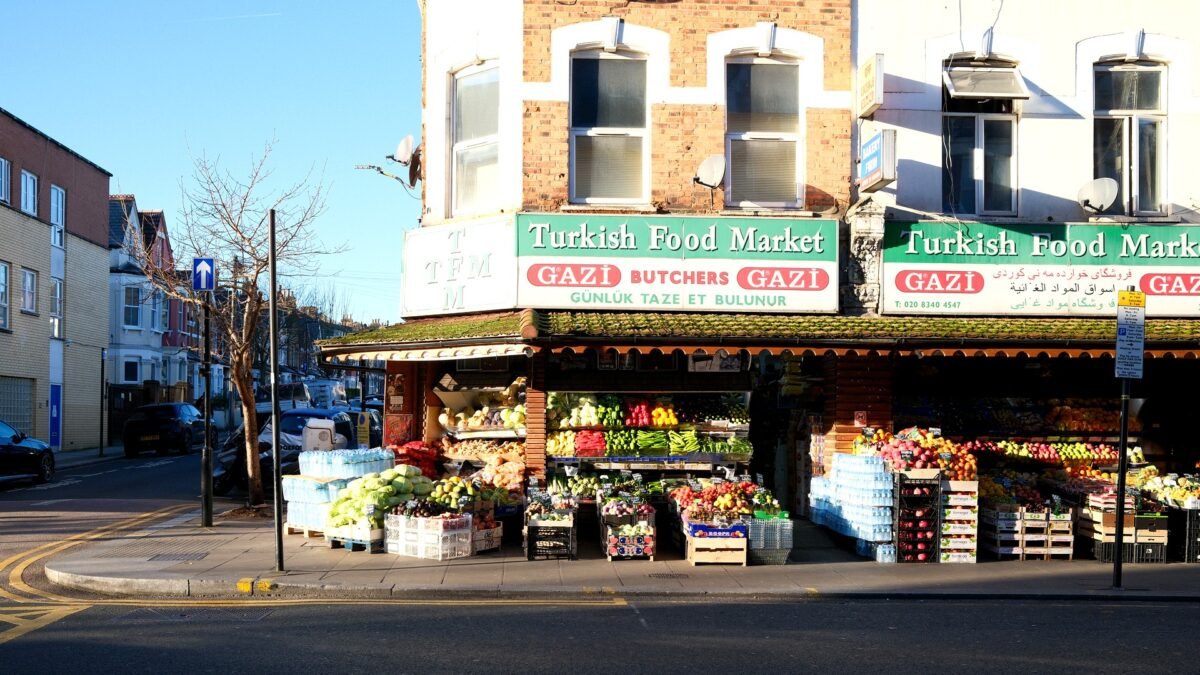
Hundreds of Turkish business owners who built their lives in Britain are being told to leave
Hundreds of Turkish nationals who settled legally in Britain, built businesses and raised families here, are facing removal from the country after a sudden surge in refusals of permanent residency, according to The Guardian. The figures behind the story are stark: Home Office data shows that grants of settlement to people on the European Community Association Agreement route, known as ECAA visas, fell from 3,378 in the first six months of 2025 to just 745 in the same period of 2026 — a drop of 78 per cent.
The ECAA route has long allowed Turkish nationals to settle in the United Kingdom by setting up a business, and for years most applications for indefinite leave to remain were approved. Since the start of this year, according to the Guardian’s reporting, that pattern has reversed. Hundreds of ECAA holders have been refused permanent residency, a sharp increase on previous years, while the number of successful applications has fallen from the usual several thousand to just a few hundred.
The refusals have prompted accusations that the Home Office has failed to learn the lessons of the Windrush scandal, in which people who were in Britain legally were wrongly threatened with deportation, detained and denied public services. David Lammy, the former foreign secretary and the MP for Tottenham, a constituency with a large Turkish-speaking population, told The Guardian there “seems to be a sudden change” in government policy, one that had devastated the lives of those affected and brought back memories of Windrush. He called on the Home Office to revisit the Lessons Learned review into that scandal, describing the situation as entirely unacceptable and calling for justice for Britain’s Turkish-origin community.
The Home Office insists nothing has changed. A department spokesperson said there had been no change to how ECAA settlement applications were considered, and that every application continued to be judged on its individual circumstances, in line with the published rules and guidance. For the families now facing removal, that assurance is hard to square with the refusal letters landing on their doorsteps.
The cases behind the numbers
The refusal letters themselves have drawn some of the strongest criticism. Lawyers and campaigners say they are riddled with basic errors, invented requirements and a disregard for personal tragedies that would previously have been treated with discretion, according to The Guardian.
One case involves a woman who began treatment for cancer in Turkey after being diagnosed during a trip in the Covid-19 pandemic, when the NHS restricted such care. Her application was refused on the grounds that she had chosen to start treatment abroad, even though her medical team advised that moving her care carried significant clinical risk. After a review, the Home Office stood firm, and in October she was told that she and her three young children “should now leave the United Kingdom”.
Another applicant, a window cleaner, was told his business was not legitimate because he had no social media presence — a requirement that does not exist in the immigration rules. In a separate case, a woman whose father in Turkey is living with terminal Alzheimer’s disease was refused because officials said his condition had been “known for several years”, so her time away from the United Kingdom did not count as an urgent and unforeseen situation.
Other refusals collapsed under the slightest scrutiny. In one case that was eventually overturned, the department said it had been unable to find a website for the applicant’s business or any evidence of an online presence, and wrongly claimed he had not supplied a complete set of bank statements. In another, officials miscalculated how long the applicant had spent outside the country, incorrectly claiming he had been away for more than 180 days within a 12-month period.
The pressure is also showing in the appeals system. The number of ECAA applications under administrative review, the process in which the Home Office re-examines a refusal, has soared since the start of the year. A freedom of information request showed the figure rising from 145 in 2025 to 395 between January and mid-August 2026, according to The Guardian.
MPs warned the department months ago
The concerns are not new. In September, three Labour MPs — David Lammy, Bambos Charalambous and Feryal Clark — wrote jointly to the Home Office minister Jo White after receiving substantial correspondence from constituents experiencing difficulties with applications under the Turkish Businessperson visa route, according to LabourHome.
The MPs said solicitors and constituents had reported that assessments of genuine business activity were increasingly being replaced by attempts to identify technical issues or minor inconsistencies in paperwork. They warned that there was now a perception that “the goalposts have been shifted unfairly”, with errors on business invoices and other technical matters increasingly being cited as reasons for refusal.
The letter highlighted cases in which the MPs believed mistakes had been made by Home Office officials. In one, a business owner was recorded as having left the United Kingdom despite attending an in-person Home Office appointment during the same week. In another, an application was refused after officials allegedly miscounted the number of days the applicant had spent outside the country. The MPs said such errors could have serious consequences, including long delays, uncertainty and additional administrative burdens for applicants and their businesses.
According to the letter, hundreds of applicants were by then waiting longer than six months for decisions. “We are equally concerned that Home Office staff either don’t understand the Ankara Agreement or have been given instructions to assess claims to a different standard, a change which we have not been made aware of and would not support,” the MPs wrote.
Lammy told The Guardian he had been contacted by constituents whose lives had been devastated by what appeared to be a sudden change in policy. He said they were people who had built their lives and families in Britain and played by the rules, and that hearing their stories brought the Windrush scandal to mind.
When did the pattern change?
The increase appears to affect applications lodged since September 2025, shortly before the home secretary, Shabana Mahmood, announced proposals at the Labour conference for tougher conditions on those applying for leave to remain, according to The Guardian. At the time she warned that solving the crisis would involve steps people might not like, and that long-standing assumptions and legal constraints would have to be questioned.
Lawyers working on ECAA cases say these applications were previously approved routinely, because guidance allowed for compassionate circumstances. They say a harsher approach took hold for applications lodged from last September, and that waiting times have also stretched well beyond the usual six months.
The timing matters because the settlement system is in the middle of a wider overhaul. On 2 November 2026, the home secretary made a statement in the House of Commons setting out further details of the government’s “earned settlement” proposals, which would move most routes to indefinite leave to remain from a five-year qualifying period to ten years. According to the immigration analysis site Free Movement, the policy document lists Turkish businesspeople and workers on the Ankara route among the groups completely outside those proposals, with a five-year qualifying period preserved. The Home Office has also confirmed that no changes to settlement are planned for those on the ECAA route and that, as a closed route, it falls outside the new framework.
That official position makes the collapse in grants harder to explain. If the route is exempt from the earned settlement reforms, and if, as the Home Office says, nothing has changed in how applications are considered, then a 78 per cent fall in approvals in a single year demands an explanation that the department has so far not given.
The Ankara route, and why it exists
The ECAA route traces its origins to the Ankara Agreement of 1963, the association agreement between Turkey and the European Community, which allowed Turkish nationals to establish businesses in the United Kingdom under special provisions. After Brexit, the route closed to new applicants on 31 December 2020, but the position of those already holding ECAA permission was protected by Appendix ECAA of the Immigration Rules.
Existing holders can still extend their leave and, after five years of continuous residence, apply for settlement. At the settlement stage, businesspeople must still show a genuine and viable business that they have genuinely operated and intend to continue operating. Applicants must meet the English language and Life in the UK requirements, and the settlement application fee is £3,226 per person.
The route has never been large in the scale of the immigration system, but for the Turkish community in Britain — concentrated in north London, in areas such as Harringay, Hackney and Enfield, where Turkish-run grocers, restaurants, jewellers and barbers line streets like Green Lanes — it has been the main legal path to permanent settlement for a generation of entrepreneurs.
This is not the first time the route has been thrown into turmoil. In 2018, Turkish nationals told HuffPost UK they feared deportation after the Home Office swept away their path to permanent settlement “overnight”, following an Upper Tribunal judgment in March of that year which found that the agreement’s standstill clause did not cover indefinite leave to remain. Around 12,500 Turks living in the UK were due to qualify for settlement under the route at the time. The government eventually rebuilt settlement as a defined five-year route under Appendix ECAA in July 2018. Four years later, in 2022, Civil Service World reported that about 8,000 people were waiting more than a year for decisions on ECAA extension applications, unable to travel even after a bereavement without withdrawing their applications, in what campaigners described as “typical hostile environment treatment”.
Why the Windrush comparison stings
Campaigners say the approach now being taken appears to contradict recommendations made in the independent review into Windrush, which the then home secretary, Priti Patel, accepted and promised to act on. Those recommendations included clearer guidance on the burden and standard of proof, more direct contact with applicants, and revised criteria for assessing cases involving vulnerable people.
The Windrush Lessons Learned Review, conducted by Wendy Williams and published on 19 March 2020, found that the Home Office had displayed “institutional ignorance and thoughtlessness” towards the issue of race, and made 30 recommendations intended to prevent a repeat of a scandal in which members of the Windrush generation were denied access to public services, housing and jobs, and even deported despite being in the UK legally. The review called for a full review of the hostile environment policy, better guidance on the burden of proof for visa applicants, clearer criteria for increasing contact with applicants where needed and working with vulnerable applicants, and a programme of major cultural change for the whole department.
The government’s response, published in September 2020 as a comprehensive improvement plan, accepted the findings. But a progress review by Williams in 2022 found limited progress in many areas: no formal reconciliation events had taken place, the recommended Migrants’ Commissioner had not been introduced, and the department had failed to review its hostile environment policy. The Turkish cases now being reported echo the precise failings the review identified — decisions taken on the basis of paperwork rather than people, the burden of proof loaded onto the applicant, and errors that only surface when a lawyer or an MP intervenes.
Analysis: Why It Matters
The numbers are the story
A 78 per cent collapse in settlement grants in a single year is not drift, and it is not a statistical quirk. It is the kind of cliff-edge change that, in any other part of government, would trigger an urgent inquiry. The Home Office’s own figures show 3,378 ECAA settlement grants in the first half of 2025 and 745 in the first half of 2026, while administrative reviews — the formal signal that applicants believe they were wrongly refused — nearly trebled. Two different measures, drawn from the department’s own data, point in the same direction. When a department insists that nothing has changed while its own statistics describe a transformation, one of those two claims is wrong, and the public is entitled to know which.
A policy change the Home Office will not admit
The most troubling feature of this story is not the refusals themselves but the gap between what officials say and what the evidence shows. The Home Office says every application is judged on its individual circumstances, in line with the published rules and guidance. Yet the refusal letters described by lawyers invent requirements — a social media presence for a window cleaner — that do not exist in those rules, miscount days spent abroad, and treat a cancer patient’s medical advice as a lifestyle choice. That is not individual assessment; it is a system applying a different standard while denying that any standard has changed. The MPs’ letter in September put the same point more bluntly: either staff do not understand the Ankara Agreement, or they have been told to assess claims differently. Either explanation is a failure of management, and the department has answered neither.
The human cost is the point, not a side effect
It is easy, in a debate about settlement statistics, to lose sight of what a refusal actually does. A woman undergoing cancer treatment is told she and her three young children should leave the country. A shopkeeper who has traded for years is told his business is not real because he is not on social media. A daughter who travelled to care for a father with terminal Alzheimer’s is told her father’s illness was not urgent enough. These are not borderline cases or attempted abuses of the system; they are people who followed the rules for years and were refused on grounds that, in several instances, turned out to be factually wrong. The damage is done long before any appeal succeeds — businesses stall, children are pulled from schools, families live under the threat of removal. A system that gets the decision wrong and then makes the applicant pay to prove it is not a system that has learned from Windrush; it is a system repeating it at smaller scale.
The Windrush parallel is about machinery, not malice
It is worth being precise about what the Windrush comparison does and does not mean. Nobody is alleging that the Home Office set out to target Turkish nationals, and the scale is different: Windrush destroyed the lives of thousands of Caribbean-born Britons over decades. But the comparison made by Lammy and by campaigners is about machinery, not motive. The Williams review identified a department that decided cases on paperwork, placed the burden of proof on people who had done nothing wrong, and treated compassion as a concession rather than a duty. The ECAA refusals display the same machinery: invented requirements, miscounted absences, disregard for medical evidence, and a refusal to correct obvious errors without a formal challenge. The lesson of Windrush was supposed to be that a department which cannot see the people behind the files will keep producing the same injustices under different letterheads. Six years after the review, that lesson is being tested again.
What this means for the wider settlement crackdown
The ECAA story cannot be separated from the government’s broader direction on settlement. The earned settlement proposals would double the qualifying period for most migrants, and the home secretary has framed the agenda in terms of questioning long-standing assumptions. Turkish businesspeople were explicitly carved out of those reforms, yet they appear to be experiencing the sharp end of the same tightening by other means — not through a change in the rules, but through a change in how the rules are applied. That is the worst of both worlds: the government gets the political benefit of announcing an exemption, while the people it exempted face a harsher regime in practice. If the exemption is real, the department should be able to show it in the figures. At the moment, the figures show the opposite, and Parliament, the MPs who raised this in September, and the families affected are all waiting for an answer that has not come.
What to Watch Next
- Parliamentary pressure: Lammy, Charalambous and Clark have already written to the Home Office minister, and the Guardian’s figures give their concerns a sharper edge. Watch for parliamentary questions, an urgent question in the Commons, and whether the home secretary is pressed to explain the 78 per cent fall in grants.
- Administrative reviews and appeals: With 395 ECAA cases already in administrative review by mid-August, the outcomes of those challenges will show how many refusals the department itself concedes were wrong — and whether the pattern continues into the second half of 2026.
- Fuller statistics: The figures published so far cover only the first half of each year. Watch for the Home Office to publish complete 2026 settlement data for the ECAA route, and for the refusal rate behind the grants collapse.
- The earned settlement rules: Statements of Changes to the Immigration Rules are expected from December 2026. Watch for how the ECAA exemption is reflected in the rules, and whether ministers repeat the assurance that no change to the route is planned.
- Legal challenges and campaigning: Turkish community organisations and immigration lawyers have challenged Home Office treatment of this route before, including in 2018. Watch for coordinated legal action, a formal complaint to the Independent Chief Inspector of Borders and Immigration, and renewed calls for the Home Office to revisit the Windrush Lessons Learned review.
Sources
- The Guardian — “‘Windrush’ accusations over sharp rise in Turkish nationals facing removal from UK”, 8 November 2026
- LabourHome — “Labour MPs Warn Home Office Over ‘Harsh’ Ankara Agreement Visa Decisions Affecting Turkish Businesspeople”
- Free Movement — “Home Secretary’s statement reveals further details about ‘earned settlement'”
- GOV.UK — Immigration Rules, Appendix ECAA: Settlement
- GOV.UK — The Response to the Windrush Lessons Learned Review: A Comprehensive Improvement Plan (CP 293), September 2020
- Civil Service World — “‘Typical hostile environment treatment’ — Home Office leaves thousands of Turkish nationals waiting more than a year for visa decisions”

About the Author — Abdul Mannan
Related Articles

Five European Leaders Call for Closer EU-UK Ties as Barnier Warns Burnham There Will Be No Cherry-Picking on the Single Market
Five European leaders have urged closer ties with Britain ahead of the 20 November Brussels summit, as Michel…

Smugglers Open a New Front in the Netherlands as First Dutch Small-Boat Launch Leaves 38 Migrants Adrift in the Channel
People smugglers have launched a small boat from the Netherlands for the first time, leaving 38 migrants adrift…
Tube Drivers to Stage Eight Days of Strikes Over Christmas as RMT Rejects TfL’s Four-Day Week Plan
London Underground drivers will stage eight 24-hour strikes between 26 November and 25 February, including walkouts on 17…