
Tube Drivers to Stage Eight Days of Strikes Over Christmas as RMT Rejects TfL’s Four-Day Week Plan

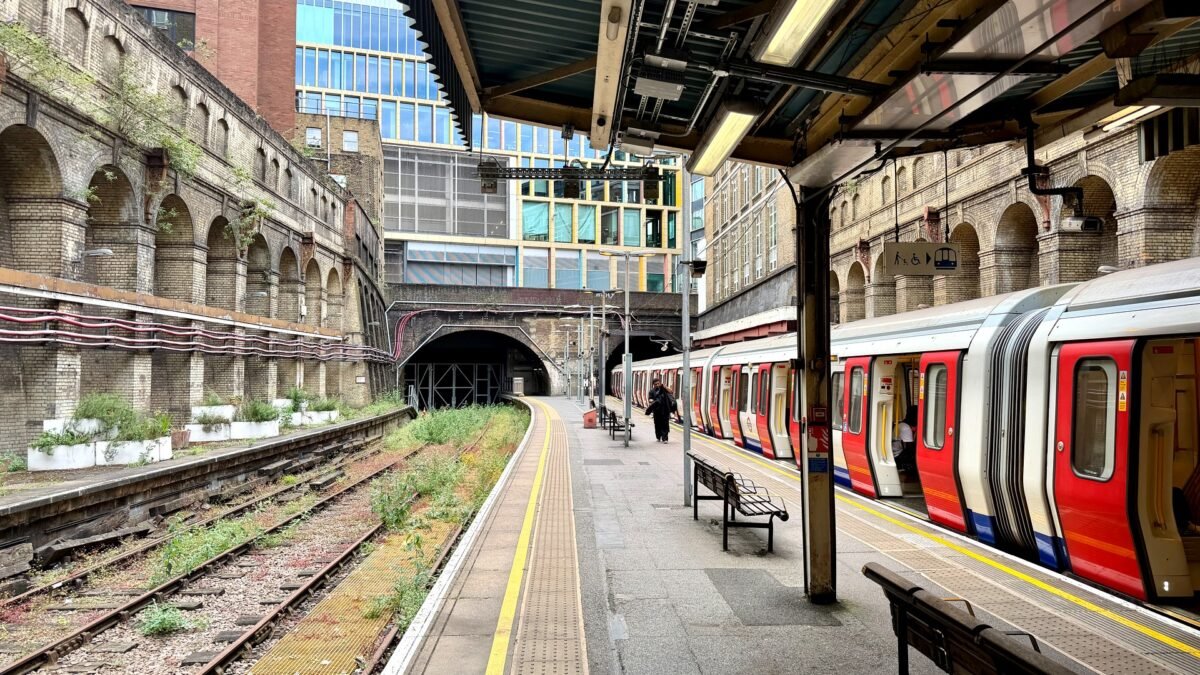
London Underground drivers are to stage eight days of strikes over the winter, including two walkouts in the run-up to Christmas, after their union rejected Transport for London’s plan for a voluntary four-day working week. The Rail, Maritime and Transport union (RMT) announced the action on Friday 6 November 2026, saying the 24-hour strikes will begin at noon on Thursday 26 November and continue into February 2027.
Each strike will last 24 hours, running from noon until noon the following day, which means every walkout disrupts travel across two days. The full list of strike dates is Thursday 26 November 2026; Thursday 17 December; Saturday 19 December; Monday 4 January 2027; Wednesday 6 January; Wednesday 17 February; Tuesday 23 February; and Thursday 25 February. The December dates fall squarely in the busiest shopping period of the year: the first strike runs into the morning of Black Friday on 27 November, and the 19 December walkout lands on the last Saturday before Christmas.
According to Reuters, the RMT said the eight strikes were called in a dispute over plans for new working arrangements, and the union warned the changes would worsen conditions for drivers, requiring them to drive trains for longer, and could pave the way for hundreds of job cuts. Transport for London, which runs the Tube, did not immediately respond to a request for comment from Reuters, but later issued a detailed defence of its proposals.
The Tube carries between three million and four million passengers a day, according to Reuters, so even a partial shutdown ripples across the capital. The Elizabeth line, the London Overground and the Docklands Light Railway are not part of this action, but the Underground’s eleven lines — the Bakerloo, Central, Circle, District, Hammersmith and City, Jubilee, Metropolitan, Northern, Piccadilly, Victoria, and Waterloo and City — will be affected on strike days, with the precise level of service confirmed closer to each date.
The dates in full
The RMT has announced eight separate 24-hour strikes, each beginning at noon:
- Thursday 26 November 2026 — running into Black Friday morning, 27 November
- Thursday 17 December 2026 — the last full working week before Christmas
- Saturday 19 December 2026 — the last Saturday before Christmas
- Monday 4 January 2027 — the first working Monday of the new year
- Wednesday 6 January 2027
- Wednesday 17 February 2027
- Tuesday 23 February 2027
- Thursday 25 February 2027
Because each walkout starts at noon, the evening rush hour and the following morning’s rush hour are both hit, and services typically take time to recover afterwards as drivers and trains are displaced. Based on previous strikes in this dispute, transport specialists expect no service on the Circle line, the Piccadilly line, the Metropolitan line between Baker Street and Aldgate, and no service on the Central line between White City and Liverpool Street, although Transport for London will confirm the exact impact nearer each date.
What the dispute is about
At the centre of the dispute is Transport for London’s proposal to compress the standard working week into four days. Under the plan, drivers would work the same number of hours spread across four longer shifts instead of five, with paid meal breaks introduced. The RMT’s objection is not to a shorter working week in principle — the union has itself long demanded a genuine 32-hour, four-day week with no loss of pay — but to the terms on which Transport for London wants to introduce it.
RMT general secretary Eddie Dempsey said: “London Underground is attempting to dress up a wholesale attack on drivers’ working conditions as a voluntary four-day week.” He added: “But there is nothing voluntary about a scheme that forces drivers to give up existing protections whether they work four days or five, and threatens those who refuse with displacement from their depots.”
According to the Press Association, the RMT says that under the plans drivers face increased time spent driving trains, longer duties, earlier starts and later finishes. The union argues that extending daily driving shifts from around seven hours to close to nine creates a fatigue and safety risk, and that the changes would erode agreements negotiated and defended over many years. The union also believes the changes, alongside a new Trains Modernisation Framework, would pave the way for hundreds of job cuts.
Transport for London rejects that characterisation. Nick Dent, director of customer operations for London Underground, said: “We have engaged with our trade unions for months about our proposal for a new four-day working week.” He added: “As a result of that engagement, drivers can now choose to remain on a five-day week with a guarantee of remaining at the same depot.” According to Mr Dent, the changes will “give our colleagues a real, meaningful choice on their working pattern without having to change where they work” and will “also mean less time at work for Tube drivers, while delivering a more efficient, reliable Tube service for our customers.” He concluded: “Given that we have provided this new option after their feedback, we urge the RMT to put this proposal to their members.”
A union split down the middle
What makes this dispute unusual is that the two unions representing Tube drivers are on opposite sides of it. The RMT represents about half of the drivers on the network, according to The Times, while the train drivers’ union Aslef represents the remainder. Aslef has accepted Transport for London’s proposals and is actively opposed to the strikes.
Finn Brennan, Aslef’s full-time organiser on London Underground, said: “We are surprised that the RMT has, once again, decided to take strike action to try to prevent Underground drivers moving to a four-day week on a voluntary basis.” He added: “The voluntary four-day week gives Tube train drivers an extra 35 days off every year with rosters based on a 34-hour week in return for some changes to working conditions and moving to electronic, rather than paper-based, systems for booking on for duty.”
Mr Brennan said Aslef was still in discussions with Transport for London about how the final details would work in practice, and that management had agreed anyone who wanted to keep working a five-day week would be able to do so without suffering any detriment. “We will be holding them to that,” he said. “A strike designed to stop people having the choice of a shorter working week and more time off is a strange choice to make.”
The split matters because it limits what either side can achieve. The RMT alone cannot shut the network as completely as it could when it called out all of its 10,000 Tube members — station staff, signallers and controllers as well as drivers — in September 2025. But Aslef’s acceptance does not settle the dispute either, because Transport for London still needs the RMT’s agreement to change rosters and working arrangements for the drivers the RMT represents. The result is a stalemate in which both unions claim to speak for drivers’ interests, and passengers are caught between two competing versions of what a four-day week should mean.
Business and political reaction
London’s business community reacted with dismay to the announcement. Ed Richardson, transport programme director at BusinessLDN, said: “These strikes will not bring any festive cheer to Londoners and visitors that rely on the Tube to get around the city.” He added: “While many people will be able to work from home or use other modes of travel, it will hit the hospitality sector particularly hard during the vital Christmas trading season.” He urged both sides “to reach an agreement urgently and avoid these damaging strikes.”
The political reaction split along familiar lines. Richard Holden, the shadow transport secretary, said: “These RMT militants who bankroll hand-picked Labour MPs do not care about better services, they do not care about passengers and they do not care about our capital city – all they care about is beating as much cash out of this weak pinata of a Labour mayor and Government as they can.”
The timing is awkward for the Mayor of London, Sadiq Khan, who chairs Transport for London. He has intervened before to avert Tube strikes, most notably at the start of 2024, when he surprised Transport for London’s negotiators by announcing an extra £30 million to fund pay increases and a planned strike was called off at the last minute. Whether he can repeat that feat this time is an open question: the dispute is no longer about pay, where extra money can bridge a gap, but about the structure of the working week itself, where the two sides disagree about what counts as a concession.
A dispute with a long history
This is not the first time the four-day week has brought the Tube to a standstill. In September 2025, the RMT called out just over 10,000 of London Underground’s 15,000 staff in a dispute about working hours and conditions in pay talks, and the network was expected to close entirely for four days. Services were severely disrupted from Monday 8 September to Thursday 11 September 2025, with virtually no Tube trains running from the early evening of Sunday 7 September until 8am on Friday 12 September, according to Transport for London. The union had demanded a 32-hour week and better fatigue management, while Transport for London offered a 3.4 per cent pay rise in line with retail price inflation and said it could not afford to cut the working week from 35 to 32 hours.
The dispute continued into 2026. Walkouts planned by drivers in May 2026 were called off, according to Reuters, but the underlying disagreement was never resolved. In April 2026 the RMT scheduled a further wave of walkouts, and the Centre for Economics and Business Research estimated at the time that a week of major Tube strikes could cost the London economy between £130 million and £250 million, with between 320,000 and 630,000 lost working days, and warned that the cumulative cost of the spring strike programme could reach between £390 million and £760 million if the action went ahead as planned. Those figures, published during the spring 2026 round of strikes, give a sense of the scale of the damage at stake this winter, even though the new programme is spread over four months rather than concentrated in a single season.
The pattern goes back further still. A three-day strike in March 2023 closed the majority of stations across London, and in 2022 several stoppages over pension reform brought the network to a standstill on some days and affected millions of journeys. Each round has followed the same rhythm: a ballot, a deadline, a last-minute intervention or a walkout, and then a return to talks that leaves the core disagreement intact. The four-day week is the latest chapter in a dispute that has now run, in one form or another, for more than a year.
What passengers should expect
For passengers, the practical consequences are straightforward but significant. On each strike day, Tube services will be severely reduced or suspended on affected lines, and the disruption will spill into the following morning because each 24-hour walkout runs from noon to noon. Buses, the Elizabeth line, the Overground, the DLR and National Rail services will all be far busier than usual, and Transport for London’s website and journey planner have crashed under the surge of demand during previous strikes.
The Christmas dates are the ones that will hurt most. The strike beginning at noon on Thursday 17 December will disrupt the last full working week before Christmas, when offices hold parties and shoppers flood the West End. The strike on Saturday 19 December falls on the last Saturday before Christmas, traditionally one of the busiest shopping days of the year, when Oxford Street and the West End depend on the Tube to move hundreds of thousands of visitors. Retailers had already been counting on a strong festive season; a strike on that Saturday would cut footfall at precisely the moment it matters most.
The first strike, on 26 November, is timed to run into Black Friday, the biggest shopping day of the year, while the January dates — Monday 4 January, the first working Monday of the new year, and Wednesday 6 January — will hit commuters returning to work after the holiday. The February dates, spread across three weeks, keep the pressure on through the winter.
Transport for London advises passengers to check its website the day before travel to confirm whether a strike is going ahead, because strikes can still be called off if a deal is reached. That has happened before in this dispute: walkouts planned for May 2026 were called off, and a strike planned for the start of 2024 was averted at the last minute. The eight dates announced on Friday are therefore a timetable of intent rather than a certainty — but they are also a clear signal that the RMT does not expect a quick settlement.
Analysis: Why It Matters
1. A dispute about the meaning of “voluntary”
The most revealing word in this dispute is “voluntary.” Transport for London insists its four-day week is voluntary: drivers can choose it, or stay on five days at the same depot without detriment. The RMT insists it is nothing of the sort, because drivers who stay on five days must still give up existing protections, and those who refuse the new arrangements face displacement from their depots. Both sides are, in a sense, describing the same scheme accurately — they simply disagree about where the choice ends and the compulsion begins. That is why the dispute has proved so hard to settle: it is not a disagreement about numbers that can be split down the middle, but about the meaning of a single word. Until both sides agree on what “voluntary” means in practice, no pay offer and no roster tweak will resolve it.
2. The union split weakens both sides — and the passengers pay
Industrial disputes are usually a contest between a union and an employer. This one is a three-way contest, and that changes the dynamics. Aslef’s acceptance of the four-day week gives Transport for London a powerful argument: half the driving workforce has already agreed the deal is a good one. The RMT’s rejection gives the union a powerful argument of its own: the other half believes the same deal is an attack on working conditions. Neither side can claim to speak for all drivers, and neither can be dismissed as a fringe. The practical consequence is that Transport for London cannot implement the new rosters cleanly while the RMT objects, and the RMT cannot shut the network completely while Aslef members keep working. The stalemate persists, and the cost lands on passengers and businesses who have no seat at the negotiating table at all.
3. Christmas timing is leverage — and a gamble
Choosing 17 and 19 December is not an accident. Strike dates are leverage, and the closer they fall to Christmas, the more leverage they carry: every day of disruption in the festive season costs retailers, restaurants and theatres far more than an ordinary Tuesday in February. But leverage cuts both ways. A strike that ruins the last shopping Saturday before Christmas will also win the RMT few friends among the public, and public sympathy matters in a dispute where the union needs political pressure on the Mayor to force Transport for London back to the table. The RMT is betting that the pain of Christmas disruption will be blamed on the employer, not the union. That bet has failed before — in September 2025, the disruption was blamed on both sides — and if it fails again, the union could find itself more isolated, not less.
4. The Tube is a test case for the four-day week
Beyond London, this dispute is being watched as a test of whether the four-day week can work in a safety-critical, round-the-clock public service. The idea has momentum across the British economy, with trials and pilots reporting happier staff and, in some cases, maintained productivity. But a Tube driver’s week is not an office worker’s week: shifts start before dawn and end after midnight, fatigue is a safety issue rather than a comfort issue, and the network cannot close for a long weekend while staff take their extra day off. If Transport for London and the RMT can agree a four-day week that works for drivers, passengers and the budget, it would be a model for other public services. If they cannot, it will be cited for years as proof that the idea does not survive contact with operational reality. The stakes, in other words, extend well beyond the Underground.
5. The cost of no deal keeps rising
Every round of this dispute has been more expensive than the last. The Centre for Economics and Business Research put the cost of a week of major Tube strikes in spring 2026 at between £130 million and £250 million, and the cumulative cost of that programme at up to £760 million. The winter programme announced on Friday is spread over four months, which may soften the blow of any single week, but eight strike days across the Christmas and new year period will still cost London’s economy dearly — and the hospitality and retail sectors, which cannot recover a lost Christmas trading day, will bear the brunt. There is also a cost that does not appear in any economist’s model: the slow erosion of confidence in the Tube itself. Every strike teaches another cohort of Londoners to work from home, to cycle, or to avoid the centre altogether, and some of those habits stick. Transport for London’s fare revenue, already under pressure, cannot afford many more lessons of that kind.
What to Watch Next
- Talks before 26 November: the first strike is nearly three weeks away, which leaves time for negotiation. Watch for any announcement of resumed talks, and for whether the conciliation service Acas is brought in, as it has been in previous rounds of this dispute.
- Whether the RMT puts the offer to members: Transport for London has urged the union to ballot its members on the revised proposal, including the guarantee of staying at the same depot on a five-day week. If the RMT refuses, that tells its own story about how confident the union is of its members’ support.
- The Mayor’s next move: Sadiq Khan has intervened with extra funding before. Watch for any sign of mayoral involvement, and for whether the Government — through the shadow transport secretary’s attacks or otherwise — tries to make the strikes a national political issue.
- The service picture on 26 November: because Aslef members will not strike, the first walkout will reveal how much of the network the RMT alone can actually stop. The scale of disruption on that day will set expectations — and the negotiating balance — for the Christmas dates.
- Christmas week: if the 17 and 19 December strikes go ahead, watch the impact on West End footfall, hospitality bookings and retail sales. Those numbers, more than any press release, will determine how much pressure builds on both sides to settle before January.
Sources
- Reuters — London tube drivers to hold 8 days of strikes over winter
- Hillingdon Times (Press Association) — Tube drivers to strike over Christmas period in long-running dispute
- The Times — London Tube strikes 2026/2027: when are the next walkouts planned for?
- IanVisits — Tube strikes announced in the weeks up to Christmas
- The Caterer — Fresh wave of tube strikes announced over the festive season
- Briefly — London Tube strikes in 2026 could cost the UK economy up to 760 million (CEBR estimates)

About the Author — Abdul Mannan
Related Articles

Thomas Markle, Father of the Duchess of Sussex, Arrested by FBI on Federal Child Sexual Abuse Material Charge
Thomas Markle, 82, the estranged father of Meghan, Duchess of Sussex, has been arrested in Florida and charged…

Met Chief Warns Policing Is ‘Heading for Failure’ Without Biggest Overhaul in 50 Years
Metropolitan Police Commissioner Sir Mark Rowley has warned that policing in England and Wales is 'heading for failure'…
Andrew Mountbatten-Windsor Made £2,000 a Month Sub-letting Cottages at His Rent-Free Royal Lodge, MPs Reveal
MPs say the Crown Estate failed to learn lessons from the Royal Lodge lease after it emerged Andrew…