
Towhid Hridoy Smashes Record 242 Not Out as Bangladesh Fight Back to Lead West Indies in Sylhet Test

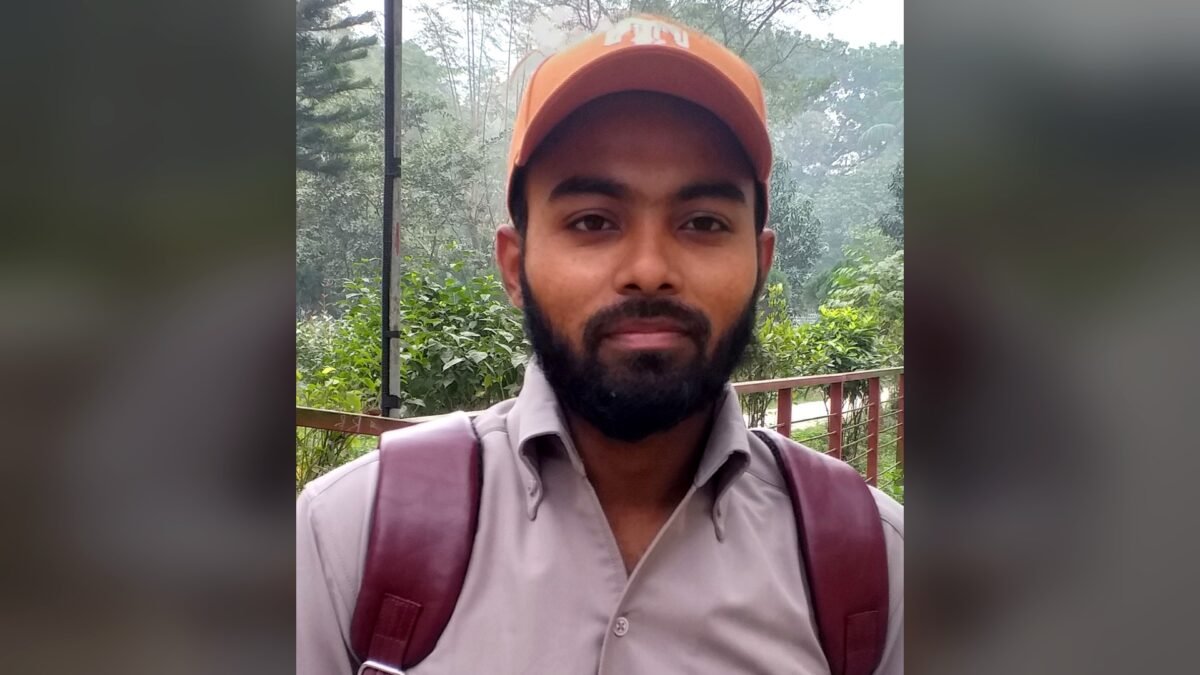
Towhid Hridoy produced the greatest innings in Bangladesh Test history on Saturday, striking an unbeaten 242 to rescue his side from a position of deep trouble and hand them a first-innings lead over West Indies in the second Test at the Sylhet International Cricket Stadium.
The 25-year-old, playing only his third Test match, walked in with Bangladesh struggling and then carried the innings almost single-handedly, according to Cricbuzz. When the hosts collapsed to 184 for seven shortly before lunch on the third day, a sizeable West Indies lead looked inevitable. Instead, Hridoy added 202 runs with the last three wickets and lifted Bangladesh to 386, a lead of 30 over the visitors’ 356.
His 242 not out from 359 balls, featuring 22 fours and 11 sixes, passed Mushfiqur Rahim’s 219 not out against Zimbabwe at Mirpur in 2018 to become the highest individual score by a Bangladesh batter in Test cricket, according to Cricbuzz and the Wisden record books. It also made him only the fourth Bangladesh batter to score a Test double century, joining Mushfiqur, Tamim Iqbal and Shakib Al Hasan, and the first to convert a maiden Test hundred into a double hundred.
By the close of the third day, West Indies had begun their second innings and reached seven without loss, trailing by 23 runs. The match remained finely balanced on the fourth morning, with West Indies reaching 128 for two at lunch, a lead of 98, after Brandon King made 61, according to ESPNcricinfo.
A morning of collapse, then a day of defiance
The scale of Hridoy’s achievement is best measured against the state of the match when he took guard. West Indies, who won the toss and batted first, had posted 356 in their first innings, built around Amir Jangoo’s 133. Bangladesh ended the second day on 88 for three, already 268 runs behind, and the third morning began badly.
Hridoy had walked in at 22 for two on the second day and, together with the veteran Mushfiqur, steadied the innings with a 73-run stand for the fourth wicket after the hosts had slipped to 51 for three. But the third morning brought a rush of wickets. Jomel Warrican, the left-arm spinner who had already starred in the first Test, dismissed Mushfiqur for 34 and Litton Das in successive overs, both caught at cover, according to Cricbuzz. Mehidy Hasan Miraz was then run out by a sharp piece of fielding from Justin Greaves, who moved across from slip to complete the catch after the batter attempted a paddle sweep. Warrican struck again to remove Hasan Mahmud for one, and at 184 for seven, shortly before lunch, Bangladesh appeared to be heading for a deficit of well over 100.
What followed was one of the great lower-order revivals in recent Test cricket. Hridoy, who had resumed the day on 29 from 80 balls, reached his hundred by lunch and then shifted into a higher gear, according to Cricbuzz. With the innings increasingly dependent on his contribution, he began to farm the strike and prioritise boundary hitting, turning defence into attack in a way that kept the scoreboard moving while protecting his partners.
The assault gathered momentum against Roston Chase, the West Indies captain, whom Hridoy cleared over square leg before launching two more sixes in the spinner’s following over. An upper-cut off Shamar Joseph had earlier signalled his intentions, and the introduction of the second new ball did little to change the course of the innings, according to Cricbuzz. Taijul Islam, his partner in an eighth-wicket stand worth 117 runs, immediately put pressure back on the attack with boundaries off Jayden Seales and Joseph, and Hridoy then joined in, taking Seales for a four and a six in the same over before bringing up his 150 with a wristy flick off Joseph.
At 172, Hridoy went past Mahmudul Hasan Joy’s 171 against Ireland to register the highest individual Test score at the Sylhet ground. Two more boundaries followed against Joseph in the next over before the eighth-wicket stand was broken, with Warrican having Taijul stumped for 22. Taijul’s contribution went beyond the runs: he faced 56 deliveries and allowed Hridoy to dictate the scoring, according to Cricbuzz.
Hridoy resumed the charge after the break and brought up his double century in the fourth over of the final session, taking a single off Warrican. He then moved past Tamim’s record for the most sixes in a single Test innings by a Bangladesh batter, depositing Joshua Bishop over the ropes for his eighth maximum. There was little respite for the West Indies bowlers thereafter. Hridoy found the boundary against Warrican in three successive overs before launching Bishop down the ground, and Chase bore the brunt of the next assault, conceding two more sixes, the first through a slog sweep and the second with a clean strike straight down the ground, taking his tally to 11, according to Cricbuzz.
Taskin Ahmed, who had offered steadfast support throughout the final stand, eventually fell to a top-edged pull off Seales, caught at fine leg. His dismissal brought Bangladesh’s innings to a close at 386, with Hridoy unbeaten on 242. The pair had added 85 runs for the last wicket, and because opener Shadman Islam was unavailable to bat through injury, Hridoy quite literally ran out of partners.
The record book, rewritten
The numbers attached to Hridoy’s innings tell their own story. His 242 not out is the highest individual Test score by a Bangladesh batter, surpassing Mushfiqur Rahim’s 219 not out from 2018, a record that had stood for eight years, according to Cricbuzz and Wisden. He became only the fourth batter from the country to register a Test double century, joining Mushfiqur, Tamim Iqbal and Shakib Al Hasan.
He is also the first Bangladesh batter to convert his maiden Test century into a double hundred, and his 242 is the highest score by a Bangladesh batter against West Indies, as well as the highest individual score at the Sylhet International Cricket Stadium, according to myKhel. His 11 sixes are the most struck by any Bangladesh batter in a Test innings, one short of the world record of 12 shared by Wasim Akram and Yashasvi Jaiswal, according to Cricbuzz. CricTracker adds that the 11 sixes are the joint third-highest tally in a single Test innings in world cricket.
Perhaps the most remarkable figure of all is the pace of his scoring on the third day. Hridoy resumed on 29 and accumulated 213 runs during the day, surpassing Shakib Al Hasan’s previous single-day record of 212 runs for Bangladesh, according to CricTracker. He reached his century from 171 deliveries and his double hundred from 304 balls, and 154 of his 242 runs came in boundaries, 22 fours and 11 sixes.
The eighth-wicket partnership of 117 with Taijul Islam was the second-highest eighth-wicket stand in Bangladesh Test history, according to CricTracker, and the 202 runs Hridoy added with the last three wickets turned a likely deficit into a lead. No other Bangladesh batter passed 35 in the innings; Mushfiqur’s 34 was the next highest score.
“It was a dream of mine”
Speaking after the innings, Hridoy described the achievement in simple terms. “Definitely, it was a dream of mine, to be very honest. I’m delighted that it has come true, and perhaps a little earlier than I expected. I’m grateful for everything,” he was quoted as saying by The Daily Star, as reported by CricTracker.
He was quick to share the credit with the tail-enders who stayed with him. “When you play Test cricket professionally, you have to do your best for the team. There are so many records in Test cricket, so whenever you get an opportunity, you have to make the most of it. Taijul and Taskin played really well. The way they supported me gave me a lot of confidence,” Hridoy said, according to CricTracker.
Looking ahead, he insisted he was not chasing personal landmarks. “I have no target for now, just want to do what the team needs. As I mentioned earlier, whenever I get an opportunity, I always look to contribute to my team. Whatever the situation demands in a match, whatever the team needs, I will try to do accordingly,” he added.
Series context: Bangladesh fighting to stay alive
The innings arrived at a moment of real pressure for Bangladesh. West Indies lead the two-match series 1-0 after a comprehensive eight-wicket victory in the first Test at Mirpur on 31 October, according to Cricbuzz. In that match, Bangladesh made 272, with Shadman Islam scoring 105, and 142, before West Indies chased down their target of 170 with eight wickets in hand. Brandon King made an unbeaten 81 and John Campbell 49 in the chase, while Jomel Warrican, named player of the match, took nine wickets across the two innings and captain Roston Chase claimed five for 36 in the second innings.
That defeat left Bangladesh needing to win in Sylhet to square the series, and for two days the second Test followed a similar pattern. West Indies’ 356, built on Jangoo’s hundred, and Bangladesh’s stumble to 88 for three at the end of day two suggested the visitors were again in control. Hridoy’s innings changed the shape of the match entirely, and it also changed the mood around a Bangladesh Test side that has too often relied on the same small group of senior players.
For West Indies, the frustration will be that they had the match in their hands. Warrican finished with four for 104 and was again their most threatening bowler, but the attack could find no answer once Hridoy decided to take the game to them. The visitors’ consolation is that the pitch still has two days left in it and their second innings began with purpose: openers Brandon King and Joshua Da Silva played out the four remaining overs of day three without alarm, and on the fourth morning they added 85 for the first wicket before Taijul Islam had Da Silva leg before for 36. Taijul has now dismissed Da Silva six times in Test cricket, according to ESPNcricinfo.
King went on to make 61, striking ten fours and a six, before edging Mehidy Hasan Miraz to slip, where Najmul Hossain Shanto took a good catch. At lunch on the fourth day, West Indies were 128 for two, leading by 98, with Kavem Hodge unbeaten on 30 and Wickham yet to score, according to ESPNcricinfo. The visitors had the advantage of a lead and two days of cricket remaining, but Bangladesh had the momentum of a record innings behind them.
Analysis: Why It Matters
A career reframed in a single day
Before Sylhet, Towhid Hridoy was known first and foremost as a white-ball cricketer, a batter whose reputation had been built in one-day and Twenty20 cricket. Test cricket is a different examination, and it is one that has exposed many talented limited-overs players. To arrive in the format and, in only your third Test, produce the highest score your country has ever seen is a statement that cannot be ignored. Hridoy did not simply survive at Test level; he bent a Test match to his will, over the course of a full day, against an attack that had dominated his team a week earlier. Whatever he does next, this innings will be the reference point of his career, and it gives Bangladesh’s selectors a genuine top-order option for the years ahead rather than a short-format specialist filling a gap.
The lost art of batting with the tail
There is a particular skill in batting with the lower order, and it is one that modern cricket does not always reward or teach. The numbers show Hridoy mastered it. He faced 111 of the 167 deliveries in the stand with Taijul Islam, according to Wisden, farming the strike so that the weaker batter was protected and the scoreboard kept moving. He knew when to block, when to take a single, and when to clear the ropes. The 202 runs added with the last three wickets were not an accident of slogging; they were the product of a batter who understood that his job was to score while his partners’ job was simply to survive. It is a template that young batters in Bangladesh, where tail-end collapses have cost many matches, should study closely.
A new name in an old record book
Bangladesh’s Test history has been, to a large extent, the story of a small group of players. Mushfiqur Rahim, Tamim Iqbal and Shakib Al Hasan have carried the batting for the best part of two decades, and until Saturday they were the only three Bangladeshis with a Test double century. Hridoy’s arrival in that company matters because it signals a generational shift. Bangladesh cricket has been waiting for the next wave of Test batters to announce themselves, and the fact that the announcement came from a 25-year-old in his third Test, rather than from an established senior, suggests the future may arrive sooner than expected. Records are not just statistics; they are permission slips. Hridoy has now given every young batter in Bangladesh permission to believe a double century is possible.
The six-hitting revolution reaches the record books
There is a wider trend visible in Hridoy’s 11 sixes. Test cricket’s old guard once treated the six as a rare event, a shot played only when the match situation allowed. The modern game, shaped by Twenty20, has changed that calculation. Yashasvi Jaiswal’s 12 sixes in an innings against England in 2024 showed what the new generation considers possible, and Hridoy, one short of that world record, has now taken Bangladesh into the same territory. His 154 runs in boundaries from 33 scoring shots show a batter who did not accumulate his record through attrition but seized it. The purists may grumble, but the scoreboard does not distinguish between a cover drive and a slog sweep, and Hridoy’s method was exactly what the match situation demanded.
The match is far from won
For all the celebration, the hard truth is that Hridoy’s innings bought Bangladesh time, not victory. West Indies led by 98 runs at lunch on the fourth day, with eight wickets in hand in their second innings and two days of cricket remaining, and the side that bats last at Sylhet will face a wearing pitch on the fifth day. Bangladesh’s bowlers must now do the work Hridoy did with the bat, and the team’s fourth-innings batting, which folded for 142 in the first Test, remains the great uncertainty. A record innings that ends in a series defeat would be a footnote; the same innings as the foundation of a series-levelling win would be a legend. That is the task now facing the rest of the team.
What to Watch Next
- West Indies’ second-innings total: How far the visitors extend their lead will decide the match. A lead beyond 300 would leave Bangladesh chasing under severe pressure on a fifth-day pitch.
- The fourth-innings chase: Bangladesh’s batting folded for 142 in the second innings of the first Test. Whether the side has learned from that collapse, and whether Hridoy can repeat his heroics if needed, will define the final day.
- Jomel Warrican’s threat: The left-arm spinner has been West Indies’ most dangerous bowler in the series, with four for 104 in this innings and nine wickets in the first Test. A wearing Sylhet pitch on day five should suit him.
- The Sylhet pitch: How much the surface deteriorates on the final day will shape the chase. Turn and uneven bounce would favour the spinners on both sides and make any target harder than it looks.
- The series outcome: A Bangladesh win squares the series 1-1 and would be remembered as the Hridoy series. A West Indies win seals a 2-0 sweep away from home and confirms their dominance of this tour.
Sources
- Cricbuzz — Towhid Hridoy’s record 242 not out gives Bangladesh improbable lead
- ESPNcricinfo — King’s 61 gives West Indies solid start on fourth morning
- CricTracker — ‘It was a dream’: Hridoy reacts after record-breaking 242
- Wisden — Highest Test Score For Each Country: Towhid Hridoy Breaks Mushfiqur Rahim’s Bangladesh Record
- Cricbuzz — Warrican, Chase and King help West Indies go 1-0 up (first Test report)
- Geo Super (AFP) — Hridoy’s record knock gives Bangladesh lead over West Indies in second Test

About the Author — Abdul Mannan
Related Articles

Real Madrid Cruise Past Valencia 3-0 to Draw Level With Barcelona as Mbappé Scores in Seventh Straight Game
Federico Valverde, Arda Güler and Kylian Mbappé scored as José Mourinho's Real Madrid won 3-0 at Valencia to…

Liam Delap’s Double Stuns Manchester City as Nottingham Forest Win 3-1 and Hand Champions Third Straight Defeat
Liam Delap scored twice against his former club as Nottingham Forest stunned Manchester City 3-1 at the City…

Mohammed Shami Retires From Test Cricket After 13 Years as India’s Seam Spearhead Ends 229-Wicket Career
Mohammed Shami has announced his retirement from Test cricket, exactly 13 years after his debut, closing a 64-Test…