
Mohammed Shami Retires From Test Cricket After 13 Years as India’s Seam Spearhead Ends 229-Wicket Career

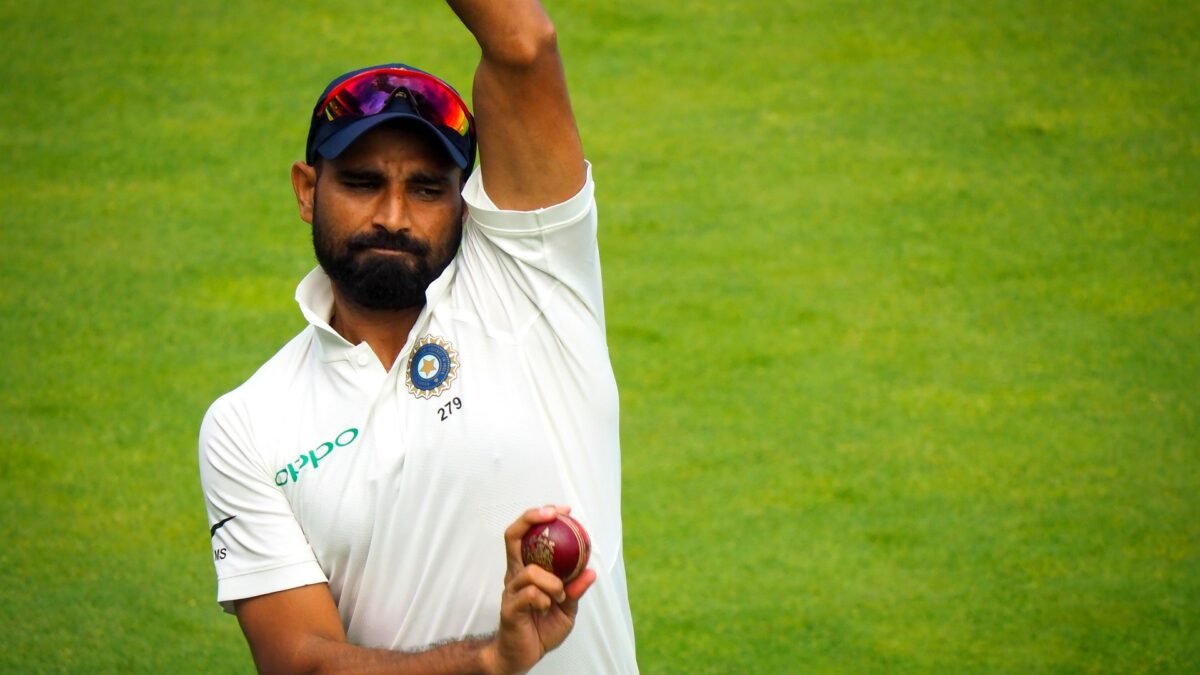
The announcement, thirteen years to the day
Mohammed Shami has retired from Test cricket, closing one of the finest fast-bowling careers in Indian history exactly thirteen years after it began. The 36-year-old announced his decision on Friday in a video posted on social media, choosing the anniversary of his Test debut to bring the curtain down on a red-ball journey that produced 229 wickets in 64 Tests, according to Reuters.
“Let’s end this 13-year journey here today,” Shami said in the video, as reported by Reuters. “I made my debut today, and today I am taking retirement. I am leaving this, but I will continue to play white-ball cricket, whether it is IPL or domestic. If it is needed for fitness, I will continue to play days cricket. So, this was the journey so far. I started it today, and I am ending it today.”
The symmetry was deliberate. Shami made his Test debut against West Indies at Eden Gardens in Kolkata on 6 November 2013, and he announced his retirement on 6 November 2026, the same date, thirteen years on. In the video he held up his Test cap, number 279, which had been presented to him by Ishant Sharma before that debut. It was a quiet, self-authored farewell: no farewell Test, no lap of honour, no final spell in whites. Just a cricketer choosing his own ending.
Shami was clear that this is a retirement from one format only. He will continue to play white-ball cricket, for Bengal in domestic cricket and for Lucknow Super Giants in the Indian Premier League, and he remains available for domestic multi-day matches if fitness requires it, according to Reuters. His last appearance for India in a one-day international came against New Zealand last year, and his last Twenty20 international was against England in February 2025, but the door to the white-ball side has not been closed by the man himself.
The announcement landed while India were in the middle of their tour of New Zealand, on the morning of the second one-day international in Wellington, and it immediately became the defining cricket story of the day. Tributes followed within hours from a former head coach, the current bowling coach and a former Bengal captain, and from fans who had watched a bowler from a small village in Uttar Pradesh become one of the most feared seamers in world cricket.
A debut written into the record books
Shami’s Test career began the way it would continue: with wickets, and plenty of them. Against West Indies at Eden Gardens on 6 November 2013, in front of his home crowd in Kolkata, he took four wickets for 71 runs in the first innings and five for 47 in the second, finishing the match with nine wickets for 118 runs. His maiden Test wicket was that of Kieran Powell.
That nine-wicket match haul remains the most by an Indian fast bowler on Test debut, surpassing Munaf Patel’s seven for 97 at Mohali in 2006, and the five-wicket haul in the second innings made Shami one of only nine Indian bowlers to take five wickets on Test debut, and only the third Indian fast bowler to do it. It was a statement of intent that never really needed repeating: here was a bowler who could move the ball both ways at pace, hit the seam hard, and reverse the old ball with a skill that would become his trademark.
Over the next decade Shami became the spearhead of an Indian pace attack that changed what the team believed was possible overseas. Alongside Jasprit Bumrah, Ishant Sharma and Umesh Yadav, he was part of the fast-bowling group that won Test series in Australia in 2018-19 and again in 2020-21, and that carried India to the finals of the first two World Test Championships. His 229 wickets came at an average of 27.71, with six five-wicket hauls and best figures of six for 56, and he finished as the sixth-most successful fast bowler in India’s Test history, according to CricTracker.
He was never a bowler who relied on one trick. The upright seam, the wrist position that let the ball dart late, the ability to bowl long spells without losing pace, and a reverse swing that arrived earlier than batters expected made him dangerous on every surface, from the green tops of England to the hard decks of Australia and the slow turners at home. When the ball was new he attacked the stumps; when it was old he made it talk. It was a complete fast bowler’s toolkit, and it was built the hard way.
Shami came from Sahaspur village in Uttar Pradesh’s Amroha district and made his name in Bengal domestic cricket, a journey that took him from small-town cricket to the top of the world game without the advantages that many of his contemporaries enjoyed. That background stayed with him. He was, by every account, a bowler who trusted his skill over his circumstances, and the career that followed rewarded that trust.
He could bat, too, when the occasion demanded it. His unbeaten 56 at Lord’s in 2021, part of a famous ninth-wicket stand with Jasprit Bumrah, helped set up one of India’s most celebrated overseas Test wins, against England. It was the kind of contribution that summed him up: unglamorous, stubborn, and exactly what the team needed at exactly the right moment.
The white-ball giant who owned World Cups
If Shami’s Test career was distinguished, his one-day World Cup record was extraordinary, and it is the part of his career that will be quoted for decades. He finished with 55 wickets in 18 World Cup matches, making him India’s all-time leading wicket-taker in the tournament and the fifth-highest in its history, according to Reuters and ANI.
The 2023 World Cup at home was his masterpiece. He did not play India’s first four matches of the tournament. Once he came in, he was unplayable: five for 54 against New Zealand in Dharamsala, four for 22 against England in Lucknow, five for 18 against Sri Lanka in Mumbai, and then, in the semi-final against New Zealand at the Wankhede Stadium on 15 November 2023, seven for 57. That spell remains the best by an Indian bowler in World Cup history and in one-day internationals, and it carried India into the final. He finished the tournament as its leading wicket-taker, with 24 wickets in seven matches at an average of 10.70, and he reached 50 World Cup wickets in just 17 innings, the fastest any bowler has ever done it.
He holds the record for the most five-wicket hauls in World Cups, with four, three of them in the 2023 edition alone. In the 2019 World Cup he became only the second Indian bowler to take a hat-trick in the tournament, against Afghanistan. Across his one-day career he took 206 wickets in 108 matches, and he was part of the India side that won the Champions Trophy in 2025, his last one-day international coming in the final against New Zealand on 9 March 2025.
Those numbers explain why his retirement from Tests, and not from cricket, matters so much to Indian fans. The white-ball Shami is still, on his day, one of the most destructive bowlers in the game, and he has said plainly that he intends to keep playing it. He received the Arjuna Award for 2023 from the President of India on 9 January 2024, recognition of a career that had already delivered more than most bowlers manage in a lifetime.
Injuries, exile and a retirement without a farewell Test
The sadness in the reaction to Shami’s announcement comes from how the Test career ended: not with a farewell match, but with a long, quiet exile. His final Test appearance came in the World Test Championship final against Australia at The Oval in June 2023, more than three years ago. He continued to play limited-overs cricket after that, but injuries and fitness concerns hampered his appearances for India, according to Reuters.
After the 2023 World Cup, in which he had been India’s best bowler, Shami’s body began to betray him. An ankle injury required surgery and a long rehabilitation, and by the time he was fit again, the selectors had moved on. He was dropped from the Test squad and never recalled. The then chief selector, Ajit Agarkar, said Shami’s fitness was not up to the mark, and the selection committee was told not to pick him for Test cricket, according to Yardbarker.
That is the part of the story that has angered many in Indian cricket. Shami was recently overlooked by the selectors for the New Zealand Tests, the series that begins on 19 November, even as he continued to bowl long spells for Bengal in domestic cricket. Former head coach Ravi Shastri, speaking on Sony Sports Network ahead of the second one-day international in Wellington, did not hide his disappointment.
“It is sad to see a top performer go. I feel he would have taken another 30 or 40 wickets. He should have played for India in the last 12 months and should have been in the Test side,” Shastri said, according to Yardbarker. He questioned the repeated concerns about Shami’s fitness, pointing to his workload for Bengal as evidence that the bowler could still contribute at international level, and he criticised the reliance on gym-based fitness measures when a fast bowler was performing on the field.
Shami himself has never publicly attacked the selectors, and his retirement message contained no bitterness. But the timing of it, on the anniversary of his debut and while the Test side he once led was playing in New Zealand without him, said plenty on its own. He chose to end the story himself rather than wait for a recall that was not coming.
The tributes: Shastri, Morkel and Tiwary
The tributes that followed the announcement came from every corner of Shami’s cricketing life. India’s bowling coach, Morne Morkel, spoke ahead of the second one-day international in Wellington and described it as a sad day, recalling the role Shami had played when Morkel first joined the Indian coaching staff.
“I was quite fortunate when I first started with the group for Shami to be a part of the team,” Morkel said, according to CricTracker. “He helped me quite a lot. So a sad day to see him go. But yeah, I mean, he’s still bowling a lot of overs back home, and it’s still great to see.”
Among the most personal tributes came from Manoj Tiwary, the former India batter and Bengal captain who led Shami in domestic cricket. Writing on X, Tiwary said: “The red ball may no longer be in his hands, but the memories of his thunderbolts will forever remain in the hearts of cricket lovers. Some legends don’t say goodbye; they simply become history.” He added: “This what it meant to me when I was leading the Bengal team and having Shami in the bowling line up. Warrior at heart.”
Shami’s own words carried the same emotion. “Test cricket is not just a format for me, it is a very special part of my life. Today I am deciding to retire from Test cricket with a heavy heart and unlimited beautiful memories,” he wrote, according to CricTracker. “I am leaving the white jersey, but never the memories connected to it. When I first wore India’s Test jersey, I had only a dream — to do something for my country. After that every wicket, every struggle, every injury and every comeback taught me something.”
Fans, meanwhile, flooded social media with the numbers that define him: 229 wickets in 64 Tests, six five-wicket hauls, and the reminder that he and Virat Kohli, Test cap numbers 279 and 269, have now both said goodbye to the red-ball game. Kohli retired from Test cricket in 2025; Shami’s departure closes another chapter of the team that dominated world cricket through the late 2010s and early 2020s.
What comes next for Shami
The immediate future is already mapped out. Shami has been named in Bengal’s squad for the Syed Mushtaq Ali Trophy, which starts on 14 November, and he will continue to play for Lucknow Super Giants in the Indian Premier League. That keeps him in competitive cricket, and it keeps the white-ball door ajar.
The longer question is whether India will ever need him again in one-day cricket. The next ODI World Cup is in 2027, in South Africa, Zimbabwe and Namibia, and Shami has made it clear that he wants to keep playing white-ball cricket, leaving open the possibility of a recall ahead of that tournament, according to Yardbarker. At 36, with a body that has already endured ankle surgery and years of fast bowling, that would be a demanding road back. But if there is one bowler whose career has been defined by comebacks, it is Shami’s: he has returned from injury, from being dropped, and from long spells out of the side, and each time he has come back taking wickets.
For now, though, the story is the ending of a Test career, not the beginning of a white-ball one. Shami retires from the longest format with his numbers intact, his reputation secure, and his place in Indian cricket history assured. He was not given a farewell Test. He gave himself one instead, on the anniversary of the day it all began.
Analysis: Why It Matters
1. The end of India’s great pace generation
Shami’s retirement is not just the loss of one bowler. It marks the closing of the pace generation that transformed Indian cricket. For most of India’s history, fast bowling was the team’s weakness, something to be endured between spells of spin. The group of Bumrah, Ishant, Shami and Umesh Yadav changed that completely, winning Test matches in Australia, England and South Africa with pace alone, and giving India an attack that could take twenty wickets anywhere in the world. Ishant retired earlier, and now Shami has followed. Only Bumrah remains of that quartet as a regular in the Test side, and the attack India fields in New Zealand later this month will look very different from the one that conquered Australia. That is a generational shift, and it deserves to be recognised as one, not treated as routine squad rotation.
2. A retirement that exposes a selection failure
The uncomfortable truth in this story is that Shami did not retire because he could no longer bowl. He retired because the selectors had decided, more than three years ago, that he would not play Test cricket again, and nothing he did for Bengal changed their minds. Ravi Shastri’s public disappointment matters because it comes from a man who coached Shami at his peak, and because his criticism is specific: the fitness standards applied to Shami were gym-based measures that did not reflect what the bowler was doing on the field. When a bowler is taking wickets in domestic cricket and bowling long spells, and is still not picked, the system has a problem with how it judges readiness. Shami’s retirement forces that question into the open, and the selectors will have to answer it the next time a senior bowler is discarded on similar grounds.
3. The numbers understate the bowler
Two hundred and twenty-nine wickets at 27.71 is an excellent record, but it does not capture what Shami did. His value was in the spells that changed matches rather than the ones that filled scorecards: the burst with the old ball that broke a partnership, the yorker that ended a tail, the spell on a flat pitch when nothing was happening for anyone else. His World Cup record tells that story better than his Test average does. Fifty-five wickets in eighteen World Cup matches, the fastest ever to fifty, four five-wicket hauls, and a semi-final spell of seven for 57 that remains the best by any Indian in one-day cricket. Shami was a big-match bowler, and big-match bowlers are rarer than their averages suggest. India will miss that quality in the next World Test Championship cycle more than the raw numbers imply.
4. Fitness, age and the new Indian fast-bowling economy
Shami’s exit also says something about how Indian cricket now manages fast bowlers. The current system prizes youth, workload management and multi-format durability, and it is built around a pipeline of young quicks: Gurnoor Brar and Anshul Kamboj, who bowled New Zealand out for 134 in Wellington on Saturday, the morning after Shami announced his retirement, are the latest products of it. That pipeline is a strength, and the Wellington performance showed why the selectors feel confident about the future. But it also creates a ruthlessness about age and injury that previous generations did not face. Shami is 36, he has had ankle surgery, and the system moved on. The question is whether the system is right to move on so completely, or whether it is discarding experience that cannot be replaced by pace alone. The answer will become clear over the next two years, in the Tests that Bumrah cannot play and the overseas series where guile matters as much as speed.
5. The white-ball door is genuinely open
Finally, this is not a full retirement, and that distinction matters. Shami has kept himself available for white-ball cricket, and the 2027 World Cup is a year away. A bowler with 55 World Cup wickets and a record of delivering in knockout matches does not become irrelevant because he has left Test cricket. If he stays fit through the Syed Mushtaq Ali Trophy and the IPL, and if India’s one-day attack needs experience in South African conditions, a recall is not fantasy. It would also be a fitting final act: the bowler who owned the 2023 World Cup getting one more chance at the tournament he never won. Whether the selectors see it that way is another matter, but Shami has given them the option, and he has done it on his own terms.
What to Watch Next
- Bengal’s Syed Mushtaq Ali Trophy campaign from 14 November: Shami’s first cricket after the announcement, and the clearest evidence of whether his body and his bowling are still at the level he claims. His performances there will be watched closely by the national selectors, whatever they say in public.
- The New Zealand Tests from 19 November: India’s first Test series since Shami’s retirement, and the first real test of the new pace attack without him. How Brar, Kamboj, Arshdeep Singh and the rest perform in Wellington and Christchurch will shape the debate about whether Shami was discarded too soon.
- The BCCI’s response: whether the board marks Shami’s retirement with any formal honour, and whether any selector or official addresses Shastri’s criticism of the fitness policy that kept him out of the Test side for three years.
- The IPL auction and Lucknow Super Giants’ plans: Shami’s white-ball future runs through the IPL, and his value there will be a measure of how the franchises, as opposed to the national selectors, rate a 36-year-old fast bowler with his record.
- The road to the 2027 World Cup: a year out, with the tournament in South Africa, Zimbabwe and Namibia, the question is whether Shami’s name re-enters the one-day conversation. His World Cup record says it should. His age and his injury history say it will be a fight.
Sources
- Reuters — India’s Shami keeps white-ball focus after ending Test career
- Sportskeeda — “He should have played in the last 12 months” — Former India coach’s remark on Mohammad Shami’s Test retirement
- CricTracker — Manoj Tiwary’s emotional tribute to Shami after Test retirement
- CricTracker — Morne Morkel pays homage to Mohammed Shami after Test retirement
- LatestLY / ANI — Mohammed Shami: records and accomplishments of India’s ‘World Cup Warrior’
- Wikipedia — Mohammad Shami (career statistics, via ESPNcricinfo)

About the Author — Abdul Mannan
Related Articles

Stephen Curry Passes Oscar Robertson for 17th on NBA All-Time Scoring List as Warriors Beat Heat 120-100 for Sixth Straight Win
Stephen Curry scored 29 points and passed Oscar Robertson for 17th on the NBA's all-time scoring list as…

LIV Golf Shuts Down After Five Years as Bankruptcy Court Hears League Will Liquidate Assets
LIV Golf has told a US bankruptcy court it will wind down operations and liquidate its assets, ending…

Victor Wembanyama Drops Career-High 52 Points With 24 Rebounds and Eight Blocks as Spurs Edge Mavericks 112-111
Victor Wembanyama scored a career-high 52 points with 24 rebounds and eight blocks as the San Antonio Spurs…