
Sensex Soars 8.8% in Best Week Since 2021 as Record Foreign Buying Powers India’s Market Rebound

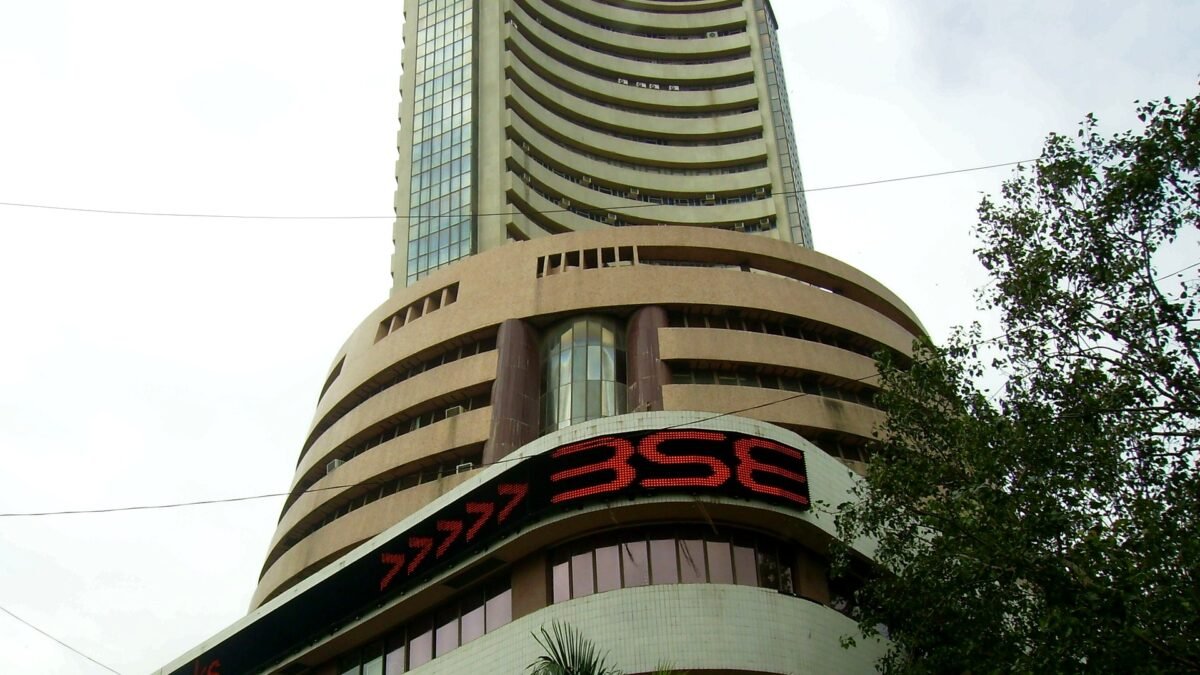
India’s stock market has delivered its strongest week in almost six years. The BSE Sensex surged 8.82 per cent in the week ended Friday, 6 November, closing at 81,028.02, while the NSE Nifty 50 climbed 8.58 per cent to 25,030.35, according to Reuters. It was the best weekly performance for both benchmarks since February 2021, and it arrived in a week when most of the world’s major markets were falling.
The rally capped seven consecutive sessions of gains. On Friday alone, the Sensex rose 1,718.01 points, or 2.17 per cent, from its previous close of 79,310.01, finishing at an eight-month high, Reuters reported. The Nifty gained 493.75 points, or 2.01 per cent, on the day to settle at 25,030.35, its highest close in about nine months. The scale of the move was striking: the Sensex added 6,568.49 points over the week, and the Nifty added 1,977.25 points, according to market data cited by several Indian outlets.
The rebound was powered by a decisive return of foreign money. Foreign portfolio investors bought a record net Rs 45,960 crore of Indian equities during the week, Business Standard reported, reversing months of heavy selling. Domestic institutional investors, by contrast, sold a net Rs 24,197 crore, their largest-ever weekly outflow, in a week that belonged almost entirely to overseas buyers. The combined market value of BSE-listed companies rose by Rs 28.70 lakh crore during the week to about Rs 503 lakh crore, according to HDFC Sky, which described the gain as the biggest weekly addition to investor wealth in years.
The timing added to the drama. Indian markets were scheduled to open for a special one-hour Muhurat trading session on Sunday, 8 November, to mark Diwali and the start of the Hindu new year, Samvat 2083, Reuters reported. Traders therefore headed into the festival with the market at its most buoyant in months, and with a single question hanging over the celebration: was this the start of a durable recovery, or one spectacular week inside a still-fragile year?
A week that rewrote the market’s mood
The scale of the turnaround becomes clear only when set against what came before it. Indian equities had spent much of 2026 under pressure. Foreign investors had pulled a record 29 billion dollars out of Indian markets during the year, according to a report cited by The Core, and the benchmarks had been nursing year-to-date losses even as other Asian markets moved in different directions. The Nifty had fallen 6.5 per cent for the year and the Sensex 7.4 per cent as of Thursday, The Core reported, citing compilations from Bloomberg and Reuters.
The week of 2 to 6 November changed that picture abruptly. The Sensex opened the week at 74,459.53 on Monday and, according to HDFC Sky, never looked back, registering gains in every single session. By Friday’s close, the benchmark had climbed 7,782 points, or 10.62 per cent, since 28 October, while the Nifty had advanced 2,331.50 points, or 10.27 per cent, over the same period, according to News Go Live. The seven-session winning streak was the longest in three years, Upstox reported, and it trimmed the Sensex’s year-to-date decline to 4.9 per cent, according to Reuters.
The rally was broad in one sense and narrow in another. Large companies drove almost all of it. The combined market value of Nifty 50 companies rose by Rs 14.83 lakh crore to Rs 200.81 lakh crore between 30 October and 6 November, according to FinBrooks, and private-sector banks alone accounted for Rs 3.23 lakh crore, or 22 per cent, of that increase. Yet the advance did not extend evenly across the market, a divergence that matters for how the week should be read. The Nifty Midcap 150 slipped 0.09 per cent on Friday and the Nifty Smallcap 250 fell 0.85 per cent, FinBrooks reported, even as the headline indices were closing at multi-month highs.
That split between large caps and the rest of the market is one of the week’s most important details. A rally led by the biggest, most liquid stocks, funded largely by foreign institutions, can look very different from a rally in which domestic investors are buying across the board. This one was emphatically the former, and the distinction shapes everything that follows.
Record foreign buying ends months of selling
The undisputed catalyst for the surge was the return of foreign institutional investors. According to Business Standard, foreign portfolio investors bought a net Rs 45,960 crore of Indian equities during the week, a record weekly purchase. The buying built up steadily and then peaked on Thursday, 5 November, when overseas investors bought shares worth about Rs 15,000 crore, or roughly 1.6 billion dollars, in a single session, according to provisional exchange data cited by Reuters. That was the biggest one-day net purchase by foreign investors in nearly six years.
The figures reported across the week tell a consistent story of acceleration. Over the previous five trading sessions, foreign investors had bought shares worth about Rs 35,781 crore, V.K. Vijayakumar, chief investment strategist at Geojit Investments, said, according to Trends News Stories. Thursday’s buying alone was described by HDFC Sky as the biggest single-day purchase since February 2021, at Rs 14,974.68 crore. The Sensex jumped 2,009 points on Thursday, its best single-day gain in seven months, Trends News Stories reported, and the buying carried into Friday, when the index closed at 81,028.02.
The turn matters because foreign investors had sold Indian shares heavily through much of 2026. Their return therefore represented not just a flow of money but a change of mind, and it arrived alongside a set of developments that made Indian assets look newly attractive. The United States midterm elections on 3 November, in which Democrats swept both chambers of Congress, shifted expectations about American policy, including the course of the war with Iran and the outlook for oil prices. Falling crude prices, improving sentiment and corporate earnings then combined to draw overseas capital back to Mumbai, according to BoldVoices.
Domestic institutions moved in the opposite direction. Domestic institutional investors recorded net sales of approximately Rs 24,197 crore during the same week, their largest-ever weekly net outflow, according to Business Standard. The opposing flows suggest the recovery was driven more by overseas buying than by a uniform shift among investor groups, FinBrooks noted. That is not a criticism of the rally; it is a description of its character. Foreign money can move large-cap stocks quickly, and it did. Whether domestic investors join in will say much about whether the move endures.
Derivatives activity pointed to another source of momentum. Nifty futures rose 8.4 per cent while open interest fell 17.6 per cent, a combination consistent with traders closing bearish positions rather than only building fresh bullish bets, FinBrooks reported. Foreign investors also closed 103,315 Nifty 50 futures contracts during the week. Short-covering can accelerate a rebound, but by itself it does not confirm that buying will persist, and analysts quoted in the FinBrooks report were careful to make that distinction.
Cheaper oil changes the maths for India
If foreign buying was the engine of the rally, cheaper oil was the fuel. Brent crude fell nearly 18 per cent from its 30 October high of about 118 dollars a barrel, registering its steepest weekly percentage decline since the Covid-triggered crash of 2020, FinBrooks reported. By Friday, Brent was trading near 99 dollars a barrel, down by more than 20 dollars over the week, according to reports carried in the Indian press and in this site’s own coverage of the Iran conflict. The LinkedIn weekly markets newsletter put the weekly decline at about 17 per cent, with Brent settling on Friday at 98.32 dollars against 117.64 dollars at the end of the previous week.
The fall matters enormously for India because the country imports the overwhelming majority of the crude oil it consumes. A lower oil price eases pressure on the import bill, supports the rupee, and improves the outlook for inflation, all of which make Indian assets more attractive to foreign investors. The pullback, alongside foreign equity inflows, helped the rupee strengthen for a sixth consecutive session, FinBrooks reported. It settled at 93.91 against the dollar, its strongest close since 22 April 2026, and it gained about 1.2 per cent over the week, according to HDFC Sky.
Cheaper oil does not, however, guarantee stronger profits for every company it touches. For oil marketing companies, lower crude is not an immediate guarantee of stronger profitability, FinBrooks noted. The report cited October under-recoveries of 12 rupees a litre on diesel and 9 rupees on petrol, alongside losses of around 230 to 245 rupees on each LPG cylinder. Retail fuel prices and refining margins also remain relevant to their financial position, and investors will need to weigh those details rather than assume that a lower crude price automatically lifts every energy stock.
The oil story also carries a warning. The source data underline why a single week’s decline is not enough to settle the outlook: geopolitical developments continue to influence supply expectations, and Brent remained volatile around the 100-dollar mark, FinBrooks reported. The price had fallen sharply after the US midterm elections raised expectations of a possible easing in tensions involving Iran, according to The National in South Africa, and any reversal in that diplomacy could send crude higher again just as quickly. For India, that makes the oil windfall real but fragile, a tailwind that could turn into a headwind without much notice.
Banks lead the charge as earnings impress
Financial stocks were among the main beneficiaries of the renewed foreign flows, and they supplied much of the week’s index gains. Reuters said the Nifty Financial Services index gained 10.4 per cent during the week, while private banks rose 9.1 per cent, according to the ad-hoc-news report of the Reuters coverage. HDFC Bank rose 13.8 per cent in the week and ICICI Bank gained 12.4 per cent, their strongest weekly rises in about six years, Trends News Stories reported.
The banking surge had a fundamental foundation as well as a flow-driven one. Strong second-quarter earnings for the 2026-27 financial year from heavyweights including Reliance Industries, Bharti Airtel and Mahindra and Mahindra provided support for the rally, HDFC Sky reported. Reliance Industries, India’s largest company by market capitalisation, gained 13.3 per cent over the week after upbeat quarterly results, Reuters reported, and the company reported a record consolidated net profit of Rs 29,550 crore for the quarter, according to HDFC Sky.
The earnings picture was broader than a handful of household names. Profits at roughly two-thirds of BSE 100 companies that had reported results rose 20 per cent from a year earlier in the September quarter, according to Citigroup data cited by Bloomberg and reported by The Core. That is a substantial rate of profit growth, and it helps explain why foreign investors, who had been selling Indian equities for months, suddenly found the market worth buying again. Valuations that had looked stretched when earnings were weaker began to look more reasonable as profits caught up.
The concentration of the rally in banks and large caps is also a reminder of how index mathematics works. When a small number of very large companies rises sharply, the benchmark index follows, even if hundreds of smaller companies do not. Private-sector banks accounted for more than a fifth of the increase in the combined market value of Nifty 50 companies during the week, according to FinBrooks. That is not a flaw in the rally, but it is a fact about it, and it explains why the mood on Dalal Street felt euphoric while the mid-cap and small-cap indices were quietly slipping.
The rally’s narrow base: small stocks lag
The week’s most important caveat is the one the headline numbers hide. While the Sensex and the Nifty were setting multi-month highs, the broader market was not following. The Nifty Midcap 150 slipped 0.09 per cent on Friday and the Nifty Smallcap 250 fell 0.85 per cent, FinBrooks reported. That divergence matters because benchmark strength alone does not establish that investors are broadly willing to take on risk, and the week ended with the narrowest of bases under the broadest of headlines.
There are several possible explanations. Foreign institutions buy large caps because those are the stocks with the liquidity to absorb billions of rupees in a week. Domestic institutions, which sold a record amount during the week, may have been the sellers on the other side of those trades, including in smaller stocks. Retail investors, who dominate mid-cap and small-cap ownership, may simply have been slower to react. Whatever the cause, the effect is the same: the rally has so far been a large-cap, foreign-funded event, and its breadth remains a point to watch rather than a fact to celebrate.
History offers a useful caution here. Recoveries that begin in large caps often broaden over time as confidence spreads and as domestic money follows foreign money. But they do not always do so, and when they do not, the headline indices can keep rising while most investors’ portfolios do not. The coming weeks will show whether the buying spreads downwards or remains confined to the top of the market, and that will matter more for most Indian investors than anything the Sensex does on Monday.
The “anti-AI trade” and the global backdrop
Perhaps the most striking feature of the week was that it happened at all. Global technology stocks were being sold heavily at the same time, after a Wall Street sell-off linked to concerns about the returns on large artificial-intelligence infrastructure investments. The Nasdaq Composite fell more than 10 per cent from its 6 October record close during Thursday’s trading, crossing the widely used threshold for a market correction, according to the Invest News Week newsletter. Major technology-heavy Asian markets fell sharply, with Japan, South Korea and Taiwan among those hit hardest.
India, by contrast, rose. Reuters reported that India’s comparatively limited exposure to AI-linked hardware helped its equity market remain more resilient than markets such as Japan, South Korea and Taiwan, according to the ad-hoc-news report. Indian equities are gaining an edge in Asia thanks to stronger earnings and early signs of a return of foreign investors, a Bloomberg report said, as reported by The Core. Since 1 October, the Nifty 50 had risen almost 9 per cent through Thursday, even as the MSCI Asia Pacific index had fallen about 8 per cent, The Core reported.
Investors have begun describing this rotation as the “anti-AI trade”: a shift of capital away from expensive AI-related technology exposure and towards markets with different economic and sector characteristics, according to Coin AI News. India, with a market dominated by banks, energy, consumer goods and industrials rather than by the chipmakers and AI infrastructure companies at the centre of the global sell-off, became a natural destination for that reallocated capital. The country’s relative insulation from the global artificial intelligence rout made it the preferred destination for reallocated foreign capital, HDFC Sky reported.
The contrast with the United States is instructive. Strong US employment data, with 165,000 jobs added in October, pushed markets towards an approximately 80 per cent probability of another Federal Reserve interest-rate increase in December, according to the Invest News Week newsletter. The Bank of England raised its benchmark rate from 3.75 per cent to 4.00 per cent during the same week, its first increase since 2023. Tighter monetary conditions in the West, a technology correction on Wall Street, and a collapsing oil price together created a set of conditions in which India, almost by accident of its market structure, looked like a haven.
Whether that haven status survives depends on what happens next in the global technology sell-off. If the Nasdaq correction deepens, the selling could eventually spread to all emerging markets, including India, regardless of how different their sector mix may be. If the correction stabilises, India may keep attracting the capital that is leaving technology stocks. The week proved that India can move in the opposite direction from the rest of the world. It did not prove that it can do so indefinitely.
Rupee, bonds and reserves tell a mixed story
The rally extended beyond shares to the rupee and government bonds, although not every external indicator improved. The 10-year government bond yield fell 23 basis points over the week, its sharpest weekly decline since 2019, before rising about 2 basis points on Friday to 7.19 per cent, FinBrooks reported. Falling bond yields, like rising share prices, reflect improving sentiment towards Indian assets, and they lower borrowing costs across the economy.
The rupee’s recovery came alongside continued reserve drawdowns rather than an across-the-board improvement in every external indicator, FinBrooks noted. Foreign exchange reserves declined for an eighth consecutive week to 717.06 billion dollars in the week ended 30 October. The central bank’s reserves have been falling even as the currency strengthened, which suggests that the Reserve Bank of India may have been selling dollars to support the rupee, or that other outflows have been offsetting the equity inflows. Either way, the reserves figure is a reminder that one strong week of foreign buying does not repair every external balance at once.
Volatility also rose even as prices did. The volatility gauge, India VIX, jumped 14.2 per cent over the week to end at 17.55 on Friday, Upstox reported. A rising volatility index during a rising market usually means that traders are buying protection against a reversal, or that options are becoming more expensive as uncertainty grows. It is a small detail, but it fits the broader picture: this was a week of big moves in both directions across global markets, and traders were paying up for insurance even while they were buying Indian shares.
The overall picture, then, is one of genuine improvement with visible caveats. Shares, the rupee and bonds all moved in the right direction, and the drivers, foreign inflows, cheaper oil and strong earnings, were real. But reserves kept falling, smaller stocks lagged, volatility rose, and the rally depended heavily on a single week’s foreign flows. That combination is encouraging, but it is not yet conclusive.
Diwali trading opens a new Samvat
Indian stock and commodity markets were scheduled to hold a special Muhurat trading session on Sunday, 8 November, on the occasion of Diwali, marking the beginning of Samvat 2083, The Hindu BusinessLine reported. The National Stock Exchange and the Bombay Stock Exchange announced the special equity session, while the Multi Commodity Exchange issued separate timings for commodity trading.
The block deal window was scheduled to operate from 1:50 pm to 2:05 pm, followed by a pre-open session from 2:05 pm to 2:17 pm, with continuous trading on both exchanges beginning at 2:20 pm and continuing until 3:30 pm, according to The Hindu BusinessLine. The special session came after a strong rally in domestic equities on Friday, with benchmark indices extending their gains for the seventh consecutive trading session despite a sell-off in major global markets and technology stocks.
Muhurat trading is a symbolic session, lasting only an hour, and it is not expected to move the market in any lasting way. Its significance is instead cultural and psychological. Diwali is traditionally considered an auspicious time to begin new ventures, and traders place token orders to mark the start of the new Samvat year. This year, the session arrives with the market at its strongest in months, and with the Nifty back above 25,000 and the Sensex above 81,000, the symbolism will feel particularly welcome to investors who have waited through a difficult year.
Trading resumes in full on Monday, and that is when the week’s rally will face its first real test. The next test comes with the monthly inflation data and the remaining company results, Trends News Stories noted, and investors will assess whether the recent inflows and the supportive oil-price backdrop persist into the new trading week, Reuters reported. The Muhurat session is a celebration. Monday is the examination.
Analysis: Why It Matters
Foreign money has rediscovered India, and that changes the arithmetic
The most important number in this story is not the 8.82 per cent rise in the Sensex. It is the Rs 45,960 crore that foreign investors put into Indian equities in a single week. For most of 2026, foreign money had been leaving India at a record pace, with 29 billion dollars withdrawn over the year, according to the figures cited by The Core. A market that depends on foreign flows for its marginal price-setting cannot rise sustainably while those flows are negative, and for months it did not. The reversal of that flow, in record size, is what turned a struggling market into a surging one within five trading sessions.
The lesson is that India’s market is, for better or worse, a foreign-flow market at the margin. Domestic institutions sold a record Rs 24,197 crore in the same week, and the market still rose by nearly 9 per cent. That tells us whose money moves prices. It also tells us where the vulnerability lies. If the foreign buying was a one-week rotation driven by the American midterm result and the oil price, it can reverse just as quickly. If it was the beginning of a reassessment of India’s earnings and valuations, it could run much further. The distinction between those two possibilities is the single most important question facing Indian markets now, and it cannot be answered from one week’s data.
Oil is the quiet hero, and the quiet risk
Brent crude’s fall of roughly 17 per cent in a week did more for India than any single policy announcement could have done. India imports most of its oil, so a 20-dollar fall in the price of a barrel is, in effect, a tax cut for the entire economy. It lowers the import bill, supports the rupee, eases inflation, and gives the central bank more room to manoeuvre. It also, crucially, gave foreign investors a reason to buy: a country whose biggest macroeconomic vulnerability had just become materially smaller.
But the oil price fell for reasons that have nothing to do with India. It fell because the American midterm elections raised expectations that tensions with Iran might ease, and because traders began to price in a lower geopolitical risk premium. That premium can return overnight if diplomacy fails or if the conflict in the Gulf escalates again. Indeed, the same week that Brent was collapsing, the United States was announcing a new task force to choke Iran’s land supply routes and disabling a cargo ship in the Gulf of Oman. The oil market chose to focus on the prospect of talks. It could just as easily choose, next week, to focus on the prospect of war. India’s rally is therefore built, in part, on a commodity price that India does not control and that is hostage to events in a region where the shooting has not stopped.
The rally exposes how narrow India’s market really is
A week in which the Sensex rises 8.8 per cent while small-cap stocks fall on the final day is a week that should make investors think carefully about what they own. The gains were concentrated in the largest, most liquid companies, above all the private banks, and they were driven by foreign institutions buying exactly the stocks they can buy in size. HDFC Bank and ICICI Bank posted their best weekly gains in six years, Reliance rose 13.3 per cent, and the financial services index gained more than 10 per cent. Meanwhile the mid-cap and small-cap indices ended Friday lower.
This concentration is neither unusual nor necessarily unhealthy. Large caps lead recoveries; smaller stocks follow when confidence spreads. But it does mean that the headline index figures overstate how widely prosperity was shared last week. Millions of Indian retail investors hold mid-cap and small-cap shares, and for them the week will have felt very different from the one described by the Sensex. A durable bull market needs breadth, and breadth is the one thing this rally has not yet demonstrated. The coming weeks will show whether the buying spreads downwards or remains confined to the top of the market.
The “anti-AI trade” is a compliment with an expiry date
India’s outperformance during a global technology sell-off has been described as the “anti-AI trade”, and the label captures something real. When investors began to doubt the returns on hundreds of billions of dollars of AI infrastructure spending, they sold the companies most exposed to that spending, and they bought markets that were not. India, whose market is dominated by banks and consumer companies rather than chipmakers, benefited from a rotation that had little to do with India’s own merits and everything to do with the world’s doubts about something else.
That is a compliment with an expiry date. Rotations driven by what investors are selling are less durable than rotations driven by what they are buying, and the anti-AI trade will last only as long as the AI sell-off does. If technology stocks stabilise and begin to recover, the capital that flowed into India as a refuge could flow back out just as quickly. If the AI correction deepens into a broader market rout, even India will eventually be dragged down, because global sell-offs rarely respect sector boundaries for long. India’s challenge is to convert a flow that arrived for someone else’s reasons into a flow that stays for India’s own: earnings growth, reasonable valuations, and a stable macroeconomic backdrop. The earnings are there. The rest is still to be proved.
Diwali optimism is real, but markets do not run on festivals
There is a temptation, as the Muhurat session opens Samvat 2083, to treat the rally as a Diwali gift and to assume that the new year will be kind to Indian equities. The sentiment is understandable. After a year in which foreign investors withdrew 29 billion dollars and the benchmarks fell, a week of record inflows and an 8.8 per cent gain feels like a turning point, and the festival timing makes it feel like a blessing.
But markets do not run on festivals, and the history of Diwali rallies is full of years in which the optimism of the Muhurat session faded within weeks. What will decide whether this rally lasts is mundane and measurable: whether foreign buying continues into November, whether Brent crude stays below 100 dollars, whether the remaining earnings reports confirm the strength of the early ones, and whether inflation data gives the Reserve Bank room to support growth. None of those questions will be answered during a one-hour ceremonial session on a Sunday. They will be answered, one by one, in the ordinary trading weeks that follow. The rally has given Indian investors something they have not had for months: a reason to hope. Whether that hope becomes a trend is a question for the data, not for the festival.
What to Watch Next
- Monday’s trading: whether the seven-session winning streak extends into the new week, and whether foreign investors keep buying after the Muhurat session, will be the first test of the rally’s durability.
- Foreign flows in November: the record Rs 45,960 crore weekly inflow needs to be followed by continued buying. A sharp reversal would signal that the week was a rotation, not a reassessment.
- Brent crude: whether oil stays near or below 100 dollars a barrel, and how the Iran talks and the Gulf blockade develop, will shape the rupee, inflation and foreign sentiment alike.
- Inflation data and remaining earnings: monthly inflation figures and the rest of the September-quarter results will show whether the earnings recovery is broad and whether the central bank has room to support growth.
- The global technology sell-off: whether the Nasdaq correction stabilises or deepens will determine whether the “anti-AI trade” keeps favouring India or gives way to a broader emerging-market sell-off.
Sources
- Reuters, via ad-hoc-news: BSE Sensex closes at 81,028.02, up 2.17% in seventh straight session
- FinBrooks: Stock Market Benchmarks Post Best Week in Six Years Amid Diwali Rally
- The Hindu BusinessLine: Stock, commodity markets to open for Diwali Muhurat trading today
- The Core: Nifty Posts Best Weekly Performance In 5 Years As FIIs Step Up Buying
- HDFC Sky: Sensex Soars 8.82%, Nifty Gains 8.58% in Best Week
- BSE India: Bombay Stock Exchange official website (index data)

About the Author — Abdul Mannan
Related Articles

Berkshire Hathaway Accelerates Buybacks to $9.6 Billion as Operating Profit Falls 5.8% in Greg Abel’s Third Quarter as Chief Executive
Berkshire Hathaway bought back $9.6 billion of its own shares in the third quarter as operating earnings fell…

Investors Balk at Anthropic’s $1.5 Trillion IPO Price as AI Sell-Off Puts November Listing in Doubt
Major investors are pushing back on Anthropic's $1.5 trillion IPO valuation and questioning whether its roadshow can start…

Fox Closes $22 Billion Roku Takeover Months Early as Combined Group Becomes Third-Largest TV Business in America
Fox Corporation completed its $22 billion acquisition of Roku on Friday, months ahead of schedule, after US antitrust…