
Berkshire Hathaway Accelerates Buybacks to $9.6 Billion as Operating Profit Falls 5.8% in Greg Abel’s Third Quarter as Chief Executive

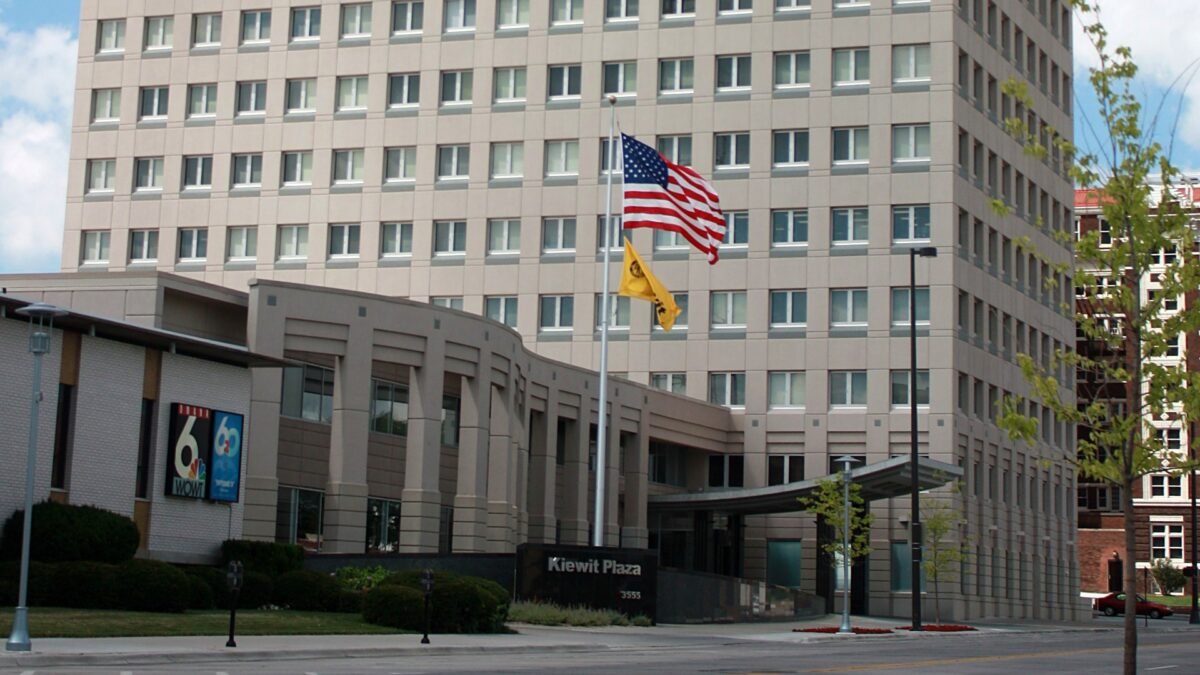
Berkshire Hathaway bought back $9.6 billion of its own shares in the third quarter of 2026, more than doubling its repurchase pace from the first half of the year, even as the conglomerate’s operating earnings fell 5.8 per cent on weaker insurance results, according to Reuters.
The Omaha-based company reported operating earnings of $12.71 billion for the three months to the end of September, down from $13.49 billion a year earlier, in results released on Saturday. Net earnings, which include gains and losses on Berkshire’s vast stock portfolio, fell 28 per cent to $22.11 billion, from $30.80 billion in the same quarter of 2025.
The figures cover the third quarter of Greg Abel’s first year as chief executive, after he succeeded Warren Buffett in January. The accelerated buybacks are the clearest sign yet that Abel, 64, is prepared to put Berkshire’s enormous cash reserves to work more aggressively than his predecessor, who had struggled in his final years at the helm to find attractive places to invest the money.
“Berkshire Hathaway has accelerated its stock repurchases, as new CEO Greg Abel demonstrated a greater willingness than his predecessor Warren Buffett to put the conglomerate’s enormous cash hoard to use,” Reuters reported on Saturday.
Revenue rose 11 per cent to $105.65 billion, the second consecutive quarter of double-digit growth, despite declines in some consumer businesses. Operating earnings came to about $8,954 per Class A share, above the average analyst forecast of about $8,822, according to figures reported by Reuters and the Associated Press.
The results landed in a week when Berkshire’s shares reached record highs, even as the wider stock market was shaken by a sharp sell-off in technology shares. Since the end of September, Berkshire’s stock has outgained the S&P 500 by more than 18 percentage points, according to Reuters, and for 2026 as a whole the $1.21 trillion conglomerate has beaten the index by more than five percentage points.
Insurance weakness drags on the quarter
The main drag on the quarter was insurance, the engine room of Berkshire’s business model and the source of the “float” — the premiums collected before claims are paid — that has funded its investments for six decades.
Profit from insurance underwriting fell 42.9 per cent, to $1.35 billion from $2.37 billion a year earlier, according to the Associated Press, with each of Berkshire’s three insurance groups earning less from underwriting than in the same period of 2025. Overall profit from the insurance businesses declined 26 per cent, Reuters reported.
The biggest decline came at Geico, the auto insurer. Geico’s pre-tax underwriting earnings shrank to $982 million from $1.77 billion a year earlier, and its pre-tax profit fell 45 per cent, according to Reuters. The insurer’s loss ratio — the share of premiums consumed by claims and the cost of handling them — rose to 76.6 per cent from 71.5 per cent a year earlier.
Berkshire attributed the deterioration to claims that were both more frequent and more expensive, combined with lower average premiums per policy. Geico’s underwriting expenses also climbed 17 per cent in the quarter, with higher commissions and advertising accounting for most of the rise over the first nine months of the year, according to the Associated Press.
The pattern at Geico reflects a deliberate trade-off. Reuters reported that the 45 per cent fall in pre-tax profit reflected a willingness to charge lower premiums to help win back customers lost during a multi-year effort to improve underwriting quality and reduce overhead. That strategy, in other words, is costing Berkshire money now in the hope of rebuilding market share later.
Cathy Seifert, an analyst at CFRA Research who rates Berkshire a “hold”, told Reuters that Geico’s results looked weak compared with rivals Allstate and Progressive. She also warned that Berkshire’s famously limited financial disclosures make it harder for outsiders to pinpoint problems and judge how they will be fixed. “Limited disclosures are fine when everything goes in the right direction, but become a point of vulnerability” when they do not, she said.
Insurance investment income also fell, dropping 14.1 per cent to $2.73 billion after tax, as lower short-term interest rates reduced the interest Berkshire earns on the cash and bonds it holds against future claims, according to the Associated Press.
Railroads, energy and industry pick up the slack
Outside insurance, most of Berkshire’s big businesses grew. Profit at BNSF, the railroad, rose 19 per cent to $1.73 billion from $1.45 billion a year earlier, benefiting from fuel surcharges and higher volumes of consumer, agricultural and energy products, Reuters reported. That came even though BNSF’s fuel bill jumped 60.6 per cent, according to the Associated Press.
Berkshire Hathaway Energy, which owns utilities, natural gas pipelines and the company’s namesake real estate brokerage, gained 8.3 per cent to $1.61 billion, helped by its American utilities and gas pipelines.
The manufacturing, service and retailing businesses rose 11.8 per cent to $4.04 billion, led by industrial products and service businesses. Within that unit, aerospace and industrial gas turbine sales helped Precision Castparts boost pre-tax profit by 30 per cent, Reuters reported.
Consumer products were the exception. Profit from those businesses declined, mainly because of lower tax credits at the battery maker Duracell, while higher petrol prices boosted the Pilot truck stop chain. Revenue fell at consumer names including Fruit of the Loom underwear and Forest River recreational vehicles, according to Reuters.
Berkshire warned in its filing that “considerable uncertainty” remains about economic and geopolitical events, including tariffs and wars, and that several of its retailing businesses are experiencing “sluggish” demand because of that uncertainty and its effect on consumer confidence. The caution sits oddly beside the wider economic picture: the United States economy grew at an annualised rate of 3.4 per cent in the third quarter, according to the advance estimate from the Commerce Department’s Bureau of Economic Analysis. Berkshire’s own businesses, in other words, are feeling the squeeze from elevated inflation and fuel prices even while the headline economy expands.
The buyback acceleration — and what it signals
The most closely watched number in the release was the buyback total. Berkshire repurchased $9.6 billion of its own stock between July and September, and about $2 billion more in the first four weeks of October, on top of $4.8 billion earlier in the year, Reuters reported. That took repurchases for the first nine months of 2026 to about $14.4 billion.
The pace quickened as the quarter went on. September was the busiest month, at $5.41 billion, or 56 per cent of the quarter’s total, according to figures reported by the Associated Press. Berkshire’s average purchase price for its Class B shares edged up each month, from $496.24 in July to $506.64 in September, when it bought about 7.7 million Class B shares and 1,983 Class A shares. The Class B stock closed on Friday at $570.89.
The contrast with the first half of the year is striking. The $9.6 billion spent in three months was more than double the $4.5 billion Berkshire spent in the second quarter alone, and twice what it spent in the entire first half, according to the Associated Press. Berkshire’s biggest year for buybacks remains 2021, when it repurchased $27 billion of stock, Reuters reported.
Under Berkshire’s programme, repurchases happen only when the chief executive, after consulting the chairman of the board, judges the price to be below a conservatively determined estimate of the company’s intrinsic value. The programme also bars buybacks that would cut cash, cash equivalents and Treasury bills below $30 billion.
The Associated Press reported that the buybacks had probably stopped recently, as the Class A shares surged past $878,000 — a price at which Abel may no longer consider the stock cheap enough to buy. That detail matters, because it suggests the acceleration was opportunistic rather than open-ended: Berkshire bought heavily while its shares were cheaper, and pulled back once the market caught up.
Cash pile still near record highs
Even after the buybacks and a string of acquisitions, Berkshire’s cash mountain remains enormous. Following the repurchases, the company ended September with $356.9 billion of cash and equivalents, down from $380.2 billion six months earlier, according to Reuters.
The insurance and other businesses held $352.3 billion in cash, equivalents and Treasury bills at 30 September, after netting out bill purchases made in September that settled in October — a 1.9 per cent decline over the quarter, according to figures reported by CNBC and cited by the Associated Press. A broader measure that adds railroad and utility cash and those unsettled purchases rose to $377.4 billion from $365.5 billion at the end of June, a record high.
The scale of that pile is the central strategic question facing Abel. Buffett, 96, spent the final years of his 60-year tenure struggling to find “elephant-sized” acquisitions at acceptable prices, and the cash kept accumulating. Abel now has to decide whether to keep waiting for the right deal, keep buying back stock, or both — and investors will judge him on how quickly that money is put to work.
Two acquisitions completed this year are already in the numbers. Berkshire bought the chemicals business OxyChem from Occidental Petroleum on 2 January for about $9.4 billion in cash, and the unit earned $71 million before tax in the third quarter, according to the Associated Press. It also completed the purchase of the homebuilder Taylor Morrison on 24 July for about $6.8 billion in cash, at $72.50 a share, and the builder produced roughly $1.1 billion of home sales by 30 September.
New deals bed in, and the stock portfolio grows
Berkshire was also a net buyer of other companies’ shares this year, spending $41.8 billion on stocks against $30.6 billion of sales over the first nine months. In the same period of 2025 it bought only $13.4 billion and sold $24 billion, according to the Associated Press — a sharp reversal from seller to buyer.
The company owned $335.5 billion of stocks as of 30 September, including Alphabet, Apple and American Express, Reuters reported. Its five largest holdings at the end of the quarter were Alphabet, American Express, Apple, Bank of America and Coca-Cola — the same five as in the second quarter, according to CNBC.
Reuters reported that Berkshire has spent billions of dollars on Alphabet shares to help Google’s parent expand in artificial intelligence, though the stock trades below the discounted prices Berkshire paid. It also took a 4 per cent stake in Bending Spoons, the Italian software technology company. The Alphabet buying is notable: it puts Berkshire, famously cautious about technology, deeper into the AI race at precisely the moment when investors are questioning whether the industry’s spending is sustainable.
One long-running liability still hangs over the energy business. Berkshire Hathaway Energy’s western utility, PacifiCorp, faces wildfire claims from the 2020 fires in Oregon. The Oregon Supreme Court heard arguments on 3 November in the plaintiffs’ appeal of an April state appeals court ruling that overturned a jury verdict finding PacifiCorp grossly negligent, and the remaining damages trials are on hold until the appeal is resolved, according to the Associated Press. PacifiCorp has recorded about $2.85 billion of estimated losses through 30 September from those fires and a 2022 blaze, and Berkshire said further material losses are reasonably possible.
Berkshire’s insurance float — the money held between collecting premiums and paying claims — stood at approximately $178.5 billion at the end of September, up about $2.1 billion since the end of last year.
Shares hit records as investors rotate to safety
The market’s reaction to the quarter has been shaped less by the earnings themselves than by what Berkshire represents in a nervous market. Shares of the company reached record highs this week despite a broader market sell-off driven by investor worries about artificial intelligence and debt-fuelled spending by technology companies, Reuters reported.
Seifert, the CFRA analyst, said Berkshire’s balance sheet strength, diversification and share repurchases provide tailwinds. “Investors may be rotating into less volatile, high-quality names such as Berkshire,” she told Reuters. “The question is how much investors will accept short-term shortfalls in exchange for owning a company with a strong balance sheet and which successfully transitioned to a post-Buffett era.”
That framing captures the bet investors are making. Berkshire’s operating profit fell, its biggest insurer is struggling, and its disclosures remain thin. Yet the shares keep rising, because in a week when trillions of dollars were wiped off technology stocks, investors wanted somewhere solid to hide — and few companies look more solid than one sitting on $377 billion of cash.
The third quarter was also a milestone in the succession itself. It was Abel’s third quarter as chief executive, and it came weeks after the formal changing of the guard: on 18 September, Buffett became chairman emeritus and the board elected his son Howard Buffett, a director since 1993, as chairman. Buffett remains a director. The announcement in May 2025 that he would step down as chief executive ended six decades in which his name and Berkshire’s were effectively the same thing.
Analysis: Why It Matters
Abel is spending — and that is the real story
The headline numbers are mixed: profit down, revenue up, buybacks accelerating. But the number that will define Abel’s first year is $9.6 billion. Buffett’s reluctance to buy back stock at high prices, and his even greater reluctance to overpay for acquisitions, left Berkshire with a cash pile so large it became a problem in its own right — money earning modest returns while shareholders waited for a deal that never came. Abel’s decision to spend $9.6 billion in a single quarter, plus another $2 billion in October, is a statement of intent. He is not going to sit on the cash the way his predecessor did in the final years. The question is whether he is spending it wisely, or simply because he can.
The buyback is a bet on Berkshire itself
A buyback is the most conservative use of cash available to a chief executive: it says the best investment you can find is your own company. That is a defensible claim for Berkshire, whose shares have beaten the market this year and hit record highs. But it is also an admission. Every dollar spent buying back stock is a dollar not spent acquiring a new business, and Berkshire’s history was built on acquisitions — the railroads, the utilities, the insurers, the consumer brands. If Abel’s main tool turns out to be buybacks rather than deals, Berkshire becomes a very different company: a holding company that slowly shrinks itself rather than one that keeps growing by acquisition. That may be the right answer in an expensive market. It is worth watching whether the deal pipeline — OxyChem and Taylor Morrison this year — keeps flowing, or whether buybacks become the default.
Geico is the weak spot that matters most
Insurance is not just another Berkshire business; it is the funding mechanism for everything else. The float — $178.5 billion of other people’s money, held until claims are paid — is what allowed Buffett to buy railroads and build a $335.5 billion stock portfolio. When Geico’s underwriting profit halves and its loss ratio jumps five points, the machine still works, but it works less well. The strategy of cutting premiums to win back customers is a gamble: if it restores volume without restoring discipline, the losses compound. Progressive and Allstate are the benchmark here, and by Seifert’s account Geico is currently losing that comparison. Abel’s background is in energy, not insurance, which makes the Geico turnaround — and the quality of the people running it — one of the most important tests of his tenure.
The cash pile is both a fortress and a target
There is no company in the world better placed to survive a downturn than one holding $377 billion in cash. That is the fortress, and it is why investors fled to Berkshire during this week’s technology sell-off. But the fortress is also a target: shareholders, activists and analysts will keep asking why so much money sits idle earning Treasury-bill returns while the businesses it could fund — or the acquisitions it could buy — wait. Abel’s buyback acceleration answers part of that question. The rest of the answer will come from the next big deal, if one arrives, and from whether the cash keeps growing faster than it is deployed. A cash pile that never shrinks is not prudence; it is indecision.
The post-Buffett era is now a measurable thing
Until this year, the succession was a story about a person. Now it is a story about numbers, and the numbers so far are encouraging but incomplete. Three quarters in, Abel has completed two acquisitions, accelerated buybacks, kept the shares at record highs and overseen a business that beat analyst forecasts. The soft spots — insurance, consumer demand, wildfire liabilities — are inherited problems, not new ones. The real test will come when something goes seriously wrong: a recession, a major insurance loss, a failed acquisition. Buffett earned his reputation over sixty years by navigating those moments. Abel has navigated three calm quarters. The market’s confidence, visible in the record share price, is real — but it is confidence lent on the strength of the balance sheet, not yet earned by the new chief executive in a crisis.
What to Watch Next
- Whether the buybacks continue: Berkshire’s Class A shares have surged past $878,000, and the Associated Press reported the repurchases had probably stopped. If the shares fall back, watch for the buybacks to resume — and for the pace to signal how cheap Abel thinks the stock is.
- Geico’s next quarter: the insurer’s loss ratio and premium volumes will show whether cutting prices is winning back customers or simply giving away margin. A second consecutive quarter of deterioration would raise harder questions.
- The PacifiCorp appeal: the Oregon Supreme Court’s ruling on the 2020 wildfire verdict could move billions of dollars of liability. Berkshire has already booked about $2.85 billion of losses, and has warned more are possible.
- The next acquisition: with $377 billion in cash and two deals completed this year, the market will watch for Abel’s first truly large purchase — and whether he is willing to pay up for it.
- The Alphabet position: Berkshire’s growing bet on Google’s parent puts it at the centre of the AI spending debate. If the technology sell-off deepens, the value of that holding — and Abel’s judgement in building it — will be under scrutiny.
Sources
- Berkshire Hathaway — 2026 News Releases: Third Quarter Earnings 2026 (7 November 2026)
- Reuters (Jonathan Stempel) — “Berkshire Hathaway speeds up stock buybacks, though profit falls” (7 November 2026)
- Associated Press reporting via SourceFirst — “Berkshire Q3 operating profit falls 5.8%; buybacks $9.6 billion” (7 November 2026)
- The Edge — “Berkshire Hathaway Operating Earnings Fall 5.8%, Quarterly Buybacks Hit $9.6 Billion”
- The American Quorum — “Berkshire Accelerates Buybacks as Insurance Weakness Weighs on Profit” (7 November 2026)
- NationWire — “Berkshire Q3 Profit Falls as Cash Hits $377 Billion” (7 November 2026)

About the Author — Abdul Mannan
Related Articles
Investors Balk at Anthropic’s $1.5 Trillion IPO Price as AI Sell-Off Puts November Listing in Doubt
Major investors are pushing back on Anthropic's $1.5 trillion IPO valuation and questioning whether its roadshow can start…
Fox Closes $22 Billion Roku Takeover Months Early as Combined Group Becomes Third-Largest TV Business in America
Fox Corporation completed its $22 billion acquisition of Roku on Friday, months ahead of schedule, after US antitrust…

Tesla to Wind Down Cybertruck Production as Musk Shifts Texas Factory to Robotaxi Future
Elon Musk has confirmed Tesla will wind down Cybertruck production at Gigafactory Texas around the middle of 2027…