
COP31 Opens in Antalya on Monday as Climate Plans Fall Far Short of the 1.5°C Goal

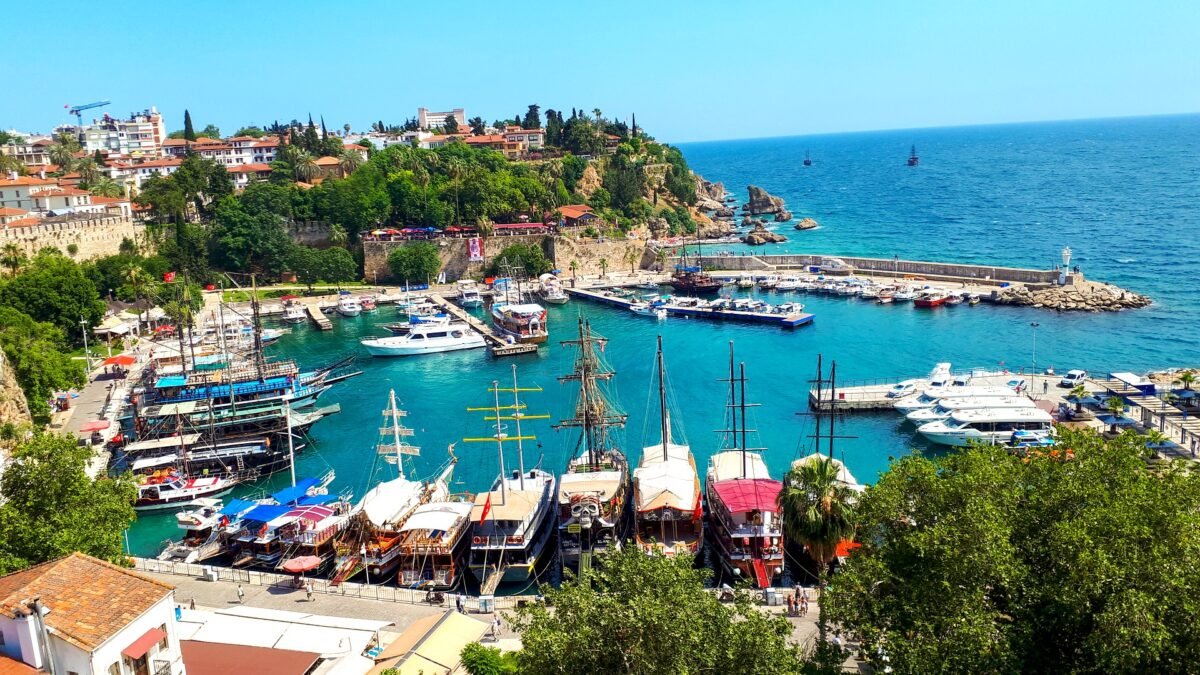
Nearly 200 countries gather in Antalya, Türkiye, on Monday for the COP31 climate summit, the first United Nations climate conference held after the world all but conceded that its most ambitious temperature goal is slipping away. The two-week meeting, which runs from 9 to 20 November at the Antalya Expo Center, arrives with national climate plans pointing to barely a fraction of the emissions cuts scientists say are needed, with the United States absent from the Paris Agreement, and with developing countries demanding money that richer nations are reluctant to promise.
According to the United Nations Framework Convention on Climate Change (UNFCCC), COP31 is the 31st meeting of the Conference of the Parties to the UNFCCC, the landmark treaty agreed in 1992 and the parent treaty of the 2015 Paris Agreement. The UNFCCC confirmed on Sunday that the conference “gets underway on Monday 9 November”, with delegates convening in Antalya “for two weeks of crucial negotiations, dynamic discussions and global collaboration, all focused on tackling the climate crisis with urgency and ambition”. More than 100,000 people are expected to attend, according to Agence France-Presse (AFP).
The summit has been billed by its organisers as an “implementation COP” — a meeting less about new promises and more about keeping the ones already made. As UN climate chief Simon Stiell put it in September, “No single COP can fix this global crisis, but each takes meaningful steps forward.” Türkiye’s environment minister Murat Kurum, the COP31 president, has pledged that the conference will strive “to turn the commitments of past COPs into real results”, according to AFP. But expectations are deliberately low. A European Union official, speaking anonymously to AFP, said: “We cannot expect a revolution in terms of climate action from the Antalya COP.”
The reason for that caution is written into the numbers the UN itself published days before the summit opened.
The numbers that frame the summit
A UN synthesis of national climate plans published on 27 October delivers the starkest possible verdict on where the world stands. The 127 new national climate plans submitted by 154 Parties — covering about 71 per cent of 2019 global emissions — point to 2035 emissions on average only 6 per cent below 2019 levels, within a range of zero to 12 per cent. If conditional pledges, the promises countries make only if they receive support, are counted, the figure rises to about 9 per cent. A pathway consistent with limiting warming to 1.5°C above pre-industrial levels needs a cut of about 60 per cent. On current plans, warming is put at about 1.7 to 2.3°C.
The gap is not a rounding error. It is the difference between the world the Paris Agreement promised and the world countries are actually planning for. In their fourth letter to the parties, the COP31 presidency team said the world is likely to exceed 1.5°C within a few years, with a peak of about 1.8°C in the best case. The United Nations warned in September that global temperatures were on course to exceed 1.5°C, breaching the most ambitious threshold set by the Paris Agreement. NEXA reported in October that the UN’s own emissions gap assessment had declared the 1.5°C goal effectively gone, with the world on track for around 2.8°C of warming on current policies — a reminder that even the 1.7 to 2.3°C range implied by the new plans depends on those plans being delivered in full.
Yet the picture is not one of uniform failure. According to the UN, electric vehicles made up about one in four new cars sold in 2025 and are expected to reach 28 per cent in 2026. More than 600 gigawatts of solar power was installed in 2025, and global battery capacity is now 11 times its 2021 level, with 108 gigawatts added last year alone. The clean-energy transition is real, and it is accelerating. But its benefits are unevenly shared: emerging economies outside China receive only about 18 per cent of clean energy investment, and about 600 million people in Africa remain without electricity. That imbalance — between a transition racing ahead in some places and barely begun in others — is at the heart of almost every argument delegates will have in Antalya.
An unusual presidency: two countries, one summit
COP31 is being run under an arrangement the UN climate process has never tried before. Türkiye is hosting the conference and holds the presidency, with Murat Kurum nominated as COP31 president. Australia leads the formal negotiations, with its climate and energy minister Chris Bowen serving as President of Negotiations. The split was the compromise that settled a dispute after both countries competed for the presidency, and it was agreed at COP30 in Belém, Brazil, last year.
The division of labour is clear in principle. Türkiye runs the venue and the “action agenda” — the voluntary, non-binding initiatives covering electrification, methane, food security, waste and the circular economy, oceans and resilient cities. Australia chairs the formal talks, where countries work through the detail of programmes such as the just transition for workers, climate finance and the rules that will govern the next round of national plans. In practice, the arrangement has already produced friction: Türkiye has insisted it retains the “final decision” at COP31 despite Australia running the negotiations, and the two teams have said they will work on a cover decision together. The opening plenary on Monday will be the first test of whether the dual presidency can hold together under pressure. Climate Home News reported that Australia is working to avoid an agenda fight at the start, after African countries submitted requests for additional items, including on adaptation finance and trade.
The Pacific island countries, which partnered with Australia and Fiji to host a pre-COP meeting in Fiji and Tuvalu in early October, will be watching closely. For nations whose territory is measured in metres above sea level, the difference between 1.5°C and 1.8°C is not an abstraction. It is the difference between survival and disappearance.
The five fights to follow
Five issues will dominate the two weeks of negotiations, and each of them has been fought over at previous summits without being resolved.
Finance. The core issue, as at every recent COP, is who pays. Parties will discuss delivery of the New Collective Quantified Goal on climate finance — the $300-billion-a-year goal agreed at COP29 in Baku — along with a climate finance work programme and how Article 2.1(c) of the Paris Agreement, on aligning all finance flows with climate goals, relates to Article 9, on what developed countries owe. Developing countries want the second kept in focus; richer countries lean on the first. The European Union, according to Climate Home News, is arriving empty-handed on new finance pledges, and budget-strapped developed countries are reluctant to commit more money to help developing nations cope with climate impacts.
Adaptation. Parties have committed to tripling adaptation finance, and work continues on the Belém Adaptation Indicators and the Belém-Addis Vision. The UN Environment Programme’s latest Adaptation Gap Report, published on 4 November under the title “Ready? Not”, put the annual adaptation need for developing countries at about $305 billion — far above current flows. A tripling of adaptation finance would bring it to roughly $85 to $120 billion a year, still well short of the estimated need. African and other developing countries will push for a number to be put on last year’s vague goal to triple adaptation finance by 2035, as well as for talks on how to get there. The Adaptation Fund will be seeking contributions from donor governments, as will the new Pacific Resilience Facility.
The just transition mechanism. Last year’s conference in Belém agreed to create a mechanism to support workers and communities moving away from fossil fuels. At Antalya, parties must decide its functions and governance. That may sound technical, but it will determine whether the idea has money and staff or only a name. Delegates want the mechanism fleshed out so that workers who depend on fossil fuels can adjust to a low-carbon economy without being left behind.
Mitigation and fossil fuels. The Mitigation Work Programme has so far produced talk and few commitments. The presidency wants electrification treated as a priority: its flagship goal is to raise electricity’s share of final energy demand from about 20 per cent today to 35 per cent by 2035. Countries most exposed to sea-level rise, including Pacific members, want stronger language on moving away from fossil fuels, and big fossil fuel producers will resist it. Two roadmaps drawn up by Brazil, published on 3 November by the COP30 presidency, will be central to that discussion: one sets out a path for moving away from fossil fuels, and the other deals with halting deforestation. Tougher action on fossil fuels, the main driver of climate change, appears unlikely, according to AFP, and observers say Türkiye and Australia are keen to avoid a repeat of last year’s fossil fuel fight.
Loss and damage, and the next stocktake. The Fund for responding to Loss and Damage is expected to move towards its first funding requests. The second global stocktake — the five-yearly review of progress under the Paris Agreement — also begins in Antalya, and it will set the stage for the next round of national plans. Delegates also want a resolution to the dispute over climate science that has troubled recent meetings of the Intergovernmental Panel on Climate Change, with countries squabbling over when the next UN science reports should be delivered.
Who is coming — and who is staying away
The World Leaders’ Summit is scheduled for 11 and 12 November, in the first days of the talks. But the early speaking list suggests a relatively low-key turnout, with few of the world’s most powerful leaders attending. The big names expected include Brazil’s President Luiz Inácio Lula da Silva, on his first international visit since winning re-election — a victory over conservative challenger Flávio Bolsonaro, according to AFP — along with the United Kingdom’s Prime Minister Andy Burnham and Spain’s Pedro Sánchez. Lula’s presence matters: Brazil held the COP30 presidency, published the fossil fuel transition roadmap now before the talks, and its leader is seen by supporters as a forceful voice for the developing world.
The most conspicuous absence is the United States. Washington’s withdrawal from the Paris Agreement took effect on 27 January 2026, and the US is staying away from Antalya. The Guardian, previewing the summit, noted that the meeting “arrives at a moment when the central goal of the Paris climate agreement has already been breached, the United States is staying away”. The American absence removes the world’s second-largest emitter — and historically its largest — from the room where the rules are written, and it leaves the European Union, China and the developing-country blocs to carry the negotiations. The US midterm elections this week delivered a rebuke to climate-sceptic Donald Trump, according to Climate Home News, which has sweetened the geopolitical mood somewhat — but a change of mood in Washington does not restore a seat at the table.
India arrives with a new national climate plan of its own. Its Nationally Determined Contribution for 2031–35, approved by the Union Cabinet in March and lodged with the UNFCCC, aims for about 60 per cent non-fossil installed capacity by 2035 and a 47 per cent reduction in the emissions intensity of GDP from 2005 levels. Non-fossil capacity has already crossed 300 gigawatts, more than 54 per cent of the total, though coal still supports over 70 per cent of generation. India will be closely watched on three issues: it has consistently pressed for climate finance from developed countries under Article 9, it has long argued for common but differentiated responsibilities, and it has argued for treating all fossil fuels alike rather than singling out coal.
Ministers usually arrive for the final days, when the hardest trade-offs are made, and COPs often run late. The tests of success are specific: is there a working design for the just transition mechanism? Is there a credible road to tripling adaptation finance? Do the first loss and damage funding requests move? Does the stocktake begin with clear inputs? And do major emitters signal stronger plans? Those answers will be known by the end of the conference — or a few days after, if it follows past form.
A year of extremes sets the backdrop
The talks follow a year in which the climate crisis has repeatedly forced itself onto the front pages. Deadly floods struck Nepal, searing heatwaves swept Europe, and major wildfires burned in Indonesia. An exceptionally strong El Niño climate phenomenon is forecast to peak later this year, adding to extreme weather and possibly helping to make 2026 or 2027 the hottest year on record, according to AFP. An energy crisis and cost-of-living pressures, fuelled by the war in the Middle East, are also looming over the gathering.
The host city itself is no stranger to the crisis on the agenda. Wildfires burned 8,000 hectares in Antalya alone this year, some just a few kilometres from where COP31 will take place, according to 350.org. The delegates meeting in the resort city on Türkiye’s Mediterranean coast will be negotiating the future of a climate that is already reshaping the landscape around them.
The World Meteorological Organization will support countries at COP31 by providing authoritative scientific observations on the state of the global climate system, including through the launch of its flagship State of the Climate update 2026 on the first day of the summit. That report will land in the opening hours of the talks, giving negotiators the freshest possible picture of the year they have just lived through — and of the gap between what the science demands and what the politics is delivering.
Analysis: Why It Matters
The 1.5°C goal is becoming a piece of history — and that changes the politics
For a decade, 1.5°C was the line the world promised not to cross. It was the number written into the Paris Agreement, the number schoolchildren learned, the number against which every national plan was measured. The documents arriving in Antalya quietly retire it. The presidency’s own letter says the world is likely to exceed 1.5°C within a few years; the UN’s synthesis shows current plans pointing to 1.7 to 2.3°C. That shift matters far beyond the science, because it changes what the negotiations are for. A conference organised around preventing a breach is a different creature from a conference organised around managing one. The first can trade in ambition and deadlines. The second must trade in adaptation, loss and damage, and the unglamorous work of deciding who pays for a warmer world. Expect the language in Antalya to reflect that shift — more talk of resilience and finance, less of the heroic pledges that defined earlier summits. The danger is that accepting overshoot becomes an excuse for accepting anything. The opportunity is that honesty about the gap could finally force a serious conversation about the money.
The dual presidency is an experiment the whole UN system will be judged by
Nothing like the Türkiye–Australia arrangement has been tried in the thirty-year history of the climate talks. It was born of a bidding dispute, not of design, and it carries obvious risks: two centres of authority, two political cultures, and a host country that has publicly insisted it retains the final say. If it works, it could become a template for future deadlocked hosting contests — a way to share a prize no single country can claim alone. If it fails, if the opening days dissolve into procedural fights over the agenda or the cover decision, it will confirm the suspicion that the COP process is held together by little more than habit. The early signs are mixed. Australia is working to avoid an agenda fight, but African countries have already tabled additional items. The first forty-eight hours will tell us more about the presidency than the next two weeks of text.
Finance is the summit — everything else is commentary
Strip away the side events, the pavilions and the press conferences, and COP31 comes down to one question: will rich countries put real money on the table for the countries bearing the costs of a crisis they did least to cause? The numbers make the scale of the ask unavoidable. Adaptation alone needs about $305 billion a year for developing countries; current flows are a fraction of that, and even tripling them would leave a gap of roughly $200 billion. The $300-billion-a-year climate finance goal agreed in Baku is itself a compromise that developing countries regarded as inadequate when it was struck. And now the European Union is arriving, by its own negotiators’ admission, empty-handed. That is not a negotiating tactic; it is a statement of political reality in capitals where budgets are strained and the war in the Middle East is driving energy costs. But it is also a gamble. Every year the finance gap is left open, the bill for loss and damage grows, and the trust on which the entire Paris framework depends erodes a little further. Antalya will not close the gap. The question is whether it narrows it enough to keep the framework alive.
The real transition is happening anyway — but not where it is needed most
There is a genuine paradox at the heart of this summit. The technologies of the energy transition are winning in the market: solar is the cheapest new source of electricity in most of the world, electric vehicles are a quarter of new car sales, and batteries are eleven times cheaper and more abundant than they were five years ago. Yet the countries that need the transition most are receiving the least of it. Emerging economies outside China get about 18 per cent of clean energy investment; 600 million Africans have no electricity at all. That is why the electrification goal — raising electricity’s share of final energy demand to 35 per cent by 2035 — is the presidency’s flagship initiative, and why it matters more than it looks. Electrification is the one agenda item that unites climate ambition with development: it promises cleaner air, cheaper energy and industrial jobs, not just fewer emissions. If Antalya produces a broad coalition behind it, with finance attached, that would be a concrete achievement no amount of communiqué language could match. If it remains a voluntary pledge with no money behind it, it will join a long list of COP announcements that changed nothing.
An empty chair changes the room
The absence of the United States is the largest structural fact of COP31, and its effects will be felt in every negotiation. Washington’s withdrawal removes not only the world’s largest historical emitter but also its largest single source of climate finance and its most powerful diplomatic voice. Other countries will have to decide whether to fill the vacuum or to use it as cover for their own inaction. China, whose emissions now exceed those of all developed countries combined, faces a sharper question than ever about whether it will step into a leadership role it has long resisted. The European Union, arriving without new finance pledges, can hardly claim the mantle either. The likeliest outcome is a more fragmented negotiation, in which blocs — the Africans, the small island states, the Like-Minded Developing Countries, the Umbrella Group — matter more than any single great power. That fragmentation makes consensus harder, but it also makes the summit more genuinely multilateral than any COP in years. What emerges from Antalya will be, for better or worse, the product of nearly 200 countries rather than the deal of two or three.
What to Watch Next
- The opening plenary on Monday: whether Australia and Türkiye avoid an agenda fight, and whether the African group’s requests for additional items on adaptation finance and trade are admitted or deferred.
- The World Leaders’ Summit on 11–12 November: what Lula, Burnham and Sánchez actually promise — and whether any major emitter uses the leaders’ segment to announce a stronger national climate plan.
- The electrification goal: how many countries sign on to raising electricity’s share of final energy demand to 35 per cent by 2035, and whether any finance is attached to the pledge.
- Adaptation finance numbers: whether parties agree a figure for tripling adaptation finance by 2035, and whether the Adaptation Fund and the Pacific Resilience Facility secure fresh contributions.
- The final cover decision: whether it contains any language on the 1.5°C overshoot, on moving away from fossil fuels, and on methane — and whether the talks run past their scheduled close on 20 November, as COPs so often do.
Sources
- UNFCCC — COP31, Antalya, November 2026
- Agence France-Presse via Turkish Minute — “COP31 in Turkey faces finance and fossil fuel disputes” (6 November 2026)
- The Guardian via World Right Now — “Climate summit opens in Turkey as world weighs fossil fuel exit” (8 November 2026)
- Climate Home News via Spherenexus — “COP31 Briefing: What to expect from the Antalya climate summit?”
- Wirony — “COP31 in Antalya: what is at stake at the climate talks” (5 November 2026)
- United Nations — “As disasters mount, next UN climate summit faces a test of trust” (19 October 2026)

About the Author — Abdul Mannan
Related Articles
Russia Hammers Kyiv’s Power Grid with 36 Ballistic Missiles Days Before Abu Dhabi Peace Talks as Zelenskyy Accuses Moscow of Using Strikes as Leverage
Russia fired 36 ballistic missiles and 172 drones at Ukraine's energy grid overnight, leaving five regions without power…

US Launches ‘Task Force Iron Gate’ to Choke Iran’s Land Routes as Aircraft Disables Cargo Ship in Gulf of Oman
CENTCOM has created Task Force Iron Gate to cut Iran's land and Caspian supply routes, and on the…
Trump Confirms New ‘Minor’ US Strikes on Iran’s Qeshm Island as Tehran Lifts Its Missile-Range Limit and Talks Continue
President Donald Trump has confirmed fresh limited US strikes on Iran's Qeshm Island — the second in five…