
Trump Confirms New ‘Minor’ US Strikes on Iran’s Qeshm Island as Tehran Lifts Its Missile-Range Limit and Talks Continue

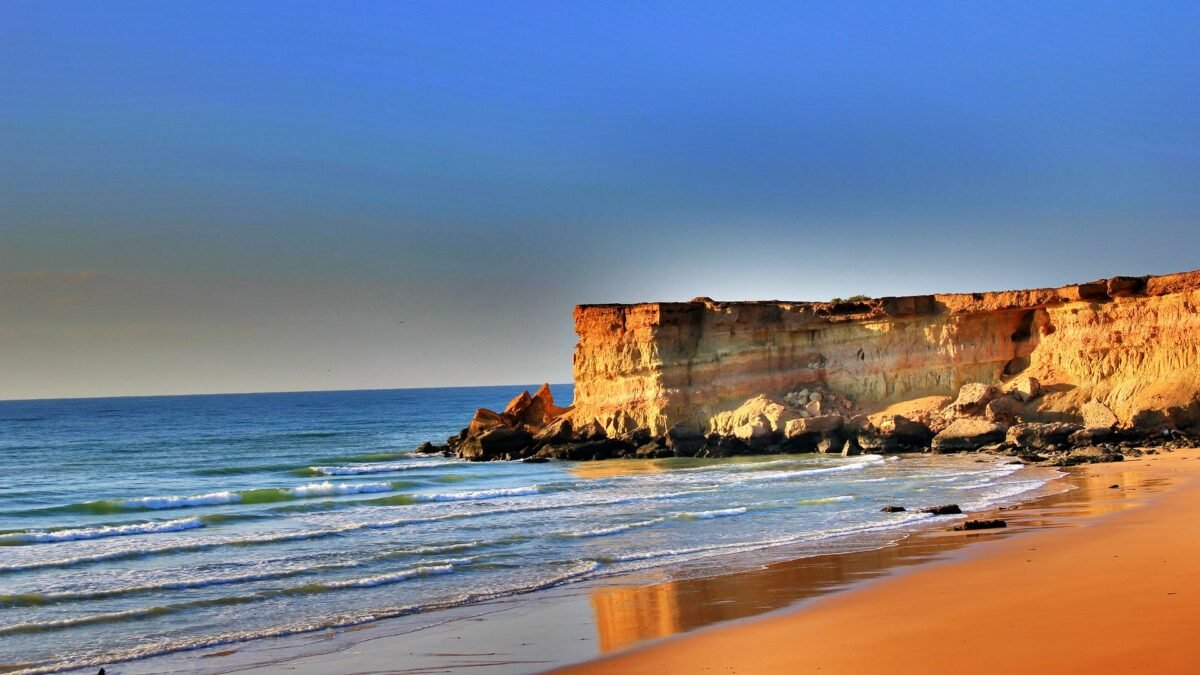
President Donald Trump has confirmed that American forces carried out a fresh round of limited strikes against Iran on Friday, hitting an air-defence installation on Qeshm Island in the Strait of Hormuz, even as he insisted that negotiations with Tehran were making progress. The operation, which Trump described as minor, was the first publicly acknowledged American strike since his Republican Party’s sweeping defeat in Tuesday’s midterm elections — and the second on the strategically vital island in five days.
Speaking to reporters after landing in West Palm Beach, Florida, on Friday evening, Trump said United States forces had destroyed a newly built Iranian anti-aircraft device. “We do minor strikes,” he said, according to the Associated Press. “They knocked out — they built a little bit of an anti-aircraft device and we knocked it out in about 15 minutes, maybe five.” He gave no further details about the target, the weapon used, or the platform that carried out the attack.
Iranian state media reported two explosions in the Suza area of Qeshm Island, on the island’s southern coast. The semi-official Tasnim news agency reported early on Saturday that two missiles had struck the island, while the state news agency IRNA cited local witnesses who said they heard an aircraft before two projectiles hit the Suza area. Iranian authorities had not released an official damage assessment, and there were no confirmed casualty figures. The precise relationship between the reported missile impacts and the American operation has not been independently established, according to AP reporting.
Trump paired the announcement with an upbeat account of the diplomacy running alongside the fighting. “We’re dealing with them now. They want to make a deal,” he told reporters on Friday, claiming that a lot of progress had been made in the negotiations. On Saturday, Qatar — the mediator between Washington and Tehran — dismissed reports that the talks had failed. Majed al-Ansari, the spokesman for the Qatari Foreign Ministry, said: “Promoting such false claims serves only those seeking to prolong the war and destabilise the region.”
The Associated Press reported that Iran is reviewing Qatari proposals aimed at bridging the differences with the United States over its nuclear programme, in what the agency described as a glint of openness after months of war. Two Middle East officials told AP that the proposals focus on Tehran’s nuclear programme, the central dispute in a conflict that began in late February and has now run for more than eight months.
The new strike came on the same day that Iran’s Revolutionary Guard announced it had lifted a self-imposed limit of about 2,000 kilometres on the range of its ballistic missiles — a move that, if it leads to longer-range weapons, would put new targets within Tehran’s reach and deepen the sense that both sides are preparing for a wider war even while they talk.
A second strike in five days
Friday’s operation was the second publicly reported American attack on Qeshm Island in five days. The first, on Monday 2 November, followed a missile fired from Qeshm toward an American aircraft, according to accounts filed earlier in the week. That strike, described by American officials as defensive, also targeted sites on nearby Hengam Island. The two operations, taken together, show that Qeshm — a large island sitting inside the Strait of Hormuz, the narrow passage connecting the Persian Gulf with the Gulf of Oman and global shipping routes — has become the most contested piece of ground in the war.
Trump’s description of the latest strike as minor was deliberate. The president has spent the week weighing a far larger decision: whether to resume the war in full after his first post-midterm national security meeting on Thursday, when he said a decision was coming soon. According to the Associated Press, Trump said on Thursday that the United States may have to destroy the rest of Iran. The New York Times reported on Wednesday, citing unnamed Pentagon officials and military commanders, that thousands of American air and naval personnel were poised to resume major combat operations on his orders.
That larger decision has not yet been announced. Friday’s limited strike, and Trump’s insistence on calling it minor, suggest a president who is keeping his options open — applying military pressure without yet committing to the full-scale resumption of hostilities that his own generals have prepared for.
Iran’s response to the strike was, on its face, defiant. The country’s state broadcaster, IRIB, reported an army statement saying that air-defence forces had intercepted and destroyed an American MQ-9 drone over Qeshm Island, using what it described as an unnamed new system. The Islamic Revolutionary Guard Corps separately claimed on Friday that its air defences had intercepted an MQ-1 drone, reportedly the 16th aircraft of that model to be destroyed since the start of the war. Neither claim has been independently verified. United States Central Command said the situation on the island was relatively calm and that it had no further comment.
Iran’s army spokesman, Mohammad Akraminia, said on Saturday, according to IRNA, that the armed forces were on higher alert and stronger than at the start of the war, with greater motivation, commitment and self-confidence.
Iran’s answer: the range limit is gone
The most consequential development of the weekend may not have been the strike itself, but what Tehran announced hours later. Brigadier General Hossein Mohebbi, the spokesman for the Islamic Revolutionary Guard Corps, told a news conference in Tehran on Saturday, marking the IRGC’s Aerospace Week, that the self-imposed limit of about 2,000 kilometres on the range of Iran’s ballistic missiles had been lifted.
“This restriction has been lifted for us,” Mohebbi said, according to the Tasnim news agency and other state-linked outlets. He added that Tehran must demonstrate its capabilities in practice rather than merely making statements. “We must demonstrate these capabilities in practice, and we should not merely make statements beforehand. Our duty is to demonstrate our capabilities on the battlefield,” he said, according to Iran’s ISNA news agency.
The 2,000-kilometre limit had been a deliberate policy for years. Iran’s then supreme leader restricted the range of domestically manufactured ballistic missiles to 2,000 kilometres, a limit first publicly acknowledged in 2017, in part to reassure European countries that they would not be targeted. A range of 2,000 kilometres covers Israel and American military bases across the Middle East, but not Europe. Removing the cap therefore carries a message aimed well beyond the region: Tehran is signalling that, if the war widens, its missiles could reach further than they could before.
Mohebbi’s remarks followed comments by Supreme Leader Mojtaba Khamenei, who ordered an immediate and effective response to any threat, without geographical limits. According to reporting by the Al Jazeera news network, Khamenei also ordered an update to the list of American and Israeli military targets within reach. Mohebbi said the IRGC’s aerospace division had prepared “surprising defence achievements” that would be deployed if another wave of major attacks began, and that the force planned to unveil another underground “missile city” soon.
He went further still. Mohebbi said that if the Islamic republic decided to alter its nuclear doctrine and build a bomb, the necessary preparations would be made — a statement that ties the missile announcement directly to the nuclear question at the heart of the diplomacy.
Analysts urged caution about how much the announcement changes in practice. Iran has long been assessed by outside experts as technically capable of building missiles with ranges beyond 2,000 kilometres — its Khorramshahr missile, for example, is widely believed to be capable of flying further, with its range limited in testing by a heavier warhead. What has changed is the political decision to say so publicly. Mohebbi himself cautioned against treating the statement as proof of a new operational capability, saying Tehran must demonstrate it on the battlefield. But as a signal of intent, delivered on the same day as an American strike, it could hardly have been clearer.
Talks continue — but the pendulum swings
The diplomacy, meanwhile, has not stopped. Iran’s Foreign Minister, Abbas Araghchi, said on Saturday that he had held talks with 12 foreign ministers over the past 48 hours, including the top diplomats of Oman, Qatar, Saudi Arabia and Pakistan. He said he had explained Tehran’s “fundamental positions”, including its seven demands for reopening the Strait of Hormuz, and stressed the need to form “regional security arrangements without the interference of superregional powers”.
Iran’s security chief, Mohsen Rezaei, reportedly emphasised the same conditions to Russian President Vladimir Putin during a visit to Moscow on Thursday, which was also aimed at delivering a message from Khamenei. The seven conditions, which Tehran has insisted on since the strait was closed, remain the central obstacle: Iran has offered a two-day reopening of the waterway, mediated by Qatar, but no agreement has been reached, and the two sides remain far apart, according to a senior Iranian official cited by Reuters.
Qatar’s mediation has been the one constant thread in the diplomacy. Doha has hosted the indirect talks, floated the plan that could reopen the strait alongside nuclear inspections, and repeatedly pushed back against reports that the process has collapsed. On Saturday, its foreign ministry spokesman was blunt: reports of failure, he said, serve only those who want the war to go on.
The week also brought a new American move on the nuclear file. United States Central Command announced a reward of up to 20 million dollars, and possible relocation, for information about Iran’s nuclear programme — a public invitation to insiders that underscored how much Washington still does not know about the state of Tehran’s nuclear work after eight months of war.
Political analyst Mostafa Najafi, who is said to be close to Iran’s security chief, described the developments between Iran and the United States as resembling “a constant pendulum swing between war and negotiations” that is increasingly leaning towards conflict. “What is clear for now is that the movement of this pendulum will continue; a conflict whose ending is much more complicated and time-consuming than imagined,” he wrote on the social media platform X.
Trita Parsi, the executive vice president of the Quincy Institute for Responsible Statecraft, told Al Jazeera that three factors increase the risk of war in the short term after the midterm elections, unless negotiations lead to a breakthrough. The political cost of high fuel prices, brought about largely by the war on Iran, has already been paid, he said, and there will not soon be another point on the political calendar for Trump to worry about. Pressure from pro-war hawks will also escalate significantly, he said, because they will be constrained in their efforts to step up the conflict after the Democrats take control of Congress in early January. And the appointment of Stephen Miller — a far-right, pro-Israel hawk — as White House chief of staff also hints that Trump might not be ready to wind down the war.
The shipping war grinds on
Beyond the missiles and the diplomacy, the war at sea continues to exact its toll. At least 11 ships were attacked in and around the Strait of Hormuz over the week ending on 6 November, according to the United Kingdom Maritime Trade Operations centre, which said three of them sank. A Western military intelligence agency has recorded 88 projectile strikes since hostilities resumed in early July, although it has cautioned that most attacks are going unreported.
The centre’s weekly report also identified 170 outbound and 155 inbound transits of the strait — approximately 65 percent below pre-conflict levels. Most of the vessels travelling with their transponders switched on are using the Iranian route to the north of the waterway. Many ships are still attempting the southern route near Oman with their tracking systems switched off to shuttle oil out of the strait.
On Saturday, the Iranian military’s naval force said a tanker with its transponder turned off had caught fire in the eastern area of the Strait of Hormuz after hitting a mine. Washington says the mines have been cleared. The claim followed a statement by the Revolutionary Guard’s navy on Friday that two more oil tankers had struck naval mines and caught fire — part of a pattern of attacks on commercial shipping that has now run for months, with at least 129 incidents recorded in the strait and the wider region as of 6 November, according to the International Maritime Organization, and 25 seafarer fatalities since the conflict began.
Oil markets have felt the strain. Prices fell by more than 20 dollars a barrel over the past week, with Brent crude near 99 dollars on Friday, after the steepest weekly drop since 2020 — a fall driven in part by signs that the fighting, for all its intensity, has not yet choked off the flow of oil entirely, and in part by the expectation that a diplomatic breakthrough remains possible.
Elsewhere in the region, the war’s edges continued to fray. Colonel Turki al-Malki, the spokesman for the Saudi-led coalition forces, said a cruise missile launched by the Houthi militia toward the Riyadh area was intercepted and destroyed. The Wall Street Journal reported that the Houthis police Red Sea transit through a system in which vessels request safe passage by email, usually receiving a reply within 24 hours — a remarkable arrangement that shows how thoroughly the rules of one of the world’s busiest shipping lanes have been rewritten by the conflict.
Analysis: Why It Matters
A strike that is small by design — and a decision still to come
The most important thing about Friday’s strike is what it is not. It is not the resumption of the full-scale war that Trump has been threatening since Thursday, and it is not the “decision” he promised after his first post-midterm national security meeting. By calling the operation minor, and by describing the target in almost dismissive terms — “a little bit of an anti-aircraft device” — Trump is doing two things at once. He is demonstrating that American forces can still hit Iranian targets at will, and he is signalling to Tehran, to his own party, and to the American public that he has not yet chosen the path of escalation. The strike is a pressure valve, not a declaration. But pressure valves only work if the other side reads them the same way, and Tehran’s answer — lifting the missile-range limit within hours — suggests it read the strike as a threat to be answered, not a gesture to be pocketed.
The midterm shadow over every decision
Nothing about this week’s events can be understood without the midterm elections of Tuesday 3 November, in which the Democrats won control of both the House and the Senate. Trump himself has blamed the Iran war — and the high petrol prices it caused — for the defeat, and his vice president, JD Vance, has said the same in public. That creates a strange political geometry. On one side, the war is now a proven electoral liability: the president has admitted as much. On the other, the political calendar no longer disciplines him in the way it did before the vote. There is no election looming that would punish a new escalation, and the Democrats who take control of Congress in early January will have limited power to stop a war already under way. As Trita Parsi observed, the cost of high fuel prices has already been paid. That makes the coming weeks — the lame-duck period before the new Congress sits — the most dangerous window of the war so far, because the usual political restraints on escalation are at their weakest just as the military preparations for escalation are at their most advanced.
The missile-range announcement is a message to Europe, not just to Washington
Iran’s decision to lift its 2,000-kilometre missile-range limit deserves more attention than it has received. For years, the cap was a deliberate reassurance to Europe: Tehran was telling the continent’s capitals that its missiles could not reach them, and that the dispute was a regional one. Removing it changes the map. It tells European governments that their cities could, in principle, become targets if the war widens — and it gives Tehran a new lever in its dealings with Europe, which has been pressing for restraint. It also complicates the diplomacy: the nuclear talks are, at their core, about whether Iran can be trusted not to build weapons that threaten others, and a public announcement that Tehran is extending the reach of its delivery systems is not the kind of confidence-building measure that makes a deal easier. Whether Iran can actually field longer-range missiles quickly is a separate question, and Mohebbi’s own caution — that the capability must be demonstrated on the battlefield — is a reminder that announcements are not arsenals. But in a war in which signalling is half the battle, the signal is unmistakable.
Qatar’s mediation is holding — but it is holding by a thread
Amid the strikes and the threats, the quiet work of Qatar’s mediators continues, and it deserves recognition. Doha has kept the two sides talking for months, floated the plan that could reopen the strait alongside nuclear inspections, and repeatedly absorbed the political cost of being the go-between in a war that neither side has been willing to end. Its spokesman’s statement on Saturday — dismissing reports that the talks had failed as the work of those who want the war to go on — was unusually blunt, and it suggests the mediation is under strain. The problem is structural: Iran’s seven conditions for reopening the strait, the American demand for nuclear concessions, and the mutual distrust built up over eight months of fighting leave very little room for compromise. Qatar can keep the channel open, but it cannot manufacture the political will that both capitals would need to make a deal. The mediation’s survival is a necessary condition for peace, but it is not a sufficient one.
The shipping war is the war’s quiet catastrophe
While the world watches the missiles, the slow strangulation of the Strait of Hormuz continues, and its human cost is mounting largely out of sight. Eleven ships attacked in a week, three of them sunk, 25 seafarers dead since the conflict began, and shipping volumes down by nearly two-thirds — these are the numbers of a waterway that is being systematically destroyed as a commercial route. The crews who still sail it increasingly decline to report attacks, according to maritime security sources, which means the true toll is almost certainly worse than the official figures. The 20-dollar fall in the oil price over the past week may look like good news for consumers, but it is a measure of how much of the world’s oil trade has already been rerouted, discounted or simply lost. If the strait stays closed, or if the attacks on shipping intensify, the economic damage will spread far beyond the Gulf — to the petrol pumps, the shipping lanes and the economies that depend on them.
What to Watch Next
- The decision Trump promised: The president said on Thursday that a decision on resuming the war in full was coming soon. Watch for a formal announcement, a Pentagon or Central Command statement, or any movement of American forces that would signal the larger operation the New York Times reported is being prepared.
- Iran’s demonstration: The Revolutionary Guard said it must demonstrate its longer-range missile capability on the battlefield, not merely announce it. Any test launch, or the unveiling of the promised underground “missile city”, would show whether the range announcement is a real capability or a political signal.
- The Qatari proposals: Iran is reviewing Qatari proposals on the nuclear programme, and the Associated Press reported a glint of openness. Any sign that Tehran has formally responded — or that Washington has accepted the framework — would be the first concrete diplomatic progress in weeks.
- The Strait of Hormuz: Watch the weekly shipping figures from the United Kingdom Maritime Trade Operations centre, and any further mine or projectile attacks on tankers. A further fall in transits, or another sinking, would show the shipping war intensifying.
- The Abu Dhabi talks: Ukrainian, Russian and American delegations are due to meet in Abu Dhabi on 10 and 11 November, with Russia having struck Kyiv’s energy infrastructure and bridges in the days before the meeting. Whether that separate negotiation produces anything may shape how much attention Washington can spare for the Gulf.
Sources
- Associated Press, via Khabr — “Trump confirms new limited US strikes on Iran’s Qeshm Island as talks go on”
- The American Quorum — “U.S. Strikes Qeshm Island Again as Iran Talks Continue”
- Seoul Economic Daily — “Trump Strikes Iran Three Days After Midterm Defeat”
- Al Jazeera, via 234Radio — “Qeshm island and Hormuz hit, as mediators try to prevent US-Iran escalation”
- The Insight International — “Iran says it has lifted self-imposed limit on ballistic missile ranges”
- Clash Report — “Trump Confirms New US Strike on Iran’s Qeshm Island”

About the Author — Abdul Mannan
Related Articles

Gunman Kills Six in Random Shooting in Krakow’s Main Market Square as Police Officer Fights for Life
Six people were killed and 15 injured after a gunman opened fire at random in Krakow's Main Market…
New Zealand Election Ends in Deadlock as Luxon’s Coalition Clings to a One-Seat Lead and Weeks of Talks Loom
New Zealand's general election ended in a knife-edge deadlock, with Christopher Luxon's governing coalition clinging to a one-seat…

Europe Rejects Trump’s ‘Big, Beautiful’ Security Deal With Russia as Zelensky Warns Against a ‘Yalta 2.0’
Europe has rejected President Trump's proposal for a sweeping security deal with Russia, with the EU's Kaja Kallas…