
Nvidia Opens Independent Investigation as CEO Jensen Huang Admits Affair Amid Claims He Was Targeted by Chinese Intelligence

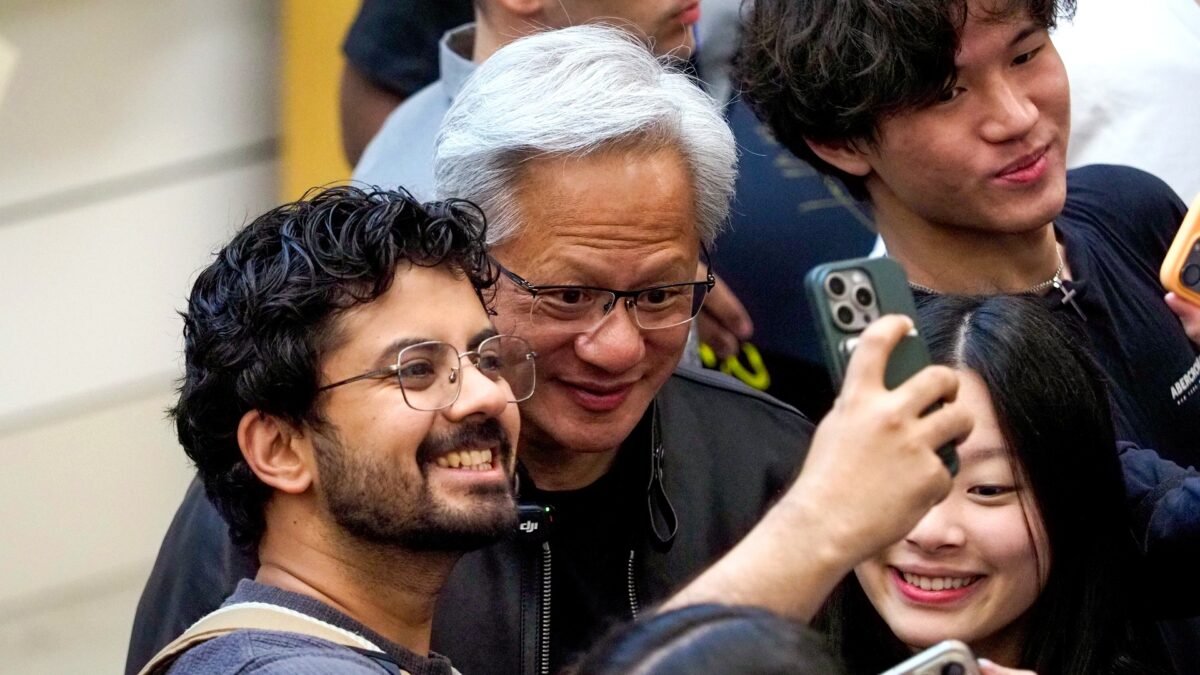
Nvidia, the world’s most valuable chipmaker, has opened an independent investigation into its founder and chief executive, Jensen Huang, after reports that he was the target of a foreign intelligence operation — and Huang has publicly admitted to an extramarital affair in a message to the company’s staff.
The board of directors announced the inquiry on Sunday, 8 November, saying a committee of independent directors, assisted by outside independent counsel, would examine the reports. In a separate email to employees published the same day, Huang, 63, wrote that he had been unfaithful to his wife, apologised to his family and to Nvidia’s staff, and said he fully supported the board’s investigation and would cooperate with it.
According to CNN, Nvidia’s board said it had “no reason to believe that either national security or NVIDIA secrets were compromised”, while adding that its inquiry would “examine all available information”. The board said it retained confidence in Huang and his leadership team, and a company spokesperson told CNN that the news would not slow Nvidia and that Huang was committed to continuing as chief executive “without interruption”.
The announcement caps a ten-day chain of revelations that began with a report in The New York Times on 29 October and has since drawn in the United States Congress, the Chinese government, the authorities in Singapore, and the wider contest between Washington and Beijing over the advanced computer chips that power artificial intelligence. It also lands nine days before Nvidia is due to report its quarterly results on 17 November, when investors will get their first chance to question the company’s leadership in public.
What the board announced
In a short statement published on Nvidia’s newsroom website on Sunday, the board said it was “initiating an independent investigation in light of recent reporting that founder and CEO Jensen Huang has been the target of a foreign intelligence effort”.
“A committee of independent directors, assisted by outside independent counsel, will oversee the investigation,” the statement said. “The Board prioritizes U.S. national and economic security, which is paramount to the interests of NVIDIA and its shareholders.”
The board added: “While the Board has no reason to believe that either national security or NVIDIA secrets were compromised, the Board’s inquiry will examine all available information. Jensen fully supports the review and has committed to cooperating with it. The Board has confidence in Jensen and his leadership team and will provide further updates as appropriate.”
The statement did not name the committee members, identify the law firm involved, or set a deadline for the investigation.
Huang’s message to staff
Alongside the board’s statement, Nvidia published the full text of an email Huang sent to employees on Sunday. In it, he wrote: “I owe my family and all of you an apology. I was unfaithful to my wife. My actions hurt her and our children. There is no excuse for what I did. I am deeply sorry.”
“Throughout my life, my family has given me love and support,” he continued. “They deserve my honesty and loyalty. Instead, I let them down and damaged the life we built together. I take full responsibility for what I did and the hurt I caused, and I accept the criticism that comes with it.”
Huang told colleagues that they deserved better from him, saying: “Leading NVIDIA is the privilege of my life. My responsibility is to serve you and be worthy of your trust. I have fallen short of that responsibility. I am fully committed to NVIDIA and will work to earn back your confidence.”
On the national security questions raised in the reporting, he wrote: “Regarding the national security concerns raised in news reports, NVIDIA’s Board of Directors has initiated an independent investigation. I support the investigation and will cooperate fully. I love our country and our company. I am committed to protecting NVIDIA and supporting America’s national security. I am proud and grateful to be an American.”
He closed by asking staff to give his family privacy, writing: “My family bears no responsibility for my choices. I do.”
Huang did not name the woman involved in the affair in his message. According to CNN, the admission followed reporting by the Financial Times that United States officials believed he had been romantically involved with Alice Huang, a former executive at a Singapore-based company called Megaspeed. The two are not related.
The woman at the centre of the reports
Alice Huang, also known by her Chinese name Huang Le, is a Chinese citizen and a senior executive at Megaspeed, a Singapore-based data-centre company that buys Nvidia chips to run computing facilities for its customers. According to the Financial Times, Megaspeed was founded in 2023 out of a Chinese video game company, and it has become a major buyer of Nvidia hardware.
The New York Times first reported on 29 October that American intelligence officials had concluded that Alice Huang was passing information to Beijing, and that she had developed a close relationship with Jensen Huang. The newspaper said officials initially believed the Nvidia chief did not know about her alleged intelligence activities, and it said it could not establish what information she had passed on, or how valuable that information was to China.
In a follow-up report on 6 November, according to Engadget, The New York Times said Alice Huang had been recruited by China’s Ministry of State Security — the country’s main foreign intelligence service — to gather information on the Nvidia chief executive. The Financial Times reported that a memo written by American officials described a romantic relationship between the two, and said the memo had circulated among a small group of senior administration officials earlier this year, before President Donald Trump’s trip to China for a summit with President Xi Jinping.
According to the reporting, the intelligence operation dates back to at least 2024, and Alice Huang’s reported brief included trying to persuade Huang to argue for looser American limits on sales of advanced chips to China. She was questioned by Singaporean authorities in 2025 and released without charge, according to The New York Times, and she has not been charged with any offence. Alice Huang did not respond to the newspaper’s requests for comment.
It is important to be precise about what has, and has not, been established. No outlet has accused Jensen Huang of a crime, and none of the reporting has shown that he knowingly passed sensitive information to anyone. Nvidia has said that the chief executive’s meetings with customers were “not unusual or unexpected”, and that any concerns about illegal chip diversion were “debunked last year”. The intelligence memo at the heart of the story has not been made public, so nobody outside the government can test the sources behind its claims.
Beijing has rejected the allegations. Guo Jiakun, a spokesman for the Chinese Foreign Ministry, said on 30 October that the report was baseless speculation intended to smear China. Singapore’s Ministry of Home Affairs said on 31 October that neither the government nor its officials had made the claims attributed to them, and that no investigation into Alice Huang had been conducted — although Singapore police confirmed to the technology publication DatacenterDynamics that an investigation into Megaspeed itself was still under way.
How the story unfolded
The affair came to light in stages. On 29 October, The New York Times reported that United States intelligence agencies had determined that Alice Huang was a Chinese intelligence asset, and that surveillance of her had revealed a close relationship with the Nvidia chief executive. The paper said the operation had been uncovered through the surveillance of Alice Huang, and that Huang’s identity had surfaced through a procedure known as unmasking, in which intelligence agencies may reveal the identity of an American citizen who communicates with a person under surveillance.
On 6 November, The New York Times reported the recruitment by China’s Ministry of State Security, and the Financial Times reported the contents of the American officials’ memo describing a romantic relationship. On the same day, three Republican chairmen of committees in the United States House of Representatives wrote to Huang asking him to explain his contacts with Alice Huang and the safeguards Nvidia has in place against foreign espionage.
The lawmakers — the chairmen of the House Foreign Affairs, Financial Services and Intelligence committees — asked for a joint closed-door briefing on 18 November, and asked Huang to accept that date or propose an alternative by 11 November. Their letter is a request for an appearance, not a subpoena, and it does not supply underlying intelligence evidence or establish that Huang knowingly assisted espionage.
Megaspeed told The New York Times for its October report that it had retained outside lawyers to conduct an internal investigation and had notified the United States government of its willingness to cooperate. The company is separately the subject of an American investigation into whether it helped China obtain restricted Nvidia artificial intelligence chips. According to The New York Times, Megaspeed bought nearly two billion dollars’ worth of Nvidia’s most advanced chips through a unit in Malaysia.
The market test comes next
For investors, the immediate question is how the market reacts when trading resumes. Nvidia’s shares fell by about three per cent after the first New York Times report in late October, according to market reports, and Monday’s session in New York will be the first chance for the shares to trade on the board’s investigation and on Huang’s admission.
The timing could hardly be more sensitive. Nvidia, which CNN puts at a market capitalisation of about 4.5 trillion dollars, is the world’s leading maker of the advanced chips on which the artificial intelligence boom depends, and its shares have become the single most watched barometer of the technology sector. The company is scheduled to report its quarterly results on 17 November, the day before the congressional briefing the House chairmen have requested, and the earnings call that evening will be the first public forum in which Huang’s leadership is likely to be questioned directly.
The board’s statement was carefully calibrated to steady nerves. By opening an independent investigation while simultaneously expressing confidence in Huang, saying it had no reason to believe secrets had been compromised, and confirming that he would remain chief executive, the directors sought to show that they were taking the national security questions seriously without creating a leadership vacuum at the most valuable company in the world. The company’s head of public-policy communications, John Rizzo, told the news website Axios that Huang remained committed to leading the company without interruption.
Whether that balance holds will depend on what the investigation finds, and on how Congress responds. If the inquiry concludes that no secrets were shared, the episode may be remembered mainly as a personal crisis for a celebrated chief executive. If it finds that sensitive information changed hands, or that Nvidia’s safeguards failed, the consequences for the company — and for the wider American effort to keep advanced chips out of Chinese hands — would be far more serious.
Analysis: Why It Matters
A governance test for the world’s most valuable company
The board’s decision to investigate its own founder and chief executive is, in itself, a significant event. Jensen Huang is not merely Nvidia’s chief executive; he founded the company in 1993, has led it for more than three decades, and is so closely identified with it that his black leather jacket has become a kind of corporate uniform. Boards rarely open formal investigations into founders of that standing, and they do so only when the reputational and legal risks of inaction outweigh the disruption of acting.
The structure of the inquiry matters. By placing it in the hands of independent directors and outside counsel, rather than the company’s own management or its regular lawyers, the board has signalled that it wants the findings to be credible to outsiders — to shareholders, to regulators, and to Congress. That is a deliberate choice, and it suggests the directors understand that the real audience for this investigation is not inside Nvidia’s headquarters in Santa Clara, but in Washington and on Wall Street.
There is also a personal dimension that no governance manual can capture. Huang’s email to staff was unusually frank for a chief executive of a public company. He did not hide behind lawyers, blame the media, or dispute the reporting. He admitted infidelity, apologised to his wife and children, accepted that criticism would follow, and asked only that his family be left alone. That candour may earn him sympathy, and it removes the risk of a drip-feed of denials being overtaken by events. But it also means there is no longer any ambiguity about the personal conduct at the heart of the story — and the board must now decide whether that conduct, combined with the intelligence questions, affects his fitness to lead.
The espionage question is about systems, not just one man
It would be a mistake to treat this as a story about one chief executive’s private life. The reason it matters to governments is that Nvidia’s chips are the central prize in the technology rivalry between the United States and China, and the chief executive of the company that makes them is one of the most consequential figures in that rivalry.
Washington has spent years tightening export controls to prevent China’s military and artificial intelligence industry from obtaining the most advanced American chips. Those controls depend, in part, on the cooperation of the companies that make the chips, and on the integrity of the people who run them. If a foreign intelligence service could get close to the chief executive of Nvidia — whether or not it succeeded in obtaining secrets — that is a vulnerability in the system, not merely a personal embarrassment.
The reported brief attributed to Alice Huang is instructive. According to the reporting, her task was not only to gather information about Huang, but to push him to argue for looser American export rules so that the most advanced chips could be sold in China. That is a reminder that influence, not just information, is the currency of modern intelligence work. A chief executive who publicly lobbies for relaxed export controls is doing his job as a businessman; the same argument, encouraged by a foreign intelligence asset, becomes a national security problem.
That distinction is precisely what the board’s investigation and the congressional briefing will have to untangle. Huang has been a prominent public advocate for allowing Nvidia to sell more freely in China, and he has a close relationship with President Trump, who has championed the artificial intelligence industry. None of that is secret or improper in itself. The question is whether any of it was shaped, knowingly or unknowingly, by someone acting for Beijing.
The chip war’s human front
The affair is also a reminder that the contest over artificial intelligence is fought by people, not just by governments and companies. Other firms caught up in the artificial intelligence boom have warned their employees to be wary of possible spies, including those offering sex or romance, according to TechCrunch. The warning sounds like something from a Cold War novel, but it reflects a practical reality: the people who design, build and sell the world’s most advanced chips are now targets, and the methods used against them are as old as espionage itself.
Megaspeed’s role in the story illustrates a second front in the same contest. The company is under American investigation over whether it helped China obtain restricted Nvidia chips, and the reported purchase of nearly two billion dollars’ worth of advanced chips through a Malaysian unit shows how export controls can be tested through intermediaries and third countries. Singapore’s confirmation that its own investigation into Megaspeed continues suggests that the questions about the company will not be resolved quickly, whatever the Nvidia board’s inquiry concludes.
For the wider industry, the episode is likely to accelerate a trend that was already under way: tighter internal controls on who executives meet, what they discuss, and how those contacts are recorded. Companies that once treated customer relationships as purely commercial matters are now having to treat them as potential security risks. That is a cost, in time and in trust, that the whole sector will bear.
What to watch next
Five dates and decisions will shape how this story develops. The first is Monday’s trading in New York, when investors will deliver their first verdict on the board’s investigation and Huang’s admission. The second is 11 November, the deadline the House chairmen set for Huang to accept or propose an alternative to their 18 November briefing. The third is Nvidia’s earnings report on 17 November, when Huang will face analysts for the first time since the story broke. The fourth is the briefing itself on 18 November, where lawmakers will press him behind closed doors on his contacts with Alice Huang and on Nvidia’s safeguards. And the fifth is the board’s investigation, which has no published deadline — but which shareholders and Congress will expect to produce findings, not just reassurance.
Two questions will run through all of them. The first is whether any Nvidia secrets or American national security information were compromised — the board says it has no reason to believe so, but it has also said its inquiry will examine all available information, which is an acknowledgement that the question is not yet closed. The second is whether Huang’s position is secure. The board has expressed confidence in him, and he has said he will not step aside. But confidence expressed on a Sunday evening is a starting position, not a guarantee, and it will be tested by whatever the investigation and the congressional briefing uncover.
Until those questions are answered, the episode stands as a striking illustration of how quickly the personal, the corporate and the geopolitical can collide. A chief executive’s private conduct, a foreign intelligence operation, a congressional inquiry, and the future of the world’s most valuable company are now bound together in a single story — and the next ten days will determine how much damage it does.
Sources
- Statement from NVIDIA Board of Directors — NVIDIA Newsroom
- A Message to Our Company — NVIDIA Newsroom
- Nvidia launches investigation into CEO Jensen Huang over foreign intelligence concerns — CNN
- Nvidia will investigate CEO Jensen Huang’s relationship with possible Chinese spy — TechCrunch
- NVIDIA is investigating reports that CEO Jensen Huang was the target of Chinese spy efforts — Engadget
- US lawmakers seek Nvidia answers on China claims — IANS

About the Author — Abdul Mannan
Related Articles

Sensex Soars 8.8% in Best Week Since 2021 as Record Foreign Buying Powers India’s Market Rebound
India's Sensex posted its strongest weekly gain since February 2021, rising 8.8% to 81,028 as record foreign inflows,…

Berkshire Hathaway Accelerates Buybacks to $9.6 Billion as Operating Profit Falls 5.8% in Greg Abel’s Third Quarter as Chief Executive
Berkshire Hathaway bought back $9.6 billion of its own shares in the third quarter as operating earnings fell…
Investors Balk at Anthropic’s $1.5 Trillion IPO Price as AI Sell-Off Puts November Listing in Doubt
Major investors are pushing back on Anthropic's $1.5 trillion IPO valuation and questioning whether its roadshow can start…