
China’s Factory Inflation Hits Four-and-a-Half-Year High as Consumer Prices Cool, Exposing a Split-Screen Economy

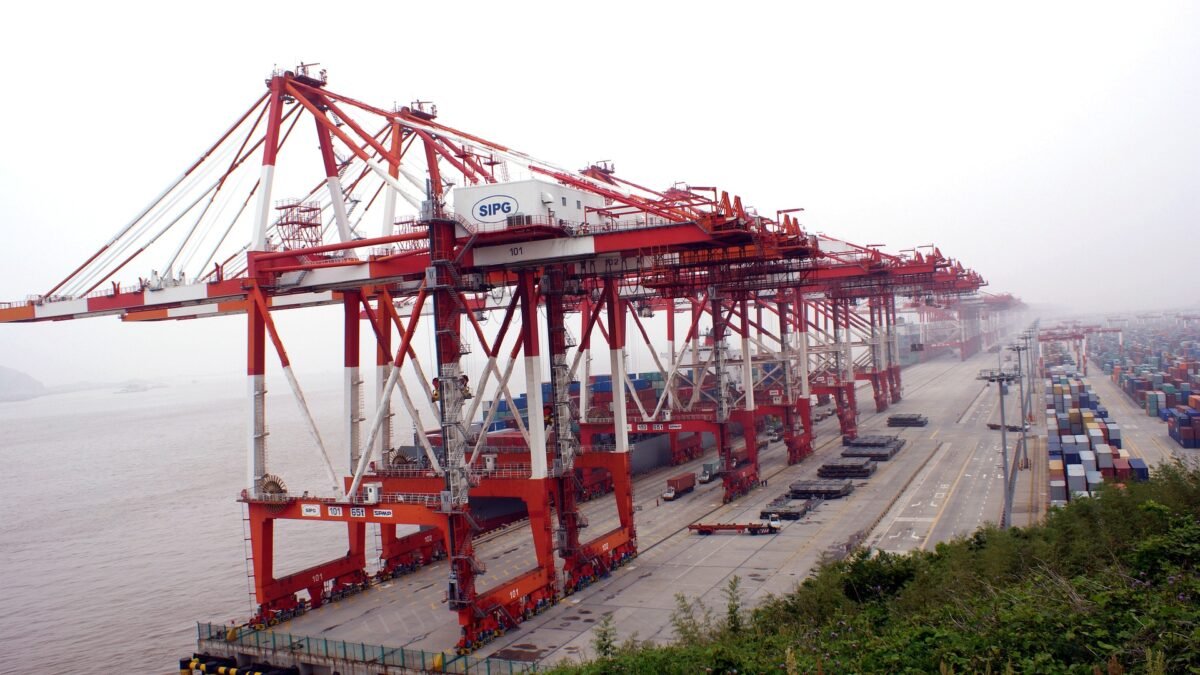
China’s factories are charging more than they have in almost four and a half years, yet the country’s shoppers are seeing prices rise more slowly than before. Official data released on Monday laid bare that contradiction at the heart of the world’s second-largest economy: producer prices surged while consumer inflation cooled, leaving Beijing with an economy that looks hot at the factory gate and cold on the high street at the same time.
According to China’s National Bureau of Statistics, the producer price index rose by 5.7 per cent in October compared with a year earlier, up from a 5.0 per cent increase in September and comfortably above the 5.3 per cent gain economists had forecast in a Reuters poll. It was the fastest annual rise in factory-gate prices since June 2022, and the third consecutive month in which the pace of producer inflation has quickened.
The consumer price index told a very different story. It rose by just 0.7 per cent year on year in October, down from 0.9 per cent in September and below the 0.8 per cent increase economists had expected. Core inflation, which strips out volatile food and energy prices and is watched as a gauge of underlying price pressures, eased to 0.8 per cent from 1.0 per cent in September. On a month-on-month basis, consumer prices were flat in October after edging up 0.2 per cent in September, while producer prices rose 0.7 per cent on the month.
The gap between the two measures — roughly five percentage points — is now one of the widest on record, and it captures the central tension in China’s economy. Costs are climbing for the businesses that make things, driven largely by forces beyond China’s borders, while the households that buy things remain reluctant to spend, keeping a lid on the prices they actually pay.
The Numbers in Detail
The breakdown of the producer price data, published by the National Bureau of Statistics, shows where the pressure is concentrated. Prices of producer goods — the raw materials, components and energy that feed China’s vast manufacturing machine — rose 7.4 per cent from a year earlier, lifting the overall index by about 5.77 percentage points. Within that, the mining industry surged 27.9 per cent, the raw materials industry rose 11.6 per cent, and the processing industry increased 3.5 per cent. Prices of consumer goods at the factory gate, by contrast, actually fell 0.1 per cent.
The industry-level figures are striking. Coal mining and washing prices jumped 36.6 per cent year on year. Oil and natural gas extraction rose 35.0 per cent. Petroleum, coal and other fuel processing climbed 29.9 per cent. Chemical raw materials and chemical products manufacturing increased 16.4 per cent. Gas production and supply rose 7.9 per cent, and computer, communications and other electronic equipment manufacturing — the hardware at the centre of the global artificial intelligence boom — rose 5.9 per cent. In every case, the increases were wider than in the previous month.
On the consumer side, the main force holding prices down was food. Food prices fell 2.9 per cent in October, a decline 1.2 percentage points steeper than in September, pulling the overall consumer price index down by about 0.49 percentage points, according to Dong Lijuan, chief statistician of the Urban Department at the National Bureau of Statistics. Higher petrol prices supported consumer prices, according to CNBC, but the sharper fall in food prices more than offset that increase.
The data were released on Monday morning in Beijing, and the figures were consistent across the major wire services. Reuters reported the 5.7 per cent producer price rise and the 0.7 per cent consumer price rise within hours of publication, Agence France-Presse confirmed the same numbers with its own reporting, and CNBC carried an identical reading of the data. All three noted that the producer price figure beat forecasts while the consumer price figure missed them.
Why Factory Prices Are Climbing
The main driver of the factory price surge is energy. Global oil prices remained elevated through much of October, raising costs for coal mining, oil and natural gas extraction and processing, chemicals and other energy-intensive sectors, according to Reuters. Those upstream price pressures have yet to feed through fully to consumers, the news agency noted, because demand conditions at home remain soft.
The energy shock is not an accident of the commodity cycle. It is, in large part, a consequence of the war in the Middle East. Agence France-Presse reported that China’s producer price index has steadily picked up since the start of the Iran war at the end of February, ending a period of more than three years in which factory prices were falling. Brent crude, the international benchmark, was quoted at around 97.67 dollars a barrel on Monday morning, according to market data, after trading near 99 dollars on Friday. That is far above the levels that prevailed before the conflict began in late February, when the United States and Iran went to war, the Strait of Hormuz was disrupted, and a US-led blockade of Iranian ports reshaped global oil flows.
The second driver is the artificial intelligence boom. “Higher global energy and AI-related electronics prices continued to be the main drivers,” Nguyen Hoang Nam of Capital Economics wrote in a note following the data release, according to Agence France-Presse. Demand for the chips, servers, memory and components that power AI data centres has pushed up prices across the electronics supply chain, and China — which manufactures a large share of the world’s electronics — is feeling that demand in its factory-gate prices. Computer, communications and other electronic equipment manufacturing prices rose 5.9 per cent year on year in October, faster than the previous month.
Capital Economics expects the shock to last a while longer but not forever. “We expect the external price shock to persist over the coming months but fade next year, with producer prices returning to deflation,” the consultancy said, according to Agence France-Presse. That judgement matters: it frames the current surge as an imported cost shock rather than the start of a self-sustaining inflationary cycle inside China.
Why Shoppers Are Not Feeling It
If factories are paying so much more for energy and materials, why are consumers not paying more at the till? The answer lies in the weakness of domestic demand, which has been the defining feature of China’s economy for several years.
A persistent spending slump has vexed the country’s leaders for years, Agence France-Presse reported, as the once-booming real estate sector remains mired in a debt crisis. Households that watched property values fall are saving rather than spending. The consumer price data reflect that caution: with shoppers reluctant to buy, retailers and manufacturers cannot pass higher costs on, so they absorb them instead, squeezing their own margins.
An official at China’s state planner acknowledged the imbalance last month, according to Reuters. “External shocks are having a greater impact, while the imbalance between robust supply and weak domestic demand remains pronounced,” the official said. It is a candid admission that China’s factories can produce far more than its households are willing to consume, and that the gap is being filled by exports rather than by domestic spending.
China’s struggling stock market may be compounding the problem. AI-related stocks have tumbled from lofty valuations on concerns about AI demand and export restrictions targeting China, Reuters reported, and that could further weigh on consumer spending by denting household wealth and confidence. The authorities’ efforts to curb the yuan’s rapid gains — which have squeezed exporters’ margins even as shipments remain strong — alongside a series of measures to stabilise the capital market, have yet to translate into a meaningful recovery in consumer sentiment, according to Reuters.
The consumer price reading of 0.7 per cent is well short of Beijing’s official target for inflation of around two per cent, Agence France-Presse noted. In other words, the government itself regards current price growth as too low, not too high — a reminder that in China, the fear is still deflation, not inflation.
Markets React Cautiously
Financial markets greeted the data with a measured, slightly positive response. China’s CSI 300 index of leading Shanghai and Shenzhen shares rose 0.56 per cent after the figures were published, according to CNBC. Across the region, MSCI’s broadest index of Asia-Pacific shares outside Japan rose approximately 0.8 per cent on Monday after declining 4.6 per cent during the previous week, according to Reuters. Japan’s Nikkei gained around 3.3 per cent, while South Korean shares advanced more than 1.2 per cent.
The rebound came after a difficult week for global equities. On Friday, the Dow Jones Industrial Average declined 0.46 per cent to 51,285.73, while the S&P 500 gained 0.31 per cent to 7,376.86 and the Nasdaq Composite advanced 1.09 per cent to 24,579.42, although it recorded a weekly decline. Concerns about the profitability of artificial intelligence investments have created uncertainty across international stock markets, and upcoming results from companies including CoreWeave, Applied Materials and Cisco Systems are expected to provide further indications of demand and profitability across the technology sector.
Investors will now watch a busy week of data. China’s October trade figures are due on Tuesday and are expected to show that the strong export performance continued through the month, according to Agence France-Presse. India’s October consumer price inflation data are also due on Tuesday, and United States inflation figures are expected later in the week, alongside commentary from the Federal Reserve on its December policy decision. Crude oil prices, the war in the Middle East and the trajectory of the AI investment boom will all shape how markets interpret what comes next.
Analysis: Why It Matters
An Imported Shock, Not a Homegrown Boom
The most important thing to understand about China’s October inflation figures is what they are not. They are not evidence that China’s economy is overheating, or that domestic demand has suddenly revived, or that consumers are on a spending spree. The 5.7 per cent rise in producer prices is overwhelmingly a story about the price of oil and the price of AI hardware — two global markets in which China is a price taker, not a price maker.
That distinction matters because it determines what the data mean for policy. If inflation were being driven by strong domestic demand, the natural response would be to tighten monetary policy and cool the economy down. But when inflation is imported through energy costs while domestic demand stays weak, tightening would be exactly the wrong medicine: it would crush the spending that is already too soft. The People’s Bank of China, the country’s central bank, is far more likely to look through the producer price surge — treating it as a temporary external shock — than to react to it with higher interest rates. Indeed, the bigger risk for Beijing remains the opposite one: that weak demand tips the economy back towards the deflation that plagued it for more than three years.
The Margin Squeeze
The five-percentage-point gap between what factories pay and what consumers will spend is not an abstraction. It is a margin squeeze, and it is being felt in boardrooms across China. Manufacturers are paying sharply more for coal, oil, chemicals and components, but they cannot charge their customers more because those customers — whether Chinese households or foreign buyers — will not pay it. The result is that profits are being compressed from both sides.
That squeeze has consequences. Some firms will cut investment. Some will shed workers. Some will try to pass costs on and lose market share to competitors who do not. And some, particularly in export industries, will lean even harder on the one advantage they still have: the ability to keep prices low for foreign buyers, absorbing the cost increase themselves in order to hold on to orders. That is, in effect, what has been happening for much of this year. China’s exporters have kept shipments strong — the economy grew 4.5 per cent in the third quarter, slightly faster than the 4.3 per cent recorded in the previous three months, buoyed by resilient exports, according to Reuters — but they have done so by eating the cost of higher input prices rather than passing them on.
There is a limit to how long that can continue. If oil prices stay elevated and the AI hardware boom keeps pushing up component costs, some exporters will eventually have to raise their prices, and at that point the cost shock that is currently confined to China’s factory gates will start to show up in the prices paid by consumers in America, Europe and everywhere else that buys Chinese goods. For now, though, the transmission is blocked by weak demand and fierce competition, and the inflation is staying where it started: inside China’s industrial sector.
The Deflation Ghost Has Not Left
It is worth remembering how recently China was fighting the opposite problem. For more than three years, producer prices were falling — a long deflationary stretch that reflected overcapacity in manufacturing, weak demand at home, and a property crisis that destroyed household wealth. That period ended only when the Iran war pushed oil prices up at the end of February. The current producer price surge is, in that sense, a war-driven interruption of a deflationary trend, not a decisive break from it.
Capital Economics’ forecast — that the external price shock will persist for a few more months and then fade, with producer prices returning to deflation next year — should be read in that light. If the consultancy is right, then China’s underlying problem has not changed at all: an economy that produces far more than its people consume, with a property sector still working through a debt crisis, and a government that has so far been unable to persuade households to spend with the confidence they once had. The October data do not resolve that problem. They disguise it, briefly, behind an oil price spike.
The consumer figures make the point plainly. Consumer inflation of 0.7 per cent, core inflation of 0.8 per cent, food prices falling 2.9 per cent — these are the numbers of an economy in which demand is weak, not strong. Beijing’s own inflation target of around two per cent is nowhere in sight. Until Chinese households start spending again, the economy’s centre of gravity will remain exports, and its fortunes will remain hostage to wars, oil prices and trade tensions it does not control.
What It Means for the Rest of the World
For the rest of the world, China’s split-screen inflation picture cuts both ways. On the one hand, the fact that Chinese exporters are absorbing higher costs rather than passing them on is good news for global inflation: it means the world’s factory is still, for now, exporting low prices rather than high ones. Central banks in the United States, Europe and elsewhere, which have spent the last few years fighting inflation, will be relieved that the largest exporter on earth is not yet adding to their problems.
On the other hand, the data are a reminder of how exposed the global economy has become to the price of oil, and therefore to the war in the Middle East. A conflict that began in late February has now, nine months later, pushed factory-gate inflation in the world’s largest manufacturing economy to its highest level in four and a half years. If the war escalates — if the Strait of Hormuz is disrupted more severely, or if the tentative talks between Washington and Tehran collapse — oil could rise further, and the cost shock would deepen. The same logic applies in reverse: a durable ceasefire or settlement would likely bring oil down and, with it, China’s producer prices.
There is also a trade dimension. China’s export strength has been the main engine of its growth this year, and the government is targeting annual growth of 4.5 to 5.0 per cent, its lowest goal in decades, according to Agence France-Presse. But that export model depends on open markets, and trade tensions remain unresolved. The United States has imposed export restrictions targeting China, and tariffs and trade barriers are a live issue. If those tensions worsen, China’s export engine could stall just as its domestic engine is already sputtering — and then the producer price surge would look very different: not a sign of a booming industrial sector, but a cost shock hitting an economy with nowhere to hide.
Policy Crossroads for Beijing
The October data leave Beijing’s policymakers with an uncomfortable choice. The traditional tools for supporting demand — cutting interest rates, encouraging bank lending, spending on infrastructure — are less effective when the problem is that households do not want to spend, not that they cannot borrow. The property crisis has made people cautious, the stock market’s volatility has made them poorer on paper, and the trade war has made them uncertain about the future. None of those problems is solved by a cheaper loan.
What is needed, most economists argue, is a more direct boost to household incomes and consumption: stronger social safety nets, support for the property market, and measures that give people the confidence to spend rather than save. Beijing has taken steps in that direction, including measures to stabilise the capital market and efforts to manage the yuan, but as Reuters noted, those efforts have yet to translate into a meaningful recovery in consumer sentiment. The October data suggest the gap between what the government has done and what households need remains wide.
The central bank, for its part, will be watching the trade data due on Tuesday and the United States inflation figures due later in the week. If China’s exports stay strong and American inflation stays contained, the People’s Bank of China will have room to keep policy supportive without worrying about the currency or capital outflows. But if the Federal Reserve signals that it will hold rates higher for longer, Beijing’s room for manoeuvre will narrow, because cutting Chinese rates while American rates stay high tends to push the yuan down — which is precisely what the authorities have been trying to avoid, since a weaker yuan would make imported oil even more expensive and add to the producer price pressure.
What to Watch Next
- China’s October trade data, due Tuesday: The figures will show whether the export boom that has carried the economy through 2026 continued into October, and whether shipments held up despite rising input costs and trade tensions.
- United States inflation data and the Federal Reserve: American price figures due later this week will shape expectations for the Fed’s December decision, which in turn will determine how much room Beijing has to ease policy without pressuring the yuan.
- Oil prices and the Iran talks: With energy costs driving the producer price surge, the trajectory of Brent crude — and the state of the tentative negotiations between Washington and Tehran — will decide whether the shock persists or fades.
- Chinese consumer spending into year-end: Retail sales and consumer confidence data over the coming weeks will show whether households are starting to spend again, or whether the spending slump that has defined the year is deepening as winter approaches.
- Corporate earnings in the AI supply chain: Results from technology companies including CoreWeave, Applied Materials and Cisco Systems this week will indicate whether the AI hardware demand that is pushing up Chinese electronics prices is sustainable, or whether the sector is heading for the correction that has already hit AI-related stocks.
Sources
- Reuters — “China’s October producer inflation quickens further, consumer prices edge down” (9 November 2026)
- Agence France-Presse — “China’s producer prices top forecasts in October” (9 November 2026)
- CNBC — “China wholesale inflation hits over four-year high as consumer measure slows” (9 November 2026)
- National Bureau of Statistics of China — October 2026 price data (industry breakdown and official commentary)
- Reuters market reporting — “Global Markets Watch AI Investment Risks as China Factory Inflation Accelerates” (9 November 2026)
- Reuters via TradingView — “China’s October producer inflation quickens further, consumer prices edge down” (9 November 2026)

About the Author — Abdul Mannan
Related Articles

Nvidia Opens Independent Investigation as CEO Jensen Huang Admits Affair Amid Claims He Was Targeted by Chinese Intelligence
Nvidia's board has opened an independent investigation into reports that chief executive Jensen Huang was targeted by a…
Sensex Soars 8.8% in Best Week Since 2021 as Record Foreign Buying Powers India’s Market Rebound
India's Sensex posted its strongest weekly gain since February 2021, rising 8.8% to 81,028 as record foreign inflows,…

Berkshire Hathaway Accelerates Buybacks to $9.6 Billion as Operating Profit Falls 5.8% in Greg Abel’s Third Quarter as Chief Executive
Berkshire Hathaway bought back $9.6 billion of its own shares in the third quarter as operating earnings fell…