
Drone Strike on Iraq’s Khor Mor Gas Field Cuts Power to More Than 70% of Kurdistan as Production Halts

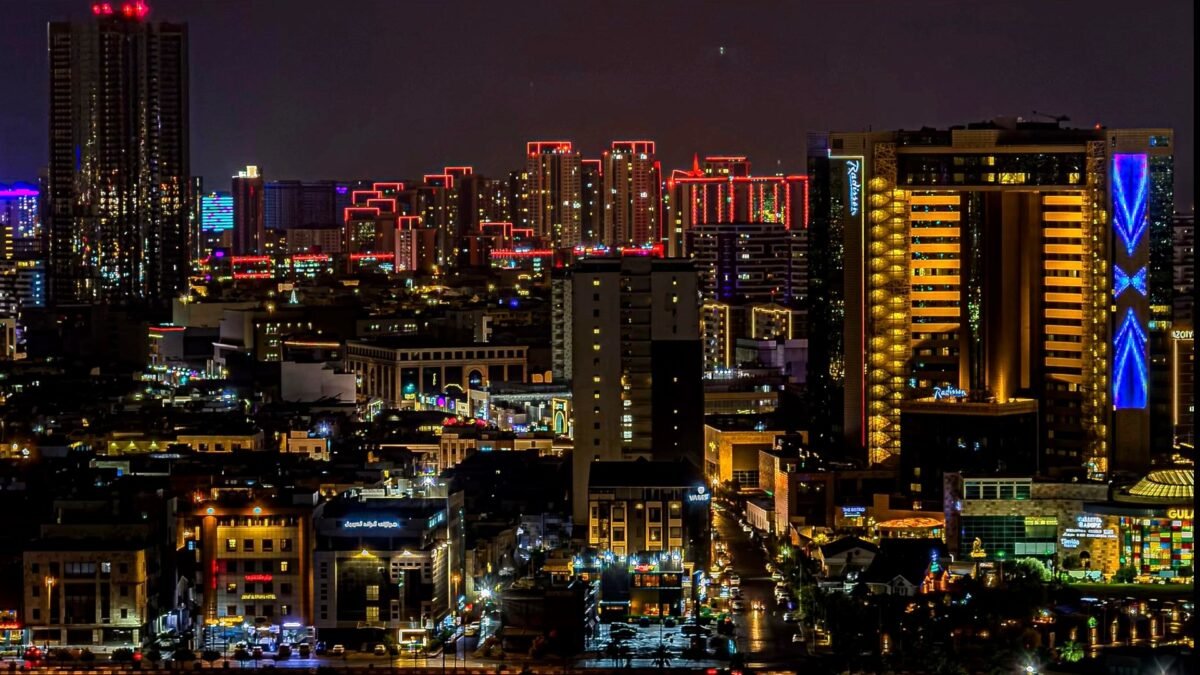
A drone strike on Iraq’s Khor Mor gas field late on Sunday night set fire to a storage tank, halted production at the Kurdistan Region’s most important source of fuel for electricity generation, and plunged more than 70 per cent of the semi-autonomous region into darkness, according to Iraqi and Kurdish officials.
The attack struck at about 11pm local time on 8 November, hitting a liquefied petroleum gas (LPG) storage tank at the sprawling complex in the Chamchamal district of Sulaimaniyah province, two sources in the Kurdistan Regional Government’s Ministry of Electricity told Reuters. The impact set the tank ablaze, sent thick smoke rising over the site, and forced staff to take shelter inside the facility, the sources said. Footage verified by Al Jazeera’s fact-checking unit, Sanad, showed smoke and flames rising from the gas field in the Sulaimaniyah governorate.
Dana Gas, the United Arab Emirates-based company that operates the field through the Pearl Petroleum consortium alongside Crescent Petroleum, said in a statement on Monday that production had been suspended after a suspected drone attack. The company said the fire had been extinguished, that no member of staff had been injured, and that it was assessing the damage before deciding when output could resume, according to Reuters.
The consequences for ordinary people across Iraqi Kurdistan were immediate and severe. Omid Ahmed, a spokesperson for the Kurdistan Regional Government’s Ministry of Electricity, said the attack had suspended gas supplies to power plants serving Erbil, Sulaimaniyah, Bazian, Chamchamal and Duhok, the official Iraqi News Agency reported. The ministry put the generation lost at between 2,500 and 2,800 megawatts — roughly three quarters of the region’s normal output. Security sources cited by Al Jazeera put the reduction in grid capacity at between 70 and 80 per cent, leaving more than 70 per cent of the region without electricity.
Iraqi Prime Minister Ali al-Zaidi said an initial assessment had found no casualties and ordered a joint investigative committee with the Kurdish authorities to establish the circumstances of the attack, the Iraqi News Agency reported. In a joint statement, the Kurdistan Region’s ministries of natural resources and electricity described the incident as a “terrorist attack” and said they were working to minimise its impact.
No group has claimed responsibility for the strike, and no official attribution has been made. A Kurdish security source told the news agency Rudaw that the projectile had been launched from the direction of Tuz Khurmatu, a disputed town south of Kirkuk outside the Kurdistan Region’s control, but that claim has not been independently confirmed. Reports also differed on the number of drones involved: two sources in the regional electricity ministry told Reuters that a single drone had struck the LPG tank, while a source cited by the Iraqi broadcaster Al-Sumaria counted three. The Media Line, citing Xinhua, reported that three drones had struck the facility at about 11.10pm local time, and that other energy installations, including the Khormala and Sarsang oil fields, had also been targeted.
The regional electricity ministry said it would try to keep power flowing to hospitals and water treatment plants by running the Dukan and Darbandikhan hydroelectric stations and power plants that can burn alternative fuel. The ministry said electricity supplies could begin recovering gradually from midday on Monday, but that a return to normal supply depended on gas production restarting at Khor Mor.
A field that has been hit before
Khor Mor is not just another gas field. It is the largest gas field in the Kurdistan Region and the main domestic source of gas for the region’s power stations, producing about 750 million standard cubic feet of gas a day after the KM250 expansion, commissioned in October 2025, added 250 million cubic feet a day of processing capacity. The field has produced gas since October 2008, and the gas it supplies feeds the power stations that light and heat the homes of millions of people across Erbil, Sulaimaniyah and Duhok. When Khor Mor stops, the lights go out across the region. Sunday night proved the point in the starkest possible way.
It is also a field with a long history of being attacked. A drone strike in April 2024 killed four foreign workers at the site. On 26 November 2025, two drones hit its storage tanks and forced a shutdown that brought power cuts across the region. In July 2026, Dana Gas shut down the field’s main production facilities, citing credible security threats and regional tension, before restarting production later that month. Sunday’s attack ended a roughly four-month pause in direct hits on the field, according to reports, and it struck a part of the complex — the “Old Field” section that produces liquefied petroleum gas — that had not been targeted before, Kurdistan24 reported.
Kurdish officials have blamed Iranian-backed militias for earlier attacks on the region’s energy sites, according to Reuters, and the pattern of strikes on Khor Mor has long been read in Erbil as a message: the region’s energy infrastructure, and with it its economic lifeline, is exposed. But no evidence has been presented linking Sunday’s attack to any particular group, and Al Jazeera reported that it was not clear whether the strike was related to the war between the United States and Israel on one side and Iran on the other, which has dominated the region’s politics throughout 2026.
A region caught between Baghdad, Tehran and Washington
The attack lands in the middle of a war that has already redrawn the politics of the Middle East this year. The United States and Israel have been at war with Iran since late February 2026, a conflict that has included American strikes on Iranian nuclear facilities, an Iranian missile campaign, a United States naval blockade of Iranian oil exports, and repeated attacks on shipping in the Gulf. Iraq, which hosts both American forces and powerful Iran-aligned armed groups, has been caught in the middle of that confrontation from the start.
Baghdad has sought to balance its relationships with both Iran and the United States, a balancing act that has been repeatedly complicated by the Iran-backed militants who still hold power in parts of Iraq and who targeted attacks on Gulf neighbours at the beginning of the conflict, according to Reuters. Iran, in turn, has launched attacks against Iranian Kurdish opposition groups based in northern Iraq. The Kurdistan Regional Government, which exercises autonomy in northern Iraq, maintains close ties with Washington, underpinned by significant American investment in the region’s energy sector.
The timing of Sunday’s strike is therefore impossible to ignore, even though no link has been established. It came a day after President Donald Trump told CNN that fresh American strikes on Iran were “highly unlikely” if talks between Washington and Tehran made progress, while warning that three American aircraft carriers were “fully locked and loaded” and naming 38 bridges in Iran as targets that could be destroyed within an hour. It also came as Iran’s foreign minister, Abbas Araghchi, said there had been no progress in talks with the United States, and as the American secretary of state, Marco Rubio, told allies in Paris that a war on Iran was unpopular but “necessary” to stop a nuclear threat. The region is, in other words, in a moment of suspended escalation — a ceasefire of sorts between rounds — and the Khor Mor strike is a reminder that the war’s shadow falls well beyond the battlefield.
Whether the attack was a deliberate attempt to exploit that moment, a local score being settled, or something else entirely, remains unknown. What is known is that it was precise: it hit the storage and loading area that turns Khor Mor’s gas into the fuel that powers the region, and it did so at night, when the grid was carrying the evening load. The choice of target, and the scale of the disruption it caused, suggests an attacker who understood exactly what Khor Mor means to Kurdistan.
What the blackout means for millions of people
For the people of the Kurdistan Region, the attack is not an abstraction about energy security. It is a night without light, heat or running water, in a region where winter is approaching and where electricity is the difference between a functioning home and a cold, dark one. Hospitals and water treatment plants have been given priority, according to the electricity ministry, but for households, businesses and schools across Erbil, Sulaimaniyah, Bazian, Chamchamal and Duhok, the loss of between 2,500 and 2,800 megawatts of generation means hours — and possibly days — of power cuts.
The region’s electricity supply was already fragile. Kurdistan’s grid has long struggled to meet demand, and residents are accustomed to scheduled outages and to the hum of private generators. But a sudden loss of three quarters of generation capacity is of a different order. It strains the hospitals that must run on backup power, the water plants that must keep pumps turning, the bakeries and the cold stores, and the families who cannot afford a generator of their own. The ministry’s assurance that supplies could begin recovering from midday on Monday offers some hope, but it is conditional on engineers being able to inspect the damage and restart production — a process that, after the November 2025 strike, took about a week to restore normal output.
There is also a financial cost. Dana Gas and its partners in Pearl Petroleum have invested heavily in expanding Khor Mor, including the KM250 expansion completed last year. Every day the field is offline is a day of lost revenue and a day in which the consortium’s insurers, investors and lenders ask harder questions about the security of an asset that has now been hit repeatedly. The company’s decision in July to shut the field’s main production facilities on the basis of credible security threats already signalled how seriously it takes the risk. Sunday’s attack will intensify that debate, and it may affect the appetite for further investment in Kurdish energy at a time when the region badly needs it.
The investigation and the search for answers
The joint investigation ordered by Prime Minister al-Zaidi will now try to answer the questions that matter most: who launched the drone, where it was launched from, and why. The direction of Tuz Khurmatu, suggested by a Kurdish security source, points towards the disputed territories south of Kirkuk, an area where the writ of neither Baghdad nor Erbil runs cleanly and where armed groups have long operated. But a launch direction is not an attribution, and the history of attacks on Khor Mor suggests that definitive answers are rarely forthcoming. No group claimed the November 2025 attack either, and no group claimed the April 2024 attack that killed four workers.
The investigation also has a political dimension. The relationship between Baghdad and Erbil has long been strained over oil, gas, revenue and territory, and an attack on Kurdistan’s most important energy asset inevitably becomes part of that argument. The federal government in Baghdad has condemned the strike and pledged to investigate, which is welcome in Erbil, but the Kurdish authorities will be watching closely to see whether the investigation produces results — and whether the federal government is willing and able to protect energy infrastructure in the north. The fact that the prime minister ordered a joint committee, rather than leaving the investigation to the Kurdish authorities alone, is at least a sign that Baghdad recognises the attack as a national, not merely regional, problem.
There is also the question of what, if anything, the United States will do. Washington has significant investments in Kurdish energy, and the Kurdistan Regional Government is one of America’s closest partners in Iraq. An attack on an asset operated by a company listed on the Abu Dhabi Securities Exchange, in a region that hosts American personnel, is the kind of incident that would normally draw a statement from Washington. Whether it draws more than a statement — and whether it affects the calculations around the wider confrontation with Iran — remains to be seen.
Analysis: Why It Matters
A single point of failure for an entire region
The most striking fact about Sunday’s attack is how little it took to darken a region of millions of people. One drone, one storage tank, one fire — and within hours, more than 70 per cent of Iraqi Kurdistan had lost power. That is not a failure of the Kurdish electricity system alone; it is a structural vulnerability. Khor Mor is the region’s energy heart, and like any heart, it is a single point of failure. The KM250 expansion made the field bigger and more productive, but it did not make the region’s power supply more resilient. If anything, it concentrated more of the region’s electricity in a single place, and therefore made the consequences of an attack on that place more severe.
This is a lesson that extends far beyond Kurdistan. Energy infrastructure is the soft underbelly of modern states: it is large, fixed, difficult to defend, and impossible to hide. A drone that costs a few thousand dollars can disable a facility worth billions and deprive millions of people of power. The economics of that asymmetry are terrifying, and they explain why energy sites have become such attractive targets in the wars of the past decade, from the attacks on Saudi oil facilities in 2019 to the strikes on Ukrainian power stations and now to Khor Mor. The technology of attack has become cheaper and more accessible faster than the technology of defence, and the gap is widening.
For Kurdistan, the practical question is whether the region can afford to keep its energy eggs in one basket. Diversification — more generating capacity from other sources, more interconnection with the federal grid, more storage — would reduce the impact of the next attack, but it costs money the region does not easily have, and it takes time that the region’s enemies may not grant. The alternative is to harden Khor Mor itself, with better air defences and better protection, but that too is expensive and, as the history of attacks on the field shows, no defence is perfect. There is no cheap answer, and the people of Kurdistan are the ones who pay the price for that.
The politics of deniability
The second striking fact is that nobody has claimed the attack, and nobody is likely to. The pattern of strikes on Khor Mor — April 2024, November 2025, now November 2026 — is a pattern of unattributed violence. The attackers do not want the credit; they want the effect. That is the logic of deniable warfare in the modern Middle East: a drone launched from a disputed town, no claim of responsibility, and a trail that leads nowhere definite enough to justify retaliation.
This deniability serves everyone except the victims. It serves the attacker, who achieves the disruption without the consequences. It serves the governments who would otherwise have to respond, because a response requires an attribution they do not have. And it serves the wider politics of the region, where every actor would prefer to avoid a further escalation of a war that is already the most dangerous the Middle East has seen in years. But for the people of Kurdistan, deniability means impunity. It means that the people who killed four workers in 2024 and the people who cut the power in 2025 and 2026 have never been held to account, and that there is no reason to believe they will not strike again.
The joint investigation ordered by the prime minister is a necessary step, but the history of such investigations is not encouraging. The November 2025 attack was never attributed either, and the April 2024 attack that killed four people produced no public accountability. Unless the investigation is backed by real political will — and by intelligence sharing between Baghdad, Erbil and their international partners — it risks becoming another file that is opened with ceremony and closed in silence.
A warning shot in a wider war
The third point is the context in which this attack happened. The Middle East is in the middle of a war that has already involved the United States, Israel and Iran directly, and that has drawn in Iraq, Yemen, Lebanon, Syria and the Gulf states. The fighting has been paused and resumed several times this year, and the current moment is one of those pauses: talks are being discussed, threats are being made, and everyone is waiting to see whether diplomacy or escalation comes next.
In such a moment, an attack on a gas field in Kurdistan is a message, whether or not it was intended as one. It tells the United States and its partners that the war’s reach is not limited to the battlefield, and that the infrastructure on which their allies depend is exposed. It tells the Kurdistan Regional Government that its closeness to Washington carries a cost. And it tells the people of the region that the war is not something that happens elsewhere, on television, but something that can turn off their lights on a Sunday night.
It would be a mistake to assume a direct link to the war with Iran without evidence, and this article does not make that assumption. But it would be an equal mistake to pretend that the attack happened in a vacuum. The Middle East’s wars have a way of spilling over, and Khor Mor has been spilled over before. The question is whether this attack is the beginning of a new phase in that spillover, or a one-off incident that will be absorbed and forgotten. The answer will depend on what the investigation finds, on what happens in the talks between Washington and Tehran, and on whether the region’s leaders decide that the protection of civilian energy infrastructure is a red line worth defending.
What it means for Iraq’s future
Finally, the attack is a test for Iraq itself. The country has spent two decades trying to build a state that can provide security and services to its people, and it has repeatedly failed. The electricity sector is the most visible symbol of that failure: Iraqis have lived with power cuts for a generation, and the gap between the electricity the country needs and the electricity it can provide is one of the main sources of public anger. Kurdistan was supposed to be the exception — a region with its own gas, its own power stations and a degree of autonomy that allowed it to do better. Sunday’s attack is a reminder that even the exception is vulnerable, and that the security of energy infrastructure is a national problem that neither Baghdad nor Erbil can solve alone.
The joint investigation is, in that sense, a small but real opportunity. If Baghdad and Erbil can work together effectively to identify the attackers and to protect the field, it would be a rare example of the federal government and the regional government cooperating on something that matters to ordinary people. If they cannot — if the investigation stalls, if the blame game resumes, if the field is hit again — it will be one more confirmation that Iraq’s divisions are deeper than its capacity to overcome them.
For now, the people of Kurdistan are waiting for the lights to come back on. The ministry says supplies could begin recovering from midday on Monday, and the experience of the November 2025 attack suggests that normal output could be restored within about a week. But the deeper question — how a region of millions of people can be left in the dark by a single drone — will not be answered by the return of the power. It will be answered, if it is answered at all, by whether the region’s leaders, and Iraq’s leaders, and their international partners, are willing to treat the protection of civilian infrastructure as the urgent priority it so plainly is.
What to Watch Next
- The damage assessment: Dana Gas said it was assessing the damage after extinguishing the fire. The scale of the damage to the LPG storage and loading facilities will determine how long production stays offline — days, or, as after the November 2025 strike, about a week.
- The power recovery: The electricity ministry said supplies could begin recovering gradually from midday on Monday, with hospitals and water plants given priority. Watch whether the recovery holds, and how long households in Erbil, Sulaimaniyah and Duhok remain without reliable power.
- The investigation: Prime Minister al-Zaidi ordered a joint committee with the Kurdish authorities. Watch for any attribution — and for whether the claim that the drone came from the direction of Tuz Khurmatu is confirmed or dropped.
- Other targeted sites: Reports said the Khormala and Sarsang oil fields were also targeted on Sunday night. Watch for confirmation of damage at those sites, which would suggest a coordinated campaign rather than a single strike.
- The wider war: Watch whether the attack is followed by further strikes on energy infrastructure in Iraq or the Gulf, and whether it affects the talks between Washington and Tehran. Any link to the wider confrontation would raise the stakes considerably.
- The American response: Watch for a statement from Washington, given the United States’ investment in Kurdish energy and its close partnership with the Kurdistan Regional Government.
- Winter: The attack comes as winter approaches in northern Iraq. A prolonged outage in cold weather would be far more serious than a summer one, and the region’s ability to keep homes heated will be a test of the recovery.
Sources
- Reuters — “Iraq’s Khor Mor gas field suspends output after drone attack, operator says” (via Devdiscourse)
- Al Jazeera — “Drone attack suspends production at Iraq’s Khor Mor gasfield”
- The Media Line — “Drone Strikes Shut Down Iraqi Kurdistan Gas Field, Cut Power Output by Up to 80%”
- The Insight International — “Drone attack halts gas production at Khor Mor field in Sulaimani”
- Press TV — “Drone attack in Iraq’s Kurdistan region halts production at major gas field”
- Business Times — “Khor Mor Gas Field Attack Cuts 2.8 Gigawatts in Kurdistan”

About the Author — Abdul Mannan
Related Articles
Trump Says Fresh Strikes on Iran ‘Highly Unlikely’ if Talks Progress — But Warns Three Carriers Are ‘Locked and Loaded’
Trump told CNN renewed attacks on Iran are 'highly unlikely' if talks progress — while warning three US…
First Winter Storm Floods 70,000 Tents in Gaza as Displaced Families Face a Harsh Winter Without Shelter
Heavy rain has flooded at least 70,000 tents sheltering displaced Palestinians across Gaza in the first winter storm…
Herzog Hands Eisenkot the Mandate to Form Israel’s Next Government in Setback for Netanyahu
President Isaac Herzog has chosen opposition leader Gadi Eisenkot to make the first attempt at forming Israel's next…