
Lame-Duck Congress Returns With Five Weeks to Fund the Government and Decide Pete Hegseth’s Fate

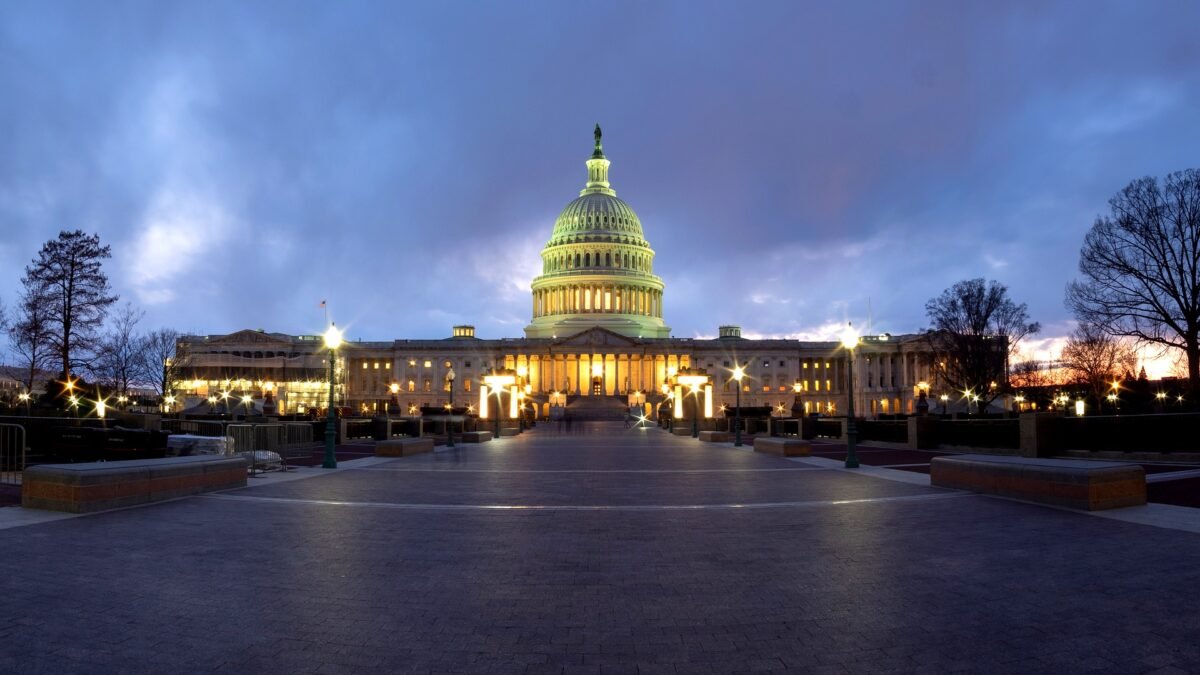
Congress returned to Washington on Monday for a five-week lame-duck session, and the lawmakers who lost the midterm elections still hold all the power. The House came back after a seven-week recess and the Senate after more than a month away, according to reporting by ABC News, USA Today and The Wall Street Journal, and the outgoing Republican-led 119th Congress now has fewer than 25 working days to fund the government, decide the fate of the secretary of defense and clear a pile of expiring laws before a new Democratic majority takes over on 3 January 2027.
Democrats won control of both chambers in the midterm elections on 3 November, but the new Congress is not sworn in until January. Until then, the outgoing majority keeps the gavels, the committee chairs and the full power to pass laws and confirm nominees. The session runs for about five weeks, with a break for Thanksgiving, and the House calendar leaves only 16 session days between Monday and the federal funding deadline on 11 December, according to the calendar published by Majority Leader Steve Scalise.
Three fights will define the session. The first is money: the stopgap law keeping the government funded expires on 11 December, and not one of the 12 regular spending bills for fiscal year 2027 has been signed into law. The second is a test of President Donald Trump’s grip on his own party: a vote on impeaching Secretary of Defense Pete Hegseth could come as early as Wednesday, and several Republican sources expect it to pass, according to CNN. The third is the handover itself: more than 109 incoming House freshmen — the largest class since 1933, according to ABC News — are arriving for orientation while both parties elect new leaders and two Senate races remain uncalled.
The money clock: 11 December
The most urgent deadline is funding. The Continuing Appropriations and Extensions Act, 2027, signed on 2 September, keeps every federal agency funded from 1 October through 11 December, according to the Congressional Research Service and a memo from the House Budget Committee. The Congressional Budget Office estimates that the law provides about $1.701 trillion in annualised discretionary budget authority. If Congress passes nothing by 11 December, parts of the federal government shut down, and a funding gap begins on 12 December.
Not one of the 12 regular spending bills for fiscal year 2027 has been enacted. The House has passed three of them, while the Senate has not passed any, according to the law firm Holland & Knight and the Committee for a Responsible Federal Budget. The House-passed bills cover agriculture, military construction and veterans affairs, and national security and the State Department. The likeliest outcome, according to congressional experts cited by USA Today, is another short-term extension that keeps the government open into early 2027 and leaves the final spending fights to the incoming Democratic majority and President Trump.
The deadline carries more than the government’s operating budget. The same stopgap law extends federal highway and transit programmes, the National Flood Insurance Program and the Defense Production Act, and all of those authorities expire on 11 December as well, according to Holland & Knight and the Committee for a Responsible Federal Budget. The annual defence policy bill, which the House passed in July, has stalled at a procedural vote in the Senate, and farm and highway programmes face deadlines in mid-December. The Senate will also try to advance a bipartisan permitting reform bill during the session, according to Roll Call.
The shutdown deal’s final steps
The session opens with the funding package that the Senate advanced on Sunday night. Senators voted 60 to 40 to move the bipartisan package forward, with eight members of the Democratic caucus breaking ranks, according to the Associated Press. The eight were Senators Jeanne Shaheen, Maggie Hassan, Tim Kaine, Dick Durbin, John Fetterman, Catherine Cortez Masto and Jacky Rosen, along with independent Senator Angus King of Maine, who caucuses with the Democrats.
The package combines three full-year appropriations bills — covering agriculture, veterans affairs, the legislative branch and military construction — with a continuing resolution funding the rest of the government through 30 January. It reverses the Trump administration’s mass firings of furloughed federal workers, protects workers from further reductions in force through 30 January, guarantees back pay and restores food assistance funding through next September, according to the Associated Press and The Hill. It does not extend the enhanced Affordable Care Act subsidies that expire on 1 January; Senate Majority Leader John Thune has promised a vote on extending them by the second week of December, with no guarantee of passage.
Final passage in the Senate is expected on Monday night, and Speaker Mike Johnson has said he plans a House vote by Wednesday, according to Fox News. The funding lapse began on 1 October and is now in its 41st day, the longest in American history, according to the Associated Press. The Senate minority leader, Chuck Schumer, voted against advancing the package after a caucus meeting lasting more than two hours, and said: “We will not give up the fight.” Senator Bernie Sanders called the deal a “horrific mistake”, while Representative Greg Casar called it a betrayal.
The Hegseth test
The sharpest fight of the session is over Pete Hegseth. Representative Thomas Massie, a Kentucky Republican who is leaving Congress, is expected to reintroduce a privileged resolution carrying eight articles of impeachment against the secretary of defense on Monday, according to USA Today and CNN. A privileged resolution forces a vote in the House, and Massie told CNN that he will introduce the new articles on Monday, which would force a vote by Wednesday. He said passage is now “far more likely”, and several Republican sources expect the resolution to pass, according to CNN.
Massie first sought to force a vote in September, but Speaker Mike Johnson sent lawmakers home early to avoid a vote on the measure until after the midterm elections. Massie must restart the process because his September notice expired during pro forma sessions, and he has described the updated articles as “99.99% the same”, with minor corrections, according to The Washington Sun. The only way he drops the effort, he has said, is if Hegseth resigns or the president fires him.
The eight articles accuse Hegseth of waging war in Iran without congressional authorisation, launching lethal military strikes against alleged drug traffickers in the Caribbean Sea, ignoring laws requiring the minimisation of civilian casualties, conducting military strikes in Yemen, capturing Venezuelan President Nicolás Maduro in a military raid and using a Pentagon investigation to retaliate against Senator Mark Kelly of Arizona, according to USA Today. Massie wrote in the resolution that Hegseth “has demonstrated that he will remain a threat to civilians, the lawful conduct of United States military operations, the integrity and credibility of the United States Armed Forces, and the Constitution if allowed to remain in office”.
The effort gained momentum on Sunday when House Minority Leader Hakeem Jeffries, who is expected to become speaker in January, said he was a “hard yes” on the resolution. “I’m a hard yes on the Hegseth resolution,” Jeffries said on ABC’s “This Week”. “The so-called secretary of defense has abused his power, undermined our national security and engineered this reckless and costly war of choice in Iran, which has skyrocketed prices on the American people and made the country less safe. Pete Hegseth has got to go.” Jeffries predicted “incredibly strong support” among House Democrats, who plan to discuss the resolution when they meet on Tuesday.
Some Republicans have urged the White House to fire Hegseth and install a new leader at the Pentagon before Democrats reclaim control of Congress in January, according to USA Today. Representative Adam Smith of Washington, the top Democrat on the House Armed Services Committee, said: “I think there are enough Republicans who want him gone.” USA Today reports that Hegseth’s combative approach to the congressional armed services committees, which historically have a close relationship with the Pentagon’s leader, has alienated both Democratic and Republican lawmakers.
Hegseth has vowed to fight the effort. In a video address on 5 November, he called Massie a “disgruntled, defeated congressman” who had joined Democrats to drop “sham articles of impeachment against yours truly”. Trump has also defended Hegseth, and told reporters on 8 November: “He’s guilty of two things: basically winning two wars. I believe we saved the Middle East and Israel combined.” Republican leaders are expected to try to table the resolution, according to CNN. Even if the House voted to impeach, removing Hegseth would take a two-thirds vote in the Senate, which is unlikely while Republicans still hold the chamber. Massie, who lost his primary to a Trump-backed challenger, wrote on social media on Monday: “The question is whether he committed impeachable acts, and the answer is yes, eight times.”
Miller’s first day — and Trump’s “too tough” admission
Monday is also Stephen Miller’s first day as White House chief of staff. Miller replaces Susie Wiles, who resigned last Thursday and will stay on to run political operations, according to NPR. The appointment puts the architect of the administration’s immigration crackdown in charge of the White House at the very moment the president has conceded that the policy went too far.
In his first interview since the midterm elections, Trump told the programme 60 Minutes that his deportation policy “was too tough” and “ultimately… hurt me”, according to ABC News. He said he deserved an “A+” for closing the border but was hurt by the removal of people with jobs whose only offence was illegal entry. He said yes when asked whether a deal with Democrats could include legal status for undocumented workers. Exit polls published by CBS News showed that 58% of voters think the administration’s immigration actions went too far.
The tension is obvious: the immigration policy’s chief architect is now running the White House. Jeffries said on Sunday that his party will not work with Miller, according to USA Today. The question now is whether Immigration and Customs Enforcement guidance changes under a chief of staff who built the policy the president has just criticised, or whether the admission was campaign language that changes nothing in practice. The midterms gave the answer on the politics: Trump and Vice President JD Vance have attributed the Republicans’ historic losses in part to the conflict with Iran, which has pushed up petrol prices, according to USA Today.
Two races still to be called
The size of the incoming Democratic majority is still not final, because two Senate races remain uncalled a week after the election. In Mississippi, Democrat Scott Colom narrowly leads Republican Senator Cindy Hyde-Smith, with the count due for certification by 13 November. The state has no automatic recount, and no Democrat has represented Mississippi in the Senate since 1989, according to Monday’s briefings. In Alaska, Democrat Mary Peltola has slightly more first-place votes than Republican Senator Dan Sullivan, but neither has a majority. Under Alaska’s ranked-choice system, the last-place candidates will be eliminated on 18 November and their voters’ second choices redistributed, and an early analysis suggests those votes will tip the race to Sullivan, according to the Alaska Beacon.
Democrats are poised to win at least 254 seats in the House and 54 in the Senate, along with 30 governorships, according to the Palm Beach Post. The two uncalled races will decide the final margins, and with them the size of the majority that takes power in January.
The newcomers and the leadership scramble
More than 109 incoming House freshmen are arriving in Washington over the next two weeks for orientation, the largest class since 1933, according to ABC News. They will learn the building, hire staff and choose offices while the outgoing Congress finishes its work around them. New-member orientation is already under way, according to Monday’s briefings.
Both parties are also choosing their leaders for the next Congress. Senate Republicans vote on Tuesday on their leadership, with John Thune running for minority leader, and House Republicans are sorting out their own scramble after Speaker Mike Johnson said he will not run to lead his party in the minority. The Wall Street Journal reports that Republicans are weighing how much of their remaining agenda they can still move, from judicial confirmations to energy permitting deals, against simply finishing the must-pass bills and going home.
Democrats are separately preparing the oversight agenda they plan to open in January, including investigations of the administration’s immigration enforcement and its firing of federal workers. The lame duck is therefore not only the end of one Congress but the staging ground for the next one’s first fights.
The rest of the list
Beyond funding and impeachment, the session carries a long list of unfinished business. The debt ceiling must be raised by mid-2027 to avoid a potential default, according to the Committee for a Responsible Federal Budget, and some lawmakers may try to attach it to the year-end bills. October’s consumer price index data arrives on Tuesday, and will be read as the first hard economic evidence of the post-election mood.
Abroad, the week is crowded. President Trump and Vice President Vance meet Qatar’s prime minister, Sheikh Mohammed bin Abdulrahman Al Thani, at the White House on Monday, with Qatar expected to urge the president to give negotiations with Iran more time rather than resume major military operations, according to Reuters. The United States struck Qeshm Island again overnight into Monday, targeting radar systems for air defence and ship navigation as well as missile-launcher and mine-laying bases, a senior Iranian source told Reuters. Secretary of State Marco Rubio joins foreign ministers in Paris on Monday and Tuesday for the G7 meeting, his first trip abroad since the midterms, with Iran, Ukraine, energy and artificial intelligence on the agenda.
Trump said on Sunday that he expects a three-way meeting with Xi Jinping and Vladimir Putin in China next week, at the Asia-Pacific Economic Cooperation summit in Shenzhen on 18 and 19 November, to discuss ending the Iran war and “denuclearization”, according to the Manila Times. Beijing said on Monday that it is in communication with the relevant parties about the meeting. The Wall Street Journal reports that Putin wants to use the talks to broker a Ukraine deal on Moscow’s terms.
Oil prices extended their slide on Monday, with Brent crude falling to about $93 a barrel, its lowest since early September and down nearly 5% from Friday’s settlement, while West Texas Intermediate dropped to about $87, according to market reports. That follows last week’s 16% drop, Brent’s biggest weekly decline since the start of the Covid-19 pandemic. Traders are pricing in a possible diplomatic deal based on Trump’s remarks and the Qatar meeting, despite the continued attacks on shipping.
Analysis: Why It Matters
A lame duck with real power
Lame-duck sessions are often treated as caretaker periods, a few weeks of tidying up before the new Congress arrives. This one is not. The outgoing majority still holds the gavels, and the decisions it takes in the next five weeks will bind the incoming Democratic majority on funding, on defence policy and on the fate of a cabinet secretary. The losers of the election are writing the first chapter of the winners’ term. That is the constitutional design — power changes hands on a fixed date, not on election night — but it means the most consequential votes of the year are being cast by lawmakers the voters have just rejected.
The Hegseth vote is a verdict on the midterms
The impeachment resolution is, on its face, about whether a secretary of defense broke the law. In practice, it is a referendum on the Iran war and on the price Americans are paying for it. Massie’s articles rest on the claim that the war was waged without congressional authorisation, and Jeffries’s case rests on the claim that the war “skyrocketed prices”. Both arguments are aimed at the same audience: Republicans who lost their seats last Tuesday and have nothing left to lose by defying the president. The fact that several Republican sources expect the resolution to pass tells us how thoroughly the midterm result has changed the arithmetic of loyalty. A vote that would have been unthinkable in September is now, in Massie’s words, “far more likely”. If it passes, it will be the first time the House has impeached a cabinet secretary since 1876, and it will be a Republican-authored rebuke of a Republican administration.
The funding trap has two clocks
Congress is caught between two deadlines that point in opposite directions. The immediate one is the package advanced on Sunday: pass it this week and the government reopens through 30 January. The structural one is 11 December, when the stopgap law expires and none of the 12 regular spending bills is law. The likeliest outcome, as the experts cited by USA Today put it, is another short-term extension into early 2027 — which means the incoming Democratic majority will inherit the spending fight rather than settle it. That suits both parties in the short term and neither in the long term: it avoids a second shutdown before Christmas, but it guarantees that the first act of the new Congress will be another funding crisis, with the same arguments and the same deadline pressure.
Miller and the immigration contradiction
The most revealing appointment of the session is the one that has nothing to do with Congress. Stephen Miller, the architect of the deportation policy, now runs the White House on the same day the president says that policy was “too tough” and hurt him. One of those two facts will give way. Either Miller moderates a policy he built, which would be an extraordinary act of self-reversal, or the president’s admission was rhetoric for a post-election audience and the policy continues unchanged under the man who designed it. The 58% of voters who told exit pollsters that the administration went too far will be watching for the answer in the enforcement numbers, not in the interviews.
The handover nobody can rush
Finally, the session is a reminder that American power transfers slowly by design. Two Senate races are still uncalled, more than a hundred new members are still finding their offices, and the leadership of both parties is still being chosen. The new majority will not know its exact size until Alaska’s ranked-choice tabulation on 18 November and Mississippi’s certification on 13 November. Until then, the outgoing Congress governs with borrowed authority and the incoming Congress prepares with incomplete information. The five weeks ahead will be messy, and that messiness is the point: the system is built to make power change hands in an orderly way, even when the election that decided it was anything but orderly.
What to Watch Next
- Monday night: the Senate’s final passage vote on the bipartisan funding package, and whether the eight Democrats who broke ranks on Sunday hold together.
- Tuesday: the House Democratic caucus discusses the Hegseth resolution; Senate Republicans elect their leadership; October’s consumer price index is published.
- Wednesday: the House vote on the funding package, and the deadline Massie has set for a vote on the Hegseth impeachment articles; Veterans Day.
- Thursday 13 November: the certification deadline for the Mississippi Senate race, where Scott Colom narrowly leads Cindy Hyde-Smith.
- Tuesday 18 November: Alaska’s ranked-choice tabulation, and the APEC summit in Shenzhen, where Trump expects to meet Xi Jinping and Vladimir Putin.
- 11 December: the funding deadline, when the stopgap law, highway and transit programmes, the National Flood Insurance Program and the Defense Production Act all expire.
- 3 January 2027: the new Congress is sworn in, and the Democratic majority takes control of both chambers.
Sources
- USA Today — Republican moves to force Pete Hegseth impeachment vote this week
- Zark News — Congress Returns for a Five-Week Lame-Duck Session With a Shutdown Deadline and an Impeachment Fight
- House Budget Committee — December 11: Congress bought time past the midterms. Now what?
- Holland & Knight — Beyond the Midterms: Congress Faces Converging Year-End Deadlines
- San Francisco Inquirer — Congress returns with 16 House session days before federal funding runs out on Dec. 11
- Committee for a Responsible Federal Budget — Lame Duck Session Shouldn’t Be an Excuse to Borrow More

About the Author — Abdul Mannan
Related Articles

Republican Thomas Massie Forces House Vote to Impeach Defence Secretary Pete Hegseth Over the Iran War
Republican Thomas Massie has forced the House to vote by Wednesday on eight articles of impeachment against Defence…

Stephen Miller Takes Over as White House Chief of Staff as Trump Doubles Down After Midterm Defeat
Stephen Miller starts work as Donald Trump's chief of staff on Monday, replacing Susie Wiles in the first…
Senate Votes 60-40 to Advance Deal to End 40-Day Government Shutdown as Eight Democrats Break Ranks
Eight members of the Democratic caucus broke ranks to advance a funding package that would end the longest…