
Stephen Miller Takes Over as White House Chief of Staff as Trump Doubles Down After Midterm Defeat

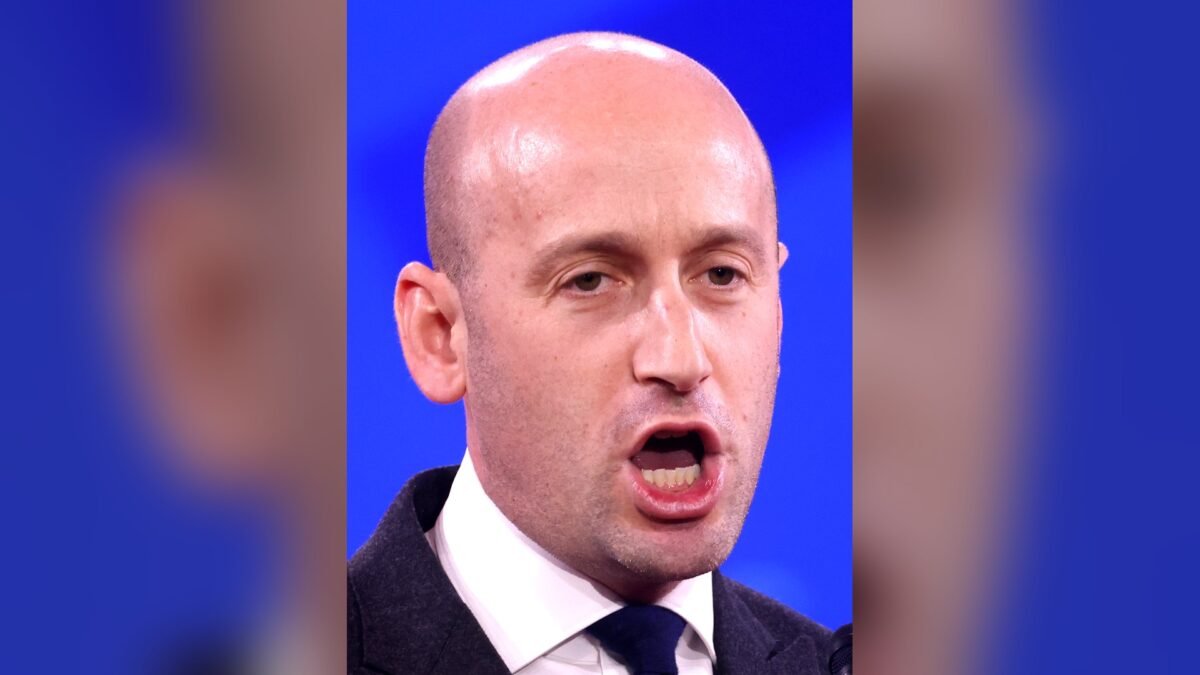
Stephen Miller takes up the most powerful staff job in American government on Monday, becoming President Donald Trump’s White House chief of staff in the first major shake-up of the administration since Republicans suffered heavy losses in last week’s midterm elections.
Miller, 41, the architect of Trump’s hardline immigration agenda and one of his longest-serving advisers, replaces Susie Wiles, who is leaving the post she has held since the start of the president’s second term. Trump announced the change on Friday in a post on his Truth Social platform, saying Miller would begin as chief of staff on Monday, 9 November 2026, while Wiles moves to his political operation.
“I am pleased to announce that Mr. Stephen Miller, the current Deputy Chief of Staff of the Trump Administration, and one of my most trusted advisors, will become the Chief of Staff starting Monday, November 9, 2026,” Trump wrote, according to reports of the post. “Susie Wiles, who has done an outstanding job, will be moving over to the Trump Political Operation. I want to thank her for her service as Chief of Staff — She has done a great job!”
According to IANS, the White House separately confirmed Miller’s appointment as the 33rd White House chief of staff and released endorsements from cabinet members, Republican lawmakers and conservative allies.
The appointment lands on the first working day of a week that will define the rest of Trump’s presidency. The Senate is expected to give final approval on Monday night to a funding package that would end the 40-day government shutdown, the longest in American history, and the House is expected to vote on Wednesday. At the same time, Democrats who won control of both chambers of Congress in the 3 November midterms — and who take power on 3 January 2027 — have made clear they regard Miller as their chief adversary. Miller begins his new job, in other words, at the exact moment the White House enters its most confrontational phase.
The announcement
Trump announced the move on Friday, 6 November, three days after voters delivered what CNN described as a “catastrophic” midterm defeat for Republicans, who lost their majorities in both the House and the Senate. The decision was the first major personnel change since the election, and it came after the president had grown visibly angrier as he watched coverage of the losses, according to people familiar with his response who spoke to CNN.
Trump initially appeared unfazed by the results on election night, but his mood soured over the following days, CNN reported. He made his displeasure with his political team known at a tense election-night reception in the East Room, according to one person familiar with the matter, venting that the deep Republican losses were the result of their strategy. Wiles was among those Trump blamed, the person said.
Wiles submitted her resignation on Thursday evening, according to two sources familiar with the matter cited by CNN. A person familiar with her thinking said she decided to resign believing the president should be able to tap someone to lead his White House who had his confidence. The same person noted that Wiles had endured a tough year personally, having recently completed treatment for breast cancer, and said: “It wasn’t worth her staying in a job Trump was making clear he didn’t want her in.”
Trump himself pushed back on the idea that the election caused the departure. Speaking publicly late on Friday, he said Wiles’s exit was “not because of the election”, adding: “It’s just time. Sometimes you change.” As he left the White House for an event in Florida on Friday, he praised Miller warmly. “Stephen’s been great, and sometimes in life, you gotta make moves,” he told reporters, according to CNN. “Stephen’s been with me from beginning. He gets it, very good politically, and he’s a very good man.”
The president also signalled on Friday that the shake-up would not be the last. Asked by CBS News whether he intended to fire more people, he replied: “I do.” “I love my Cabinet. I think they’re good. But I’ll be doing maybe a few changes. I don’t want to mention who,” he said, according to CNN.
Miller welcomed the appointment in a post on X on Friday. “It has been the privilege of my lifetime to have served on his team from Day One, and I am honored beyond words to serve as his White House Chief of Staff,” he wrote. He thanked Wiles for her service and friendship before adding: “The mission now is more clear than ever: Fight with all of our soul to support our President and defend this magnificent Republic.”
Wiles, for her part, said in a statement on X that serving Trump was “the honor of a lifetime” and that she was “proud to have been a part of what we’ve accomplished together”. “While my role may be changing, my commitment to the President and the mission never will,” she added.
Why Wiles left
Wiles’s departure closes one of the most consequential tenures of any modern White House chief of staff. Before taking the job, she managed Trump’s 2024 election campaign, and she became the first woman ever to serve as White House chief of staff. She adopted a strategy that did not seek to fundamentally alter the way Trump carried out the job or change his priorities, CNN reported; instead, she sought to use influential figures within Trump’s orbit to shape his governing agenda.
She lasted longer in the post than any of the four chiefs of staff Trump cycled through during his first term. As recently as 16 October, Trump had insisted she would remain in the job for the foreseeable future. “Susie is here and she’s gonna be here for a long time,” he said, according to CNN.
Her exit nonetheless came as a shock to many in the administration, CNN reported, and multiple White House officials said it left them concerned about the rest of Trump’s second term. “Susie keeps the trains running on time. I don’t know what this looks like moving forward,” one official said. Another Trump ally called it a “catastrophic loss” for the president.
The West Wing has become increasingly factionalised in recent days, according to CNN, with aides describing a workplace filled with tension and infighting, likening it to the “knives out” days of Trump’s first term. Wiles’s departure is likely to accelerate the shift in the balance of power in the president’s inner circle.
Her relationship with Defence Secretary Pete Hegseth had significantly fractured, according to people familiar with the matter cited by CNN. For months, Wiles had raised concerns inside the administration about his leadership of the Pentagon and his role in Trump’s cabinet. Hegseth, whom some in the Republican Party have sought to blame for the party’s midterm losses because of his leadership on the Iran war, welcomed Miller’s elevation, saying in a post on X that Miller “never backs down” and vowing his support.
Wiles is the latest high-ranking woman to depart Trump’s administration and be replaced by a man, CNN noted. Trump previously parted ways with women serving as attorney general, labour secretary and homeland security secretary, among others.
Who is Stephen Miller?
Miller has been at Trump’s side for a decade, and his rise to the top staff job in the West Wing is the culmination of one of the longest ascents in modern American politics. He joined Trump’s 2016 presidential campaign as a senior policy adviser in January 2016 and quickly became an influential voice on immigration, according to USA Today. At the urging of Steve Bannon, he began writing speeches for Trump and helped write the acceptance speech at the 2016 Republican National Convention, as well as Trump’s 2017 inaugural address.
Born in 1985 in Santa Monica, California, Miller graduated from Duke University in 2007, according to USA Today. He began his political career that year, working as press secretary for Minnesota Representative Michele Bachmann before taking a similar role with Arizona Representative John Shadegg. In 2009 he joined the office of then-Alabama Senator Jeff Sessions as press secretary, becoming communications director in 2014. While working for Sessions, he helped lead opposition to the Border Security, Economic Opportunity, and Immigration Modernization Act of 2013, a bipartisan immigration overhaul that passed the Senate but stalled in the House.
During Trump’s first term, Miller helped develop some of the administration’s most controversial immigration measures. Working alongside Bannon, he helped craft early executive actions, including the travel restrictions targeting several predominantly Muslim countries that became widely known as the “Muslim travel ban”, according to USA Today. He was also a leading advocate of the administration’s family separation policy at the southern border and was instrumental in pushing for its implementation, according to The New York Times, as reported by USA Today.
His influence grew further after Trump returned to the White House in January 2025. As deputy chief of staff for policy and homeland security adviser, Miller became a driving force behind the administration’s second-term immigration crackdown, including its push to invoke the Alien Enemies Act to deport people the administration accused of belonging to the Venezuelan gang Tren de Aragua. Invoking the centuries-old law allowed the administration to seek deportations outside the traditional immigration-court process, a move that triggered extensive legal challenges, according to USA Today.
CNN reported that Miller’s power inside the administration became evident in daily 10 a.m. conference calls with Department of Homeland Security officials, where he demanded updates from agencies and exerted pressure on senior officials who delivered less-than-satisfactory results. Officials would often breathe a sigh of relief when Miller directed his ire at other agencies during the calls, CNN reported.
Last year, Miller directed Immigration and Customs Enforcement officials to meet daily quotas of 3,000 immigration arrests — an unprecedented number that the agency struggled to meet, according to CNN. The White House and the Department of Homeland Security have repeatedly denied the existence of arrest quotas. The intense White House pressure has resulted in immigration enforcement casting a wide net on arrests, including targeting people who do not have criminal records, CNN reported.
Miller’s influence has also made him a frequent target of criticism, particularly over his views on immigration and race, according to USA Today. In 2019, the Southern Poverty Law Center reported that leaked emails Miller sent to a former Breitbart editor promoted material associated with white nationalist ideology. Miller, who is Jewish and the grandson of immigrants, has rejected accusations that he is a white nationalist, USA Today reported.
His wife, Katie Miller, has also held several prominent roles in Republican politics. She served as press secretary to then-Vice President Mike Pence from October 2019 to May 2020, and more recently served as a spokesperson for the Department of Government Efficiency, known as DOGE. In August she launched “The Katie Miller Podcast”, a show aimed at Republican women, according to USA Today. CNN reported that she appeared to confirm reporting in Politico that she lobbied for her husband to get the chief of staff job, writing on X in response to the article: “If your wife doesn’t do this, find a new one.” The couple married in February 2020 and have four children.
Allies and enemies alike privately refer to Miller as “the prime minister”, CNN reported, a measure of how much power he already wielded before his promotion. Trump had asked allies over the past several days whether they believed Miller would be a suitable choice to replace Wiles, according to a person familiar with the conversations cited by CNN, and also raised the director of national intelligence, Jay Clayton, as a possible candidate.
The reaction: praise from allies, fury from Democrats
The appointment drew sharply contrasting reactions, with administration officials praising Miller’s experience and Democrats pledging to challenge his policies, according to IANS.
Democratic Senate leader Chuck Schumer said in a statement: “Donald Trump learned nothing from his historic defeat. Stephen Miller is the architect of the most barbaric, inhumane policies of this administration. Trump couldn’t have made a worse choice. Our Democratic majorities will fight him every step of the way.”
House Democratic leader Hakeem Jeffries went further. Appearing on ABC’s “This Week” on Sunday, 8 November, he called the move “an awful choice” and “irresponsible”, and said his party would not work with the new chief of staff. “There’s not going to be any opportunity, certainly, to work with Stephen Miller and what he represents,” Jeffries said, according to USA Today. Jeffries, who is likely to become the next Speaker of the House when Democrats assume the majority in January, had previously called Miller a “dangerous xenophobe”.
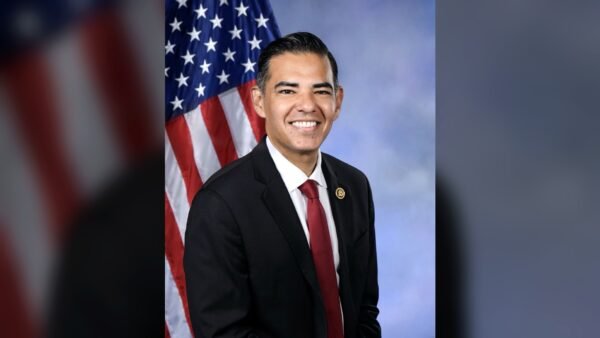
Representative Robert Garcia, the ranking Democrat on the House Oversight Committee, reaffirmed on Friday that Miller would be a top target for investigation, according to CNN. “Stephen Miller should lawyer up,” the California Democrat said. Senator Ruben Gallego of Arizona said Miller should be ready to testify, while California Governor Gavin Newsom called Miller one of the “most vile thugs” to enter the Oval Office and said the pick was “an insult to every American who voted for change on Tuesday”, according to reports.
Senator Alex Padilla of California said the appointment showed Trump was doubling down on the administration’s immigration agenda. “Trump is doubling down – so will we,” Padilla said, according to IANS. “We will use every tool at our disposal – oversight, investigations, subpoenas, and our leverage over federal funding – to expose this Administration’s abuse of power and hold those responsible accountable.” Padilla accused Miller of shaping policies involving family separations, immigration raids and arrest quotas, and said enforcement operations had spread fear in California neighbourhoods, schools and workplaces.
Administration officials and Trump allies praised the choice. Vice President JD Vance welcomed the appointment and thanked Wiles for her friendship and service, saying: “Stephen Miller is an amazing patriot and will do great things,” according to remarks reproduced by the White House and reported by IANS. Secretary of State Marco Rubio praised Wiles’s leadership and said he looked forward to working with Miller to advance the president’s agenda. FBI Director Kash Patel said Miller had been a friend and colleague since the first Trump administration.
Hegseth wrote on X: “Patriots in control,” calling Miller a figure who “never backs down”. Steve Bannon, a former Trump adviser and close ally, called Miller a “perfect pick”. “On the key issues that impact MAGA and the administration, Stephen is very aggressive,” Bannon said, according to CNN.
But even some Republicans expressed dismay about the selection, openly worrying that it represented an extreme misreading of the motives behind voters’ rejection of Republican governance, CNN reported. Representative Marlin Stutzman of Indiana said in a local radio appearance: “We lost Latinos because of the deportation look,” singling out Miller for “constantly talking about deportation”. “The Republican Party needs to wake up and realize we’re going to be in the minority,” he said.
Some Homeland Security officials expressed disbelief at the news, while others welcomed it, CNN reported. “Trump got his MAGA mojo back,” one Department of Homeland Security official said.
Miller’s first week: a shutdown endgame and a divided Congress
Miller begins the job as Washington races to end the longest government shutdown in American history. On Sunday night, the Senate voted 60–40 to advance a bipartisan funding package, with eight members of the Democratic caucus breaking ranks to join Republicans. Final passage was expected on Monday night, with the House due to vote by Wednesday and the bill then heading to Trump for his signature.
The package would fund the government through 30 January, finalise full-year funding for agriculture, veterans affairs, the legislative branch and military construction, reverse the mass firing of federal workers during the shutdown, guarantee back pay, and fund food assistance through September next year. It does not extend the enhanced Affordable Care Act subsidies that expire at the end of the year — the issue at the heart of the shutdown — although Senate Majority Leader John Thune has promised a vote on the subsidies by the second week of December.
As chief of staff, Miller will sit at the centre of that endgame and of every negotiation that follows it. The chief of staff controls access to the president, manages the flow of paper and people into the Oval Office, and decides which disputes reach Trump’s desk and which are settled below him. For a president who has described himself, in the words of one adviser quoted by CNN, as “his own chief of staff”, the job is less about restraining the president than about executing his instincts — and Miller has spent a decade proving that he shares those instincts more completely than almost anyone else in Trump’s orbit.
The timing also matters because the ground is about to shift beneath the White House. The Democrats who won both chambers on 3 November take control on 3 January 2027, and they have already promised a wave of investigations into the administration and its top officials, including Miller. Jeffries’s declaration on Sunday that there will be no opportunity to work with Miller sets the tone for two years in which the White House and Congress are likely to be in open confrontation, with the shutdown deal — and the promised December vote on health subsidies — as the first tests of whether anything can still be negotiated at all.
Analysis: Why It Matters
A doubling down, not a course correction
The most important thing about Miller’s appointment is what it is not. After a midterm defeat in which voters punished Republicans decisively, a president looking to change course would have chosen a chief of staff who signalled conciliation — a bridge-builder, a figure the opposition could do business with, or at least a manager with no ideological baggage. Trump chose the opposite. He chose the official most closely identified with the policies voters had just rejected, the architect of the deportation campaign that even a Republican congressman now blames for the loss of Latino voters.
That is a deliberate message, and both sides read it the same way. CNN’s analysis put it plainly: Miller’s elevation sent a clear message that Trump is doubling down. Schumer’s verdict — that Trump “learned nothing from his historic defeat” — and the Homeland Security official’s celebration — “Trump got his MAGA mojo back” — are the same observation from opposite directions. Trump briefly suggested after the election that he might soften his approach and work with Democrats. Within days, he had abandoned that posture and promoted the adviser least likely to compromise with them. The appointment is the clearest evidence yet that the second half of Trump’s second term will be fought on the same ground as the first half, only harder.
The most powerful staff job in Washington
The White House chief of staff is often called the second most powerful job in Washington, and in Miller’s case the title may understate the reality. He already wielded extraordinary influence as deputy chief of staff: running the daily 10 a.m. calls that drove immigration enforcement, setting arrest targets for federal agencies, and shaping policy across wide swathes of domestic affairs. Allies and enemies alike already called him “the prime minister”. Now the informal power becomes formal.
The difference matters. A deputy chief of staff must work through the chief of staff; a chief of staff works directly for the president and controls the machinery around him. Miller will now decide who sees Trump, what the president reads, and how the White House staff is organised. For an administration that has relied on speed and executive action — invoking centuries-old laws, testing the bounds of executive power, and moving faster than the courts and Congress can respond — putting its most aggressive operator in charge of the machine is a decision with consequences for every policy area, not only immigration.
It also matters that Trump has never really had a chief of staff who could restrain him. He cycled through four in his first term, and Wiles succeeded precisely because she did not try to change how he governed. Miller is not a restraining figure either; he is an amplifier. The question is not whether Miller will moderate Trump, but whether anyone in the building will now be in a position to tell the president something he does not want to hear.
Immigration moves to the centre of the West Wing
Whatever else the chief of staff does, the appointment places immigration — the most divisive issue of Trump’s presidency — at the very centre of the White House. Miller has been the driving force behind the deportation campaign, the travel restrictions, the family separation policy and the use of the Alien Enemies Act. His promotion is, in effect, a promotion of the policy itself.
That has practical consequences. The enforcement apparatus Miller built — daily arrest targets, a wide enforcement net, pressure on agencies to produce numbers — will now be run from the chief of staff’s office rather than from a deputy’s. The legal challenges to the Alien Enemies Act deportations will continue, and the incoming Democratic Congress has promised to use oversight, subpoenas and funding leverage against the enforcement machine. But for the next two months, before Democrats take control, Miller will have a free hand to set the pace.
It also has political consequences that reach beyond the White House. Representative Stutzman’s warning — that Republicans lost Latino voters “because of the deportation look” — captures a fear shared by parts of the party: that the policy which energises Trump’s base is the same policy that cost the party its congressional majorities. Elevating Miller answers that fear with defiance. The administration is betting that the voters who turned out in the midterms were rejecting something else — the economy, the shutdown, the chaos — and that doubling down on immigration will not cost it more. It is a large bet, and the next election will settle it.
A collision course with the incoming Democratic Congress
Jeffries’s Sunday declaration that Democrats will not work with Miller is not mere rhetoric; it is a statement of strategy. The incoming Speaker has effectively announced that the new chief of staff is beyond negotiation, and the new Democratic majorities have promised investigations, testimony and court fights against him personally. Garcia’s warning — “Stephen Miller should lawyer up” — was aimed at the man, not the office.
That sets up an unusually personal confrontation between the White House and Congress. Chiefs of staff are normally behind-the-scenes figures, shielded from the daily political fight. Miller has never been a behind-the-scenes figure: he is a public advocate of his own policies, a prolific poster on social media, and a man who has described the Democratic Party as “not a political party” but “a domestic, extremist organization”. He will now be the president’s principal point of contact with a Congress led by people who regard him as an extremist and have promised to investigate him.
The first test comes quickly. The shutdown deal depends on a promised December vote on health subsidies, and the Democrats who take power in January will control the committees that investigate the administration. Between now and then, Miller’s job will be to manage a lame-duck Congress, a shutdown endgame and a transition to divided government — all while the opposition prepares its case against him.
The loyalty test
Finally, the appointment is a test of what Trump values most in the people around him. Wiles was, by every account, a superb manager: the person who kept the trains running on time, who lasted longer than any of her predecessors, and who was praised by Trump himself only weeks ago. She lost the job, according to the accounts that emerged on Friday, because the president blamed her for an election defeat and because allies urged him to make changes.
Miller, by contrast, has been loyal since 2015, has never publicly broken with the president, and has built his entire career inside Trump’s movement. His wife lobbied publicly for the job. His promotion rewards a decade of loyalty and ideological alignment over managerial competence. That is Trump’s consistent pattern — he has said he will make more changes, and the people who survive them will be the ones who share his instincts, not the ones who manage his schedule best.
Whether that is a strength or a weakness will become clear quickly. A White House run by its most ideological operator, facing a hostile Congress, in the middle of a shutdown endgame and a war in the Gulf, is a White House with very little margin for error. Miller’s first day is Monday. The tests start immediately.
What to Watch Next
- The shutdown endgame: The Senate is expected to pass the funding package on Monday night, with the House voting by Wednesday. Watch whether Miller, in his first days, pushes Trump to sign quickly or to demand changes — and whether the promised December vote on health subsidies survives the transition.
- More staff changes: Trump told CBS News he intends to fire more people. Watch who follows Wiles out of the White House, and whether Miller uses the shake-up to install his own allies in senior staff roles.
- Immigration enforcement: With Miller now running the White House, watch for any acceleration of deportation operations, new executive actions, or shifts in enforcement targets — and for the legal challenges that follow.
- The Democratic response: Jeffries has said Democrats will not work with Miller. Watch how the incoming Democratic leadership handles the December subsidies vote and whether the promised investigations begin before they take power in January.
- Trump’s first public appearance with Miller as chief of staff: The president’s tone — and Miller’s visibility at his side — will signal how much of the White House’s public face the new chief of staff is expected to become.
Sources
- CNN — Stephen Miller replacing Susie Wiles as chief of staff as Trump grows furious with midterm results, sources say
- CNN — How one of Trump’s most controversial advisers rose to chief of staff – and what it means
- USA Today — Meet Stephen Miller, Trump’s new chief of staff and longtime adviser
- USA Today — Jeffries says Democrats will not work with Trump’s new chief of staff
- IANS — Trump names Stephen Miller chief of staff, replaces Wiles
- Le Monde — Stephen Miller, reactionary ideologue and white supremacist, promoted head of Trump administration

About the Author — Abdul Mannan
Related Articles

Senate Votes 60-40 to Advance Deal to End 40-Day Government Shutdown as Eight Democrats Break Ranks
Eight members of the Democratic caucus broke ranks to advance a funding package that would end the longest…
Democrats Vow Probes of Musk and Miller as Jeffries Backs Move to Impeach Hegseth After Midterm Rout
Incoming Oversight chair Robert Garcia says Elon Musk and Stephen Miller will face congressional probes in January, while…

Trump Orders Justice Department to Investigate Democrats for ‘Extortion’ After Midterm Losses
President Donald Trump has ordered the Justice Department to investigate Democrats he accuses of threatening officials and donors,…