
Russell Brand Jailed for Ten Years and Six Months for Rape and Sexual Assault

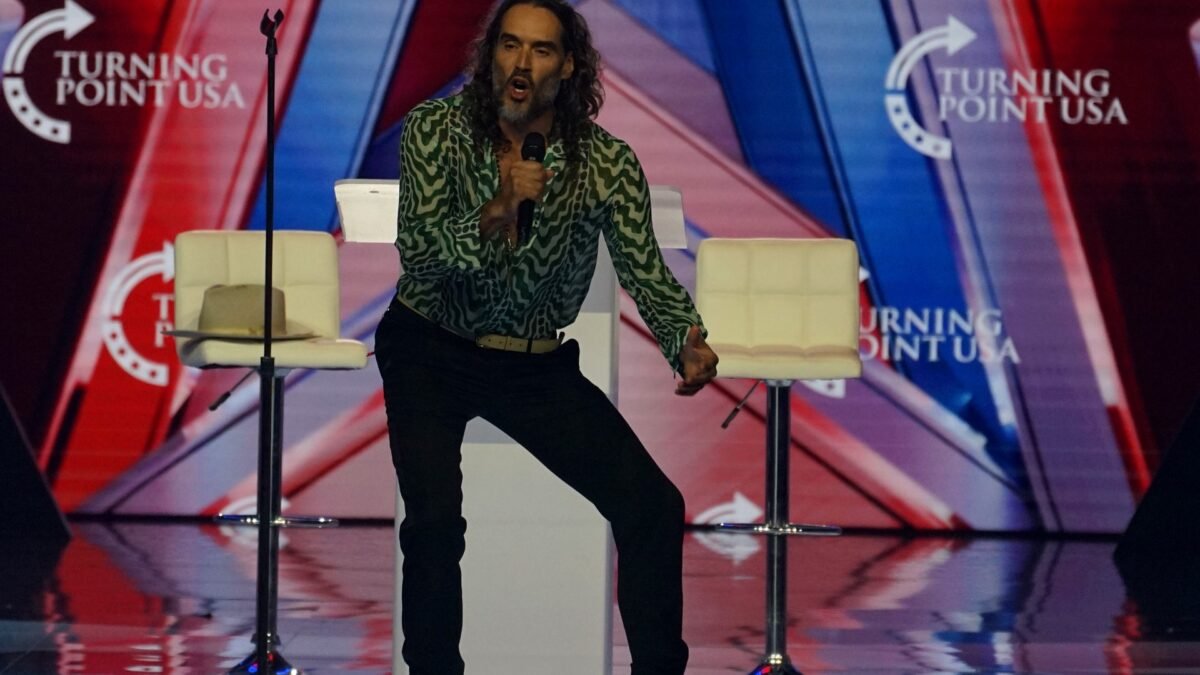
Russell Brand has been jailed for ten years and six months for rape and sexual assault, bringing to an end a criminal case that began with a newspaper and television investigation more than three years ago and closed on Monday with a judge telling the former comedian he had become a “sexual predator” as his fame grew.
The 51-year-old was sentenced at Southwark Crown Court in London on Monday 9 November 2026, four days after a jury convicted him of one count of rape and three counts of sexual assault against four women, for offences committed between 2004 and 2009, at the height of his celebrity. Mr Justice Joel Bennathan, passing sentence, described Brand’s conduct as showing a “staggering arrogance” and said his fame had protected him for years.
Brand, who showed no emotion as the sentence was delivered, will have to serve two-thirds of his term — seven years — in prison before he can be released on licence, according to the BBC. He will also be on the sex offenders’ register for life. The sentence is made up of nine years for the rape and eighteen months for the three sexual assaults, which run concurrently with each other but consecutively to the rape term. The judge reduced the rape sentence from ten years to nine, and one of the assault sentences from two years to eighteen months, to take account of mitigation and the overall length of the sentence.
As he was led from the dock, Brand mouthed “I love you” to his wife, Laura Brand, who had been sitting a few feet away in the public gallery. According to the BBC, he had earlier told her as he entered the dock: “It’ll be okay, I don’t know how, but it will.” Outside the court, some members of the public broke into applause as the sentence was announced, while a small group of Brand’s supporters protested nearby, CNN reported.
The sentence, count by count
The judge set out the sentence in full, count by count, in remarks that were later published in full. Brand received nine years’ imprisonment for raping a 21-year-old woman in 2009 at his London home, days after meeting her at one of his shows at the Hammersmith Apollo. He received nine months for sexually assaulting a woman at a bar in Soho in 2004, during a birthday party. He received eighteen months for sexually assaulting a woman at the Choice FM radio studios in London in 2004 or 2005. And he received eight months for sexually assaulting a woman while working on a Channel 4 project in 2009.
The three sexual assault sentences run at the same time as each other, so the longest of them — eighteen months — is added to the nine years for rape, producing a total of ten years and six months. The judge explained that he had reduced the sentence for the rape from ten years to nine, and the sentence for the Choice FM assault from two years to eighteen months, in light of the mitigating factors and the principle of totality, which requires a judge to step back and ask whether the combined sentence is fair and proportionate.
The mitigating factors the judge took into account were that Brand had no significant previous convictions, that seventeen years had passed since the last of the offences, and that he had since done good work helping people struggling with addiction, often by funding their treatment. The prosecution, led by Riel Karmy-Jones KC, had argued for a minimum sentence of twelve years, according to the Observer, on the grounds of the severity of the convictions and their impact on the women.
Under the rules for offenders jailed for four years or more for serious violent or sexual offences, Brand will be released at the two-thirds point of his sentence, which in his case means seven years in custody. Once released, he is likely to spend the rest of his sentence on licence and will have to follow specific conditions, such as wearing an electronic tag. His sentence will not be included in the early release scheme, from which sex offenders and murderers are exempt, the BBC reported.
“You had also become a sexual predator”
The judge opened his sentencing remarks with a passage that set the tone for everything that followed. “About 20 years ago, Russell Brand, you were becoming famous,” Mr Justice Bennathan said. “You were clever and, in many people’s eyes, funny and charismatic. You had also become a sexual predator.”
He went on: “Your status protected you until 2023 when journalists collected and published the allegations that were broadcast as a Channel 4 documentary and in articles in the Times newspapers. Those public declarations that you were a sex offender empowered a number of women to come forward and tell their stories of your activities many years before.”
The judge said Brand harboured “a casual arrogant disregard to any woman’s right to say no to you”, and that his fame had led him to believe he could act as he liked, when he liked. Speaking of one of the assaults, which took place in front of other people during a filming project, he said: “The whole episode reeks of casual disrespect and your belief that fame meant you could act how you liked, when you liked, unhindered by the rules by which decent people live.”
He also addressed the fact that two of the women had been drinking on the nights they were attacked. “They were both accomplished women who took perfectly reasonable decisions to go to a party and have a few drinks, or to go to your house for one type of consensual sex,” he said. “I pause to add and stress at once the fact they did so in no way, shape or form diminishes your culpability for sexually assaulting one and raping the other. Whatever women wear, wherever they go, indeed whatever they drink, they retain the right to say no and to demand justice from the criminal courts when sexual predators like you, Russell Brand, act without their consent.”
The judge was equally direct about the evidence he heard during the trial. He said the evidence showed that Brand’s entourage, during the peak of his celebrity, had “indulged your dreadful behaviour”. He told Brand that, in light of the jury’s verdicts, his claim during the trial that he had never touched a woman sexually without her consent was “one of a series of lies you told”.
At the same time, the judge was careful to draw a line around what he was sentencing Brand for. “I make clear that I disregard the allegations in the documentary and the allegations in the recent trial of which the jury were less than sure, and found you not guilty,” he said. Brand was acquitted of two counts of rape and one count of attempted indecent assault.
Before passing sentence, the judge paid tribute to the women who gave evidence. “I pause to pay tribute to the determination and bravery of all the women whose evidence I have been recounting,” he said. He also acknowledged the effect of the sentence on Brand’s family. “I am very conscious that your imprisonment will deprive your children of the presence of their father,” he said. “That sad loss to them, however, is caused by your serious offending.”
The women’s own words
Before the sentence was handed down, the court heard victim impact statements from the four women at the centre of the case. Their words, read out in court and reported by the BBC and CNN, gave the hearing its most harrowing passages.
The woman who was sexually assaulted at a central London bar in 2004 delivered her statement in court from behind a protective screen. She said she had been in “shock and turmoil for years” after the attack, and that she had been “extremely upset and traumatised”. “I didn’t have any respect for myself. I was thinking I was damaged goods — scared of giving off signals that could be taken the wrong way,” she said. She added: “I just want to say — a leopard may change its spots but it’s still a leopard.”
She also spoke of the years she had spent unable to escape Brand’s presence in public life. “For many years as his star was rising it was impossible to escape seeing him all over the media, being celebrated for his disgusting behaviour against women like it was all a joke,” she said, according to CNN. “There were many times I felt visibly sick at the sight of him parading around think he can get away with anything.” She said the last three years, navigating the investigation and the trial, had been “a massive strain on myself and my family” and had “taken a huge toll on my mental and physical health”.
A statement from the woman Brand was found to have raped in 2009 was read to the court by the prosecutor. “I felt anxious, humiliated and overwhelmed,” she said. “I struggled to sleep and eat, I struggled to cope with my emotions, I had to take time away from my work. I had to live with my parents, I sought help and support … I am living with trauma, something I carry every day.” She said her confidence and self-esteem had been badly affected, that she no longer trusted her instincts, and that one of the worst parts of what happened was her fear that she might have contracted HIV. She also said she had been in considerable pain after the assault. The judge, summarising her evidence, said that although the rape was seventeen years ago, she still found it affected her ability to form new friendships and to know when to trust people.
The woman who was sexually assaulted at the Choice FM studios in 2005 said in a statement read out in court: “Russell Brand has managed to move on. This has had a lasting impact on my life. I recognise this now.” She said that over the years, hearing his voice on television or seeing his image had made her jump, and that she had a strong adverse reaction to hearing his voice. “Russell Brand is a sexual predator who has no remorse,” she said. “I just hope he is not allowed to hurt any more women.”
The woman who was sexually assaulted while working on a Channel 4 project with Brand in 2009 said in her statement that she was “really upset” afterwards. “I felt I lost my trust in people, I felt my working environment wasn’t safe,” she said. “I felt powerless in that moment and it had a knock-on effect on my confidence.” She added that she feared the assault would “haunt me every day” and worried there would be repercussions for telling the truth.
Brand held a crucifix in his hands and appeared to be praying as he heard the impact of his actions on his four victims, CNN reported. He did not react in the dock as the sentence was delivered.
The trial and the verdicts
The verdicts were delivered on Thursday 5 November, after a trial at Southwark Crown Court that lasted about a month. The jury convicted Brand of one count of rape and three counts of sexual assault, and acquitted him of two further counts of rape and one count of attempted indecent assault. The offences of which he was convicted involved four women and took place between 2004 and 2009.
During the trial, Brand acknowledged that he had been a highly promiscuous man who enjoyed sex, but he insisted that all of his encounters had been consensual. The prosecution argued that he had been ruthless and calculating in his pursuit of women, and that he had set himself a personal goal of bedding 5,000 women, according to CNN. His defence barrister, Ian Winter KC, told the court that none of the complainants had “resisted or screamed or even tried to leave”, according to The Times — an argument that would later become one of the most discussed features of the trial.
When the verdicts were delivered, the judge told Brand to expect a “significant custodial term” and remanded him in custody. Brand spent the four nights before his sentencing at HMP Wandsworth in south-west London. He had asked to be released on bail until the sentencing so that he could explain what was happening to his children, but the judge refused, saying the father of three had “considerable resources” and was a flight risk.
At the sentencing hearing, Mr Winter put forward six character references for Brand, including one from Georgina Baillie, the granddaughter of the late actor Andrew Sachs. Baillie was thrust into the spotlight in 2008 when Brand and Jonathan Ross left offensive messages about her on her grandfather’s answering machine during a BBC Radio 2 broadcast — the incident that ended Brand’s BBC radio career. Mr Winter also told the court that Brand’s wife, Laura Brand, who had given evidence in her husband’s defence during the trial, was experiencing “total devastation” at the verdicts, and that the couple were “currently wrestling with how to exactly explain to a child who’s just turned 10 what has happened here”.
How the case reached court
No charge in this case predates publication. The allegations against Brand first came to light in September 2023, when The Times, The Sunday Times and Channel 4’s Dispatches programme published a joint investigation, “Russell Brand: In Plain Sight”, carrying allegations of sexual abuse by several women. The Metropolitan Police announced an investigation the same month, and the first charges were made in April 2025.
The judge’s own account of that sequence was unambiguous: it was the journalists’ work that broke the silence. “Those public declarations that you were a sex offender empowered a number of women to come forward and tell their stories,” he said. The BBC reported the same point, noting that the judge said Brand’s status had protected him until 2023, when journalists from the Sunday Times, the Times and Channel 4’s Dispatches outlined a series of misconduct allegations, leading to women making complaints to police.
Brand has denied any wrongdoing in relation to the allegations in the 2023 investigation, and he pleaded not guilty to all of the charges at his trial. The women who gave evidence in the 2023 investigation were different from the six complainants at his trial, and the judge made clear that he was sentencing Brand only for the offences of which the jury had convicted him.
From television stardom to the dock
Brand’s rise was one of the fastest in British entertainment. His big break in television came in the early 2000s as the host of Channel 4’s Big Brother spin-off show, first as Big Brother’s E-Forum and later as Big Brother’s Big Mouth. In 2006 he was offered his own radio show with the BBC, The Russell Brand Show, which began on BBC Radio 6 Music before moving to a coveted Saturday night slot on BBC Radio 2. His chaotic, hyper-sexual public persona — he frequently boasted about his sexual exploits — was part of the act, and it was rewarded with increasingly lucrative work, including Hollywood film roles in Forgetting Sarah Marshall, Get Him to the Greek and Arthur.
But the warning signs were visible long before the criminal case. Brand left his BBC radio show in 2008 after the broadcast of the offensive voicemail messages about Andrew Sachs, an episode that drew widespread condemnation and a record number of complaints to the BBC. The judge’s remarks made clear that, behind the scenes, his behaviour towards women was already a matter of complaint and indulgence: his entourage, he said, had “indulged your dreadful behaviour” at the peak of his celebrity.
In the past decade, Brand had moved away from his hyperactive, sex-forward image and reinvented himself as a figure of spirituality, meditation and yoga, presenting himself as a born-again Christian. He was living in Florida and, since the Covid-19 pandemic, had cultivated a large online following, with more than 6.6 million subscribers to his YouTube channel and a show on the conservative-friendly platform Rumble, according to CNN. That reinvention, and the loyal audience it built, was part of what made the 2023 investigation so divisive: many of his supporters dismissed the allegations outright, and a small group of them were outside the court on Monday to protest his conviction.
Reaction: “No one is above the law”
The reaction to the sentence was swift, and it came from the police, the prosecutors, the broadcasters and the government alike. The common thread was that fame, time and status had not protected Brand in the end — and should not protect anyone else.
David Roberts, of the Crown Prosecution Service, said: “Today’s result shows that fame, status and the passage of time do not change the fundamental issue of consent.” Detective Superintendent Andy Furphy, of the Metropolitan Police, said on the steps of the court: “Today’s sentence marks a significant milestone in our investigation and means Russell Brand has been held accountable for his crimes. The victims have had to revisit deeply traumatic experiences and endure significant public and media attention. Their courage in coming forward has not only led to this outcome but may also give confidence to others who have suffered sexual violence to seek help and report what happened to them.”
Detective Superintendent Furphy had said after the verdicts that Brand had “used his influence, status and fame to exploit and sexually offend against women”, and that “as his profile grew, so too did his sense of entitlement”. He added: “I hope this conviction sends a clear message that no one is above the law, no matter how famous or powerful they may be.”
The Metropolitan Police confirmed last week that it is investigating two further allegations of rape against Brand, and that files have been sent to the Crown Prosecution Service. One of the complaints came from a woman who said Brand began grooming her when she was sixteen years old and he was thirty. The Metropolitan Police Commissioner, Sir Mark Rowley, said on Friday that it would not surprise him if “many more” alleged victims came forward, because high-profile cases often lead to an upsurge in reporting as they give victims confidence to speak up. “It does make a difference because people see it is possible, and you will be believed,” he said.
Prime Minister Andy Burnham called Brand’s crimes “horrifying” and praised the bravery of the women who spoke out. He promised more support for victims of sexual crimes “to give them the confidence to come forward”, and said the bravery of the victims in the Brand case would “change the system”. He promised to be “relentless in making whatever improvements we can” to provide more support for victims. Burnham also said that rape victims should not be left “feeling like they are on trial”, and that he would “look closely” at concerns raised by Sir Mark Rowley, who has backed calls for a change in the law to ensure juries are warned about so-called “rape myths”.
Culture Secretary Lisa Nandy warned that there had not been enough change in media organisations to stop celebrities like Brand from preying on women. Louisa Compton, Channel 4’s director of news, digital and audience trust, said: “Today, and throughout the trial, we have heard of the trauma suffered by the women in this case. Above all else, we commend their bravery. This case is also a powerful demonstration of why investigative journalism matters. The women who trusted the original Dispatches investigation helped give others the confidence to come forward.”
Analysis: Why It Matters
The sentencing of Russell Brand is, on its face, a straightforward criminal case: a jury found a man guilty, a judge sentenced him, and he will spend seven years in prison before he can be released on licence. But the case matters far beyond the fate of one disgraced comedian, because it exposes three things about Britain that the country has been reluctant to confront — the protection that fame affords, the role of journalism in breaking that protection, and the way the criminal justice system still treats the women who report sexual violence.
Fame as a shield
The most striking sentence in the judge’s remarks was also the simplest: “Your status protected you until 2023.” It is a finding of fact about one man’s life, but it is also an indictment of the world he moved in. Brand’s offences took place between 2004 and 2009, when he was at the centre of British popular culture — on Channel 4, on BBC radio, in Hollywood films. The women he attacked were, in several cases, colleagues or people working in the same industry. They were not believed, or not heard, or not asked. His entourage, the judge found, “indulged your dreadful behaviour”. The institutions around him — broadcasters, agents, producers — kept giving him work, and the work kept making him more famous, and the fame kept making him harder to challenge.
That is not a story about one bad man. It is a story about a system in which celebrity functions as a form of immunity. The judge’s language — “staggering arrogance”, “casual disrespect”, a belief that he could act “unhindered by the rules by which decent people live” — describes a man who had learned, over years, that the normal consequences of his behaviour did not apply to him. The lesson for the entertainment industry is not that it employed a predator, but that it built the conditions in which a predator could operate openly for years. Culture Secretary Lisa Nandy’s warning — that there has not been enough change in media organisations to stop celebrities like Brand from preying on women — is the question the industry now has to answer in deeds rather than statements. The test will be whether broadcasters and production companies change how they handle complaints about their biggest stars, or whether the next investigation finds the same pattern of indulgence.
Journalism that opened the door
The second lesson of the case is about how it came to court at all. No charge predated publication. The Metropolitan Police investigation, the charges in April 2025, the trial and the sentence all followed from the joint investigation published by The Times, The Sunday Times and Channel 4’s Dispatches in September 2023. The judge said so himself, and Channel 4’s Louisa Compton said so again on Monday: the women who trusted the original investigation helped give others the confidence to come forward.
That matters because the 2023 investigation was, at the time, fiercely contested. Brand denied the allegations, his supporters attacked the journalists, and the question of whether a newsroom should publish allegations that the police had not yet acted on was debated in public. The verdict and the sentence do not settle that debate in the abstract, but they do settle it in this case: without the journalism, there would have been no investigation, no charges, no trial and no sentence. The women who gave evidence in court were not the women who spoke to the journalists, but the judge found that the publication “empowered” them to come forward. That is a powerful vindication of the kind of slow, careful, evidence-based investigative reporting that is expensive to do and easy to attack — and it is a reminder that the press, at its best, can do what institutions will not do on their own.
The trial’s wider questions
The third lesson concerns the trial itself, and the way sexual offence cases are argued in court. The defence argument reported by The Times — that none of the complainants had “resisted or screamed or even tried to leave” — drew a sharp response from the Metropolitan Police Commissioner, who said it was “getting very close to victim blaming”, and from the Prime Minister, who said rape victims should not be left “feeling like they are on trial”.
The argument is familiar to anyone who has followed sexual offence trials: the suggestion that a woman who did not fight back, or did not leave, or did not report immediately, must have consented. It is an argument that rests on a set of assumptions about how victims of sexual violence are supposed to behave — assumptions that researchers, support services and the police have spent years trying to correct, because freezing, compliance and delayed reporting are common and well-documented responses to assault. Sir Mark Rowley has backed calls for juries to be warned about so-called “rape myths”, and the Prime Minister has said he will look closely at that proposal. The Brand trial has given that debate a new urgency, because the argument was made in one of the most watched trials in recent British history, and because it failed: the jury convicted anyway. But the fact that it was made at all, and that it was made about women whose evidence the judge described as brave and determined, shows how much of the argument in these cases is still fought on the ground of the victim’s behaviour rather than the defendant’s.
There is also a question here about the role of the court in protecting complainants. One of the women gave her victim impact statement from behind a screen, and the identities of the complainants are protected by law. Those protections exist because the process of giving evidence is itself traumatic — the women in this case described years of strain, the fear of being disbelieved, the toll on their mental and physical health. The Prime Minister’s promise to be “relentless” in improving support for victims will be judged by whether it produces concrete changes: better support during investigations, clearer information about the process, and a trial system in which the burden of the case falls on the evidence rather than on the character of the person who reported it.
What the sentence actually means
The sentence itself deserves a careful reading. Ten years and six months is a long sentence, and it reflects the gravity of the offences and the judge’s finding that Brand’s conduct was aggravated by his abuse of his fame and by the humiliation he inflicted on some of his victims, in some cases in front of other people. But it is also a sentence that recognises mitigation: the judge reduced the rape term from ten years to nine, and one of the assault terms from two years to eighteen months, because Brand had no significant previous convictions, because seventeen years had passed since the last offence, and because of his work helping people struggling with addiction.
The prosecution had argued for a minimum of twelve years. The judge’s decision to go below that figure is not a sign of leniency; it is a sign of a sentencing process that weighs aggravation against mitigation and arrives at a figure the judge considers proportionate. What matters is the structure of the sentence: the assault terms run consecutively to the rape term, so the total reflects all four victims rather than only the most serious offence. And the practical consequence is clear: seven years in prison before release on licence, a lifetime on the sex offenders’ register, and no access to the early release scheme. For a man who built his career on the belief that he could act as he liked, the sentence is a statement that the rules do, in the end, apply.
What to watch next
The case is not entirely over. The Metropolitan Police confirmed last week that it is investigating two further allegations of rape against Brand, and that files have been sent to the Crown Prosecution Service. One of those complaints involves a woman who says Brand began grooming her when she was sixteen and he was thirty. The Commissioner has said he expects “many more” alleged victims to come forward, and the police have published a contact route for anyone with information. Any decision on further charges will be for the Crown Prosecution Service, and it will be watched closely: it will show whether the confidence the police hope this sentence will inspire translates into further action.
The government’s response will also be watched. The Prime Minister has promised to look closely at the question of jury directions on rape myths, and to improve support for victims. Those promises were made in the heat of a high-profile case; the test will be whether they survive into legislation and funding. The same applies to the broadcasters: the Culture Secretary’s warning about media organisations will mean little unless the companies that employed Brand — and that employ the next generation of stars — can show how their complaints systems have changed since 2009.
Finally, there is the question of Brand himself. He is 51, with a wife and three children, and he will be in prison until at least 2033. His online following — more than 6.6 million subscribers on YouTube, a show on Rumble — will remain, and so will the arguments of his supporters, who were outside the court on Monday insisting on his innocence. The jury’s verdicts and the judge’s sentence do not end that argument, but they do settle the legal question. The court has spoken, in the judge’s words, about a man who “had also become a sexual predator” — and about a system that protected him until journalism, and the bravery of four women, brought him to account.
Sources
- CNN — Russell Brand sentenced to 10 years and six months in prison for rape and sexual assault
- The Times — Russell Brand jailed for ten years for rape and sexual assaults (live coverage)
- The Times — Russell Brand jailed for ten years and six months
- The Observer — Russell Brand sentenced to 10½ years for rape and sexual assault
- Media Mole — Judge’s sentencing remarks to Russell Brand, in full
- Chortle — Russell Brand sentenced to 10½ years

About the Author — Abdul Mannan
Related Articles
Labour MPs Urge Burnham to Scrap Draft Conversion Practices Bill Over Fears Parents Could Face Jail
At least a dozen Labour MPs have told party whips they are unhappy with the draft Conversion Practices…
Russell Brand Jailed for Ten and a Half Years for Rape and Sexual Assaults as Judge Calls Him a ‘Sexual Predator’
Russell Brand has been jailed for ten years and six months for raping one woman and sexually assaulting…

Starbucks to Hire 7,500 UK Baristas in Five-Year Expansion as It Bets on Growth Beyond London
Starbucks has announced plans to recruit 7,500 new baristas across the UK over the next five years, staffing…