
Starbucks to Hire 7,500 UK Baristas in Five-Year Expansion as It Bets on Growth Beyond London

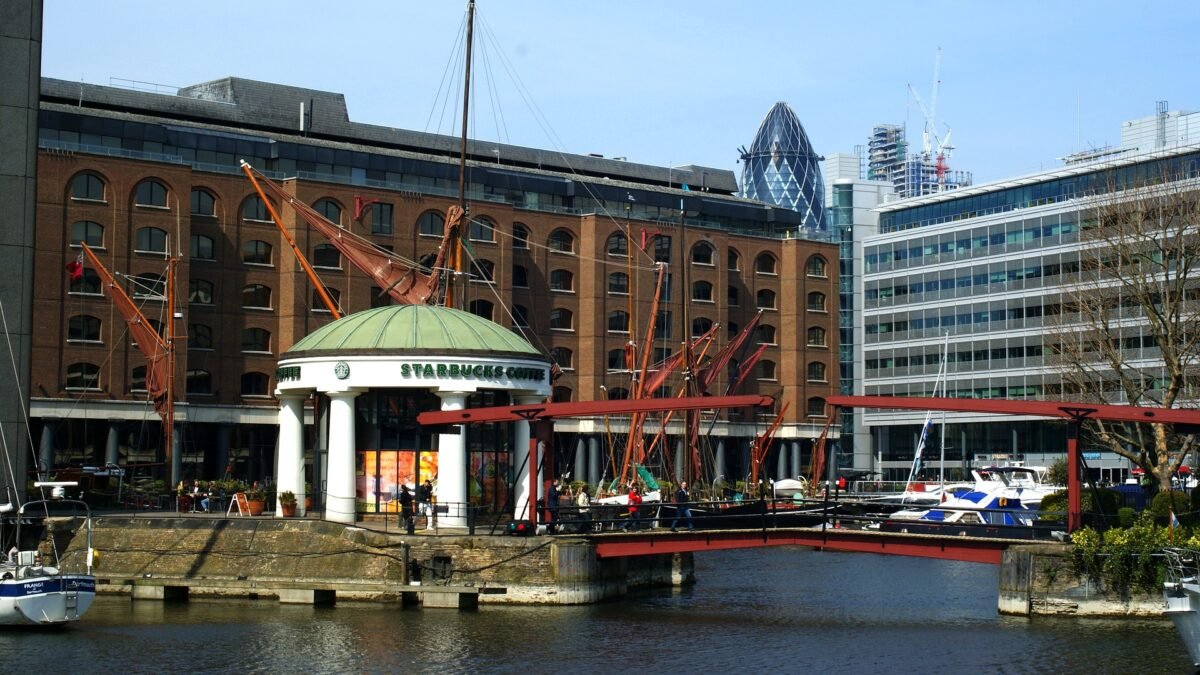
Starbucks has announced plans to recruit 7,500 new baristas across the United Kingdom over the next five years, in the clearest sign yet that the world’s largest coffee chain intends to grow its way out of a bruising two-year turnaround rather than shrink its way out of it.
According to the Press Association, the Seattle-headquartered company confirmed on Monday that the hiring drive will support 500 new coffee shops it plans to open across the country by 2031, adding to a British workforce that already numbers more than 18,000 people. The recruitment push will be concentrated deliberately away from the capital, in the Midlands, northern England, Wales and Scotland, as the business pursues growth beyond the M25.
The announcement, reported widely across British media on Monday morning, lands on the same day that the Trades Union Congress warned that fixing Britain’s youth jobs crisis will require far greater investment in employment support, education and training. That coincidence is not a small one. More than half of the people working in Starbucks’ company-operated British stores are under 24, and the company says its new roles are aimed squarely at young people looking for a first step into work.
“We’re proud to be creating thousands of new jobs across the UK over the next five years, bringing new opportunities to communities across the country as we continue to invest and grow here,” Darren King, vice-president and managing director of Starbucks UK, said in a statement carried by the Press Association.
“At the heart of our Back to Starbucks strategy is our ambition to create a place where people can build skills, grow their careers and feel part of a team,” he added. “We’re deeply focused on how we can help more young people into these positions, starting by making entry-level roles as accessible as possible. You don’t need previous industry experience and we’ll give you the training and support you need from day one.”
Helen Dickinson, chief executive of the British Retail Consortium, welcomed the investment. “At a time when too many young people are struggling to get a foot on the career ladder, this investment is hugely welcome,” she said, according to the Press Association. “Retail and hospitality are vital routes into the workplace, helping young people build skills, confidence and experience while offering genuine opportunities to progress.”
A turnaround that began with closures
The scale of the hiring pledge is striking precisely because of where Starbucks has just been. The chain is in the middle of a turnaround under chairman and chief executive Brian Niccol, who took the helm in September 2024 and launched the “Back to Starbucks” plan to revive flagging sales, cut waiting times and rebuild the in-store experience.
According to trade publication The Grocer, the first phase of that plan was painful. A strategic review of the company’s coffeehouse portfolio led to the closure of hundreds of stores around the world and the elimination of 900 non-retail jobs, at an expected cost of around $1 billion — about £750 million — in severance packages and long-term rental contracts. In Britain, ten stores closed in October 2025, including branches in Ilford, London Bridge station, Balham, Glasgow Exchange Place, Muswell Hill and Holland Park, according to The Grocer and New Food Magazine.
The company’s latest accounts, filed at Companies House and reported by The Grocer, show why the medicine was thought necessary. Starbucks UK saw operating losses widen to £29.8 million in the year ending 28 September 2025, up from £27.5 million the previous year, driven by input cost inflation, higher wage and benefit costs — including a 7.8 per cent increase in employers’ National Insurance contributions — and one-off costs from the store closure programme.
Yet the same accounts tell a more encouraging story underneath. According to The Grocer, Starbucks opened 92 new stores in the UK in 2025, and the company says it is now seeing encouraging progress from the turnaround, with improvements in customer service, product consistency and digital and loyalty engagement. The 500-store expansion, first announced in March 2026, was the first public signal that the retrenchment phase was over. Monday’s hiring announcement is the second — and the more consequential one, because it puts a human number on the ambition: 7,500 jobs.
The first Starbucks store in Britain opened in London in 1998, according to TheStreet, and the chain has grown since then into the largest market in Starbucks’ Europe, Middle East and Africa region. The new expansion pointedly looks beyond the city where it all began. The Midlands, the north of England, Wales and Scotland are where the new stores — and the new jobs — will be concentrated.
Hiring into a youth jobs crisis
The timing of the announcement gives it a weight beyond a single company’s expansion plans. Britain’s youth jobs market is, by the account of the country’s own trade union movement, in crisis.
According to The Guardian, reporting on Monday, TUC general secretary Paul Nowak says tackling the youth jobs crisis will require substantially more investment in employment support, education and training, and has urged ministers to avoid arbitrary benefit cuts. His comments came ahead of the publication of Alan Milburn’s review of young people and work, expected this week, which may recommend benefit changes to fund support for nearly one million young people not in education, employment or training.
The official figures underline the scale of the problem. According to the TUC’s own analysis, an estimated 981,000 young people aged 16 to 24 were not in education, employment or training — NEET — between April and June 2026, equivalent to 13 per cent of the age group. That was an improvement on the January-to-March figure, when the total passed one million for the first time since 2013, but it remained 30,000 higher than a year earlier.
The government’s response so far includes a pledge of £2.5 billion for youth employment support, covering almost 500,000 opportunities to earn and learn, and work with businesses to create up to 200,000 jobs, according to The Guardian. Its Jobs Guarantee scheme offers eligible 18 to 24-year-olds who have been claiming Universal Credit and looking for work for 18 months a fully funded, six-month paid job, with more than 90,000 places planned over three years. The TUC wants the scheme expanded dramatically — eligibility after six months on Universal Credit rather than 18, and 225,000 places instead of 90,000 — at an estimated additional cost of £1 billion.
Polling by Focaldata for the Jobs Foundation, cited by The Guardian, found that the public now ranks the youth jobs crisis second among national concerns, behind only the cost of living and ahead of NHS waiting lists, housing, crime and immigration. On Monday, the Jobs Foundation launched a national campaign backed by employers including Amazon, Pret a Manger, NatWest, Marks & Spencer and Shell, pledging support for young people overlooked for work.
Against that backdrop, 7,500 entry-level jobs that require no previous experience are not a trivial contribution. Starbucks says more than half of its company-operated store workforce is under 24, and research it commissioned found that 68 per cent of 18 to 35-year-olds surveyed consider retail and hospitality jobs to be temporary or “stopgap” work — a perception the company says it is trying to change by offering genuine career progression.
Hiring despite rising costs
The expansion comes at a moment when hiring in Britain has become markedly more expensive. The government announced in last month’s Budget that the national minimum wage will rise by 3.9 per cent in April next year, according to the Press Association, adding to the cost pressures that already pushed Starbucks UK’s losses wider in its last financial year.
That makes the decision to add 7,500 people to the payroll a deliberate bet: that the demand for its coffee shops will grow fast enough to absorb the higher wage bill, and that the economics of the new stores — mostly outside London, where rents and wages are lower — will work where some of the closed city-centre branches did not.
It is also a bet on the British high street itself. Coffee shops have become one of the most resilient features of town centres in an era when so much other retail has moved online. A coffee shop cannot be delivered by an algorithm; it sells time and place as much as it sells coffee. That is why the sector has kept growing even as the wider economy has stalled, and why a chain that closed ten stores last year can credibly announce 500 new ones this year.
Analysis: Why It Matters
A vote of confidence in the regions
The most important word in Monday’s announcement may be the one that describes where the jobs are going. The Midlands, the north of England, Wales and Scotland have spent decades hearing that growth happens in London and the south-east and trickles outwards. A major employer choosing to concentrate its next phase of growth beyond the M25 is a small but real vote of confidence in the opposite direction — and a recognition that the economics of expansion now favour the regions, where property costs are lower and where a new coffee shop can still be a genuine addition to a town centre rather than the fourteenth on a single street.
That matters because regional growth is not just an economic statistic; it is the mechanism by which young people in places like Oldham, Wrexham or Motherwell get their first job without having to leave home. Starbucks says it is deliberately targeting growth north of London. If the 500 stores arrive as promised, the geography of the announcement may matter as much as the headline number.
Hospitality is still Britain’s first rung
There is a persistent tendency in British public debate to treat retail and hospitality jobs as not quite real jobs — stopgaps, as the Starbucks-commissioned research found most young people regard them. That attitude is both snobbish and wrong. For a 17-year-old school leaver with no qualifications and no connections, a barista job is often the only door into the labour market that is actually open. It teaches punctuality, customer service, teamwork and cash handling — the unglamorous skills that every employer says it wants and that no classroom reliably teaches.
The TUC is right that the youth jobs crisis needs far more investment than a single company’s hiring drive can provide. Nearly a million young people outside work, education or training is a national failure, not a recruitment problem. But it is also true that the crisis will not be solved by government schemes alone. It will be solved, if it is solved, by employers actually hiring — and by making those first jobs lead somewhere. Starbucks’ promise of training from day one and a career path inside the company is the part of the announcement that deserves the closest scrutiny in the years ahead. A job is only a first rung if there is a ladder attached to it.
The turnaround’s real test
For Brian Niccol, Monday’s announcement is the moment his turnaround stops being a story about closures and starts being a story about growth. Closing stores is the easy part of a restructuring: it cuts costs immediately and the savings show up in the next set of accounts. Opening 500 stores and hiring 7,500 people is the hard part, because it requires the underlying business to be healthy enough to support them.
The widened operating loss of £29.8 million is the number that should keep the optimism honest. Starbucks UK is expanding while still losing money, and it is doing so in the face of a minimum wage rise and higher National Insurance costs. That is either a sign of genuine confidence in the recovery — the company can see demand returning and wants to be ready for it — or a gamble that the recovery will arrive on schedule. The difference between the two will only become visible in the next set of accounts. What can be said now is that the company has chosen to spend its way forward rather than cut its way back, and that choice will be judged on the numbers it produces over the next two years.
The wage-cost paradox
There is an irony at the heart of this story that neither the company nor its critics should ignore. The same forces that make hiring more expensive — a rising minimum wage, higher employer National Insurance — are also the forces that put money in the pockets of the young workers Starbucks wants to hire. A barista earning more is also a consumer with more to spend, including on coffee. Britain’s long argument about whether higher wages destroy jobs or create demand has never had a cleaner test case than a company announcing 7,500 new jobs in the same breath as the minimum wage rises by 3.9 per cent. If the expansion succeeds, it will be evidence that the two can coexist. If it falters, the cost of labour will be the first explanation offered. Either way, the result will be watched far beyond the coffee industry.
What the numbers do not say
Finally, a note of caution about the headline figure itself. Seven thousand five hundred is a large number, but it is a promise spread over five years, and it is tied to the opening of 500 new stores that do not yet exist. The jobs will arrive store by store, town by town, and the pace will depend on planning permission, property deals and trading conditions that no announcement can guarantee. Some of the roles will be part-time; some will be filled by people who leave within months, as is normal in hospitality. None of that makes the announcement hollow — it makes it a beginning, not a conclusion. The fair measure of Monday’s news will not be the press release but the count, in a year or two, of how many of those stores actually opened and how many of those baristas are still employed.
What to Watch Next
- The Milburn review: Alan Milburn’s review of young people and work is expected this week. Its recommendations — and the government’s response — will set the framework within which announcements like Starbucks’ either become part of a national effort or remain isolated corporate gestures.
- The first new stores: Starbucks opened 92 UK stores in 2025. Watch whether the pace of openings accelerates in 2026 and where the first of the 500 new sites appear — the geography will show whether the regional focus is real.
- The next set of accounts: Starbucks UK’s operating loss widened to £29.8 million last year. The next Companies House filing will show whether the turnaround is producing the profits needed to sustain a 500-store expansion.
- The minimum wage in April: The 3.9 per cent rise takes effect in April 2027. Watch for the company’s response — and for whether other hospitality employers follow Starbucks’ lead in hiring despite the higher wage bill.
- The Jobs Guarantee: The TUC wants the government’s scheme expanded from 90,000 places to 225,000, with eligibility after six months rather than 18. The government’s decision will shape how many young people get structured support into work — and how much of the burden falls on employers like Starbucks.
Sources
- Press Association via Glasgow Times — “Starbucks to create 7,500 jobs and 500 stores in expansion”
- Brit Brief — “Starbucks to hire 7,500 UK baristas by 2031 in expansion push”
- The Guardian via TalkFuse — “Fixing UK’s youth jobs crisis demands much more investment, TUC boss warns”
- Trades Union Congress — “Young People and Work: A Call to Action” (PDF)
- The Grocer — “Starbucks to open 500 more UK sites despite ‘tougher market'”
- New Food Magazine — “Starbucks closing stores in US and UK as part of major global restructure”

About the Author — Abdul Mannan
Related Articles

Lucy Powell Tells England’s Schools to Stop Teaching GCSEs Early in Major Curriculum Overhaul
England's secondary schools are to be told to stop teaching GCSE courses before Year 10, as the government…

King Charles Leads Remembrance Sunday at the Cenotaph as Record Nine Former Prime Ministers Join Twelve Second World War Veterans
King Charles III led the nation in a two-minute silence at the Cenotaph on Remembrance Sunday, as a…

‘Windrush’ Accusations as Turkish Business Owners Face Removal After Sharp Rise in Home Office Settlement Refusals
Home Office figures show ECAA settlement grants fell 78 per cent in a year as hundreds of Turkish…