
Saudi Arabia Says Its East-West Oil Pipeline Was Attacked Again as the Houthi War Reaches the Kingdom’s Energy Lifeline

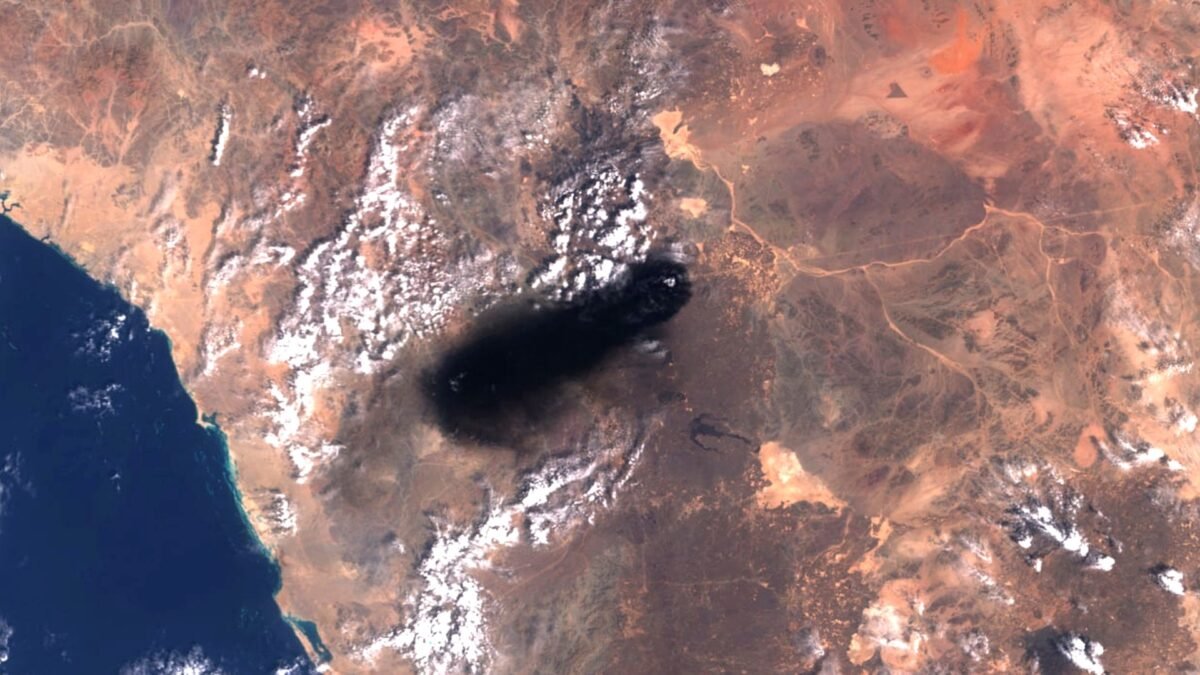
Saudi Arabia said on Monday that its East-West oil pipeline, the 1,200-kilometre artery that carries the kingdom’s crude to the Red Sea and around the blockaded Strait of Hormuz, had been targeted in an attack in the Medina region, in the latest strike on the infrastructure at the centre of the Middle East’s energy war.
According to Reuters, state media reported on Monday, citing an official at the Saudi energy ministry, that the pipeline had been targeted in the west of the country, causing a limited fire that was extinguished. No injuries or fatalities were reported, and pipeline operations were unaffected, the official said. Al Jazeera reported the same account from the Saudi Press Agency, which carried the ministry’s statement.
The Saudi report did not identify who was responsible for the attack, and it gave no details about the weapon or the method used. No group had claimed responsibility by the time the announcement was made, and Al Jazeera noted that it had not reported any independent attribution for the incident.
The attack matters far beyond the limited fire it caused. Since the conflict in the Middle East disrupted oil flows through the Strait of Hormuz, Riyadh has rerouted about four million barrels of crude a day through the East-West pipeline to the port of Yanbu, according to Reuters, equivalent to about four per cent of global supply. The pipeline has spared Saudi Arabia, the world’s biggest oil exporter, from the worst of the wartime shutdown of the strait that has crippled exports from its neighbours. Every strike on it is therefore a strike on the one route that still reliably moves Gulf oil to world markets.
It was the second time in two months that the pipeline has been hit, and the latest blow in a weekend of escalating attacks across the region. On Sunday, Houthi missiles and drones were fired at Riyadh, where falling debris damaged a building belonging to Saudi Aramco in the capital’s financial district. In Yemen, Houthi health authorities said airstrikes near Sanaa had killed 44 people, most of them women and children, in a toll that has not been independently verified. The pipeline attack on Monday brought the war directly to the steel artery on which Saudi Arabia’s oil exports now depend.
What Happened on Monday
The Saudi Press Agency published the energy ministry’s account on Monday, 9 November. An official at the ministry said the pipeline was targeted in the Medina region in the west of the country, causing a “limited fire” that emergency crews extinguished. The ministry said technical teams immediately began work at the site and took the necessary measures to secure it, according to the Yemen Monitor, which reported the ministry’s statement.
“No injuries or fatalities were reported, and pipeline operations were unaffected,” the Saudi Press Agency said, in the account carried by Al Jazeera and Reuters.
The announcement was notable for what it did not say. It named no attacker and no weapon. That silence contrasts with the September attack on the same pipeline, which Saudi Arabia publicly blamed on Iraqi militias, and with the Houthis’ own claims in October, when the group said it had struck the pipeline’s pumping stations. As of Monday evening, the Houthi group had not announced any operation targeting Saudi Arabia that day, according to the Yemen Monitor, whose reporting noted that comments from the group’s military spokesman were limited to saying that 103 airstrikes had targeted areas under Houthi control.
The restraint in the Saudi statement may reflect uncertainty, or it may reflect a deliberate choice. Riyadh has in the past waited before attributing attacks on its oil infrastructure, and the September incident showed that the trail can lead in unexpected directions. What is not in doubt is that the pipeline was hit, that it burned, and that the fire was put out without loss of life or interruption to the flow of oil.
The Pipeline That Keeps Saudi Oil Moving
The East-West pipeline, also known as the Petroline, runs roughly 1,200 kilometres (745 miles) across the Arabian Peninsula, from the Abqaiq processing complex in the kingdom’s east to the Red Sea port of Yanbu in the west. Built to give Saudi Arabia an export route that does not depend on the Strait of Hormuz, it can move up to about seven million barrels of crude a day, according to industry reporting.
For most of its life, that capacity was a form of insurance, used at well below its maximum. The war changed that. According to Reuters, the Islamic Revolutionary Guard Corps declared the Strait of Hormuz closed on 26 October, and since then Riyadh has rerouted about four million barrels a day through the pipeline, about two-thirds of the oil that would once have sailed through the strait. The pipeline is now carrying roughly four per cent of the world’s daily oil supply to market through the Red Sea.
The strait itself has become a near-empty corridor. IMF PortWatch recorded a single vessel passing through the Strait of Hormuz on 1 November, against a normal flow of about 85 ships a day, according to reporting on Monday. About 20 per cent of global oil and liquefied natural gas shipments passed through the strait before the conflict began, and the route remains tightly constricted by the war between the United States and Israel on one side and Iran on the other, a war that began on 28 February 2026 and has now run for more than eight months.
The pipeline’s importance explains why it has become a target. Whoever can threaten the Petroline can threaten the one remaining reliable outlet for the world’s largest crude exporter, and with it the supply of oil to Europe and Asia. It also explains why Riyadh has worked so hard to keep it running, and why each attack has been followed by swift public reassurance that operations continue.
A Weekend of Escalation
The pipeline attack did not come out of nowhere. It followed a weekend in which the war between Saudi Arabia and the Houthis, reignited after the collapse of Yemen’s ceasefire in July 2026, reached new levels of intensity on both sides of the border.
On Saturday, 7 November, airstrikes hit homes in al-Shariya village in the Bani Hushaysh district east of Sanaa, the Yemeni capital. Houthi health authorities said at first that at least 33 people had been killed, most of them women and children, and later raised the toll to 44, including 21 children and 10 women, with 40 more people wounded, according to the Associated Press. The Houthi-run health ministry said the strikes hit homes, roads, medical workers and civil defence teams. The figures have not been independently verified by international news organisations, and Saudi Arabia’s Centre for International Communication said it was investigating the reported deaths. Reuters, reporting the toll, noted that it could not independently verify the casualty account.
A day earlier, an attack on a crowded market in Taiz province was reported to have killed at least 30 people, according to reports from the region, adding to a toll that has mounted quickly as the fighting has intensified.
On Sunday, 8 November, the Houthis answered with a wave of missile and drone attacks on Saudi Arabia. The group’s military spokesman, Yahya Saree, said the movement had carried out six operations against Saudi targets, including King Khalid International Airport, Aramco facilities at Khurais and Abqaiq, a pumping station at Dawadmi, and Saudi military positions, describing the attacks as retaliation for the strikes in Yemen.
Saudi officials said air defence systems intercepted and destroyed several incoming projectiles, including two ballistic missiles and two cruise missiles heading towards Riyadh, as well as other projectiles and drones targeting the Eastern Province and southern parts of the kingdom. The Saudi-led coalition said it had destroyed two missile launchers in Sanaa. Saudi authorities said at least 15 missiles and drones had been intercepted or destroyed across the kingdom during November by the time of Sunday’s reporting.
Falling debris from an intercepted attack struck an administrative building belonging to Saudi Aramco in Riyadh, causing minor damage but no casualties, according to the Saudi energy ministry. Reports and footage identified the damaged building as the Aramco Tower in the King Abdullah Financial District, where windows were blown out across several floors. The tower stands in one of the most prominent symbols of the kingdom’s economic reform programme, and the sight of its shattered windows brought the war into the heart of the Saudi capital’s business district.
The Houthi account of Sunday’s attacks was broader than the Saudi one. Saree also claimed operations against what he described as an Aramco distillation tower in Riyadh, a description that differs from the Saudi official’s account of an administrative building, and his statement cannot establish that an industrial target was hit. What the two accounts agree on is that missiles flew over Riyadh, that Saudi defences intercepted most of them, and that debris from the interceptions damaged a prominent Aramco building without causing casualties.
A Familiar Pattern
Monday’s attack was the latest in a series of strikes on the pipeline that stretches back to September, and the pattern of those attacks tells its own story about the war’s shifting geography.
On 10 September, a satellite captured a plume of black smoke rising above the Saudi desert, the day before Riyadh shut the East-West pipeline as a precaution after drone strikes in the Riyadh and Medina regions. The attack damaged three of the system’s 11 pumping stations and forced the closure of a line carrying four to five million barrels a day. Saudi officials said the strike had been launched from the Iraqi province of Maysan, and a preliminary Iraqi investigation attributed the September attacks to the Revolutionary Guards and the Houthis, according to reporting at the time. No group claimed responsibility, and the Iraqi government opened an investigation, saying it would take legal action against anyone proven to have been involved.
The pipeline was restarted on 22 September at reduced rates. On 6 October, Energy Minister Prince Abdulaziz bin Salman told The National that the pipeline that had been heavily attacked was operational again, and confirmed that flows had recovered to 5.8 million barrels a day. That figure remains the last officially confirmed throughput.
Later in October, the Houthis claimed drone attacks on the pipeline’s pumping stations on 26 October, the same day the Revolutionary Guards declared the Strait of Hormuz closed, and claimed a fresh attack two days later, saying they had targeted pumping stations for the second time in 48 hours. Saudi Arabia did not confirm or deny those claims, and did not immediately confirm any damage or disruption to the flow of crude. The coalition confirmed intercepting a missile headed towards Riyadh, but that did not confirm the pipeline claim.
The sequence matters. In September, the attack was attributed by Riyadh to Iraqi militias, suggesting an Iranian-directed operation launched from Iraqi territory. In October, the Houthis claimed the pipeline as their target. On Monday, nobody claimed it and nobody was blamed. The ambiguity may be deliberate on all sides. For the attackers, silence avoids inviting retaliation. For Riyadh, silence avoids a public attribution it may not yet be able to prove, and avoids the pressure to respond that a public accusation would create.
The Wider War Around the Pipeline
The pipeline attack sits inside a much larger war that has now spread across the region, from the Strait of Hormuz to the Red Sea, from Lebanon to Yemen, and into the diplomatic rooms where the United States is trying to end it.
In the strait itself, attacks on shipping have continued at the highest rate since the war began. Iran’s Revolutionary Guards said on Sunday that three oil tankers had exploded and caught fire in the strait after breaching Iranian rules and taking what the Guards called unauthorised routes. A tanker was reported hit by an unknown projectile over the weekend while transiting the route, according to United Kingdom Maritime Trade Operations. United States forces fired on and disabled a commercial ship on Saturday that Washington said was trying to slip past its blockade, according to reporting on Monday. Iran said on Sunday that a tanker had hit a mine east of the strait.
United States strikes on Iran’s Qeshm Island continued overnight on Sunday, according to Iranian state media, which said the strikes did not damage vital infrastructure or services. The island sits at the mouth of the strait, and the strikes there are part of the American campaign against the Iranian blockade.
Diplomacy, meanwhile, is moving in parallel with the fighting. President Donald Trump was due to meet the prime minister of Qatar, Sheikh Mohammed bin Abdulrahman Al-Thani, in Washington on Monday, as efforts to end the war intensified, according to Reuters. The Qatari leader had visited Tehran the previous week. Iran’s proposal to end the war involves an end to the American blockade of its ports, the lifting of some sanctions and a halt to bombing, in return for Tehran stopping its own blockade of the Strait of Hormuz, with talks on its nuclear programme and other sanctions to follow. The United States has repeatedly rejected that plan, which Iran has said could be condensed into a two-day timeframe, and Secretary of State Marco Rubio on Sunday described Tehran’s conditions as outrageous and ridiculous.
Trump has played down the likelihood of major warfare restarting soon, saying fresh strikes are highly unlikely while talks progress, a position he repeated in an interview with CNN. Trilateral talks between Ukraine, Russia and the United States are also due to open in Abu Dhabi on Tuesday and Wednesday, 10 and 11 November, with France taking part, adding another diplomatic track to a week already crowded with them.
The Houthis, for their part, have expanded their campaign beyond Saudi Arabia’s borders. The group has struck at targets in the Red Sea and the Gulf, and its war with the Saudi-backed Yemeni government has reignited across Yemen, with fighting resuming near Bab al-Mandab and Yemeni government forces reporting gains in Al Jawf. The war that began as a civil conflict inside Yemen has become one front of a regional war, and the pipeline is where that front meets the global economy.
Analysis: Why It Matters
The bypass is now the battlefield
For decades, the East-West pipeline was a contingency, a piece of infrastructure built for a war that never came. The war has now come, and the contingency has become the main route. That transformation is the single most important fact about Monday’s attack. When the Strait of Hormuz was open, an attack on the pipeline would have been a nuisance, a story about a secondary route. With the strait closed and four million barrels a day flowing through the desert to Yanbu, an attack on the pipeline is an attack on the world’s oil supply, and the market knows it.
This is why the pipeline has been hit three times in two months, and why it will be hit again. It is the one target that connects the Houthis’ war in Yemen to the global economy in a single strike. A missile that lands on a pumping station in the Medina region does not need to stop the flow of oil to matter. It needs only to remind everyone who depends on that flow that it can be interrupted, and that the people who can interrupt it have done so before. The pipeline survived Monday’s attack without a pause in operations, but survival is not the same as safety, and the gap between the two is where the risk now lives.
A war of deniability
The most striking feature of Monday’s announcement was its silence about who did it. In September, Riyadh blamed Iraqi militias. In October, the Houthis claimed the pipeline themselves. On Monday, nobody was named and nobody claimed it. That silence is itself a development, and it deserves to be read carefully.
There are several possible explanations, and they are not mutually exclusive. The attack may have been carried out by a group that does not want the attention, or by a proxy whose sponsor does not want the blame. The Saudi authorities may not yet know who was responsible, and may prefer to say nothing rather than guess. Or Riyadh may know and have chosen not to say, because a public accusation would create a public expectation of retaliation, and retaliation against the wrong target, or at the wrong moment, could widen a war that Saudi Arabia is already struggling to contain.
Whatever the reason, the pattern points to a war fought increasingly through deniable means. Drones launched from Iraqi territory in September, Houthi claims in October, silence in November: each episode leaves just enough uncertainty to make a decisive response difficult. That uncertainty is not an accident. It is the strategy. The attackers have learned that a strike nobody can attribute with confidence is a strike nobody can answer with confidence, and the pipeline, stretched across 1,200 kilometres of empty desert, is the ideal target for that kind of war, because it can be hit from almost anywhere and defended almost nowhere.
The escalation ladder
Look at the sequence of the last four days and a ladder becomes visible. On Friday, a market in Taiz. On Saturday, homes in a village outside Sanaa, with dozens reported killed, most of them women and children. On Sunday, missiles over Riyadh and debris falling on the Aramco Tower. On Monday, a fire on the pipeline in Medina. Each step answered the one before it, and each step reached a little further into the other side’s most valued territory.
This is how wars that nobody wants to widen get wider anyway. Neither side set out to attack a market, or a village, or a tower in a financial district, or a pipeline carrying four per cent of the world’s oil. But each side answered the last blow with a blow of its own, and each answer was calibrated to hurt a little more than the one it answered. The result is a cycle in which civilian deaths in Yemen produce missile attacks on Riyadh, which produce airstrikes in Yemen, which produce an attack on the pipeline, which will in turn produce something else.
The danger is not that either side wants a wider war. It is that neither side can afford to be seen absorbing a blow without answering it. The Houthis cannot let the Sanaa strikes pass without a response, because their authority rests on their claim to defend Yemen. Saudi Arabia cannot let missiles fall on Riyadh without a response, because its authority rests on its claim to defend the kingdom. And once the pipeline is in play, the audience for each response is no longer just the other side. It is the whole world, watching the price of oil.
Markets look past the fire, for now
The most surprising fact about Monday was what the oil market did not do. Brent crude settled at 92.57 dollars a barrel, down 5.9 per cent on the day, and West Texas Intermediate settled at 86.85 dollars, down 4.4 per cent, according to Bloomberg, via Rigzone. The pipeline was attacked, and the price of oil fell. The reason was hope: unconfirmed reports of progress in the talks between the United States and Iran, carried by Al Arabiya, sent traders betting that the war might end, and the bet overwhelmed the news of the fire in Medina.
That reaction should not be mistaken for indifference. Brent has fallen 16 per cent in the past week, its steepest weekly decline since the Covid pandemic began, and it had traded above 115 dollars a barrel late in October. The market is pricing in a peace that has not yet arrived, and it is doing so on the basis of unconfirmed reports about uranium enrichment, a detail that has moved prices by billions of dollars on more than one occasion in this war. Oil remains up more than 50 per cent this year, according to Rigzone, and the physical risks have not gone away. Ships are still being hit in the strait. The pipeline is still being attacked. The gap between the price of oil and the reality on the ground is a measure of how much the market wants this war to end, not of how likely it is to end.
The history of this war suggests caution. Last Wednesday, Brent plunged nearly nine per cent on expectations that the Democratic sweep of Congress would accelerate an end to the fighting. The fighting did not end. It reached Riyadh and the pipeline instead. Traders who bet on peace on Monday may be right in the end, but they are betting against a pattern of escalation that has held for eight months, and the pipeline fire is the latest evidence that the pattern is still intact.
What the pipeline’s survival says about Saudi resilience
There is another way to read Monday’s events, and it is more encouraging for Riyadh. The pipeline was attacked, a fire was lit, and the oil kept flowing. That is not a small achievement. The system was built with redundancy, with 11 pumping stations spread across the desert, and it has now absorbed three attacks in two months without a sustained interruption. The September shutdown lasted several days, but the line was repaired and restored to 5.8 million barrels a day within a month. The October claims produced no confirmed disruption at all. Monday’s attack produced a limited fire and no disruption.
This resilience is the product of investment and preparation, and it matters for the kingdom’s standing in the world. Saudi Arabia’s claim to be a reliable supplier of oil, even in wartime, is the foundation of its influence, and the pipeline is the physical proof of that claim. Every time the line survives an attack, that claim grows stronger. Every time it is hit, the claim is tested again. The balance between those two facts will decide whether the world continues to treat Saudi oil as secure, or begins to price in the possibility that it is not.
There is also a symbolic dimension that should not be overlooked. The Aramco Tower in the King Abdullah Financial District is one of the most visible symbols of the kingdom’s economic transformation, the project known as Vision 2030, which aims to reduce Saudi Arabia’s dependence on oil. Missiles falling on that tower, and fire on the pipeline that carries the oil, strike at the two pillars of the Saudi project at once: the future the kingdom is trying to build, and the present that pays for it. That the tower’s windows were shattered on Sunday and the pipeline burned on Monday, and that both kept functioning, is a statement of intent from Riyadh as much as it is a fact about engineering.
What to Watch Next
- Attribution: whether Saudi Arabia names a culprit for Monday’s attack, or whether the Houthis claim it, and what either statement would mean for the next round of retaliation.
- Saudi retaliation: whether Riyadh answers the pipeline attack and the Riyadh missile strikes with further airstrikes in Yemen, and whether the death toll from the Sanaa strikes, still unverified, shapes the scale of that response.
- The pipeline’s flow: whether Saudi Aramco or the energy ministry confirms the current throughput, and whether Monday’s fire causes any reduction in the four million barrels a day now moving through the line to Yanbu.
- The Qatar talks: what emerges from President Trump’s meeting with the Qatari prime minister in Washington, and whether the Iranian proposal for ending the war gains any traction in the days that follow.
- Oil prices: whether Brent holds below 95 dollars a barrel on hopes of a diplomatic breakthrough, or whether another attack on the pipeline or the strait sends the price sharply higher again.
- The Abu Dhabi talks: whether the trilateral discussions on Ukraine opening on Tuesday and Wednesday produce any movement, and whether the diplomacy around Ukraine affects the diplomacy around Iran.
- The Houthi campaign: whether the group escalates further, with more attacks on Saudi oil infrastructure, or whether the costs of the Saudi response begin to constrain its operations.
Sources
- Reuters — Saudi East-West oil pipeline hit in Medina region, state media reports
- Al Jazeera (via EuropeSays) — Saudi Arabia reports new attack on key East-West pipeline
- Rigzone / Bloomberg — Oil Prices Sink on Iran Peace Hopes
- OilPrice.com — Brent Crashes 7% on Iran Peace Hopes Despite Fresh Saudi Pipeline Attack
- Associated Press — Houthi rebels say at least 44 killed in airstrike near Yemeni capital, and other Mideast news
- Reuters — Trump to meet Iran war mediator Qatar, no imminent deal seen to end the war

About the Author — Abdul Mannan
Related Articles
Drone Strike on Iraq’s Khor Mor Gas Field Cuts Power to More Than 70% of Kurdistan as Production Halts
A drone strike on the Khor Mor gas field has halted production and cut power to more than…

Trump Says Fresh Strikes on Iran ‘Highly Unlikely’ if Talks Progress — But Warns Three Carriers Are ‘Locked and Loaded’
Trump told CNN renewed attacks on Iran are 'highly unlikely' if talks progress — while warning three US…
First Winter Storm Floods 70,000 Tents in Gaza as Displaced Families Face a Harsh Winter Without Shelter
Heavy rain has flooded at least 70,000 tents sheltering displaced Palestinians across Gaza in the first winter storm…