
Labour MPs Urge Burnham to Scrap Draft Conversion Practices Bill Over Fears Parents Could Face Jail

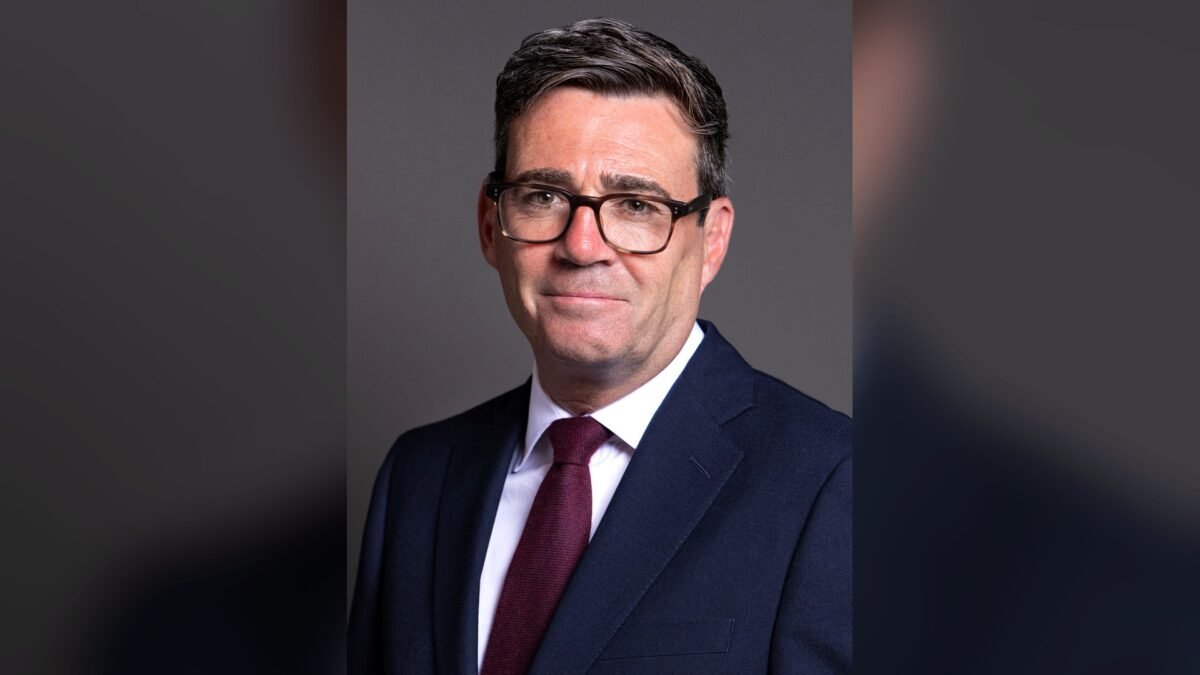
Labour MPs are urging Prime Minister Andy Burnham to scrap the government’s draft Conversion Practices Bill, warning that the legislation as written could criminalise parents for ordinary conversations with their children about gender and sexuality.
According to The Telegraph, at least a dozen Labour MPs have told party whips that they are unhappy with the bill, and a number of ministers are also said to have what the newspaper described as “grave concerns” about it. The revolt, reported over the weekend and into Monday, leaves Mr Burnham facing an early test of his authority over a measure he inherited rather than wrote: the draft was published in the final days of Sir Keir Starmer’s government and is now passing through pre-legislative scrutiny by a joint committee of MPs and peers.
Tonia Antoniazzi, the Labour MP for Gower since 2017, has called on the Prime Minister to step in and drop the legislation. She told The Telegraph that she feared the bill would have a chilling effect on parents who want to give a child loving advice, adding: “Mothers are often closest to their children – they need to be brave and strong and look after their children. If parents are criminalised and families divided, it is mothers who will be affected.”
The government insists that parents would not be criminalised simply for questioning a decision by their child, and stresses that abuse would remain unlawful under any version of the law. But with the committee still taking evidence, and a deadline for written submissions of 5pm on Monday 16 November, the pressure from within the Prime Minister’s own party has turned a technical piece of pre-legislative scrutiny into a political problem for Downing Street.
The revolt on Labour’s own benches
The MPs who have spoken out so far are not the usual rebels on the Labour left. They include backbenchers from different traditions inside the party, and their objections are framed not as opposition to banning abusive practices — which they say they support — but as a warning about how widely the draft is drawn.
Steve Yemm, the Labour MP for Mansfield, told The Telegraph: “I support banning abusive and coercive conversion practices, but we must ensure that parents, teachers and clinicians can have open and honest conversations with young people questioning their gender, without fear of criminalisation.” He added: “Biological sex matters, and legitimate gender-critical beliefs must remain protected. I welcome the parliamentary scrutiny of the draft bill and hope it will address these concerns.”
Mr Yemm, who has said he remains sceptical but has an open mind, added that he would be willing to support legislation “that protects people from genuine abuse while safeguarding freedom of belief and appropriate clinical care”.
Mary Glindon, the Labour MP for North Tyneside, warned that parents could become “criminally liable” for offering cautionary advice under the draft bill. “The expert evidence has been clear: the drafting of this bill could result in parents, faith leaders, teachers and counsellors being unfairly restricted or even punished for raising concerns or questions about a young person’s decision to transition,” she said.
Ms Glindon also argued that the bill cuts across the findings of the Cass Review, the 2024 review of gender identity services for children, which recommended a cautious approach in light of what she described as “various unknown consequences and potential harms of interventions like puberty blockers or chest binders”. “Concerningly, the proposed offence in the draft bill does not even require an intention to cause any harm,” she said, adding that parents and other adults entrusted with caring for vulnerable people “must not be put in a position where offering caring or cautionary advice could leave them criminally liable”.
Graham Stringer, the Labour MP for Blackley and Middleton South, told The Telegraph that his biggest fear was that “parents would be denied the right to help their children if they were having deep anxieties about their sexuality, as lots of adolescents do”. Mr Stringer said he would watch the debate closely but that, on what he now knows of the bill, he would vote against it.
Lord Glasman, the Labour peer and founder of the influential Blue Labour group, told The Telegraph: “Putting parents at risk of prosecution for trying to protect their children is something no Labour government should even consider.”
Preet Kaur Gill, who served as a health minister earlier this year and previously worked in social care, warned last month that parents could face prosecution under the draft legislation, including for trying to dissuade their children from pursuing medical interventions before the age of eighteen. She said she had “serious concerns” about the drafting, including that it was not in keeping with the Cass Review, while acknowledging that the government may be well-intentioned in its aims.
According to the Free Speech Union, which campaigns against the bill, the unease extends beyond the back benches. “A number of ministers are also said to have ‘grave concerns’,” it reported, citing The Telegraph’s account of the whips’ soundings.
What the draft bill would do
The government published the draft Conversion Practices Bill on 25 June 2026. It applies to England and Wales only, and it is currently undergoing pre-legislative scrutiny — a process in which a joint committee of MPs and peers examines a draft law and takes evidence before it is formally introduced in Parliament. The committee, which has twelve members, is due to report by 22 January 2027. It is taking written evidence until 5pm on Monday 16 November and is scheduled to hear further oral evidence on Thursday 12 November.
The draft creates a new criminal offence of carrying out an abusive conversion practice, defined in the bill as “any conduct” intended to change a person’s sexual orientation or transgender identity, where a court decides the conduct was abusive. The maximum penalty is five years in prison, an unlimited fine, or both. The draft also creates offences of encouraging or assisting an abusive conversion practice carried out outside England and Wales, and provides for conversion practice protection orders. If the bill becomes law, it would take effect two months later.
The bill does not exempt parents. Nor does it exempt teachers, clinicians, faith leaders or therapists. That absence of an exemption is at the centre of the row: critics argue that the words “any conduct” are so broad that they could capture conversations in a family home, a classroom, a clinic or a place of worship.
The Telegraph reported on 4 November that the draft could also make company directors and managers criminally liable if staff repeatedly used language covered by the bill and the employer had failed to take all reasonable steps to prevent an offence. The Daily Mail has also reported concerns about the breadth of the drafting. Equalities Minister Bridget Phillipson has discussed the bill on LBC, and the government has repeatedly said the measure is aimed at abuse, not at ordinary discussion.
The bill was a Labour manifesto commitment at the 2024 general election, when the party promised a trans-inclusive ban on conversion practices. It was announced in the last King’s Speech, and the draft was published as Sir Keir Starmer’s government was coming to an end. Mr Burnham, who became prime minister and Labour leader three months ago, has therefore inherited both the promise and the drafting.
Why critics say the drafting is the problem
The most detailed criticism of the draft has come from lawyers and from people who work with children questioning their gender identity. Lord Ken Macdonald, the former Director of Public Prosecutions, told The Telegraph that there was a “serious problem with the Bill” and that it was “unclear” in a way that offended a basic principle of the rule of law.
“I don’t think it criminalises anything that isn’t already criminal,” Lord Macdonald said. “The minister in the House of Lords was asked to explain what it was that was presently not criminal, that would be criminalised by the legislation. And he said that will come out in pre-legislative scrutiny, which is unprecedented.” He added: “If the minister can’t explain what it is that’s presently lawful that the Bill is going to make unlawful, that means there’s a serious problem with the Bill, frankly.”
Discussing the possibility of parents being imprisoned for talking to their children about transitioning, Lord Macdonald said the legislation put people in an “unacceptable situation”. “It talks about the use of psychological or emotional pressure. The problem with that is, when you’re having very sensitive discussions between, for example, parents and their children, or clinicians and their patients, it’s very difficult to understand what that means,” he said. “There’s a basic principle called legal certainty, which is a very important part of the rule of law, which means that people need to understand when they are breaking the law and when they’re not breaking the law.”
He concluded: “But I think those concepts of psychological or emotional pressure mean that it would be very difficult for parents to know when they’re talking to their children or for clinicians to know when they’re talking to their patients, whether they’re breaking the law or not. And that is obviously an unacceptable situation. It’s completely contrary to the rule of law.”
An analysis by the think tank Policy Exchange, cited by GB News, concluded that the draft could criminalise parents who seek to dissuade children from transitioning. The Church of England has also raised concerns with The Telegraph about the bill’s scope, and Dr David Bell, the psychiatrist who raised concerns about the Tavistock children’s gender clinic, told the Daily Mail that the proposed law could have been used to silence those who raised the alarm about the clinic.
Philippa Roberts, who had a double mastectomy at nineteen and later stopped identifying as a man, told The Telegraph on 6 November that she feared the bill could criminalise conversations in which she shares her experience with young women considering similar surgery.
The Telegraph launched a campaign on 3 November calling for the draft bill to be scrapped, warning that it would have a chilling effect on the relationship between children and their parents. The campaign has been backed by the Conservative leader, Kemi Badenoch, who said: “We already have laws to protect people from abuse and discrimination. I looked at this in government, and concluded that the bill was unworkable.” The Reform UK leader, Nigel Farage, said: “I fully support The Telegraph with their campaign. This bill needs to be scrapped immediately – parents should never be criminalised for simply having conversations with their children about their gender.”
Baroness Falkner, the former chair of the Equality and Human Rights Commission, has called on Mr Burnham to “quietly abandon” the bill, even though it was a Labour manifesto commitment, and has warned that it could criminalise people for trying to persuade someone that they were not a cat. The campaign has also been backed by whistleblowers who raised the alarm about the Tavistock clinic and by Baroness Sharron Davies, the former Olympic swimmer.
The government’s defence
Ministers strongly reject the suggestion that ordinary conversations between parents and children would become criminal. In a parliamentary answer on 29 October, the equalities minister Simon Lightwood said: “The draft Bill will not prevent parents from making choices on how to raise their children. We are preventing a very specific, severe form of abuse.”
The government’s position is that the proposed law is intended to close gaps in existing legislation, particularly around psychological abuse, rather than to punish parents for expressing concern or offering advice. Ministers insist that abuse would remain unlawful under any version of the law, and that questioning a child’s decision, on its own, would not be criminalised.
That defence has not satisfied the bill’s critics, who argue that the reassurance sits uneasily with the words on the page. The draft defines a conversion practice as “any conduct” intended to change a person’s sexual orientation or transgender identity, and the critics say that a definition that wide cannot be narrowed by ministerial assurances alone. The Free Speech Union, which campaigns against the bill, argues that abusive practices such as so-called “corrective rape” and attempts to “pray the gay away” are abhorrent but already illegal, and that the new law would instead capture “parents and therapists who have well-intentioned conversations with gender-confused children, and religious leaders who share their faith’s teachings on sex, gender, and marriage with their congregations”.
The government has also pointed to the scrutiny process itself as the place where such concerns should be tested. The joint committee is hearing from witnesses on both sides, and ministers have said they welcome parliamentary scrutiny of the draft. That argument cuts both ways: the scrutiny process is now generating the very evidence — from MPs, lawyers, clinicians and detransitioners — that the bill’s opponents are using against it.
The case for the ban
The argument for legislation has been made most forcefully by survivors of conversion practices, who gave evidence to the joint committee on 2 November. Ian Smith, aged fifty-six, told the committee about his experience, including what he described as “demon exorcisms”, and joined three-quarters of conversion practice victims in calling for a comprehensive legal ban. The proposed legislation includes three offences, including carrying out abusive conversion practices that cause serious harm, and provides for civil protection orders, representing a significant expansion of legal protection for victims.
Humanists UK, which supports the bill, has urged the committee to look at what the draft actually says “rather than what headlines claim it says” and to recommend that it becomes law without delay. Its director of human rights and advocacy, Richy Thompson, said: “Survivors of conversion practices have waited years for this protection.” The Equality Network, which responded to the committee’s call for evidence on 6 November, has called for improvements to the bill while supporting its aims.
The history matters here. A ban on conversion practices has been promised by successive governments since 2018, and none has delivered one. The Conservative governments of Theresa May, Boris Johnson, Liz Truss and Rishi Sunak all pledged action and all failed to legislate, for reasons that ranged from disagreement over the scope of any ban to the press of other business. Labour’s 2024 manifesto promise was meant to break that logjam. For supporters, the draft bill is the first concrete step towards a law that victims have waited years to see, and delay or abandonment would be a betrayal of that promise.
The BBC reported in June 2026 on an earlier version of the government’s plans, and the current draft has been welcomed by many LGBT+ organisations as a long-overdue measure. For them, the argument that the bill would criminalise parents is a misreading of a law that requires a court to find that conduct was abusive before any offence is committed.
Analysis: Why It Matters
An inherited bill, a new prime minister’s problem
Mr Burnham did not write this bill, but he now owns it. That is the central political fact of the row. The draft was published in the final days of Sir Keir Starmer’s government, and Mr Burnham, who took over three months ago, has to decide whether to press ahead with a measure that is already dividing his own party, amend it substantially, or quietly abandon it and break a manifesto promise in the process.
Each option carries a cost. Pressing ahead risks a backbench revolt that could grow: a dozen MPs telling the whips they are unhappy is a warning, not yet a rebellion, but it is the kind of number that grows quickly if ministers are seen to be dismissive. Amending the bill substantially would require the government to accept that the drafting is flawed, which would hand its critics a victory and invite demands for more changes. Abandoning it would please the MPs who want it scrapped, but it would infuriate the LGBT+ organisations and survivors who have waited years for a ban, and it would allow the Conservatives and Reform UK to say that Labour cannot keep its promises.
The fact that the unease is reported to extend to ministers makes the problem sharper. A backbench revolt can be managed; a cabinet that is privately divided cannot. If ministers with what The Telegraph called “grave concerns” begin to say so publicly, Mr Burnham will face a choice between his cabinet and his back benches. That is a choice no prime minister wants to make three months into the job.
The definition at the heart of the row
Strip away the politics, and the row is about four words: “any conduct”. The draft defines a conversion practice as any conduct intended to change a person’s sexual orientation or transgender identity. The government says the offence only bites where a court finds the conduct abusive. The critics say that is not enough, because the definition is so wide that it leaves parents, teachers, clinicians and faith leaders guessing about where the line falls.
Lord Macdonald’s intervention is significant precisely because it is not a political argument. As a former Director of Public Prosecutions, he is concerned with whether a law can be understood and applied fairly. His point — that a minister in the House of Lords could not explain what is presently lawful that the bill would make unlawful — goes to the heart of the government’s difficulty. If the government cannot say clearly what new conduct the law would catch, it is hard to argue that the law is needed, and harder still to argue that it is safe.
The counter-argument, made by supporters of the bill, is that the requirement for a court to find that conduct was abusive is a real safeguard, and that the bill is aimed at sustained, coercive behaviour rather than single conversations. That is a reasonable reading of the draft. But the critics’ answer is also reasonable: that the breadth of the definition, combined with the five-year maximum sentence, will have a chilling effect even if prosecutions are rare, because few parents or clinicians will want to risk finding out where the line is drawn.
This is, in the end, a disagreement about how much trust to place in the good sense of prosecutors, courts and future governments. The government asks for trust. The critics say the words on the page should not require it.
The Cass Review shadow
Running through the debate is the Cass Review, the 2024 review of gender identity services for children and young people, which recommended a cautious approach to medical interventions such as puberty blockers. The review changed the terms of the debate in Britain: it is now common ground among most politicians that children questioning their gender should be treated carefully, and that the evidence base for medical intervention is thin.
The critics of the bill argue that it sits uneasily with that consensus. Ms Glindon’s point — that the bill could punish parents for urging caution about interventions the Cass Review itself treated cautiously — is the sharpest version of the argument. Ms Gill made the same point when she said the drafting was “not in keeping with” the review.
The government’s answer is that the bill is about abuse, not about clinical caution, and that nothing in it prevents a clinician from following the Cass Review’s recommendations. That may be right as a matter of law. But the political argument is harder to win, because the Cass Review has given the bill’s critics a respected, evidence-based anchor for their position, and because the review’s emphasis on caution sits awkwardly with a law that critics say could punish caution itself.
A parliament that has not yet decided
It is worth remembering what stage this bill is at. It is a draft, undergoing pre-legislative scrutiny. It has not had a first reading, it has not been enacted, and it does not create any new offences at present. The joint committee’s job is to test the draft, hear evidence, and recommend changes — or, if it concludes the bill cannot be fixed, to say so.
That process is working as intended. The committee has heard from survivors who want a comprehensive ban, and it is hearing from parents, clinicians, lawyers and detransitioners who fear the draft goes too far. It has received written evidence from organisations on both sides, and it has until 22 January 2027 to report. The deadline for written submissions, 5pm on Monday 16 November, is a week away, and further oral evidence is scheduled for Thursday 12 November.
The question is whether the political row overtakes the scrutiny process. If Mr Burnham is forced to take a position before the committee reports — either by his own MPs or by the opposition parties, which are now campaigning against the bill — the careful, evidence-based process the government set up could be short-circuited by a political decision. That would be a pity, because the committee is the one forum in which the competing claims about the bill can be tested against evidence rather than asserted in newspaper columns.
What the row reveals about Labour’s coalition
The row is also a window into the tensions inside the Labour Party. The MPs who have spoken out — Ms Antoniazzi, Mr Yemm, Ms Glindon, Mr Stringer, Lord Glasman — are not a faction. They come from different parts of the party, and their objections are rooted in different concerns: parental rights, freedom of belief, the rule of law, and the findings of the Cass Review. What unites them is a sense that the bill, as drafted, goes further than the party promised and further than the public would accept.
That matters because Mr Burnham’s leadership depends on holding together a coalition that includes both the MPs who want the bill scrapped and the MPs and activists who regard a conversion practices ban as a fundamental test of Labour’s commitment to LGBT+ rights. The 2024 manifesto promised a trans-inclusive ban, and for many in the party that promise is not negotiable. For the MPs who have spoken out, the promise was to ban abusive practices, not to criminalise conversations.
Both sides can claim to be defending the manifesto. That is what makes the row so difficult to resolve, and why it is likely to run for some time. The committee’s report in January will be the next staging post, but the political argument will not wait until then.
What to Watch Next
- Thursday 12 November: the joint committee hears further oral evidence on the draft bill. Who is called, and what they say about the definition of a conversion practice, will shape the debate.
- Monday 16 November, 5pm: the deadline for written evidence to the committee. The volume and content of submissions from parents, clinicians, faith groups and LGBT+ organisations will show how wide the concern runs.
- The Prime Minister’s response: whether Mr Burnham comments publicly on the revolt, and whether he signals any willingness to amend the draft or to press ahead unchanged.
- Ministers breaking cover: whether any minister with reported “grave concerns” about the bill speaks publicly, which would turn a backbench warning into a cabinet problem.
- The committee’s report: due by 22 January 2027, the report will recommend whether the bill should proceed, and in what form. Its conclusions will be difficult for the government to ignore.
- The opposition’s campaign: whether the Conservatives and Reform UK, both of which now back scrapping the bill, keep up the pressure, and whether The Telegraph’s campaign gathers further high-profile support.
- Amendments: whether the government offers changes to the draft — for example, an explicit exemption for parents, or a narrower definition of a conversion practice — before the bill is formally introduced.
Sources
- Free Speech Union – “Labour MPs call on Burnham to scrap Conversion Practices Bill” (9 November 2026)
- QNC News – “Labour MPs Urge Burnham to Scrap Draft Conversion Practices Bill Over Parent Fears” (10 November 2026)
- TalkFuse / GB News – “Labour MPs revolt against Andy Burnham’s trans law amid fears parents could face jail” (8 November 2026)
- British Bulletin – “Labour’s Trans Conversion Therapy Bill Is ‘contrary To Rule Of Law’, Warns Former Top Prosecutor” (9 November 2026)
- The UK Pulse – “Conversion Therapy Survivor Urges Parliament to Ban ‘Demon Exorcisms’” (7 November 2026)
- Protect and Teach – “Draft Conversion Practices Bill live tracker” (updated 4 November 2026)
- Billboard Chris – “UK Draft Conversion Bill Could Put Company Bosses at Risk of Jail, Report Says” (5 November 2026)

About the Author — Abdul Mannan
Related Articles
Russell Brand Jailed for Ten Years and Six Months for Rape and Sexual Assault
Russell Brand has been jailed for ten years and six months after a judge at Southwark Crown Court…
Russell Brand Jailed for Ten and a Half Years for Rape and Sexual Assaults as Judge Calls Him a ‘Sexual Predator’
Russell Brand has been jailed for ten years and six months for raping one woman and sexually assaulting…

Starbucks to Hire 7,500 UK Baristas in Five-Year Expansion as It Bets on Growth Beyond London
Starbucks has announced plans to recruit 7,500 new baristas across the UK over the next five years, staffing…