
Shehbaz Sharif Briefs Nawaz Sharif on Khyber Pakhtunkhwa Security and the Economy at Jati Umra

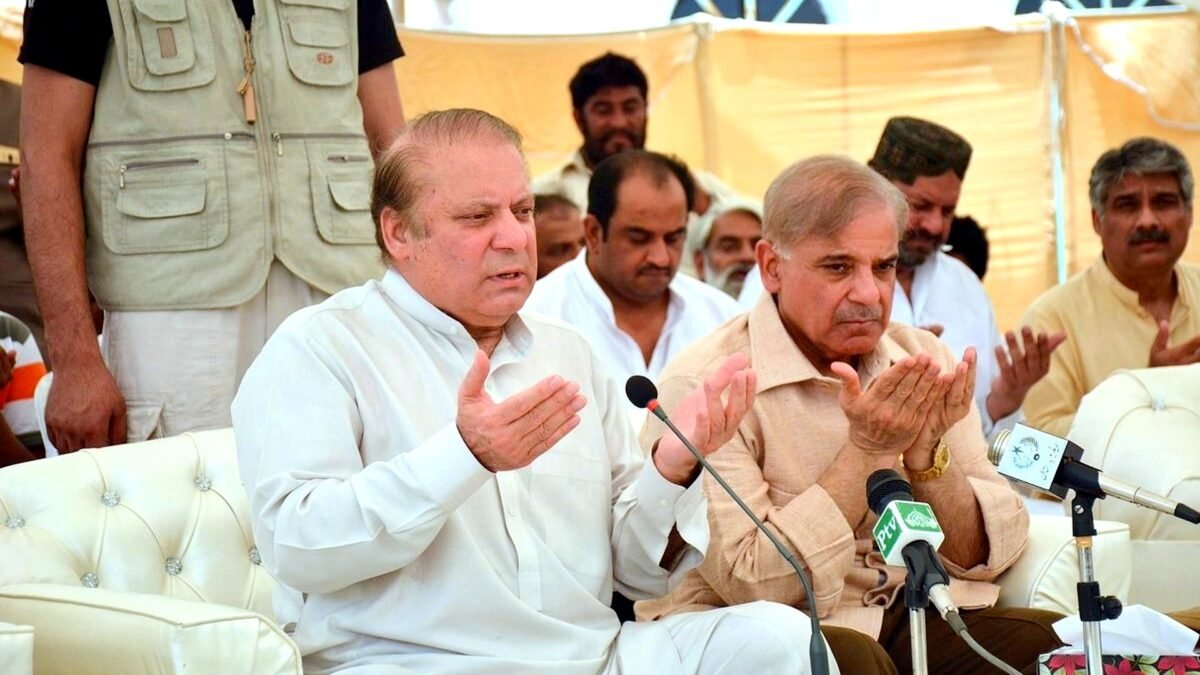
Prime Minister Shehbaz Sharif travelled to Jati Umra in Lahore on Sunday, 8 November 2026, to brief Pakistan Muslim League-Nawaz (PML-N) president Nawaz Sharif on the security situation in Khyber Pakhtunkhwa, the state of the economy and the government’s reform agenda, in the most significant meeting of the ruling party’s leadership in weeks. Deputy Prime Minister and Foreign Minister Ishaq Dar and Punjab Chief Minister Maryam Nawaz also attended the session at the Sharif family’s residence, according to the Prime Minister’s Office.
The meeting, which ended without a formal statement, brought together the two most powerful figures in the PML-N at a moment when the government is managing a security emergency in the country’s northwest, rising household electricity costs and increasingly public friction inside its own coalition. Party sources described the session as significant, and the Prime Minister’s Office confirmed its shape: the prime minister briefed Nawaz Sharif on the law and order situation in Khyber Pakhtunkhwa, the country’s economic challenges and the reform agenda, and the two leaders held detailed consultations on national political matters and on measures to strengthen the economy, according to Radio Pakistan.
That the meeting took place at all, and that it took place in Lahore rather than Islamabad, underlines how the PML-N still treats Nawaz Sharif as the final sounding board on the decisions that matter most. Shehbaz Sharif runs the government day to day, but the big calls on Khyber Pakhtunkhwa, on the economy and on the party’s political strategy are still taken, or at least ratified, in consultation with his elder brother. Sunday’s session was the clearest sign yet that the leadership sees the twin pressures of militancy in the northwest and strain inside the coalition as a single political problem that needs a coordinated response.
The Meeting at Jati Umra
Shehbaz Sharif arrived at Jati Umra on Sunday and sat down with Nawaz Sharif for detailed consultations on the country’s political, security and economic situation, according to reports of the meeting. Maryam Nawaz, who governs Punjab, and Ishaq Dar, who holds the foreign affairs and deputy prime minister’s portfolios, were present throughout, according to the Prime Minister’s Office.
Four broad areas were on the table, according to party sources: the overall political landscape, law and order, economic indicators and the government’s policy priorities for the coming months. The Prime Minister’s Office confirmed that the prime minister briefed Nawaz Sharif on the security situation in Khyber Pakhtunkhwa and on recent initiatives aimed at the development and prosperity of the province, and that the two leaders discussed ways to improve the national economy. The prime minister also informed the PML-N president about the ongoing economic reforms being implemented by the government, highlighting the challenges faced and the measures being undertaken to address them, according to Radio Pakistan.
No formal statement was issued after the discussions. That silence is itself informative. When the PML-N leadership wants to project confidence, it usually says so. The absence of a communique suggests a working session rather than a set-piece event: a briefing and a discussion, not a decision announced to the public. Party insiders, rather than an official statement, were left to describe a session they called significant.
The timing mattered. The meeting took place less than a month after the federal government imposed emergency rule in Khyber Pakhtunkhwa, on the same day the PML-N was digesting by-election results in Punjab, and two days before the prime minister was due to fly to Turkiye for the COP31 climate conference. It also came as the opposition was preparing a joint conference of its own, and as the Islamabad High Court prepared to hear the appeals of jailed former prime minister Imran Khan and his wife Bushra Bibi in the 190 million pound case on Tuesday, 10 November.
Khyber Pakhtunkhwa Dominates the Agenda
The security situation in Khyber Pakhtunkhwa dominated the briefing the prime minister gave his elder brother, and for good reason. Emergency and governor’s rule was imposed in the province on 11 October 2026, after President Asif Ali Zardari approved the recommendation on the prime minister’s advice under Articles 232 and 234 of the Constitution. The proclamation suspended the provincial government run by the Pakistan Tehreek-e-Insaf (PTI), the party of jailed former prime minister Imran Khan, and put the provincial governor in charge with an advisory council, initially for six months, according to Law Minister Azam Nazeer Tarar.
The federal cabinet, meeting under Shehbaz Sharif earlier on 11 October, had reviewed the situation and taken note of what the prime minister’s office called the provincial government’s deliberate disengagement from the fight against terrorism. President Zardari said in a social media post that he had approved the cabinet’s recommendations. PTI lawmaker Junaid Akbar said the province’s chief minister, Sohail Afridi, was arrested along with the party’s president in the province shortly after the announcement, according to Al Jazeera.
The figures the federal cabinet has been shown explain why the province consumed so much of Sunday’s meeting. Reports presented to the cabinet put the rise in terrorist incidents in Khyber Pakhtunkhwa at 195 per cent between March 2024 and September 2026, and recorded 170 drone attacks on police and security forces in 2026, against none in 2024, according to khabr.pk. Governor Faisal Karim Kundi has said that 70 billion rupees was planned for the police and 10.3 billion rupees for the Counter Terrorism Department in the current financial year, and that intelligence-based operations will continue wherever terrorists are found.
The emergency has not ended the violence. The province remains the centre of Pakistan’s militancy problem, with the Pakistani Taliban, known by the acronym TTP, and other armed groups regularly attacking police and security forces. The PTI, for its part, had been preparing a march on Islamabad to demand Imran Khan’s release. The march was originally scheduled for 27 September but was postponed until 4 October to allow talks between the government and the PTI leadership to take place, according to Al Jazeera. The question hanging over Sunday’s meeting is whether the emergency, now a month old, is containing the militancy or merely containing the politics around it.
That distinction matters for the PML-N. Governor’s rule in a province run by the opposition is the most drastic constitutional instrument available to a federal government, and it invites the charge that the centre is using security as a cover for politics. The government’s answer is the security data: the surge in attacks, the drone strikes on police, the disengagement it alleges on the part of the provincial government. The opposition’s answer is that the emergency suspends an elected government and arrests its chief minister. Sunday’s briefing was, in effect, the prime minister making the government’s case to the one person whose endorsement carries the most weight inside the party.
The Economy on the Table
The second item on Sunday’s agenda was the economy, and here the news the prime minister carried to Jati Umra was mixed. On the one hand, the government points to stabilisation and to reforms it says are gathering momentum. On the other, households and industry are feeling the cost of the adjustment, and the leadership knows it.
Electricity prices were the most immediate pressure. The National Electric Power Regulatory Authority notified a 2.36 rupee per unit increase under the monthly fuel cost adjustment for September, according to The Express Tribune, as reported by khabr.pk. Rising electricity costs for households and industry have become one of the most persistent complaints against the government, and they featured in the economic discussion at Jati Umra, according to party sources.
Against that, the prime minister was able to report a political win. The PML-N won the PP-203 by-election seat in Punjab on Sunday, and Shehbaz Sharif congratulated the party’s candidate, Rashid Bashir Work, on Monday, saying the result showed the public’s confidence in the party’s leadership and the government’s policies. By-elections are a poor guide to national sentiment, but for a government under pressure on living costs, any win is worth claiming, and the prime minister’s message made a point of congratulating Nawaz Sharif and Maryam Nawaz as well.
The prime minister also had smaller, practical announcements to carry into the week. The youth loan limit under the government’s loan scheme has been raised from 7.5 million rupees to 25 million rupees, according to Dunya News. It is the kind of measure that allows the government to argue it is opening opportunity for young people even while the broader economy remains tight.
What the meeting did not produce, at least publicly, was any new economic announcement. The discussion, according to the Prime Minister’s Office, was about sustaining stability, attracting investment and maintaining the momentum of ongoing reforms. That is the language of a government that believes its economic programme is working but knows the public has not yet felt the benefit, and it is the reason the economy keeps returning to the table at Jati Umra.
The Politics Around the Table
The third strand of Sunday’s meeting was the politics itself, and here the pressures are visible in public. The governing coalition has been showing strain. Punjab Chief Minister Maryam Nawaz has sent a 5 billion rupee defamation notice to Federal Minister Chaudhry Salik Hussain, an ally, following his allegations of corruption and criticism of the Punjab government’s development priorities, according to reports in the Pakistani press. A public legal threat between a chief minister and a coalition minister is not a routine event, and it is the kind of friction the leadership would have wanted to discuss behind closed doors at Jati Umra.
The opposition, meanwhile, is regrouping. Pakistan’s opposition parties have agreed to hold an all-parties conference within ten days, according to Dawn, as reported by Zark News, at a meeting at the Islamabad home of Maulana Fazlur Rehman, who leads the Jamiat Ulema-i-Islam-Fazl. Those taking part included Mahmood Khan Achakzai, the leader of the opposition in the National Assembly, who heads the Tehreek-i-Tahafuz-i-Ayeen-i-Pakistan alliance. The parties agreed to work together in parliament and to hold the conference within ten days, and they also raised fresh concern about the health of Imran Khan, the jailed PTI founder, whose party is part of the opposition alliance.
Imran Khan’s health has become a political issue in its own right. Twenty-one cricket captains have urged the government to ensure he is given timely and independent medical care, according to Al Jazeera. The concern is shared, in different forms, by his family and his party, and it was on the agenda of the opposition meeting that agreed the all-parties conference.
The most consequential date on the political calendar, however, is Tuesday, 10 November, when the Islamabad High Court is set to hear the appeals of Imran Khan and Bushra Bibi against their convictions in the 190 million pound case. A division bench comprising Chief Justice Sardar Muhammad Sarfraz Dogar and Justice Muhammad Asif will take up the pleas, according to the Express Tribune and Capital News Point. The couple were sentenced by an accountability court on 17 January 2025, Imran Khan to 14 years and Bushra Bibi to seven years, in the reference filed by the National Accountability Bureau over 190 million pounds returned to Pakistan by the United Kingdom’s National Crime Agency in 2019, money linked to property tycoon Malik Riaz.
The hearing has been a long time coming. The couple’s lawyer, Barrister Salman Safdar, met Imran Khan on 2 November for the first time in seven months, and Bushra Bibi after eleven months, according to reports of the case. In an affidavit submitted to the Islamabad High Court, Safdar said he found Bushra Bibi wearing very dark glasses because she could not tolerate sunlight or artificial light, and that doctors had diagnosed a mature cataract and advised a possible second eye operation around 15 November. On 7 November she filed an application asking the court to order production of her complete medical records, direct an immediate eye examination coordinated with the prison medical officer, and allow treatment by private specialist doctors at her expense, according to Particle News.
Imran Khan has been in jail since August 2023 and faces multiple cases ranging from corruption to terrorism. The appeal hearing on Tuesday will not decide his fate: the bench will hear arguments from the lawyers and may give directions for how the case moves forward. A hearing date is not the same as a suspension of sentence, an acquittal or a release. But it is the first real movement in the appeals since the couple’s lawyer finally got access to them in Adiala Jail, and it is the reason the PML-N leadership would have wanted to be sure, on Sunday, that its own house was in order before the court sits.
Analysis: Why It Matters
The family council is still the real cabinet
The most important fact about Sunday’s meeting is not what was discussed but where it happened and who was in the room. The prime minister of Pakistan travelled to his elder brother’s home to brief him, with the deputy prime minister and the Punjab chief minister in attendance. In most governments, a meeting of that weight would happen in the prime minister’s office, with the cabinet secretary taking notes and a statement issued afterwards. In this government, it happens at Jati Umra, and no statement is issued at all.
That tells us something durable about how the PML-N works. Nawaz Sharif holds no government office, but he remains the party’s president and its final authority. Shehbaz Sharif holds the government, but he still seeks his brother’s endorsement for the decisions that carry the greatest political risk. The arrangement has advantages: it keeps the party’s most experienced figure engaged, and it gives the prime minister cover for difficult decisions. It also has a cost. Decisions that are really taken at Jati Umra are harder for the cabinet, the parliament and the public to scrutinise, and the absence of a formal statement after Sunday’s meeting means the public is left to infer what was decided from what the government does next. For a party that presents itself as the guardian of democratic norms, that opacity is a weakness, and it is one the opposition will keep pointing to.
Khyber Pakhtunkhwa is the test of the emergency
A month into governor’s rule, Khyber Pakhtunkhwa is the test case for the government’s entire approach to the northwest. The emergency was imposed on the argument that the provincial government had disengaged from the fight against terrorism, and the figures the cabinet has been shown, a near tripling of terrorist incidents in two and a half years and 170 drone attacks on police and security forces in 2026, are genuinely alarming. If the emergency delivers a visible improvement in security, the government will argue that the drastic step was justified. If the violence continues at the same pace, the opposition’s charge that the emergency is about politics rather than security will gain force.
The arrest of the province’s chief minister, Sohail Afridi, is the sharpest edge of that argument. Suspending an elected government is one thing; arresting its chief minister is another, and it is the detail that will be remembered if the emergency is ever challenged in court or in parliament. Sunday’s meeting suggests the leadership is aware of the stakes. The prime minister briefed Nawaz Sharif on the province in detail, and the two leaders reviewed the law and order challenges together. What they did not do, at least publicly, was set out a path back to normal constitutional government in the province. The proclamation runs for six months. The longer it runs without a visible security dividend, the harder it will be to defend.
The economy’s credibility problem
The economic discussion at Jati Umra exposed the gap between the government’s account of the economy and the public’s experience of it. The prime minister can point to reforms under way, to a by-election win in Punjab and to measures such as the higher youth loan limit. But the household experience is dominated by electricity bills, and the latest fuel cost adjustment, a further 2.36 rupees per unit, lands on bills that are already a source of political anger.
This is the central problem for the PML-N. The party’s claim to competence rests on its record of managing the economy, and it is asking voters to accept short-term pain for long-term stability. That argument is easier to make in a briefing room at Jati Umra than in a household choosing between the electricity bill and the grocery bill. The by-election win in PP-203 gives the leadership some comfort, but a single constituency result does not settle the question. What will settle it is whether the reforms the prime minister described to his brother start to show up in people’s lives before the next round of elections, and whether the government can hold its nerve on the reforms while the costs are still visible and the benefits are not.
The opposition is finding its voice again
The agreement to hold an all-parties conference within ten days is a modest step, but it is a step the opposition has struggled to take for months. The meeting at Fazlur Rehman’s home brought together parties that disagree about plenty, and the decision to work together in parliament and to hold a joint conference suggests that the shared grievance against the government is, for now, stronger than their differences. The choice of Imran Khan’s health as a rallying point is deliberate: it is an issue on which the opposition can claim the moral high ground, and it is one that the cricket captains’ intervention has already put in the public eye.
The PML-N leadership will have discussed this at Jati Umra. The party’s instinct has always been to treat the opposition as a problem to be managed rather than a partner to be engaged, and the emergency in Khyber Pakhtunkhwa is the most extreme expression of that instinct. But an opposition that is organised, that has a shared platform and that is raising a humanitarian concern about a jailed former prime minister is harder to dismiss than a scattered one. The all-parties conference, when it happens, will be the first real test of whether the opposition can turn shared grievance into shared purpose.
The court date that matters most
Tuesday’s hearing in the Islamabad High Court is the most consequential date in Pakistan’s politics this week, and Sunday’s meeting was timed with it in mind. The appeals of Imran Khan and Bushra Bibi have been waiting for a hearing for months, and the fact that the bench will finally sit, with the couple’s lawyer having at last been able to meet them in jail, is a genuine development. But it is important not to overstate what Tuesday will decide. The bench will hear arguments and give directions. It will not, on the first day, acquit or release anyone.
What Tuesday will do is put the case back in the public eye, and it will do so alongside Bushra Bibi’s application for urgent eye care, which is a reminder that the human cost of prolonged detention is not an abstraction. The government’s interest is in the case proceeding in an orderly way, without becoming a political flashpoint. The opposition’s interest is in the opposite. The PML-N leadership’s interest, which is why the meeting happened on Sunday, is in being ready for either outcome, and in making sure that when the court speaks, the party speaks with one voice. That, more than any single item on the agenda, is what the Jati Umra meeting was for.
What to Watch Next
- The Islamabad High Court hearing on Tuesday, 10 November, when the appeals of Imran Khan and Bushra Bibi in the 190 million pound case come before Chief Justice Sardar Muhammad Sarfraz Dogar and Justice Muhammad Asif, and whether the bench fixes a schedule for arguments or adjourns.
- Bushra Bibi’s application for urgent eye care, including whether the court orders production of her medical records and an examination by private specialists, and what the prison medical officer reports.
- Prime Minister Shehbaz Sharif’s departure for Turkiye on Tuesday for the COP31 climate conference in Antalya, which opens on Wednesday and is to be inaugurated by President Recep Tayyip Erdogan, and what Pakistan seeks from the summit.
- Deputy Prime Minister Ishaq Dar’s inauguration of the two-day Margalla Dialogue in Islamabad on Tuesday and the Pakistan Minerals Investment Forum on Thursday, with the prime minister chairing its concluding session on Friday.
- The opposition’s all-parties conference, agreed to be held within ten days at the meeting at Maulana Fazlur Rehman’s home, and whether it produces a joint programme or merely a joint statement.
- The security situation in Khyber Pakhtunkhwa under governor’s rule, including whether the intelligence-based operations the governor has promised produce a visible fall in attacks, and any legal or parliamentary challenge to the emergency proclamation.
- The next electricity bills, and whether the 2.36 rupee per unit fuel cost adjustment deepens the political argument about the cost of living, and how the government responds.
Sources
- khabr.pk — PM Shehbaz briefs Nawaz Sharif on K-P security and economy in Lahore
- AsiaNet-Pakistan (Radio Pakistan) — PM Shehbaz and PML-N Quaid Nawaz Sharif Discuss National Issues in Lahore
- Pakistan Khabar Nama — Shehbaz Nawaz Meeting 2026: Jati Umra Talks On KP, Economy
- The News — Dar to inaugurate Margalla Dialogue, Mineral Forum today
- Capital News Point — £190 Million Case, IHC Fixes Imran Khan, Bushra Bibi’s Appeals for November 10

About the Author — Abdul Mannan
Related Articles
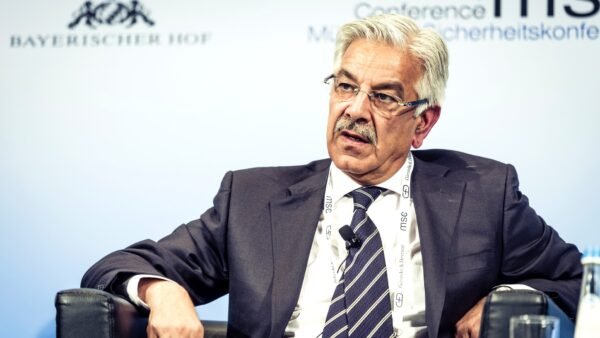
Khawaja Asif Backs Redrawing Pakistan Into 12 Provinces as Debate Over 28th Amendment Gathers Pace
Defence Minister Khawaja Asif has backed creating up to 12 provinces on administrative grounds, as reports say a…
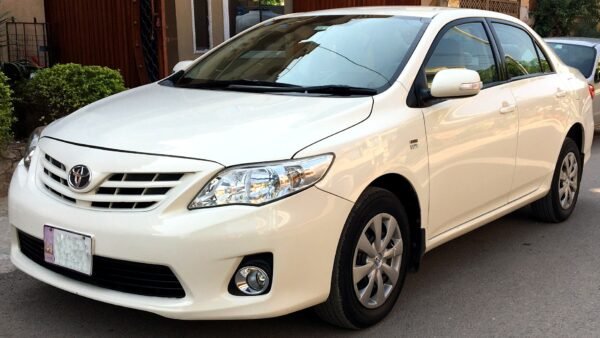
Pakistan Unveils New Auto Policy Promising Cheaper Cars, $6 Billion in Exports and a Big Electric-Vehicle Push
The government says car prices will fall gradually, advance payments will be capped at 20 per cent and…
PTI Urges Supreme Court to Enforce Hospital Order for Imran Khan as Health Fears Mount
PTI chairman Barrister Gohar Ali Khan says reports about Imran Khan's health in Adiala Jail are 'not encouraging'…