
Trump Says FBI Is Probing Nvidia Chief Jensen Huang Over Suspected Chinese Spy Affair as Shares Slide and Investors Sue

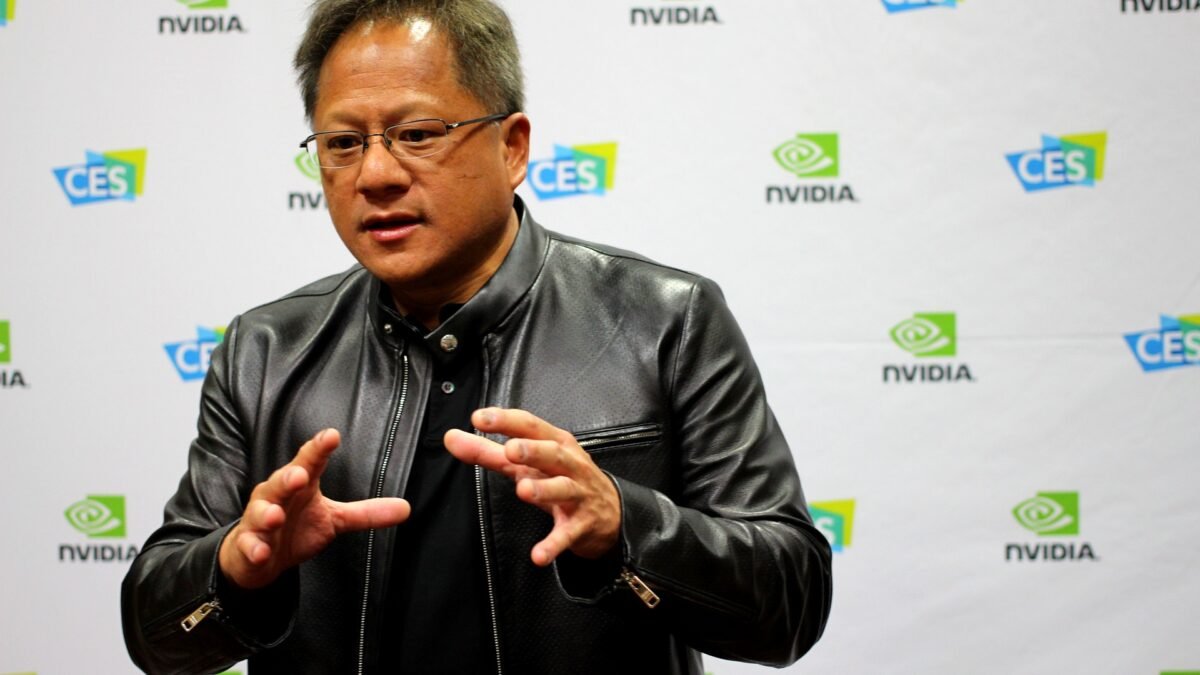
President Donald Trump has confirmed that the FBI is investigating Nvidia chief executive Jensen Huang over his relationship with a woman United States intelligence agencies believe is a Chinese spy, a disclosure that sent the world’s most valuable chipmaker’s shares sliding and drew a shareholder lawsuit within hours.
Speaking to reporters at an impromptu White House press conference on Monday, Mr Trump said he believed Mr Huang’s insistence that he had no idea the woman was a spy, and predicted the Nvidia chief would emerge from the episode unscathed. “I hope there’s no problem,” the president said, according to USA Today. “I know the FBI is looking into it, in terms of something else. I think that he’ll be in good shape.”
The president’s remarks were the first public confirmation from the White House that federal investigators are examining the affair, which has grown in a matter of days from a corporate governance crisis into a national security controversy touching the company at the centre of the global artificial intelligence boom. Nvidia’s board announced its own independent investigation on Sunday, hours after Mr Huang admitted to employees that he had been unfaithful to his wife. On Monday, the company’s shares closed down 4.3 per cent, wiping about $190 billion from its market value, according to Reuters, and shareholders filed a proposed class action in federal court in San Jose, California, accusing Nvidia and Mr Huang of defrauding investors by concealing the matter.
The woman at the centre of the affair is Alice Huang, a former executive of the Singapore-based data centre company Megaspeed International who is not related to the Nvidia chief. The New York Times reported last month that American authorities had concluded she was a Chinese intelligence asset who passed information to Beijing while developing a close relationship with Mr Huang. China has denied the allegation. Reuters has said it could not independently verify the intelligence claim, and no evidence has been made public establishing that Mr Huang knowingly took part in any intelligence activity.
What Trump said on Monday
Mr Trump spoke at length about the episode during his surprise appearance in the White House briefing room on Monday, and his tone was protective throughout. He described Mr Huang, 63, as a close ally and a friend, and said he had telephoned the Nvidia chief earlier in the day to ask how he was doing.
“He said he had absolutely no idea that the person in question was a spy,” Mr Trump told reporters, according to the Hindu BusinessLine. “I asked him that question, ‘Did you have any idea that she was a spy?’ He said, ‘I had no idea that she was a spy.’ I really believe him.”
According to CNN, the president said he was “amazed” by the allegations and insisted that none of it much worried him. “I’d certainly check with the intelligence people,” he said of when he was first made aware of the concerns tied to Mr Huang. “They could have been mentioned. Certainly, it didn’t make much of an impact on me.”
Mr Trump also spoke about the personal toll on the Nvidia chief. “He is definitely suffering,” he said, according to USA Today, adding that Mr Huang was suffering because of his family, including “his wife, who he loves.”
The president’s backing is striking given how central Mr Huang has become to his administration. Only last month, Mr Trump awarded the Nvidia chief the National Medal of Science, telling the audience at the time: “An amazing man, gotten to know him so well, Jensen Huang. The entire world is now running on Nvidia.” That remark, reported by CNN, captures a relationship that has placed the head of the world’s most valuable chipmaker at the heart of American technology policy — and now at the centre of a counterintelligence question that reaches into the White House itself.
Mr Trump said he did not expect to raise the matter when he meets Chinese President Xi Jinping next week, but added that Mr Xi might ask him about it. “I’m sure President Xi will ask me about it,” he said, according to USA Today. “I just know Jensen very well. I know he’s a very honorable man. He built a great company, an American company. I think he’s a very honorable guy. I feel very confident that he’ll be in good shape.”
The board investigation and Huang’s admission
The crisis became public on Sunday, when Nvidia announced that its board had launched an independent investigation into reports that Mr Huang had been the target of a foreign intelligence effort. The company said the inquiry would be led by a committee of independent directors with the support of external advisers, according to reporting by the Spanish outlet Demócrata, and the board said it had no reason to believe that national security information or company trade secrets had been compromised, Reuters reported.
Mr Huang, who co-founded Nvidia in 1993 and has led it ever since, acknowledged in a message to employees on Sunday that he had been unfaithful to his wife, without disclosing details of the relationship. In an open letter posted on Nvidia’s website, he issued an apology to his wife and to the company, and said he was committed to supporting American national security, according to the Hindu BusinessLine and Reuters.
The company has stressed the limits of what any outside contact could have obtained. Nvidia has said its chief executive meets thousands of customer executives each year, and that its cloud customers in Asia receive ordinary business information rather than trade secrets or information related to American national security, Reuters reported.
Yet, as CNN reported, it remains unclear whether the board is willing to remove Mr Huang — and what the consequences would be if it did. There is no obvious successor to a chief executive who has turned Nvidia into the powerhouse supplier of the chips at the centre of the AI boom, and the board’s dilemma is sharpened by the fact that the investigation is examining whether Mr Huang was the victim of a targeting operation rather than a participant in one.
Who is Alice Huang
The woman named in the reporting is Alice Huang, also known as Huang Le, a Chinese businesswoman reported by the Chinese financial publication Caixin to be about 42 years old. A detailed profile published by Reuters on Tuesday, based on more than 30 publicly available financial records, corporate filings and company materials, traces a career that began in Chinese finance before moving into the global race for artificial intelligence chips.
According to Reuters, Ms Huang previously worked in banking and investment management, including at HSBC’s private bank in Hong Kong and at CITIC Securities, and held senior positions at Shanghai Hexi Investment Management, a Chinese investment firm. Posts on the firm’s official WeChat account between 2016 and 2017 identified her as its deputy general manager, executive director and a member of its investment decision committee. A business card reviewed by Reuters identified her as a partner and general manager, with an office in Shanghai’s Lujiazui financial district — though when Reuters visited the address listed on the card, it found offices undergoing extensive renovation, with no company signage or staff present, and calls to a number on the card went unanswered.
Ms Huang became the controlling shareholder of Megaspeed International in March 2023, according to the Washington-based research group C4ADS, which reviewed corporate records. Megaspeed, incorporated in Singapore in 2015 as 7Road International, provides cloud-computing services and describes itself on its website as an Nvidia business partner in the Asia-Pacific region. Nvidia itself lists Megaspeed as an official cloud partner in its directory, Reuters reported.
The company first attracted public attention in October 2025, when the New York Times reported that it was under American investigation over whether it was helping Chinese customers obtain advanced Nvidia chips subject to Washington’s export controls. Shipping records from the trade-data provider ImportGenius reviewed by Reuters show that Megaspeed’s Indonesian subsidiary imported Nvidia hardware between 2024 and 2026, including H100 processors and related components, in shipments from suppliers including Giga Computing, a subsidiary of the Taiwanese server manufacturer Gigabyte.
The H100 is among the advanced Nvidia processors restricted from export to China, although, as Reuters noted, the shipments to Indonesia do not themselves establish any violation of American export controls, and there has been no public finding that Megaspeed violated the rules.
Ms Huang also served as a director and managing director of Megaspeed’s Indonesian subsidiary from March to November 2023, according to C4ADS. Megaspeed’s shares were transferred in late 2023 to SwiftData, a Singapore-based company that holds all 10 million of its ordinary shares, C4ADS said. The research group said it could not determine who ultimately controls SwiftData, but assessed that Ms Huang may have continued to exercise influence over Megaspeed after the transfer, citing appearances in which she was identified as its chair.
The two Huangs were both present at a party hosted by Gigabyte during the 2024 Computex technology trade show in Taipei, according to a person who attended, and a photograph posted on LinkedIn showed them seated next to each other, Reuters reported. Megaspeed did not respond to Reuters’ requests for comment, and Reuters said it could not determine Ms Huang’s whereabouts to seek comment from her.
China has rejected the espionage claims outright. “The so-called Chinese spy allegation is unsubstantiated. It is nothing but smears against China,” foreign ministry spokesman Guo Jiakun said on Monday, according to the Hindu BusinessLine. CNN reported his words as “purely groundless speculation and an attempt to smear and malign China.” Beijing had earlier dismissed the New York Times report that Mr Huang had developed a close relationship with a Chinese citizen named Alice Huang.
The intelligence timeline: a year of warnings
What has alarmed officials in Washington is not only the affair itself but how long American intelligence agencies appear to have been watching it — and how little, apparently, was done about it.
According to CNN, federal agents first informed some lawmakers roughly a year ago that they suspected Mr Huang was the “target of a foreign intelligence effort”, citing his close relationship with Ms Huang. The FBI officials noted that Ms Huang suddenly had an unusual level of purchasing power for someone in her position, one of the people familiar with the matter told CNN.
Those early suspicions formed the basis of a classified memo issued in May warning that Mr Huang had a close relationship with a woman the United States had concluded was a Chinese spy, according to a United States official and another person familiar with the matter cited by CNN. The memo was overseen by Secretary of State Marco Rubio and circulated among a small group of senior administration officials before Mr Trump’s trip to China to meet President Xi.
Around the same time, a New York research firm that specialises in betting against publicly traded companies published its own report questioning the “uncomfortably close” relationship between the Nvidia chief and Ms Huang, CNN reported.
Yet Mr Trump took no apparent action to distance himself from Mr Huang. The Nvidia chief was not initially among the technology executives and businessmen invited to accompany the president on the China trip, though it is unclear whether that decision was tied to the Rubio memo. In the end, Mr Trump insisted that Mr Huang join him: the chief executive boarded Air Force One during a layover in Alaska, accompanying Mr Trump and his top aides for the final leg of the flight to China. The president later hailed him in a social media post as “the Great Jensen Huang” and insisted that reports he had not been invited were incorrect.
Mr Trump said on Monday that he had only recently learned of the concerns surrounding Mr Huang, and was not aware of the suspected espionage operation when he brought him to Beijing, CNN reported. That claim is now one of the central questions facing the White House: what the president knew, and when he knew it.
Two former senior intelligence officials at the FBI have questioned the decision not to give Mr Huang a “defensive briefing” that would have informed him he could be the target of Chinese intelligence, CNN reported. Such briefings are a standard counterintelligence tool, designed to warn a potential target without revealing sources or methods — and their absence here is one of the details lawmakers are now pursuing.
Congress demands answers
Senior Trump administration officials met on Monday with the Gang of Eight, the group of top lawmakers charged with overseeing the nation’s intelligence agencies, to discuss the intelligence surrounding Mr Huang’s affair. Jay Clayton, the director of national intelligence, and CIA Director John Ratcliffe were seen on Capitol Hill as administration officials huddled with the lawmakers for more than an hour, CNN reported.
The private meeting had initially been intended to focus on the war in Iran. Instead, it came days after Mr Huang admitted to the affair — and nearly a year after the FBI first raised its concerns with lawmakers. Afterwards, lawmakers indicated they still had more questions than answers, with Democrats vowing a series of investigations once they take control of Congress in January, CNN reported.
“The export of advanced semiconductors to China or countries where China might access them is a matter of immense national security importance,” Representative Jim Himes, the top Democrat on the House Intelligence Committee, said in a statement reported by CNN. “We are aggressively pursuing more information to understand what happened and whether the decision-making process to export chips was improperly influenced or compromised.”
House Minority Leader Hakeem Jeffries, who is in line to become speaker when Democrats take control of Congress in January, said lawmakers needed more information from the administration about the reports that Mr Huang had been targeted by foreign intelligence, USA Today reported. “Clearly Congress needs more information,” Mr Jeffries told reporters at the Capitol. “We’re going to need a full briefing specifically as it relates to the Nvidia situation so we can all get to the bottom of what has happened.” He added that lawmakers could restrict sales of computer chips to China through a defence policy bill because of the dispute.
Republicans have also sought information from Nvidia, in a sign of the distress across party lines over the prospect of China gaining intelligence that could give it an edge in the intense competition with the United States to develop AI technology. A trio of House Republicans last week demanded that Mr Huang sit for a confidential briefing this month, CNN reported.
Senator Chris Coons, who is poised to lead the Senate Foreign Relations Committee next year, wrote in a recent post on X that he was convinced the episode showed corruption at the heart of the administration. “The more I learn about the insane relationship between the Trump Administration, Chinese spies, and AI billionaires, the more I’m convinced there is nothing this administration does that isn’t corrupt,” he wrote, according to CNN. “Congress will investigate and get answers.”
The market’s verdict and the lawsuit
Investors moved faster than politicians. Nvidia’s shares closed down 4.3 per cent on Monday, reducing the company’s market capitalisation by approximately $190 billion, Reuters reported. The fall extended a brutal stretch for the chipmaker: Nvidia shares had already dropped 9 per cent on Thursday 5 November, when the Nasdaq fell 5.52 per cent in its biggest one-day drop in 19 months and roughly $3 trillion was wiped from the value of companies in the S&P 500 in a single session.
Five minutes after the market closed on Monday, Nvidia and Mr Huang were sued in a proposed class action, Reuters reported. The complaint, filed in federal court in San Jose, California, accuses the defendants of misleading shareholders about Mr Huang’s alleged affair with Ms Huang and of failing to disclose that the matter raised national security concerns that threatened Nvidia’s reputation and business prospects. Shareholders led by Mark Kistenmacher are seeking unspecified damages. Nvidia did not immediately respond to a request for comment, Reuters reported.
As Reuters noted, it is common for shareholders to sue companies after unexpected share price declines, and a filing of this kind does not by itself establish wrongdoing. But the speed of the suit — filed within minutes of the closing bell — underlines how quickly the affair has become a financial as well as a political problem for the company, and how exposed Nvidia now is to the argument that investors were kept in the dark about a risk that, once public, cost them nearly $200 billion in a day.
Huang’s role at the heart of US AI policy
The episode has generated far more alarm among federal officials than a corporate scandal normally would, because of the role Mr Huang has played in shaping the Trump administration’s approach to artificial intelligence — the technology at the centre of the United States’ competition with China.
According to CNN, Mr Huang is among a handful of technology billionaires who have played an influential role in shaping Mr Trump’s hands-off regulatory approach to the AI industry. In September, he helped craft a pledge that he and other major AI executives signed at the White House committing to “self-police” their companies. He has also repeatedly pressed Mr Trump for greater freedom to sell advanced AI chips to China, putting himself at the centre of one of the most critical and contentious debates inside the administration.
That is the context in which the affair matters most. The question now facing Congress is not only whether information was passed to Beijing, but whether the judgment of the man advising the president on chip sales to China was compromised — and whether decisions about which chips could be sold, and to whom, were influenced by a relationship the president’s own intelligence agencies had flagged.
Mr Huang’s close relationship with Mr Trump, including regular telephone calls and trips to Washington for meetings in the West Wing, persisted despite long-running suspicions within the government that he could be an unwitting conduit of information to China’s government, CNN reported. The revelations have, in the words of one former senior Trump official quoted by CNN, left people “jaw-dropping” at the stakes: a suspected Chinese spy gaining such direct access to the executive running perhaps the nation’s most important AI company — and potentially, by extension, to decision-making at the government’s highest levels.
Mr Huang’s troubles have also generated fears across the wider technology sector among lobbyists and policymakers who worry the episode has prompted renewed enthusiasm in Congress for more stringent regulation of AI companies, dampening the gains that have driven the broader stock market consistently higher, CNN reported.
Analysis: Why It Matters
The target, not the suspect
The language used by everyone involved in this story deserves close attention, because it tells us what kind of crisis this is — and what kind it is not. Nvidia’s board says its chief executive may have been “targeted by a foreign intelligence effort”. The FBI told lawmakers a year ago that Mr Huang was the “target” of such an effort. The New York Times reported that American authorities concluded Ms Huang was an intelligence asset. Nobody in a position of authority has publicly accused Jensen Huang of spying, of passing secrets, or of knowingly working for Beijing. The distinction matters, and it is the reason Mr Trump can defend him in public while the FBI investigates in private.
Counterintelligence professionals understand the difference instinctively. The most effective intelligence operations do not recruit willing traitors; they cultivate people who never realise they are being used. A chief executive who meets thousands of customer executives a year, who travels constantly, who is courted by governments and companies alike, is precisely the kind of person a foreign service would try to get close to — not by asking for secrets, but by building a relationship and harvesting whatever flows through it. That is why the absence of a defensive briefing, flagged by two former senior FBI intelligence officials to CNN, is so consequential. If the government believed a year ago that Mr Huang was a target, warning him would have been the standard, low-cost response. That it apparently did not happen is a failure that Congress will now examine closely, and it raises the uncomfortable possibility that the people who knew the most about the risk did the least about it.
The chip war’s human front
For years, the contest between the United States and China over advanced semiconductors has been fought with export controls, licensing rules and corporate compliance departments. It has been a war of paperwork: which chips can be sold, to which customers, through which countries, under which licences. The Huang affair shows that the same contest has a human front, and that it may be the more vulnerable one.
Consider what is actually alleged. A Singapore-based cloud company, listed as an official Nvidia partner, is suspected of helping Chinese customers obtain advanced chips that Washington has restricted. Its controlling shareholder built a close personal relationship with the chief executive of the company that makes those chips — a man who was simultaneously lobbying the American president to loosen the very restrictions that governed them. Whether or not any secret was ever passed, the structure of the situation is the vulnerability: the person advising the president on chip policy was personally entangled with a company sitting at the exact point where export controls are most likely to leak.
Holden Triplett, who served as director of counterintelligence at the National Security Council in the first Trump administration, put the point sharply to CNN. “To me, the real damage goes beyond the attempted influence or the limited intelligence gathering on Nvidia’s intellectual property that inevitably occurred,” he said. “It’s all the small details she was likely able to collect about partners, suppliers, how sanctions work in practice, and potential workarounds.” That is the quiet danger of a relationship like this one: not a single stolen blueprint, but a thousand small observations about how the system works, who supplies whom, and where the gaps are. Export controls are only as strong as the knowledge of how to evade them is weak — and that knowledge is precisely what a well-placed relationship can supply.
What the White House knew, and when
The most politically dangerous question in this story is also the simplest: what did the president know, and when did he know it? The classified memo overseen by Secretary of State Marco Rubio in May put the warning in front of a small group of senior officials before the president’s trip to China. Mr Trump says he only recently learned of the concerns and that they made no impact on him when they were mentioned. Both things cannot fully be true in the way the president describes them, and the gap between them is where congressional investigators will now dig.
There are only a few possibilities. Either the warning never reached the president in a form he understood — which would be a failure of his own national security system. Or it reached him and was set aside — which would be a failure of judgment, given that he then took Mr Huang with him to Beijing and awarded him the National Medal of Science. Or the president is telling the truth and the warning was buried by others — which would be a failure of the people around him. None of these explanations is comfortable for the White House, and all of them point in the same direction: a system that was supposed to protect the president from exactly this kind of exposure did not work.
The timing matters because of what happened next. Democrats take control of Congress in January, and they have already promised investigations. The Gang of Eight briefing on Monday, attended by the director of national intelligence and the director of the CIA, suggests the administration knows how serious this is. But briefings are not answers, and the lawmakers who left that meeting with more questions than they arrived with will not be satisfied for long. The Huang affair has given the incoming Democratic majority a ready-made investigation with a clear storyline, a paper trail, and a president on record saying he was not worried. That is a combination no White House wants to face.
The market has already delivered its verdict
Whatever the eventual findings of the FBI or the board, the market has already made its own judgment, and it is brutal. Nearly $190 billion of value disappeared in a single session, on top of a 9 per cent fall the previous Thursday. The shareholder lawsuit filed five minutes after the closing bell is routine in form — such suits follow almost every unexpected decline — but its substance is the question that will haunt Nvidia’s board for months: what did the company know, when did it know it, and should investors have been told sooner?
The board’s position is genuinely difficult. Mr Huang is not merely Nvidia’s chief executive; he is, in the eyes of investors, Nvidia. He co-founded the company, he has led it for more than three decades, and there is, as CNN noted, no obvious successor. Removing him would be a shock to a company whose value rests substantially on confidence in his leadership. Keeping him, while a federal investigation and a congressional inquiry run in parallel, carries its own risks — above all the risk that new revelations emerge piecemeal, each one knocking the share price again.
There is also a wider market question. Nvidia is not just a large company; it is the company whose chips power the artificial intelligence boom that has driven stock markets higher for three years. A crisis of confidence in Nvidia is, to a degree, a crisis of confidence in the entire AI trade. The falls of the past week — a $3 trillion one-day wipeout across the S&P 500 on Thursday, followed by Monday’s Nvidia slide — suggest investors are beginning to price in something they had previously ignored: that the companies at the centre of the AI boom are exposed to geopolitical risks that no earnings report can capture. A chipmaker can have flawless demand, record revenues and a dominant market position, and still lose a fifth of a trillion dollars in a day because of a relationship its chief executive did not disclose.
What happens next in Congress
The final front in this story is Congress, and it is the one that will determine whether the affair becomes a footnote or a turning point. The demands already on the table are concrete: a confidential briefing for Mr Huang demanded by House Republicans, a full briefing for all lawmakers demanded by Mr Jeffries, and the prospect of chip-sale restrictions written into a defence policy bill. Those are the early moves. The real investigation begins in January, when Democrats take the gavels.
What Congress will want to know falls into three baskets. First, the intelligence picture: what exactly did American agencies conclude about Ms Huang, what did they know about Megaspeed’s chip dealings, and what, if anything, was compromised? Second, the White House picture: who saw the May memo, what did the president know before the China trip, and why was no defensive briefing given? Third, the policy picture: were decisions about chip exports to China influenced, directly or indirectly, by the relationship between the man selling the chips and the man setting the policy?
The third question is the most consequential, and the hardest to answer. Influence does not leave a paper trail; it leaves a pattern of decisions. Mr Huang pressed for greater freedom to sell advanced chips to China. The administration’s approach to AI regulation was notably hands-off, and Mr Huang helped shape it. None of that proves anything improper. But it is exactly the pattern a congressional investigation will now examine, document by document, meeting by meeting. And it is why this story, which began as a personal failing admitted in a message to employees, has become a test of whether the most important company in the most important industry in the world was, for a time, being advised — and advising — through a relationship that a foreign intelligence service had cultivated.
What to Watch Next
- The FBI investigation: whether federal investigators treat Mr Huang as a witness, a victim of targeting, or something more — and whether any charges or findings are ever made public.
- Nvidia’s board inquiry: the independent investigation’s findings, whether it is published, and whether the board stands by a chief executive with no obvious successor.
- The Gang of Eight follow-up: whether lawmakers receive the full briefing Mr Jeffries has demanded, and what the intelligence community is prepared to share about Ms Huang and Megaspeed.
- The shareholder lawsuit in San Jose: whether the class action survives its early stages, and what internal Nvidia documents it forces into the open.
- China’s response: whether Beijing says more than its current denial, and whether the affair affects Mr Trump’s meeting with President Xi next week.
- Chip export policy: whether Congress moves to restrict advanced chip sales to China through the defence policy bill, as Mr Jeffries has suggested.
- The January investigations: what the incoming Democratic majority in Congress does with the affair once it takes control — and what the May memo, and the record of who saw it, reveals.
Sources
- CNN — Trump downplays alleged spy plot targeting CEO who helped shape US tech policy
- USA Today — Trump says FBI probing Nvidia’s Jensen Huang, hopes there’s ‘no problem’
- Reuters — Nvidia, CEO Huang sued over disclosures related to suspected Chinese spy
- Reuters — Alice Huang, Chinese businesswoman tied to Nvidia CEO, went from finance to chips
- The Hindu BusinessLine — Trump backs Nvidia CEO Jensen Huang amid alleged Chinese spying probe
- TechCentral — Jensen Huang’s China problem reaches the FBI

About the Author — Abdul Mannan
Related Articles
Republican Thomas Massie Forces House Vote to Impeach Defence Secretary Pete Hegseth Over the Iran War
Republican Thomas Massie has forced the House to vote by Wednesday on eight articles of impeachment against Defence…
Lame-Duck Congress Returns With Five Weeks to Fund the Government and Decide Pete Hegseth’s Fate
The outgoing Republican-led Congress returned on Monday for a five-week lame-duck session, facing a 11 December funding deadline,…
Stephen Miller Takes Over as White House Chief of Staff as Trump Doubles Down After Midterm Defeat
Stephen Miller starts work as Donald Trump's chief of staff on Monday, replacing Susie Wiles in the first…