
Pakistan Cuts Petrol Price by Rs8 to Rs338 a Litre and Diesel by Rs7 to Rs371

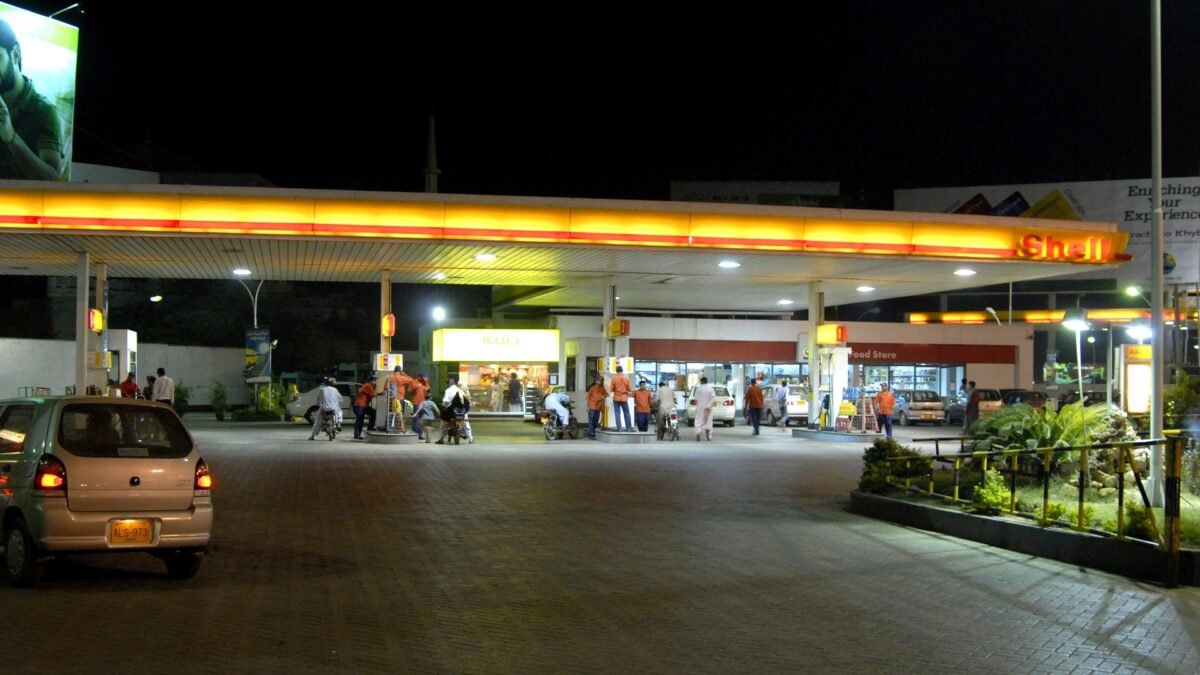
Pakistan cut the price of petrol by Rs8 a litre and high-speed diesel by Rs7 a litre on Tuesday night, taking petrol to Rs338 a litre and diesel to Rs371 a litre from Wednesday, 11 November, according to the Oil and Gas Regulatory Authority (OGRA). It was the sixth cut in nine days under the government’s new daily fuel pricing system, and it capped a week in which the price at the pump has fallen by almost Rs40 a litre for petrol and by nearly Rs32 a litre for diesel.
The federal government announced the revision late on Tuesday, and OGRA said the new prices would remain in effect from 11 November, according to The News. Petrol, known in Pakistan as motor spirit, falls from Rs346 to Rs338 a litre. High-speed diesel falls from Rs378 to Rs371 a litre. The cuts apply to the notified ex-depot rates, the base price before the freight margin that varies by district, so what a driver actually pays at an individual pump can differ slightly from the notified figure.
The reduction continues a run of cuts that began on 3 November, when the regulator first started publishing prices daily. In eight days, petrol has fallen from Rs377.91 a litre to Rs338, a drop of Rs39.91, or about 10.6 per cent. Diesel has fallen from Rs402.96 to Rs371, a drop of Rs31.96, or about 7.9 per cent. For a country where fuel prices are the most politically sensitive number the government publishes, and where a rise at the pump is felt within hours by every household, bus operator and farmer, a week of steady falls is the most welcome economic news the government has had in months.
The timing matters. The cuts come as the war between the United States, Israel and Iran, which began in late February, has pushed global oil markets through months of volatility, and as a campaign of mine attacks in the Strait of Hormuz has disrupted shipping through the waterway that carries a fifth of the world’s traded oil. That the price at a Pakistani pump is falling while tankers are still burning in the Gulf is the direct result of two things: a slide in world crude prices, and a new pricing mechanism in Islamabad that is designed to pass changes in the international market on to consumers within a day instead of a fortnight.
Whether the relief lasts is another question. The same mechanism that cut prices six times in nine days can raise them just as quickly if crude rebounds, and the government still collects more than Rs100 a litre in taxes and duties on every litre sold. But for now, the direction of travel is unmistakable, and it is downwards.
The new prices in full
The latest revision, announced on Tuesday 10 November and effective from Wednesday 11 November, sets petrol at Rs338 a litre, down Rs8 from Rs346, and high-speed diesel at Rs371 a litre, down Rs7 from Rs378, according to The News and the price tables published by Mettis Global. OGRA, the regulator, issues the notification under the petroleum pricing mechanism approved by the federal government.
One early report of the announcement carried a conflicting figure for diesel in its text, stating Rs378, while its own price table and the arithmetic of the cut pointed to Rs371. The Rs371 figure is confirmed by the price tables published by Mettis Global and by OGRA’s published rates, which list petrol at Rs338 and diesel at Rs371 from 11 November, and it follows directly from the previous rate of Rs378 minus the announced Rs7 cut. This article uses Rs371.
The full sequence of the daily revisions tells the story of the past week. On 3 November, petrol was cut by Rs3.40 to Rs374.51 a litre and diesel by Rs7.76 to Rs395.20. On 4 November, petrol fell by Rs5.45 to Rs369.06 and diesel by Rs3.68 to Rs391.52. On 5 November, petrol dropped by Rs7.06 to Rs362 and diesel by Rs3.71 to Rs387.81. On 6 November, petrol fell by Rs9.41 to Rs352.59, the largest single cut of the sequence, and diesel by Rs5.56 to Rs382.25. On 7 November, petrol fell to Rs346 and diesel to Rs378. Those rates then held through the public holiday on 9 November, Iqbal Day, until the latest revision took effect on 11 November.
Petrol has now been cut on every single revision since the daily system began. Diesel has been cut on every revision too, with the single exception of the way one early wire report described the 4 November change, a discrepancy the published tables resolve in favour of a cut. The pattern is consistent: every morning’s notification has brought the price down.
The notified rates are ex-depot prices. OGRA’s notification labels the rate as the total price excluding secondary freight, the cost of trucking fuel from an oil marketing company’s depot to the individual pump, which companies add outlet by outlet. A single Inland Freight Equalisation Margin, currently Rs8.17 a litre on petrol, is built into the notified price to even out the cost of moving fuel across a country more than 1,600 kilometres long, according to the price trackers that follow OGRA’s notifications. Pakistan State Oil, Shell, Total Parco and Attock Petroleum all start from the same notified rate for standard 92 RON petrol and high-speed diesel.
A week of cuts, one after another
Until this month, Pakistan revised fuel prices once a fortnight, a rhythm that left consumers waiting two weeks for any fall in world prices to reach the pump, and left the government exposed to two weeks of rising prices when crude spiked. The weekly review system was introduced after the outbreak of the Israel-Iran conflict in February, which was further intensified by American involvement and disruptions to energy shipments through the Strait of Hormuz, according to The News. Before that, prices were revised on a fortnightly basis.
The move to daily pricing was approved by the federal cabinet on 30 October, amid volatility caused by the United States-Iran war. It is the third change of rhythm in less than a year: fortnightly, then weekly, now daily. Each change has been a response to the same problem, which is that in a war that moves oil prices by several per cent in a single session, a price fixed for fourteen days is out of date before the ink is dry.
The first daily notification landed on the morning after crude oil slid by more than 6 per cent, and the cuts have followed the market down ever since. Brent crude, the international benchmark, touched two-month lows on Tuesday, according to Reuters, as American officials played down the prospect of further military action and as President Donald Trump struck a more conciliatory tone since his party’s defeat in the midterm elections on 3 November. Mr Trump declared on Monday that the war was, in his words, effectively over, according to reports, even as the naval mine campaign in the Strait of Hormuz continued and three more tankers were hit on Tuesday.
The result is a paradox that would have been hard to imagine a month ago: tankers burning in the Gulf, and petrol getting cheaper in Lahore. The explanation is that the market is pricing the war’s end rather than its present violence, and that Pakistan’s new mechanism passes that judgement on to the pump within a day.
How the new daily pricing system works
The mechanics of the new system, as described by The News from the government’s notification, are more involved than a simple decision to look at the market each morning. Under the revised formula, the import price of petrol is determined on the basis of the actual import cost of the relevant cargo brought in by Pakistan State Oil, the state-owned importer. If that cost is unavailable for a given day’s pricing, the premium, incidentals and customs duty of the last available cargo are used instead.
For local refineries, the government has temporarily fixed the premium, incidentals and customs duty used in calculating the ex-refinery petrol price at their levels of 7 March 2026, before the war began, for 30 days. The difference between the import price and the resulting ex-refinery price is to be surrendered by the refineries under the petroleum levy account, with the resulting benefit passed on through a corresponding reduction in the petrol price. In plain terms, the refineries are absorbing part of the cost so that the pump price can fall further than the import price alone would allow.
The government has also introduced a short-term adjustment to smooth petrol price movements, incorporating the benefit arising from a premium differential into petrol prices at a rate of $2.950 per barrel per day. And OGRA has begun publishing daily petroleum prices on its website, a transparency step that lets consumers, transporters and analysts see each morning’s rate and check it against the previous day’s.
The refinery contribution is substantial. Under a 30-day arrangement announced earlier in the week, oil refineries will contribute a cumulative Rs15 billion towards the petroleum levy, according to the Green Post, which reported the arrangement alongside the 5 November cut. The government is also exploring a similar mechanism for liquefied petroleum gas, Petroleum Minister Ali Pervaiz Malik has said.
The minister has been the public face of the change. He told reporters that fuel prices are now fixed on a daily basis because of fluctuations in international market prices, and he announced the earlier cuts at press conferences in Islamabad alongside Information Minister Attaullah Tarar. The daily rhythm is itself a political statement: a government that once hid behind a fortnightly formula is now putting its name to a new number every morning.
Why prices are falling now
The immediate cause of the cuts is the fall in world crude prices. Crude slid by more than 6 per cent in a single session at the start of November, the move that preceded the first daily cut on 3 November, and Brent has since touched two-month lows. The slide reflects a market judgement that the war in the Gulf is winding down, even though the fighting at sea has not stopped. American officials have downplayed the prospect of further military action, Mr Trump has said the war is effectively over, and the United States, Russia and Ukraine opened a second day of peace talks in Abu Dhabi on Wednesday, a negotiation that has nothing to do with oil but everything to do with the market’s mood.
There is also a domestic reason the cuts have been so large: the refinery arrangement. By fixing refinery premiums at pre-war levels and requiring refineries to surrender the difference to the petroleum levy, the government has engineered an extra reduction on top of whatever the world market delivers. The Rs15 billion refinery contribution is, in effect, a transfer from the refining industry to the consumer, negotiated for 30 days. Whether it is renewed when it expires will determine how much of the recent fall survives into December.
The third factor is the exchange rate, which sets the rupee cost of every barrel Pakistan imports. Pakistan buys almost all of its crude and refined fuel abroad, so the pump price is the world price translated through the rupee. A stable rupee makes every fall in dollar crude prices count in full at the pump; a sliding rupee would eat the benefit before it reached the consumer. The past week’s cuts are, among other things, evidence that the currency has held steady enough for the world price fall to pass through.
What the cut means for households and businesses
For a motorcyclist in Lahore, the arithmetic is simple. A litre of petrol that cost Rs377.91 on 2 November costs Rs338 today. A ten-litre fill, the usual purchase for a commuter bike, costs Rs399 less than it did nine days ago. For a car owner filling a 40-litre tank, the saving is about Rs1,596 on a full tank. Those are real sums in a country where the price of petrol is discussed at every dinner table and where a rise of a few rupees can dominate the evening news.
Diesel matters even more, because it is the fuel of everything that moves. High-speed diesel powers the trucks that carry food from farms to cities, the buses that carry workers to factories, the tractors that plough the fields and the generators that keep shops and small factories running through power cuts. A diesel price of Rs371, down from Rs402.96 nine days ago, is a direct reduction in the cost of moving every sack of wheat and every crate of vegetables in the country. Transporters have historically been quick to raise fares when diesel rises and slow to cut them when it falls, and whether this cut reaches passengers and shoppers depends on whether provincial transport authorities and market committees enforce the fall in fares and freight rates.
The cut also matters for inflation, the government’s most persistent economic headache. Fuel is an input to almost everything, and a falling fuel price is one of the few forces that can pull the general price level down rather than merely slowing its rise. The government has not published a figure for how much the week’s cuts will shave off inflation, and this article does not invent one, but the direction is not in doubt: cheaper diesel means cheaper transport, and cheaper transport means cheaper food.
There is a political dimension that is impossible to ignore. Petrol is the one price every Pakistani knows without looking it up, and it is the one the government is judged on most directly. A government that cuts the price six times in nine days is a government that wants to be seen cutting it, and the daily publication of the price on OGRA’s website is designed to make sure nobody misses it. The cuts come at a moment when the government is under pressure on several fronts at once, from the emergency rule it imposed in Khyber Pakhtunkhwa a month ago to the court proceedings over former prime minister Imran Khan, and a run of good economic news is the cheapest form of relief a government can buy.
The other side of the ledger
None of this means fuel is cheap. Even after a week of cuts, a litre of petrol still carries Rs114 in taxes and duties, and a litre of diesel Rs100, according to the reports that accompanied the 3 November and 5 November cuts. More than a third of the price of petrol is tax. The petroleum levy, the government’s main instrument for taxing fuel, is collected on every litre, and the refinery contribution of Rs15 billion is a transfer within the system, not a reduction in the tax take.
The fiscal question is whether the government can afford to keep passing the full benefit of falling crude on to consumers. The petroleum levy is a major source of revenue, and every rupee cut from the pump price is a rupee the government chooses not to collect at a time when it is under constant pressure to raise revenue. The decision to let the price fall, rather than holding it steady and pocketing the difference as levy, is a political choice, and it is one the government has now made six days running.
The refinery arrangement carries its own risk. Refineries agreed to contribute Rs15 billion over 30 days, but that agreement expires, and the industry will want something in return for renewing it. If the arrangement lapses and crude prices stabilise, the pump price could stop falling even if the world price does not rise. The smoothing adjustment of $2.950 a barrel a day is also explicitly short term, a device to prevent sharp daily swings rather than a permanent feature of the formula.
There is also the question of what happens when the market turns. Daily pricing is symmetrical. A government that publishes a new price every morning cannot hide a rise any more than it can hide a fall, and the same mechanism that delivered six cuts in nine days will deliver rises just as promptly if the war in the Gulf escalates again or if the Strait of Hormuz is closed to shipping. The mine campaign in the strait has already hit tankers on three successive days this week, and the market’s calm is a bet that the campaign will not close the waterway, not a guarantee.
Analysis: Why It Matters
The daily price is a political invention as much as an economic one
Governments do not change the rhythm of fuel pricing by accident. A fortnightly price lets a government blame the formula when prices rise and take the credit when they fall, all at a fortnight’s remove. A daily price removes the distance. Every morning, the government puts a number on a website and owns it. That is a deliberate choice, and it tells us something about how this government wants to be judged: on the price at the pump, day by day, in full view. It is a brave choice when prices are falling and a dangerous one when they rise, because the same transparency that advertises today’s cut will advertise tomorrow’s increase. The gamble is that the market will keep falling, or at least not rise sharply, for long enough for the habit of daily cuts to become the story.
Relief at the pump is real, but it is borrowed from the refineries
The most important fact in this story is not the size of the cut but where it comes from. Part of it comes from the world market, which no government in Islamabad controls. Part of it comes from the refineries, which have been made to surrender the difference between the import price and the ex-refinery price to the petroleum levy, and to contribute Rs15 billion over 30 days. That is a negotiated transfer, not a market outcome, and it has a deadline. When the 30 days expire, the government will have to renegotiate, and the refineries will have a stronger hand if crude has stopped falling. The consumer’s relief is real, but it is rented, and the rent comes due in December.
Diesel is where the economy will feel it
Petrol is the price people talk about, but diesel is the price the economy runs on. A Rs31.96 fall in diesel in nine days is a cut in the cost of every journey a truck makes, every acre a tractor ploughs and every hour a generator runs. If that saving reaches the price of food and the fare of a bus, it will do more for living standards than any number of announcements about growth. If it does not, because transporters pocket the difference, the benefit will stop at the pump and the public will notice. The test of this cut is not the number on OGRA’s website but the price of onions in a market in Rawalpindi and the fare on a bus in Karachi. That is where the government’s promise will be kept or broken, and it is where the opposition will look first.
The war is still setting the price, even as it fades from the headlines
It is easy to read this story as a domestic one, about a pricing formula and a regulator. It is not. Every number in it is a consequence of a war that began in February, when Israel and Iran went to war and the United States joined in, and of a mine campaign in the Strait of Hormuz that has hit tankers on three successive days this week. The cabinet approved the daily pricing mechanism on 30 October explicitly because of volatility caused by the United States-Iran war. The refinery premiums are fixed at pre-war levels. The crude price fell because the market believes the war is ending. Pakistan’s petrol price is now, more directly than ever, a daily referendum on the war in the Gulf, and the voter at the pump is reading the result every morning. That is a remarkable position for a country that imports almost all of its fuel, and it means the next twist in the war will arrive at a Pakistani petrol station within 24 hours.
The government has bought itself a good week, not a solution
Six cuts in nine days is a good week, and the government is entitled to enjoy it. But it is worth being clear about what has actually been achieved. The price of petrol has fallen by about a tenth, which is significant, but it is still Rs338 a litre, and more than a third of that is tax. The mechanism that delivered the fall is new, untested in a rising market and partly dependent on a 30-day deal with the refineries. The war that set the market falling has not ended, whatever the President of the United States has said, and the tankers are still being hit. The honest way to describe this week is as a well-managed piece of good fortune: the market fell, the mechanism passed the fall on quickly, and the government took the credit. The question is what the government does with the breathing space. If it uses it to fix the things it controls, the pricing formula, the levy, the refinery relationship, then this week will be remembered as the start of something. If it does not, then it will be remembered as a good week that ended when the market turned.
What to Watch Next
- The next OGRA notification, expected on Thursday morning, will show whether the run of cuts continues or whether the market has found its floor.
- Brent crude and the Strait of Hormuz: any new mine attack or closure of the waterway would be reflected at Pakistani pumps within a day under the new system.
- Whether transport fares and food prices actually fall, and whether provincial authorities enforce fare reductions as diesel gets cheaper.
- The refinery arrangement: whether the Rs15 billion contribution is renewed when the 30-day period expires, and on what terms.
- The petroleum levy: whether the government holds the levy steady as prices fall, or uses the falling price to raise the levy and rebuild revenue.
- Prime Minister Shehbaz Sharif’s address to the COP31 climate summit in Antalya on Wednesday, where he is expected to press for climate finance for developing countries, a reminder that Pakistan’s energy debate is also a climate debate.
Sources
- The News — Petrol price cut by Rs8 per litre, diesel by Rs7
- AsiaOne — Pakistan Cuts Petrol Price by Rs8 and Diesel Rate by Rs7
- Mettis Global via Investify — Petrol price in Pakistan today: petrol Rs338, diesel Rs371 (OGRA, 11 November 2026)
- OilPrices.pk — Petrol and diesel prices by city in Pakistan, 11 November 2026 (OGRA rates: petrol Rs338, diesel Rs371)
- The Green Post — Pakistan Cuts Petrol Price by Rs7.06, Diesel by Rs3.71 Per Litre (5 November 2026)
- Islamabad Post — Govt cuts petrol price by Rs9.41 per litre, diesel by Rs5.56 (6 November 2026)

About the Author — Abdul Mannan
Related Articles
Islamabad High Court Orders One-Hour Lawyer Meetings for Imran Khan and Bushra Bibi as Counsel Warns of Brain Haemorrhage Risk
The Islamabad High Court has ordered one-hour meetings between Imran Khan, Bushra Bibi and their lawyers at Adiala…
Shehbaz Sharif Briefs Nawaz Sharif on Khyber Pakhtunkhwa Security and the Economy at Jati Umra
Prime Minister Shehbaz Sharif travelled to Jati Umra on Sunday to brief PML-N president Nawaz Sharif on the…
Khawaja Asif Backs Redrawing Pakistan Into 12 Provinces as Debate Over 28th Amendment Gathers Pace
Defence Minister Khawaja Asif has backed creating up to 12 provinces on administrative grounds, as reports say a…