
Israel’s New Parliament Sworn In as Eisenkot Moves to End Netanyahu’s Rule and Cancels Unity Talks With Likud

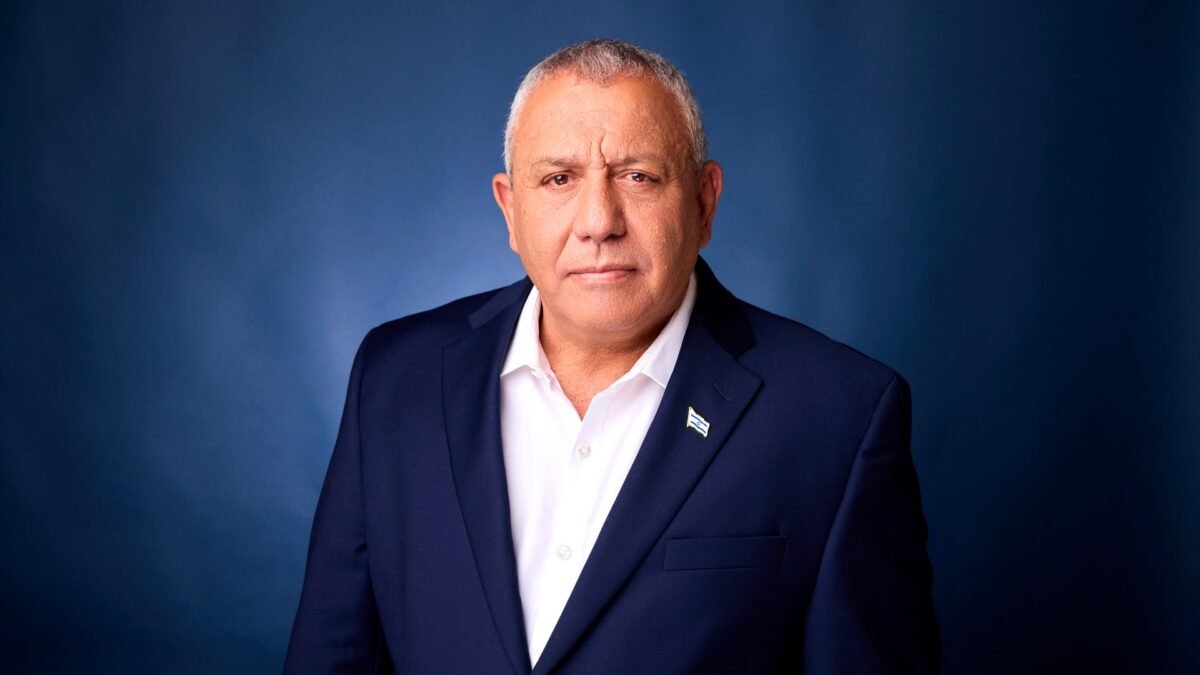
Israel’s new parliament was sworn in on Tuesday without a new government, opening the most consequential political contest in the country’s recent history: a former army chief with a presidential mandate to form a coalition, a caretaker prime minister fighting to keep the office he has held longer than anyone else, and a parliament in which neither man commands a majority.
The 120 members of the 26th Knesset took their oaths of office in Jerusalem on 10 November, two weeks after an election on 27 October stripped Prime Minister Benjamin Netanyahu of his parliamentary majority but left his challengers short of one of their own. Within hours of the ceremony, the two rivals had set out their positions in sharply contrasting speeches, and the man charged with forming the next government had already cancelled the first meeting that might have brought them together.
Gadi Eisenkot, the former chief of staff of the Israel Defense Forces and leader of the centrist Yashar party, was tasked by President Isaac Herzog on Sunday 8 November with forming a government, after 67 members of the Knesset recommended him for the job against 46 who backed Netanyahu, according to the Israeli presidency. Seven lawmakers from the ultra-Orthodox United Torah Judaism party recommended neither man.
Eisenkot has 28 days, running to about 6 December, to assemble a coalition, with the possibility of a 14-day extension to 20 December, according to Reuters. Netanyahu, Israel’s longest-serving prime minister, remains in office in a caretaker capacity until a new government is sworn in. If Eisenkot fails, the president would be likely to give Netanyahu the next chance to try, and if he fails too, Israel could be heading for yet another election.
The swearing-in ceremony itself carried the weight of the moment. President Herzog, who presided over the proceedings, told the new lawmakers: “You must do everything to avoid a repeat election.” He urged them to “reach out a hand for compromise, even between rivals” and to “look upon one another with generosity,” according to Reuters. He also told the Knesset it was “duty bound to leave no stone unturned” in investigating the catastrophe of 7 October 2023, while Israel continues to face threats from Iran and its proxies.
Among those sworn in on Tuesday was Elisha Madan, a military reservist who lost both legs fighting in Gaza and who received an ovation from the chamber when he stood up on his prosthetic legs, according to Reuters. Almost half of the new parliament’s members have no experience in the previous Knesset, according to BusinessDay, a measure of how thoroughly the election turned over Israel’s political class.
A parliament sworn in, a government still missing
The ceremony formalised a result that has left Israel in political limbo. The election of 27 October was widely seen as a referendum on Netanyahu’s leadership after years of war in Gaza, mass protests over his government’s failure to prevent the Hamas-led attack of 7 October 2023 and its handling of the wars that followed, and a corruption trial that has shadowed his premiership. The voters delivered a verdict that was decisive in one respect and ambiguous in every other: Netanyahu’s coalition lost its majority, but no alternative majority emerged to replace it.
Netanyahu’s right-wing and religious bloc won 53 of the 120 seats, down from the 68 it held before the election, according to the official count published by the Central Elections Committee on 4 November. Eisenkot’s four-party alliance won 48 seats. The remaining 19 seats belong to two predominantly Arab parties, the Joint List with 11 seats and the United Arab List, known as Ra’am, with eight, according to TBS News. A government needs 61 seats.
Eisenkot’s own Yashar party won 21 seats, making it the second-largest party in the Knesset behind Netanyahu’s Likud, according to reporting on the election results. His allies are the Together alliance led by former prime ministers Naftali Bennett and Yair Lapid, Avigdor Lieberman’s secular nationalist Yisrael Beytenu, and the Democrats led by Yair Golan. Together, the four Jewish-led opposition parties hold 48 seats, thirteen short of a majority.
The arithmetic is the story. On paper, the 67 lawmakers who recommended Eisenkot to the president constitute a majority. In practice, they do not represent a coalition. The 19 Arab lawmakers are aligned with Eisenkot in their opposition to Netanyahu, but their parties have said they will not sit in his government, and Eisenkot’s own conditions for joining a coalition would exclude some of them. Lieberman, whose support Eisenkot needs, has repeatedly ruled out serving in any government dependent on Arab support. The ultra-Orthodox parties, which hold the balance in some calculations, have so far said they would not join an Eisenkot-led government.
That is why Eisenkot himself has described his path to power as “extraordinarily complex,” in the phrase reported by Reuters. It is also why the mandate he received on Sunday is best understood as a mandate to try, not a mandate to govern.
Two speeches, two Israels
The first sitting of the new parliament brought the rivalry into the open within the hour. Netanyahu, addressing the Knesset as caretaker prime minister, proposed that it should “establish a national unity government,” and warned that “Iran is working to revive the nuclear threat,” according to reporting on the session. He also told ultra-Orthodox lawmakers that a narrow government led by Eisenkot “must not be formed.”
Eisenkot answered within the hour on X, rejecting the offer the same afternoon. He described Netanyahu’s speech as “divisive” and “hate-filled,” and said he was now even more convinced that Netanyahu was “unfit to remain in office for even one more minute,” according to the Associated Press. In a longer Hebrew-language post, he called the speech delusional, divisive, full of hatred and shameful, and accused the outgoing prime minister of abusing a state ceremony, the swearing-in of the 26th Knesset, for political purposes.
The consequences were immediate. Eisenkot’s Yashar party had scheduled a preliminary meeting with Netanyahu’s Likud party for Wednesday to discuss coalition negotiations. Following Netanyahu’s speech, the meeting was cancelled. Eisenkot later confirmed that he had called off the talks because of the speech, according to the Associated Press.
The exchange set the tone for the weeks ahead. Netanyahu’s offer of unity is, on its face, the most straightforward route out of the deadlock: a broad government spanning the two largest blocs. But it is an offer neither side’s supporters want. Eisenkot has repeatedly ruled out serving under Netanyahu, although his party has left open the possibility of Likud joining a government under his leadership if it abandons its far-right allies, according to Xinhua. For his part, Netanyahu’s proposal came wrapped in a warning about Iran and an appeal to the ultra-Orthodox parties whose support he still needs, which Eisenkot’s camp read as an attempt to delegitimise the government he is trying to form rather than a genuine offer of partnership.
Netanyahu has also cast doubt on the election results, baselessly alleging voter fraud by Arabs, who make up about a fifth of Israel’s population, according to Reuters. Election officials have said they are investigating potential misconduct but have seen no evidence of fraud that could have influenced the outcome of the vote. The allegation, coming from a sitting prime minister about an election he has just lost in parliamentary terms, has added a further strain to a transition already thick with distrust.
The first day’s bills: inquiry, term limits, speaker
If Eisenkot cannot yet form a government, his bloc has shown it can already use the parliament. Moments after the official opening of the Knesset on Tuesday, Eisenkot and his allies submitted a series of bills, including legislation to establish a state commission of inquiry into the 7 October attacks and to impose term limits on the prime minister, according to Reuters. They also filed a bill to repeal the judicial overhaul that brought hundreds of thousands of Israelis onto the streets in protest in 2023.
The opposition also moved to take control of the machinery of parliament itself. The leaders of the anti-Netanyahu bloc announced an agreement to appoint Matan Kahana, a senior member of Eisenkot’s Yashar party, as the next Speaker of the Knesset, according to LaPresse, citing The Times of Israel. Sixty-seven lawmakers signed a request to remove the current speaker, the Likud member Amir Ohana, and Ohana has scheduled the vote on his replacement for Tuesday 17 November at 4 p.m., according to reporting on the session. The composition of the Knesset committees is to be finalised this week and submitted to the parliament for approval on Wednesday, according to the same report.
The significance of these moves goes beyond procedure. A state commission of inquiry into 7 October is something Netanyahu has long resisted, and it is backed by the Arab parties as well as by Eisenkot’s bloc, which means it could command a majority in the chamber even before any government is formed. Control of the speakership and the committees would give the opposition the power to set the parliament’s agenda, summon witnesses and advance legislation that a caretaker prime minister cannot block. As Reuters noted, the newly sworn-in parliament could still deliver on some of Eisenkot’s campaign promises without him ever becoming prime minister.
Eisenkot has set out four conditions for any party or lawmaker seeking to join his proposed government: recognition of Israel as a Jewish and democratic state; acceptance of the values of its Declaration of Independence; support for mandatory military, national or civilian service for all citizens, including communities currently exempt; and recognition of Hamas as a terrorist organisation, alongside a commitment to dismantling its military and governing capabilities, according to TBS News, citing the BBC. He has said he wants to swear in a “national emergency government” that puts aside ideological differences to end Netanyahu’s tenure.
The four conditions are doing double work. They are a statement of principle, and they are also a filter. The service requirement speaks directly to the long-running dispute over the exemption of ultra-Orthodox men from military service, one of the most divisive issues in Israeli politics. The demand that Hamas be recognised as a terrorist organisation is a condition that some Arab parties, whose votes Eisenkot may need, have been unwilling to accept in those terms. The conditions that make Eisenkot acceptable to the centre-right are, in other words, the same conditions that make a deal with the Arab parties harder.
Who is Gadi Eisenkot?
The man at the centre of this contest is not a conventional politician. Gadi Eisenkot, 66, was born in Tiberias to Moroccan Jewish immigrant parents and grew up in Eilat, at the far southern tip of Israel, far from the country’s political centres. He joined the Israel Defense Forces’ Golani infantry brigade in 1978 and spent 41 years in uniform, rising through senior commands in the West Bank and northern Israel before serving as the army’s 21st chief of staff from February 2015 to January 2019, under Netanyahu. He was the first chief of staff of Mizrahi background, the descendant of Jews from the Middle East and North Africa, in the army’s history.
He entered parliament in 2022 and joined Netanyahu’s emergency government after the Hamas-led attack of 7 October 2023, attending the war cabinet’s discussions on the Gaza campaign as an observer and serving as a minister without portfolio. The war brought him personal losses of a kind few politicians anywhere have suffered. His son Gal, a 25-year-old master sergeant in the reserves, was killed fighting in northern Gaza in December 2023, when an explosive device detonated in a tunnel shaft in the Jabalia area. His nephew, Sergeant Maor Cohen Eisenkot, was killed in Gaza the following day, and a second nephew was later killed in the fighting.
Eisenkot resigned from the government in June 2024, criticising Netanyahu’s handling of the war and the lack of a clear postwar plan for Gaza. He founded Yashar, a new centrist party, about thirteen months before the October 2026 election, and led it to 21 seats, the second-largest delegation in the Knesset.
His military reputation rests on more than rank. As head of Northern Command after the 2006 Lebanon war, he formulated the Dahiya doctrine, a strategy of disproportionate force against the infrastructure of an enemy that fights from within civilian areas, named after the Beirut suburb where it was first applied. As chief of staff, he developed the “campaign between wars,” a sustained, low-profile effort to strike Iranian entrenchment in Syria and elsewhere without triggering a full-scale regional war. The irony of his current position is that the doctrine of restraint and the doctrine of overwhelming force both bear his name, and his opponents and his supporters each claim a different half of his record.
His backers present him as the one figure who can end an era of permanent political crisis: a soldier untainted by the corruption allegations and the culture wars that have defined Netanyahu’s later years, a man whose family has paid the war’s highest price, and a leader whose appeal crosses the divides of left and right because it rests on competence and sacrifice rather than ideology. His critics, including Netanyahu, present him as a political novice whose coalition arithmetic does not add up, and whose promise of a “national emergency government” is a slogan in search of a majority.
The road from here
Eisenkot’s 28 days run to about 6 December, with a possible 14-day extension to 20 December. Reuters, summarising the options before him, described three possible paths, each of them difficult: trying to form a minority government with Arab party support; forming a coalition with ultra-Orthodox parties that he and his allies have shunned in the past; or forging a unity government with Netanyahu. All three face formidable obstacles.
The minority government route would require the Arab parties to support, or at least not oppose, a government they do not join, and it would require Lieberman to accept a government that depends on Arab votes, something he has repeatedly ruled out. The ultra-Orthodox route would require parties that have so far refused to join an Eisenkot-led government to change their minds, and it would collide with Eisenkot’s demand for universal service. The unity route would require Netanyahu to accept a subordinate role under the man who has just called him unfit to remain in office for one more minute, and it would require Eisenkot to accept the man he has spent the campaign promising to replace.
There is also the question of what Netanyahu does while he waits. As caretaker prime minister, he retains the powers of the office, including on security matters, at a moment when Israel faces an unresolved war with Iran that began in late February, a fragile ceasefire in Gaza that took effect in October 2025, and continuing attacks on shipping in the Strait of Hormuz. In his Knesset speech, he warned that Iran is working to revive the nuclear threat, a reminder that the caretaker government still controls the country’s war-making machinery and that a prolonged political vacuum has security consequences.
The opposition leaders, for their part, met in the city of Herzliya, north of Tel Aviv, in their first joint meeting since the election, and agreed to back Eisenkot as prime minister, promising to replace Netanyahu’s government as quickly as possible, according to Al Jazeera. The meeting brought together Eisenkot, former prime minister Naftali Bennett, Yisrael Beytenu leader Avigdor Lieberman, Yair Golan of the Democrats, and Yair Lapid, who heads the Yesh Atid party, according to The Jerusalem Post, cited by Al Jazeera. In a joint statement, the leaders said all their parties would recommend Eisenkot to the president and that negotiating teams would immediately begin drafting policy guidelines and coalition agreements. “The party leaders are coordinated and will act immediately” to replace Netanyahu’s coalition “with a national emergency government,” the statement said. But the bloc remains divided over whether to ally with Arab-led parties, whose support could prove decisive, according to the same report.
If Eisenkot fails to form a government, President Herzog would be likely to pick Netanyahu to try next. If Netanyahu fails, another candidate can try, and if that person also fails, a new round of elections would be called. Israel has been here before: between 2019 and 2022, the country held five elections in under four years, as governments formed and collapsed and no leader could hold a majority. Herzog’s plea to the new Knesset to do “everything to avoid a repeat election” was addressed to a chamber that knows exactly how that story ends.
Analysis: Why It Matters
A mandate to try, not a mandate to govern
The most important number in Israeli politics this week is not 67. It is 48. Sixty-seven lawmakers recommended Eisenkot to the president, and that is a genuine political achievement: it is the first time since Netanyahu returned to power that a majority of the Knesset has formally backed someone else for the premiership. But 48 is the number of seats held by the parties that are actually prepared to sit in a government led by him, and 48 is thirteen short of a majority. The gap between those two numbers is the whole story of the weeks ahead, and it is a gap that cannot be closed by rhetoric. It can only be closed by a deal with someone Eisenkot’s camp has so far been unwilling to deal with: the Arab parties, the ultra-Orthodox parties, or Netanyahu himself. Every one of those deals has a price, and every price costs Eisenkot support somewhere else. The mandate is real, but it is a mandate to negotiate, not a mandate to rule.
The Arab parties are the kingmakers, and the taboo is the story
For the first time in Israel’s history, the decisive bloc in forming a government is held by parties representing the country’s Arab citizens, who make up about a fifth of the population. The Joint List and Ra’am hold 19 seats between them, and without them neither Eisenkot nor Netanyahu can reach 61. Yet no Arab party has ever sat in an Israeli governing coalition, and the idea remains taboo for a large part of the Jewish political spectrum. Lieberman’s refusal to serve in a government dependent on Arab support is not a personal quirk; it is a position shared by much of the centre-right, and it is the single largest obstacle to Eisenkot’s path to power. Netanyahu, meanwhile, has responded to his loss by baselessly alleging voter fraud by Arabs, a claim election officials say has no evidence behind it. The election has made Arab voters decisive, and the response of the political establishment has been, in part, to question the legitimacy of their votes. That contradiction will not be resolved by coalition arithmetic. It is a question about what kind of democracy Israel intends to be, and it will outlast this government-formation process whatever its outcome.
Parliament can act even without a government
The most underappreciated development of the week is that the opposition does not need to form a government to start changing Israel. The bills filed on the first day, the move to replace the speaker, the control of committees: these are the instruments of a parliamentary majority that exists even though a governing majority does not. A state commission of inquiry into 7 October 2023 is the most consequential of them. Netanyahu has resisted a full independent inquiry into the intelligence and political failures that preceded the attack for three years, and an inquiry with the power to summon witnesses and publish findings would be the most serious accounting of that day ever undertaken. Term limits for the prime minister would strike directly at the personalised politics of the Netanyahu era. Repealing the judicial overhaul would reverse the most divisive legislative project of the last government. None of these measures requires Eisenkot to become prime minister. They require only the 67 votes that recommended him, and those votes exist today. The swearing-in has therefore created something Israel has not had for years: a parliament that can legislate against the wishes of the prime minister, and a prime minister who cannot stop it.
Netanyahu’s three defences: unity, fraud and time
Netanyahu is not a passive observer of his own displacement, and his first moves show the shape of his defence. The first is the unity offer: a proposal that sounds statesmanlike, that places him at the centre of any solution, and that, if accepted, would keep him in government while denying Eisenkot the clean break his supporters voted for. The second is the fraud allegation: a claim without evidence that serves to cast doubt on the election itself, to rally his base around the idea that his loss was not legitimate, and to put election officials on the defensive. The third is time. As caretaker prime minister, Netanyahu keeps the powers of the office, the security briefings, the diplomatic channels and the ability to present himself as the indispensable man in a crisis. Every week that Eisenkot spends negotiating is a week in which Netanyahu governs, warns about Iran, and waits for his rival’s arithmetic to fail. The cancellation of the Likud meeting suggests Eisenkot understands the trap. Whether he can escape it depends on whether he can turn 67 recommendations into 61 votes faster than Netanyahu can turn delay into doubt.
Why Washington and the region are watching
The government-formation process matters far beyond Jerusalem because Israel’s next government will decide the fate of two unresolved conflicts. The first is Gaza, where a ceasefire that took effect in October 2025 remains fragile, where winter storms have already killed people in flooded tent camps, and where the question of who governs Gaza, who disarms Hamas and who pays for reconstruction is still unanswered. The second is Iran, where a war that began in late February continues to be fought in the Strait of Hormuz and across the region, and where Netanyahu has warned that Tehran is working to revive its nuclear programme. The United States, which brokered the Gaza ceasefire and has pressed Israel to implement its terms, has an interest in a stable Israeli government that can make and keep commitments. A caretaker government cannot make long-term commitments, and a government that collapses within months cannot keep them. For Israel’s neighbours, for the Palestinians in Gaza, and for Washington, the question is not only who becomes prime minister. It is whether Israel can produce a government that lasts long enough to end its wars and keep its agreements. The Knesset that was sworn in on Tuesday will answer that question, one way or another, by 6 December.
What to Watch Next
- The speaker vote on 17 November. The vote to replace Amir Ohana with Matan Kahana is the first real test of whether the 67 lawmakers who recommended Eisenkot will vote together. A win gives the opposition control of the parliament’s agenda; a loss would be the first crack in the bloc.
- The Arab parties’ price. Watch whether the Joint List and Ra’am move from opposing Netanyahu to actively supporting an Eisenkot government, and what they demand in return, and whether Lieberman can be brought to accept their support.
- The ultra-Orthodox parties. United Torah Judaism recommended neither candidate. If its lawmakers, or those of other ultra-Orthodox parties, open talks with Eisenkot, the arithmetic changes overnight. Their price is likely to be the service exemption Eisenkot has promised to end.
- The 7 October inquiry bill. Its progress through the new Knesset will show whether the opposition’s parliamentary majority is real, and it will force every party to take a public position on an investigation Netanyahu has resisted.
- The 6 December deadline. Eisenkot has until then to present a government, with a possible extension to 20 December. If the deadline passes without a coalition, the mandate is likely to pass to Netanyahu, and the contest starts again from the other side.
- Gaza and Iran while Israel waits. A caretaker government still commands the army and conducts foreign policy. Watch for decisions on the Gaza ceasefire, on the reported international stabilisation force, and on Iran, where Netanyahu’s warnings about the nuclear programme may be the prelude to action he takes without a new government in place.
Sources
- Reuters — Israel’s parliament sworn in as Eisenkot tries to forge a government
- TBS News — Israel’s new parliament sworn in as rival blocs vie to form government (citing the BBC)
- The Sent Times (Associated Press) — Eisenkot unveils agenda to reverse Netanyahu’s policies as Israel’s new parliament is sworn in
- Xinhua — Explainer: Can Eisenkot form Israeli gov’t after getting mandate?
- BusinessDay — Eisenkot faces coalition test as Israel’s new parliament is sworn in
- LaPresse — Eisenkot coalition reaches agreement on Kahana as Speaker of the Knesset

About the Author — Abdul Mannan
Related Articles

Three More Oil Tankers Explode in the Strait of Hormuz as Iran’s Mine Campaign Defies Talk of De-escalation
Three oil tankers exploded after striking naval mines in the Strait of Hormuz on Tuesday, Iran's Revolutionary Guards…
Gaza Floods Kill Four as Winter Storm Swamps Tens of Thousands of Tents and Trump’s Board of Peace Calls Israel’s Response ‘Insufficient’
Four people, three of them children, were killed when a rain-soaked sandbank collapsed onto tents in Deir al-Balah…

Saudi Arabia Says Its East-West Oil Pipeline Was Attacked Again as the Houthi War Reaches the Kingdom’s Energy Lifeline
Saudi Arabia said its East-West oil pipeline was targeted in the Medina region on Monday, causing a limited…