
Three More Oil Tankers Explode in the Strait of Hormuz as Iran’s Mine Campaign Defies Talk of De-escalation

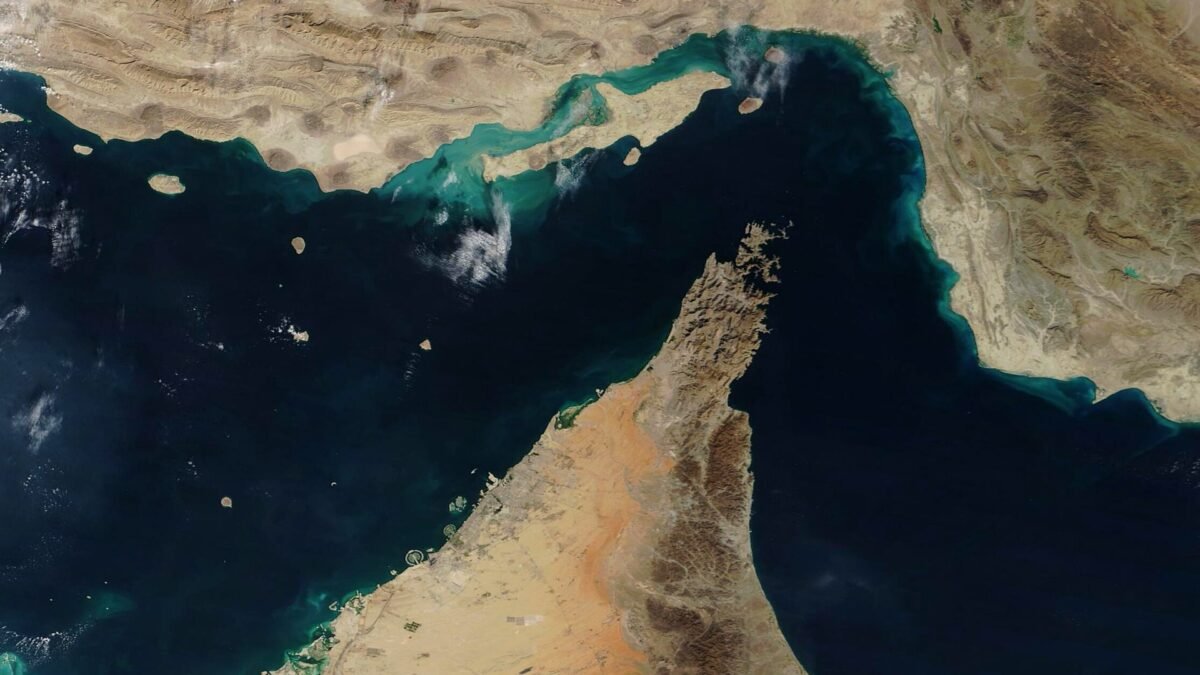
Three oil tankers exploded after striking naval mines in the Strait of Hormuz on Tuesday, according to Iran’s Revolutionary Guards Navy, in the latest wave of attacks on commercial shipping through the world’s most important oil waterway — even as President Donald Trump declared the war with Iran “effectively over” and oil markets bet on de-escalation.
The Islamic Revolution Guards Corps (IRGC) Navy said two tankers caught fire earlier on Tuesday after hitting mines on what Tehran calls an “unauthorised route” through the strait, and that a third tanker exploded later in the afternoon after striking another mine in the eastern part of the waterway, according to Iranian state broadcaster IRIB and the Press TV news agency.
“A third oil tanker attempting to cross an unauthorized route through the Strait of Hormuz exploded after striking a naval mine on Tuesday afternoon,” the IRGC Navy said in a statement carried by Press TV, adding that the vessel was burning in the eastern part of the strait “with smoke from the explosion and ensuing fire spreading across the area.”
The British maritime agency United Kingdom Maritime Trade Operations (UKMTO) separately reported on Tuesday that a tanker had been struck by an unknown projectile about 19 nautical miles north-east of Lima, Oman, near the strait, at 13:38 UTC. The agency said the vessel’s crew were safe, there was no environmental impact, and a damage assessment was planned for first light. It did not say who struck the vessel, and it was not immediately clear whether it was one of the tankers named in the Iranian statements.
The Emirati state oil company ADNOC also said on Tuesday that one of its vessels had “sustained damage following an attack in the UAE’s territorial waters” in the Gulf, according to the Middle East Eye news outlet. The company did not identify the vessel.
No names, flags or operators were given for the tankers in the Iranian statements, and no casualty figures were released for Tuesday’s incidents. The IRGC Navy did not say how many crew were aboard the stricken vessels or whether any were injured.
What Happened on Tuesday
Tuesday’s attacks unfolded in two waves, according to the Iranian accounts. In the morning, the IRGC Navy said two oil tankers attempting to navigate the restricted route had suffered “massive explosions” and were left ablaze, Press TV reported. One of the vessels, identified by the IRGC only as a supertanker, struck a naval mine and exploded. The second tanker, which the IRGC said was operating under the protection of United States military aircraft, “encountered an incident and caught fire while attempting to secretly cross the waterway through an illegal route,” the statement said.
The IRGC Navy said both vessels had switched off their navigation and identification systems before attempting the crossing, and had ignored warnings. The tankers were left burning near the southern shores of the strait, the statement said.
Hours later, the IRGC announced the third explosion. The statement said the tanker had been attempting to pass through the same unauthorised route in the afternoon when it struck a mine, and was left burning in the eastern part of the strait.
IRGC spokesman Brigadier General Hossein Mohebbi said the Strait of Hormuz was “without any doubt” under the control of the IRGC Navy, Press TV reported. The IRGC statement also claimed that coastal radar and navigational assistance systems belonging to the US military in the southern strait had been destroyed, leaving tankers attempting to pass through unauthorised routes “at significantly greater risk than before.”
The Iranian claims about who was aboard the tankers and how the explosions were caused have not been independently substantiated, and it remains unclear in several cases whether the reported explosions were caused by mines, missiles or drones, according to the maritime news outlet Splash247. Reuters said it could not confirm some of the reported strikes. The exact number of tankers affected on Tuesday, and whether the UKMTO and ADNOC incidents were among those claimed by Tehran, remained disputed as the day ended.
A Weekend of Fire
Tuesday’s explosions followed a weekend in which the strait saw some of the heaviest shipping attacks since the war began. On Sunday, three tankers were hit after travelling what Iran called unauthorised routes, according to the IRGC Navy, whose account was carried by Iranian state broadcaster IRIB and reported by Reuters.
Videos posted on social media on Sunday and verified by Reuters showed one of the vessels, the Navig8 Messi, a Singapore-flagged, medium-sized refined products tanker, on fire near the coast of Oman. An image captured by the European Union’s Copernicus Sentinel-2 satellite on Sunday showed a large cloud of black smoke at the same location, Reuters reported. The vessel is managed by Navig8, which is majority owned by ADNOC Logistics and Services. Neither company replied to emailed requests for comment from Reuters.
UKMTO confirmed two tanker incidents on Sunday with no crew casualties, according to The National and the maritime safety outlet Safety4Sea, and said that “further reported incidents cannot be independently verified” — leaving a gap between Iran’s claim of three vessel strikes and what international maritime authorities could confirm. NASA’s Fire Information for Resource Management System detected a thermal anomaly at about 06:00 UTC on Sunday near the Khasab area, roughly eight nautical miles off the Omani coast, consistent with a large vessel fire, according to Townhall, citing the satellite data.
On Saturday, two tankers were hit within an hour of each other in the evening, according to incident reports subsequently issued by UKMTO. The first incident occurred at about 19:20 UTC, eight nautical miles north-west of Khasab, Oman, where a tanker caught fire and its crew was evacuated. A second vessel was hit by a projectile during an outbound transit shortly afterwards, according to a company security officer’s report carried by UKMTO.
The most dramatic American action of the weekend came on Saturday, when a US military aircraft fired precision-guided munitions at the stern of the St Kitts and Nevis-flagged bulk carrier Huda in the Gulf of Oman, disabling the vessel after it tried to depart regional waters following a visit to an Iranian port, according to US Central Command. The United States has been enforcing a naval blockade of Iranian ports since the war began.
Another outbound vessel had suffered an explosion at the port-side waterline about 16 nautical miles east of Khasab on Friday, according to incident reports. Explosions were also reported on Saturday around Qeshm Island, Bandar Abbas, Sirik and Jask on Iran’s southern coast, although Iranian state television said the evening explosions might be related to Iranian military activity in the waterway.
The Blockade and the “Unauthorised Route”
At the heart of the shipping war is a dispute over who controls passage through the strait. Iran declared the waterway closed on 26 October, and the IRGC Navy has since treated vessels that pass without its authorisation as legitimate targets, insisting that its navigation regulations have been repeatedly communicated to all vessels through radio stations and official notices.
The United States, which has enforced a naval blockade of Iranian ports, has said its forces will protect commercial shipping and has claimed that mines in the waterway had been cleared. According to reports, US Central Command said last month that all mines had been cleared from the strait — a claim the latest explosions, if confirmed as mine strikes, would call into question.
On 7 November, US Central Command announced Task Force Iron Gate, a new command intended to coordinate efforts against weapons and sanctioned material crossing Iran’s land borders and the Caspian Sea, according to maritime reporting. The move underlined how the conflict has spread beyond the strait itself into a wider campaign against the movement of goods in and out of Iran.
The IRGC, for its part, has warned that vessels cooperating with US military escorts would “face the same fate” as the tankers it says it has struck. Iranian state media reported on Monday that the IRGC Navy had targeted 11 oil tankers in the preceding 10 days, a claim that could not be independently verified.
The Joint Maritime Information Center, which advises shipping companies on threats in the region, kept its threat assessment for the Strait of Hormuz at SEVERE in its latest advisory, published on 9 November, and warned that further deliberate attacks were highly likely. The advisory logged 177 maritime security incidents since 1 March, according to reporting by the House of Saud news site.
Traffic through the strait has collapsed. By 8 November, ship traffic had fallen to roughly 20 per cent of its prewar level, according to Lloyd’s List Intelligence. Data from IMF PortWatch showed only one vessel passing through the strait on 1 November, against a normal rate of about 85 a day. About 20 per cent of the world’s oil and liquefied natural gas passed through the strait before the war, according to Lloyd’s List Intelligence.
Oil, Markets and the Environment
Despite the attacks, oil markets on Tuesday moved in the opposite direction to the news from the strait. Crude prices hit two-month lows on Tuesday after US officials downplayed the need for additional military action against Iran, Reuters reported, with analysts noting President Donald Trump’s more conciliatory tone since the Republicans’ defeat in the 3 November midterm elections. Mr Trump declared the war “effectively over” on Monday, according to reports from Washington.
The market’s calm sits uneasily with the scale of the shipping campaign. There is little sign of attacks abating in November, after 37 ships were attacked in October, the highest monthly total since the start of the war, according to data from the Washington Institute for Near East Policy cited by Reuters. The International Maritime Organization has confirmed 130 incidents, most of them attacks, in the region since the conflict began in late February, with at least 25 seafarers killed, Reuters reported.
The attacks have also caused environmental damage. Oil has leaked from damaged tankers, and a video shared on social media on Monday and verified by Reuters showed oil reaching the shores of Oman, while satellite imagery showed oil spills off the coasts of Oman and the United Arab Emirates. The Omani government did not respond to a Reuters request on Tuesday for comment on the video of oil reaching Omani shores.
Elsewhere in the region, energy infrastructure and civilian facilities have also come under attack. Iran and its regional allies have struck targets including the offices of Saudi Aramco, the world’s largest oil company. Video verified by Reuters showed damage to Aramco’s office building in Riyadh, following Houthi-claimed missile strikes on 8 November. The Saudi Energy Ministry said that a building belonging to Aramco in Riyadh had been targeted in an attempted attack, with debris causing limited damage to the building and no injuries or fatalities.
The Saudi East-West oil pipeline was attacked on Monday in the Medina region, according to the Saudi energy ministry, in the latest strike on the kingdom’s energy infrastructure by the Houthis, the Iran-aligned movement that controls much of Yemen. Saudi air defences have intercepted missiles over Riyadh twice in recent days, and the Houthis have launched repeated drone and missile attacks on Saudi targets since the war in Yemen reignited.
Analysis: Why It Matters
The war Trump declared over is still burning
The most striking feature of Tuesday’s attacks is their timing. They came on the same day that President Donald Trump declared the war with Iran “effectively over” and on the day oil prices fell to two-month lows on bets that the conflict was winding down. The IRGC’s announcement of a third tanker explosion, issued in the late afternoon, read like a deliberate answer to that declaration: the war is not over, the strait is not open, and the mines are still in the water.
This is not the first time the two sides’ accounts of the war have diverged sharply. The United States has repeatedly signalled that the military phase of the conflict is ending, while Iran and its allies have continued to strike shipping and energy infrastructure. The gap matters because it shapes what governments, shipping companies and markets do next. If Washington believes the war is over, it may draw down the forces that protect shipping; if Tehran believes the war continues, it will keep laying mines and firing missiles. The tankers burning in the strait on Tuesday are the physical evidence that the two sides are not fighting the same war, or at least not describing the same one.
Mines are the weapon that needs no attribution
Naval mines are the ideal weapon for a campaign of deniable disruption. They are cheap, they can be laid by small boats in the dark, they wait silently for their victims, and when they explode, nobody can say with certainty who put them there. Iran has claimed responsibility for the mine strikes in the strait, which is unusual, but the broader pattern of the shipping war shows why mines are so useful: a mine does not need a launch signature, a radar track or a pilot. It simply needs a ship to sail over it.
The ambiguity cuts both ways. Because mines are so hard to attribute, every explosion becomes a matter of competing claims. Tehran says the tankers hit mines on an unauthorised route; Washington says it cleared the mines; UKMTO reports a projectile strike and says it does not know who fired it; ADNOC says one of its vessels was damaged but does not say how. The result is a fog in which the only certain facts are the fires themselves, the smoke on the satellite images, and the oil on the Omani shore. For shipping companies, that uncertainty is itself a cost: insurers and owners cannot price a risk they cannot identify, so they simply stop sailing. That is how a waterway closes without a single warship firing a shot in anger.
The strait’s closure is now a fact, not a threat
For decades, the threat to close the Strait of Hormuz was Iran’s ultimate card, held in reserve and rarely played because playing it would hurt Iran’s own oil exports as much as anyone else’s. The war that began in late February changed that calculation. With its ports under blockade and its exports already strangled, Iran had little left to lose by closing the strait, and it did so on 26 October.
The numbers now tell the story. Traffic through the strait is down to about a fifth of its prewar level. On 1 November, a single vessel passed through, against a normal rate of 85 a day. The world’s oil markets have absorbed the shock so far — prices fell on Tuesday, not rose — because alternative routes, strategic reserves and the East-West pipeline bypass have cushioned the blow, and because demand has softened. But the cushion is not infinite. If the strait stays closed through the winter, when northern hemisphere demand for heating oil peaks, the buffer will thin. The question is no longer whether Iran can close the strait; it has. The question is how long the world can live with it closed.
The environmental cost is becoming visible
The shipping war is also an environmental war, and its effects are now washing up on shore — literally. Reuters-verified video on Monday showed oil from damaged tankers reaching the shores of Oman, and satellite imagery showed spills off the coasts of Oman and the United Arab Emirates. At least 25 seafarers have been killed since the conflict began, according to the International Maritime Organization, and the toll on marine life in one of the world’s most enclosed and ecologically sensitive seas has not been measured at all.
The Gulf is a shallow, warm, semi-enclosed sea with limited circulation. Oil spilled there does not disperse the way it does in the open ocean; it lingers, coats mangroves and coral reefs, and washes onto the desalination plants that supply drinking water to millions of people around its shores. The tankers burning in the strait are not only a security story and an energy story; they are a slow-moving environmental disaster that will outlast the war itself. The Omani government’s silence when Reuters asked about the oil on its shores on Tuesday spoke volumes about how politically awkward that disaster has become.
The market has stopped listening — for now
Perhaps the most remarkable feature of Tuesday was the market’s indifference. Crude prices hit two-month lows on the same day three tankers exploded in the world’s most important oil chokepoint. That is not how oil markets are supposed to behave. In 2019, a single attack on two tankers in the Gulf of Oman sent prices up 4 per cent in a day. In 2026, three tankers in a day barely register.
There are good reasons for the calm. Global oil demand has softened, non-OPEC supply has grown, strategic reserves are deep, and traders have had nine months to price in the shipping war. But there is also a danger in the calm. Markets that stop reacting to attacks stop sending the price signals that force governments to act. If the cost of the shipping war is invisible in the price of oil, the political pressure to end it weakens, and the war can grind on indefinitely at a low simmer — tankers burning, seafarers dying, oil leaking, and nobody in a trading room in London or New York noticing. That is the most dangerous outcome of all: a war that becomes background noise.
What to Watch Next
- Independent confirmation of Tuesday’s incidents. The IRGC has not named the three tankers, and UKMTO has confirmed only the projectile strike near Lima. Watch for the vessels to be identified by insurers, owners or satellite tracking, and for casualty reports from crews or their flag states.
- The United States response. Washington has downplayed the need for further military action and Mr Trump has declared the war effectively over. Watch whether Tuesday’s attacks change that posture, or whether the administration treats the tanker strikes as a separate, lower-level problem.
- Whether the mine campaign spreads. The IRGC has warned that vessels cooperating with US escorts will face the same fate. Watch for incidents beyond the strait — in the Gulf of Oman, the Arabian Sea or the Red Sea — which would signal an expansion of the campaign.
- The environmental toll. Oil from the damaged tankers is already reaching Omani shores. Watch for statements from Oman, the UAE and the International Maritime Organization on the scale of the spills and any clean-up effort.
- Oil prices and shipping rates. Brent hit two-month lows on Tuesday despite the attacks. Watch whether war-risk insurance premiums for Gulf shipping rise and whether the market’s calm survives a further escalation, especially if a named vessel with a major owner is hit.
- The wider regional war. The tanker attacks are one front in a conflict that also includes Houthi missile strikes on Saudi Arabia, the attack on the Saudi East-West pipeline, and the continuing blockade of Iranian ports. Watch for any of these fronts to flare in the coming days, and for diplomatic movement around the Qatar-mediated talks.
Sources
- Reuters — “Tankers continue to burn in the Middle East despite hopes for de-escalation” (10 November 2026)
- Press TV — “3rd oil tanker explodes after striking mine in Strait of Hormuz: IRGC Navy” (10 November 2026)
- Press TV — “IRGC Navy says two violating oil tankers catch fire in Strait of Hormuz, warns against cooperating with US” (10 November 2026)
- Devdiscourse (Reuters syndication) — “Oil tanker catches fire after hitting naval mine in Hormuz, Iran says” (10 November 2026)
- House of Saud — “IRGC Says 3 Tankers Hit in Hormuz, 11 Ships in 10 Days” (10 November 2026)
- Splash247 — “Hormuz suffers weekend of fire” (9 November 2026)

About the Author — Abdul Mannan
Related Articles
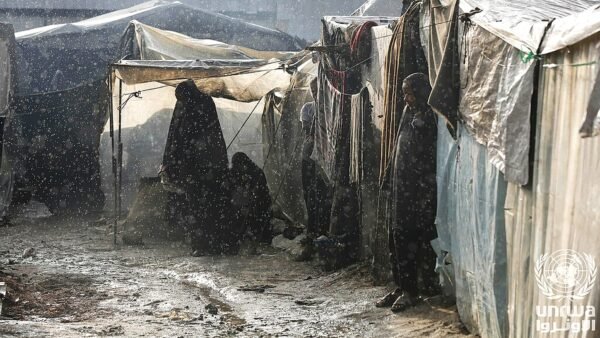
Gaza Floods Kill Four as Winter Storm Swamps Tens of Thousands of Tents and Trump’s Board of Peace Calls Israel’s Response ‘Insufficient’
Four people, three of them children, were killed when a rain-soaked sandbank collapsed onto tents in Deir al-Balah…
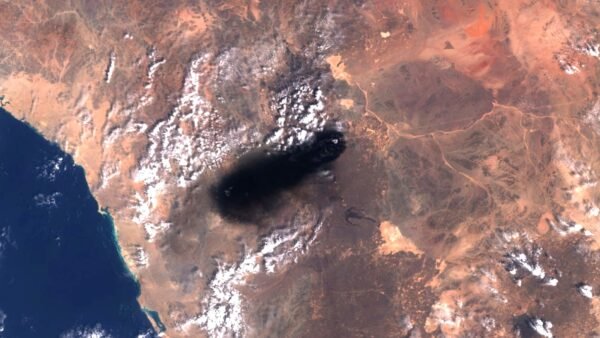
Saudi Arabia Says Its East-West Oil Pipeline Was Attacked Again as the Houthi War Reaches the Kingdom’s Energy Lifeline
Saudi Arabia said its East-West oil pipeline was targeted in the Medina region on Monday, causing a limited…

Drone Strike on Iraq’s Khor Mor Gas Field Cuts Power to More Than 70% of Kurdistan as Production Halts
A drone strike on the Khor Mor gas field has halted production and cut power to more than…