
Nvidia Board Prepares to Oust Jensen Huang as Second Affair Report Turns Spy Probe into Succession Crisis

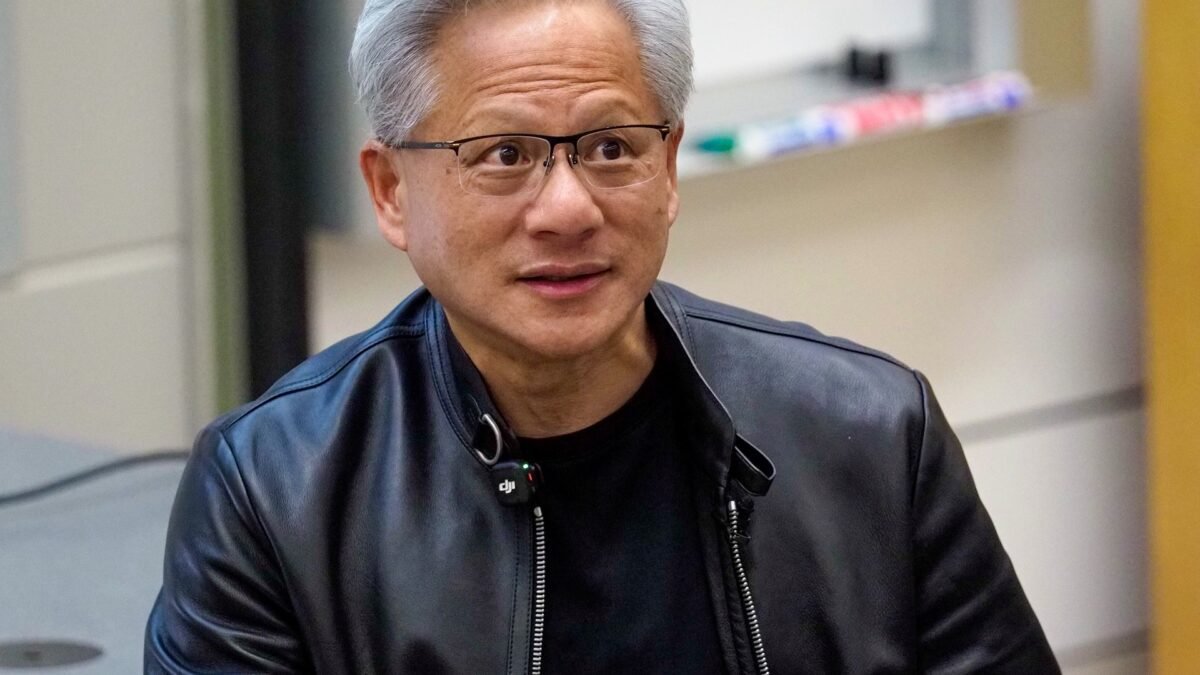
Nvidia’s board of directors is preparing to remove Jensen Huang, the founder and chief executive who turned the company into the centre of the artificial intelligence revolution, after reports of a second extramarital affair transformed a national security investigation into a full-blown succession crisis, according to the Wall Street Journal.
The Journal reported on Wednesday that directors were preparing to meet as soon as that day to decide Huang’s future, citing people familiar with the matter, and that all options were on the table, including his dismissal. Reuters relayed the Journal’s report and separately confirmed that the board was meeting late on Wednesday, citing a person familiar with the matter. No decision had been announced, Nvidia had not commented publicly, and Huang remained chief executive when the reports were published.
The report landed within hours of a separate account in the New York Times that Huang had a relationship with Kimberly Powell, Nvidia’s vice-president of healthcare, who reports directly to him. The Times said both were married to other people, citing five people who had worked at the company. The two developments together pushed a story that began as an intelligence allegation into the most serious leadership crisis in the company’s 33-year history.
Investors reacted at once. Nvidia shares had risen 2.9 per cent in regular trading on Wednesday to close at $173.73, recovering some of the ground lost earlier in the week. After the closing bell they fell about 8 per cent, to roughly $157 to $160, according to market reports, reversing the day’s gain. S&P 500 futures slipped 0.4 per cent as the news spread through Asian trading. Including the after-hours sell-off, Nvidia has lost about $600 billion in stock market value this week since the board announced its investigation, according to Reuters.
The second report that changed the board’s calculation
According to the New York Times, Huang and Powell were filmed being affectionate with one another at a hotel in San Jose, California, in March, during Nvidia’s annual GTC developer conference. The newspaper said it had not seen the video itself. It reported, citing three people briefed on the incident, that members of Huang’s security team took aside the bystander who had filmed the pair and offered them a non-disclosure agreement.
When the Times reached Huang by telephone and asked about Powell, he replied that the newspaper should not be talking to him directly, and then hung up, according to the paper’s account, as reported by Reuters. Powell did not respond to requests for comment from the Times, CNBC or Reuters, and Nvidia declined to issue a statement to the Times.
The claims about a relationship with Powell have not been confirmed by Nvidia, by Huang or by Powell, and they have not been tested in any formal process. That distinction matters, and it is one this report preserves throughout: the Powell relationship is an allegation reported by a reputable newspaper on the basis of unnamed sources, not an established fact.
Powell, 48, is a long-serving Nvidia executive who joined the company in 2008 and has led its healthcare business since 2017. She delivered a keynote at the same GTC conference in March, speaking about how the company’s artificial intelligence technology could accelerate drug discovery and improve clinical efficiency. According to Nvidia’s website, she is responsible for the company’s healthcare business, including the hardware and software platforms for accelerated computing, artificial intelligence and visualisation used in medical imaging, life sciences, drug discovery and healthcare analytics.
According to CNBC, citing an anonymous employee, rumours of a relationship between Huang and Powell had circulated inside the company for years, partly because of questions about her background in health or science, as reported by Le Monde. The healthcare unit is far smaller than Nvidia’s data centre business, which accounts for the overwhelming share of its revenue, and the company does not break out the unit’s sales separately.
What is not publicly established is whether the relationship Huang admitted to in his message to staff on 8 November was the one involving Alice Huang, the one involving Powell, or something else entirely. His memo admitted infidelity without naming anyone. The Wall Street Journal’s account treats the two as separate affairs. Until the board’s investigation or the people involved say otherwise, that question remains open, and honest reporting should say so.
How a spy allegation became a boardroom crisis
The crisis began with a very different kind of allegation. In October 2025, the New York Times first reported on the business connection between Huang and Alice Huang, an executive at Megaspeed, a Singapore-based data centre supplier and a major Nvidia customer. Alice Huang, who is no relation to the chief executive, was formerly the chief executive of Megaspeed. According to the Times and the Financial Times, United States intelligence officials believe she was recruited by China’s Ministry of State Security to get close to Huang and shape his views on chip sales to China. Beijing has called the claims a smear.
The Times reported in October 2025 that Megaspeed had bought billions of dollars of Nvidia chips amid suspicion that it was helping China evade American export restrictions, according to a summary of the reporting. Megaspeed is Nvidia’s largest customer in South-East Asia and has faced United States scrutiny for months over suspected chip smuggling, according to Bloomberg.
On Sunday 8 November, Huang acknowledged in a letter to employees that he had been unfaithful to his wife, Lori Huang, to whom he has been married for four decades, and apologised for breaking the trust of his family and his staff. The same day, Nvidia’s board opened an independent investigation into whether Huang had been the target of a foreign intelligence operation, and said it had no reason to believe that national security or company secrets had been compromised.
On 10 November, the board hired the law firm Wachtell, Lipton, Rosen & Katz to lead the inquiry, according to CNBC and the New York Times, with Joon H. Kim, a former federal prosecutor, reported to be involved. The Wall Street Journal reported that the Justice Department was now leading multiple investigations involving Alice Huang, according to people familiar with the matter.
For three days, the board’s public position was one of confidence. On 8 November it said it had confidence in Huang and his leadership team, and Huang was expected to continue running the company during the inquiry. The Wall Street Journal’s report on Wednesday marked a sharp reversal of that position, and it came within hours of the Times’s report about Powell.
The sequence matters. A board that was prepared to stand behind its chief executive while the question was whether he had been targeted by a foreign intelligence service appears to have been moved by a second, entirely different kind of allegation: a relationship with a subordinate. As Fast Company put it, it could be the second affair that ultimately seals Huang’s fate, even though the first would seem to carry far greater consequences.
A market that had already been shaken
The market damage was already severe before Wednesday evening. Nvidia had shed more than $400 billion in market value in the two trading sessions since Huang’s admission, according to market reports, falling 4.3 per cent on Monday and 5.5 per cent on Tuesday to close at $168.89. Wednesday’s regular session brought a partial recovery, with the shares rising 2.9 per cent, before the after-hours fall wiped out the gain and more.
The scale of the loss reflects how much of Nvidia’s value investors attribute to one man. Wedbush Securities analyst Dan Ives estimated that Nvidia would be worth 25 to 30 per cent less without Huang, according to Yahoo Finance’s live market coverage. Jake Dollarhide, chief executive of Longbow Asset Management in Tulsa, Oklahoma, told Reuters that he believed the board would not remove Huang until it had an established, well-known figure in the technology sector to replace him.
That is a telling observation, because Nvidia has no obvious replacement. According to Fortune, Huang has approximately 60 direct reports in an unusually flat management structure, with no chief operating officer. The company has never publicly identified a successor, and Huang has said he does not believe in succession planning, arguing that leaders should continuously pass on knowledge and information as they have it.
Bloomberg reported on Wednesday that Nvidia was working with an outside firm to find possible candidates to succeed Huang, and that the company was weighing naming a temporary chief executive before a wider search. Fortune reported that the board was expected to consider an interim leader, with lead independent director Stephen Neal among the contenders. Nothing had been decided or announced when the reports were published.
Huang is also Nvidia’s largest individual shareholder, holding a 3.56 per cent stake in the company, according to SiliconANGLE. He is not an employee who can simply be dismissed without consequence for the ownership structure; he is the founder, the largest individual owner and, for most investors, the company itself.
The timing could hardly be worse for the wider technology market. Nvidia reports third-quarter results on 17 November, six days after the reported board meeting, and investors had been counting on the numbers to steady a market already anxious about the enormous sums being poured into artificial intelligence. Anthropic, one of the leading AI laboratories, is reportedly preparing to go public as soon as next week, according to Fast Company, at a moment of growing investor anxiety about AI spending. A leadership crisis at the company that supplies the chips for almost the entire AI boom is the last thing that market needed.
Washington is now part of the story
The affair has also become a political matter in Washington, where the national security dimension has drawn in lawmakers from both parties. Three chairs of House committees have requested a closed-door meeting with Huang, according to Fast Company. House Republicans have been pushing for Huang to testify and have floated the idea of a subpoena over the spy allegations, according to Reuters.
Senator Kevin Cramer of North Dakota, a senior Republican on the Senate Banking Committee, called on Huang to step down late on Tuesday, according to Politico. A proposed shareholder class action over the scandal has also been filed, according to Fast Company. The legal exposure is one reason the second allegation matters so much to the board: a relationship with a subordinate raises a different set of concerns from a relationship with an outside business contact, and it could open new avenues of legal risk for the company, including questions about Nvidia’s own code of conduct, which tells employees to avoid situations that create conflicts, including those involving personal relationships.
President Donald Trump, by contrast, has defended Huang. According to SiliconANGLE, Trump was previously told about Huang’s relationship with the suspected Chinese spy but decided to take no action, and has since described Huang as an “honourable man”, saying he did not know of the woman’s connections to Chinese intelligence. Huang has become a close ally of the president, and the defence is a reminder that this story sits at the intersection of corporate governance, national security and presidential politics at the same time.
Thirty-three years that built the AI age
To understand why the possible removal of one chief executive can erase hundreds of billions of dollars in a week, it helps to remember what Huang built. In 1993, after working at AMD and the chipmaker LSI Logic, he co-founded Nvidia with engineers Chris Malachowsky and Curtis Priem, betting that increasingly sophisticated computer graphics would require specialised processors. Six years later, Nvidia introduced the GeForce 256, marketed as the world’s first graphics processing unit, or GPU. By handling complex visual calculations far more efficiently than general-purpose processors, GPUs transformed video gaming.
His most consequential bet came in 2006, when Nvidia introduced CUDA, a software platform that lets programmers harness GPUs for tasks beyond graphics. It was an expensive, long-term investment, made on the belief that the GPU’s ability to perform thousands of calculations simultaneously could open entirely new markets. In 2012, researchers used Nvidia GPUs to train AlexNet, a breakthrough neural network that helped usher in the modern era of deep learning. A decade later, the release of ChatGPT sent demand for Nvidia’s chips soaring as Silicon Valley raced to build ever more powerful AI systems. “We are at the iPhone moment of AI,” Huang declared in March 2023.
The results have been extraordinary. In its most recent quarterly earnings report, Nvidia reported $96.2 billion in revenue, more than double the previous year’s figure, with $89 billion coming from its data centre business alone, according to Fast Company. Its chips have become essential infrastructure for Microsoft, Google and the leading AI laboratories. The company controls around 90 per cent of the global market for the computer chips used in artificial intelligence, according to SiliconANGLE, and is the second most valuable company in the world.
Huang retained an extraordinary degree of control throughout, involving himself in the minutiae of chip development and famously avoiding one-on-one meetings in favour of group discussions. He also became something of a rock star in the technology world, instantly recognisable in his black leather jacket. Family members hold key roles in the executive team, according to SiliconANGLE. For 33 years, Nvidia’s fortunes have been inseparable from Huang’s. Now, at the moment when much of the technology industry’s fortunes are tied to Nvidia, the company may have to prove it can thrive without him.
Analysis: Why It Matters
The possible removal of Jensen Huang is not only a story about one executive’s private life. It is a story about how the world’s most important technology company is governed, about what happens when national security and corporate conduct collide, and about whether a business built entirely around one person can survive that person’s fall. Four things make this moment different from an ordinary boardroom scandal.
1. A founder-shaped company faces its founder-shaped risk
Every great founder-led company carries the same hidden risk: the qualities that make the founder indispensable are the same qualities that make the company fragile without them. Huang built Nvidia by making decisions no committee would have made, from the long, expensive bet on CUDA to the refusal to plan for his own succession. That concentration of judgement worked brilliantly for three decades. It also means there is no obvious second-in-command, no chief operating officer, and no publicly named successor for a company worth trillions of dollars.
The board now faces a choice it has spent years avoiding. If it removes Huang, it must find, in days, a leader for a company that has never been run by anyone else. If it keeps him, it must explain to investors, employees and lawmakers why conduct that would end the career of almost any other chief executive does not end his. There is no version of this decision that is cheap, and the market knows it, which is why the shares fell 8 per cent in a single evening on a report that the board was merely preparing to meet.
2. The second allegation changes the legal and governance maths
The first allegation was, paradoxically, easier for the board to manage. If Huang was the target of a foreign intelligence operation, he could be presented as a victim, and the board could say, as it did, that it had no reason to believe secrets were compromised. The investigation could be framed as a matter of national security rather than personal conduct, and Huang could remain in place while it ran its course.
A reported relationship with a subordinate is different in kind. It raises questions about power, consent and the workplace that no board can treat as a private matter, and it potentially engages the company’s own code of conduct in a direct way. It also creates legal exposure that the first allegation did not: shareholder suits, employment claims and regulatory questions that turn on whether the company’s leadership enforced its own rules at the top. That is why the second report, not the first, appears to have moved the board from investigation to preparation for removal, and it is a pattern boards and investors will recognise from other corporate scandals: the allegation that ends a career is often not the most serious one, but the one that is hardest to defend in a boardroom.
3. The national security question will not go away
Whatever the board decides about Huang’s future, the intelligence questions remain unanswered, and they are the questions that matter most to governments. Did a woman suspected of working for China’s Ministry of State Security gain access to Nvidia’s thinking about chip sales to China, or to anything more sensitive? The board has said it has no reason to believe secrets were compromised, but that is a statement about the evidence available to it, not a finding of fact, and the Justice Department is now reported to be leading multiple investigations involving Alice Huang.
The context is the export-control regime that governs the flow of advanced chips to China, one of the most sensitive areas of American technology policy. Megaspeed’s reported purchases of billions of dollars of Nvidia chips, and the suspicion that it helped China evade United States export restrictions, sit at the centre of that regime. The reported purchase of two Nvidia H200 chips by Northwestern Polytechnical University, a Chinese military-linked institution on the American Entity List since 2001, reported by Reuters on the same day, is a reminder that the controls are under constant pressure. Even if Huang personally did nothing wrong on the security front, the episode will intensify the debate in Washington about who sells what to whom, and about how closely the government should watch the companies that build the hardware of the AI age.
4. The market is pricing a person, not just a company
The speed and scale of the market reaction, roughly $600 billion of value lost in a week according to Reuters, tell their own story. Investors are not only worried about what Huang may have done; they are worried about what Nvidia is without him. The estimate that the company could be worth 25 to 30 per cent less without its founder is not a judgement about its factories or its patents, which would remain. It is a judgement about the role of a single person’s taste, timing and authority in a company that has made a habit of betting correctly on the future.
That is a fragile way to value a company, and it is a warning that extends well beyond Nvidia. The AI boom has concentrated extraordinary power in a handful of founder-led firms, and the market has priced those firms as if their founders were permanent. This week has shown how quickly that assumption can break. If the board does remove Huang, the test for Nvidia will be whether its engineering depth, its CUDA software ecosystem and its customer relationships are strong enough to carry it through a transition its founder never planned. If it does not, the test will be whether investors can trust a board that investigated its chief executive and then kept him.
5. Washington is now a party to the story
The involvement of Congress, the Justice Department and the president means this is no longer a matter the board can settle quietly. Lawmakers who want Huang to testify will not be satisfied with a corporate announcement, and a shareholder class action will keep the facts in public view for months or years. President Trump’s defence of Huang adds a political dimension that cuts both ways: it may protect him in the short term, but it also ties his fate to a political relationship that could change.
For the rest of the technology industry, the lesson is already clear. Boards that tolerated founder exceptionalism while the shares rose are discovering that the bill arrives all at once, in the form of investigations, subpoenas, lawsuits and a collapsing share price. The question for every other founder-led AI company is whether its own governance would survive the same scrutiny.
What to Watch Next
- The board meeting: whether the directors meet late on Wednesday, as Reuters reported, and what, if anything, they announce. A decision to remove Huang, a decision to keep him, and a decision to delay will each send a very different signal to the market.
- An interim leader: whether the board names a temporary chief executive, and who it chooses. The choice of an insider or an outsider, and the involvement of lead independent director Stephen Neal, will shape how investors judge the transition.
- The Wachtell investigation: what the independent inquiry finds, and whether its conclusions are made public. The board’s statement that it had no reason to believe secrets were compromised was made before the second allegation surfaced.
- Third-quarter results on 17 November: Nvidia’s earnings arrive six days after the reported board meeting. The numbers, and whatever the company says about leadership on the earnings call, will be watched more closely than any results in the company’s history.
- The Justice Department inquiries: whether the reported investigations involving Alice Huang produce charges, findings or further disclosures about Megaspeed and the flow of chips to China.
- Congress: whether the three House committee chairs secure their closed-door meeting with Huang, and whether the talk of a subpoena becomes a subpoena.
- The share price: whether Thursday’s trading extends the after-hours fall or stabilises, and whether the wider AI trade, including CoreWeave and the chipmakers that rallied on Wednesday, follows Nvidia down.
The board of the world’s most important AI company is deciding the future of the man who built it. Whatever it decides, the week has already proved that no company, however dominant, is bigger than the governance that holds it together.
Sources
- The Wall Street Journal – “Nvidia Is Preparing to Oust CEO Jensen Huang”
- Reuters, via Devdiscourse – “Nvidia is preparing to oust CEO Jensen Huang, WSJ reports”
- Fast Company – “Jensen Huang may be out at Nvidia: The rise and fall of a key figure in the AI boom”
- SiliconANGLE – “Nvidia’s board reportedly preparing to oust Jensen Huang after reports of a second affair”
- Le Monde – “Nvidia CEO faces allegations of second affair with employee after ties to Chinese woman suspected of espionage”
- Reuters – “Asian stocks fragile, Nvidia plummets as board to decide CEO’s fate”

About the Author — Abdul Mannan
Related Articles
Google Opens Gemini 4 Carbon to All Paying Developers as Its Strongest AI Model Yet
Google has made Gemini 4 Carbon, its strongest AI model, available to all paying developers and enterprises —…
Anthropic Sets IPO Price at $70 to $78 a Share, Targeting a $1.4 Trillion Valuation in the Biggest AI Listing Ever Attempted
Anthropic has set the price range for its stock market debut at $70 to $78 a share, a…
Anthropic Unveils Claude Fable 5.2 and Mythos 5.2, Its Fastest and Cheapest Frontier Models Yet
Anthropic has launched Claude Fable 5.2 and Mythos 5.2, its most capable AI models yet, pairing a step…