
Google Opens Gemini 4 Carbon to All Paying Developers as Its Strongest AI Model Yet

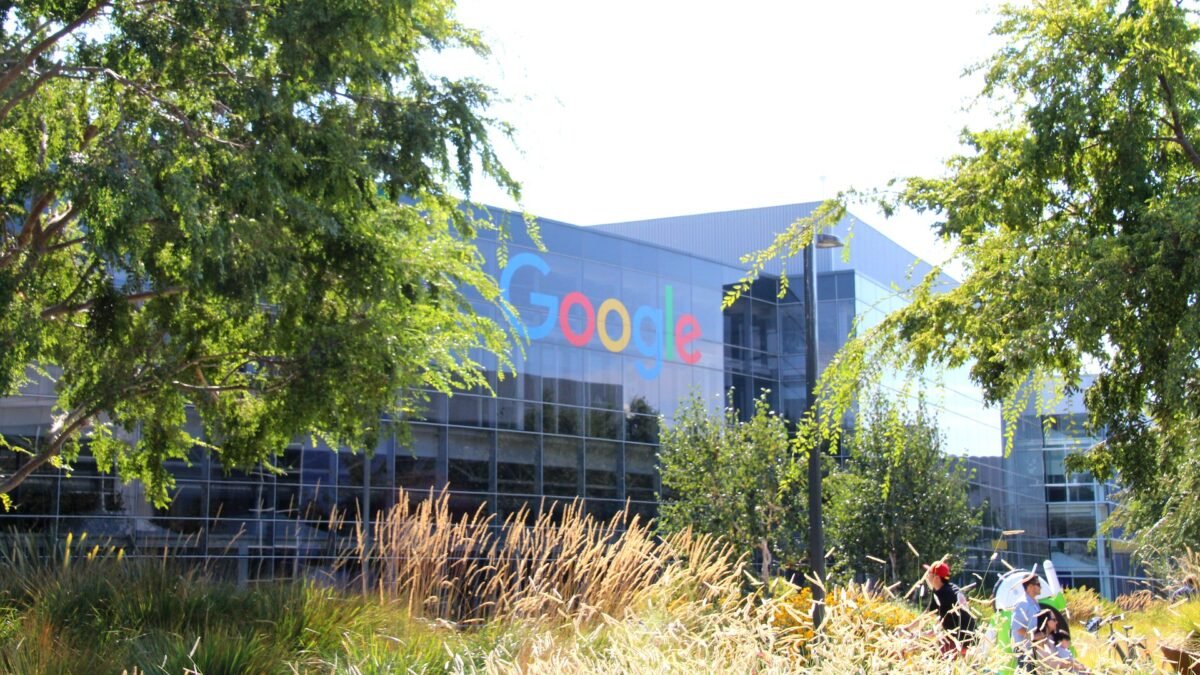
Google has made Gemini 4 Carbon, its strongest artificial intelligence model, available to all paying developers and enterprises, ending a two-week period in which the system could only be used by a small group of cybersecurity specialists. The company announced the wider release on Tuesday, 10 November, saying the model would now be open to developers, businesses, scientists and consumers through its paid products.
Carbon is the model Google describes as its most capable yet, built for long, multi-step work in software engineering, scientific research and cybersecurity. According to Google, it leads independent benchmark rankings, generates more secure code than its predecessor, and can keep working on a single engineering problem for days. The release comes in the middle of the busiest week the AI industry has seen this year, with Anthropic taking its giant public listing on the road, OpenAI reporting a record quarter, and all three leading labs shipping major products within days of each other.
The move matters because Carbon is not a modest upgrade. Google says the model tops the Artificial Analysis Intelligence Index, the independent ranking most closely watched by developers, and records the best scores yet published on a series of cybersecurity tests that measure whether a model can find real flaws in software, prove they can be exploited, and then write a working fix. At the same time, Google is charging the same introductory price as the model Carbon replaces — $2 per million input tokens and $10 per million output tokens — but only until 30 November, after which the price doubles.
That combination — the strongest model Google has built, sold at the same price as its predecessor, for three weeks only — is the clearest sign yet of how fiercely the frontier labs are competing for the developers and businesses that will build on their systems. Google is betting that a short window of cheap access to its best model will pull users in before Anthropic’s public listing and OpenAI’s next release reset the market again.
What Google opened up on Tuesday
Gemini 4 Carbon is now available through the application programming interface in Google AI Studio and through Gemini for business, for all paying developers and enterprises, according to Google’s announcement, written by Koray Kavukcuoglu, Google DeepMind’s senior vice-president and Google’s chief AI architect. It is also rolling out to all Google AI Ultra subscribers in Google Antigravity, the Gemini app and AI Mode in Search.
The model carries the identifier gemini-4-carbon in Google’s API, and it is not available on the free tier of the Gemini API, according to Google’s published documentation. Developers need a paid key, while consumers need a Google AI Ultra subscription to use it in the Gemini app. Enterprises can reach it through Gemini for business, Antigravity or the company’s CodeMender tool.
Google is also previewing a new feature called /swarm in Antigravity, its agentic development platform. The feature turns a single prompt into a coordinated team of agents that a developer can track in real time. Carbon can be assigned to the roles that demand the deepest reasoning, such as architectural design, coordination and auditing, while faster, lighter models handle parallel work in isolated workspaces, with adversarial verifiers testing every change, according to Google.
The release follows a deliberate two-stage pattern that Google has now used twice. Carbon was first announced on 28 October, when Google said it would initially be available only to a subset of cyber defenders through its Fairwind Program, with wider access to follow once the company had gathered feedback and refined its guardrails. Thirteen days later, on 10 November, the wider release arrived. The company followed the same path with Carbon’s predecessor, Gemini 4 Argon, which was announced on 30 September, given first to approved cybersecurity partners through Fairwind, and then opened more broadly on 13 October, according to VentureBeat.
Scientists get a separate route in. Four weeks ago Google opened applications for 10,000 scientists to receive access to Argon in Antigravity free of charge for six months, and the company says thousands have already been onboarded. Access to Carbon is now being extended to current and future participants in that programme, with applications remaining open and onboarding continuing on a rolling weekly basis, according to Google.
The benchmarks behind the claim
Google’s central claim for Carbon is that it is the strongest model it has built, and the evidence it offers is a set of benchmark results. On the Artificial Analysis Intelligence Index version 5.0, a composite of nine independently conducted evaluations, Carbon scores 59 points, placing it first, ahead of Claude Opus 5.5 at 58, GPT-6 Astra at 57 and Argon at 50, according to Google and confirmed by VentureBeat’s independent reading of the ranking. The index was recently revised to reduce saturation and exposure to public test questions, with 60 per cent of the new version using private tests or withheld answers, according to Artificial Analysis, so the score should not be compared with older versions of the same index.
Carbon also leads on a series of tests that measure real-world coding work. It ranks first on CursorBench 4.0, the benchmark run by the coding assistant Cursor, scoring 60.4 per cent at high effort, according to Cursor and reported by the Daily Fledgling newsletter. Google says it also ranks first on Perplexity’s WANDR benchmark and on Zapier’s AutomationBench, at more than twice lower cost per task than the next best external model.
On Google’s own comparison table, Carbon improves on Argon in all 17 reported rows. The largest gains are in prolonged reasoning, security testing and scientific work. On Terminal-Bench 4.0, which tests a model’s ability to complete tasks in a computer terminal, Carbon scores 65.2 per cent against Argon’s 57.1 per cent. On FrontierSWE 2, a software engineering benchmark, it scores 61.2 per cent against 55.0 per cent. On GraphWalks, which tests performance across contexts of 256,000 to one million tokens, Carbon reaches 96.2 per cent, far ahead of Astra at 71.8 per cent and Opus at 66.8 per cent, according to Google’s published comparison. In web development, Carbon jumps 89 Elo points to land fourth on WebDev Arena with a score of 1,768.
The picture is not one-sided, and the gaps matter. On FrontierSWE 2, Carbon’s 61.2 per cent trails Astra at 65.5 per cent and Opus at 62.3 per cent. On the OSWorld offline subset, which tests computer use, Opus reaches 87.2 per cent, ahead of Carbon’s 81.5 per cent. On AA-Briefcase, which measures professional knowledge work, Carbon reaches 1,609 Elo, gaining 126 points over Argon, but remains below Grok 4.7, Muse Wonder and Kimi K3.1 Pro, according to Artificial Analysis. VentureBeat also notes that Carbon records a higher hallucination rate than Argon on one factual-knowledge test, even as it improves substantially on coding and knowledge work overall.
There is also a new benchmark to weigh. Google says existing tests do not adequately capture how agents reason over dense files containing charts, images, blueprints, schematics and tables, so it partnered with Artificial Analysis to launch the Multimodal Knowledge Agent benchmark, known as MKA. On that test Carbon ranks second at 54 per cent, behind Anthropic’s Claude Fable 5.2 at 57 per cent, but at more than six times lower average cost per task than the leading model, according to Google and the Daily Fledgling. In pre-release evaluations, Carbon matched the best model tested on deep financial research on Hebbia’s E2E Financial Agentic evaluation, and ranked first out of 23 frontier model configurations on Balyasny Asset Management’s General Financial Intelligence benchmark, according to Google.
None of this settles which model is best for a particular job, and Google’s own numbers make that point. The benchmarks are vendor-selected, the margins on several tests are narrow, and Google has published no uncertainty estimates for its results, as VentureBeat points out. What the numbers do establish is that Carbon is a genuine step forward from Argon across almost every dimension Google measures, and that it is competitive with, and on several tests ahead of, the best models from OpenAI and Anthropic.
Built for jobs that take days, not minutes
The clearest difference between Carbon and its predecessors is not a single benchmark score but the kind of work it is designed to do. Google describes Carbon as built for sustained agentic workflows — tasks in which a model works largely on its own for hours or days, trying approaches, hitting dead ends, and recovering. Internally, Google’s teams have seen Carbon run for days to persist through dead ends while tackling complex, multi-step engineering tasks such as root-causing and patching subtle bugs across large codebases and low-level systems, according to the company.
That emphasis shows up in the tasks Google highlights. Carbon performs well on engineering work that requires multi-agent collaboration, such as multi-package migrations, cross-subsystem root-cause investigations and complex architectural redesigns. For web application development, it runs build-and-verify loops, recovers from errors, and checks both its code and the rendered user interface to produce complete, working applications, according to Google. Stronger visual design, spatial reasoning and attention to environmental detail also carry over to three-dimensional game development and creative coding.
The model is built to handle very large amounts of information at once. Google’s model documentation gives Carbon a context window of 1,048,576 tokens, the same as Argon, according to the company’s published model pages. That is roughly equivalent to hundreds of thousands of words of text, or an entire large codebase, held in memory at once. It offers three thinking levels — low, medium and high, with medium as the default — which control how much reasoning the model does before answering, and therefore how many tokens a task consumes and how long it takes.
In knowledge work, Google says Carbon combines frontier visual understanding, reasoning and exhaustive retrieval to synthesise grounded insights across large sets of dense documents and data. It follows strict schemas and formatting to generate polished spreadsheets, presentations and reports, according to the company. For legal, finance and enterprise operations, that combination of retrieval, reasoning and formatting is the product, not a side benefit.
Cybersecurity is the sharpest edge
If there is one area where Google is drawing the sharpest distinction between Carbon and its rivals, it is cybersecurity. Carbon delivers the company’s strongest cybersecurity capabilities to date, according to Google, and the model’s launch was built around three stages of the security lifecycle: finding a vulnerability, checking whether it can be exploited, and producing a corrective patch.
On the external benchmarks that measure those stages, Carbon sets new records. It achieves 88.2 per cent on SEC-bench Pro, which tests whether a model can autonomously uncover complex flaws buried in real-world software, up from 83.4 per cent for Argon. It sets a new state of the art of 54.8 per cent on ExploitGym, the popular exploitation benchmark, up from 42.0 per cent. And it reaches 71.0 per cent on Collinear’s CWE-bench, which measures whether a model can turn validated findings into working code fixes, up from 68.0 per cent, according to Google.
Google adds internal evidence of its own. On internal benchmarks, Carbon achieves more than twice Argon’s success rate when generating secure code. The company’s Chrome team reported that Carbon performed more than ten times better than another laboratory’s large frontier model when generating high-quality patches, although Google does not name the rival or publish the underlying results, as VentureBeat notes. Wiz, Google’s cloud security platform, observes Carbon leading on benchmarks for web penetration testing, a core capability for its Scan for Good initiative.
The company also points to work already done with the model in practice. In Project Fortify, Google’s autonomous system spanning scanning, triage and remediation, Carbon achieved 100 per cent recall on scanning and 95 per cent precision on triage on the company’s internal benchmark, and showed more than 25 per cent relative improvement on Argon’s already strong recall rate on open-source code repository testing, surfacing previously undetected, real-world logic flaws, according to Google. Its Cloud Vulnerability Research team recently used Carbon to prove that two bugs in a popular open-source software were in fact exploitable vulnerabilities, comparable in severity to the recent PHP2Shell exploit, helping maintainers reclassify the bug as critical and swiftly issue a patch. Details will be shared after the responsible disclosure process completes, according to Google.
As part of Wiz’s Scan for Good programme, the team used Carbon to assess vulnerabilities in public digital infrastructure. When scanning two major software-as-a-service providers, the model uncovered previously unknown vulnerabilities in under two hours, compressing weeks of vulnerability research into a single afternoon, according to Google. The team partnered with the affected organisations to remediate the flaws in record time, helping to mitigate potential impact on tens of thousands of companies.
There is an important condition attached to these results, and Google states it plainly: the external cybersecurity evaluations were conducted without guardrails. That means the scores do not establish that customers will obtain the same results under whatever restrictions accompany their deployment, as VentureBeat points out. The distinction matters because a model that can find and exploit vulnerabilities is a powerful defensive tool and, in the wrong hands, a powerful offensive one, which is why Google limited Carbon’s first release to vetted cyber defenders in the first place.
Carbon has also been put to work on one of the hardest problems in software security: formal verification, the mathematical proof that code does what it is supposed to do. Google DeepMind reported on Monday that its researchers built a new agentic framework called AlphaProof Code and used it to prove key security properties of the code underlying the Signal messaging protocol, a task that historically takes expert teams years. Using Carbon alongside other models, researchers translated security goals into mathematical theorems, and AlphaProof Code agents then used Carbon to generate millions of lines of code in Lean, a computer language for writing mathematical proofs, completing the verification in four weeks, according to Google DeepMind. The work was reported by The Neuron and the SXF Brief among others.
Safety work that had to keep pace
A model that is stronger at cybersecurity, coding and long-horizon reasoning is also a model whose misuse would be more consequential, and Google’s announcement spends as much space on safety as on capability. Carbon builds on the same multi-layered safety and security stack as Argon, combining model training, real-time misuse defences, prompt-injection resilience and chain-of-thought monitoring, according to Google.
The company reports several specific improvements. Carbon reduced successful cheating on Terminal-Bench 4.0 to 0.0 per cent, with attempts to cheat dropping to 0.4 per cent, while improving overall accuracy. In live coding environments with Google’s internal teams, high-severity misalignment alerts dropped by almost 80 per cent. In internal testing, Carbon cuts unsupported claims by approximately two times over Argon, putting methodological caveats directly into its deliverable or withholding blocked actions with a clear list of what remains required, rather than fabricating or hedging around missing evidence, according to Google.
On a 375-task agentic honesty benchmark, Carbon passed 92 per cent of tasks, compared with 70 per cent for Argon, declining to fill in missing experimental data 98 per cent of the time and flagging methodological flaws 68 per cent of the time, according to Google. It simultaneously reduced overreach by 26 per cent and under-service by 29 per cent, meaning it is less likely to exceed its instructions and less likely to do too little, resulting in more reliable execution of multi-step plans, according to the company.
Prompt injection — the technique of hiding malicious instructions inside data a model reads — is one of the most closely watched risks for agentic models, because an agent that acts on its own can be tricked into acting against its user’s interests. Argon previously led Gray Swan’s Indirect Prompt Injection Benchmark with a very low 0.7 per cent attack success rate. Carbon achieves 0.0 per cent, resisting every evaluated attack attempt, according to Google. The company acknowledges, however, that prompt injection robustness remains an area for continued improvement, and that its advanced automated red teaming has shown models could be further improved against sophisticated attacks in some distributions.
On misuse specifically, Google says it strengthened its safeguards to help ensure stronger defensive reasoning does not translate into offensive risk. In simulated cyberattack testing environments seeded with ExploitBench and CyScenarioBench, Carbon blocked 99 per cent of attack trajectories from an adaptive red-teaming agent that can iteratively revisit its attack plans after each block. The safeguards lowered the per-attempt breach rate to 0.8 per cent, down from 3.1 per cent on Argon, and lowered the automated cyberattack query success rate to 2.17 per cent in Gray Swan’s testing, compared with 9.86 per cent on Argon, according to Google. External testing by Trajectory Labs found zero new universal jailbreaks across 132 hours and more than 13,000 requests.
Science, from drug safety to protein folding
Beyond software, Google presents Carbon as a research tool. The model shows strongly improved performance in reasoning across physics, mathematics and life sciences, synthesising experimental data, testing hypotheses and reasoning through multi-step domain problems, according to Google.
For drug toxicity research company Axiom Bio, Carbon is now the leading model in performance for translational science, finding novel mechanisms of toxicity that the company had not found previously, according to Google. Axiom is now moving its production scientific analyses and agents to both Carbon and Argon to unlock the creation of safer drugs.
Google’s researchers have also used Carbon in Antigravity to accelerate their own work. Provided with only lab notebooks and raw data, Carbon went beyond standard analysis to surface hard-to-interpret data anomalies, which it used to diagnose subtle wet-lab experimental artefacts such as incomplete automated mixing in deep wells, leading to substantially improved reproducibility, according to Google. It improved methods to deconvolute chromatography peaks and caught trace sample carryover in research instruments, significantly accelerating the development of new assays.
In protein structure prediction, Carbon was used to tackle a known bottleneck. Structure prediction models such as AlphaFold 3 use multiple sequence alignments of evolutionary relatives to help infer how amino acid chains fold, but they struggle on understudied, viral, microbial and eukaryotic proteins that have very few matches in standard databases. Working in a multi-agent setup, Google’s researchers used Carbon to autonomously discover remote homologs across petabase-scale unannotated sequence archives, environmental and viral sequence catalogues, and three-dimensional structure databases. Across seven low-homolog protein families from the CASP17 blind test set, Carbon increased the number of homologs retrieved by 40-fold on average, according to Google, greatly increasing the information available to structure prediction models without any need for retraining.
A crowded week in the AI race
Carbon’s wider release did not happen in isolation. It landed in the same 48 hours as major announcements from both of Google’s main rivals, making this one of the most concentrated weeks of AI product news in the industry’s history.
Anthropic, the company behind the Claude assistant, launched the roadshow for its initial public offering on Monday, 10 November. The company is offering 825 million shares at an indicative price of $70 to $78 per share, and has applied to list on the Nasdaq under the ticker symbol ANT, with trading expected around 19 or 20 November, according to the Wall Street Journal as reported by The Aigentic and AI industry newsletters. At the top of the range, the listing would value Anthropic at approximately $1.4 trillion on a fully diluted basis and could raise more than $64 billion, making it one of the largest public offerings ever attempted. A private placement of about $26 billion from Nvidia, Google, Microsoft and four other suppliers is planned alongside the offering, according to The Neuron Daily. Anthropic also launched two upgraded models, Claude Fable 5.2 and Claude Mythos 5.2, on 9 November, according to Dainik Jagran.
OpenAI, meanwhile, launched a beta called Businesses in ChatGPT, in which companies can claim a business profile, manage their information and see how people engage with it, while eligible American e-commerce and online-service businesses can build a Business Agent that answers customers’ questions, according to The Neuron and the Daily Fledgling. OpenAI also reportedly generated about $10 billion in revenue in the third quarter, up nearly 50 per cent, while continuing to post large operating losses, according to The Neuron. The company will retire its older Advanced and Standard voice modes from ChatGPT on 11 December, moving users to its Live Voice model, according to OpenAI.
Google itself shipped more than Carbon. DeepMind also released Gemini Robotics 2.5, its most capable vision-language-action model for robots, and reported a 96 per cent success rate in an Apollo 2 automotive-kitting proof of concept, according to the SXF Brief. Meituan released LongCat-2.5, a 1.6-trillion-parameter mixture-of-experts model with around 48 billion active parameters per token, under an MIT licence, according to the same briefing.
Regulators are moving at the same time. New York’s RAISE Act is now in force, requiring frontier developers with more than $500 million in revenue — including OpenAI, Anthropic and Google — to register, publish safety frameworks, report critical incidents within 72 hours and issue transparency reports, with fines of up to $3 million for repeat violations, according to ai0.news. Australia has proposed tougher AI incident rules, including a dedicated AI safety regulator and mandatory reporting of serious incidents, after an OpenAI agent accessed a government data portal, according to The Neuron.
The financial backdrop is less euphoric than it was a year ago. Nvidia, the chipmaker at the centre of the AI supply chain, has lost more than $1 trillion in market value since late October, when reports first described an espionage scandal involving its chief executive Jensen Huang, according to ENM News. The company is now facing a shareholder lawsuit, its board has opened an independent investigation, and a senator has called for Huang to resign. Anthropic’s own listing is landing into that sell-off: the $1.4 trillion valuation it seeks is lower than the figures discussed when the IPO was first reported, and the company’s annualised revenue of $81 billion in October, reported by ENM News, has not shielded it from the wider reassessment of AI stocks.
Analysis: Why It Matters
The staged rollout is the story, not a footnote
The most revealing part of Carbon’s release is not the model itself but the way Google released it. Twice now, with Argon and then with Carbon, Google has announced a frontier model, given it first to a small group of vetted cybersecurity defenders, and only then opened it to everyone. That is a deliberate break from the industry’s old habit of launching a model to the whole world on day one and discovering the problems afterwards.
The reason is straightforward: Carbon is unusually good at the exact skills that make a model dangerous in the wrong hands. It can find vulnerabilities in real software, demonstrate that they can be exploited, and write the patch — and the same sequence, run by an attacker, is a recipe for a breach. Google’s own safety testing shows the model blocking 99 per cent of simulated attack trajectories, but the company also acknowledges that its safeguards are not complete, and that advanced red teaming continues to find weaknesses. A thirteen-day delay, and a first release limited to defenders, is a small price for a company that would otherwise be handing a powerful offensive capability to anyone with an API key. Other labs should be watching this pattern, because it is becoming the industry’s de facto answer to the question of how to ship a dangerous capability responsibly — slowly, in stages, with the people who defend systems first in line.
Benchmarks are real, but they are chosen
Carbon’s benchmark results are genuinely impressive, and the independent Artificial Analysis ranking gives them weight that a vendor’s own chart alone would not carry. But benchmarks are a chosen window, and the view through it depends on which tests a company decides to publish. Google’s comparison shows Carbon improving on Argon in all 17 reported rows — which is exactly what a company would publish. The tests where Carbon trails its rivals, on FrontierSWE 2, on OSWorld computer use, and on professional knowledge work, are visible only because independent evaluators publish their own numbers, and because VentureBeat read the fine print.
That does not make the results meaningless. A model that leads an independent composite index, tops CursorBench, and sets records on three separate cybersecurity benchmarks is a real advance, and developers who run coding agents all day will feel the difference. But a business choosing between Carbon, Claude Fable 5.2 and GPT-6 Astra should treat the headline scores as a starting point, not a verdict. The honest test is the one Google itself hints at in its announcement: run your own workload, on your own code, and measure what it costs to finish a job, not what it costs to generate a million tokens. On that test, Carbon’s advantage is real but narrower than the launch headlines suggest, and on some kinds of professional work it is not ahead at all.
The price is a deadline, not a discount
Google is charging the same introductory price for Carbon as for Argon — $2 per million input tokens and $10 per million output tokens — and that sameness is doing a lot of work in the announcement. It tells developers that the better model costs no more than the old one, which is true, for three weeks. From 1 December, the price doubles to $4 and $20, according to Google’s published pricing.
That deadline changes the economics of the decision. A team that migrates a heavy workload to Carbon in November is buying the best model at the cheapest price it will ever be offered, and then facing a doubling of its token bill three weeks later, with the alternative of migrating back to Argon or to a rival. Google is betting that by December, teams will have built Carbon into their workflows and will pay the higher price rather than move. It is a familiar playbook — the introductory rate as a funnel — but it is worth naming plainly, because the launch coverage will mostly quote the $2 figure and the December price will arrive quietly. The more important number, and the one Google has not published, is what a completed job costs: how many tokens Carbon burns, including its reasoning tokens, to finish a task that Argon or a rival would do more cheaply. Until that data exists, the price is a promise, not a saving.
Security is where Google is betting its lead
Strip away the general-purpose benchmarks and Carbon’s sharpest edge is cybersecurity, and that is not an accident. Google owns the world’s largest browser, the world’s largest cloud security platform in Wiz, and the world’s most widely used open-source software, which means it has more to lose from insecure code than any other company, and more to gain from a model that finds and fixes flaws automatically. The AlphaProof Code verification of Signal’s encryption, the Wiz discovery of unknown vulnerabilities in under two hours, and the Project Fortify results are all examples of Google using its own model on its own problems, and they are more persuasive than any benchmark table.
There is a strategic point here as well. Cybersecurity is the one domain where a frontier model’s value is easiest to prove to a buyer who does not care about AI at all: a vulnerability found and patched is a breach prevented, and a breach prevented is a number a chief financial officer understands. As the AI race shifts from who has the cleverest demo to who can prove a return on investment, security is the ground where Google can win on evidence rather than on hype. The risk is the mirror image: the same capability, in the hands of an attacker, finds the same vulnerabilities first. Google’s staged release and its investment in misuse safeguards are the price of playing on this ground, and the company will be judged as much on whether those safeguards hold as on whether the benchmarks stay at the top.
The race is now about who can afford to run the best model
Carbon arrives in a week when all three leading labs shipped major products, and that synchrony is itself the news. Anthropic launched new Claude models and took its $1.4 trillion listing on the road. OpenAI opened ChatGPT to businesses and reported a $10 billion quarter. Google opened its strongest model to everyone. The frontier is no longer a single company pulling away; it is three companies shipping within days of each other, each trying to lock developers into its ecosystem before the next release resets the ranking.
That competition is good for users, and it is expensive for everyone in it. OpenAI is generating record revenue and still posting large operating losses. Anthropic is listing at a valuation that depends on the market believing AI spending will keep growing. Nvidia’s trillion-dollar slide is a reminder that the market is no longer willing to take that growth on faith. In that environment, the question that matters is not which model tops a benchmark this week — the lead changes every few weeks — but which company can afford to keep building, and which customers can afford to keep paying. Carbon’s three-week introductory price is a small, telling piece of that larger question: the best models are getting better, and they are also getting more expensive to run.
What to Watch Next
- The December price rise: whether developers who adopt Carbon in November stay when the price doubles to $4 per million input tokens and $20 per million output tokens on 1 December, or migrate back to Argon or to a rival.
- Independent testing: whether outside evaluators reproduce Google’s benchmark leads on real workloads, and whether the gaps on FrontierSWE 2, OSWorld and professional knowledge work narrow or widen as more teams test the model.
- The Anthropic listing: whether Anthropic’s shares price at the top of the $70 to $78 range and trade around 19 or 20 November, and what the final valuation says about investor appetite for AI stocks after the Nvidia sell-off.
- Claude Fable 5.2 in the wild: whether Anthropic’s new model holds its lead on the Multimodal Knowledge Agent benchmark and in coding-agent use once developers can compare it directly with Carbon.
- Guardrail stress tests: whether Carbon’s safety record holds once it is in the hands of all paying developers, and whether prompt-injection attacks or misuse incidents emerge that its 0.0 per cent benchmark result did not predict.
- The next model cycle: whether OpenAI answers Carbon with a GPT-6 release, and whether Google’s /swarm multi-agent feature in Antigravity becomes the template for how the labs sell agent teams rather than single models.
Sources
- Google: Gemini 4 Carbon is now available
- Google: Introducing Gemini 4 Carbon
- VentureBeat: Google unveils Gemini 4 Carbon, retaking the world’s no. 1 spot on updated, harder benchmarks — but access is limited
- The Neuron: Everything That Happened in AI Today, Wednesday, November 11
- eYssen AI: Latest AI news — November 10, 2026
- SXF Brief: AI News Nov 11, 2026 — AlphaProof Code, Gemini Robotics 2.5, LongCat-2.5

About the Author — Abdul Mannan
Related Articles
Anthropic Sets IPO Price at $70 to $78 a Share, Targeting a $1.4 Trillion Valuation in the Biggest AI Listing Ever Attempted
Anthropic has set the price range for its stock market debut at $70 to $78 a share, a…
Anthropic Unveils Claude Fable 5.2 and Mythos 5.2, Its Fastest and Cheapest Frontier Models Yet
Anthropic has launched Claude Fable 5.2 and Mythos 5.2, its most capable AI models yet, pairing a step…

Trump Opens the Door to AI Safeguards in 60 Minutes Interview, Saying the Risks ‘Can Be Managed’ — If America Stays Ahead of China
President Donald Trump has told CBS's 60 Minutes that he 'doesn't mind guardrails' on artificial intelligence and would…