
Hardik Pandya Joins Punjab Kings in Blockbuster IPL Swap as Arshdeep Singh Moves to Mumbai Indians

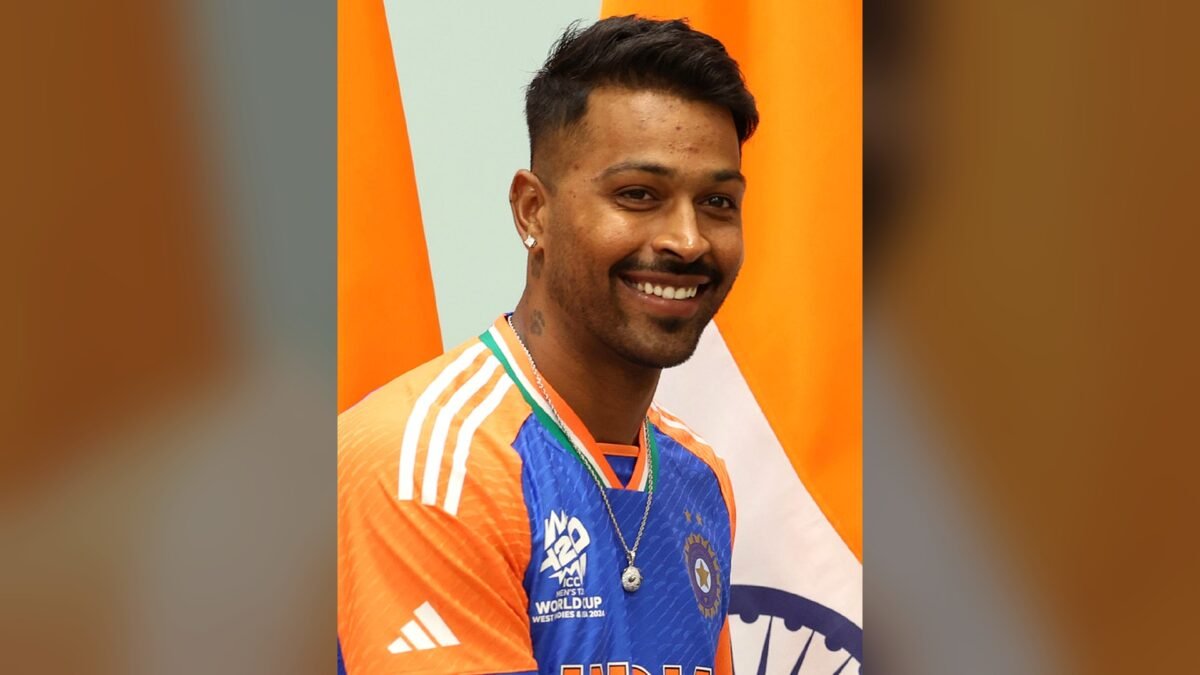
Mumbai Indians have traded captain Hardik Pandya to Punjab Kings in exchange for left-arm fast bowler Arshdeep Singh, the Indian Premier League confirmed on Wednesday, in a straight player-for-player swap that ends one of the most scrutinised captaincy experiments in the league’s history and hands Punjab the biggest name of the IPL 2027 trading window.
According to ESPNcricinfo, which reported the completed deal from an IPL press statement, Hardik will join Punjab for a fee of INR 18 crore, up from his existing fee of INR 16.35 crore, while Arshdeep will move to Mumbai at his existing fee of INR 18 crore. The two fees are identical, but the story behind them could hardly be more different: one franchise is buying a five-time IPL champion and former captain who has not played a competitive match in almost six months, and the other is buying a 27-year-old fast bowler who has spent his entire IPL career in one shirt and leaves as that club’s greatest wicket-taker.
The trade was confirmed on Wednesday 11 November, four days after ESPNcricinfo first reported that it was being finalised, with both franchises having placed expressions of interest with the IPL and both players having given their written consent. It is, by any measure, the headline move of the trading window ahead of the IPL 2027 mini auction in Goa on 16 December, and it leaves Mumbai Indians — the league’s joint-most successful franchise — without a captain for the first time since Hardik returned to the club in 2024.
For Punjab Kings, the deal is a statement of intent from a franchise that has never won the IPL. For Mumbai, it is an admission. Three seasons of Hardik’s captaincy produced one last-place finish, one playoff exit and one ninth-place finish, and the numbers, as ESPNcricinfo recorded them, are stark: in 39 matches under Hardik since 2024, Mumbai won 15 and lost 24, a win-loss ratio of 0.625 that is the worst for any captain of a team in IPL history with a minimum of 30 games, excluding Super Over results.
A second stint that never took hold
Hardik Pandya’s relationship with Mumbai Indians is one of the great modern stories of the IPL, and its second act never quite matched the first. He debuted for the franchise in 2015, a raw all-rounder from Baroda with a big backlift and a bigger personality, and he won four IPL titles with Mumbai before leaving when the league expanded to ten teams in 2022. At Gujarat Titans he was made captain immediately, and he led the new franchise to the title in its debut season and to the final a year later, a record that made him look like the most natural leader of his generation.
That record is what made his return to Mumbai ahead of IPL 2024 so explosive. According to ESPNcricinfo, Mumbai bought him back from Gujarat in an all-cash deal and appointed him captain, replacing Rohit Sharma, who had led the franchise to all five of its titles. The reaction from supporters was hostile in a way the league had rarely seen: Hardik was booed at grounds around the country, including at Mumbai’s own Wankhede Stadium, and the team finished last in 2024, winning only four of 14 matches.
There was a recovery of sorts in 2025, when Mumbai reached the playoffs and went out in Qualifier 2, but 2026 was a regression. Mumbai won four of their 14 league matches, finished ninth, and won only two of their seven home games at the Wankhede, according to Sports Yaari. Hardik’s own season was cut short by injury: back spasms kept him out of three games in May, he played ten of the 14, and in those ten he made 206 runs at a strike rate of 138.26 and took four wickets at 64.75, going at 11.43 runs an over, according to SportsAdda. He has not played a competitive game since 24 May.
ESPNcricinfo reported that Hardik and Mumbai had held several conversations since the latter part of IPL 2026 before the all-rounder told the franchise he wanted to be released. Mumbai, the report said, spoke to virtually every other team in the league about a viable trade, with the exception of Royal Challengers Bengaluru, before settling on Punjab. Kolkata Knight Riders were among the clubs approached, according to the Times of Bengal, and Mumbai were reported to have asked for two of their players, Harshit Rana and Angkrish Raghuvanshi, in exchange — a demand that stalled those talks.
Mumbai’s farewell to Hardik was warm, whatever the frustrations of the last three seasons. “Hardik has shared some very special moments with Mumbai Indians. We have seen him grow as a cricketer, make his mark on the world stage and then return to lead the team,” Akash Ambani, the franchise’s co-owner, said in a statement quoted by ESPNcricinfo. “His contribution, his energy and the competitive spirit he brings to the field have been valuable to Mumbai Indians. I have great respect for him, both as a cricketer and as a person, and wish him nothing but the very best for everything that lies ahead.”
Punjab will be Hardik’s third IPL team, and the move is the second time in three years that he has been part of a trade. Across his career he has played 162 IPL matches, scoring 2,955 runs at a strike rate of 146.28 and taking 82 wickets, according to CricTracker — a record that explains why, even now, franchises queue for him.
Punjab’s prize, and its risk
For Punjab Kings, the attraction is obvious. The franchise reached the IPL final in 2025 under Shreyas Iyer, losing to Royal Challengers Bengaluru, and then narrowly missed the playoffs in 2026, according to Cricket Times. It is a team that has spent years searching for a winning formula and has now, in one move, acquired a player who has won the tournament five times — four with Mumbai and once with Gujarat — and who has captained a team to a title in its first season.
But the acquisition comes with the largest caveat in the league: Hardik’s body. His fitness problems have followed him for years, and the last five months have been the worst stretch of all. According to SportsAdda, he has been at the BCCI’s Centre of Excellence in Bengaluru since early June, where a quadriceps strain ruled him out of the Afghanistan one-day internationals. In September he could not get through the ten overs he needed in a fitness test, picked up a shin injury in the next one, and scans found a bone stress response in his right shin. That cost him the India A one-day series against Australia A, and he is not in either of India’s squads for the New Zealand series.
Other reports put the sequence slightly differently — back spasms, a leg strain and now a shin injury, three different setbacks in the space of five months, according to The Newz Express — but the conclusion is the same: Punjab have traded away their most reliable bowler for a player whose availability cannot be taken for granted, and whose bowling workload, the thing that makes him a genuine all-rounder rather than a batting captain who bowls a little, is precisely what his body has stopped permitting. In IPL 2026 he bowled just 22.4 overs all season.
Punjab’s co-owner Ness Wadia, speaking to Cricbuzz and SportsTak after the deal was confirmed, did not hide the emotion of the decision, but he was clear that the club believes it was the right one. He described parting with Arshdeep as an emotional call, said the swap was worth it for Punjab Kings, and revealed that the deal had taken more than a month to put together. He also said Hardik was in a good mental space, and that Punjab had been clear from the start that Arshdeep would only be involved in a deal with Mumbai, even though other franchises had shown interest in the fast bowler.
Former India batter Mohammed Kaif, meanwhile, offered a dissenting note, telling the Indian Economic Observer that Hardik had made a mistake by leaving Gujarat Titans, the franchise where he won his first IPL title as captain, and urging him to focus on regaining his form with Punjab after what Kaif called an underwhelming second run with Mumbai. It is a reminder that Hardik’s career has been defined by bold moves — and that not all of them have worked.
The financial terms, as set out in the IPL statement quoted by YourStory, are worth understanding, because they show how the league’s trade rules actually work. The transfer fee is a bipartite agreement between the two franchises and is independent of the retention fee, the salary paid to a player by his franchise. It was mutually decided by Mumbai and Punjab that Hardik’s trade fee would rise by INR 1.65 crore, from INR 16.35 crore to INR 18 crore, and under the existing rules he will receive 50 per cent of that hike, with the rest going to Mumbai Indians. Arshdeep moves at his existing price of INR 18 crore, unchanged.
Mumbai’s answer: Arshdeep and Bumrah
If Punjab’s half of the deal is a gamble on a great player with a fragile body, Mumbai’s half is a bet on something far more reliable: a fast bowler in his prime, joining the best fast bowler in the world. Arshdeep Singh will form what ESPNcricinfo called a potentially mouth-watering pairing with Jasprit Bumrah, and the numbers suggest Mumbai have solved a problem that cost them dearly in 2026, when their pace attack looked depleted.
Arshdeep played 96 matches across eight seasons for Punjab, and his 111 wickets for the franchise are the most by any bowler for the side in its 19 seasons in the competition, according to ESPNcricinfo. He made his IPL debut for Punjab in 2019 and had never played for another franchise until now; he was retained at the IPL 2025 auction for INR 18 crore, with Punjab exercising their Right to Match card to keep him, according to CricTracker. He is also India’s leading wicket-taker in Twenty20 internationals.
His value to Mumbai is specific and well understood. He is a left-arm bowler in an attack built around right-arm pace, which gives the new-ball pairing variety and creates different angles for right-handed batters. He bowls at the death, a phase in which Mumbai leaked runs throughout 2026, and he has done it for years in high-pressure situations for both Punjab and India. What Mumbai lose in middle-order power and a sixth bowling option, they gain in a bowler who can be trusted with the hardest overs in the game.
“Arshdeep’s arrival adds an exciting dimension to our bowling attack. We are always looking to build a team with the right balance of experience, skill and hunger to compete and Arshdeep brings all of these qualities,” Akash Ambani said in the statement quoted by ESPNcricinfo. “We welcome him along with the MI Paltan as he takes the field in Blue and Gold.”
The trade also completes a sweeping changing of the guard at Mumbai. Hardik’s departure leaves the franchise with an entirely new leadership group and staff ahead of next season after a revamp of the team management, according to ESPNcricinfo. Kieron Pollard has taken over as head coach, replacing Mahela Jayawardene, while Robin Uthappa, Mitchell McClenaghan and T Dilip have been named batting coach, bowling coach and fielding coach respectively. Pollard, a Mumbai great as a player, now inherits the task of rebuilding a team that has finished in the bottom two in two of the last three seasons.
The most immediate question is the captaincy. SportsTiger, citing a Press Trust of India report, said Rohit Sharma is likely to return as Mumbai’s captain — a restoration that would close the circle on the most controversial decision in the franchise’s history, and one that would be welcomed by the supporters who never accepted Hardik’s appointment in the first place. Mumbai have not confirmed it, and there are other candidates in the squad, but the logic is hard to resist: the most successful captain in the club’s history, still its most important batter, leading a rebuilt side with a new coach and a new strike bowler.
The window that matters as much as the auction
The Hardik-Arshdeep swap is the biggest deal of the trading window so far, but it is not the only one, and the window itself has become one of the most important parts of the IPL calendar. According to myKhel, which listed the most expensive trades completed so far ahead of the IPL 2027 auction, the window has already seen several high-profile players change franchises, and it will remain open until a week before the mini auction in Goa on 16 December, with franchises expected to announce their retention lists after 16 November.
One of the other deals in the window, a cross-swap involving Sanju Samson and Ravindra Jadeja worth INR 18 crore, has been described in some reports as the biggest trade in IPL history — a claim that sits awkwardly alongside the Hardik-Arshdeep deal, which matches it on value. The honest reading is that the league has never seen a trading window like this one: two INR 18 crore swaps, both involving India internationals, both reshaping the balance of power between franchises, and both completed before a single ball of the auction has been bowled.
That is a change in how the IPL works. For most of its history, the auction was where teams were built, and trades were a footnote. Now, with franchises able to negotiate directly, obtain a player’s written consent and register the deal with the league — the process ESPNcricinfo described when it first reported the Hardik talks, with expressions of interest placed with the IPL and ratification as the final step — the window has become a second market, quieter than the auction but, this year at least, just as consequential.
It also means the mini auction on 16 December will look very different from the one franchises were planning a month ago. Punjab will go into it with their biggest hole filled and their biggest question — who leads them — at least partly answered, even if the leadership structure under Shreyas Iyer, the man who took them to the 2025 final, still needs to be worked out. Mumbai will go into it with a new captain to appoint, a new coach to bed in, and a bowling attack that, on paper, is suddenly one of the strongest in the league.
Analysis: Why It Matters
1. A captaincy that never quite worked
The hardest question in this trade is not whether Hardik Pandya is a good cricketer — he plainly is — but whether he was ever the right captain for Mumbai Indians. The numbers say no. Fifteen wins from 39 matches, a last-place finish, a ninth-place finish, and the worst win-loss ratio of any captain with 30 or more games in IPL history are not the record of a bad team having bad luck; they are the record of a leadership fit that never took. The booing that greeted his appointment in 2024 never fully went away, and a captain who has to win over his own supporters before he can win a match is carrying a burden no other captain in the league carries. Mumbai’s decision to move him on is not a judgement on his talent. It is a judgement on a three-year experiment, and the experiment failed.
2. Punjab’s gamble is really on a body, not a bat
Punjab have not bought Hardik Pandya’s batting or his captaincy record. They have bought the possibility that his body will allow him to do both, and that is a much riskier purchase. He has not played competitive cricket since 24 May, he has had three different injuries in five months, and he could not complete a ten-over fitness test in September. A stress response in the shin is not a minor complaint; it is the kind of injury that ends seasons and shortens careers. Punjab will have done their medical due diligence, and the fact that the deal took more than a month suggests it was thorough. But no amount of diligence can guarantee that a 33-year-old all-rounder with a long injury history will stay fit through a two-month tournament. If he does, Punjab have a match-winner. If he does not, they have given away their best bowler for a player in a tracksuit.
3. Mumbai finally fix the death overs
For all the emotion around Hardik’s departure, the cricketing logic of Mumbai’s half of the deal is hard to fault. In 2026 their attack was thin, their death bowling was expensive, and they had no left-arm variety to complement Bumrah. Arshdeep solves all three problems at once, and he solves them with a player who is 27, durable, proven at international level and, crucially, available. Pairing him with Bumrah gives Mumbai the two best death bowlers in Indian cricket in the same attack, and that is a foundation a team can build a season around. Teams win IPL titles on bowling attacks more often than they win them on batting line-ups, and Mumbai have just bought themselves one.
4. The trade window has become the real auction
There was a time when the IPL trading window was an administrative curiosity, and the auction was the only event that mattered. That time is over. This window has produced two INR 18 crore swaps involving four India internationals, and it has done so weeks before the auction, with franchises negotiating directly and players giving written consent. The advantage is obvious: a team can fill its biggest hole with a known player at a known price, rather than gambling on the auction floor. The risk is that it rewards the richest and best-connected franchises, and that it makes the auction itself — the event that gives smaller teams their chance to catch up — less important. The league will need to watch that balance. For now, though, the window has given fans a better story than most auctions manage.
5. What it means for India’s plans
The trade is a franchise story, but it is also, quietly, an India story. Hardik has been absent from India’s squads for the New Zealand series, and his last competitive cricket was in May. India have moved on without him before — they won the T20 World Cup in 2024 with him as a central figure, but the team has kept winning since — and the selectors will not wait forever for a player whose fitness cannot be guaranteed. Punjab’s interest is therefore about more than the IPL: it is the first step on Hardik’s road back to regular cricket, and regular cricket is the only route back to the India team. If he plays a full season, bowls his overs and stays fit, the trade will look like a masterstroke. If he breaks down again, the questions will not be about Punjab’s judgement but about whether the great all-rounder of his generation can still be relied upon at all.
What to Watch Next
- The retention lists: franchises are expected to announce their retained players after 16 November, and Mumbai’s list will show how much of the old squad survives the rebuild — and how much money they have to spend in Goa.
- Mumbai’s next captain: Rohit Sharma is reported to be the likely choice, but Mumbai have not confirmed it. Watch for an announcement before the auction, because the captain shapes every buying decision that follows.
- Hardik’s fitness: the BCCI’s Centre of Excellence in Bengaluru holds the key. Any clearance, setback or revised timeline for his return will be the most important news of Punjab’s pre-season.
- The mini auction in Goa on 16 December: Punjab and Mumbai will both be active, but for different reasons — Punjab to replace a frontline bowler, Mumbai to rebuild a middle order and a leadership group.
- Arshdeep and Bumrah together: their first spell as a new-ball pair, whether in a warm-up or in the season opener, will be one of the most watched moments of IPL 2027.
- More trades before the window closes: the window stays open until a week before the auction, and after two INR 18 crore swaps, no franchise will want to be the one that stood still.
- Punjab’s leadership picture: Shreyas Iyer took Punjab to the 2025 final. Whether Hardik slots in under him, or the franchise rethinks its leadership entirely, will define the team’s identity next season.
Sources
- ESPNcricinfo — “IPL 2027: Mumbai Indians and Punjab Kings complete Hardik Pandya and Arshdeep Singh swap” (11 November 2026)
- ESPNcricinfo — “IPL 2027: MI set to trade Hardik Pandya to PBKS for Arshdeep Singh” (7 November 2026)
- YourStory (Press Trust of India) — “Blockbuster IPL trade: Hardik Pandya moves to Punjab for Rs 18 Cr, Arshdeep heads to MI” (11 November 2026)
- myKhel — “IPL 2027 Trade Deals: Hardik Pandya to Arshdeep Singh — Top 5 Most Expensive Trades ahead of IPL 2027 Auction So Far” (12 November 2026)
- CricTracker — “Releasing Arshdeep Singh was tough, but Hardik Pandya trade was worth it says PBKS co-owner Ness Wadia” (12 November 2026)
- SportsAdda — “Hardik Pandya bowled 22.4 overs in IPL 2026, and Mumbai Indians should trade him before 15 November” (31 October 2026)

About the Author — Abdul Mannan
Related Articles
Pat Cummins Calls Friday Press Conference as Khawaja’s Sandpapergate Claims Split Australian Cricket
Australia captain Pat Cummins will face the media on Friday after Usman Khawaja claimed the whole 2018 team…
Manchester United Reach Agreement in Principle with Mauricio Pochettino as Michael Carrick’s Sacking Nears
Manchester United have reached a verbal agreement in principle with Mauricio Pochettino to become their next head coach,…
Kirk Cousins Returns to the Minnesota Vikings as NFL Trade Deadline Delivers a Quarterback Homecoming
Kirk Cousins is a Minnesota Viking again. The Las Vegas Raiders sent the 38-year-old quarterback back to Minnesota…