
Kirk Cousins Returns to the Minnesota Vikings as NFL Trade Deadline Delivers a Quarterback Homecoming

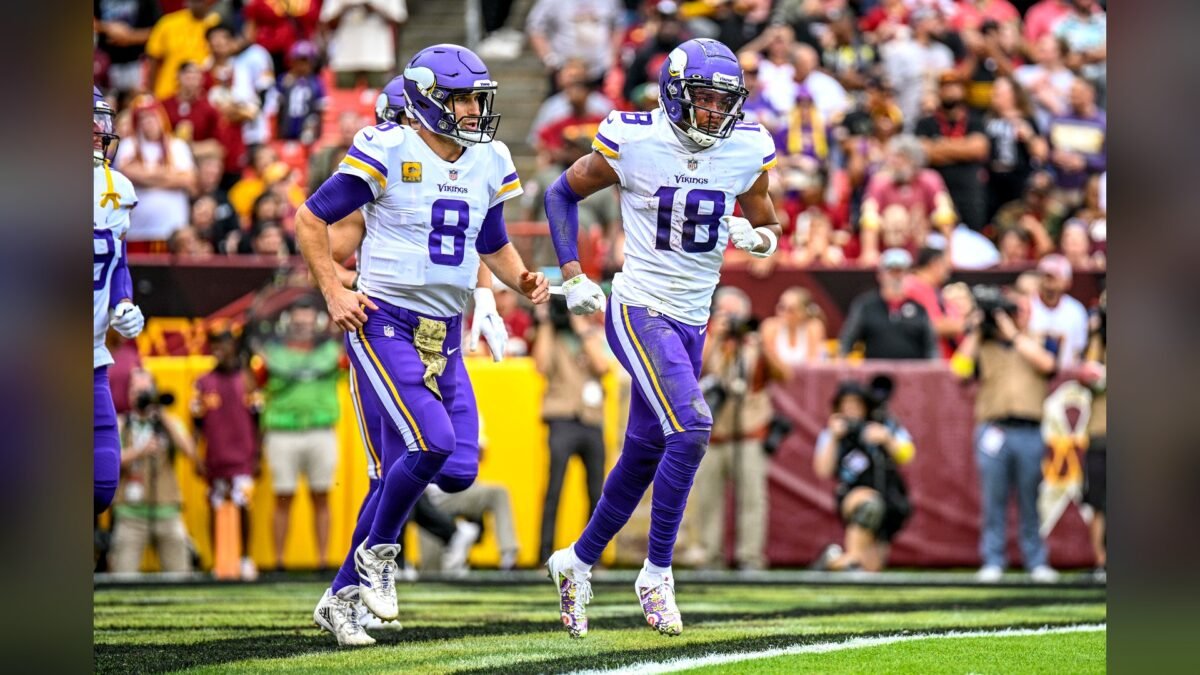
Kirk Cousins is a Minnesota Viking again. The Las Vegas Raiders agreed on Tuesday to send the 38-year-old quarterback back to the team he led for six seasons, accepting a third-round pick in the 2027 NFL draft in a deal completed with little more than an hour to spare before the league’s 4 p.m. ET trade deadline, according to USA Today.
The move came less than 24 hours after Minnesota’s offence hit rock bottom in a 23-6 defeat to the Buffalo Bills on Monday Night Football, a game in which the Vikings failed to reach the end zone and struggled simply to move the ball. Carson Wentz, starting in place of the injured Kyler Murray, threw for only 81 yards, completed barely a third of his passes and was intercepted twice, according to reports from the game. It was, by several measures, one of the worst quarterback performances of the season, and it left the Vikings with no realistic alternative but to act.
Cousins, who started all nine games for the Raiders this season and threw 20 touchdown passes, now returns to the franchise where he spent eight seasons, threw 171 touchdowns and became one of the most productive passers in team history. He will be reunited with wide receiver Justin Jefferson, with whom he connected for 28 touchdowns across four seasons together, and he will take over a 6-2 team whose defence is widely regarded as the best in the NFL but whose offence has been the worst in the league by several statistical measures.
The trade was the headline move of a busy final 48 hours before the deadline, in which nine trades were completed on Monday and Tuesday and 17 deals were struck across the season, according to a full-season tracker of the deadline. The Jacksonville Jaguars, also 6-2, made the boldest statement of the day, acquiring three defensive players in a single day. The Buffalo Bills, San Francisco 49ers, Kansas City Chiefs and Denver Broncos all added pieces for a playoff push, while the Philadelphia Eagles, Indianapolis Colts and Tennessee Titans sold, and the winless Los Angeles Chargers stood largely still.
The Deal, in Detail
The agreement, as reported by USA Today and The Ringer, sends Cousins from Las Vegas to Minnesota in exchange for a 2027 third-round draft pick. The timing was tight. The deal was agreed with little more than an hour remaining before the 4 p.m. ET deadline on Tuesday, 10 November, and it materialised within a day of the Vikings’ humiliation in Buffalo, where the offence managed no touchdowns and, as USA Today put it, struggled simply to get first downs.
For Minnesota, the price is strikingly modest. The Vikings are giving up only a third-round pick, and, according to The Ringer, they are on the hook for only the remainder of Cousins’s veteran minimum salary this season. They will owe him a $10 million bonus if he is still on the roster after the new league year begins in March, a detail that makes the deal effectively a rental with an option to extend, rather than a long-term commitment. The Ringer also reported that Cousins is being paid this year by three teams, with the Atlanta Falcons still carrying part of the contract he signed with them in 2024.
For the Raiders, the deal converts a short-term asset into a draft pick and clears the way for the future. Las Vegas signed Cousins in April to what The Ringer described as essentially a one-year, $11.3 million deal, with a dual purpose: to start games and to mentor Fernando Mendoza, the first overall pick of the 2026 draft. With Cousins gone, Mendoza is expected to make his first career start on Sunday against the Seattle Seahawks, and the Raiders have turned a contract that included a $10 million team option in March into a 2027 third-round pick.
Cousins, according to USA Today, is playing his best football since 2023, the season that ended with the Achilles injury that cut short what had been expected to be his final year in Minnesota. He threw 20 touchdown passes in nine games for the Raiders, and The Ringer noted that he ranks ninth in the league in expected points added per dropback and twelfth in success rate, and that only he and Joe Burrow have thrown 20 or more touchdowns this season. The same report was candid about his limits: he played his worst game as a Raider last week against San Francisco, throwing three interceptions, including one on his only red-zone passing attempt of the day, and his lack of mobility puts a low ceiling on an offence. He ranks last in the league in expected points added per dropback on scrambles.
Why Minnesota Had No Choice
The Vikings’ need was not a matter of preference. It was, as The Ringer put it, a case of a team with a championship-worthy defence watching terrible quarterback play torpedo its season. Minnesota ranks last in the NFL in success rate and second-to-last in expected points added per play, ahead of only the winless Chargers, according to The Ringer. The team is 31st in yards per game and among the bottom five in scoring. Those figures, the report added, cannot fully convey how unwatchable the Vikings’ quarterbacks have been for most of the season.
The numbers behind that verdict are stark. Of the 275 individual quarterback performances by qualified passers in 2026, Kyler Murray’s Week 3 outing, in which he completed 15 of 29 passes for 168 yards in a win against the Tampa Bay Buccaneers, ranks dead last by success rate, according to The Ringer. Wentz’s miserable Monday night, when he completed just 32 percent of his passes and threw two interceptions, ranks 273rd of 275. Murray is currently sidelined with a Grade 2 hamstring strain, and the idea that Wentz can function as a backup, The Ringer argued, died on Monday night.
ESPN analyst and former NFL defensive lineman Chris Canty captured the imbalance before the trade, saying, as quoted by USA Today: “It’s the best defense in the National Football League, and they have nothing to show for their work because of the ineptitude on the offensive side of the ball.” The Vikings, at 6-2, are in a stacked division in which every other team has an established quarterback, and they at least upgrade significantly at the position by bringing Cousins back, USA Today concluded. Armed with one of the elite defences the league has seen in the 21st century, Minnesota at least gives itself a more viable Super Bowl shot than it had 24 hours ago.
The alternatives, The Ringer reported, were thin. The Indianapolis Colts were unwilling to listen to offers for Daniel Jones, who spent 2024 as the Vikings’ backup behind Sam Darnold. The Los Angeles Chargers were not going to trade Justin Herbert, who holds a no-trade clause in his contract in any case. Minnesota probably could have acquired Geno Smith from the New York Jets, but Cousins offered something no other available quarterback could: experience in head coach Kevin O’Connell’s scheme and established chemistry with Jefferson, who has clearly been frustrated by the ineffective quarterback play this season.
The Quarterback Carousel That Led Here
Cousins’s return closes a circle that began in the autumn of 2023. He threw 171 touchdowns during his eight seasons in Minnesota, 47 of them during his two seasons playing under O’Connell, according to The Ringer. He produced three consecutive seasons of at least 4,200 passing yards and 29 or more touchdowns from 2020 to 2022. Then, in 2023, he tore his Achilles tendon, and the season that had been presumed to be his last in Minnesota ended early. He left for Atlanta in 2024 on a large contract, but it did not work out: the Falcons used a first-round pick on Michael Penix Jr. shortly after signing him, and Cousins was soon surplus to requirements.
Minnesota, meanwhile, has cycled through quarterbacks since his departure. Sam Darnold delivered one surprisingly strong season in 2024. J.J. McCarthy, a first-round pick, disappointed in 2025. The team then turned to Kyler Murray for 2026, and the experiment, as USA Today described it, failed. McCarthy, USA Today reported, was traded to the New York Giants for a fifth-round pick, a price that suggests Minnesota gave up on him prematurely, and he is now 2-0 as the Giants’ starter, which makes the episode look, in USA Today’s words, like a classic win-win. Murray’s hamstring injury then forced Wentz into the lineup, and Monday night exposed the depth of the problem.
Cousins was not, by most accounts, enthusiastic about leaving Minnesota for Atlanta in 2024, and USA Today noted the symmetry of his return, describing it as a chance to complete some unfinished business. He had not wanted to leave, and now, at 38, he comes back to a team that needs exactly what he still does well: get the ball to its best players, avoid mistakes, and let the defence win games.
What Cousins Still Has, and What He Does Not
The Vikings should not expect the Cousins of his peak years. The Ringer was clear on that point: he is unlikely to reproduce the three straight seasons of 4,200-plus yards and 29-plus touchdowns he produced from 2020 to 2022. But they do not need him to. Cousins simply needs to be competent, The Ringer argued, and to look for, and hit, Jefferson, whose all-world talent was being wasted this season.
That relationship is the heart of the deal. Jefferson, the Vikings’ best player, spent his first four NFL seasons catching passes from Cousins, and the two connected for 28 touchdowns in that time, according to The Ringer. USA Today put the cost of the last two seasons bluntly: Jefferson, who once again becomes an impactful player with Cousins back, had been relegated to the status of just another player, a “JAG”, in the jargon of the league, for the past two seasons. Cousins was comfortable constantly feeding the Raiders’ best receiving option, tight end Brock Bowers, The Ringer noted, and he will surely know that the quickest path to success in Minnesota is to funnel targets to Jefferson.
There are risks. Cousins is 38, his arm talent is, by The Ringer’s assessment, underwhelming, and his mobility is limited. But he can still put the ball in the right places when throwing within 20 yards of the line of scrimmage, and he has earned locker-room respect everywhere he has played. The Vikings probably should not expect him to play like he did at his peak, The Ringer concluded, but they do not need him to. If the Vikings had passed on the opportunity to bring him back, the same report argued, they would have been the biggest loser of the trade deadline. Instead, they have given themselves a chance to be a real contender.
Mendoza’s Moment Arrives in Las Vegas
The other side of the trade is a beginning. Fernando Mendoza, the first overall pick of the 2026 draft, will get his chance when he makes his first career start on Sunday against the Seattle Seahawks, according to The Ringer. It was time, the report argued. Cousins had been efficient, but he played his worst game as a Raider last week, and the tape had Raiders fans calling for his benching for weeks.
The Raiders’ plan for Mendoza was deliberate, and it reflected the influence of minority owner Tom Brady. Most quarterbacks drafted first overall in the past two decades have started in Week 1 of their rookie seasons, but first-year head coach Klint Kubiak and Brady were adamant that a better development plan was to let Mendoza sit and learn. Brady’s thesis on quarterback development, as The Ringer summarised it, is that starting rookie quarterbacks too early, and having them play in a simplified offence, does not make them better, and that throwing young quarterbacks into the fire early is more likely to destroy their confidence and force them into bad habits.
Mendoza’s only habit through the first half of the season, The Ringer noted wryly, has been wearing his helmet on the sideline in order to hear Kubiak’s play calls. Now he will get to wear it for real. The challenge is unforgiving: his first two starts will come against Mike Macdonald’s Seattle defence on Sunday and the Denver Broncos defence at Mile High the following week. USA Today was equally blunt about the first test, noting that Mendoza begins his tenure as the Raiders’ starting quarterback against the Seattle Seahawks’ formidable defence, which is not even three weeks removed from forcing three-time Super Bowl most valuable player Patrick Mahomes into the worst start of his NFL career. Good luck, the report added.
But there are reasons for optimism in Las Vegas. Mendoza has a much stronger arm than Cousins, and even though he was not known for his rushing ability as a college quarterback, he is far more mobile. Compared with Cousins, The Ringer suggested, Mendoza is going to look like Steve Young when he breaks out of the pocket. If that means more mental mistakes, because Mendoza does not have more than 170 career starts behind him, it is a worthwhile trade-off to get his growing pains out of the way now rather than in 2027, the report argued. It was unrealistic to believe Mendoza would spend his entire rookie year on the bench, and the Raiders are able to start that process sooner, and pick up a third-round pick in the process, which made the deal, in The Ringer’s words, a no-brainer.
Jacksonville Goes All In
If the Cousins trade was the biggest move of the deadline, the Jacksonville Jaguars made the boldest statement. On Monday, the 6-2 Jaguars acquired three defensive players in a single day: safety Jessie Bates III from the Atlanta Falcons, defensive tackle Davon Godchaux from the New Orleans Saints, and defensive tackle Jordan Davis from the Philadelphia Eagles. The cost, according to The Ringer, was five draft picks over the next three years: a 2027 second-round pick and a 2028 fifth-round pick for Bates, a conditional 2028 sixth-round pick for Godchaux, and a 2027 first-round pick and a 2029 second-round pick for Davis.
The message to the locker room was unmistakable. The Jaguars had recently lost safety Eric Murray and defensive tackle DaVon Hamilton to season-ending injuries, USA Today reported, and the team, which should be on a glide path to a second straight AFC South title and quite possibly the number one seed in the conference, decided to reinforce rather than retreat. Jacksonville is the only team in the league ranked in the top five in both scoring offence and scoring defence, according to The Ringer, and it has won its last two games by a combined score of 75-17. Quarterback Trevor Lawrence has a legitimate shot at the most valuable player award, and defensive coordinator Anthony Campanile might become the most sought-after head coaching candidate after the season.
General manager James Gladstone, in only his second year in the job, has now traded away two first-round picks and three second-round picks to acquire Davis, Bates and 2025 draft pick Travis Hunter, The Ringer noted. None of those players plays quarterback, blocks for quarterbacks, or rushes quarterbacks: Davis has just 9.5 sacks in 73 career games. But Gladstone learned his trade under Rams general manager Les Snead, and he witnessed Snead trade away first-round picks to acquire players such as Marcus Peters, Brandin Cooks and Dante Fowler Jr. on the way to a Super Bowl appearance, then send away more first-round picks to bring in Jalen Ramsey and Matthew Stafford. When the Rams won Super Bowl LVI, nobody talked about the disappointing 9-7 campaign in 2019 or the 5-12 season in 2022 any more.
The additions also give Jacksonville what may be the most physically imposing defensive front in football. Davis will complement defensive tackle Arik Armstead’s pass rushing by occupying gaps, and when edge rushers Travon Walker and Josh Hines-Allen are factored in, the Jaguars’ front four is, by height, weight and length, among the most daunting in the league, according to The Ringer. Bates, at 29, may not be the same playmaking force he was at his peak, but his presence means the Jaguars have no obvious weakness to attack in their secondary. If the Jaguars are not good enough to justify this kind of aggression, The Ringer concluded, then nobody should ever make win-now moves.
The Rest of Deadline Day
The other contenders were busy too. The Buffalo Bills, at 7-1, added safety Amani Hooker from the Tennessee Titans, giving up a 2027 second-round pick and receiving a 2027 fifth-round pick in return, according to the deal tracker. Hooker has five interceptions this season and is signed for two more years, filling a real hole at safety for a team with championship ambitions.
The San Francisco 49ers, also 7-1, added six-time Pro Bowl receiver Keenan Allen from the Indianapolis Colts for a 2027 sixth-round pick. Allen had 40 catches for 351 yards and a touchdown in Indianapolis, and he now joins a team that, like Buffalo, is built to contend. The Kansas City Chiefs, at 6-2, acquired receiver Josh Downs from the Colts, giving up a 2027 fourth-round pick and a 2027 fifth-round pick and receiving a 2027 seventh-round pick in return, landing a receiver just before the deadline buzzer for Patrick Mahomes to throw to.
The Denver Broncos, at 7-2, acquired linebacker Daiyan Henley from the Los Angeles Chargers in a rare trade between division rivals, giving up a 2027 fourth-round pick and a 2028 fifth-round pick. The Detroit Lions, at 6-2, added safety Andre Cisco from the New York Jets for a 2028 sixth-round pick, acquiring a player on an expiring contract for the stretch run.
Earlier in the season, the Chicago Bears had already made what may prove to be the most impactful trade of all, acquiring All-Pro defensive tackle Jeffery Simmons from the Tennessee Titans on 29 October for two first-round picks. Chicago has won both of its games since his arrival, and USA Today suggested that the Simmons acquisition might wind up being the most impactful trade made over the past six weeks, given how seamlessly he has integrated. Other significant deals of the season included wide receiver Marvin Harrison Jr. moving to the Houston Texans on 11 October and quarterback Jacoby Brissett joining the Baltimore Ravens on 6 November.
Not every deal got done. On Tuesday morning, the Cincinnati Bengals agreed to send a 2027 sixth-round pick to the Philadelphia Eagles for edge rusher Arnold Ebiketie, only for the deal to fall apart about an hour later, according to the deal tracker. NFL Network’s Ian Rapoport reported that Cincinnati called it off to protect a 2027 compensatory pick: Ebiketie signed with Philadelphia as a free agent this year, so trading for him would have cancelled that pick. Ebiketie stays with the Eagles.
The Sellers: Philadelphia, Indianapolis and Tennessee
The deadline also clarified which teams have given up on this season. The Philadelphia Eagles, at 2-7, became sellers. They traded wide receiver A.J. Brown during the offseason, centre and guard Cam Jurgens last month, and Jordan Davis on Monday, and, according to USA Today, their renowned personnel chief Howie Roseman now owns ten draft selections in the first or second round spread across the 2027 to 2029 drafts. The Eagles may be down right now, USA Today concluded, but they will not be out for long.
The Indianapolis Colts, who fired general manager Chris Ballard in October, continued a hard reset. They traded guard Quenton Nelson and defensive tackle DeForest Buckner in October, then dealt away Allen and Downs on Tuesday, but they held on to running back Jonathan Taylor, whose name had been at the centre of trade talk for weeks. Taylor, 27, remains among the league’s top backs, but, according to USA Today, a second-round pick was not enough to liberate him, even though his championship window almost certainly does not align with the organisation’s. The Ringer was harsher, describing the Colts’ approach as incomplete, and noting that the money spent to retain quarterback Daniel Jones and receiver Alec Pierce, reported at $72.5 million per season, represents some of the worst contracts handed out last offseason.
The Tennessee Titans, meanwhile, embraced the rebuild. Parting with Simmons and Hooker was painful, USA Today acknowledged, but general manager Mike Borgonzi and first-year coach Robert Saleh now have two first-round picks next year, two second-round picks next year and two first-round picks in 2028. The Titans also received two first-round picks for Simmons in October and a second-round pick for Hooker on Tuesday, a substantial haul of draft capital for a team starting again.
The Los Angeles Chargers were the deadline’s most puzzling non-sellers. A team that has yet to win a game, at 0-8, held on to players such as outside linebackers Khalil Mack and Tuli Tuipulotu and wide receiver Quentin Johnston rather than collecting needed assets for 2027, when Mack and Tuipulotu are both out of contract, according to USA Today. Henley was the only Charger to leave. The Los Angeles Rams, meanwhile, made no move for a veteran wide receiver even with Puka Nacua set to join Davante Adams on injured reserve, and will apparently roll with Konata Mumpfield and Tutu Atwell, USA Today reported.
Who Stayed Put
The running backs were the deadline’s biggest non-movers. Taylor, the Eagles’ Saquon Barkley, the Titans’ Tony Pollard, the Ravens’ Derrick Henry and the Jets’ Breece Hall were all among the backs whose names were floated as potential trade targets in recent weeks, according to USA Today. Given the rebuild Indianapolis has begun and Pollard’s expiring deal, it seemed a near certainty that both Taylor and Pollard would change addresses. It was not to be, with running backs apparently not as valuable as safeties, USA Today observed. Bates and Hooker both brought second-round picks to their former teams, a remarkable return for players at a position that is not routinely the most expensive on the field.
The Jaguars’ wide receiver Brian Thomas Jr. also stayed, with the offers for him evidently underwhelming, leaving him as the team’s fourth or fifth option at the position, according to USA Today. The Chargers kept Herbert, as expected, and the Colts kept Jones. The deadline’s lesson, as ever, was that the players teams most want to move are rarely the ones other teams most want to buy.
Analysis: Why It Matters
A defence should not be wasted
The central truth of this deadline is the one Chris Canty stated before the trade was made: the best defence in the league had nothing to show for its work. Minnesota is 6-2 despite an offence that ranks last in the league by success rate, and that record is a tribute to the defence, not the quarterbacks. A team that wins six of eight games while its offence cannot score is a team one competent quarterback away from being a genuine contender. The Vikings recognised that, and they paid a third-round pick, a price so low it barely registers, to fix the one thing that was broken. If the defence is as good as the numbers suggest, the Vikings did not merely save their season. They changed what it can become.
The homecoming is the story, but the fit is the substance
Cousins returning to Minnesota is a romantic story, and the romance is real: he did not want to leave in 2024, he threw 171 touchdowns for the franchise, and he is reuniting with the receiver with whom he shared his best years. But romance does not win games, and the reason this trade works is not sentiment. It is fit. Cousins knows O’Connell’s offence, he knows Jefferson’s routes and timing, and he knows the building, the city and the expectations. A quarterback arriving in a new system in November has roughly a week to learn an offence. Cousins has two seasons of it in his memory. That is why Minnesota could afford to wait until the deadline, and why no other available quarterback made as much sense. The homecoming is the headline. The familiarity is the value.
Jacksonville has changed the terms of the debate
The Jaguars’ three trades in one day are a challenge to the way the league usually thinks about draft picks. The conventional wisdom is that first-round picks are precious, that mortgaging the future is reckless, and that windows open gradually. Jacksonville’s general manager, schooled in the Rams’ system, has rejected all of it. He has traded two first-round picks and three second-round picks in two years for players who do not play the premium positions, and he has done it because his team is 6-2, top five on both sides of the ball, and playing in a conference that looks wide open. The argument is simple: windows do not arrive on schedule, and the team that waits for the perfect moment often waits forever. If Jacksonville wins, nobody will remember the picks. If it falls short, the bill will arrive in 2027, 2028 and 2029, and it will be steep. Either way, the Jaguars have made this season a referendum on ambition itself, and that is a more interesting question than any single trade.
The market has spoken about running backs
Five of the league’s best running backs were available in the rumour mill, and none of them moved, while two safeties each fetched a second-round pick. That is not an accident. It is the market’s verdict on positional value in the modern NFL, delivered in the plainest possible terms. Running backs, even great ones, are treated as replaceable, and teams will not pay premium prices for them, even when the player is 27, in his prime, and plainly wasted on a rebuilding team, as Jonathan Taylor is in Indianapolis. The Colts’ decision to keep Taylor, after reportedly turning down a second-round pick, looks like a team that values the player more than the market does, and that is a difficult position to defend. Taylor’s championship window does not align with the Colts’ rebuild, and another season of his prime has, in USA Today’s phrase, essentially been wasted. The league has decided what a running back is worth. The Colts have not yet accepted it.
Las Vegas is betting on the future, and it is the right bet
The Raiders’ side of the Cousins deal is easy to misread as surrender. It is not. Las Vegas signed Cousins to mentor Mendoza, and the plan always had an expiry date. Cousins was efficient, but he was also 38, immobile, and, by the end, playing his worst football of the season. Mendoza is the future, and the future cannot wait until the Week 13 bye, which was the original plan, when the present is costing the team games and the rookie is ready to learn on the job. The Raiders got a third-round pick for a player they were going to lose anyway, and they get to start Mendoza’s education now, against the hardest defences on the schedule, rather than later, against softer ones. That is the right order of operations. The growing pains will be real, and they will start on Sunday against Seattle. But growing pains in November are an investment. Growing pains in 2027 would be a delay.
What to Watch Next
- Sunday at Green Bay: The Vikings visit the Packers on Sunday in Cousins’s first game back in Minnesota colours. How quickly he reconnects with Jefferson, and how the offence looks after a week of practice, will be the first real test of the trade.
- Mendoza’s debut: The rookie makes his first career start for the Raiders on Sunday against the Seattle Seahawks, one of the league’s toughest defences, followed by a trip to Denver the following week. Two games will tell Las Vegas a great deal about what it has.
- Jacksonville’s new defence: Bates, Godchaux and Davis make their Jaguars debuts in the coming weeks. Whether three new starters can be integrated quickly enough to keep the 6-2 Jaguars on course for the AFC’s top seed is the biggest question of the second half.
- The $10 million decision: Cousins is owed a $10 million bonus if he is still on Minnesota’s roster after the new league year begins in March. How he plays over the next two months will decide whether the Vikings pay it or move on.
- Thursday night: Week 10 kicks off on Thursday with the Washington Commanders visiting the New York Giants, where J.J. McCarthy, the quarterback Minnesota traded away, is now 2-0 as a starter.
- The offseason market: Jonathan Taylor, Saquon Barkley, Derrick Henry and the other running backs who did not move will dominate the offseason conversation, and the Colts in particular will face renewed questions about why they kept Taylor through a rebuild.
Sources
- USA Today — Vikings’ Kirk Cousins deal might doom NFC West: NFL trade deadline winners, losers
- The Ringer — The Winners and Losers of the NFL Trade Deadline
- Duffel Bag Adventures — NFL Trade Deadline 2026: Every Deal, Winners and Losers
- For The Win (USA Today) — 6 winners, 4 losers and one ‘we’ll see’ from the NFL trade deadline
- Fox News / OutKick — NFL trade deadline winners and losers, including Dianna Russini and Kirk Cousins
- Lindy’s Sports — Fantasy football winners and losers for 2026 NFL trade deadline: Kirk Cousins, Fernando Mendoza, Josh Downs, Keenan Allen

About the Author — Abdul Mannan
Related Articles

Messi Earns Record 18th FIFPRO World 11 Selection as Ballon d’Or Winner Harry Kane Is Left Out
Lionel Messi has returned to the FIFPRO World 11 for a record 18th selection, but Ballon d'Or winner…
Manchester United Set to Sack Michael Carrick as Pochettino Emerges as Front-Runner to Take Over
Manchester United intend to sack Michael Carrick, according to The Athletic, with a change expected before the Liverpool…
College Football Playoff to Expand to 24 Teams in 2027 as ESPN Strikes $1.7 Billion Deal and Conference Title Games End
The College Football Playoff will double to 24 teams from 2027 under a new five-year ESPN deal worth…