
Trump Pulls Vance Off Iran Talks and Sends Him After Fraud in Democratic States, Declaring ‘We Don’t Need a Deal with Iran’

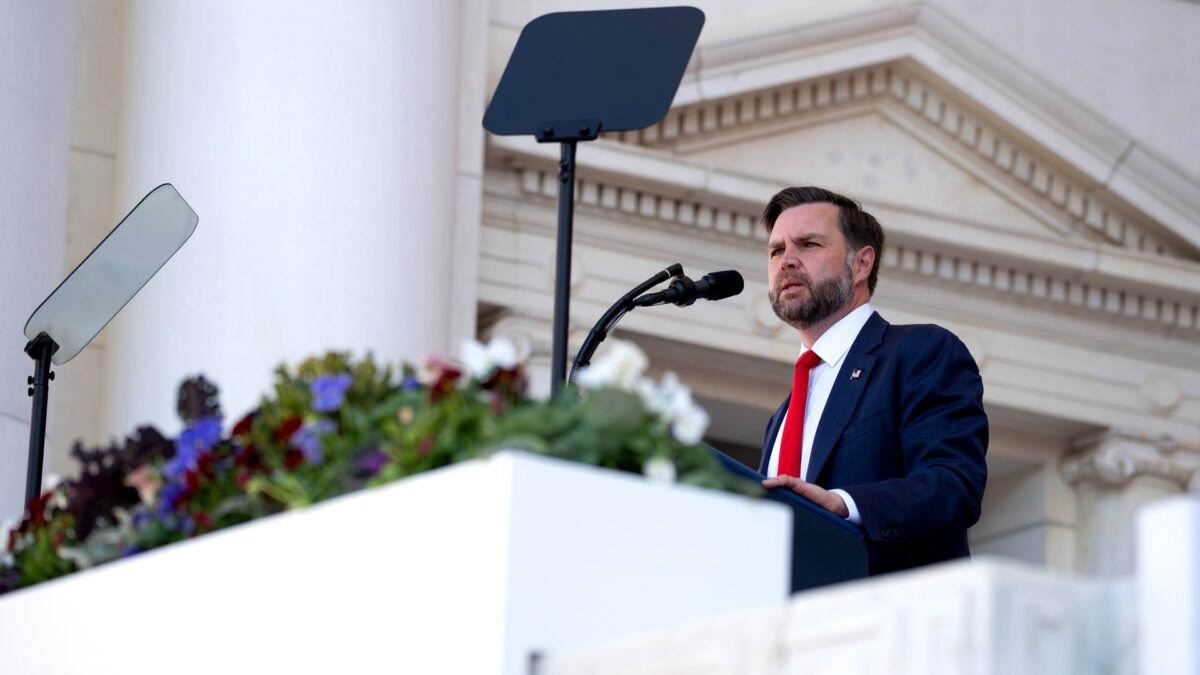
President Donald Trump has removed Vice President JD Vance from the Iran negotiations and ordered him to devote his full attention to alleged fraud in Democratic-run states, declaring that the United States no longer needs a deal with Tehran. The announcement, made in a social media post on Thursday, 12 November 2026, is the sharpest public break yet between the president and his vice president over a war that has already cost Republicans control of Congress.
“I have asked Vice President Vance to focus his complete and total attention on the Massive Corruption and Crime taking place in Democrat run Cities and States throughout the U.S.,” Mr Trump wrote on Truth Social, according to Reuters. “We don’t need a deal with Iran. Those days have long since passed. We’ve got their money, Hundreds of Billions of Dollars, and we’ve got their Strait!”
The move came one day after The Wall Street Journal reported that Mr Vance was considering face-to-face peace talks with Mohsen Rezaei, the hard-line secretary of Iran’s Supreme National Security Council, a step that would have placed the vice president at the centre of the negotiations. It also came a week after Mr Vance publicly blamed the eight-month war with Iran for the Republican Party’s sweeping defeat in the 3 November midterm elections, an assessment Mr Trump himself called “largely true”.
Mr Vance’s office did not immediately respond to a request for comment, Reuters reported. The vice president had been the administration’s most senior figure in the Iran diplomacy for months, and his removal leaves special envoys Steve Witkoff and Jared Kushner as the primary negotiators with Tehran, according to the New York Post.
What Mr Trump announced
The president’s post named the states he wants investigated and set out his case in sweeping terms. “The Blue States, such as Minnesota, California, Illinois, and many more, are all poorly run, corrupt disasters,” he wrote. “Billions of Dollars is being stolen each and every month. Our Budget could be quickly BALANCED with the correction of this large scale criminal activity. CORRUPTION is in the Democrat Leadership’s blood!”
Mr Trump presented the reassignment as a matter of priorities rather than a rebuke. The fraud brief is not new to Mr Vance: he already chairs the administration’s Task Force to Eliminate Fraud, created by executive order in March 2026, and Mr Trump named him the administration’s “fraud czar” in April. What changed on Thursday is the scale of the instruction. Instead of splitting his time between a foreign war and a domestic enforcement campaign, the vice president is now told to give the fraud hunt his “complete and total attention”.
The timing matters. Democrats are poised to take control of both the House and the Senate when the new Congress convenes in January 2027, according to projections by the Associated Press and other outlets, and Mr Trump’s push to investigate corruption in Democratic-run states and cities comes as his party prepares to lose its grip on Capitol Hill. The Wall Street Journal noted that the announcement jumbles an Iran strategy that has already changed course several times since the United States and Israel launched the war in February.
Mr Trump’s language on Iran was equally categorical. The president, who in recent weeks had suggested that Tehran would be more willing to strike a deal after the American elections, now says no deal is needed at all. His administration signalled this week that it believes its naval blockade and economic sanctions against Iran are working, meaning neither military escalation nor diplomacy is required, Reuters reported. The United States military is imposing a blockade on Iranian ports while attempting to secure safe passage for international shipping through the Strait of Hormuz, the waterway through which a large share of the world’s seaborne oil passes.
Vance’s road to — and from — the Iran file
Mr Vance had been the administration’s top Iran negotiator for months, according to The Wall Street Journal, and his role took on more urgency after the midterm elections. He led talks with Iranian officials in Pakistan in April that produced a 14-point memorandum of understanding in June, which opened a 60-day window for negotiations to finalise an end to the war. That window passed without a deal, and the memorandum collapsed within weeks when Iran attacked commercial vessels in the Strait of Hormuz over a disagreement about shipping routes, with Tehran attempting to assert new post-war authority over the waterway, the New York Post reported.
The vice president, a longtime critic of protracted wars in the Middle East, attempted to revive the talks last month by sending a letter, with Mr Trump’s blessing according to the New York Post, to Mr Rezaei. Iranian state media said late last month that Tehran had received a letter from Mr Vance seeking renewed talks with Washington, Reuters reported, although Mr Trump said he had not directed his vice president to make the outreach.
On Wednesday, The Wall Street Journal reported that Mr Vance was considering meeting Mr Rezaei in person, a move that would have put him at the centre of peace negotiations. Reuters said it had not confirmed the potential talks. Less than a day later, the president ended the experiment in public, on social media, without explanation beyond the fraud assignment and the declaration that no deal with Iran is needed.
The reversal is striking because it follows a pattern of Mr Trump empowering Mr Vance and then pulling back. In recent days, the president had told top aides and counterparts that he was open to Mr Vance restarting talks with Iran and had empowered him to negotiate, The Wall Street Journal reported. Thursday’s announcement undid that in a single post. It also followed the president’s statement on Tuesday that the war was “effectively over”, while adding that he would keep in place the “status quo” naval blockade of Iranian ports.
Secretary of State Marco Rubio added to the sense of a hardening line on Tuesday, after talks with American allies in Paris, when he described Iran’s demands for a potential deal as “absurd”, citing Tehran’s demand for reparations for the war, and said Mr Trump would not sign a bad deal, according to Reuters. Iran had proposed ending its blockade of the Strait of Hormuz in exchange for an end to the American blockade, the lifting of some sanctions and a halt to the bombing, a proposal Mr Rubio had earlier called “outrageous and ridiculous”.
The midterm reckoning behind the move
To understand Thursday’s announcement, it is necessary to go back to the morning after the midterm elections. On Wednesday, 4 November, Mr Vance published a lengthy post on X, running to more than 600 words, in which he blamed the Iran war for the Republican Party’s losses. “The reason we lost is the war. The president himself said so last night,” he wrote, according to multiple reports of the post.
Mr Vance argued that the defeat was not primarily a failure of turnout. Voters who had backed the Trump-Vance ticket in 2024, he wrote, had switched to Democratic candidates in 2026, and a pollster who had accurately forecast the results had relayed four demands from those voters: end the war with Iran, focus on the cost of living and inflation, put America first, and change the United States’ relationship with Israel. “If you’d like to argue it was worth it, that losing the Senate for the next 6 years was worth it, then do so,” he wrote.
Mr Trump, asked about the assessment while touring construction of the White House ballroom the same day, called it “largely true”, while drawing a distinction between the war itself and the petrol prices it pushed up. He defended the decision to strike Iran as necessary to stop Tehran obtaining a nuclear weapon and said he would do it again. In a later interview with CBS’s 60 Minutes, he said he did not disagree with Mr Vance’s analysis.
The vice president’s candour has not gone unchallenged inside his own party. Representative Randy Fine, a Florida Republican and one of the House’s most outspoken defenders of Israel, accused Mr Vance of effectively blaming Jewish people for the Republican losses, likening the rhetoric to Germany in 1932 and saying he would not support Mr Vance in a presidential primary. Mr Vance’s post did not mention Jewish Americans; Mr Fine’s argument is that attributing the losses to the American relationship with Israel amounts to a tacit blame of Jews. Mr Vance has not responded to the accusation, according to the reports.
Iran’s own officials have seized on the split. Mohammad Bagher Ghalibaf, the speaker of the Iranian parliament, mocked Mr Vance on social media after the 4 November post, writing that the vice president should say his criticism to his boss rather than in public, and accusing the administration of refusing to acknowledge the political consequences of its military campaign.
The disagreement between the two men is therefore not about whether the war hurt Republicans at the ballot box. Both have now said, in public, that it did. It is about what follows from that admission. Mr Vance’s answer, set out in his post, was to end the war and change course. Mr Trump’s answer, set out on Thursday, is to declare the war effectively finished, keep the blockade, walk away from a deal, and send his vice president to fight a different battle at home.
The fraud brief Mr Vance now carries
The assignment Mr Trump has given Mr Vance is not a ceremonial one. The Task Force to Eliminate Fraud, which the vice president chairs, was created by executive order in March 2026 to investigate fraud across federal programmes, with particular attention to Democratic-led states such as California, Illinois, Minnesota and New York. Mr Trump named Mr Vance “fraud czar” in April, saying he would focus on the misuse of taxpayer money.
The task force says it has uncovered fraud on an enormous scale. At a cabinet meeting at Camp David on 31 July, Mr Vance announced that the task force had identified 230 billion dollars in fraud and halted 56 billion dollars of it, according to reports of the meeting. No methodology, itemisation or supporting documentation has been published for either figure, and The New York Times reported in September that the task force’s headline numbers rest on questionable maths. The administration has also announced the uncovering of more than 13 billion dollars in suspected fraud, according to the Daily Caller. The figures should therefore be treated as the task force’s own claims, not as independently verified totals.
What is not in doubt is the scale of the fraud that has actually been proved in court in Minnesota, the state at the centre of the administration’s campaign. The non-profit Feeding Our Future claimed to have served 91 million meals to children across Minnesota during the pandemic. In fact, prosecutors showed, it was running what the Department of Justice called the largest Covid-19 fraud scheme in the country. Its founder, Aimee Bock, was sentenced to nearly 42 years in prison for stealing close to 250 million dollars in taxpayer money. Seventy-eight defendants and counting set up shell companies and phantom feeding sites to claim money for children who did not exist, and only about 60 million dollars of the stolen money has been recovered.
The Minnesota case has grown well beyond a single charity. The administration has estimated total human-services fraud in the state at between 9 billion and 19 billion dollars, according to the New York Post, and federal agents with the FBI and the Department of Homeland Security have raided more than 20 businesses across Minnesota, including childcare centres, as part of the continuing investigation. On the day Ms Bock was sentenced, the Department of Justice charged 15 more defendants with 90 million dollars of additional Minnesota fraud, including what it called the largest autism fraud scheme in its history.
Mr Vance has put Minnesota’s Democratic governor, Tim Walz, on notice. In an interview on Fox News in April, he said federal investigators were looking into what Mr Walz and other officials knew about billions of dollars in human-services fraud in the state, and whether they knowingly let it “fester” on their watch. “This fraud ring that we’ve allowed to fester in this country, it defrauds the taxpayers. It also literally takes resources from the mouths of poor children,” he said. He added that the task force had “not got much help” from Mr Walz’s office, and that “multiple Minnesota authorities were turning a blind eye to this fraud”. Mr Walz announced in January that he was dropping his bid for re-election as criticism mounted over the plundering of the state’s welfare services.
The early findings cited by the task force include 355,000 people receiving double food-stamp benefits, 186,000 people claiming benefits using the identities of the deceased, and nearly 1.4 billion dollars in payments withheld, according to a detailed account of the task force’s work. Those figures, like the larger totals, come from the administration itself and have not been independently audited. What the record does establish is that the fraud in Minnesota is real, that it runs into the billions, and that the state’s own oversight failed for years to stop it.
What happens to the Iran file now
With Mr Vance out, the Iran negotiations pass to Mr Witkoff and Mr Kushner, the two special envoys who have been at the centre of the diplomacy for months. The pair were in Moscow on Thursday to meet President Vladimir Putin, a day after United States-brokered talks between Russia and Ukraine in Abu Dhabi ended without progress on a ceasefire, and are expected to meet President Volodymyr Zelensky in Dublin afterwards. Their workload is already considerable; Iran now joins a crowded brief.
The underlying conflict has not stopped. Iran’s military said on Thursday that four oil tankers had been hit by explosions after they ignored Iranian warnings, Reuters reported, and the Revolutionary Guard Corps said earlier in the week that two tankers had been disabled by explosions in the Strait of Hormuz. On Wednesday, Reuters reported that Iran had attacked navigation systems on Oman’s Didamar Island in the strait, a claim Oman disputes. The war, which the United States and Israel launched on 28 February 2026 with a prediction from Mr Trump that it would last four to five weeks, has now run for more than eight months, with no ceasefire in force.
Mr Trump’s declaration that no deal is needed rests on a claim of leverage. “We’ve got their money, Hundreds of Billions of Dollars, and we’ve got their Strait!” he wrote. The administration believes the blockade of Iranian ports, reimposed in July after a brief lifting in June, is strangling Tehran’s revenues, and that the Strait of Hormuz, which Iran has repeatedly threatened to close, remains open to international shipping under American protection. Whether that leverage is as complete as the president claims is a different question. Iran has continued to hit shipping, to attack navigation infrastructure in the strait, and to unveil new underground missile facilities, and Gulf oil exports have only partly recovered.
The diplomatic picture is equally unresolved. Qatar’s prime minister, Sheikh Mohammed bin Abdulrahman Al-Thani, met Mr Trump in Washington on Monday to discuss the war, and Iran has put forward a proposal that would trade an end to its Hormuz blockade for an end to the American blockade, the lifting of some sanctions and a halt to the bombing. Mr Rubio’s dismissal of those terms as “absurd” and Mr Trump’s declaration on Thursday that no deal is needed suggest the proposal is going nowhere. But a blockade is not a settlement, and a war that the president says is “effectively over” continues to produce explosions in the world’s most important oil waterway.
Analysis: Why It Matters
1. A public demotion, dressed as a promotion
The first thing to notice about Thursday’s announcement is how it was made. A vice president was removed from the most consequential diplomatic file of the administration not by a private conversation or a quiet reshuffle, but by a social media post, in capital letters, while he was still, as far as anyone knew, preparing for the face-to-face talks reported the day before. Mr Trump did not criticise Mr Vance. He did not say the vice president had failed. He simply reassigned him, in public, to a different war, and declared the first one over.
That is a familiar pattern in this White House. The president has repeatedly used public posts to set the terms of his subordinates’ jobs, and the abruptness is part of the message. It tells the rest of the administration, and the rest of the world, that the Iran file now belongs to whoever the president says it belongs to, and that yesterday’s empowerment can be reversed overnight. For Mr Vance, the assignment is a promotion in title only. The fraud campaign is real and politically potent, but it is not the negotiation that will decide whether the United States remains at war in the Gulf. The man who was, until Thursday morning, the administration’s lead voice on ending that war is now its lead voice on benefit fraud in Minnesota.
2. The war’s political bill has come due
The deeper story is the one Mr Vance told on 4 November, and which Mr Trump has now, in his own way, confirmed. The Iran war was launched with a promise that it would last four to five weeks and might end the Iranian government. Eight months later it has produced no settlement, no ceasefire, and no change of regime in Tehran, and it has cost the Republican Party control of both chambers of Congress. Voters who backed the ticket in 2024 switched sides in 2026, and they told pollsters why: the war, the cost of living it inflamed, and the sense that the administration’s priorities lay abroad rather than at home.
Mr Trump’s response is not to end the war, which he cannot do by declaration while Iranian missiles and mines are still striking ships, but to declare it over and change the subject. The fraud campaign is the new subject, and it is a well-chosen one. It speaks directly to the cost-of-living anger that drove the midterm result, it targets Democratic states rather than Republican ones, and it puts the vice president, the man who blamed the war most bluntly, on a mission that keeps him busy, visible and, crucially, at home. The politics of the move are not subtle. What is less clear is whether the voters who punished the party over the war will be satisfied by a fraud crackdown while the war itself grinds on.
3. Fraud as the new front in the federal-state war
There is a real scandal at the heart of this story, and it should not be lost in the politics. Feeding Our Future stole a quarter of a billion dollars meant to feed children. The wider Minnesota fraud runs into the billions. State oversight failed for years, and the federal government’s own systems, which reimburse states on the basis of meal counts submitted on a single monthly form, were plainly not designed to catch it. A serious fraud crackdown is a legitimate use of federal power, and the early results, including the Bock conviction and the continuing raids, are genuine achievements.
But the way the campaign is being framed raises questions that go beyond Minnesota. Mr Trump’s post does not speak of fraud in general. It speaks of fraud in “Democrat run Cities and States”, names three blue states, and accuses Democratic leadership of having corruption “in the blood”. The task force’s targets, as announced in April, are California, Illinois, Minnesota, Maine and New York, all Democratic-led. Fraud exists in states of every political colour, and a campaign that investigates only one side of the map will inevitably be read as a political weapon, whatever its findings. The administration’s own headline figures, hundreds of billions of dollars identified, have not been independently verified, and the New York Times has questioned the maths behind them. The campaign’s credibility will depend on whether it publishes evidence, brings cases that stand up in court, and applies the same scrutiny to Republican-led states. So far, it has done the first two in Minnesota and said little about the third.
4. The 2028 shadow over everything
Every move in this story is shadowed by the next presidential election. Mr Vance is widely viewed as the leading contender for the 2028 Republican nomination, and his 4 November post was read across Washington as the opening move of that campaign: a break with the president’s war, a pitch to the voters who abandoned the party, and a challenge to anyone who thought the cost had been worth it. Mr Trump’s response, a week later, was to agree with the diagnosis in public and then, on Thursday, to remove the vice president from the file on which he had staked his independence.
The message is twofold. First, the president remains the author of the administration’s Iran policy, and no subordinate, however senior, will set it in public. Second, the vice president’s path to the nomination, if he wants it, will run through the domestic fights Mr Trump chooses for him, not the foreign-policy dissent he chose for himself. Mr Vance now has a large, visible, politically charged brief, and success in it would strengthen him. But it is a brief defined by the president, on the president’s terms, and it keeps him away from the one issue on which he has publicly disagreed with his boss.
The reaction from Representative Fine, who said he would not support Mr Vance in a primary, shows that the vice president’s post-election candour has already cost him support among the party’s most committed defenders of Israel. The 2028 contest is still two years away, but the lines are being drawn now, and Thursday’s announcement is one of the first moves in it.
5. A negotiation with no negotiator — or two of them
Finally, there is the practical question of who, if anyone, is now negotiating with Iran. Mr Witkoff and Mr Kushner are capable envoys, and they have the president’s confidence, but they are also, this week, in Moscow and Dublin, working on the Russia-Ukraine file. Mr Vance’s letter to Mr Rezaei, his April talks in Pakistan, and the June memorandum were the product of months of personal engagement. That engagement has now been discarded, and with it the only channel that had produced even a temporary pause in the fighting.
Mr Trump’s position is that no channel is needed, because the blockade and the sanctions are doing the work. That may be true in the short term. But blockades do not negotiate themselves, and the history of this war suggests that American leverage is greatest when it is paired with a diplomatic track. The June memorandum, for all its flaws, paused the war for a time. Its collapse came when the talking stopped. Thursday’s announcement removes the administration’s most active talker from the file at precisely the moment when tankers are again being hit in the strait and navigation systems are again under attack. The president may be right that he does not need a deal. The events of the coming weeks will test whether he is right that he does not need a negotiator either.
What to Watch Next
- Mr Vance’s response. The vice president’s office has not commented. Whether he embraces the fraud brief publicly, and how he speaks about the Iran file from now on, will show whether Thursday’s post was a genuine reassignment or the start of a longer public estrangement.
- The first fraud announcements. The task force’s credibility depends on evidence. Watch for new indictments, published findings and audited figures from Minnesota and the other named states, and for any sign that the scrutiny is being applied beyond Democratic-led jurisdictions.
- Minnesota’s response. Governor Walz and state officials have been accused of turning a blind eye to billions in fraud. Their reply, and any further federal action against state officials, will determine whether this becomes a criminal matter or a political one.
- The Strait of Hormuz. Four tankers were reported hit on Thursday, and navigation systems on Didamar Island were attacked earlier in the week. If shipping is disrupted again, the president’s claim that the strait is securely in American hands will be tested in public.
- Witkoff and Kushner’s next move on Iran. With Mr Vance out, the two envoys carry the file. Whether they open a new channel to Tehran, or simply manage the blockade, will show whether the administration has a diplomatic track at all.
- The Alaska Senate race. The last uncalled Senate contest of the midterms is still to be decided, with Democrat Mary Peltola leading Republican Senator Dan Sullivan by about 4,250 votes. Its outcome will set the final size of the Democratic majority that Mr Trump’s fraud campaign is aimed at.
- Mr Trump’s Asia trip. The president heads to the ASEAN summit in Manila next week, then to the APEC summit in Shenzhen, China, on 18 and 19 November. His handling of the Iran file, and of the allies who want the war ended, will be on display there.
Sources
- Reuters, “Trump says US does not ‘need’ Iran deal, directs Vance to focus on domestic corruption”, 12 November 2026
- New York Post, “Trump orders Vance to focus on blue state ‘corruption and crime,’ says ‘we don’t need a deal with Iran’”, 12 November 2026
- The Wall Street Journal, “Trump Reverses Course on Iran, Tells Vance to Focus on U.S. Crime”, 12 November 2026
- Daily Caller, “Trump Pulls Vance From Iran Negotiations, Orders Him To Focus On Blue State Corruption”, 12 November 2026
- Political.org, “Vance, Cruz and DeSantis offer rival explanations for GOP midterm losses as 2028 jockeying begins”, 6 November 2026
- The American Mind, “Feeding the Fraudsters”, on the Minnesota fraud and the Task Force to Eliminate Fraud

About the Author — Abdul Mannan
Related Articles

Ousted Nvidia Chief Jensen Huang Agrees to Testify Before Congress as Spy-Scandal Fallout Reaches Washington
Former Nvidia chief executive Jensen Huang has agreed to testify before Congress by Thanksgiving about his alleged affair…

Five Shot, One Killed at Washington Gym as Gunman Barricades Himself in Logan Circle Building
Five people were shot, one fatally, at VIDA Fitness in Washington's Logan Circle on Thursday morning, and the…
Trump Signs Bill Ending Longest Government Shutdown in US History as House Passes Funding Deal 222-209
President Donald Trump signed the funding bill on Wednesday night, ending the longest government shutdown in American history…