
Putin Offers No Compromise in Moscow Talks With US Envoys as Ukraine Peace Push Moves to Dublin

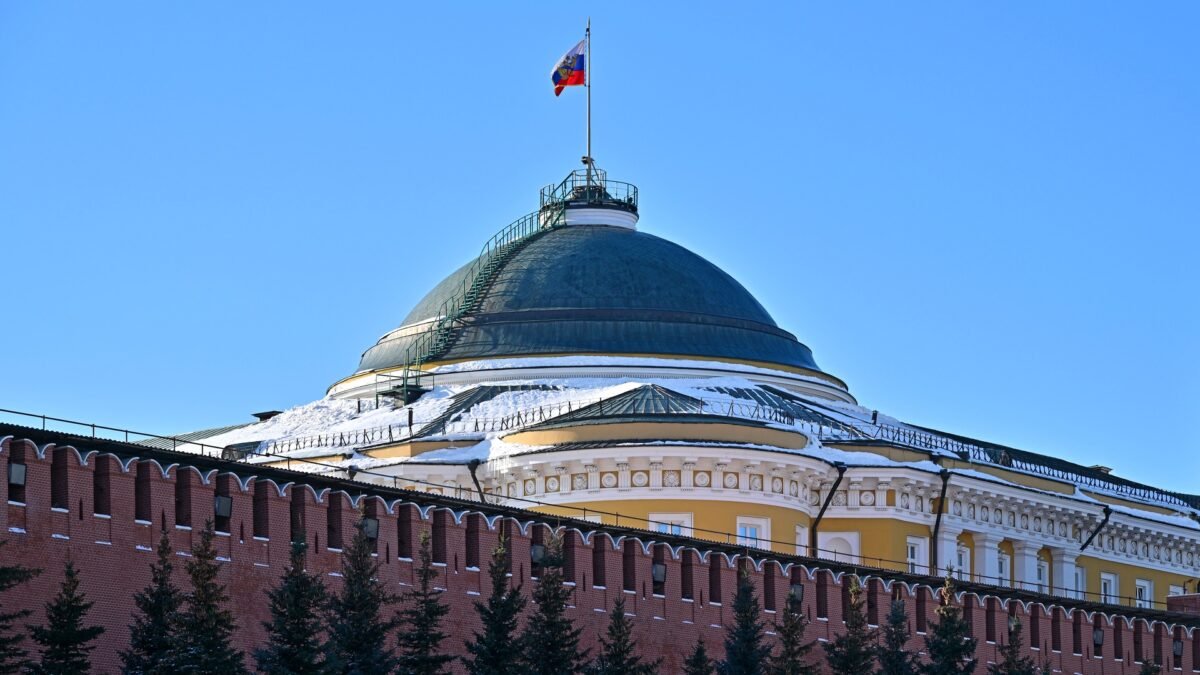
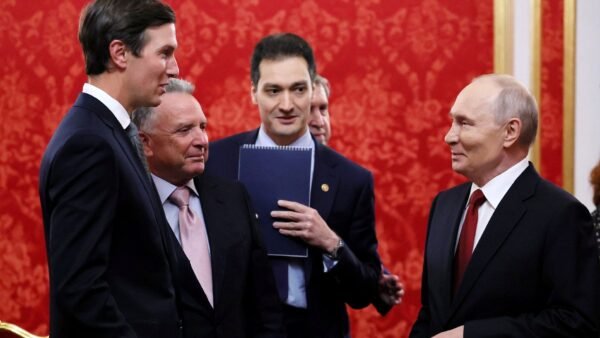
Russian President Vladimir Putin offered no compromise on Moscow’s core demands for ending the war in Ukraine during talks with United States envoys Steve Witkoff and Jared Kushner in the Kremlin on Thursday, even as the two sides agreed to keep the negotiating process alive and the Americans flew on to Dublin to brief Ukrainian President Volodymyr Zelenskyy.
The meeting in Moscow, which lasted about two hours, was the latest step in a week of shuttle diplomacy that began with two days of American-mediated talks between Russian and Ukrainian delegations in Abu Dhabi. Those talks ended on Wednesday with agreement on a large prisoner exchange but no ceasefire and no breakthrough on the central disputes of the war, according to CNN and the Associated Press.
Speaking to CNN’s Frederik Pleitgen at Moscow’s Vnukovo Airport shortly before the envoys left Russia, Witkoff struck a more upbeat note than the substance of the day appeared to support. “I think progress was made. I think it was made earlier today,” he said, according to CNN. “People didn’t think that we were going to restart trilateral. We’ve restarted it. We’ve set a new meeting.”
“This is what President Trump wants to see,” Witkoff added. Kushner, who is President Donald Trump’s son-in-law, told reporters that the discussions had been “very fulsome and detailed” and would inform “hopefully the next multilateral discussions”, according to CNN.
But the public record of what Putin actually said in the Kremlin pointed in a different direction. The Russian president told the envoys that European countries must decide whether they want “peace or war”, warned that any foreign troops deployed to Ukraine would be treated as legitimate military targets, and rejected the idea of demilitarised zones along a future front line. For Moscow, he said, there is only one line of demarcation: the state border.
The contrast between the envoys’ language of progress and Putin’s language of immovable positions captured the state of the peace effort after a week of intense diplomacy: the talks are continuing, the format is widening, and the gap between the two sides has not narrowed.
What Putin said in the Kremlin
Putin opened the meeting by asking Witkoff and Kushner “to work with Europe so that they can decide what they want — peace or war”, according to The Times, which reported his remarks from the start of the Kremlin talks. It was a message aimed as much at European capitals as at the two Americans in the room.
“From the very beginning, we have stated that the presence of foreign troops in Ukraine is absolutely unacceptable to us. We believe it poses a threat to Russia’s security,” Putin said, according to The Times. “The Europeans are aware of this. And what do we hear from them? That once a peace agreement is reached, they will immediately deploy troops to Ukraine. What does that mean? To us, that constitutes a legitimate military target. The war would resume instantly … it’s a vicious circle.”
The warning matters because the deployment of European forces to Ukraine after any settlement has been one of Kyiv’s central demands for a future peace agreement, and a point on which the United States, Europe and Ukraine have said they are broadly aligned. Putin’s statement was a direct rejection of that demand, delivered face to face to the men carrying Washington’s proposals.
Putin also poured cold water on hopes that a peace deal involving demilitarised zones in Ukraine could be within reach, according to The Times. “For us, there is only one line of demarcation: the state border. Because then it will be clear and obvious: here are we, and here you are,” he said. Russia claims to have annexed four regions of Ukraine that it now says are part of the Russian Federation, as well as Crimea, which it seized in 2014. A settlement drawn on the state border, as Putin described it, would mean Ukraine formally surrendering the territory Russia claims — a demand Kyiv has repeatedly refused.
There was, however, one concrete humanitarian proposal. Putin is reported to have proposed evacuating civilians from Kostiantynivka, a frontline city in the Donetsk region, under a limited ceasefire similar to one recently implemented in Russian-occupied Oleshky, according to AFP reporting carried by the Sweden Herald. There are about 400 to 500 civilians still in Kostiantynivka, Putin is reported to have told the envoys. The proposal, if it proceeds, would be a short, local pause in the fighting for a humanitarian purpose — not a step towards a wider ceasefire.
Putin also insisted that Russia had “never objected (to) pursuing dialogue” with Europe, according to CNN. “You want this peace to be a durable and lasting one, and I confirm that I subscribe to that, and I’d say more. I want this peace to be eternal, for good,” the Russian leader said. The words were conciliatory; the conditions attached to them were not.
What the American envoys took away
Witkoff and Kushner arrived in Moscow on Thursday morning and were greeted at Vnukovo Airport by Kirill Dmitriev, Putin’s special envoy for investment and international economic cooperation, amid wet snow, according to the Associated Press. The meeting was the tenth time Witkoff has met Putin in person, according to The Times — a measure of how central the real-estate developer turned special envoy has become to the Trump administration’s diplomacy with Moscow.
The envoys’ stated purpose was to brief Putin on the Abu Dhabi talks and to secure his agreement to bring European representatives into the negotiating format. On that point, Witkoff appeared to claim success. He told reporters that European representatives would join the next talks about the Ukraine conflict, according to CNN. “They’re our partners, and it’s important for them to be involved,” he said.
Kushner, who acts as one of the country’s top diplomats despite holding no official role within the Trump administration, according to CNN, added that the Europeans “have a desire for this war to really be the end and for there to be a long peace after”. He said one goal of the meeting with Putin was to get the Russian leader’s blessing for European representatives to be part of the talks, which are looking at the continent’s broader security arrangements, according to the Associated Press.
Dmitriev, speaking to CNN on Thursday, endorsed the idea of working on European security. “I think working on European security is definitely a great, important step for Europe. And frankly, people who care about Europeans and their lives, of course, want European security to be strong,” he said.
But the Kremlin’s own account of the meeting was notably cooler. Putin’s foreign policy aide, Yuri Ushakov, confirmed that trilateral talks involving Russia, Ukraine and the United States would continue, but appeared to play down Witkoff’s assertion that European representatives would also join them, according to CNN. “They are making every effort to get involved in the negotiations, but, as our president has said, they need to decide whether they want peace or a continuation of the war. So far, all their practical actions point precisely to the latter,” Ushakov said.
Ushakov also said that Putin and Trump would “continue discussions” about Ukraine during a planned bilateral meeting at the APEC summit in Shenzhen, according to CNN. “It was noted that President Donald Trump is personally focused on resolving this issue,” Ushakov said. “Naturally, during the planned meeting with him at the APEC summit in Shenzhen, the discussion of the full range of issues related to the settlement will continue.”
The Europe question
Whether Europe gets a seat at the negotiating table has become one of the sharpest disagreements in the peace process — and one of the clearest measures of how far apart the parties remain. Ukraine has long argued that Europe should be at the main negotiating table, according to CNN, and the United States and Zelenskyy want Europe to appoint a single person to negotiate with Moscow, according to the Associated Press. Moscow has so far appeared to resist such efforts.
Russian Foreign Minister Sergey Lavrov criticised the presence of European officials in Abu Dhabi earlier this week, saying their involvement was not a “promising approach”, according to CNN. When asked if there had been any contact between the Russians and any European representatives in Abu Dhabi, Kremlin spokesperson Dmitry Peskov said on Wednesday: “No such contacts were planned, and none took place.”
The Russian position, as stated by Ushakov on Thursday, is that Europe must first choose between peace and war — and that, in Moscow’s view, Europe’s practical actions so far point to war. The Europeans, for their part, have made discussion of the continent’s security architecture contingent on a ceasefire in Ukraine, according to Euronews. Putin, by contrast, has made clear that his real interest lies in revising that architecture, a complex topic that Europeans see as a ploy to divert attention from the war and to realise Russia’s great-power aspirations, including gaining a veto over NATO’s future membership, according to Euronews.
The issue will be discussed at an informal European Council summit in Dublin on Friday, where European Union leaders are set to consider appointing a special envoy for the diplomatic process, according to Euronews and The Times. Zelenskyy was in Dublin on Thursday for a meeting of the European Political Community involving more than 40 European countries, which also included NATO Secretary-General Mark Rutte, according to the Associated Press.
Rutte said the United States, Europe and Ukraine are “very much aligned” on what security guarantees should look like, according to the Associated Press. “But now of course we need the peace deal, or at least a ceasefire,” he said. The remark underlined the gap between agreement on the shape of a future settlement and agreement on how to get there.
What Abu Dhabi produced — and what it did not
The Moscow meeting cannot be understood without the two days of talks that preceded it. Delegations from Russia, Ukraine and the United States met in Abu Dhabi on Tuesday and Wednesday in the first direct discussions between Russian and Ukrainian representatives in nine months, according to the Associated Press, and the first trilateral talks of their kind since February, according to CNN.
The sessions closed on Wednesday with agreement on a large prisoner exchange but no movement towards stopping the fighting. Kushner called the exchange the biggest humanitarian release of the conflict, according to the Associated Press, with the final numbers to be settled on Thursday in Moscow. Speaking after Wednesday’s talks, which lasted less than two hours on the final day, Kushner said the Moscow meeting would finalise plans for more humanitarian relief and prisoner releases, according to the Associated Press.
Beyond that, the gaps were on full display. Russia’s chief negotiator, Vladimir Medinsky, gave little indication that Moscow’s demands had changed. “We will be satisfied with the negotiations when we have won and signed a peace treaty on our terms,” Medinsky told Russian state television, according to The Times.
Zelenskyy, meanwhile, said on Thursday that the Russian negotiators in Abu Dhabi had admitted they had no permission from the Kremlin to discuss a halt to Russian strikes on Ukraine’s energy infrastructure or a de-escalation of attacks on shipping in the Black Sea, according to The Times. If accurate, the admission suggests that the Russian delegation arrived in Abu Dhabi without the authority to negotiate on two of the issues that matter most to Ukraine’s survival through the winter: electricity and the sea lanes that carry its exports.
The talks did address security arrangements, humanitarian assistance, prisoner exchanges and potential mechanisms for a future ceasefire, according to CNN. But the core disputes — over territory, security guarantees and the order in which a ceasefire and a settlement would come — were not resolved in Abu Dhabi, and nothing in the reports of the talks suggests Moscow or Kyiv has moved on them.
The war did not pause
While the diplomats talked, the war continued without interruption. Moscow launched a ballistic missile and drone attack on Ukraine overnight into Thursday, according to the Ukrainian Air Force, as reported by CNN. In Kyiv, at least one person was killed and several others injured in a Russian drone attack on Thursday morning, according to local authorities.
Russian air strikes on Ukraine’s power grid left more than 850,000 consumers without electricity across the Dnipropetrovsk and Kharkiv regions, according to regional reports cited by the Associated Press and other outlets, and a separate tally put roughly 600,000 residents in eastern regions without power. Grid operators imposed emergency and scheduled blackouts, and operators in Kyiv warned of rolling blackouts in the capital as winter approaches and Russia’s campaign against energy infrastructure intensifies.
Zelenskyy also warned on Thursday of recurring disruptions to Starshield, the military-grade version of Elon Musk’s Starlink satellite service that is critical to Ukraine’s military operations, according to CNN. He said the service had faced “significant disruptions” in recent days, hampering Kyiv’s ability to shoot down Russian drones.
“These are not random errors but systematic speed restrictions. For us, this primarily means a significant complication in intercepting Russian jet-powered drones,” Zelenskyy said, according to CNN. “Unfortunately, this is helping the Russians kill more Ukrainians and carry out more accurate strikes against Ukraine,” he posted on X.
Zelenskyy said Kyiv was “trying to establish all the circumstances with the American side”, according to CNN. SpaceX, the company which owns Starshield, told CNN that there had been no change in its service. CNN said it had reached out to the White House and the Pentagon. In October too, Ukraine said speed limits were imposed on Starshield satellite terminals, as the relationship between Kyiv and Washington deteriorated, according to CNN. Trump denied approving that decision, while Musk said the Trump administration was behind the restrictions.
The Starshield dispute is a reminder that the peace process is not the only channel through which Washington’s choices shape the war. A satellite service that Kyiv depends on to intercept drones is, at the same moment, the subject of an unresolved argument between Kyiv and Washington about who restricted it and why.
Analysis: Why It Matters
A process that survives its own failures
The most striking feature of this week is not what the talks achieved but that they are happening at all — and that they keep happening after each round fails to produce a breakthrough. The Abu Dhabi talks were the first direct meeting between the two sides in nine months. They ended without a ceasefire. Within a day, the American envoys were in Moscow; within hours of leaving Moscow, they were on their way to Dublin. A new meeting has been set, even though no one can yet say what it will decide.
That persistence is, in itself, a form of progress — but a thin one. A negotiating process that survives its own failures is better than no process at all, because it keeps a channel open and gives both sides a reason not to close the door entirely. The prisoner exchange is real humanitarian relief for the families involved, and it is the one concrete product of a week of diplomacy. But a process is not a peace. The danger is that the rhythm of meetings becomes a substitute for movement: each round produces a statement about progress, a date for the next round, and no change on the ground. Witkoff’s claim that progress was made in Moscow sits awkwardly beside Putin’s public refusal to move on territory, troops and demilitarised zones. Both statements can be true at once — progress in keeping the process alive, and no progress on the substance — but only one of them decides whether the war ends.
The European seat at the table
The argument over whether Europe joins the talks is about more than protocol. Europe is the continent on which the war is fought, the source of much of Ukraine’s financial and military support, and the party that would have to live with — and help enforce — any settlement. A deal negotiated without Europe would be a deal Europe is asked to guarantee without having shaped. That is why Kyiv and Washington want a European representative at the table, and why the question of a single European negotiator is now on the agenda of EU leaders meeting in Dublin.
Moscow’s resistance is equally easy to understand. Russia has consistently preferred to deal with Washington alone, where it can present the war as a dispute between great powers rather than an invasion of a European neighbour. Bringing Europe into the room would add voices that are, on the whole, more committed to Ukraine’s sovereignty and to the principle that borders cannot be changed by force. Ushakov’s formulation — that Europe must first decide whether it wants peace or war — is a way of making Europe’s participation conditional on Europe accepting Moscow’s framing of the conflict. It is also, notably, the same phrase Putin used to the envoys themselves. Repetition is not agreement. The fact that Witkoff left Moscow saying Europeans would join the next round, while Ushakov played the idea down in the same hours, suggests that this question is not settled at all — and that the next round may begin with an argument about who is even in the room.
Putin’s red lines, stated in public
There is a temptation to read Putin’s remarks as theatre — hard words for a domestic audience, delivered while the real bargaining happens behind closed doors. That reading may be partly right, but it should not be comforting. The positions Putin stated in the Kremlin are the same positions Russia has held throughout the war: no foreign troops in Ukraine, no demilitarised zones, a settlement drawn on the borders Russia claims, and a wider revision of Europe’s security architecture. The consistency is the point. These are not opening bids to be traded away; they are, as far as the public record shows, the terms on which Moscow says it will settle.
The Kostiantynivka proposal fits the same pattern. A short, local ceasefire to evacuate a few hundred civilians is a humanitarian gesture that costs Moscow nothing strategically and demonstrates, to Washington at least, that Putin is willing to make limited concessions. It is the kind of offer that allows the American envoys to report movement while changing nothing about the war’s direction. The test is not whether such small pauses happen — they have happened before, in Oleshky and elsewhere — but whether they ever lead to anything larger. So far, they have not.
The battlefield sets the tempo
Diplomacy does not happen in a vacuum, and this week the battlefield made its own argument. More than 850,000 consumers lost power in two regions on the eve of the Moscow meeting. A woman was killed by a drone in Kyiv on the morning the envoys sat down with Putin. Zelenskyy says his air defences are being hampered by restrictions on the satellite service they depend on. Each of these facts strengthens Moscow’s hand at the table: the longer the war goes on, the more Ukraine’s energy grid, its air defences and its civilian population are degraded, and the more attractive any settlement — even a bad one — begins to look.
That is why the timing matters. The talks are taking place as winter approaches, when Russia’s campaign against energy infrastructure does its worst damage, and as Ukraine’s partners debate how much support they can sustain. A negotiation conducted under bombardment is not a negotiation between equals; it is a negotiation in which one side is trying to bomb the other into accepting terms it has already rejected. The envoys’ optimism should be measured against that reality. A process that produces prisoner exchanges while the power grid collapses is a process that is, for now, managing the war rather than ending it.
The clock Zelenskyy is watching
Zelenskyy said on Thursday that there is a “window of opportunity” to reach a breakthrough before the end of the year, according to The Times. “Today there really is this opportunity, this window of opportunity, when all those participants who are now engaged in the negotiation process genuinely want to achieve a result before 2027,” he said when he arrived in Ireland on Wednesday.
The deadline is political, not military. Zelenskyy pointed to changes coming in January — Democrats taking control of Congress after the midterm elections, and votes in France next year — as factors that could alter the diplomatic landscape, according to the Associated Press. The implication is that the current alignment of willing participants may not last, and that a deal struck now would be struck under more favourable conditions than one struck later.
Whether that window is real or rhetorical, it explains the urgency of the shuttle diplomacy: Moscow on Thursday morning, Dublin on Thursday afternoon, a European Council discussion on Friday, a Putin-Trump meeting at APEC in Shenzhen to come. The calendar is crowded because the participants believe the moment is perishable. But a window is only useful if someone is willing to walk through it. On the evidence of Thursday’s meeting, Putin is not yet willing — and the envoys’ next task, in Dublin, is to tell Zelenskyy exactly that, and to ask him what, if anything, he is prepared to offer in return.
What to Watch Next
- The Dublin debrief: what Witkoff and Kushner tell Zelenskyy after Moscow, and whether the Ukrainian president’s public language about a “window of opportunity” hardens or softens in response.
- The next round: the date, the venue and — critically — the guest list of the new meeting Witkoff said had been set, and whether European representatives are actually in the room.
- The European Council discussion on Friday: whether EU leaders agree to appoint a special envoy for the diplomatic process, and what mandate that envoy is given.
- The Kostiantynivka proposal: whether the limited ceasefire to evacuate civilians goes ahead, how many people are moved, and whether it becomes a precedent for further local pauses.
- The prisoner exchange: the final numbers to be settled after the Moscow meeting, and when the swap actually takes place.
- The Starshield question: whether Kyiv and Washington resolve the dispute over the satellite service’s restrictions, and whether the disruptions to Ukraine’s drone defences continue.
- The Putin-Trump meeting at the APEC summit in Shenzhen: whether the two presidents’ discussion moves the process forward or simply restates the positions their envoys have already exchanged.
Sources
- CNN — Witkoff and Kushner to meet Zelensky after talks with Putin, as Ukraine says Starshield restricted again (12 November 2026)
- The Times — Putin tells Europe to choose ‘peace or war’ in Kremlin talks (12 November 2026)
- The Times — Zelensky says ‘window of opportunity’ exists for peace deal this year (12 November 2026)
- Associated Press, via EuropeSays — US envoys meet with Putin in Moscow, then head for Dublin to see Zelensky (12 November 2026)
- Sweden Herald (AFP reporting) — Putin rejects Western troops in Ukraine and stands by Russia’s territorial claims in talks with US envoys (12 November 2026)
- CNN — Trump envoys to meet Putin in Moscow after latest Ukraine talks end with no breakthrough (11 November 2026)

About the Author — Abdul Mannan
Related Articles
Witkoff and Kushner Meet Putin in Moscow as Ukraine Peace Talks Turn to Europe’s Seat at the Table
President Donald Trump's envoys Steve Witkoff and Jared Kushner met Vladimir Putin in Moscow on Thursday after two…
COP31 in Antalya: Guterres Warns of ‘Mutually Assured Destruction’ as Burnham Pledges a New Era of British Climate Leadership
The UN chief told leaders in Antalya that the climate crisis is 'outrunning us' — as Britain's prime…
US Envoys Head to Moscow for Putin Talks as Russia and Ukraine Trade Strikes on Each Other’s Capitals
Explosions shook Kyiv and Moscow shot down drones heading for its capital hours before Jared Kushner and Steve…