
Ousted Nvidia Chief Jensen Huang Agrees to Testify Before Congress as Spy-Scandal Fallout Reaches Washington

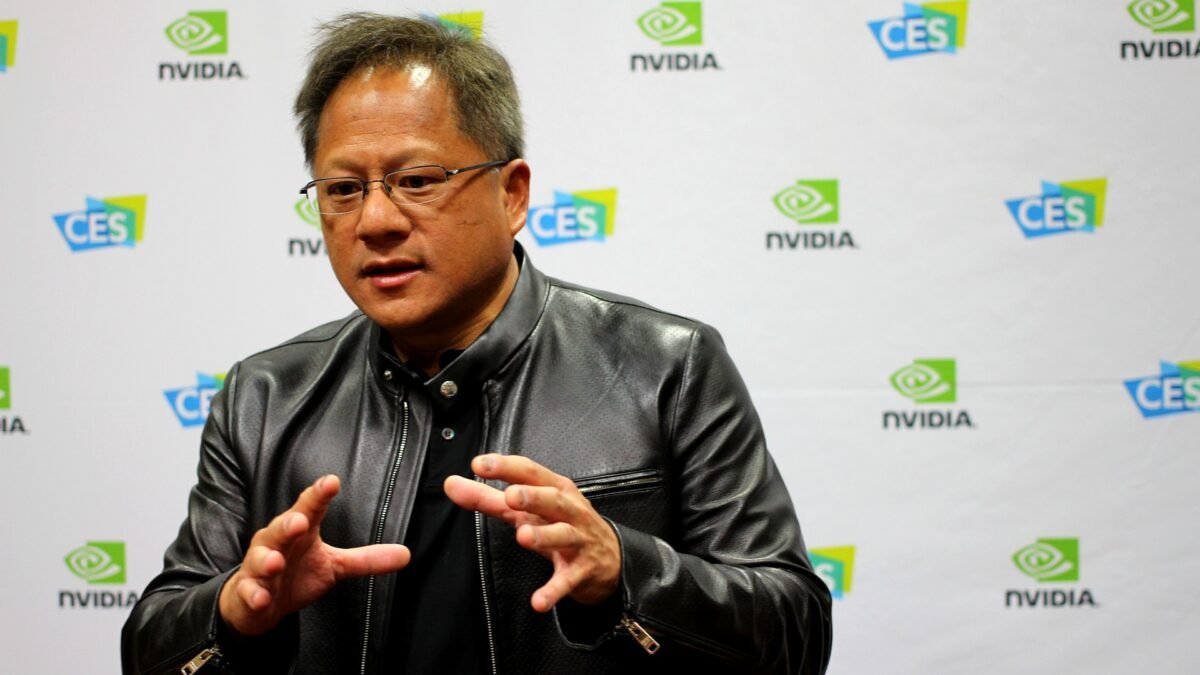
Former Nvidia chief executive Jensen Huang has agreed to testify before Congress about his alleged affair with a woman American intelligence officials suspect of spying for China, House Foreign Affairs Committee Chairman Brian Mast said on Thursday, hours after Huang resigned from the chipmaker he co-founded 33 years ago.
According to TechCrunch, citing reports from Bloomberg and NBC News, Huang agreed to appear before lawmakers by Thanksgiving, which falls on 26 November. The testimony is expected to take place behind closed doors, although Mast said he expects the session to be recorded on video and transcribed.
“He has some very serious questions to answer,” Mast told reporters on Thursday, according to TechCrunch. “Jensen and I have been very at odds as some of you already know on export controls, but Nvidia is a very important company to the United States of America,” he added. “I don’t want to see anything hurt in Nvidia.”
The agreement came on Wednesday, after three Republican committee chairmen threatened Huang with a subpoena, according to Engadget and TechCrunch. No final date for the appearance has been set, and Mast told reporters that his office was still negotiating which day Huang would come in.
The subpoena threat that forced the agreement
Huang’s agreement to testify followed a formal request sent on 4 November by Mast, John Moolenaar, chairman of the House Select Committee on the Chinese Communist Party, and Rick Crawford, chairman of the House Permanent Select Committee on Intelligence. In their letter, the three chairmen asked Huang to appear for a closed-door joint briefing with their committees.
“Recent reports raise significant national security concerns regarding the [People’s Republic of China]’s access to sensitive U.S. technology and information,” the chairmen wrote, according to TechCrunch, which cited the letter published by the Select Committee on China. “The issue of PRC infiltration and access to cutting-edge U.S. technology is core to the investigative work of our three committees this Congress. It is vital that Congress determines the extent to which U.S. national security has been placed at risk.”
For a week, Huang did not respond. Then, on 10 November, Mast told ABC News that he was prepared to subpoena Huang if the then-chief executive did not respond by 11 November, according to the timeline published by TechCrunch. On Wednesday, Moolenaar said on Fox Business that if Huang did not agree to the briefing, he would likely be subpoenaed. Within hours, Huang’s team confirmed that he would appear.
The New York Post reported that Huang’s team confirmed he would appear after Mast and the two other Republican chairmen threatened him with a subpoena on Wednesday. The interview is expected to take place before Congress breaks for its Thanksgiving recess.
All three committees are expected to take part in the session, which is likely to focus on Huang’s reported interactions with the woman suspected of working as a Chinese intelligence asset, and on Nvidia’s security protocols and export controls.
A resignation hours before the announcement
Huang’s agreement to testify was announced on the same day he left the company he built. Nvidia confirmed in a filing with the Securities and Exchange Commission on Thursday that its board had accepted Huang’s resignation on Wednesday, according to TechCrunch. The company said its chief financial officer, Colette Kress, would serve as interim chief executive while continuing her duties as chief financial officer, and that the board would conduct a wider search for a permanent successor.
Harvey C. Jones, a managing partner of Square Wave Ventures and a former chief executive of Synopsys, was appointed as the company’s first-ever chairman of the board of directors. Jones has served on Nvidia’s board since 1993, according to TechCrunch.
Huang, 63, resigned early on Thursday, ending a 33-year run at the chipmaking company he co-founded in 1993 and shaped into one of the biggest companies in the world, according to the New York Post and USA Today. Nvidia said in a statement on 12 November that “Jensen’s contributions to NVIDIA are profound. NVIDIA is one of the most consequential technology companies in the world,” USA Today reported.
The resignation came four days after Huang admitted in a public message to Nvidia employees on 8 November that he had cheated on his wife of 40 years. “I owe my family and all of you an apology,” Huang wrote in the letter, which was also published as a press release, according to TechCrunch. “I was unfaithful to my wife. My actions hurt her and our children. There is no excuse for what I did. I am deeply sorry.”
Huang did not mention Alice Huang by name in the message, but he linked his infidelity to “the national security concerns raised in news reports”. He wrote that Nvidia’s board had begun an independent investigation, that he supported it and would cooperate fully, and that he was “committed to protecting Nvidia and supporting America’s national security”.
Nvidia shares slid more than 5 percent the following day, according to TechCrunch, citing the Associated Press. On Thursday, the shares fell to a fresh 52-week low, closing down 4.3 percent, according to the Associated Press.
The woman at the centre of the scandal
The national security questions facing Huang centre on his relationship with Alice Huang, an executive at Megaspeed, a Singapore-based artificial intelligence infrastructure company and Nvidia customer. Alice Huang, a Chinese citizen, is of no relation to Jensen Huang. United States officials believe she is a Chinese spy who has been feeding information back to Beijing, according to TechCrunch.
Megaspeed reportedly purchased 4.8 billion dollars’ worth of Nvidia chips over the last two years, according to TechCrunch. The New York Post, citing analyst estimates, put the figure at more than 4 billion dollars, and reported that federal authorities have investigated whether the company helped route chips to China in violation of American export laws. Megaspeed denies any wrongdoing.
The story first broke in late October, when the New York Times reported that United States officials had been investigating Alice Huang and Megaspeed for more than a year, and that the two executives had developed a close relationship. An Nvidia spokesperson denied at the time that the relationship was anything out of the ordinary.
“Jensen’s interactions with Ms. Huang are not unusual or unexpected. Meetings with customers are part of a CEO’s job; Jensen talks with thousands of customer executives every year,” Nvidia spokesperson John Rizzo said, according to TechCrunch. He added that “if the U.S. government believes that any person is a threat to American industry, it would let us know.”
But the reporting that followed painted a far more serious picture. According to the New York Times, as reported by TechCrunch, a secret memo circulated among policymakers in the Trump administration in the spring of 2026 warning that Alice Huang was a spy for China’s Ministry of State Security. Secretary of State Marco Rubio supervised the drafting of the memo, according to the Times. The memo was not public knowledge until the Times reported on it.
The Times also reported that President Donald Trump was briefed in late 2025 about intelligence findings that a possible Chinese spy had formed a close relationship with Huang, and that Trump did not act on the information. Huang, an ally of Trump, has repeatedly advocated for the United States government to let Nvidia expand its business in China, according to TechCrunch.
Alice Huang and her family reportedly built a network of companies in China and Singapore to acquire Nvidia chips, including founding a Chinese company called Shanghai Century Litong in 2023, which became an Nvidia-preferred cloud partner, giving it priority access to chips, according to The Information, as reported by TechCrunch. The Information also reported that Shanghai Century Litong facilitated the purchase of 7.5 billion dollars’ worth of Nvidia chips, including banned chips.
In early 2025, Alice Huang and a business partner sought China-based investors for an Asian data centre, promising they had no problem securing graphics processing units, according to the Financial Times, as reported by TechCrunch.
The Megaspeed investigations
Megaspeed was confirmed in October 2025 to be under investigation by both the United States and Singaporean governments, according to CNBC, as reported by TechCrunch. The company, a so-called neocloud that used Nvidia chips, was suspected of helping Chinese companies get around American embargoes on chip exports. It had been renting computing power to the Chinese internet giant Alibaba and other Chinese companies, according to the New York Times.
A Commerce Department official who visited Megaspeed’s data centre in Malaysia in 2024 found a hoard of Nvidia equipment that was still packed in boxes, raising concern that the equipment was being shipped directly somewhere else, such as China, rather than installed and sold as a cloud service, according to the Times. At the time, an Nvidia spokesperson told reporters that the company did not have “any reason to believe products had been diverted”, and said the company had visited multiple Megaspeed sites and confirmed that Megaspeed was “running a small commercial cloud, like many other companies throughout the world, as allowed by U.S. export control rules”.
Singapore has long drawn suspicion as a waypoint for American chips bound for China. Last year, the city-state charged three men with misleading Dell and Supermicro about the destination of servers that may have held restricted Nvidia chips, costing the companies close to 400 million dollars, according to the New York Post. A fourth person was charged in connection with the scheme this past April.
Nvidia’s head lawyer, Tim Teter, intervened in a 2025 United States government investigation into the suspected smuggling of artificial intelligence chips by Megaspeed International, according to Bloomberg, as reported by TechCrunch. Teter contacted Commerce Under Secretary Jeffrey Kessler asking questions about whether the Trump administration played a role in detaining Alice Huang.
The Justice Department has since taken over the federal investigation into the company, according to the New York Times, as reported by TechCrunch.
Two more affairs reported in 48 hours
The scandal widened sharply in the two days before Huang’s resignation. On Wednesday 11 November, the New York Times reported, citing five people who worked at Nvidia, that Huang also had an extramarital relationship with Kimberly Powell, the company’s vice president of healthcare, who reports directly to him. According to the report, Huang and Powell were captured on film “being affectionate” at a hotel during a conference earlier this year. Nvidia, Huang and Powell have not confirmed the report. When a Times reporter reached Huang, he reportedly said, “I don’t think you should be talking to me directly,” before hanging up, according to TechCrunch.
Then on Thursday, after Huang had already been ousted, Reuters reported that Huang had a third affair with another unnamed employee of Nvidia, according to TechCrunch. The Reuters report added a further allegation to a scandal that had already cost Huang his job.
On 9 November, Huang pulled out of upcoming speaking engagements at the ElevenLabs Summit and the Anthropic chief executive forum, according to TechCrunch. On Sunday 8 November, President Trump weighed in on the controversy and showed support for the Nvidia chief executive. “I have not spoken to him about it. I just know he’s a fine person, but you never know what’s going on,” Trump said. When asked whether Huang should remain chief of Nvidia, Trump said, “I think so. Oh yeah, sure.” Four days later, Huang was gone.
The pressure now turns to Commerce Secretary Lutnick
Huang’s resignation has not ended the political fallout. Republicans have turned their fire on Commerce Secretary Howard Lutnick, whose department never placed Megaspeed on its “Entity List”, the register of companies barred from receiving sensitive technology from American firms without a licence, according to the New York Post.
Lutnick was sent a classified memo detailing Jensen and Alice Huang’s relationship in May, according to Axios, as reported by the New York Post. The New York Times reported that Commerce handed its own Megaspeed investigation over to the Justice Department late last year, after Nvidia’s general counsel contacted investigators seeking an update on the matter.
Treasury Secretary Scott Bessent reportedly confronted Lutnick in the Situation Room last week over why Megaspeed had not been blacklisted, according to the New York Post. A Commerce spokesperson denied that any such exchange happened.
“Secretary Lutnick needs to answer that in front of God and our country,” Senator John Kennedy, a Louisiana Republican, told Politico on Wednesday, according to the New York Post. Representative Bill Huizenga, a Michigan Republican, has likewise called for Lutnick to testify.
Not every Republican has broken with the Commerce chief. Mast said on Thursday that he still has confidence in Lutnick, although he wants Congress to examine the Commerce Department’s Bureau of Industry and Security, which enforces export controls and was initially handling the Megaspeed investigation. “President Trump maintains complete confidence in the secretary and his ability to carry out the position as the most transformative commerce secretary in modern history,” a White House official told the New York Post.
Lutnick drew fresh scrutiny from the Senate on Thursday, when Intelligence Committee Chairman Tom Cotton, an Arkansas Republican, wrote to urge that the Chinese chipmaker CXMT be added to the Entity List and that Commerce explore banning the sale of its products in America. The state-subsidised company, Cotton wrote, “poses a growing risk to our economic prosperity and military superiority”, according to the New York Post. Lawmakers from both parties have pressed Commerce to blacklist CXMT since early 2025, but it is still not on the list. In fact, Lutnick’s department has not added a single company to the list in more than a year, according to the Federal Register, the New York Post reported.
Bipartisan demands for answers
The calls for accountability are not confined to one party. Senate Democratic leader Chuck Schumer demanded answers from the Trump administration about “what it did once it learned about Mr. Huang’s relationship with a suspected Chinese intelligence asset”, according to USA Today.
Following Huang’s resignation, Moolenaar called on Nvidia to appoint leadership focused on national security and on Congress to pass export control legislation. “It is in our national interest for NVIDIA and our other AI champions to succeed, but American companies should never jeopardize our nation’s security by giving Chinese companies access to their most advanced chips,” Moolenaar wrote in a statement, according to USA Today.
Ryan Fedasiuk, a senior fellow at the Foundation for American Innovation, told USA Today that the scandal had brought “enormous, sustained bipartisan attention to an issue that has been boiling in Washington for the better part of the decade, and that is the company’s willful blindness to third party intermediaries who are reselling its products to the Chinese military”.
The technology industry’s reaction has been divided. Major artificial intelligence companies, including OpenAI, Meta and Anthropic, have remained notably silent on the scandal, although some individuals have spoken out, according to USA Today. SpaceX executive Elon Musk said it would be an “honor” to hire Huang, and Palantir chief executive Alex Karp called him a “titan in our industry”, telling Politico that Huang is “going through a very tough time”.
Clement Delangue, chief executive of the artificial intelligence platform Hugging Face, wrote in a post on X: “It’s a really sad day! But I want to make one thing clear: we’ll keep fighting for open-source AI, harder than ever.”
Dan Ye, founder of the artificial intelligence company CollegeNode and a lecturer at Johns Hopkins University, warned that without Huang in charge, Nvidia would eventually struggle to keep up. “Unless Nvidia can hire another visionary like Jensen, which I highly doubt, they will probably see their growth race going down as a result of not taking as much risk or not being able to predict the future as accurately,” Ye told USA Today. He predicted that “Nvidia’s edge will quickly erode in the next one to two years, and you are gonna see this very lucrative monopoly begin to splinter off. You will see AMD, Google, maybe even Intel, taking pieces.”
Others were less alarmed. Fedasiuk said he does not expect the controversy to have such broad ramifications, emphasising that a company of Nvidia’s size is not reliant on a single person. “I’m not worried about it. I’m not worried about the future of American compute,” he told USA Today, adding that Huang’s stepping down was necessary “to protect the legacy of this incredible company he spent more than 30 years building” and that “the semiconductor industry will be better off with more transparency and integrity.”
President Trump has suggested Apple chief executive Tim Cook as a possible successor, according to Barron’s. Betting markets have put Nvidia’s Ian Buck and Colette Kress among the leading contenders, although no decision has been announced.
Analysis: Why It Matters
1. The scandal has moved from the boardroom to Capitol Hill
Huang’s agreement to testify changes the nature of this story. Until now, it has been a corporate crisis: a board investigation, a resignation, a plunging share price. Congress changes the stakes entirely. A closed-door briefing before three committees — Foreign Affairs, Intelligence and the Select Committee on China — is not a public relations exercise. It is a fact-finding mission by the branch of government that writes export control law, oversees the intelligence community and funds the agencies that are supposed to stop American chips reaching China.
What matters most is not what Huang says in public, but what he is compelled to say under oath, on the record, with a transcript that will eventually exist even if the session itself is private. Mast has said he expects the briefing to be recorded and transcribed, which means Huang’s account will be preserved, compared with the intelligence record, and available to investigators long after the headlines fade. For a man who has denied compromising national security, that transcript is both a shield and a risk: consistent testimony under oath can close questions, while contradictions can open new ones.
2. The subpoena threat worked — and that tells its own story
The speed of the sequence is revealing. On 4 November, three chairmen asked politely. For a week, Huang did not answer. On 10 November, Mast said he was prepared to issue a subpoena. On Wednesday, Moolenaar repeated the threat on television. Within hours, Huang agreed. The lesson for Congress is that the threat of compulsory process, not the request for voluntary cooperation, is what moves a chief executive of the world’s most valuable chip company.
That matters because it sets the template for what comes next. If Huang’s testimony raises new questions about who else at Nvidia knew about the Megaspeed relationship, or about the Commerce Department’s handling of the case, the same chairmen now know that a subpoena threat produces results. Lutnick has already been asked to testify by at least one Republican congressman. The Huang precedent suggests that request will not remain voluntary for long if it is refused.
3. The real target may be the Commerce Department, not Huang
Read the politics carefully and a second story emerges. Huang has resigned, apologised and agreed to testify. The man still in office is Howard Lutnick. The questions now being asked about the Commerce Secretary are sharper than the questions about Huang: why was Megaspeed never placed on the Entity List, why has no company been added to the list in more than a year, and what did the department do with a classified memo about the Huang relationship that it received in May?
The reported confrontation between Bessent and Lutnick in the Situation Room, denied by a Commerce spokesperson, shows that the argument is happening inside the administration as well as in Congress. Senator Kennedy’s demand that Lutnick answer “in front of God and our country” is the language of a politician who expects a hearing, not a briefing. And Tom Cotton’s letter about CXMT widens the frame further: the issue is no longer one company or one affair, but whether the entire export control system has been allowed to drift. Mast’s statement that he still has confidence in Lutnick, paired with his call to examine the Bureau of Industry and Security, reads as a warning shot rather than an endorsement.
4. Closed doors, public stakes
There is an obvious tension in the arrangement Mast has described. The testimony will be behind closed doors, yet its subject is a matter of intense public interest: whether the chief executive of America’s most important chip company was compromised by a suspected foreign intelligence asset, and whether American technology reached China as a result. Closed sessions are standard for intelligence matters, and there are genuine reasons to keep some of what Huang says out of public view. But secrecy also carries a cost.
The public will not see Huang answer. It will see, at best, a transcript released later, and the accounts of lawmakers who were in the room. That puts enormous weight on what Mast, Moolenaar and Crawford choose to say afterwards, and on whether they release the transcript promptly. The history of congressional investigations suggests that selective leaks from closed sessions can distort as easily as they inform. The committees’ credibility will rest on how completely and how quickly they put the record in the public domain.
5. Nvidia after Huang — and the AI race after Nvidia’s crisis
Strip away the scandal and a strategic question remains. Nvidia is not just a company; it is the central supplier of the hardware on which the artificial intelligence race is being run. Its chips power the models built by OpenAI, Meta, Anthropic and Google, and its technology is the single most important bottleneck in the contest between the United States and China. That is why Huang’s fall matters beyond the gossip columns, and why the succession matters beyond the boardroom.
The split in industry reaction captures the uncertainty. Those who see Nvidia as a machine bigger than any one person, as Fedasiuk does, expect continuity: the engineering, the customers and the market position remain. Those who see Huang as irreplaceable, as Dan Ye does, expect erosion within a year or two as rivals such as AMD, Google and Intel take pieces of a splintering monopoly. Both views cannot be right, and the answer will shape not only Nvidia’s share price but the pace of American artificial intelligence development.
There is a policy consequence too. Huang was the industry’s most prominent advocate for open-source and open-weight artificial intelligence models, and for allowing smaller laboratories and individuals to run models locally. He also lobbied the president directly for looser chip sales to China. With Huang gone and his name now toxic in Washington, that advocacy has lost its champion. As one technology policy analyst told USA Today, if the champion for open weight who used to talk to the president’s ear is out, the administration may become more willing to regulate open-weight models more strongly. The scandal may therefore change American artificial intelligence policy in ways that have nothing to do with the affair itself.
What to Watch Next
- The date of Huang’s testimony, and whether it takes place before Congress breaks for its Thanksgiving recess as Mast has indicated.
- Whether the transcript of the closed-door session is released, and how quickly, after the three committees hear from Huang.
- What Huang says about what Nvidia knew about Megaspeed, and when, and whether his account matches the intelligence record held by the administration.
- Whether Commerce Secretary Howard Lutnick is called to testify, and whether the Bureau of Industry and Security faces a formal congressional review.
- Whether Megaspeed or the Chinese chipmaker CXMT is added to the Entity List, and what the Justice Department’s investigation into Megaspeed produces.
- Who Nvidia names as its permanent chief executive, and whether the board’s choice signals continuity with Huang’s strategy or a break from it.
- Nvidia’s earnings report on Tuesday 17 November, the first test of investor confidence in the company without its founder at the helm.
Sources
- TechCrunch — Jensen Huang agrees to testify before Congress
- New York Post — Ex-Nvidia boss agrees to testify before Congress, as GOP presses Lutnick for answers in Chinese spy scandal
- USA Today — Nvidia needs new front man to stay on top after Huang’s ousting, experts say
- TechCrunch — The unfolding Jensen Huang scandal: a timeline
- Engadget — Ex-NVIDIA CEO Jensen Huang is set to testify before Congress this month
- Daily Caller — Jensen Huang Agrees To Testify Before Congress Over Relationship With Alleged Chinese Spy

About the Author — Abdul Mannan
Related Articles
Trump Pulls Vance Off Iran Talks and Sends Him After Fraud in Democratic States, Declaring ‘We Don’t Need a Deal with Iran’
President Donald Trump has removed Vice President JD Vance from the Iran negotiations and ordered him to devote…

Five Shot, One Killed at Washington Gym as Gunman Barricades Himself in Logan Circle Building
Five people were shot, one fatally, at VIDA Fitness in Washington's Logan Circle on Thursday morning, and the…
Trump Signs Bill Ending Longest Government Shutdown in US History as House Passes Funding Deal 222-209
President Donald Trump signed the funding bill on Wednesday night, ending the longest government shutdown in American history…