
Pope Leo XIV Returns to Chiclayo for Homecoming Mass as a Million Pilgrims Gather in His Former Diocese

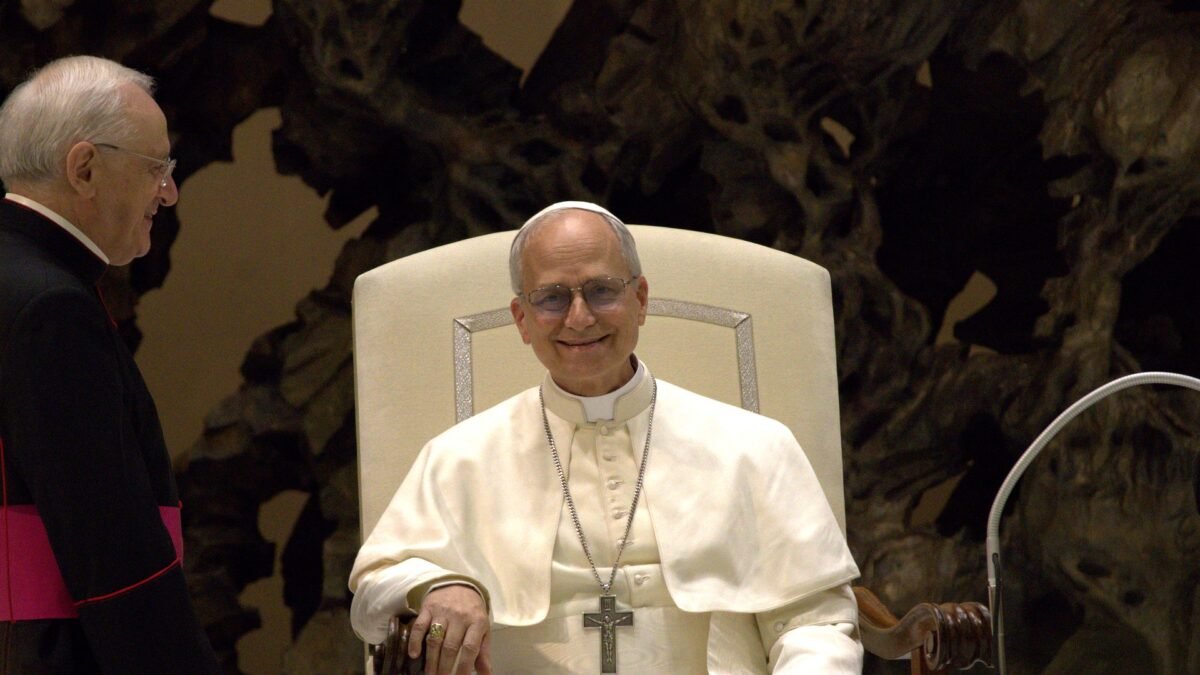
Pope Leo XIV returned on Friday to the Peruvian city where he spent eight years as bishop, arriving in Chiclayo for an open-air Mass that church organisers say could draw as many as a million people, in what has become the emotional centrepiece of his 12-day tour of South America.
According to Reuters, crowds gathered early on Friday morning and headed for the Pampas de Pimentel, a vast desert park west of the city, where the pope was due to celebrate Mass for the people who knew him for years simply as “Padre” — father — or “Amigo” — friend. Some pilgrims had camped overnight at the site, including Maria Esther Chozo Reyes, 76, who told Reuters she had taken a 12-hour bus ride from Lima and arrived on Thursday afternoon. “He knows the people of Chiclayo and he’s lived here, he’s made his mission here,” she said. “We really need his blessing.”
Leo was due to arrive in Chiclayo from Lima at around 9 a.m. local time, 1400 GMT, and will stay in the area until Sunday to lead eight events, including a private dinner with the priests who once reported to him as bishop, a meeting with clergy and seminarians, and a speech at the Catholic university where he served as chancellor, according to Reuters and the Associated Press. The university is named for St Turibius de Mogrovejo, the 16th-century first archbishop of Lima, to whom Leo is particularly devoted.
Chiclayo, a city of about 620,000 people on Peru’s northern Pacific coast and the country’s fourth largest, lies some 10,700 kilometres from Rome. Yet for the former Robert Prevost, a Chicago-born Augustinian who spent about two decades as a missionary priest and bishop in Peru, it is home. On Wednesday, as he arrived in the country, he declared that Peru was his homeland — a country whose nationality he has held since 2015.
The crowds that have greeted him in Peru are the largest of his 18-month papacy, according to Reuters. Some three million people lined the roughly 13-kilometre road from the airport into Lima on Wednesday after his arrival from Argentina, and officials in Chiclayo have estimated that a million could come for Friday’s Mass. If that figure is reached, it would be one of the largest gatherings of his pontificate — and a remarkable turnout for a city whose population is itself smaller than the crowd expected.
Leo’s visit to Peru is the final and longest leg of his first apostolic journey to Latin America, a 12-day tour running from 6 to 17 November that has already taken him through Uruguay and Argentina, where more than 2.5 million pilgrims gathered for a Mass in Buenos Aires. He is scheduled to remain in Peru until Monday, 16 November, and will also visit Pucallpa in the Amazon and lead an Angelus prayer on Sunday in Cusco, the Andean city that sits about 3,400 metres above sea level.
A pope transformed on home soil
Ever since Leo touched down on Peruvian soil on Wednesday, the world has seen a very different pope from the reserved, placid figure familiar from the Vatican, according to the Associated Press. The 71-year-old has seemed at turns positively giddy and overwhelmed with emotion, at times to the point of tears.
He sang the national anthem at the presidential palace on his arrival on Wednesday, where he was received with military honours by President Keiko Fujimori. On Thursday evening, some 60,000 young Peruvians sang for him inside Lima’s National Stadium, with the Vatican estimating that a further 300,000 gathered outside, according to AP. He sang along enthusiastically as 40,000 people in Lima’s Plaza Mayor serenaded him with “Contigo Perú”, a famous song from Peru’s Pacific coast that celebrates national unity, and later joined in another hymn, “Alma Misionera” — Missionary Soul — at the stadium vigil.
He has also made unannounced appearances on the balcony of the Vatican embassy in Lima, where he has been staying, and greeted crowds on rides in an open-air popemobile, according to Reuters. Speaking to Peruvian bishops, he joked about his health, saying some “doubting Thomases” had not thought he would make the trip because of his recent lung cancer surgery, less than a month after surgeons in Rome removed part of his right lung. Reuters described the tour as one of the most intense foreign trips arranged for a pope in decades, and noted that Leo has appeared in good form throughout it.
On Thursday, the homecoming turned to business. In the chapel of the Archbishop’s Palace in Lima, Leo met Peru’s bishops and spoke to them about a subject that has caused the church in Peru — and worldwide — deep pain: the abuse committed by members of the clergy or in church settings. He described such abuse in Spanish as delitos — crimes — and said it must be answered as Jesus would answer it, “with truth, with justice, with forgiveness, with reparation and an ever more determined commitment to a culture of prevention and protection of the weakest”.
He also met six survivors of sexual abuse committed by clergy and members of church institutions, according to the Vatican, including survivors linked to the Sodalitium Christianae Vitae, a Lima-founded lay movement whose leaders abused its members and which Pope Francis suppressed last year. Leo himself helped to shut down the powerful movement over accusations of sexual abuse of recruits, according to The Times. The anti-abuse group BishopAccountability.org has listed 77 priests, brothers, seminarians and consecrated laypeople in Peru who have been publicly accused of abusing minors, according to The Times.
“Let us value women. Let us protect and respect girls.”
A few hours after the bishops’ meeting, standing before roughly 40,000 people in Lima’s Plaza Mayor, Leo turned to a subject that reaches far beyond the church: the violence suffered by women in Peru. He denounced the machismo — the culture of male dominance — that he said still shows itself in absent fathers and in abuse and violence against women, and said it went against the Christian teaching that men and women share equal dignity and responsibility.
“It pains us to see that violence against women — who could be our grandmothers, mothers, sisters or daughters — continues to be a reality that wounds all of humanity,” he said, according to AP and the Catholic News Agency. “It is sad to see that a machista mentality persists, which shows itself in the father’s absence from family life, in abuse, in violence against women, ignoring the newness of Christianity, which recognizes and proclaims that both share equal dignity and responsibility.”
He closed the passage with an appeal to every man and woman of goodwill: “Let us value women. Let us protect and respect girls.” The words drew applause and shouts from the crowd, according to reports of the event.
Gender-based violence is an urgent social issue in Peru. According to the country’s National Institute of Statistics and Informatics, 1,261 women were victims of femicide between 2016 and 2024, and killings of women because of their gender rose by 44 per cent over that span. Leo noted that poor, Indigenous and Afro-Peruvian women are doubly penalised, and called for all women to be valued, protected and respected, according to AP.
Speaking at an event in Lima’s Gran Teatro Nacional attended by President Fujimori, he told Peruvians: “Today I understand how much of this land remains with me and how much of my own story also belongs to you.”
The bishop who never left
For the people of Chiclayo, this is not a visit by a distant figurehead. It is the return of a man they knew. Much of the world first heard the name Chiclayo on the night of Leo’s election, 8 May 2025, when he gave the city a shoutout, in Spanish, from the loggia of St Peter’s Basilica. But his connection to the place runs far deeper than a single sentence.
Prevost spent two decades as a missionary priest and bishop in Peru, and credits the place and its people with teaching him how to be a shepherd, according to AP. Pope Francis sent the Chicago-born Augustinian to take over as bishop of Chiclayo in 2014, and he stayed until Francis summoned him to Rome in 2023 to run the Vatican’s bishops’ office — one of the most important jobs in the church, and one that, in hindsight, signalled that Francis saw in Prevost a potential successor, since it would give him the Vatican experience that many consider necessary to be a viable contender for the papacy.
His first posting in Peru, in the mid-1980s, was as a young missionary priest in Chulucanas, during the Shining Path terror campaign and the authoritarian Fujimori regime’s crackdown. The Rev. John Lydon, an Augustinian who lived with Leo in Peru for more than 10 years, told AP that Prevost led a campaign to collect signatures to commemorate the 50th anniversary of the Universal Declaration of Human Rights. “These are the kind of things that just mark his identity,” Lydon said.
In Chiclayo itself, he remains beloved for championing social justice and for his closeness to the people, especially the poor, during times of crisis — and he had quite a few during his tenure: the COVID-19 pandemic, devastating floods, and a surge of Venezuelan migrants as the humanitarian situation worsened in 2018, according to AP.
“I’m so glad he’s returning,” said Rolando Antonio Mendoza, who was selling posters bearing the pope’s image in front of the cathedral where Leo used to celebrate Mass. “Even though he’s now Pope Leo XIV, he hasn’t forgotten about his homeland.”
Rocio Zena, who remembered how Prevost helped her when she lost her family home in the 2023 floods, told AP: “Chiclayo is a party. We’re overjoyed to welcome the Holy Father with so much faith. He arrives, no longer as Prevost but as Leo XIV. And he’s coming home.”
The city has dressed for the occasion. In town, the El Trebol restaurant proudly calls itself the restaurant of the pope, and his image is displayed in framed photographs of Prevost riding a horse, wading through mud in rubber boots and celebrating his birthday with a cake. A sign on his favourite table — No. 3, with a view of the cathedral — reads “mesa bendita”, Spanish for blessed table. Like many other places around the city, the restaurant sells “Papaletas”, or “Pop(e)sicles”, bearing Leo’s image in white chocolate. A few steps away, a life-size cardboard cutout of the pope welcomes visitors to his former residence at the diocese, where an exhibit displays the amaranth purple, scarlet and white zucchettos, or skullcaps, that he wore as bishop, cardinal and now pope.
“I feel so happy about my work because the pope is Chiclayano,” said Cynthia Charrary, who was sweeping the streets near the city’s main square ahead of Leo’s arrival. “We want our city to be cleaner than ever.”
A saint as a model
Leo’s devotion to St Turibius de Mogrovejo, the 16th-century first archbishop of Lima, is one of the threads running through the visit. The Catholic university in Chiclayo where he will speak on Friday is named for Mogrovejo, and Leo is said to have modelled his ministry on his.
Mogrovejo is revered for having travelled long distances on horseback to be with his flock and for having defended the rights of Indigenous and enslaved peoples. He studied the Quechua and Aymara languages and oversaw the printing of church teaching in those Indigenous languages, because he believed the faith had to be transmitted in a language people could understand, according to AP.
The parallel is not hard to see. A pope who learned his priesthood among the poor of northern Peru, who collected signatures for human rights during a dirty war, and who still calls a city of 620,000 people his home, is now returning to it as the leader of 1.4 billion Catholics — and choosing to spend the centrepiece of his tour not in a capital, but on a desert field outside a provincial city, with the people who knew him when he was simply their bishop.
Analysis: Why It Matters
A homecoming no other pope could make
Every pope makes foreign trips. Very few return to a place that made them. Leo XIV’s visit to Peru is unusual not because of its scale — though the crowds are the largest of his papacy — but because of its intimacy. He is not touring a country; he is going home to a diocese he ran for eight years, to priests he appointed, to streets he walked in rubber boots during floods. That changes the character of the visit entirely. The usual choreography of a papal trip — the motorcades, the formal addresses, the careful diplomacy — is still there, but underneath it is something rarer: a leader being welcomed back by people who remember him before the white cassock, before the ring, before the name Leo XIV existed at all.
That matters because it gives the visit an authenticity that cannot be staged. When Leo tells Peruvians that their country is his homeland, it is not a diplomatic compliment; he holds Peruvian citizenship, he served there for two decades, and his first words as pope included a greeting to Chiclayo in Spanish. When he denounces machismo in Lima’s Plaza Mayor, he is speaking to a society he knows from the inside — its families, its parishes, its newspapers — not reading a briefing note prepared in Rome. The emotional register of the trip, the singing, the tears, the jokes about his surgery, all flow from that fact. A pope who is comfortable is a pope who can be direct, and Leo has used that comfort to say hard things in public.
The machismo speech was the trip’s sharpest moment
The Mass in Chiclayo will be the largest event of the tour, but the most consequential words of the visit may already have been spoken — on Thursday, in front of 40,000 people in Lima, when Leo named machismo as a sin against the equal dignity of men and women. The figures behind that speech are stark: 1,261 femicide victims in Peru between 2016 and 2024, with killings of women because of their gender up 44 per cent. Those are not abstract statistics in Peru; they are a daily reality that fills the news and the courts.
A pope denouncing violence against women is not new in itself. What made this intervention land was the setting and the speaker. Leo was not addressing the world from St Peter’s Square; he was standing in the plaza of a country he calls home, speaking in Spanish, to a crowd that included the women he was talking about. And he did not soften the message into generalities about respect. He named the specific shape of the problem — fathers absent from family life, abuse, violence — and tied it explicitly to a Christian claim about equal dignity. That framing matters in a country where Catholic teaching still carries real cultural weight: it turns a social problem into a moral one that the church itself must answer for, and it gives Peruvian women’s organisations a statement from the most prominent Catholic voice in the world that they can quote back at their own institutions.
The speech also connected, deliberately, to the morning’s meeting with the bishops. Leo told the hierarchy that clergy abuse is a crime — delitos — to be answered with truth, justice, forgiveness and reparation, and then met survivors. The sequence was the message: a church that will not name its own crimes cannot credibly name a society’s. By putting the two together on the same day, Leo was telling the Peruvian church that accountability starts at home.
Peru is a test of whether the church can still speak to the poor
Peru has about 34 million people, and according to AP, 25.7 per cent of its population lived in monetary poverty in 2025. It is a country where the church’s credibility has been battered — by the Sodalitium scandal, by the 77 clergy publicly accused of abusing minors, by the sense in some quarters that the institution protects itself first. It is also a country where Catholicism remains woven into daily life, and where a pope who is also a Peruvian citizen carries a moral authority no visiting dignitary could match.
Leo’s visit is therefore a test of a larger question facing the Catholic Church in Latin America: whether it can still speak convincingly to the poor and the marginalised, or whether it has become an institution that speaks mainly to itself. The signs from this week are encouraging for the church. The crowds in Lima and Chiclayo are not the dutiful turnout of a state occasion; they are the response of people who feel personally connected to this pope. The “Papaletas” and the cardboard cutouts and the swept streets are the small, telling details of a city that has taken ownership of the visit. But the test will not be decided by crowd size. It will be decided by what follows: whether the bishops he instructed on Thursday actually change how they handle abuse cases, whether the denunciation of machismo is followed by concrete support for women’s safety, and whether the church in Peru uses this moment of attention to serve the poor rather than simply to celebrate itself.
A papacy finding its voice abroad
Eighteen months into his pontificate, Leo XIV is still a relatively new figure on the world stage, and this 12-day tour — Uruguay, Argentina and Peru — is his first major apostolic journey to Latin America. It comes less than a month after lung cancer surgery, which makes the intensity of the schedule all the more striking: three countries, millions of people, Masses, vigils, university addresses and meetings with survivors, all in under two weeks.
The tour is revealing a papal style that is distinct from his predecessor’s. Pope Francis, an Argentine, was famously a pope of gestures and of the peripheries; Leo, an American Augustinian formed in Peru, appears to be a pope of relationships — of returning to the places and people who formed him, and of using those relationships to say things that would sound hollow from a stranger. The devotion to St Turibius de Mogrovejo, a 16th-century archbishop who rode on horseback to reach his flock and printed the faith in Indigenous languages, is a clue to the model: a bishop who goes to the people, in their language, rather than waiting for them to come to him.
That model has obvious appeal in Latin America, where the church faces competition from evangelical movements and from indifference, and where a pope who speaks Spanish, knows the continent’s realities and holds its citizenship is a powerful asset. The crowds in Buenos Aires and Lima suggest the asset is real. The question is whether the Vatican can convert a successful tour into a sustained presence — and whether a pope formed by Peru can bring the lessons of Peru to the universal church, rather than simply bringing the universal church to Peru for a week.
What the crowds do — and do not — prove
It is worth being careful about what a million people at a Mass actually means. Crowd figures for papal events are notoriously uncertain: organisers have an interest in large numbers, and the difference between the Vatican’s estimate of 300,000 outside Lima’s stadium and other counts shows how wide the range can be. The three million figure for the Lima airport road is a local-authority estimate, not a headcount. None of that makes the crowds imaginary — the photographs and the traffic and the sheer visible scale of the gatherings speak for themselves — but it does mean the numbers should be read as signs of enthusiasm rather than as precise measurements.
What the crowds do prove is simpler and more important: that in Peru, at least, the Catholic Church can still summon a vast, joyful, voluntary gathering, and that this particular pope can summon it in a way few others could. They prove that Leo’s Peruvian identity is not a biographical footnote but a living bond, recognised and celebrated by the people themselves. And they prove that a papacy that began in a conclave in Rome, eighteen months ago, has found one of its natural homes — on a desert field outside a provincial city, 10,700 kilometres from the Vatican, among people who still call the pope “Padre”.
What to Watch Next
- The Chiclayo Mass itself: whether the crowd approaches the million that organisers have estimated, and what Leo says in his homily at the Pampas de Pimentel — his words there will set the tone for the rest of the visit.
- His speech at the Santo Toribio de Mogrovejo Catholic University in Chiclayo, and his meeting with clergy and seminarians, where he is expected to speak about the formation of priests and the church’s mission in Peru.
- Sunday’s Angelus in Cusco, at about 3,400 metres above sea level, and the visit to Pucallpa in the Amazon — the two stops that will test both the pope’s stamina after surgery and the church’s reach into Indigenous communities.
- Whether Peru’s bishops act on Leo’s instruction to answer clergy abuse with truth, justice and reparation — and whether any concrete cases move forward in the weeks after the visit.
- The response in Peru to the machismo speech, from women’s organisations, politicians and the church itself, and whether it translates into new commitments on protecting women and girls.
- The Vatican’s own accounting of the tour once it ends on Monday, 16 November — and whether the crowds and the tone of the visit shape Leo’s next foreign trips and his priorities for the coming year.
- How the visit is received in the United States, where Leo was born, and in Rome, where a pope who calls Peru his homeland is steadily defining a papacy that belongs to more than one country.
Sources
- Reuters — “Peruvians flock to see Pope Leo in city he served as bishop”, 13 November 2026
- Associated Press — “Peru’s Chiclayo welcomes its former shepherd home, and revels in pope’s love”, 13 November 2026
- The Times — “Pope tells Peru’s bishops to tackle child abusers and protect victims”, 13 November 2026
- OSV News / Catholic News Agency — “Pope Leo defies machismo culture in Peru, calls for respect and protection of women, families”, 13 November 2026
- Pollar — “Pope Leo XIV arrives in Peru for the final stop of his South America tour”, 12 November 2026
- Pollar — “Pope Leo XIV in Peru: youth vigil, abuse victims meeting”, 13 November 2026

About the Author — Abdul Mannan
Related Articles
China Stages Unannounced Pacific Drills Around Taiwan in ‘Silent Intimidation’ as Xi Demands Reunification
China massed more than 100 naval and coast guard vessels in an unannounced exercise around Taiwan, Taipei says,…
Putin Offers No Compromise in Moscow Talks With US Envoys as Ukraine Peace Push Moves to Dublin
Vladimir Putin told US envoys Steve Witkoff and Jared Kushner in Moscow that Russia will not compromise on…
Witkoff and Kushner Meet Putin in Moscow as Ukraine Peace Talks Turn to Europe’s Seat at the Table
President Donald Trump's envoys Steve Witkoff and Jared Kushner met Vladimir Putin in Moscow on Thursday after two…