
Huang’s Exit Imperils $3 Billion in Chinese AI Projects Built on Nvidia’s Restricted Chips

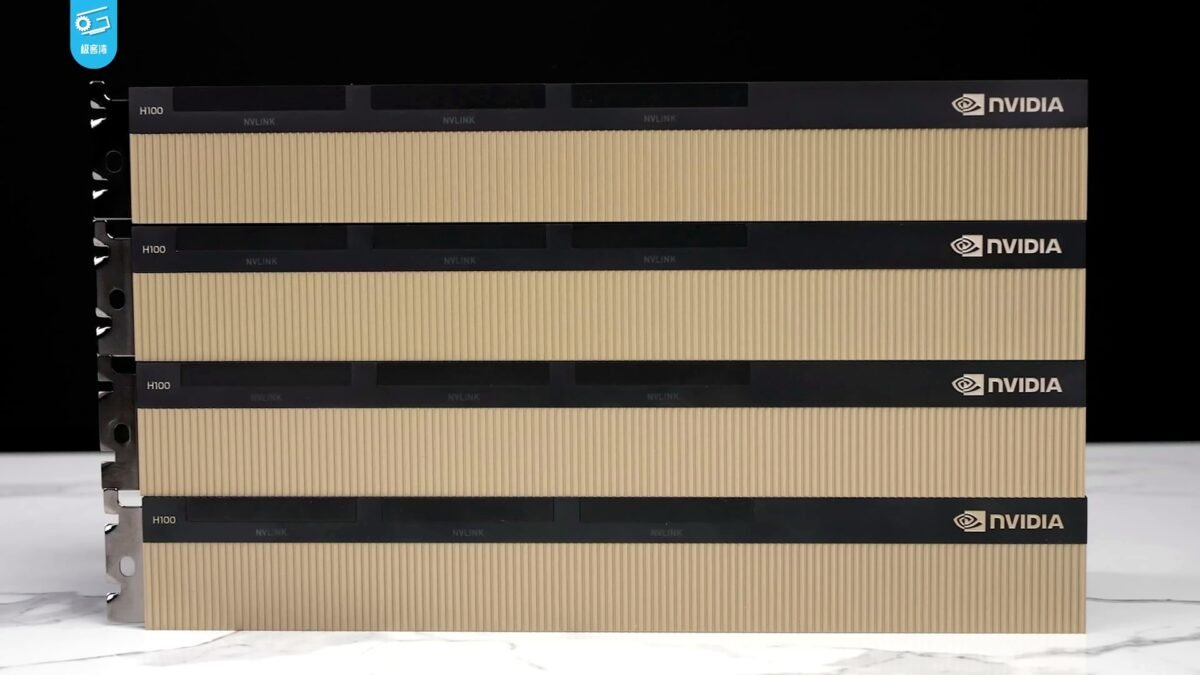
Nvidia has said that American export controls have effectively shut it out of China’s market for the processors that power artificial intelligence. A review of Chinese public documents published on Friday tells a different story: more than $3 billion in computing projects across China are being built around the very Nvidia chips Washington has tried to keep out of the country, and the sudden departure of the company’s chief executive has thrown that entire pipeline into doubt.
According to Reuters, which examined more than 150 Chinese procurement notices, investment plans, construction contracts and corporate disclosures, the projects identified carry a combined reported value exceeding 23 billion yuan, or about $3.2 billion. They stretch from wealthy coastal technology hubs to remote western provinces, and they are designed around Nvidia’s restricted H100, H200 and H800 processors — the hardware at the centre of the export-control regime the United States has been tightening since 2022.
The findings were published a day after Nvidia co-founder Jensen Huang resigned as chief executive after 33 years at the company, amid a scandal over his relationship with a Chinese businesswoman whom American authorities suspect of intelligence ties to Beijing. According to Reuters, Huang’s departure could deepen the vulnerabilities of the Chinese companies behind the projects, because it removes from Washington the industry’s most prominent voice for easing export restrictions at precisely the moment lawmakers are pressing to tighten them.
The projects identified by Reuters have not been linked to Megaspeed, the Singapore-based Nvidia cloud partner at the centre of the smuggling allegations, or to the allegations involving Huang himself. They stand on their own as evidence of demand. What they show, according to the review, is how deeply Nvidia technology remains embedded in China’s artificial-intelligence expansion — reaching well beyond the country’s largest technology firms into local government-backed ventures, universities and regional computing centres.
Billions in the pipeline
The largest single project in the review is a proposed AI computing centre in Xianyou county in coastal Fujian province, valued at 6.2 billion yuan, or about $873 million. According to Reuters, the project is seeking commercial partners and specifies Nvidia H100 chips for a facility intended to support large-scale AI development.
In northwestern Shaanxi province, the state-owned engineering group Sinomach said a subsidiary had won a contract as part of a project for a 3 billion yuan computing centre specifying Nvidia H100 and H200 processors. In northeastern Jilin province, a government prospectus published in April describes another project, worth 2.26 billion yuan, that combines Nvidia H100 processors with Chinese-developed chips. According to Reuters, the developer of the Jilin project expects bank loans to finance about 80 per cent of the investment.
In Inner Mongolia, a 1.5 billion yuan development proposes installing 625 Nvidia H200 servers. According to Reuters, Chinese industry reporting in June said construction had begun on two buildings in the first phase of that project. In northwestern Gansu province, a local company awarded a 1.16 billion yuan construction contract in July for a computing centre that plans to install approximately 3,072 Nvidia processors, according to tender documents specifying H100 and H200 hardware. The contract went to a consortium led by a subsidiary of the state-owned Shaanxi Construction Engineering group.
Some of the facilities are further along. In eastern Jiangsu province, the Wuxi municipal government said in March 2025 that a computing cluster using Nvidia H800 processors had entered operation. In Fujian, the Shanghai-listed company Damingcheng disclosed in June that a computing venture had built an H800 cluster, and that it had signed a computing-services agreement originally worth 759 million yuan, although the contract ended early.
Smaller purchases show that demand extends to research institutions. According to Reuters, Shenzhen University awarded a contract for three H100 processors in September, while Northwestern Polytechnical University — which is on the American government’s blacklist — bought two H200 chips the following month.
The review carries important qualifications, and Reuters states them plainly. The $3.2 billion estimate includes planned investments and signed contracts as well as completed installations. It covers buildings, power systems and other infrastructure, and does not reflect spending on Nvidia chips alone. The documents do not establish whether the processors specified in the tenders have actually been delivered. What they establish is intent and planning at scale: Chinese developers, institutions and local governments are still designing their AI infrastructure around American hardware that Washington says should not reach them.
Washington’s dilemma
The United States began restricting Nvidia’s most advanced AI processors in 2022, and subsequently tightened the controls on modified chips developed for China, including the H800. In January, the Trump administration moved to review H200 export licences for eligible Chinese customers individually, subject to conditions. The policy has always rested on a simple premise: deny China the hardware, and slow its AI development.
By Nvidia’s own account, the policy worked. Huang said last year that the company’s market share in China had fallen from 95 per cent to zero. In an August filing, Nvidia said it was effectively excluded from China’s data-centre computing market, and it has excluded Chinese data-centre revenue from its forecasts, citing regulatory uncertainty.
But the documents reviewed by Reuters point in a different direction. While Nvidia’s statements address its own ability to compete and sell directly in China, Chinese customers are continuing to plan purchases and, in some cases, to operate restricted processors. An IDC report cited by Reuters in October estimated that Nvidia still accounted for 34 per cent of Chinese AI-accelerator shipments in the first half of 2026. According to Reuters, the figures measure different things and do not establish how the restricted hardware identified in its investigation reached Chinese users. The gap between the two pictures — a company that says it has left the market, and a market that still runs on its chips — is now the central question in Washington.
Sunny Cheung, an analyst at the Washington-based Jamestown Foundation, told Reuters that the findings reinforce his view on enforcement. “Washington must stop focusing solely on who buys the chips on the surface and start examining who ultimately uses the computing power — and for what purpose,” he said.
That question has become harder to avoid. According to Reuters, China’s commerce ministry and Nvidia did not immediately respond to its request for comment on the review.
The week that changed the argument
The Reuters review landed at the end of a week in which the politics of Nvidia’s China business were transformed. On Wednesday, Huang agreed to testify before Congress before Thanksgiving, which falls on 26 November, after the chairmen of three House committees threatened him with a subpoena. On Thursday, he resigned as president, chief executive and director, effective immediately, after 33 years leading the company he co-founded. His chief financial officer, Colette Kress, was named interim chief executive.
The resignation followed reports of Huang’s relationship with Alice Huang, a former executive at Megaspeed, a Singapore-based Nvidia cloud partner that American authorities suspect of helping China obtain advanced AI chips restricted under United States export controls. Beijing has denied that Alice Huang is a spy. Megaspeed has denied illegally diverting Nvidia chips to China. Nvidia’s board has launched an independent investigation and said it had no reason to believe company secrets or American national security had been compromised. According to Reuters, there has been no public finding that Jensen Huang violated export-control laws.
Huang had been the most prominent corporate voice arguing that export restrictions were counterproductive — that they would push China towards domestic alternatives while costing American companies one of the world’s largest markets. His departure removes that voice from the argument at the moment when Congress is moving in the opposite direction.
According to Reuters, House Speaker Mike Johnson said on Thursday that there was a growing consensus in Congress on limiting chip exports to China. Congressional Republicans are keen to attach new restrictions on exporting advanced AI chips to China to the annual defence authorisation bill, a must-pass measure that funds the military and typically attracts bipartisan support, according to a Senate aide who spoke to Reuters on condition of anonymity. Lawmakers are pressing their colleagues to pass at least four bills on chip exports, according to statements since Monday: the AI Overwatch Act, which would give Congress more power over advanced AI chip exports; the Chip Security Act, which would require companies to track the location of advanced AI processors to prevent smuggling; the Match Act, which would pressure American allies to restrict sales and maintenance of advanced chipmaking equipment destined for China; and the Remote Access Security Act, which would give the Commerce Department the tools to stop Chinese firms from renting overseas data centres to access Nvidia chips.
Chinese AI shares tumbled on Friday as investors worried that Huang’s departure could further restrict Chinese access to advanced American chips, deepening the technology divide between the world’s two biggest economies.
Three independent lines of evidence
The Reuters review is not the only evidence published this week that restricted Nvidia hardware is reaching China in large quantities. Three separate lines of reporting, from different sources, point in the same direction.
First, the research firm SemiAnalysis said in a newsletter post on 12 November that its Accelerator Model, which tracks AI chips from production to final destination, shows more than 1.5 gigawatts of export-restricted Nvidia chips “ultimately ended up in China”. The figure excludes chips Nvidia built specifically to comply with American export rules, such as the H20 and H800. SemiAnalysis did not say how many accelerators that represents or how they split across Nvidia’s product generations, but Tom’s Hardware, which reported the estimate on 13 November, calculated that the figure equals about 1.5 million B200-class or 2.1 million H200-class graphics processors at rated power. SemiAnalysis also said the Commerce Department “now also finally believes” that more than 1.5 gigawatts of Nvidia chips are in China that should not be there, although it cited no Commerce Department document. The firm argues that the smuggling and pressure from the American intelligence community are tied to Huang’s resignation, but it offers no direct evidence for that link.
Second, a forensic analysis published on 12 November by Will DePue, a former OpenAI researcher, found that six frontier Chinese AI models were initialised on Nvidia Blackwell graphics processors, which are barred from export to China. The models are DeepSeek-V4-Flash, DeepSeek-V4-Pro, Kimi K3, Kimi K3.1-Pro, MiniMax-M3 and Ant Group’s Ling-3.1-flash. According to the analysis, four of them match Nvidia’s GB200 or GB300 Grace Blackwell systems, and two match B200 or B300 chips. The method relies on numerical fingerprints embedded in the models’ initial weight values, which are generated by pseudorandom number generators within the PyTorch framework. The report puts the strongest match that chance could produce at about eight standard deviations; the real matches range from 49 to 1,385. DePue estimates that the largest runs, Kimi K3 and DeepSeek-V4-Pro, each used about 2,000 to 3,000 Blackwell graphics processors, putting each cluster at $150 million to $200 million, and all five final training runs combined at more than $500 million.
The analysis is explicit about its limits. It says the method identifies the hardware that generated the starting weights, not every chip that later helped train the model. It also says the evidence does not show where the chips were, who owned them, or how they were obtained, and notes that Blackwell systems can be rented in data centres outside China. In the report’s words, the results “are not a finding that any law was broken”. Nvidia, DeepSeek, Moonshot AI, MiniMax and Ant Group had not commented on the report at the time of publication.
Third, documents obtained by Bloomberg showed that Moonshot AI, one of China’s leading AI model developers, signed a contract in August to lease 32 servers from Super Micro Computer. The servers are equipped with Nvidia’s Blackwell Ultra, or B300, graphics processors — the highest-performing AI accelerators currently available — and the storage location was listed as Qingyang in China’s Gansu province. The servers were valued at a combined 432 million yuan, a per-server valuation about 350 per cent higher than the prices at which the units trade in the United States, which Bloomberg noted suggests a black market may have formed as a result of export controls. Moonshot AI denied the allegations. Bloomberg also reported on 13 November that banned Nvidia servers had ended up in a Shanghai data centre linked to a former Megaspeed executive.
Taken together, these three lines of evidence — the Reuters document review, the SemiAnalysis supply-chain estimate and the forensic analysis of model weights — describe the same pattern from different angles: restricted American hardware is reaching Chinese AI developers in large quantities, through channels that the export-control system has not closed.
The Malaysia connection
One of those channels runs through South-East Asia. According to an investigation by Le Monde published on 13 November, Megaspeed and its Malaysian subsidiary Speedmatrix purchased at least $4.8 billion worth of Nvidia equipment between June 2024 and February 2026. The equipment was used to equip data centres in Malaysia and Singapore, and computing capacity at data centres linked to the Megaspeed network was reportedly rented by the Chinese technology group Alibaba to support the training of AI models. According to Le Monde, this is the mechanism suspected in the case, not a finding that all Megaspeed graphics processors were illegally transferred to China.
On 13 November, Malaysia’s Ministry of Investment, Trade and Industry confirmed that it was working with customs authorities to verify whether AI chips imported into the country by Speedmatrix had been re-exported to another country. The move follows allegations that Speedmatrix may have been involved in diverting Nvidia AI chips to China to evade American export controls. The ministry stressed that Malaysia had never granted approval or confirmed that Megaspeed and Speedmatrix had fully complied with the requirements related to the case.
According to the ministry, importing AI chips into Malaysia currently does not require a licence. However, since July 2025, exports, re-exports, transshipments or transits through Malaysia of high-performance AI chips originating in the United States have required a licence under Malaysian regulations. The suspected route, according to the reporting, runs from the United States via Singapore and Malaysia to Chinese customers — not by shipping chips directly across the Chinese border, but by installing servers containing the processors at data centres in third countries, where customers can remotely rent computing capacity.
That rental model is precisely what the Remote Access Security Act now before Congress is designed to address. The bill would give the Commerce Department the tools to stop Chinese firms from renting overseas data centres to access Nvidia chips — a recognition, in legislative form, that controlling the physical movement of chips is no longer enough when the computing power itself can be rented from abroad.
Analysis: Why It Matters
The gap between the official story and the paperwork
The most striking thing about the Reuters review is not the size of the number. It is the ordinariness of the evidence. These are not leaked intelligence files or secret shipping manifests. They are procurement notices, government prospectuses, construction contracts and corporate disclosures — documents published in the open, in the ordinary course of business, by Chinese local governments, state-owned engineering groups and listed companies. A county in Fujian province published a prospectus for a computing centre specifying H100 chips. A state-owned engineering group announced that its subsidiary had won a contract for a centre specifying H100 and H200 processors. A university awarded a contract for three H100 chips. None of this was hidden. It was simply not being read together, in one place, until Reuters did so.
That is what makes the finding difficult to dismiss and difficult to explain away. Nvidia’s position — that export controls have effectively shut it out of China — is a statement about its own direct sales. The Reuters review is a statement about what Chinese buyers are doing. Both can be true at the same time, and that is exactly the problem. A policy designed to control the sale of chips is being measured against a market in which the chips arrive through other routes, are specified in public tenders, and are installed in facilities whose construction is announced by local governments. The control regime is not failing in secret. It is failing in public, in documents anyone can read.
Enforcement is now the story
For four years, the argument about export controls was about their design: which chips to restrict, which thresholds to set, which companies to add to the entity list. The argument this week is about enforcement, and it is a much harder argument for Washington. The SemiAnalysis estimate of more than 1.5 gigawatts of restricted chips in China, the forensic evidence that six frontier Chinese models were initialised on Blackwell hardware, and the Bloomberg documents showing B300 servers leased into Gansu province all describe the same failure: the chips are getting through, in quantities large enough to train frontier models, and the system designed to stop them has not stopped them.
The Malaysian investigation illustrates why. The suspected route does not involve smuggling chips across a border in a suitcase. It involves buying servers legally, installing them in data centres in Malaysia and Singapore, and renting the computing capacity to Chinese customers over the internet. At no point does a restricted chip cross into China. The computing power does. That is a much harder thing to police, and it is why the proposed legislation in Congress now targets remote access rather than physical shipment. The question is whether a legal regime built for a world of shipping containers can be adapted to a world of cloud computing, and whether it can be adapted quickly enough to matter.
Huang’s exit removes the industry’s loudest voice
Jensen Huang spent years arguing, publicly and forcefully, that restricting chip sales to China would hurt American companies more than it would slow China. He warned that China would build domestic alternatives, that American firms would lose the revenue that funds their research, and that the controls would accelerate the very technological independence they were meant to prevent. His position was self-interested — Nvidia had more to lose from the controls than any other company — but it was also coherent, and it carried weight in Washington because it came from the chief executive of the company at the centre of the AI boom.
His resignation removes that voice at the moment when the political momentum is running entirely in the opposite direction. Speaker Johnson’s statement about a growing consensus in Congress, the four bills now being pressed, the push to attach restrictions to the defence authorisation bill, and the reported authorisation of stronger action against suspected smuggling all point the same way. The interim chief executive, Colette Kress, inherits a company whose shares have fallen sharply, whose founder has resigned in scandal, and whose China business is the subject of a congressional investigation, a Justice Department inquiry and a board probe. She is unlikely to spend her first months as chief executive lobbying Congress to ease the restrictions that her predecessor fought. The projects identified by Reuters are therefore exposed on two fronts: the hardware they need may become harder to obtain, and the political cover for obtaining it has disappeared.
China’s bet cuts both ways
The projects in the Reuters review are, in one sense, a bet on Nvidia. Developers across China are planning billions of yuan of infrastructure around H100, H200 and H800 processors — hardware they may not be able to obtain, or may only be able to obtain at black-market prices, or may have to replace with domestic alternatives at great cost. If export controls tighten further, as Congress now seems determined to ensure, those projects face delays, inflated costs or forced redesigns around Chinese chips. That is the intended effect of the controls, and for the first time the Reuters review gives it a concrete price tag: more than $3 billion of planned investment, much of it financed by bank loans, is now exposed to a policy decision in Washington.
But the bet cuts the other way too. The same documents that show Chinese dependence on Nvidia also show how far Chinese developers are willing to go to keep using its hardware — specifying it in tenders, building facilities around it, paying multiples of the American price for leased servers, and renting computing capacity through third countries. That is not the behaviour of a market that has accepted the loss of a supplier. It is the behaviour of a market that regards the supplier as irreplaceable, at least for now. The controls may eventually push China towards domestic alternatives, as Huang warned they would. In the meantime, they have created a grey market in which the same chips cost three and a half times their American price, and in which the premium is paid by Chinese buyers who have decided that Nvidia hardware is worth it.
What the numbers cannot prove
It is worth being precise about what the Reuters review does and does not establish. It does not establish that $3.2 billion worth of Nvidia chips have reached China. The figure covers buildings, power systems and other infrastructure, not chips alone, and it includes planned investments and signed contracts as well as completed installations. It does not establish that the processors specified in the tenders were delivered. The Gansu project that plans to install 3,072 processors may never receive them. The Fujian centre seeking commercial partners may never be built. The documents show intention and planning, not delivery.
Nor does the review establish how the restricted hardware that has reached China got there. The SemiAnalysis estimate and the forensic analysis of model weights are consistent with large-scale diversion, but they do not identify a single smuggling route, and the DePue analysis is explicit that its findings are not a finding that any law was broken. The Reuters projects have not been linked to Megaspeed or to the allegations against Huang. The story is not that a single criminal conspiracy moved $3 billion of chips. It is that a system of controls, applied to a technology the whole world wants, has produced a sprawling, decentralised, semi-legal market in which the line between compliance and evasion is genuinely difficult to draw — and in which the paperwork, read carefully, tells the story more honestly than any company’s public statements.
What to Watch Next
- Nvidia’s earnings on Tuesday 17 November: the company’s first results since Huang’s resignation, and the first test of how interim chief executive Colette Kress frames the China business, the export-control outlook and the board’s independent investigation.
- Huang’s congressional testimony before 26 November: the closed-door joint briefing of the Foreign Affairs, Intelligence and Select Committee on China committees, expected to be recorded and transcribed, and the questions lawmakers ask about Megaspeed, the Commerce Department and the chips that reached China.
- The defence authorisation bill: whether Republican lawmakers succeed in attaching new chip-export restrictions to the must-pass annual measure, and which of the four bills — the AI Overwatch Act, the Chip Security Act, the Match Act or the Remote Access Security Act — survive the process.
- Malaysia’s customs verification: whether the Ministry of Investment, Trade and Industry and customs authorities determine that Speedmatrix re-exported AI chips, and what action follows for Megaspeed’s Malaysian operations.
- The Justice Department investigation: whether the federal probe into Megaspeed, which the department took over from the Commerce Department, produces charges, and whether it reaches beyond the company to the officials who declined to add it to the entity list.
- Chinese AI shares and the domestic chip response: whether the sell-off in Chinese AI stocks deepens, and whether Beijing accelerates support for domestic chipmakers as the Reuters projects face redesign around Chinese hardware.
- The next Reuters-style document review: whether other outlets replicate the procurement-notice method in other provinces or other technologies, and what the public record reveals about the gap between export-control policy and its enforcement.
Sources
- Reuters — Huang exit and US scrutiny imperil $3 billion in Chinese AI projects reliant on Nvidia
- Reuters — Factbox: China’s $3 billion-plus pipeline of Nvidia-powered AI data centres
- BusinessWorld (Reuters) — China’s access to some Nvidia chips in doubt as curbs gain traction in US Congress
- Stockbiz — How could Nvidia AI chips be smuggled into China via Malaysia?
- Seoul Economic Daily (Bloomberg) — Banned Blackwell chips reach China through gray market
- MLQ (Tom’s Hardware) — SemiAnalysis says more than 1.5 GW of banned Nvidia chips reached China

About the Author — Abdul Mannan
Related Articles

Advocacy Groups Sue OpenAI, Google, Anthropic, Meta and SpaceX to Freeze Frontier AI Development, Warning of ‘Catastrophic’ Harm
Four nonprofits have sued Anthropic, Google, Meta, OpenAI and SpaceXSI in a San Francisco court, asking a judge…

Nvidia Board Prepares to Oust Jensen Huang as Second Affair Report Turns Spy Probe into Succession Crisis
The Wall Street Journal reports Nvidia's board is preparing to remove founder and chief executive Jensen Huang after…

Google Opens Gemini 4 Carbon to All Paying Developers as Its Strongest AI Model Yet
Google has made Gemini 4 Carbon, its strongest AI model, available to all paying developers and enterprises —…