
Sirens Sound at RAF Lakenheath as US Forces Respond to Suspected Drone Activity

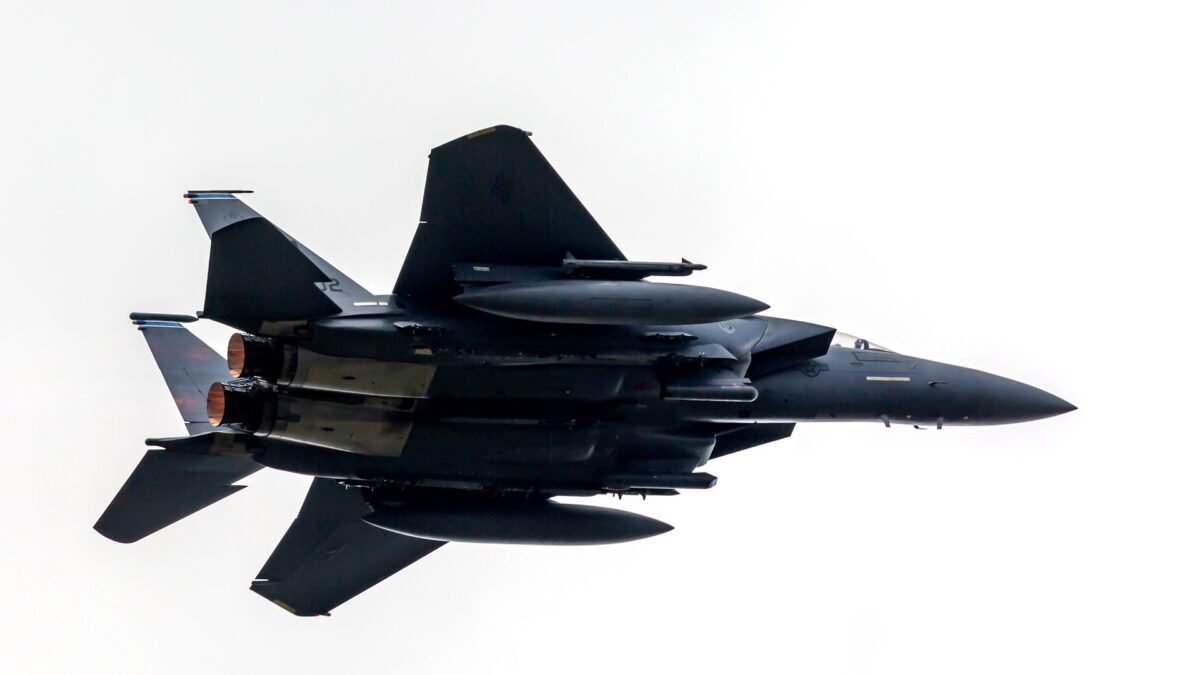
Air raid sirens sounded over RAF Lakenheath on Friday evening after American security forces responded to suspected unauthorised drone activity above the largest United States Air Force base in Britain, sending personnel to shelter in place in an incident that ended without injury or damage but underlined how exposed the country’s most sensitive military sites have become.
The alarm went off at about 6.30 p.m. local time on Friday 13 November, according to reports from the base in Suffolk, in eastern England. Within the hour, videos circulating online appeared to show sirens sounding at the installation, and the United States Air Force confirmed that its security forces had responded to reports of drones flying where they should not have been.
“This evening, USAF Security Forces personnel responded to suspected unauthorized drone activity over RAF Lakenheath,” a spokesperson for the United States Air Force in Europe said. “No personnel, aircraft or infrastructure were affected.”
Britain’s Ministry of Defence said the situation was resolved the same evening. “We are coordinating with all relevant parties regarding reports of unauthorised drone activity at RAF Lakenheath this evening,” a spokesperson said. “USAF Security Forces personnel responded to the reports and the situation is now resolved. We are working closely with them to establish the facts. We will provide updates in due course.”
The local Conservative MP, Nick Timothy, said he had been in contact with the authorities and that there was no threat to the public. “Given the raised threat level, I continue to encourage everyone to report anything suspicious or out of the ordinary to the authorities,” he said, while urging the Ministry of Defence to share more details of the alert.
What exactly was in the sky above Lakenheath on Friday evening remains unknown. Officials have not said how many drones were involved, what type they were, where precisely they were seen, or how long the security response lasted. No one has said who operated them, or why. The word the Americans used was “suspected”, and that single word matters: as of Friday night, no drone had been publicly confirmed, recovered or identified, and no link to any earlier incident had been established.
What happened on Friday evening
RAF Lakenheath is the largest American-operated air base in the United Kingdom and one of the most important United States Air Force installations in Europe. It is home to the 48th Fighter Wing, which operates F-15E Strike Eagle fighter-bombers and F-35A Lightning II stealth fighters from the Suffolk countryside, about 15 miles from the sister base at RAF Mildenhall.
According to Sky News, which said it had seen a copy of the alert sent to personnel, the message was headed in capital letters with the words “REAL WORLD” written in red. It instructed people on the base to shelter in place. “Seek the nearest shelter-in-place room,” it said.
Residents in a nearby village reported hearing sirens, and footage posted online appeared to capture the sound of an air raid siren over the base. The United States Air Force in Europe said it was working closely with its British counterparts “to ensure the safety and security of our US service members, US and host nation civilians, contractors, and all of our families”, and urged everyone to report unusual or suspicious activity to local authorities.
Reports also circulated on social media on Friday evening that sirens had sounded at RAF Mildenhall and RAF Feltwell, and that the bases had been raised to Force Protection Condition Delta, the highest and most protective level of American military alert. Neither the United States Air Force nor the Ministry of Defence confirmed either claim. The only officially confirmed protection level at the two Suffolk bases is the one reported earlier in the week, and the drone reports at Mildenhall and Feltwell were not independently confirmed on Friday night. That distinction matters, and this article does not treat the unconfirmed reports as fact.
By late on Friday evening, the immediate incident was over. The base had not been closed, according to the information available, and flying operations were not reported to have been suspended. The Ministry of Defence’s statement that the situation was “now resolved” was the last official word of the night. What comes next depends on what the investigation finds, and on whether anything is found at all.
A week of heightened security
Friday’s alarm did not come out of nowhere. It came at the end of a week in which the two big American bases in Suffolk had already been placed on an unusually high state of alert, and in which American aircraft had already been moved out of one of them.
On Monday 9 November, more than a dozen American warplanes were moved out of RAF Mildenhall, according to Sky News. Flight tracking showed nine KC-135 Stratotanker refuelling aircraft and three CV-22 Osprey special operations aircraft leaving the base late on Monday afternoon and into the evening. The tankers flew to Germany and Spain, and one to RAF Prestwick in Scotland. The three Ospreys were sent to the nearby RAF Lakenheath.
The Wall Street Journal reported that both Mildenhall and Lakenheath had been raised to Force Protection Condition Charlie, the second-highest level of American force protection, which is activated when intelligence indicates that terrorist action is likely. A United States official confirmed to the defence publication The War Zone that enhanced force protection measures were in effect at both bases, without disclosing what had prompted them.
The Journal reported that the aircraft movements and the raised alert followed an unspecified threat from Iran. The Ministry of Defence declined to discuss the activity of another nation’s forces in detail, saying only that aircraft and other assets move regularly according to operational requirements. Lucy Powell, speaking for the government on Tuesday morning, said the security of the bases was kept under constant review and that the government took “firm and quick action where we need to”.
On the same Monday morning, RAF Lakenheath posted a message on its official Facebook page urging vigilance, including over unauthorised drone operations around the installation. Later that day, emergency restrictions on drone flying were introduced around all three American-operated bases in the area — Lakenheath, Mildenhall and Feltwell — prohibiting unauthorised unmanned aircraft from flying below 1,200 feet within five nautical miles of each installation. The restrictions were made at 5.40 p.m. on 9 November and took effect immediately.
It was against that background — aircraft dispersed, alert levels raised, drone restrictions freshly in force, and a public appeal for vigilance — that Friday evening’s alarm sounded. The base was, in other words, already expecting trouble. Whether what arrived on Friday was the trouble it had been expecting, or something else entirely, is the question the investigation must now answer.
The Fairford incident and the Iran threat
The heightened security at the Suffolk bases is part of a longer and darker story that began in late September at another American base in Britain, RAF Fairford in Gloucestershire.
In the middle of the night on 27 September, a group of men approached RAF Fairford in white vans. A major incident was declared on the perimeter of the base, and five men were arrested. Two were later charged, with prosecutors alleging that one of them had tried to assist Iranian intelligence in Britain. The bombers based at Fairford — B-1B Lancers that had been deployed there as part of Operation Epic Fury — were subsequently flown back to the United States on security grounds.
The prime minister, Andy Burnham, said last month that the Fairford activity was likely to have been coordinated in Iran. Tehran has denied involvement in the Fairford incident and has rejected accusations of malign activity in Britain. But the American Justice Department said this week that a member of an Iran-backed militia had plotted to attack the Fairford air base while detained in the United States on criminal charges, a disclosure that added a new and concrete element to a picture that had previously rested largely on intelligence assessments.
The Wall Street Journal has reported that the refuelling aircraft were moved out of Mildenhall because of a threat from Iran. Britain’s domestic intelligence chief said in October that Iran had stepped up attempts to hit harder targets such as military sites in Britain. And the American bombers that had been used to strike Iran were moved out of Britain in recent weeks, according to CNN, which reported that the refuelling aircraft were relocated to Germany for the same reason.
None of that proves that Friday’s suspected drones had anything to do with Iran. No official has suggested such a link, and the Ministry of Defence has said only that it is working to establish the facts. But it explains why the alarm at Lakenheath was treated so seriously, and why the reaction — sirens, shelter in place, a “REAL WORLD” alert — was so swift. The bases were already on edge. The people responsible for them had already been told to expect the worst.
The 2024 precedent: drones over the same bases, never explained
Friday was not the first time that unidentified drones have been reported over these bases. Almost exactly two years ago, between 20 and 26 November 2024, a series of unauthorised drone incursions was reported over and near four American-operated bases in the United Kingdom: RAF Lakenheath, RAF Mildenhall, RAF Feltwell and RAF Fairford.
The United States Air Force confirmed at the time that small unmanned aerial systems had been spotted in the vicinity of and over Lakenheath, Mildenhall and Feltwell between 20 and 22 November. “The number of UASs fluctuated and they ranged in size and configuration,” a spokesperson for United States Air Forces in Europe said. The drones were actively monitored, and installation leaders determined that none of the incursions had affected base residents or critical infrastructure. It was unclear at that stage whether the drones were considered hostile.
The sightings continued for several nights. About sixty British combat troops were deployed to help defend the American bases against drones, and counter-drone systems, including the ORCUS system, were brought in. F-15E Strike Eagles were launched from RAF Lakenheath to investigate. Residents of Beck Row, the village next to the base, reported drone sightings of their own.
Two years later, those incursions remain officially unexplained. The operators were never identified, and their intentions were never established. Military analysts quoted in the American press concluded that the drones may have been on a surveillance mission for a state actor, and an investigation by The i Paper concluded that there were suspected Russian links. But no credible evidence of responsibility was ever made public, and no one was ever charged.
That history is the reason Friday’s incident cannot be dismissed as a false alarm or a hobbyist’s mistake, and also the reason it cannot be assumed to be an attack. The 2024 incursions showed that drones can operate over some of the most heavily defended airspace in Britain for night after night without being identified, let alone stopped. They also showed that the authorities are capable of keeping the public in the dark for years about what they do and do not know. Friday’s investigation begins from that same starting point: something was seen, or thought to have been seen, and nobody yet knows what it was.
The European drone picture
The Lakenheath alarm also fits into a wider European pattern in which drones have become the weapon and the worry of the moment. The most serious incident so far came at Leipzig/Halle Airport in Germany, one of Europe’s largest air cargo hubs and a base for Ukrainian Antonov cargo aircraft.
On the night of 4–5 August 2026, a quadcopter drone roughly the size of a microwave oven, carrying military-grade explosive, was found near a Ukrainian Antonov An-124 at the airport. Video showed the drone flying towards the aircraft at about 7.30 p.m., striking the wing near the fuel tank, failing to detonate and falling to the ground. A second drone collided with another aircraft, and a third device was found later.
On 1 September, Germany formally blamed Russia for the attempted attack. The interior minister, Alexander Dobrindt, said the drone’s configuration, components, explosives and detonator matched other Russian hybrid operations, and he raised the national threat level from “general” to “high”. Germany closed the Russian consulate in Bonn and tightened entry controls on Russian nationals. American intelligence agencies later concluded, according to a Wall Street Journal report in October, that President Vladimir Putin had personally ordered a stepped-up campaign of sabotage and covert action against NATO countries, and that Leipzig had been one of its opening shots. Russia has denied involvement throughout.
The Leipzig incident showed what a drone can do to an airfield: not merely watch it, but strike an aircraft on the ground with a bomb that fails only because of a faulty detonator. It also showed how a single incident can escalate into a diplomatic crisis, with expulsions, closures and a raised national threat level. The British authorities will have had Leipzig in mind on Friday evening when they decided how to respond to a suspected drone over a base that holds some of the most advanced fighter aircraft in the American arsenal.
There is an important difference, and it should not be lost. At Leipzig, a drone was recovered, examined and identified as a weapon. At Lakenheath on Friday, nothing was recovered and nothing was confirmed. The alarm was sounded on the basis of suspected activity, not on the basis of a device. That is the difference between a scare and an attack, and it is the difference the investigation must now resolve.
Analysis: Why It Matters
1. A suspected drone is enough to stop a fighter base
The most striking fact about Friday evening is how little it took to bring one of the most powerful air bases in Europe to a standstill. No aircraft was hit. No building was damaged. No one was hurt. A report of suspected drone activity — not a confirmed sighting, not a recovered device — was enough to sound the sirens, send thousands of people to shelter and put the base on a war footing for the evening.
That is not a criticism of the response. Given the week the base had just had, and given what happened at Leipzig in August, a cautious response was the only responsible one. But it is a measure of the power of the drone as a weapon of disruption. A device that costs a few thousand pounds, flown by someone who may be miles away, can force a base that costs billions to stop what it is doing and wait. The asymmetry is the point. The defender must be right every time. The person flying the drone only has to be lucky once, or merely to be suspected of flying at all.
2. The bases were already expecting this
Friday’s alarm should not be read as a bolt from the blue. The aircraft had already been moved. The alert level had already been raised. The drone restrictions had already been imposed. The base had already asked the public to watch for suspicious drone activity. Every step the authorities took on Monday was a step taken in anticipation of something like Friday evening.
That raises two questions, and both of them matter. The first is whether the authorities knew something specific — a particular threat, a particular date, a particular method — and acted on it. If they did, the public deserves to know, in due course, what it was. The second is whether the measures taken on Monday were general precautions against a raised threat, in which case Friday’s incident is a test of whether those precautions work. Either way, the sequence of events — warning on Monday, alarm on Friday — will be examined closely, and the Ministry of Defence’s promise to provide updates “in due course” will be held to account.
3. The attribution trap
The most dangerous thing about a drone incident is how quickly it invites a guess about who is responsible, and how hard that guess is to prove. In the hours after Friday’s alarm, speculation online ranged across the obvious suspects: Iran, given the threat reported earlier in the week; Russia, given Leipzig and the 2024 incursions; and a long list of less likely candidates. None of that speculation is evidence, and none of it should be reported as such.
The history of these incidents is a history of attribution that arrives late, if it arrives at all. The 2024 incursions over the same bases were never attributed. The Leipzig attack was attributed to Russia, but only after a month of investigation, and Russia still denies it. The Fairford van incident produced charges, but the full picture has not been made public. If Friday’s drones are ever attributed, it will be after forensic work on whatever was seen, recorded or recovered — not after an evening of speculation on social media. The responsible course, for the authorities and for the press, is to say what is known, to say what is not known, and to wait.
4. The public was told almost nothing, and told it late
There is a legitimate tension at the heart of incidents like this one. The authorities cannot disclose everything they know about the security of a military base without helping whoever is threatening it. But the public that lives around these bases — the villagers who heard the sirens, the families who live on them — has a right to know whether it is in danger, and the local MP was right to press the Ministry of Defence for more detail.
On Friday evening, the public learned about the incident first from videos posted online, and only later from official statements. The statements, when they came, were short and careful: a response had taken place, nothing had been affected, the situation was resolved. That is the minimum the public is owed, and it was delivered. But the questions that matter — what was seen, by whom, and what it means — remain unanswered, and the longer they go unanswered, the more room there is for rumour to fill the gap. The Ministry of Defence’s promise of updates will be judged not by whether it is kept, but by how soon.
5. Drones have changed what a base has to defend against
The deepest significance of Friday evening is not about one base or one night. It is about a change in the nature of the threat to military installations that has been building for years and has now arrived in full. A fighter base was once defended against aircraft, missiles and saboteurs. It must now be defended against small, cheap, commercially available flying machines that can cross a fence without being seen, hover over a runway without being heard, and carry a camera or a bomb with equal ease.
The British and American authorities have been adapting to that change — with counter-drone systems, with new flight restrictions, with troops deployed to the bases, with the modernisation of base defences that The Aviationist noted is now under way. But the adaptation is incomplete, and Friday evening showed why. A suspected drone, never confirmed, was enough to sound the alarm at the largest American fighter base in Britain. Until the defences can reliably detect, identify and, if necessary, defeat a drone, that will remain true. And the people flying the drones, whoever they are, will know it.
What to Watch Next
- The Ministry of Defence update. The ministry said it would provide updates in due course. The first update should establish whether a drone was confirmed, how many there were, and what, if anything, was recovered.
- Any change to force protection levels. The bases were at Force Protection Condition Charlie earlier in the week. Unconfirmed reports of a move to Delta circulated on Friday evening. Any confirmed change would be a significant signal about how the threat is assessed.
- Whether the drone restrictions are extended. The emergency restrictions around Lakenheath, Mildenhall and Feltwell were imposed on 9 November. Their extension, widening or expiry will indicate how long the authorities expect the threat to last.
- Any arrests or identifications. Drone operators must be somewhere, and the investigation will be looking for them. The 2024 incursions produced no arrests. A different outcome this time would be a major development.
- The parliamentary response. Nick Timothy, the local MP, has already urged the Ministry of Defence to share more details. Questions in Parliament, and any statement from the defence secretary, will show how much the government is willing to say.
- Whether flying operations are affected. No suspension was reported on Friday night. Any change to the flying programme at Lakenheath, or any further movement of aircraft, would show that the incident is being treated as more than a one-off scare.
- The wider European picture. Leipzig showed that a drone incident at one airfield can become a diplomatic crisis. If Friday’s incident is linked to any wider campaign, the response will involve allies, not just the two governments directly concerned.
Sources
- CNN — US Air Force responds to suspected drone activity over UK airbase
- Sky News — US military responds to ‘suspected unauthorised drone activity’ at UK air base
- The Aviationist — RAF Lakenheath Sounds Alarm After Suspected Unauthorized Drone Activity
- Associated Press — US Air Force responds to suspected drone activity over UK airbase
- The Gazette — Unidentified drones spotted over three US airbases in Britain, USAF confirms (November 2024)
- FactCheckRadar — Leipzig drone incident: explosive drone struck a Ukrainian cargo aircraft; Germany blamed Russia

About the Author — Abdul Mannan
Related Articles
Piddington Vows to Take the Government to Court Over 1,256-Man Asylum Centre After Rayner Approval
The village of Piddington has vowed to take the government to court over plans to house 1,256 asylum…

Rayner Approves Asylum Centre for 1,256 Men Beside the Village That Voted to Leave the UK
Communities Secretary Angela Rayner has granted planning permission for an asylum centre housing up to 1,256 men at…

Burnham Says EU Reset Talks Will ‘Go Down to the Wire’ as Tuition Fees Threaten Next Week’s Summit Deal
Prime Minister Andy Burnham has warned that talks to finalise Britain's post-Brexit reset deal with the EU will…