
Piddington Vows to Take the Government to Court Over 1,256-Man Asylum Centre After Rayner Approval

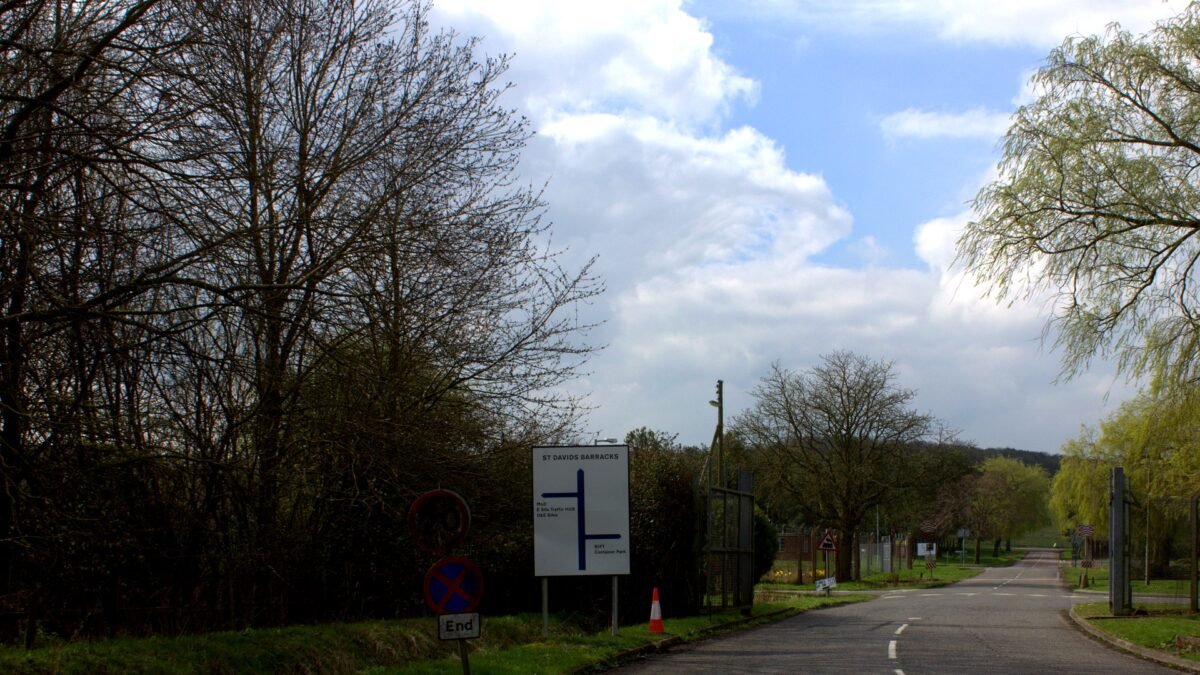
The village of Piddington in Oxfordshire, home to around 350 people, has vowed to take the government to court over plans to house up to 1,256 asylum seekers at a former military site a short distance from its homes, a day after Communities Secretary Angela Rayner granted planning permission for the centre.
Parish council chairman Tim McNally said ministers should “absolutely” expect a legal challenge, telling BBC Radio 4’s Today programme that villagers were preparing “many actions” and would disclose them as they moved forward. Opponents have six weeks to challenge the decision in the High Court.
The announcement turns a planning decision that was already one of the most bitterly contested in the government’s asylum programme into a courtroom fight, and it puts a village of a few hundred people on a collision course with a government determined to close asylum hotels by moving people onto former military sites. According to the BBC, the government’s own report on the decision recorded 3,177 representations against the proposal and one in support.
“Today is a day of reflection, and we’ll work out where we plan to go from this point,” Mr McNally told the programme. “But I will say, the Hillsborough Law is there for a reason, and we’re going to apply it.”
The reference to the Hillsborough Law, the proposed duty of candour on public authorities, was the most striking part of the village’s response. It also revealed how much of this fight will be fought on ground the government itself created: a law championed by the prime minister, invoked against his own government’s decision, by a village that says it was never properly heard.
A village that voted to leave the country
Piddington, a village of around 350 residents near Bicester, has become a national symbol of local opposition to the government’s asylum accommodation programme. In September, residents held a symbolic referendum and voted overwhelmingly to declare independence from the United Kingdom in protest at the plans, a gesture with no legal force that nevertheless carried the village’s name into the national news.
According to the BBC, 285 people voted for the village to leave the UK and 26 against, on a turnout of about 92 per cent of those eligible. The parish council chairman declared the “Principality of Piddington”, and the stunt drew visits from opposition politicians, including Conservative leader Kemi Badenoch, who met villagers in September.
The plan at the centre of the dispute is the conversion of part of the former MoD Bicester storage site, a Ministry of Defence depot about a mile from the village, into accommodation for up to 1,256 single adult male asylum seekers. The site has never been used for housing, and part of it remains in daily military use. Planning permission was granted on Thursday 12 November through the Urgent Crown Development process, a fast-track route under which the decision is taken by the Secretary of State rather than the local council.
The permission covers the demolition of existing buildings, the construction of new modular accommodation, and provisions for health and welfare facilities. The approved use is temporary and phased, running for ten years from 2027 to 2037, according to the decision.
Cherwell District Council, which formally objected to the proposals in September, said “important planning questions remained unanswered”. Its leader, Lesley McLean, said local residents would “rightly be feeling extremely angry and let down by this development”, adding that they had “campaigned tirelessly and peacefully to have their voices heard, and this decision suggests their concerns have fallen on deaf ears”.
Bicester Town Council said it was “deeply disappointed” by the decision, which it said had been taken through the Urgent Crown Development process “bypassing normal local planning scrutiny, despite strong and well-founded objections… regarding the suitability of the site, infrastructure capacity, community safety, and the lack of meaningful consultation”. The council said it would now prepare a formal response to the government “setting out its continuing concerns and seeking clear assurances on the issues raised”.
“Many actions” and a six-week window
Mr McNally’s appearance on BBC Radio 4’s Today programme on Friday was the village’s first public response to the approval, and it was deliberately short on detail and long on intent. Asked whether ministers should be braced for a legal challenge, he replied: “Absolutely, absolutely.”
Asked how the village would respond, he said: “There’s going to be many actions, you will see. We will disclose that as we move forward.”
The six-week window for a High Court challenge is the hard deadline. According to Parliament News, any challenge “may be brought only on the ground that the decision is legally flawed; it is not an opportunity to reconsider the planning merits”. That is a narrow door. Villagers cannot ask a judge to decide whether the centre is a good idea; they must show that the way the decision was reached was unlawful, for example because the government failed to follow its own procedures, ignored material considerations, or acted irrationally.
The village is not starting from scratch. Campaigners appealed for a judicial review of the proposals last month, before the approval was granted, and the campaign group “Wrong Plan, Wrong Site” had already sent the government a pre-action letter, the first formal step towards judicial review proceedings. The legal groundwork, in other words, was laid before the decision landed.
That matters because the most promising lines of attack are likely to be the ones the decision letter itself acknowledges. According to The Times, Ms Rayner’s decision letter accepted that the plans would place a “residual demand on healthcare, emergency and other public services” and could damage “community cohesion”. Those concerns, the letter said, were outweighed by the “benefit of meeting the urgent national public-service need for additional asylum accommodation, including addressing the shortage of suitable accommodation and operational headroom”.
Lawyers for the village will be reading that balancing exercise closely. The decision also recorded that residents had only ten days, from 7 to 17 September, to comment on the proposals, and that no full environmental impact assessment was carried out. The NHS had warned that nearby GP practices have no spare capacity, and questions about asbestos and unexploded ordnance on the former military site, as well as access and sewage arrangements, were acknowledged in the decision papers with details deferred.
There is also the question of cost to the public purse beyond the site itself. According to The Times, Matthew Barber, the police and crime commissioner for Thames Valley, which covers Piddington, said the plans were expected to cost his force £1.7 million.
The Hillsborough Law gamble
The most unusual element of the village’s response was Mr McNally’s invocation of the Hillsborough Law. The law, formally the Public Office (Accountability) Bill, would impose a statutory duty of candour on public authorities and public officials, requiring them to act with honesty, transparency and frankness in their dealings with official inquiries and investigations, backed by criminal sanctions for serious breaches.
It is a cause with deep roots in British public life. The campaign for the law grew out of the Hillsborough disaster of 1989, in which 97 Liverpool supporters died, and the decades-long struggle by bereaved families against what they said was a cover-up by public authorities. The bill was championed by Andy Burnham, now the prime minister, who first introduced it as a backbench MP in 2017 and made it a defining commitment of his leadership.
But the law is not yet in force, and that is the awkward fact at the heart of Mr McNally’s threat. According to Wikipedia, the bill was approved by the House of Commons on 14 July 2026 and is now being scrutinised by the House of Lords, where it was at committee stage with sittings in October 2026. The government hopes it will be in effect by April 2027, in time for the anniversary of the Hillsborough disaster. Until it receives Royal Assent and is brought into force, its duty of candour does not exist in statute.
Mr McNally’s argument, as he put it on the Today programme, was a moral one rather than a strictly legal one. “Last night, [Prime Minister] Andy Burnham was on a podium talking about the violence, sexual violence towards women, and bringing it upon the media industry as their responsibility to manage,” he said. “But the reality is, is that this is exactly what the government is doing to us here.”
The logic is plain: a prime minister who built his reputation on forcing the state to be candid with the public should not, in the village’s view, be able to push through a decision affecting 350 people after a ten-day consultation and a fast-track process that bypassed their elected council. Whether a court would accept that argument as a legal claim is a different question, and one the village’s lawyers will have to answer within six weeks.
There is a second difficulty. Even when the Hillsborough Law does come into force, its duty of candour applies to public authorities’ dealings with specified inquiries, inquests and investigations. A planning decision taken under the Urgent Crown Development process is not, on its face, an inquiry or an investigation. The village may instead be using the law as a rhetorical weapon, a way of framing the government’s conduct as the kind of official opacity the law was designed to punish, rather than as the direct legal basis for the challenge.
That does not make the threat empty. Judicial review claims often combine several grounds, and the political force of invoking the prime minister’s own flagship legislation against his government is considerable. It also guarantees the case will be covered as a story about the government, not just about a village.
The government’s case: permission is not a decision
The government’s response to the village has been consistent, and carefully worded. A Home Office spokesperson said on Thursday: “Planning permission allows us to continue to progress the use of MoD Bicester. However, a final decision to proceed is yet to be taken.”
That distinction, between permission and a final decision, is the government’s central defence. Planning permission is only one stage of a wider process, and further assessments and approvals must follow before any asylum seekers can be moved to the site. Defence minister Luke Pollard, speaking to LBC, underlined the point. “It’s pretty obvious that there’s a strong sense of feeling from the community around Bicester, especially in Piddington,” he said. “The Home Office continues to engage with those. There’s still a few more stages to go here, so it’s not yet fully locked in and delivered, so that we can understand where the concerns are, so they can be mitigated.”
“I recognise that any change for the people around MoD Bicester will be a concern, and that’s why it’s so important that the Home Office engages with the community,” he added.
The prime minister’s deputy spokeswoman insisted the accommodation would be safe for local people, saying such sites are “designed to be self-contained with 24/7 security and CCTV to minimise the impact on the local community”. She added that, as the prime minister himself had said, “we do not want a situation where it’s only the poorest communities in the country that receive all of the dispersal of refugees and asylum seekers who believe all parties to play their part.”
Asked what the prime minister would say to the women of Piddington, the spokeswoman said: “I think he would say we completely understand the strength of the feeling here and the safety of the public will always be our top priority, and that’s why we will work with police and other partners to ensure security arrangements are in place.”
The Home Office also set out the wider policy case. “The government is working on a fairer distribution of asylum accommodation across the country, with over £1bn saved in costs since the election,” the spokesperson said. “This includes closing all asylum hotels and moving to alternative accommodation, including former military sites. These are designed to be self-contained, with 24/7 security and CCTV, to minimise the impact on the local community.”
The village’s case: “It’s wrong for them, and it’s wrong for us”
For the residents themselves, the argument is simpler and more personal. Melise Witkin, who has lived in Piddington for six years, told the BBC she was “extremely disappointed but not surprised” to hear the plans had been approved. She said she had moved to the village because she wanted “tranquility” and to live in a community, “which we have”.
“I think people are angry but scared,” she said. “Where are they [the asylum seekers] going? We’ve got no pavements, we’ve got no street lights, we’ve got no pub, we’ve got no shop, so what are they going to do?”
“It’s just the wrong site,” she added. “It’s wrong for them, and it’s wrong for us.”
Jo Haw-Cook, who has lived in the village for 56 years, said she was “saddened” but “not surprised”. “There’s still a long way to go, and we’re still going to fight on,” she told the BBC. “I think the mood is reasonably positive, obviously we are disappointed, but we’re resilient, and we are a community, and we will come together to fight this as a community.”
Their concerns are the practical ones that have run through the campaign from the start: a village with no pavements, no street lighting, no shop and no pub, a mile from a site that would house more than three times its own population, with GP surgeries that the NHS itself says have no spare capacity. The decision letter’s own acknowledgement of pressure on healthcare and emergency services, and of possible damage to community cohesion, gives those concerns an official footing that the villagers did not have before.
The politics: “betrayal” and “ground zero”
The opposition parties moved quickly to make Piddington a national argument. Conservative leader Kemi Badenoch, who visited the village in September, said the plans were a “betrayal of the women of Piddington” and “emblematic of Labour and Angela Rayner’s disregard for the law and women and girls’ safety”.
“When I visited Piddington I met a village terrified of what was about to land on their doorstep,” she said on social media. “The Government said it was listening, instead it’s completely ignored this community’s concerns. The 1,000+ male migrants that Labour are about to deposit in Oxfordshire are in Britain illegally. They should be deported as soon as possible, not housed in areas completely unsuitable for the task.”
Reform UK’s home affairs spokesman Zia Yusuf, speaking in Piddington, called the village “ground zero for the invasion of Britain”. “Despite an enormous campaign from local residents demanding that the government doesn’t dump 1,200 illegal migrant men into their village, Angela Rayner has approved it. It’s absolutely shocking,” he said. Asked whether using the former military site was better value for taxpayers than hotels, he said: “The only thing that should be happening with these people is them being detained and deported back to the country from which they came.”
The language from both parties is deliberately stark, and it reflects how Piddington has become a proxy for the wider argument about asylum accommodation. For the Conservatives and Reform UK, the village is evidence that the government is imposing asylum accommodation on communities that do not want it, and doing so by overriding local democracy. For the government, the same village is evidence of the opposite problem: that without the power to override local objections, the hotel system it inherited can never be closed.
That is why the legal challenge matters beyond Oxfordshire. If the village wins, or even if it secures an injunction that delays the site, it will encourage similar challenges at the other military sites in the government’s programme. If it loses, the government will be able to say that its fast-track process has survived judicial scrutiny, and the remaining sites will be harder to stop.
The wider programme: hotels, barracks and a troubled precedent
The Bicester decision sits inside a much larger programme. The government has pledged to close all asylum hotels by the end of this Parliament, which must end by 2029, and to replace them with larger, more basic sites, including former military bases, and with more flats and shared houses.
The numbers show why ministers regard the hotel system as unsustainable. According to Home Office statistics, 16,021 asylum seekers were housed in hotels at the end of June 2026, down from a peak of 56,018 in September 2023. Fewer than 160 hotels remain in use, compared with about 400 at the peak. But the cost remains enormous: a hotel place cost an average of £144.98 per person per night, against £23.25 in shared dispersal housing, according to figures in the Home Affairs Committee’s October 2025 report. The National Audit Office found in May 2025 that the expected cost of the asylum accommodation contracts over ten years had risen from £4.5 billion to £15.3 billion.
The military-site programme is the government’s answer. Three sites, Bicester, Barnham and Linton-on-Ouse, are expected to provide around 3,750 places between them. Two sites are already in use: Wethersfield in Essex, which housed 744 people at the end of June 2026 out of 1,245 bedspaces, and Crowborough in East Sussex, which housed 418.
The precedent the village’s campaigners keep returning to is Linton-on-Ouse in North Yorkshire. The site was announced in April 2022 as accommodation for 1,500 asylum seekers, scrapped four months later after a furious local campaign, and revived in July 2026 as part of the current programme. According to the Gazette and Herald, the government paid £1.49 million to Serco for a centre that was never used, and campaigners have warned the revived scheme could cost £270.9 million.
That history is the reason Piddington’s campaigners believe they can win, or at least delay the scheme long enough for the politics to change. Linton-on-Ouse shows that a determined local campaign, backed by legal action and political pressure, can stop a military-site asylum centre. It also shows that a stopped scheme can come back.
The small-boats figures give the government its own argument for urgency. According to Home Office statistics, 22,605 people arrived by small boat between 1 January and 5 November 2026, about 39 per cent fewer than the 36,954 who arrived in the same period of 2025. Arrivals in 2025 totalled 41,472, below the record of 45,755 in 2022. The government says it has returned more than 80,000 people with no right to remain since the general election of July 2024, and it points to the fall in hotel numbers, from 213 when Labour entered government to fewer than 160, as evidence that the programme is working.
Analysis: Why It Matters
1. A village against the state, in the state’s own language
The most remarkable feature of Piddington’s response is not that it is going to court. Villages go to court over planning decisions all the time. It is the language in which the challenge is being framed. By invoking the Hillsborough Law, a piece of legislation the prime minister himself championed, the village has turned the government’s own moral vocabulary against it.
That is a deliberate choice, and a clever one. The Hillsborough Law exists because of a decades-long argument that the state concealed the truth from ordinary people and was never properly held to account. Piddington’s claim is a smaller version of the same argument: that a decision affecting their lives was taken quickly, through a process that bypassed their elected council, after a consultation window of ten days, and that they were not properly heard. The law is not yet in force, and it may not even apply to a planning decision. But as a piece of political theatre, it is devastatingly effective, because it forces the prime minister to defend a process that looks like the opposite of the candour he promised.
2. The six-week window is the real battleground
For all the rhetoric, the legal fight will be won or lost on narrow, technical grounds. A High Court challenge to a planning decision can only succeed if the decision was legally flawed. That means the village’s lawyers must find a procedural error, a failure to consider something the law required the Secretary of State to consider, or a decision so unreasonable that no reasonable minister could have made it.
The decision letter gives them material to work with. The acknowledgement of pressure on healthcare and emergency services, and of possible damage to community cohesion, is a candid admission that the costs of the scheme are real. The ten-day consultation window, the absence of a full environmental impact assessment, and the deferred details on access, sewage, asbestos and unexploded ordnance are all points a claimant’s lawyers will press. But the government will argue that the Urgent Crown Development process exists precisely for decisions of this kind, that the Secretary of State weighed the harms against the urgent national need for accommodation, and that the courts should not second-guess that judgement.
The history of judicial review in planning cases suggests the village faces an uphill struggle. Courts are reluctant to overturn ministerial decisions taken under emergency powers, and the “legally flawed” test is a high bar. But the village does not necessarily need to win outright. An injunction, or even a permission hearing that delays the scheme by months, would change the politics of the site, and delay is itself a form of victory for a campaign whose real aim is to make the centre too difficult to deliver.
3. Permission is not a decision, and that is the problem
The government’s most repeated line, that planning permission is not a final decision to proceed, is technically accurate and politically awkward. It is accurate because further assessments and approvals must follow before anyone can be moved to the site. It is awkward because it leaves everyone, the village, the councils, the opposition parties, and the asylum seekers themselves, in limbo.
For the village, the distinction is meaningless. Planning permission is the step that makes the centre real, and the government has taken it. The assurance that a final decision has not yet been made sounds, to residents who have just lost a planning fight, like a promise that can be withdrawn at any moment. For the government, the distinction is a shield: it allows ministers to say they are listening, engaging and mitigating, while the machinery of delivery continues. The risk is that the shield becomes a trap. If the final decision is eventually taken, the village will say it was misled. If it is not taken, the government will have spent political capital on a site it never uses, repeating the Linton-on-Ouse experience.
4. The military-site model is on trial
Piddington is not the only military site in the programme, but it has become the test case for the whole model. The government’s strategy depends on being able to move thousands of people out of hotels and onto former military bases, quickly and cheaply. That strategy only works if the sites can be delivered on time, and if the legal and political resistance they generate can be managed.
The record so far is mixed. Wethersfield and Crowborough are operating, but both faced legal challenges and local campaigns. Linton-on-Ouse was stopped once and revived. Barnham is still to come. If Piddington succeeds in delaying or blocking Bicester, the message to every other community facing a similar scheme will be that resistance works, and the government’s timetable for closing the hotels will slip. If the village fails, the government will have a precedent it can cite at every subsequent site, and the argument that local opposition can stop a military asylum centre will be considerably weaker.
The economics reinforce the stakes. At £144.98 a night, a hotel place costs more than six times a place in dispersal housing, and the National Audit Office’s figure of £15.3 billion for the accommodation contracts is a standing rebuke to every government that has managed the system. The military sites are supposed to be the cheap, controlled alternative. But if each site requires years of legal fighting, police costs of £1.7 million, and political damage in the communities around it, the cheap alternative starts to look expensive.
5. A protest that became a national argument
Piddington’s symbolic vote to leave the United Kingdom was, at the time, easy to dismiss as a stunt. A village of 350 people cannot secede, and nobody involved pretended otherwise. But the stunt worked, because it gave a national story a human face. The village is small enough to understand and sympathetic enough to identify with, and its protest was peaceful, organised and persistent.
The legal challenge is the serious version of the same strategy. It keeps the village in the news, it forces the government to defend its process in court, and it turns a local planning dispute into a national argument about how the state treats small communities when it needs their land. The involvement of the Hillsborough Law, the interventions of the Conservative and Reform leaders, and the objections of two councils all point in the same direction: this is no longer a dispute about one site in Oxfordshire. It is a dispute about who gets to decide, and how much a community’s objections are worth when the government says the need is urgent.
That is why the case will be watched far beyond Piddington. Every village, town and city that might one day find a former military site on its doorstep will be watching to see whether 350 people, armed with a parish council, a campaign group and a law that is not yet in force, can stop a government that has decided their village is the answer to a national problem.
What to Watch Next
- The six-week deadline: the window for a High Court challenge closes in late December. Watch for the filing of the claim and the grounds the village’s lawyers choose, particularly any reliance on the consultation period, the environmental assessment, or the decision letter’s own admissions on healthcare and community cohesion.
- The pre-action correspondence: the campaign group “Wrong Plan, Wrong Site” has already sent a pre-action letter. The government’s response to that letter, and any further correspondence, will show how seriously ministers take the threat of litigation.
- An injunction application: if the village seeks an interim order to prevent any works starting while the case is heard, the court’s decision on that application will be the first real test of the challenge’s strength.
- The Hillsborough Law in the Lords: the bill’s progress through the House of Lords, and the government’s target of bringing it into force by April 2027, will determine whether the village’s invocation of the law remains a rhetorical device or becomes a live legal argument.
- The Home Office’s final decision: ministers have stressed that planning permission is not a final decision to proceed. Watch for the further assessments and approvals that must follow, and for any timetable for when the first residents might arrive.
- The other military sites: Barnham and Linton-on-Ouse will be watched for copycat challenges. Any delay at Bicester is likely to be cited by campaigners at the other sites.
- The political fallout: Kemi Badenoch and Zia Yusuf have both made Piddington a central part of their attack on the government. Watch for the issue at Prime Minister’s Questions and in the run-up to the local elections in May, when the government’s asylum programme will be tested at the ballot box in the communities around the sites.
Sources
- BBC News — Piddington to bring legal challenge over asylum base plans
- Glasgow Times (Press Association) — Piddington will bring legal challenge over asylum base plans
- The Times — Village vows to fight on after government approves migrant camp
- Parliament News — Government grants planning approval for asylum centre at MoD Bicester
- Wikipedia — Hillsborough Law (Public Office (Accountability) Bill)
- Full Fact — Has the government stopped using hotels to house asylum seekers?

About the Author — Abdul Mannan
Related Articles

Rayner Approves Asylum Centre for 1,256 Men Beside the Village That Voted to Leave the UK
Communities Secretary Angela Rayner has granted planning permission for an asylum centre housing up to 1,256 men at…

Burnham Says EU Reset Talks Will ‘Go Down to the Wire’ as Tuition Fees Threaten Next Week’s Summit Deal
Prime Minister Andy Burnham has warned that talks to finalise Britain's post-Brexit reset deal with the EU will…

Two Iranian Men Convicted of Spying for Tehran in London in Landmark National Security Trial
Two Iranian men have been convicted at Woolwich Crown Court of spying for Tehran after surveilling journalists and…