
Manchester United Confirm Mauricio Pochettino as Head Coach From 18 November After Tearful Farewell to the USA

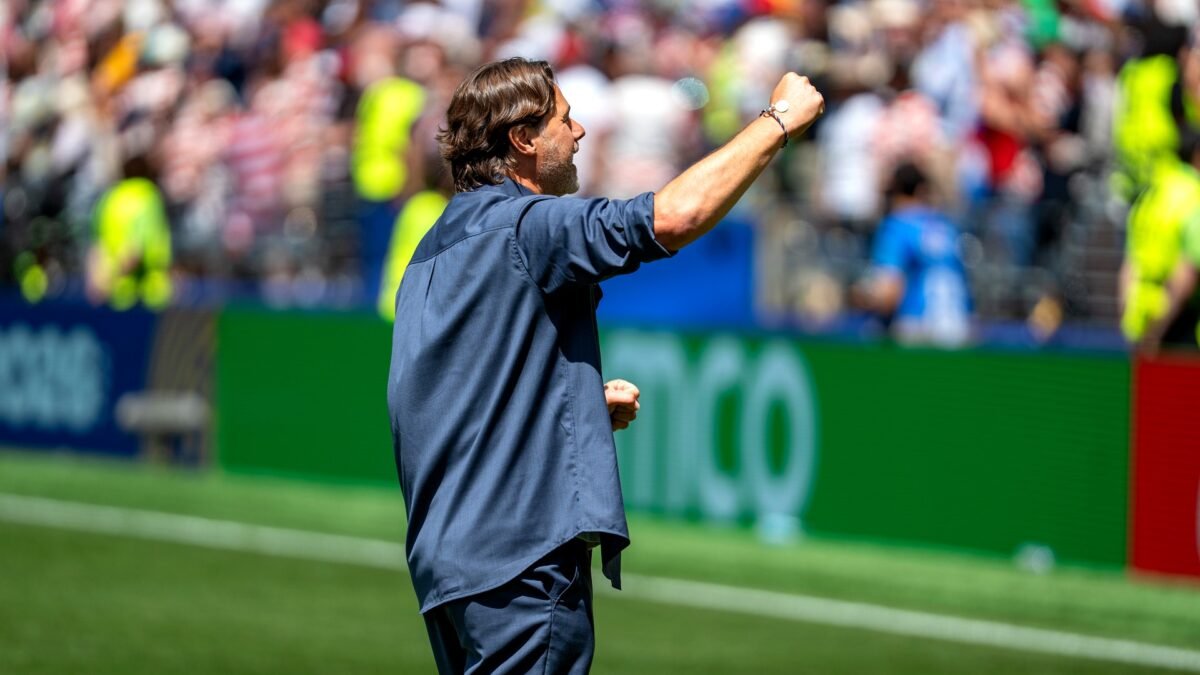
Manchester United have confirmed Mauricio Pochettino as their new head coach, announcing on Friday that the 54-year-old Argentine will take charge from Wednesday 18 November on a two-and-a-half-year contract, less than a day after the club sacked Michael Carrick.
The appointment ends two years away from club football for Pochettino, who leaves his post as head coach of the United States men’s national team after guiding the World Cup co-hosts to the last 16 on home soil earlier this year. He will finish his American duties first, coaching the United States in two CONCACAF Nations League quarter-final legs against Haiti — on Saturday in Miami and on Tuesday in Cincinnati — before crossing the Atlantic to begin work at Old Trafford.
His first match in charge will be one of the hardest fixtures in English football: away to Liverpool at Anfield on Sunday 22 November, four days after he officially starts work.
The announcement
Manchester United announced the appointment in a statement on Friday, confirming that an agreement had been reached with the United States Soccer Federation for Pochettino and his coaching staff to be released once their duties with the national team are complete. “The club has reached an agreement with the US Soccer Federation for Mauricio and his staff to be released after the conclusion of their responsibilities with the US Men’s National Team,” United said, according to Reuters.
The club’s statement did not state the length of the deal. BBC Sport and the Press Association reported that Pochettino has signed a two-and-a-half-year contract running to the summer of 2029, and the Press Association reported that his appointment had the unanimous endorsement of the club’s leadership and ownership. The Press Association also reported that Pochettino was the only coach the club spoke to directly as a potential successor to Carrick.
United’s announcement contained no quotes from a club representative, out of respect for the fact that Pochettino remains a United States Soccer employee until his national-team duties end this month, the Press Association reported. He is expected to address the media as United head coach for the first time towards the end of next week, after he arrives in Manchester.
The fee United paid to release Pochettino from his contract with US Soccer has not been confirmed by either side. BBC Sport reported that United paid a release clause of about £7.4 million, while The Times had earlier reported the figure as £7.5 million. The two figures are close enough that the difference is best read as rounding in separate reports rather than a dispute, and neither club has put a number on the deal in public.
In its own statement, United described the qualities it had bought. “The Argentinian is renowned for his high-intensity, attacking style of football, his dedication to building strong, cohesive teams and his outstanding record of developing individual players,” the club said, according to CNN.
A tearful goodbye in America
Pochettino’s farewell to the United States was emotional. He addressed the media at a news conference on Friday ahead of the first leg against Haiti, sitting between United States Soccer Federation president Cindy Parlow Cone and the federation’s chief executive, JT Batson, and he was in tears as he spoke about leaving what he called his dream job.
“Normally it’s the opposite, you’re sacked and you cry because you want to stay and you are sacked,” the tearful Pochettino said, according to CNN. “It’s never an ideal situation when this type of thing happens but like in life, football goes quick.” He spoke of the “amazing memories” he had made as head coach and repeated his commitment to the national team for the two remaining matches of this international break, describing the decision as one of the most difficult of his career.
In a statement released on Friday, Pochettino thanked the federation and its supporters. “The opportunity to represent the USA crest was one of the greatest honours of my career,” he said, according to Reuters. “We are so grateful to the players for their commitment, to the fans for their belief, and to the Federation for always supporting our staff and creating the opportunities to impact the culture of soccer in this great country.”
He added that the talent in the American player pool gave him confidence about the programme’s future. “There is tremendous talent in the U.S. player pool from the youth teams through to the senior team, and it’s one of the reasons we have so much belief for the future of U.S. Soccer,” he said. “You will always have a special place in our hearts, and we will be supporting the teams whenever they step on the field.”
US Soccer’s chief executive paid tribute to what Pochettino had changed behind the results. “Mauricio has left a lasting mark on US Soccer through his leadership, professionalism and commitment to our players and culture,” Batson said in a statement, according to CNN. “What we are most proud of goes beyond the wins. He and his staff raised standards, strengthened our culture and created clearer connections from the Youth National Teams to the senior team.”
Pochettino took over the United States in the autumn of 2024, replacing Gregg Berhalter after the team’s group-stage exit at the Copa America, and he won 21 of his 35 matches in charge, according to Reuters. His task was to lead the team into a home World Cup, and the Americans impressed in the group stage before beating Bosnia and Herzegovina in the round of 32. The campaign ended in the round of 16, where the United States were outplayed from start to finish and lost 4-1 to Belgium, according to CNN.
The timing of his departure underlines how quickly the move came together. Only about three months earlier, in August 2026, the United States Soccer Federation had announced a new four-year contract for Pochettino to lead the Americans through the 2030 World Cup, according to the Associated Press. He lasted barely a hundred days into that deal before United’s interest lured him away. According to the federation’s own tax filing, cited by the Associated Press, Pochettino earned just over $5 million during his first seven months as coach of the United States. How much he will earn at United has not been disclosed, as European clubs do not typically publish coaches’ salaries.
What Pochettino inherits at Old Trafford
Pochettino takes over a club in the relegation zone. Manchester United are 18th in the Premier League after ten games, with one win and eight points, one point above bottom side Crystal Palace, according to Reuters. They have won only three of their 15 matches in all competitions this season, and their start to a league campaign is their worst in four decades.
Carrick was sacked on Thursday, six months into the two-year contract he signed in May, after a run of results that left the club’s hierarchy with no patience left. The final sequence was brutal: a 3-0 home defeat by Bournemouth, in which captain Bruno Fernandes was left on the bench and not brought on, a 2-0 defeat at Chelsea, and then a 4-4 home draw with Aston Villa on Sunday 8 November, in which two injury-time goals salvaged a point but could not hide the collapse. Supporters chanted Carrick’s name even as they booed the players off the pitch after the Bournemouth defeat, according to Reuters, and that split — faith in the manager, fury at the players and the hierarchy — has defined the mood around the club for weeks.
Carrick’s story at United had begun with a miracle. Appointed interim head coach in January 2026 after Ruben Amorim was sacked, he won 11 of his first 16 matches, beating Arsenal, Manchester City, Liverpool and Chelsea, finished third in the Premier League and secured Champions League qualification. That run earned him the permanent job in May. But the new season exposed everything the spring run had papered over, and the decision to remove him was made at a review meeting on Monday and ratified with minority owner Sir Jim Ratcliffe in Monaco on Wednesday, before Carrick was informed at the Carrington training ground on Thursday morning.
His entire coaching staff left with him, including Steve Holland, Jonathan Woodgate, Jonny Evans and Travis Binnion, which means Pochettino will arrive at a club with a cleared-out dugout as well as a struggling squad. The details of the staff who will join him at United will be confirmed in the coming days, the Press Association reported.
The squad he inherits was assembled at considerable expense but is lacking confidence and identity, according to Reuters. The summer’s spending, about £150 million, went almost entirely on midfielders, while the club’s only established senior left-back is the injury-prone 31-year-old Luke Shaw. That imbalance is now Pochettino’s problem to solve, and it cannot be solved in a single transfer window.
He is the eighth permanent coach or manager to take the job since Sir Alex Ferguson retired in 2013, according to the Associated Press. The seven before him — David Moyes, Louis van Gaal, Jose Mourinho, Ole Gunnar Solskjaer, Erik ten Hag, Ruben Amorim and Carrick — were all sacked. Pochettino is the third appointment of the Ratcliffe and INEOS era, after ten Hag and Amorim, and the stated ambition of that ownership is to win the Premier League by 2028.
The road back to the Premier League
Pochettino’s managerial career began at Espanyol, the club where he also spent a decade as a player across two spells, before he moved to Southampton in 2013. It was at Tottenham Hotspur, between 2014 and 2019, that he built the reputation United are now buying: he turned Spurs into regular top-four contenders and guided them to the Champions League final in 2019, where they lost to Liverpool.
Subsequent spells at Paris Saint-Germain and Chelsea produced mixed results, according to Reuters, but United’s hierarchy will hope that his experience can help stabilise one of football’s most scrutinised clubs. His record at Tottenham remains the strongest argument in his favour: a coach who took a club that had not finished in the top four regularly and made it a fixture there, playing the high-intensity, attacking football United’s own statement praised, and developing young players into internationals.
That last point matters more than usual at United. The club’s statement singled out his “outstanding record of developing individual players”, and that is the part of the job that cannot be bought. United’s squad is full of expensive players whose confidence has collapsed, and the first task is not tactical but human: to make players who have been booed by their own supporters believe in themselves again.
There is also a symmetry in the fixture list that Pochettino will not have missed. His greatest night as Tottenham manager ended in defeat by Liverpool in Madrid in 2019. His first match as Manchester United manager is away to Liverpool at Anfield. Football rarely offers a cleaner chance to settle an old score, and rarely offers it so soon.
Who replaces him with the United States?
United’s gain is an immediate problem for US Soccer, which must now find a coach to lead the national team into the next World Cup cycle after losing the man it had only just tied to a four-year deal. The search will be led by chief executive JT Batson and chief operating officer Dan Helfrich, according to reports.
The most eye-catching name in the frame is Pep Guardiola. According to reporters with The Athletic, cited by CNN, the legendary former Barcelona, Bayern Munich and Manchester City manager is a top target to replace Pochettino. Guardiola has won everything there is to win in club football, and after almost two decades working with the very best, he could be tempted by the international game. It would not be the first time the United States has shown an interest in him, and the federation may feel that now is the best chance it will ever get to attract him.
Batson made clear at Friday’s news conference that the federation is prepared to spend to land a leading coach. “Our supporters, our sponsors, our donors, our fans are very supportive around making sure that we have the resources to achieve our goals including having a world class coach and we’re appreciative of that support and look forward to that being a key part of our way of winning going forward,” he said, according to CNN.
There are also closer-to-home candidates. BJ Callaghan, the 45-year-old head coach of Nashville SC, has led his team to a league-best 77 points as it topped the Eastern Conference in the regular season, according to CNN, and he is no stranger to the national setup: he was interim head coach of the team in 2023 and led the side to victory in the CONCACAF Nations League during his brief time in charge.
Another familiar name is Steve Cherundolo, currently in charge of the under-23 national side, who made 87 appearances for the United States as a player during a long career in Germany. His knowledge of the setup from the inside would make for a smoother handover than an outside appointment, though he lacks the star power of a Guardiola.
Whoever takes the job will inherit a programme that Pochettino genuinely improved, even if the World Cup ended in disappointment. The culture and standards Batson praised, the clearer pathway from the youth national teams to the senior side, and a player pool Pochettino himself described as tremendously talented are real assets. The new coach’s first task will be to keep that progress while giving the team the cutting edge it lacked against Belgium.
Analysis: Why It Matters
Speed was the statement
Manchester United sacked Michael Carrick on Thursday and confirmed his successor on Friday. In the thirteen years since Sir Alex Ferguson retired, the club has usually taken the opposite approach: long, public, agonising searches in which the vacancy itself became the story and the squad drifted while the board deliberated. This time there was no drift at all. The Press Association reported that Pochettino was the only coach the club spoke to directly, and that his appointment had the unanimous endorsement of the club’s leadership and ownership. That is not how a club behaves when it is unsure. It is how a club behaves when the decision was effectively made before the sacking was announced, and when the sacking itself was the last step in a plan rather than the first step in a search.
There is a risk in that speed, and it is worth naming honestly. A one-day turnaround leaves no time for a public debate about what the club actually needs, and it means the new manager arrives without the long courtship that usually produces a shared plan for recruitment and structure. But the greater risk, given where United sit in the table, was delay. Every week without a permanent manager in a relegation fight is a week in which the players learn that nobody is really in charge. United chose certainty over deliberation, and in 18th place, that is the right order of priorities.
A coach for a broken dressing room
The most revealing detail of the last month at Old Trafford is not a result but a sound: supporters chanting Michael Carrick’s name while booing the players off the pitch. When fans still back the manager and blame the players and the hierarchy, the problem is not the man in the dugout. It is the dressing room and the structure around it. Carrick’s sacking does not change that, and Pochettino’s first job is the one no tactics board can solve: to walk into a dressing room full of expensive, frightened players and convince them that they are better than the team that has won once in ten league games.
This is where his reputation matters more than his trophy count. United’s own statement praised his record of developing individual players, and his Tottenham years showed what that means in practice: young players trusted, improved and made central to the team. At United, the equivalent task is harder, because the players who need rebuilding are not youngsters finding their feet but established internationals whose confidence has gone. Pochettino’s gift has always been making players believe in a collective idea. At a club where the consensus among fans and the British media, as CNN reported it, is that the culture is so toxic it is almost impossible for any head coach to succeed, that gift will be tested to its limit.
Anfield in four days
Four days after he officially starts work, Pochettino takes Manchester United to Anfield to face Liverpool. It is the cruellest possible introduction and, in a strange way, the perfect one. There will be no gentle bedding-in period, no home game against a struggling side to build confidence, no time to install a system on the training ground. He will have a handful of sessions with a squad he has never coached, and then the loudest away end in English football.
That is also why the appointment’s timing is so important. Had United waited until after the international break to confirm him, he would have arrived with even less time. As it is, the two Haiti matches give him a strange kind of farewell tour, and then he lands in Manchester on Wednesday with four days to prepare for the biggest game of the season. Lose heavily at Anfield and the old questions return within a week. Win, or even draw with a performance that shows organisation and fight, and the entire mood around the club changes in an afternoon. The fixture list has handed him a referendum on his first day.
The American project, cut short
For US Soccer, this is a blow that goes beyond losing a popular coach. In August, the federation announced a new four-year deal taking Pochettino through the 2030 World Cup. Barely a hundred days later, he is gone. That is not a normal departure; it is a reminder that in international football, a national team can do everything right — agree a long contract, pay a leading salary, give the coach a home World Cup — and still lose him the moment a club like Manchester United calls. Pochettino described the decision as one of the most difficult of his career, and his tears at the news conference suggested he meant it. But he still left.
The federation’s response will define the next four years of American soccer. The reported interest in Pep Guardiola shows the scale of its ambition, and Batson’s comments about having the resources for a world-class coach suggest the money will be there. But Guardiola is a long shot, and the realistic candidates — Callaghan, Cherundolo, or an outsider — will all face the same question Pochettino faced: how do you build on a World Cup last-16 finish and take a talented generation further? The structures Pochettino left behind are his real legacy. The next coach’s job is to prove they survive without him.
The eighth man since Ferguson
Mauricio Pochettino is the eighth permanent coach to take the Manchester United job since Sir Alex Ferguson retired in 2013. Seven men have tried and failed, and the list includes serial winners and club legends alike. That is not a run of bad luck. It is a pattern, and patterns point at the institution rather than the individuals. Every new manager arrives as the answer, and every one of them discovers that the problems at United are bigger than the dugout: a squad assembled without a coherent plan, a hierarchy that has changed direction with each appointment, and a culture in which short-term results always trump long-term building.
Pochettino’s appointment does not fix any of that by itself. What it does is give United a coach whose strengths match the club’s most obvious needs: he develops players, he builds teams that press and attack with intensity, and he has done it before at a club that was drifting. Whether that is enough depends on what happens around him. The ownership’s stated ambition is to win the Premier League by 2028. On the evidence of the last thirteen years, that will take more than a new manager. It will take the club finally giving one the time, the structure and the backing that Ferguson’s successors never received. Pochettino has two and a half years. The clock is already running.
What to Watch Next
- The Haiti farewell: Pochettino’s final two matches as United States coach, against Haiti in the CONCACAF Nations League quarter-finals on Saturday in Miami and on Tuesday in Cincinnati, will show whether the team can give him a winning send-off.
- Wednesday 18 November: Pochettino’s first day at Carrington, and the confirmation of the backroom staff who will join him from the United States setup.
- The first news conference: Pochettino is expected to address the media as United head coach for the first time towards the end of next week, and his words about the squad, the structure and the relegation fight will set the tone for his reign.
- Liverpool away, Sunday 22 November: His first match in charge, at Anfield, four days after he starts work — the earliest and harshest test a new United manager could face.
- The release fee: Whether either club confirms the fee for Pochettino’s release from his United States contract, with BBC Sport reporting about £7.4 million and The Times earlier reporting £7.5 million.
- US Soccer’s search: Whether the federation’s reported interest in Pep Guardiola turns into a formal approach, or whether a candidate closer to home, such as BJ Callaghan or Steve Cherundolo, takes the job.
- The relegation fight: Whether United can climb out of the bottom three in the weeks after the Liverpool game, with the club one point above last place and eight points from ten games.
Sources
- Reuters — Pochettino to leave US team and take over as Man United head coach
- CNN — Manchester United hires Mauricio Pochettino as its new head coach, US set to begin search for replacement
- Sporting Life — Mauricio Pochettino: Manchester United confirm appointment of USA boss as head coach
- DAZN (Press Association) — Manchester United confirm Mauricio Pochettino will be new head coach
- Sportsnet (Associated Press) — Man United appoints USMNT coach Pochettino as new manager
- Yardbarker — Mauricio Pochettino named Manchester United manager as USMNT exit confirmed just months after signing new contract

About the Author — Abdul Mannan
Related Articles
Matt Henry’s Career-Best 6-27 Powers New Zealand to 244-Run Rout of India in Fourth ODI
Matt Henry took three wickets in the first over and finished with a career-best 6 for 27 as…
Harry Kane Breaks England Appearance Record with Winning Goal as Three Lions Beat Croatia to Reach Nations League Quarter-Finals
Harry Kane became England's most-capped men's player with his 126th appearance and marked the night with the winning…
Debutant Saqib Khan Takes Seven Wickets as Pakistan Fight Back Against Sri Lanka in Rain-Hit Rawalpindi Test
Saqib Khan, a 31-year-old fast bowler playing his first Test, took seven wickets for 130 runs as Sri…