
Harry Kane Breaks England Appearance Record with Winning Goal as Three Lions Beat Croatia to Reach Nations League Quarter-Finals

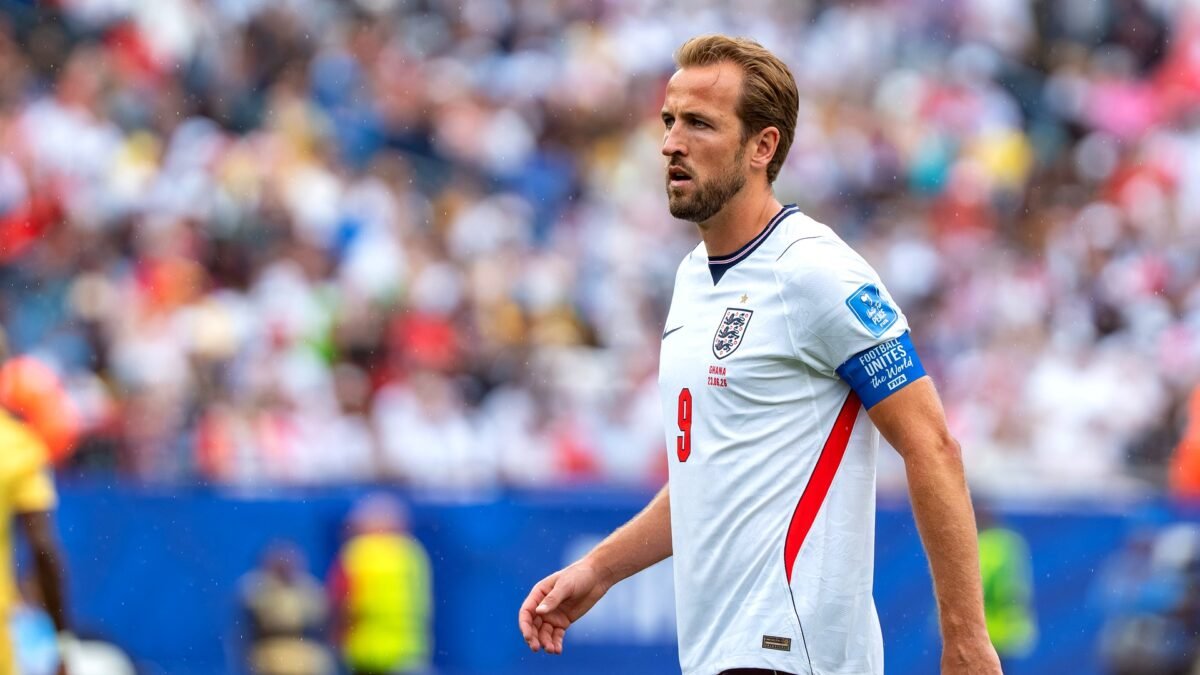
Harry Kane became the most-capped men’s player in England’s history on Thursday night, and he marked the occasion the only way he knows how: with the winning goal. The 33-year-old captain won his 126th cap in a 2-1 UEFA Nations League victory over Croatia at Wembley, passing the record of 125 appearances held by former goalkeeper Peter Shilton, and then settled the match from the penalty spot in the 64th minute to send England into the Nations League quarter-finals.
It was a night staged around one man, and Kane delivered the ending the script demanded. Before kick-off he walked out to a giant tifo bearing the words “England’s finest” and “Kane 126”, showed off the Ballon d’Or trophy he won last month, and received presentations from Shilton himself, from the Prince of Wales and from Croatia captain Luka Modric. Then, with the match level at 1-1 and Wembley growing restless, he stepped up from 12 yards and sent the ball straight down the middle as goalkeeper Dominik Livakovic dived to his left. It was his 92nd goal for England, extending a scoring record he already owned, and his seventh goal in this season’s Nations League, a competition in which he has now scored in all five of England’s group matches.
“It was incredible. Everything was amazing,” Kane said afterwards, according to Sky Sports. “Thank you to everyone who organised [the build-up], with the tifo and presentations. Thank you to Luka [Modric] and Croatia for their gift.” He added: “I knew there would be something before the game. It’s been a crazy few weeks with a lot happening, but it’s an important moment in our history as a national team.”
The victory confirmed England’s place in the Nations League quarter-finals, which will be played in March. England sit second in Group A3 behind Spain, and travel to Madrid on Sunday for a winner-takes-all meeting with the world champions that will decide who tops the group and earns a seeding for the last-eight draw.
A night built for one man
Wembley rarely stages a ceremony quite like this one. Kane was the only player featured on the cover of the matchday programme, according to Reuters, and he was greeted with a huge roar by the crowd as he led the team out accompanied by his children. The pre-match presentations were, in their own way, a history lesson. Shilton, now 77, handed over a commemorative token to the man who had finally taken the record he had held since 1989, when he passed Bobby Moore’s 108 caps. The Prince of Wales presented Kane with a framed shirt bearing the number 126. And Modric, who played alongside Kane at Tottenham Hotspur from 2009 to 2012, gave his old team-mate a replica of the first football brought to Croatia by English industrialists in 1880. According to Reuters, the only other recipient of a similar gift was the late Pope Francis, at a private audience in 2024.
Shilton, who earned his 125th and final cap at the 1990 World Cup at the age of 40, was generous in his praise. “Really, I couldn’t think of anyone better than Harry (to take the record) not only because of his football record but also the type of person that he is. He’s been a great professional and has an impeccable CV,” he told FIFA’s website, according to Reuters.
England manager Thomas Tuchel was equally effusive. Kane was described by Tuchel as the “perfect captain” and “a leader by example”, according to Reuters. The praise was not empty ceremony. Kane’s record is now the full set: most appearances, most goals, most major tournament appearances, most goals at major tournaments and most goals at Wembley. The numbers, according to Reuters, are 36 major tournament appearances, 21 goals at major tournaments, 32 major tournament games as captain and 31 goals at Wembley.
Kane had equalled Shilton’s record a month earlier, on 6 October, when he scored twice in a 3-0 Nations League win over the Czech Republic at Wembley. That night he moved level on 125 caps and took his international goal tally to 91. Thursday night, he moved clear on both counts.
How the match unfolded
For all the ceremony, the football itself was far less polished. England had thrashed Croatia 7-0 in Rijeka only 40 days earlier, a defeat Croatia coach Slaven Bilic had called an “eternal shame”, and the visitors arrived at Wembley determined to make amends. The result was a match that Sky Sports’ Rob Dorsett described as “instantly forgettable” as a game, even as the occasion “will live long in the memory”.
England took the lead in the 24th minute through Morgan Rogers. The goal began with Kane himself, dropping deep in his trademark style before clipping a fine pass for Jude Bellingham, whose volleyed cross was bundled in by Rogers after Croatia defender Josko Gvardiol failed to clear. It was Bellingham’s sixth assist for England in 2026, according to Sky Sports, the most by any England player in a calendar year since Raheem Sterling also recorded six in 2019.
England should have taken control from there, but the performance drifted. Tuchel acknowledged as much afterwards. “It was an okay performance overall,” he said, according to Sky Sports. “It took us a while to figure the press out because they played in a back five… Once we figured that out after 15 minutes we were the better team. You felt the confidence coming. We got a bit sloppy in the last five minutes of the first half. Good reaction at the start of the second half.”
The sloppiness returned, and Croatia punished it. In the 59th minute, Jarell Quansah attempted a casual headed clearance back to goalkeeper Jordan Pickford from a Croatia corner, and Petar Sucic pounced to poke the ball home. It was a gift, and it silenced Wembley. Quansah, however, made amends within minutes. From an England corner, he was pulled to the ground by Croatia right-back Ivan Smolcic, and after a VAR review referee Morten Krogh of Denmark pointed to the spot.
Kane waited, cleaned his boots, took his breaths, and then did something unusual for him. Rather than placing the ball into a corner, he drove it straight down the middle, according to The Times, fooling Livakovic, who had already committed himself to his left. It was Kane’s 27th penalty for England, according to talkSPORT, and it restored the lead in the 64th minute.
The final half-hour was nervy. James Garner thought he had scored his first England goal, only for an offside flag to cut his celebrations short. Nikola Vlasic clipped a shot wide when he looked set to equalise, Ante Budimir headed over from a late corner, and Pickford was forced into a couple of late saves. But England held on for a fourth consecutive Nations League win, according to talkSPORT, and for the result the night required.
“But once the game started it was full focus,” Kane said afterwards, according to Sky Sports. “These occasions feel much better when you win and now I can take a breath and enjoy this.”
The record in numbers
Appearance records are, by their nature, records of endurance. Goals are the currency of a striker’s reputation, but caps are the measure of a career’s length, and Kane’s 126 have been accumulated across more than a decade, five England managers and three major tournaments as captain.
He made his debut as a substitute against Lithuania in March 2015, scoring 79 seconds after coming on, according to Reuters. He has played under five England managers, starting with Roy Hodgson. He broke Wayne Rooney’s scoring record in 2023, with a penalty against Italy, and became England’s most-capped outfield player with his 121st cap. Before Thursday’s match he had already scored 91 goals for his country, 38 more than Rooney managed in his entire England career.
The list of England records Kane now holds is long. He is the country’s all-time leading men’s goalscorer, its most-capped men’s player, its most-capped outfield player, its record holder for major tournament appearances, for goals at major tournaments, for major tournament games as captain and for goals at Wembley. He has scored in each of England’s five Nations League group matches this season and leads the competition’s scoring charts with seven goals.
The next milestone is already in his sights. Only three male players in history have scored 100 international goals: Portugal’s Cristiano Ronaldo, Argentina’s Lionel Messi and Ali Daei of Iran. Kane, on 92, needs eight more. “We spoke in the last camp about the 100 goals for England, I think that’s another incredible milestone to try and reach as soon as possible,” he said earlier in the week, according to Reuters.
At 33, and in the form that won him the Ballon d’Or last month, he has time on his side. Last season he scored 73 goals in 65 games for Bayern Munich and England combined, according to Reuters. The record he broke on Thursday belonged to a goalkeeper who played until he was 40. Kane, an outfield player who shows no sign of slowing down, could yet push the new mark far beyond 126.
From Lithuania to legend
Kane’s England story began without fanfare. When he came on against Lithuania in March 2015, he was a 21-year-old Tottenham striker who had only recently forced his way into the first team at his club. He scored within 79 seconds of his debut. It was, in retrospect, the most Kane-like beginning imaginable: no ceremony, no fuss, just a goal.
What followed was a decade of steady accumulation. He became England captain, led the team to the semi-finals of the 2018 World Cup, where he won the Golden Boot, and to the final of the European Championship in 2021. He broke Rooney’s scoring record in March 2023. He moved to Bayern Munich in the summer of 2023 and became, by any measure, one of the most productive strikers in world football. Last month he won the Ballon d’Or, the first Englishman to do so in 25 years, and this summer he captained England to third place at the 2026 World Cup, according to Reuters.
None of that made Thursday night a formality. Records of this kind are not simply handed over; they have to be survived. Shilton’s 125 caps stood for 36 years, through generations of English footballers who came and went. Bobby Moore’s 108 had stood for 19 years before Shilton passed it in 1989. Kane’s achievement is not only that he played 126 times for England, but that he did so while carrying the team’s goalscoring burden for most of that period, and while remaining, in Tuchel’s words, the perfect captain.
The tifo at Wembley called him “England’s finest”. It is a claim that, on the evidence of the record books, is now difficult to dispute. No England player has appeared more often. No England player has scored more. No England player has captained the team at more major tournaments. The debate about Kane’s place in English football history is, in the statistical sense at least, over.
Shilton’s record and what it meant
To understand what Kane has done, it helps to understand what he has taken. Peter Shilton’s record was not a soft target. He won 125 caps across two decades, from 1970 to 1990, and played in three World Cups. He was 40 years old when he won his final cap, at Italia 90. His record survived the entire careers of David Beckham, Steven Gerrard, Frank Lampard and Wayne Rooney. Rooney, the previous goalscoring record holder, finished on 120 caps. Beckham finished on 115. No outfield player had ever come close to Shilton until Kane.
Shilton’s own journey to the record is part of its weight. He passed Bobby Moore’s 108 caps in 1989, 23 years after Moore had captained England to their only World Cup triumph. Moore is, for many, the greatest English footballer who ever lived. That Shilton’s record should now pass to a striker who has also passed Moore’s successor as goalscorer gives the moment a symmetry that Wembley’s ceremony seemed designed to honour.
There was something fitting, too, in Shilton being present to hand the record over in person. Records are often broken in absentia, with the previous holder reduced to a statistic in a match report. On Thursday, the two men stood together on the Wembley turf, and the record passed from one to the other in full view of the crowd. Shilton’s words to FIFA’s website, quoted by Reuters, made clear that he regarded the succession as a compliment rather than a loss.
It is worth noting, too, that Kane’s record is a men’s record. The wording matters, and every report of the night was careful to say so. The women’s game has its own appearance records, and the distinction is not a footnote but a fact. Kane is England’s most-capped men’s player. That is the record he broke, and it is the record he now owns.
Analysis: Why It Matters
A record that measures staying power
Goalscorers are remembered for their goals, but appearance records measure something different: availability, durability and the trust of successive managers. Kane has now played under five England managers, from Roy Hodgson to Thomas Tuchel, and every one of them picked him. That is the quiet truth behind the 126. Managers change, systems change, generations of players come and go, and the one constant has been the striker from Tottenham who became the striker from Munich. Records like this are not won in a single season. They are won by never being dropped, never being injured at the wrong time, and never giving a manager a reason to look elsewhere. Kane has done all three for more than a decade.
The captain who keeps delivering
There is a particular kind of pressure attached to a night like Thursday’s. The ceremony, the tifo, the presentations, the Ballon d’Or on display, the whole stadium waiting for the record-breaker to score: it is the sort of occasion that can swallow a player whole. Kane scored the winning goal anyway, from the penalty spot, in the 64th minute, with the match level and Wembley anxious. That is what he does. It is what he has always done. The penalty was not beautiful, it was not even placed in a corner, but it was scored, and that is the point. England’s history is full of talented players who faded on the big occasion. Kane’s defining quality, across 126 caps and 92 goals, is that he almost never does.
England’s flat night is the real story
For all the celebration, the performance itself should worry Thomas Tuchel. England were, by Sky Sports’ account, flat, lifeless and lacking in energy, spark and invention for long periods. They had beaten the same opponents 7-0 only 40 days earlier, yet at Wembley they needed a VAR-awarded penalty to beat them. Jarell Quansah’s error gifted Croatia their equaliser. The full-backs, Trent Alexander-Arnold and Lewis Hall, and the industrious Elliot Anderson were the exceptions in an otherwise stale display. Tuchel defended the performance, calling it “okay” and pointing to Croatia’s back five and to his team’s sloppy spells, but his own words betrayed the concern: his team were sloppy in the last five minutes of the first half, sloppy again after the break, and punished from a set-piece, which he called uncharacteristic. England got away with it because they have Kane. That is not a plan.
Tuchel’s Spain test
Sunday’s trip to Madrid is the real examination. Spain are the world champions, the group leaders, and the team that beat England 3-2 in the Nations League opener. England must win to top Group A3 and be seeded for the quarter-final draw in March; anything less leaves them second and facing a group winner in the last eight. Tuchel acknowledged the scale of the task, telling Sky Sports that his team “will have to be far better than this” to beat Spain. He is right. The Croatia performance would not survive against Spain. But the manager also has a weapon that no other team in the competition possesses: a captain who has just become his country’s most-capped player, who has scored in every group match, and who seems to treat record-breaking nights as routine. Spain will know that. England’s hope on Sunday is that Kane does too.
The 100-goal chase and the trophy that matters
Kane has already set his next target in public: 100 international goals. Eight more would put him alongside Ronaldo, Messi and Daei, the only three men to have reached the mark. It is a realistic ambition for a 33-year-old in the form of his life. But the more important target, the one Kane himself named as his biggest dream, according to Reuters, is a major trophy with England. He has finished third at a World Cup and reached a European Championship final, but he has not yet lifted a trophy for his country. The Nations League offers a path: quarter-finals in March, finals in June. The record is secure now. The trophy is the thing that would turn a great England career into an immortal one.
What to Watch Next
- Spain vs England, Sunday 15 November, Madrid: the winner-takes-all Group A3 finale. England must win to top the group and be seeded for the quarter-final draw; a draw or defeat leaves them second and facing a group winner in March.
- The Nations League quarter-final draw: group winners are seeded against runners-up, with the two-legged ties played in March and the finals in June. England’s seeding depends entirely on the result in Madrid.
- Kane’s pursuit of 100 England goals: he needs eight more to join Ronaldo, Messi and Daei as the only men to reach a century of international goals. Every England match from here is a step towards that mark.
- Thomas Tuchel’s response to the Croatia performance: the manager called the display “okay” but admitted his side were sloppy twice. His team selection and approach in Madrid will show how seriously he takes the warning signs.
- Jarell Quansah’s place in the side: the young centre-back gifted Croatia their goal and then won the penalty that decided the match. Tuchel’s faith in him, and his own response to a difficult night, will be worth watching.
- Jude Bellingham’s creative form: his sixth assist of 2026 is the most by an England player in a calendar year since Raheem Sterling in 2019. His partnership with Kane remains England’s most productive attacking axis.
- The Ballon d’Or effect: Kane is the first Englishman to win the award in 25 years. How he carries that status into the rest of the season, for Bayern Munich as well as England, will shape the next chapter of his career.
Sources
- Reuters — Kane makes record 126th appearance for England
- Sky Sports — England 2-1 Croatia: Harry Kane scores winner as he becomes Three Lions record appearance maker to book Nations League quarter-final
- Sky Sports — Harry Kane reflects on ‘overwhelming’ Wembley reception after Ballon d’Or win and record-breaking appearance
- USA Today — Harry Kane sets England all-time appearance record with 126th cap
- The Times — Harry Kane hits England winner on his special night against Croatia
- Glasgow Times (Press Association) — Harry Kane marks milestone night with winning goal as England edge out Croatia

About the Author — Abdul Mannan
Related Articles
Debutant Saqib Khan Takes Seven Wickets as Pakistan Fight Back Against Sri Lanka in Rain-Hit Rawalpindi Test
Saqib Khan, a 31-year-old fast bowler playing his first Test, took seven wickets for 130 runs as Sri…
Manchester United Sack Michael Carrick After Dismal Start Leaves Club in Relegation Zone
Manchester United have sacked head coach Michael Carrick with the club 18th in the Premier League after their…

Hardik Pandya Joins Punjab Kings in Blockbuster IPL Swap as Arshdeep Singh Moves to Mumbai Indians
Mumbai Indians have traded captain Hardik Pandya to Punjab Kings for Arshdeep Singh in a straight swap worth…