
Trump Takes Elon Musk on Asia Trip but Will Not Raise the Nvidia Scandal With Xi

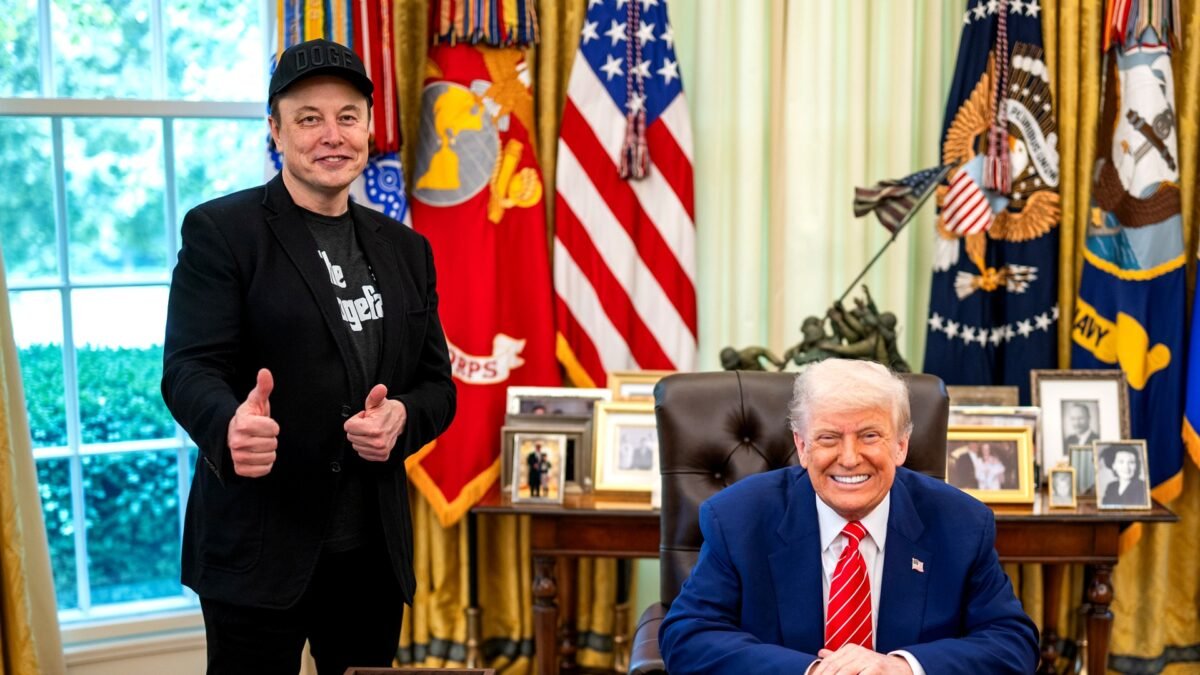
President Donald Trump will take Elon Musk with him on next week’s trip to Asia, senior administration officials said on Friday, putting the world’s richest man back at the centre of American diplomacy in China just weeks after the two men completed one of the most public reconciliations in modern politics. But Musk will travel only for the China leg of the journey, and he will be kept out of the two meetings that matter most: Trump’s one-to-one talks with Chinese leader Xi Jinping and the first-ever three-way summit that follows with Russian President Vladimir Putin.
The decision, disclosed by administration officials on a background briefing with reporters on Friday, was confirmed by the Associated Press and reported by several American outlets. It also settled, for now, the question that has hung over the trip since the scandal at Nvidia erupted: Trump does not intend to raise the affair with Xi at all.
“The situation with Nvidia should not really have any bearing on the trip,” one senior official told reporters, according to CNBC. A second official said Trump was not expected to raise the matter of Alice Huang, the former executive at the centre of the scandal, with the Chinese leader. The administration’s position, as the officials described it, is that the United States does not make its use of export controls subject to negotiation with foreign governments, and that it does not expect Beijing to retaliate against further measures designed to stop advanced American chips reaching China through illicit shipments or unauthorised access.
That is a deliberate choice, and it is also a revealing one. The trip that begins on Monday is the most consequential foreign journey of Trump’s second term: a stop in Manila for the Association of Southeast Asian Nations summit, a meeting of the Quad powers, a trade deal with Thailand, and then the Asia-Pacific Economic Cooperation summit in Shenzhen, where Trump will meet Xi for the third time in person this year before sitting down with Xi and Putin together on Thursday to discuss nuclear arms. The White House has built the week around that trilateral meeting. Bringing Musk along, and at the same time keeping the Nvidia affair off the agenda, tells its own story about what the administration wants the trip to be about, and what it wants it not to be about.
The Invitation, and Its Limits
According to the Associated Press, Musk will join only the China portion of the trip. He will not take part in Trump’s meeting with Xi, and he will not be in the room for the three-way session with Putin that follows. Newsmax, reporting the same briefing, confirmed that Musk “is expected to join only the China portion of the trip and will sit out both Trump’s meeting with Xi and the three-way session that follows.”
Asked why Musk is going at all, an official cited his large business interests in the United States-China relationship, saying he could be valuable as an adviser to the president. The description fits Musk’s position: as the head of SpaceX and Tesla, he runs companies with deep commercial and national-security stakes in China, and administration officials said those interests made him a useful counsellor on the journey.
The limits matter as much as the invitation. Musk’s Starlink satellite internet system has been integral to Ukraine’s ability to fight Russia’s invasion, and the officials made clear that he will not be part of the trilateral meeting, where the leaders are expected to discuss the war in Iran but not, according to the officials, Russia’s war in Ukraine. Keeping the man whose satellites carry much of Ukraine’s battlefield communications out of a room where nuclear arms and Iran will be discussed is a deliberate piece of stage management, and it underlines how carefully the White House is drawing the lines around this trip.
Trump is due to leave Washington early on Monday and arrive in Manila on Tuesday evening, according to the White House. The Quad meeting is scheduled before a planned trade agreement signing with Thailand, a special summit with ASEAN leaders and a dinner with regional leaders. On Wednesday he will attend a welcome ceremony at the Philippine presidential palace, followed by bilateral talks and a lunch banquet, before leaving for the APEC summit in Shenzhen, where he will hold his third in-person meeting of the year with Xi. The trilateral with Putin follows on Thursday.
The Scandal Trump Is Parking
The Nvidia affair has dominated American business and political news for nine days, and it is the reason the question of what Trump would say to Xi mattered in the first place. Jensen Huang resigned on Thursday as Nvidia’s president and chief executive, ending 33 years leading the chipmaker, after reports of an extramarital affair with Alice Huang, a former executive at Megaspeed International whom United States intelligence officials have suspected of working for Beijing. Megaspeed, a Singapore-incorporated technology company, was accused last year of shipping Nvidia’s advanced computer chips into China. Beijing denies that Alice Huang is a spy, and Chinese Foreign Ministry spokeswoman Mao Ning said on Thursday that the United States “should stop fabricating the ‘Chinese spy’ narratives as a pretext for imposing technology restrictions,” according to the Washington Times.
The fallout has spread in every direction since. Nvidia’s board appointed chief financial officer Colette Kress as interim chief executive while it searches for a permanent successor, and the Financial Times reported that the board has approached Arm chief executive Rene Haas to assess whether he could take over. Trump himself suggested on social media on Thursday that former Apple chief executive Tim Cook should replace Huang, writing that “a Legend replaces a Legend!” The New York Times reported that Trump had called Huang on Tuesday and urged him to keep fighting to retain his position. Huang has also agreed to testify before Congress by Thanksgiving, after the chairmen of three House committees threatened a subpoena.
The scandal has also turned into a fight inside the administration over who was responsible for enforcing the export rules. Treasury Secretary Scott Bessent told CNBC on Friday that enforcing restrictions on the unauthorised transfer of advanced chips falls to the Commerce Department, led by Secretary Howard Lutnick, and that questions about its internal processes belong there. Bessent had already said publicly that he was frustrated because Trump had made clear that China should not receive Nvidia chips more advanced than the H100 generation, and that the Treasury had favoured blacklisting Megaspeed. Senators Ron Wyden and Richard Neal opened an investigation on Thursday into the administration’s approval and taxation of Nvidia chip exports to Chinese companies, asking the Commerce Department to preserve the relevant records. HSBC analyst Frank Lee cut his rating on Nvidia and halved his price target to $170 from $365.
Against that background, the decision not to raise the matter with Xi is striking. The administration’s argument is that export controls are a sovereign American decision, not a bargaining chip, and that raising the affair with Xi would achieve nothing while risking the rest of the agenda. The counter-argument, which officials did not address on Friday, is that the affair goes to the heart of the export-control system itself: if advanced chips reached China through intermediaries while the rules were being enforced, then the system the president is about to discuss with Xi in the context of trade is the same system whose failures are now the subject of congressional and Senate inquiries at home.
The Crackdown Continues at Home
What the administration will not discuss with Xi, it is pressing ahead with at home. Officials told reporters that Trump’s aides are discussing ways to close loopholes in existing trade measures, including the use of export licensing and preventing Chinese firms from gaining access to advanced chips over the internet through remote access. Reuters, reviewing more than 150 Chinese procurement notices, investment plans, construction contracts and corporate filings, identified projects and equipment agreements worth more than 23 billion yuan built on Nvidia processors that fall under the restrictions.
The reporting behind the scandal has been extensive. Bloomberg reported that 22 Dell servers carrying banned H800 chips were sold to Aperia Cloud Services, a Singapore partner of Nvidia, and installed at a facility in Shanghai tied to a company founded by Alice Huang, along with 52 Super Micro servers carrying H100 and H200 chips. Dell ended its relationship with Aperia in February 2025. The filings did not say whether Alice Huang was personally involved, and she has not been part of the Shanghai company since 2017. An independent investigation is under way into reports that Huang was the target of a foreign intelligence service, and Nvidia’s independent directors have engaged the law firm Wachtell, Lipton, Rosen and Katz to handle it.
None of that will be on the table in Shenzhen, at least not in the room with Xi. The administration’s calculation appears to be that the trip’s purpose is the nuclear discussion and the trade relationship, and that the Nvidia affair is a domestic enforcement question to be settled in Washington. Whether Beijing reads it the same way is another matter: Chinese officials have already made clear that they regard the espionage allegations as a pretext for technology restrictions, and they will be watching what the administration does on export controls after the trip as closely as what it says during it.
The Quad Returns
The Manila leg of the trip has its own significance, and it was confirmed separately by Reuters on Saturday. The leaders of the United States, Japan, Australia and India are expected to meet on Tuesday on the sidelines of the ASEAN summit, marking the first summit of the Quad nations in two years and the first since Trump returned to office. The group last met in September 2024 in Delaware.
According to Reuters, which cited two people familiar with the planning, the supply of critical minerals is expected to be on the Quad agenda, along with free and unimpeded commercial shipping lanes to secure energy supplies and the issue of attacks on commercial ships. Secretary of State Marco Rubio indicated last month that the Quad leaders could meet on the sidelines of the ASEAN summit, which begins on Sunday in the Philippine capital. The White House confirmed the meeting and said it would focus on peace, prosperity and security in the Indo-Pacific, without announcing specific agreements in advance.
The Quad’s foreign ministers met in Atlanta on 31 October, and their joint statement welcomed a United States commitment of $10 million to support infrastructure for recovering critical minerals from waste in India and ASEAN nations. The grouping is widely considered a counterweight to China’s growing influence in the region, although its members have said it is not directed against any one country. Holding its first leaders’ summit in two years on the eve of Trump’s visit to China is a deliberate piece of sequencing: the message to Beijing is that Washington is arriving in Shenzhen with its Indo-Pacific partnerships visibly renewed.
Trump’s attendance at the 49th ASEAN Summit in Manila, which runs from 16 to 18 November with the Philippines as this year’s chair, is his second consecutive ASEAN summit. At last year’s gathering in Kuala Lumpur he witnessed the Thailand-Cambodia peace agreement and announced several trade deals, although renewed border clashes in December exposed the fragility of that peace. This year the Philippines has set four deliverables for its chairmanship: a code of conduct with China in the South China Sea, an ASEAN Centre on Maritime Studies in Manila, a Digital Economy Framework and promotion of the so-called silver economy. The code of conduct is not expected to be concluded at the Manila meeting. Trade and economic security are expected to dominate Trump’s agenda, with Washington seeking greater market access, critical minerals, technology cooperation and more resilient supply chains. The United States-China trade truce, extended to 10 January 2027 according to CNBC, frames the whole week.
A Reconciliation on Display
Musk’s presence on the trip is also the latest public evidence of a reconciliation that, sixteen months ago, looked impossible. Musk led the Department of Government Efficiency, the cost-cutting initiative that gave him unusual political visibility inside Washington, and left the administration in May 2025. The two men then had a high-profile blow-up over the president’s spending legislation, with Musk posting a virulent accusation on social media in early June 2025 that he quickly deleted. Trump threatened Musk’s government contracts in response.
The repair has been steady and increasingly public. On 29 September Musk returned to the White House for a technology summit, where he sat to the left of the president. Five days earlier he had been seated at the head table during the White House state dinner for Xi Jinping. On 8 October he received the National Medal of Science, the highest scientific distinction in the United States, from Trump himself. In May he flew to Beijing on Air Force One as part of the business delegation accompanying Trump on his state visit to China, one of only two business executives invited. On 2 October the Pentagon announced that Musk would co-lead “Project Meridian”, a study on the future of warfare, alongside Palmer Luckey, the co-founder of the defence technology company Anduril, and Newt Gingrich, the former Republican speaker of the House. Defence Secretary Pete Hegseth described the project as “an effort led by America’s best minds to study the future of warfare.”
The reconciliation has also been profitable. The New York Times reported on 12 October that Musk had already invested more than $366 million campaigning for the midterm elections, with the aim of preventing the Senate from flipping to the Democrats. A report by the Democracy Defenders Fund, which reviewed federal contract databases, regulatory filings, court documents and hundreds of news articles, found that in the 17 months since Musk left his government role he had seen his net worth more than double, aided by at least $10 billion in new government contracts and grants, along with repeated regulatory relief. At least 11 executive departments and 14 independent agencies have taken actions benefiting his businesses, according to the report, including fast-tracked, sole-source SpaceX contracts from the Pentagon. His companies are already major Pentagon contractors, including SpaceX building satellite networks for Trump’s planned “Golden Dome” missile defence shield, and his artificial intelligence firm xAI signed a deal this year allowing the military to use its Grok chatbot on classified systems.
That record is the context in which the Asia invitation has to be read. Musk is not travelling as a tourist or as a private citizen who happens to be wealthy. He is travelling as a man whose companies build the satellites, run the networks and supply the artificial intelligence on which American national security increasingly depends, and whose personal fortune, estimated by Bloomberg at about $966 billion, is bound up with access to the Chinese market through Tesla. The administration’s description of him as a valuable adviser is, in that sense, an understatement: he is one of the few private individuals in the world whose business interests touch every item on the trip’s agenda at once.
The Trilateral at the End of the Road
Everything on the trip builds towards Thursday’s meeting in Shenzhen, which the White House confirmed on Friday and which NEXA reported in full earlier today. It will be the first time Trump, Xi and Putin have met together, and the main topic will be the reduction of nuclear weapons. New START, the treaty signed in 2010 that capped the arsenals of the two largest nuclear powers, expired in February 2026, leaving the world without limits on those arsenals for the first time in more than half a century. Trump has rejected Russia’s offer of a one-year extension and wants a new, improved and modernised deal that includes China, which the Pentagon estimates holds more than 600 warheads against more than 5,000 each for the United States and Russia.
The officials who briefed reporters on Friday were candid that no agreement is expected. “We do not expect to get to any kind of agreement,” one senior official said, describing the meeting as “the entry point, the first conversation” and “the beginning of hopefully a conversation.” The leaders are expected to discuss the war in Iran, but Ukraine is not expected to be on the agenda, according to the officials, and there are no plans for Trump to meet the North Korean leader Kim Jong Un, whose nuclear arsenal has been a source of consternation to the United States and its allies.
Musk’s absence from that room is part of the same calculation. His Starlink system has been integral to Ukraine’s defence, and President Volodymyr Zelenskyy has said that its Starshield service faced significant disruptions and systematic speed restrictions that hampered the interception of jet-powered drones. SpaceX told CNN there had been no change in its service. Whatever the truth of that dispute, putting Musk in a room where Trump, Xi and Putin are discussing nuclear arms, while Ukraine is deliberately kept off the agenda, would have invited exactly the questions the White House wants to avoid. Keeping him in China but out of the summit is the compromise the administration has chosen.
Analysis: Why It Matters
The invitation is the message, and so is the exclusion
Presidents do not take passengers on trips like this by accident. Every seat on Air Force One is a signal, and Musk’s seat is the loudest signal of the week. Bringing him to China says that the administration regards him as a partner in its China policy, not merely a businessman with interests there. Keeping him out of the Xi meeting and the trilateral says something else: that there are rooms where the world’s richest man, for all his wealth and all his contracts, is not welcome. Both messages are deliberate, and both will be read in Beijing, in Moscow and in Washington. The invitation tells China that American business still wants a seat at the table. The exclusion tells Moscow that the trilateral is a meeting of states, not of oligarchs and entrepreneurs. The two messages sit uneasily together, and that unease is the point: the administration wants the benefits of Musk’s presence without the complications of his participation.
Parking Nvidia is a gamble, not a resolution
The decision not to raise the Nvidia affair with Xi is defensible as diplomacy and questionable as policy. It is defensible because the trip has a crowded agenda, because export controls are genuinely a sovereign decision, and because raising an unproven espionage allegation with the leader of the country accused of running the operation would be more likely to produce a public row than a useful answer. It is questionable because the affair is not a distraction from the trip’s agenda but a part of it. The chips at the centre of the scandal are the same chips whose export the administration is now promising to police more tightly, and the intermediaries accused of moving them are the same intermediaries the new loophole-closing measures are designed to catch. A president who arrives in Shenzhen having decided in advance not to mention the scandal is a president who has decided that the trade relationship matters more than the enforcement question. That may be the right call. But it is a call, not a fact, and it will be judged by what happens next: if the crackdown at home is real, the silence in Shenzhen will look like discipline; if it is not, it will look like evasion.
Musk is now an instrument of American foreign policy, whether anyone admits it or not
The most important fact about this trip may be the one the officials stated most casually: that Musk’s business interests make him a valuable adviser. That is true, and it is also an admission. SpaceX launches the satellites, Starlink carries the communications, Tesla sells the cars, xAI supplies the chatbots, and the Pentagon buys all of it. When the administration takes the owner of those companies to China as an adviser, it is not merely consulting a businessman; it is deploying an asset. The Democracy Defenders Fund’s finding that Musk’s companies have received at least $10 billion in new government contracts and grants since he left government, and that his net worth has more than doubled in the same period, is the financial side of the same story. The risk is not that Musk is disloyal or incompetent. It is that a foreign policy conducted through a private individual whose interests are so large and so entangled becomes impossible to separate from that individual’s interests. The trip will test whether the administration can use Musk without being used by him.
The Quad meeting is the trip’s quiet centrepiece
For all the attention on Musk and Nvidia, the meeting in Manila may matter more in the long run. The Quad has not met at leaders’ level for two years, and its revival on the eve of a visit to China is a deliberate statement that the Indo-Pacific partnerships Washington spent years building have not been abandoned. Critical minerals, shipping lanes and attacks on commercial vessels are the unglamorous substance of great-power competition, and they are the issues on which the Quad can actually deliver. The $10 million commitment on critical-minerals recovery infrastructure agreed by the foreign ministers in Atlanta is small in absolute terms but significant as a signal: the group is moving from declarations to projects. If the Manila meeting produces concrete agreements on minerals and maritime security, it will have done more for American strategy in Asia than anything said in Shenzhen.
The trilateral still decides the week
None of this changes the fact that Thursday’s meeting in Shenzhen is the event the whole trip exists for. A first-ever meeting of the leaders of the United States, China and Russia to discuss nuclear arms is a historic occasion even if, as the officials candidly admit, no agreement is expected. The value of the meeting is not in what it produces but in what it establishes: that the three nuclear powers can sit in a room and talk about the weapons that could end civilisation. Musk’s presence in China but absence from the room is a small part of that story, but it is a telling one. The administration wants the world to see a president who can bring the richest man alive to Beijing and still keep him outside the door when the serious business begins. Whether that is strength or stage management will be decided by what the three leaders say when they emerge.
What to Watch Next
- Monday’s departure: whether Musk boards Air Force One in Washington or joins the delegation later, and who else is on the manifest, will show how the administration is presenting his role.
- The Manila meetings on Tuesday: the Quad leaders’ session and the Thailand trade deal signing, and whether the Quad produces concrete commitments on critical minerals and maritime security.
- Wednesday in Shenzhen: the welcome, the bilateral meeting with Xi and the working lunch, and any sign of whether the Nvidia question surfaces despite the administration’s plan to avoid it.
- Thursday’s trilateral: the first-ever Trump-Xi-Putin meeting, what the three leaders say about nuclear arms, and whether anything is agreed on Iran.
- The export-control crackdown: whether the administration announces new measures on export licensing or remote access to advanced chips while the president is abroad, and whether Beijing responds.
- Nvidia’s earnings on Tuesday 17 November: the company’s first results without Huang, presented by interim chief executive Colette Kress, and what they reveal about the state of the business.
- Congress and the Senate: the timetable for Huang’s testimony before the House committees, and whether the Senate investigation into chip exports produces new disclosures while the president is in Asia.
Sources
- Associated Press, “Trump is taking Elon Musk on his Asia trip, but he plans to avoid talking about Nvidia scandal” (via KXL)
- Newsmax, “Musk Joins Trump Asia Trip Amid Nvidia Fallout”
- Reuters, “Trump, other Quad leaders to meet in Manila on Tuesday, sources say”
- Le Monde, “Trump and Musk rekindle alliance on US politics and Ukraine”
- The Geneva Times, “Elon Musk returns to Trump administration to co-lead Pentagon war study”
- Fulcrum, “Trump Returns to Manila: Will ASEAN Get More Than a Show?”

About the Author — Abdul Mannan
Related Articles

Tanker Loses Steering and Capsizes Docked Cruise Ship on the Mississippi in New Orleans; 32 Taken to Hospital
A tanker that lost steering struck the docked American Heritage paddlewheeler on the Mississippi River in New Orleans…
FAA Grounds Every Departing Flight in America After Nationwide Air Traffic Control Communications Failure
The FAA halted every departing flight in the United States on Friday after a communications failure hit air…

ICE Deported a Record 483,200 People in a Year as Trump’s Crackdown Reached New Heights — and Still Fell Short of a Million
US Immigration and Customs Enforcement deported a record 483,200 people in fiscal year 2026, the Department of Homeland…