
FAA Grounds Every Departing Flight in America After Nationwide Air Traffic Control Communications Failure

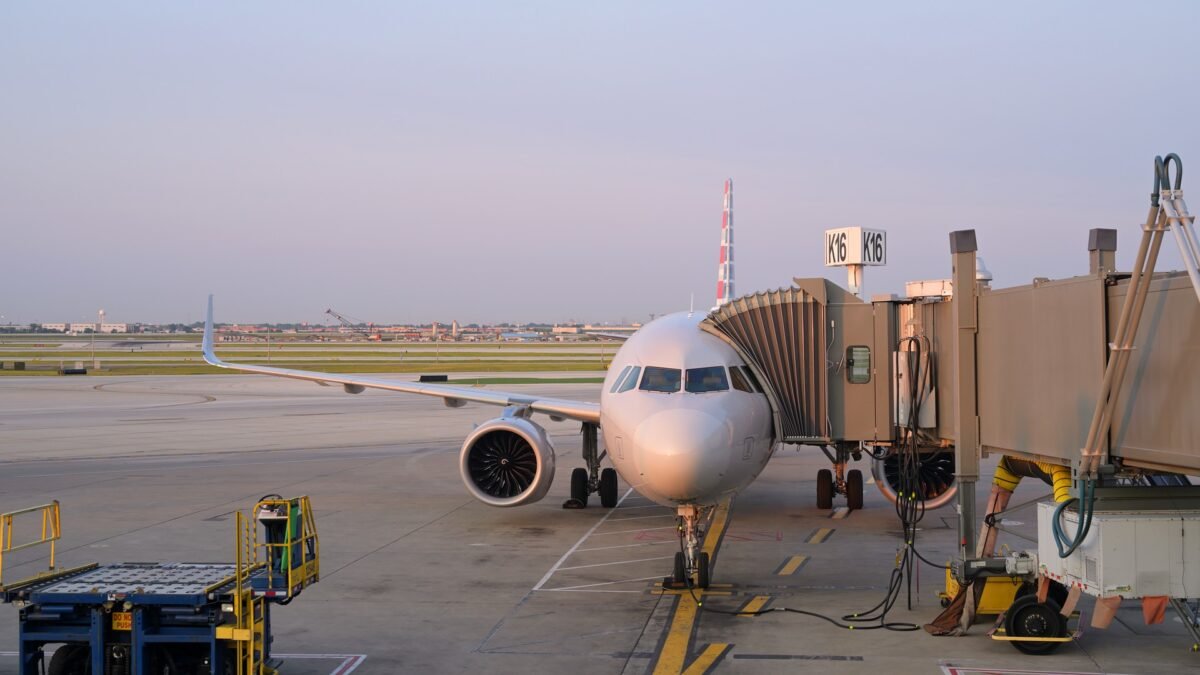
Every departing flight in the United States was grounded on Friday afternoon after a communications failure struck air traffic control centres across the country, in only the third nationwide ground stop in American history.
The Federal Aviation Administration issued the order at 3:54 p.m. Eastern Time on Friday, 13 November, telling all aircraft operators that every airport in the country was ground stopped and that all departing traffic should remain on the ground until further notice. The advisory, issued by the FAA’s Air Traffic Control System Command Center, began with the words: “Due to extraordinary circumstances and for reasons of safety.”
Planes already in the air were not ordered to land. They were allowed to continue to their destinations, while inbound international flights were to be managed on a case-by-case basis. What stopped was departures: nothing was permitted to take off from any airport in the United States.
According to Reuters, the disruption hit thousands of flights. Flight tracking service FlightAware said nearly 7,000 flights had been delayed or cancelled because of the nationwide ground stop. Flightradar24 reported that 4,042 aircraft were already airborne and bound for airports in the United States at the moment the order was transmitted, and that number fell steadily as planes landed and none took off to replace them.
Transportation Secretary Sean Duffy said the stop followed “a communication issue impacting all Air Route Traffic Control Centers,” the 22 regional facilities that guide aircraft between airports. “FAA technicians are investigating the issue. We will provide immediate updates as we have them,” Mr Duffy said in a post on X at 4:16 p.m. Eastern Time.
Flightradar24 reported that the FAA issued the order following an equipment outage, and that the agency’s advisory also cited frequency issues across the National Airspace System. The FAA did not name a specific system that had failed, and did not say what had triggered the outage.
Shortly before the nationwide order, the FAA had halted traffic in Chicago because of air traffic control communications issues, according to Reuters. The local problem then became a national one within the hour.
The FAA’s advisory listed an effective period running from 3:54 p.m. to 11:30 p.m. Eastern Time. But the order itself was open-ended — departing traffic was to remain grounded “until further notice” — and the listed end time was no guarantee that flights would resume by then. As of Friday evening in the United States, the FAA had given no estimate for when normal operations would return, and had not announced that the stop had been lifted.
A government quick to rule out an attack — but not entirely
Within hours of the order, the Trump administration moved to reassure a country that has not seen its skies emptied on this scale since the September 11 attacks. Homeland Security Secretary Markwayne Mullin told reporters outside the White House that a “telecommunication outage throughout FAA” had prompted the nationwide ground stoppage.
“We’re wanting to assure all the American people, this isn’t a safety threat to the American people or another 9/11,” Mr Mullin said, according to USA Today. “There is no prior indication as of yet that this was nefarious attack against us. It’s just a telecommunication outage as of right now.”
Mr Mullin said the Department of Homeland Security had received “a ton of calls” asking whether the outage was a terrorist attack. “Everybody’s safe. There is no reason to be concerned about your loved ones if they’re flying,” he said.
Just after 5 p.m. Eastern Time, the FAA posted on X that all flights had been halted out of an abundance of caution amid a temporary telecommunications outage. “Every flight has been accounted for and international flights will be handled on a case by case basis,” the agency said.
But Mr Mullin stopped short of a categorical all-clear. Asked whether the outage could be the result of a cyberattack or an artificial intelligence intrusion, he said: “We don’t want to get ahead of ourselves. We’re not ruling anything out at this point.” He added that the top priority was restoring communications and returning to normal operations, and that officials would “continue to work to find out what the root of the cause is.”
Mr Mullin also downplayed any connection between the FAA outage and the separate nationwide problems with Microsoft Outlook that hit hospitals, schools and police forces in Britain and elsewhere the same week. “I don’t see any reason to connect those two at all,” he said. “Those are separate issues.”
Airports left to improvise
At airports across the country, the order arrived with little warning and, in some places, little information. At Newark Liberty International Airport, no airport-wide announcement had been made over the loudspeaker almost an hour after the ground stop was first announced, according to USA Today. Passengers gathered around gates, huddled together to work out what to do about their checked luggage, many on the phone trying to make alternative plans.
One flight at Newark, Flight 124 with service to Athens, Greece, announced at 4:53 p.m. Eastern Time that all groups were able to board — though it was unclear whether that flight would actually be able to take off.
Hollywood Burbank Airport in California received notice of the nationwide ground stop just before 1 p.m. local time on Friday. Mike Christensen, the airport’s public information officer, told the Desert Sun that the airport knew little else about the order beyond that “it’s due to some kind of equipment outage.” Passengers were advised to contact their airlines for updates. “Right now, there’s going to be delays, but then even this afternoon … things can get backed up,” Mr Christensen said.
Los Angeles International Airport was also affected, with all departures halted as of about 1:45 p.m. Pacific Time on Friday, a spokesperson confirmed to the USA Today Network.
The financial markets reacted within the hour. Shares of American, Delta and United airlines all fell between 1% and 2% in after-hours trading, according to Barron’s, while rental car stocks rose as stranded travellers looked for other ways home. Flight tracking site FlightAware reported that more than 9,000 flights had been delayed into or out of the United States during the day.
Only the third time in history
Friday’s halt was the second nationwide ground stop of all departures since the September 11, 2001, attacks, according to Reuters — and only the third in American history. The other came on 11 January 2023, when the FAA paused all domestic departures for less than two hours after its Notice to Air Missions, or NOTAM, system failed.
The NOTAM system provides flight crews with essential safety information, including runway closures and other hazards. The FAA’s preliminary review of the 2023 failure found that contractors had accidentally deleted files while trying to synchronise the primary database with a backup, and that the error had spread to the backup database through synchronisation, disabling both systems. The agency subsequently introduced a one-hour delay between database updates to prevent a repeat.
After the 2023 incident, lawmakers pressed the FAA about preventing another outage, and the agency outlined modernisation plans that included retiring an older NOTAM interface by 2025 and a broader safety review. On 29 September 2025, FAA Administrator Bryan Bedford said the agency had built a new NOTAM service from the ground up. “It is resilient, user-friendly, and scalable, and will significantly improve airspace safety and efficiency,” Mr Bedford said at the time.
Friday’s failure was different in kind: not a single safety-information database, but the communications links that connect controllers to aircraft across all of the country’s air route traffic control centres at once. That distinction is what made the nationwide order necessary — and what makes the investigation that follows so consequential.
A system built on copper wire and floppy disks
The ground stop is the latest sign of strain on an air traffic control system that has been beset by equipment failures, communications problems and shortages of controllers while the FAA tries to replace ageing infrastructure, according to Reuters.
The scale of that infrastructure problem is by now well documented. The FAA still relies on telecommunications systems it is racing to replace, including copper telephone lines, decades-old computers and paper flight strips used to track aircraft. According to Reuters, the agency relies on replacement parts bought on eBay for some of its oldest equipment, and the United States faces a shortage of several thousand air traffic controllers.
Congress approved $12.5 billion over five years in June 2025 for air traffic control reforms, and the Trump administration has unveiled a sweeping modernisation programme, the Brand-New Air Traffic Control System, which aims to replace radios and control equipment at 1,581 air traffic control facilities, upgrade automation, and convert the copper telecommunications lines that still carry much of the system’s traffic to high-speed fibre and internet protocol connections. The programme covers about 12,000 modernisation projects at more than 4,600 sites nationwide, according to the National Business Aviation Association.
On Friday — the same day as the ground stop — the FAA and the White House asked lawmakers for another $30.1 billion for the overhaul, according to Reuters. The administration has said the full modernisation effort will ultimately cost more than $31 billion. An industry coalition that includes Boeing, Airbus and major airline and pilot groups has pushed Congress for a further $20 billion on top of what has already been approved.
Mr Bedford was due to testify before the House Transportation and Infrastructure Committee the following week on progress and ongoing challenges in the $12.5 billion effort, congressional aides said on 6 November, according to Reuters. That hearing now has a new and urgent subject.
Some of the modernisation work is already under way. As of August 2026, the FAA had converted more than 3,320 of its copper telecommunications circuits to fibre and internet protocol connections — about 64% complete — and the agency has said it plans to install 5,000 new high-speed fibre, satellite and wireless network connections by 2028. It has also said it will replace by the end of 2028 the outdated floppy disks used for weather and other critical information at more than 400 air traffic control facilities, and end the decades-old practice of controllers using paper flight strips by the same year. In September 2026, the FAA awarded a 12-year, $875 million contract to the startup Air Space Intelligence to build an artificial intelligence system meant to predict and prevent air traffic bottlenecks nationwide.
But critics of the programme argue that new technology does not address the FAA’s long-running controller shortage, a staffing gap that has contributed to mandatory overtime and, at times, temporary flight restrictions at understaffed facilities. The government has tried, and largely failed, to modernise the national airspace system since 2003.
Analysis: Why It Matters
1. A system that fails everywhere at once
The most alarming fact about Friday’s ground stop is not that something broke. Equipment breaks in aviation every day, and the system is designed to absorb it. The alarming fact is that something broke everywhere at once. A communications issue that hit all Air Route Traffic Control Centers simultaneously is not a local failure; it is a failure of the connective tissue of the entire national airspace system.
That is why the FAA’s response was total rather than partial. A ground stop at one airport, or even one region, is routine — weather, congestion and equipment problems trigger them constantly. A nationwide ground stop is something else entirely: an admission that the agency could not be confident that controllers anywhere in the country could talk to the aircraft they were responsible for. Frequency issues across the National Airspace System, as Flightradar24 reported, mean the problem was not a single broken radio but the network itself.
Until the FAA says what failed, the honest description is also the starkest one: the country discovered, on a Friday afternoon, that its air traffic control communications could go down as a single system. The investigation will have to answer whether that was a design flaw, a maintenance failure, a software error or something external — and whether the redundancy that is supposed to prevent exactly this outcome was present and failed, or was never there.
2. The 9/11 comparison the government rushed to kill
Mr Mullin’s first instinct, within hours of the order, was to tell the country what Friday was not: “This isn’t another 9/11.” He said it twice, in different words, and the FAA’s own statement stressed that flights had been halted “out of an abundance of caution.” The urgency of that message is understandable. The moment every departure in America stops, the public mind goes to the one precedent it knows, and the government needed to close that door before speculation filled the vacuum.
But the comparison matters precisely because the government was so keen to dismiss it — not because Friday resembled September 11 in cause, but because it resembled it in scale. Only three nationwide ground stops have ever happened. The rarity is the story. In 2023, the cause was a deleted file. In 2001, it was an attack. In 2026, the cause is still unknown, and the administration’s own homeland security secretary would not rule out a cyberattack. The reassurance and the reservation arrived in the same breath, and the public is entitled to hold both at once.
There is also a difference that cuts in the government’s favour and deserves to be stated plainly. On September 11, aircraft in the air were ordered to land at the nearest airport. On Friday, aircraft in the air were allowed to continue to their destinations. That is a measure of how different the two events were in character: Friday was a precaution taken while the system was still functioning well enough to bring 4,042 airborne aircraft home safely, not an emergency response to an unfolding attack.
3. The modernisation bill comes due in public
There is a bitter irony in the timing. On the very day the FAA asked Congress for another $30.1 billion to modernise air traffic control, the system demonstrated, in the most public way possible, why the money is needed. Copper telephone lines, floppy disks, paper flight strips and replacement parts bought on eBay are not rhetorical flourishes from critics; they are the documented reality of the system that moves more than 40,000 flights a day through the world’s most complex airspace.
The $12.5 billion approved in June 2025 was described as a down payment, and the administration’s own figures put the full cost above $31 billion, with industry groups arguing for $20 billion more still. Friday’s failure will now be Exhibit A in that argument — and also a test of it. The question Congress will ask, and should ask, is whether the money already approved was aimed at the right vulnerabilities. A new NOTAM system, however resilient, does not help if the communications network that carries controller instructions fails. The conversion of copper circuits to fibre, 64% complete as of August, is exactly the kind of unglamorous infrastructure work that determines whether a Friday afternoon ends in delays or in a national shutdown.
Mr Bedford’s scheduled testimony before the House Transportation and Infrastructure Committee will now take place in a different political climate from the one in which it was arranged. He will be asked not only about progress, but about what, specifically, failed on Friday — and whether any of the $12.5 billion already appropriated was meant to prevent it.
4. The recovery will be the real story
A ground stop is not a pause button. Every hour that departures are held, the backlog compounds: aircraft are in the wrong places, crews run out of legal duty hours, gates fill with planes that cannot leave, and passengers miss connections that cannot be remade. The FAA’s advisory listed an end time of 11:30 p.m. Eastern Time, but the order itself was “until further notice,” and the agency gave no estimate for resumption. The recovery, when it begins, will be phased and messy — a point the FAA’s own history confirms, since flight disruptions continued throughout the day after the January 2023 stop even though the stop itself lasted less than two hours.
The timing made it worse. Friday afternoon is one of the busiest travel windows of the week, and the stop landed as weekend travellers were heading to airports. The nearly 7,000 flights delayed or cancelled, as reported by FlightAware, will grow as airlines work through the backlog into Saturday, and the knock-on effects — crews out of position, aircraft out of position, passengers rebooked onto already full weekend flights — will last well beyond the moment the first departure is cleared.
For travellers, the practical advice is unchanged and unglamorous: check with the airline before heading to the airport, expect cancellations as well as delays, and do not assume that a lifted ground stop means a normal schedule. The system does not snap back. It unwinds, slowly, one flight at a time.
5. What “no threat” does and does not settle
Mr Mullin’s assurance — “there is no prior indication as of yet that this was nefarious attack” — is carefully worded, and the careful wording is the point. “No prior indication as of yet” is a statement about the state of the investigation at that hour, not a conclusion. His refusal to rule out a cyberattack or an artificial intelligence intrusion was not evasiveness; it was honesty about an investigation that had barely begun.
That honesty is worth more than a premature all-clear would have been. The FAA has not named the failed system, has not said what triggered the outage, and has not given a timeline for restoration. Until it does, every theory — equipment failure, software error, human error, malicious action — remains on the table, and the public should treat confident claims in any direction with scepticism.
What is settled is narrower but still important. Every flight was accounted for. No aircraft was ordered down in an emergency. No injuries or damage were reported. The system failed in a way that stopped departures rather than endangering aircraft in the air — which is, in the end, what a safety system is supposed to do when it can no longer guarantee that controllers and pilots can hear each other.
What to Watch Next
- The cause: the FAA’s next update on what system failed and what triggered it. A named cause — a piece of equipment, a software change, a severed link — will determine whether this was a one-off or a warning.
- When departures resume: whether the stop is lifted all at once or region by region as individual air route traffic control centres restore their communications, and how long the advisory’s 11:30 p.m. Eastern Time window holds.
- The final disruption total: how many flights were ultimately delayed or cancelled, and how many passengers were affected, once FlightAware and the airlines publish full figures.
- Whether a cyberattack is ruled in or out: Mr Mullin said nothing was being ruled out. The investigation’s first formal statement on that question will matter as much as the technical cause.
- The congressional response: Mr Bedford’s testimony before the House Transportation and Infrastructure Committee, and whether Friday accelerates the administration’s $30.1 billion funding request.
- The weekend recovery: how quickly airlines restore normal schedules, and whether crew and aircraft positioning problems spill into Saturday and Sunday travel.
- What changes at the FAA: whether the agency orders a review of communications redundancy across the National Airspace System, as it did for the NOTAM system after the January 2023 failure.
Sources
- Reuters — US grounds flights nationwide after air traffic control communications outage
- USA Today — Ground stop live updates: FAA grounds flights nationwide, but no threat to US
- Federal Aviation Administration — National Airspace System Status
- Barron’s — United, Other Airline Stocks Drop After Nationwide Flight Ground Stop
- Reuters via SRN News — US FAA administrator to testify on $12.5 billion air traffic overhaul
- National Business Aviation Association — How America’s Brand-New Air Traffic Control System Will Help Business Aviation

About the Author — Abdul Mannan
Related Articles

Tanker Loses Steering and Capsizes Docked Cruise Ship on the Mississippi in New Orleans; 32 Taken to Hospital
A tanker that lost steering struck the docked American Heritage paddlewheeler on the Mississippi River in New Orleans…

ICE Deported a Record 483,200 People in a Year as Trump’s Crackdown Reached New Heights — and Still Fell Short of a Million
US Immigration and Customs Enforcement deported a record 483,200 people in fiscal year 2026, the Department of Homeland…

Van Hollen Challenges Schumer for Senate Majority Leader as Democrats’ Midterm Sweep Turns Into a Fight Over the Party’s Future
Senator Chris Van Hollen has launched a challenge to Chuck Schumer for the leadership of the Senate Democrats,…