
McGinn’s Double Seals Scotland’s First Home Win Under Pocognoli as Robertson Equals Dalglish’s 102-Cap Record

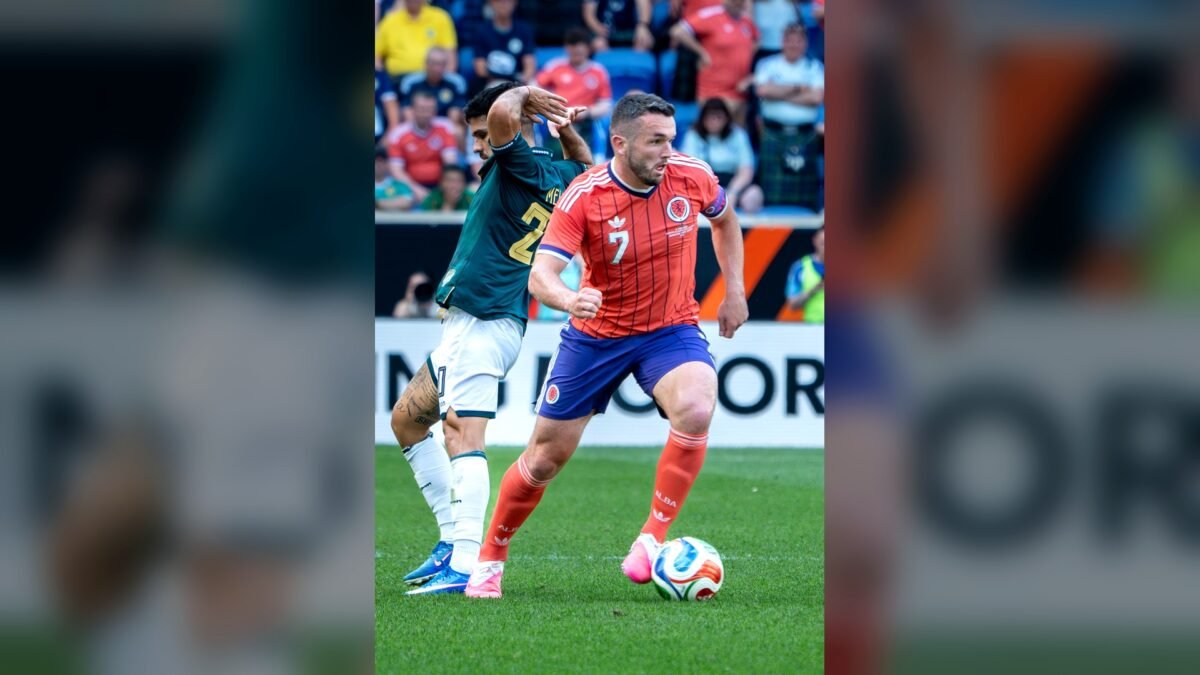
John McGinn scored twice as Scotland beat North Macedonia 2-1 at Hampden Park on Friday night, giving Sebastien Pocognoli his first home win as head coach on the evening Andy Robertson drew level with Kenny Dalglish as Scotland’s most-capped men’s player.
McGinn opened the scoring nine minutes into the second half and then converted a penalty with a little over a quarter of an hour remaining, after Elmin Rastoder had briefly cancelled out the opener with a header. The victory, in a UEFA Nations League League B Group 1 match, keeps Scotland’s hopes of promotion alive going into Monday’s final group game away to Switzerland, although the Scots will need help from elsewhere to finish second.
The night belonged in part to Robertson. The captain won his 102nd cap, matching a record Dalglish has held on his own for almost four decades, and he will have the chance to claim it outright in St Gallen on Monday. McGinn, meanwhile, moved to 24 international goals, drawing level with Hughie Gallacher as Scotland’s joint-third highest scorer of all time, behind only Dalglish and Denis Law on 30 each.
Yet the result was greeted with relief rather than celebration. Scotland were booed off at half-time with the game goalless, and the final whistle brought an exhale more than a roar. The performance raised as many questions as the result answered, and Pocognoli himself was candid about that afterwards. But a win, a record and a live promotion race were enough to make it a night that mattered.
A first half of frustration
Scotland started the match as heavy favourites. North Macedonia arrived at Hampden without a point from four games in the group and without a goal since November 2025, and they had already lost to Pocognoli’s side once in this campaign. The home crowd expected a comfortable evening. What they got, for 45 minutes at least, was a reminder of how little comfort this Scotland team has found at home under its new manager.
The Scots dominated the ball and created the better chances, but they could not turn pressure into a goal. Scott McTominay, back in the side, came closest early on. After 16 minutes he turned sharply and shot, only for North Macedonia goalkeeper Stole Dimitrievski to get down well to his left and keep the effort out, according to Sky Sports. Dimitrievski denied Che Adams and McTominay again before the break, and the Napoli midfielder even tried to recreate his famous overhead kick against Denmark, sending an acrobatic effort over the bar in the 35th minute.
Andy Robertson delivered a free-kick that Kieran Tierney headed over in the 22nd minute, and Adams saw a header take a big deflection off a McGinn corner in the 27th minute, only for Dimitrievski to be equal to it again. By the interval the pattern was set: Scotland with the ball, North Macedonia with a goalkeeper in inspired form, and a crowd growing restless. The boos that rang around Hampden as the players trudged off at half-time were, by the account of several reporters present, entirely predictable.
The mood did not improve immediately after the restart. Within a minute of the second half, Adams capitalised on a loose back pass and squared the ball to Billy Gilmour, who had only to guide it on target with the goal gaping. Gilmour skied it over the bar. It was the kind of miss that can define a match, and for a few minutes it looked as though it might define this one.
McGinn breaks the deadlock, then loses it
The breakthrough, when it came, was made by the two players who had carried Scotland’s threat all evening. In the 54th minute, Adams outmuscled his marker and poked the ball forward, allowing McGinn to race into the box and curl his finish past Dimitrievski. It was a composed, confident finish from a player who has made a habit of delivering for his country, and it brought the relief Hampden had been waiting for.
The relief lasted less than three minutes. North Macedonia won a corner, Enis Bardhi whipped it into the box, and Rastoder leapt highest to glance a header past Angus Gunn at the near post. It was Rastoder’s first international goal, and it was North Macedonia’s first goal since 18 November 2025, a drought of almost a year, according to Sky Sports. It was also their first goal of this Nations League campaign, in their fifth match.
The equaliser changed the atmosphere completely. A team that had not scored in a year had scored against Scotland at Hampden, and the home side suddenly looked rattled. North Macedonia, who had offered almost nothing as an attacking force, could even have gone in front. The match had turned from a routine assignment into a test of nerve, and for a while it was not clear Scotland would pass it.
Pocognoli had warned before the match that his team needed to learn to manage games better, and the minutes after the equaliser showed why. Scotland’s intensity dropped, their passing became hurried, and the crowd’s anxiety spread onto the pitch. It was, in the end, a piece of misfortune for the visitors rather than a moment of Scottish brilliance that settled the contest.
The penalty that saved the night
With a little over 15 minutes remaining, Ben Gannon-Doak chased a ball towards the byline. Dimitrievski, the goalkeeper who had kept his side in the game for more than an hour, came out to meet him and brought the winger down. The foul was not given at first, but a VAR review followed, and the referee was sent to the monitor. The penalty was awarded.
McGinn stepped up and scored from the spot, sending the ball straight down the middle as Dimitrievski dived, according to the BBC’s live coverage. It was his second goal of the night, his 24th for Scotland, and it gave Pocognoli his first win at Hampden. The final minutes were survived rather than enjoyed, but the three points were secured.
The goal also underlined McGinn’s standing in this Scotland side. He now has 94 caps and 24 goals, and only Dalglish and Law sit above him in the scoring charts. He is the Aston Villa captain, a player whose club career has taken him from St Mirren and Hibernian to the Premier League and the Champions League, and he remains the man Scotland turn to when a game needs winning. On Friday night, twice, he was that man.
After the match, McGinn was generous about the man whose night it was supposed to be. Speaking to Sky Sports about Robertson, he said: “Amazing – he deserves everything that is coming his way. The biggest credit I can give him is that he is always available, always willing to help his country. Whether he is at 60, 70, 80 per cent, or 100.” He added: “I’m sure Monday will be a special occasion for him but he’ll give the boring answer that it will only be special if we get three points.”
Robertson’s record night
Robertson’s achievement deserves its own space. Dalglish won 102 caps between 1971 and 1986, scoring 30 goals, and held the Scotland appearance record on his own for almost 40 years. Robertson, who made his debut in 2014, is only the second Scotland player to reach 100 caps. On Friday he joined Dalglish at the top of the list, and on Monday in Switzerland he can move clear of him altogether.
The numbers around Robertson’s Scotland career are remarkable. Friday’s match was his 48th victory for Scotland, further extending his record as the player with the most wins for his country. He has captained the side 81 times and played at three major tournaments. He has done all of this while playing for clubs at the highest level, first Liverpool, where he spent nine years and played 378 games, and now Tottenham Hotspur, who signed him as a free agent in the summer of 2026.
Robertson himself was modest about the milestone. “It feels amazing for me and my family, it’s an amazing achievement,” he told BBC Scotland. “I’ve been around here for a long time. I’ve had highs, I’ve had lows, I’ve sometimes had praise and had criticism.” The understatement is characteristic. Robertson has never been a player who seeks the spotlight, and it is fitting that his record-equalling night was shared with a teammate’s match-winning performance rather than his own goal.
There was a symmetry to the evening. Dalglish and Robertson are both left-sided players who became the heartbeat of their Scotland teams, and both are defined as much by durability as by talent. Dalglish’s record survived for four decades because so few players last that long at international level. Robertson has lasted because, as McGinn put it, he is always available, always willing, whatever his condition. That availability is itself a form of greatness.
Pocognoli’s first home win
For Pocognoli, the win was a first at Hampden and only his second in five matches since taking charge in August 2026. The Belgian, 39, was appointed on an initial two-year contract to succeed Steve Clarke, whose seven-year tenure ended after Scotland’s group-stage exit at the 2026 World Cup. Pocognoli, a former Belgium international who led Union Saint-Gilloise to the Belgian title in 2024-25 in his first season as a head coach and later managed Monaco, is only Scotland’s second foreign manager, after Berti Vogts.
His reign began with a goalless draw in Slovenia on 26 September, and the campaign since has been uneven. Scotland lost 3-0 at home to Switzerland, won away in North Macedonia, lost 1-2 at home to Slovenia, and have now beaten North Macedonia at home. Both of his wins have come against the same opponent, the weakest team in the group, and the two home defeats have left Scotland facing a third-placed finish unless results go their way on Monday.
Pocognoli was pleased with the win but honest about the performance. “Yeah, I’m happy with the result; it’s a first [home] win,” he told BBC Scotland. “It’s important for the lads because, as I said before the game, we knew that they worked very hard this week to produce and to try to apply the game plan and all the situations that we worked on in training.”
He added that the team had controlled the game and created chances, and that he was satisfied with much of what he saw, on and off the ball. “It’s a process, and credit to the lads that they tried to execute it as best as possible,” he said. But he was also clear about the flaw that nearly cost his side the match. “I feel that after the first goal, we dropped in terms of concentration, and it is also something that we need to learn,” he said. Speaking to Sky Sports, he put it more bluntly: “After the first goal, I think we need to learn to not drop the intensity. Because after the first goal, for five minutes, I really feel like we dropped the intensity and the focus. And we conceded a goal from a set-piece. And I had the same feeling after the second goal. So, it’s something that we need to fix.”
The manager also spoke about the bigger purpose of the work. “I’m happy to get the first win at home. It’s important and we knew before the game that it will help to build a winning culture,” he told Sky Sports. “In terms of what we produced on the pitch, I know exactly what we worked on this week. I’m quite satisfied about what I saw in some moments of the game, the work on the ball and off the ball. It was not always perfect, but I know that what we worked on in the last two days happened many times on the pitch. And for me that’s very important. On top of that, we created a lot of chances that we should score.”
The group picture
The win leaves Scotland third in Group B1 with seven points from five games, one point behind Slovenia and six behind Switzerland, who have already confirmed first place and promotion to League A. Slovenia were held 0-0 by Switzerland on Friday night, which is what keeps Scotland’s hopes alive. North Macedonia remain bottom with no points from five matches and are confirmed in fourth place, which means they will contest the League B/C play-offs.
The final round of fixtures, on Monday 16 November, will decide second place. Scotland travel to St Gallen to face Switzerland, while North Macedonia host Slovenia. According to UEFA, Scotland will finish second and enter the League A/B promotion play-offs if they beat Switzerland and Slovenia do not beat North Macedonia. Slovenia will finish second if they beat North Macedonia, or if Scotland do not beat Switzerland.
That means Scotland need two results to go their way: a win of their own against the group winners, away from home, and a favour from the team they have just beaten, against the side sitting second. It is a narrow path, and Robertson acknowledged as much. “Obviously, the Slovenia at home game made it unrealistic, or tougher [to qualify],” he told BBC Scotland. “We’ll go over to Monday and we’ll give everything we can to win that game. We’re in a position where we have to rely on other results.”
The stakes are real. Second place brings a promotion play-off against a third-placed League A side, and with it a route back to the top tier of the Nations League. Third place means staying in League B. For a Scotland team that is building towards the qualifiers for Euro 2028, a tournament at which Hampden Park will host six matches, the difference matters. Promotion would mean testing the new system against the best teams in Europe. Remaining in League B would mean another cycle of games against teams Scotland are expected to beat, with all the pressure that brings.
The Clarke era and the new one
To understand why Friday’s performance felt so fraught, it helps to remember what Pocognoli inherited. Clarke changed Scottish football. Before his appointment in 2019, Scotland had not reached a major tournament since the 1998 World Cup in France. Clarke led them to back-to-back European Championships after a 23-year absence, and then to the 2026 World Cup, their first appearance at the tournament in 28 years. Across three major tournament appearances, Scotland scored just four goals and won only one game, against Haiti at the World Cup, but the simple fact of being there, repeatedly, transformed expectations.
Clarke stepped down immediately after the World Cup group-stage exit, and the Scottish Football Association turned to Pocognoli through what it described as a data-driven recruitment process. The Belgian arrived with a reputation as a modern, possession-based coach, a man who had won a league title in his first season as a head coach and who had played at the highest level himself. He brought 14 new names into his first squad, including a recall for Ollie McBurnie, and set about changing the way Scotland play.
The change is visible. Scotland are trying to play with wing-backs and a single striker, to keep the ball patiently and press aggressively without it. Robertson, speaking to BBC Sport, described the work plainly: “I thought we showed glimpses of good stuff. We tried to be patient on the ball, tried to keep the ball, I think we did that well at times, but also at times it broke down because the quality wasn’t there at times so we’re still trying to piece it all together.”
“It’s a different way of playing and that’s what we are working on in the training ground,” he added. “It wasn’t always perfect, but no international game is easy and we’re all delighted in the changing room to get that win and hopefully other people have a smile on their face too. Every formation can be played differently, there are so many different variations of this formation. We’re trying to implement what the manager and coaches want us to do on the training ground and we’re working really hard. Yes, it’s not going to be perfect right away but everything is working towards us going into the qualifiers for the Euros. We’re still trying to learn it and we believe in what the manager is trying to teach us to do and we have to be patient with that.”
That patience is the central question of Pocognoli’s reign. The boos at half-time on Friday were the sound of a crowd that has grown used to tournament football and does not want to wait for a new system to bed in. The manager’s answer is that the work is happening, that the patterns rehearsed in training are appearing on the pitch, and that the results will follow. Friday’s win gives him evidence for that argument. The performance gives his critics evidence for theirs. Both are right, which is why the debate will run on.
Analysis: Why It Matters
A win that papers over nothing, and that is fine
Scotland won a game they were expected to win, against a team that had lost every match in the group and had not scored in a year, and they needed a VAR-awarded penalty to do it. On the face of it, that is not a result to celebrate. But football is not judged on the face of it. Scotland had lost their previous two home games, they had been booed at half-time, and they had just watched a one-goal lead evaporate in three minutes. To win from that position, however unconvincingly, is a skill in itself, and it is a skill this team has not always possessed. The relief at the final whistle was real, and it was earned. A team that cannot win ugly cannot win at all, and Scotland have spent long enough being a team that loses ugly.
Robertson’s record is about availability as much as ability
It is easy to treat appearance records as mere longevity prizes, the reward for turning up often enough. That misses what Robertson’s 102 caps actually represent. He has been Scotland’s captain through three major tournaments, he has played through injury and poor form, and he has never once made himself unavailable. In an era when international football is increasingly treated as an inconvenience by clubs and players alike, Robertson has treated it as an honour. The record he now shares with Dalglish, and will likely hold outright from Monday, is the product of a decade of saying yes. That is not a small thing. It is, as McGinn said, the biggest credit that can be given to any international footballer.
McGinn is Scotland’s most reliable big-game player
There is a temptation to see McGinn as a workhorse, a player whose value lies in energy and commitment rather than quality. His record says otherwise. Twenty-four goals from midfield, joint-third on Scotland’s all-time list, with only two names above him. Two goals on a night when his team needed both of them. A penalty taken with the calm of a player who has done it before. McGinn has now scored in the biggest games Scotland have played in recent years, and he has done it while carrying the captain’s armband at Aston Villa and playing in the Champions League. If Scotland are to reach the promotion play-offs, and then to qualify for Euro 2028, they will need McGinn to keep producing moments like Friday’s. The evidence suggests he will.
The Pocognoli project is being judged too early, and that is the job
Five games is not enough to judge a manager, and everyone involved in Scottish football knows it. It is also, in practice, all the time a manager gets before the questions start. Pocognoli’s problem is not that his ideas are wrong; it is that they are new, and new ideas look worst at the start. Scotland are trying to play a different way, with different players in different roles, and the mistakes that come with that are visible to everyone. The home defeats to Switzerland and Slovenia were the cost of the transition. The win over North Macedonia was the first small return. The real test is not whether the crowd is patient, because crowds are never patient, but whether the Scottish Football Association is. Pocognoli has a two-year contract. He needs at least that long to be judged fairly. Whether he gets it will depend on results like Monday’s.
Monday is a free hit, and that is dangerous
Scotland go to Switzerland with almost nothing to lose. They are not expected to win, they need help from elsewhere even if they do, and the pressure is, for once, somewhere else. That is a dangerous position for a team that has struggled when expected to win. Free hits can produce freedom, and freedom can produce the best performances of a team’s life. They can also produce the carelessness of a team that has already accepted its fate. Pocognoli’s task on Monday is to make sure his players treat the game as a final, not as a formality. Robertson’s 103rd cap, the record outright, is a prize in itself. But the greater prize is a win that would give Scotland a chance, however slim, of promotion. A team that wins in St Gallen will believe it can win anywhere. A team that loses will spend the winter wondering whether the new era is already over.
What to Watch Next
- Switzerland v Scotland, Monday 16 November, St Gallen: Scotland must win to have any chance of finishing second, and Robertson is expected to make his 103rd appearance and become Scotland’s most-capped player outright.
- North Macedonia v Slovenia, Monday 16 November: Scotland also need Slovenia to drop points. If Slovenia win, they finish second regardless of Scotland’s result.
- The promotion play-off draw: If Scotland finish second, they will enter the League A/B play-offs in March, with a two-legged tie against a third-placed League A side deciding promotion.
- Robertson’s record: The captain’s 103rd cap would put him clear of Dalglish, a record that has stood for almost 40 years. Expect the Scottish Football Association to mark the occasion.
- Pocognoli’s team selection: The manager’s use of wing-backs and a single striker has been questioned. Whether he sticks with the system in Switzerland, against the group winners, will say much about his convictions.
- McGinn’s scoring form: The Aston Villa captain now has 24 international goals. Two more would put him clear of Gallacher in third place on his own, and six more would draw him level with Dalglish and Law.
- The road to Euro 2028: Whatever happens on Monday, Scotland’s focus will turn to the European Championship qualifiers. Hampden Park hosts six matches at Euro 2028, and qualification is the minimum expectation for this generation of players.
Sources
- Sky Sports — Scotland 2-1 North Macedonia: Match Report and Highlights
- TNT Sports — Scotland 2-1 North Macedonia: Result and Reaction
- SoccerNews — “It’s a process”: Pocognoli Sees Scotland Progress in First Home Win
- UEFA — Nations League: Latest on Quarter-Final Qualification, Promotion, Play-Offs and Relegation
- Liverpool FC — Andy Robertson Equals Sir Kenny Dalglish’s All-Time Scotland Caps Record
- Glasgow Times — Sebastien Pocognoli Takes Over as Scotland Boss on Two-Year Contract

About the Author — Abdul Mannan
Related Articles
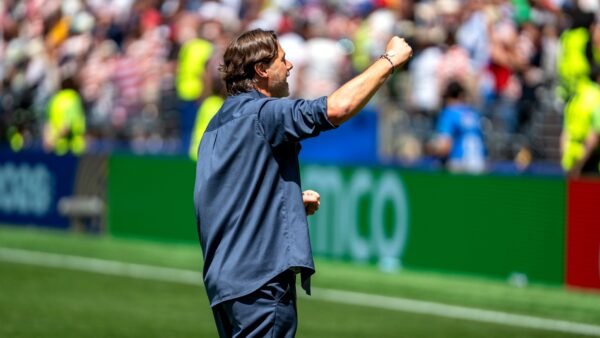
Manchester United Confirm Mauricio Pochettino as Head Coach From 18 November After Tearful Farewell to the USA
Manchester United have confirmed Mauricio Pochettino as their new head coach from 18 November, a day after sacking…
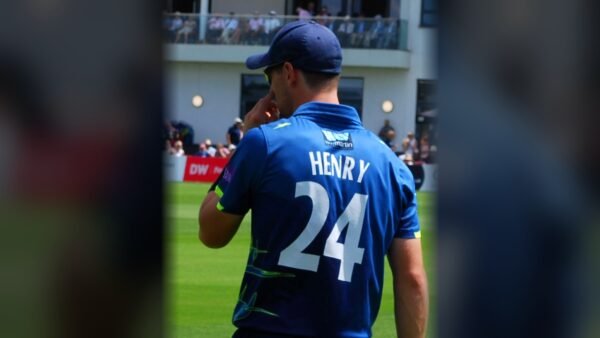
Matt Henry’s Career-Best 6-27 Powers New Zealand to 244-Run Rout of India in Fourth ODI
Matt Henry took three wickets in the first over and finished with a career-best 6 for 27 as…
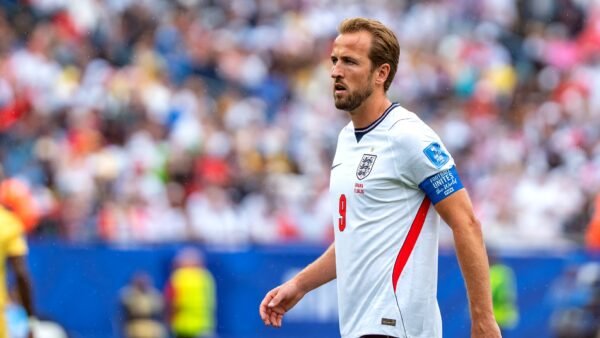
Harry Kane Breaks England Appearance Record with Winning Goal as Three Lions Beat Croatia to Reach Nations League Quarter-Finals
Harry Kane became England's most-capped men's player with his 126th appearance and marked the night with the winning…