
US Wholesale Inflation Hits 6.5%, the Highest in Nearly Four Years, as the Fed Faces a December Rate Hike

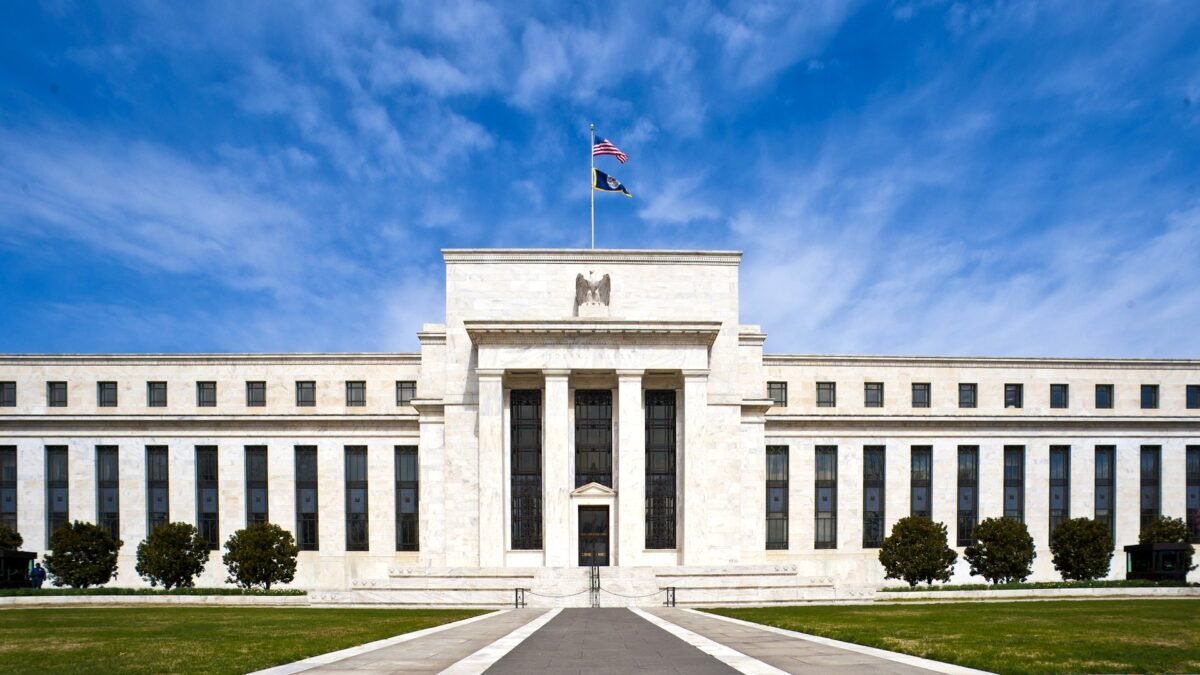
Wholesale inflation in the United States accelerated in October to its fastest annual pace in nearly four years, according to official data released on Friday, leaving the Federal Reserve on course to raise interest rates again when its policymakers meet in December.
The Producer Price Index, which measures the prices that American farms, factories and other producers receive for their goods and services, rose 0.3 per cent from September and 6.5 per cent over the 12 months to October, the Bureau of Labor Statistics said. The annual figure was the largest 12-month increase since November 2022, when producer prices were up 7.4 per cent on the year.
The monthly rise was slightly smaller than the 0.4 per cent that economists surveyed by Dow Jones had expected, and a sharp cooling from September, when the index jumped 1.4 per cent. But the details of the report gave the Federal Reserve little comfort. The annual rate moved up from 6.3 per cent in September, the underlying pipeline measure rose for a second consecutive month, and the prices of the goods that businesses buy climbed at their fastest annual pace in four years.
The report, the last major inflation reading before the Federal Open Market Committee meets on 8 and 9 December, arrived days after a hotter-than-expected consumer inflation report and strengthened the market’s expectation that the central bank will lift its benchmark rate again next month. According to Reuters, financial markets are wavering between pricing in a quarter-point increase in December and leaving room for a half-point move, while the CME FedWatch tool showed investors also anticipating a further increase in January.
The headline numbers
The Bureau of Labor Statistics, in its release published at 8:30 a.m. Eastern time on Friday 13 November, reported that the Producer Price Index for final demand rose 0.3 per cent in October on a seasonally adjusted basis, after advancing a revised 1.4 per cent in September and 0.4 per cent in August. On an unadjusted basis, the index increased 6.5 per cent for the 12 months ended in October.
Stripping out food and energy, the core measure of producer prices also rose 0.3 per cent on the month and 5 per cent over the year, matching an annual rate last seen in January 2023, according to CNN’s reading of the data. The bureau’s preferred underlying gauge, which also excludes trade services, rose 0.5 per cent in October, the same as in September, and stood 4.9 per cent higher than a year earlier.
The split between goods and services told the story of the month. Prices for final-demand goods increased 0.5 per cent in October, while prices for final-demand services rose 0.2 per cent. Over the year, the goods index jumped 10.2 per cent, its largest 12-month rise since October 2022. More than 60 per cent of October’s advance in goods prices came from goods excluding food and energy, which themselves rose 0.5 per cent.
September’s figures were revised in a direction that unsettled markets. The monthly gain for September was lifted to 1.4 per cent from the 1.3 per cent originally reported, a change that meant the autumn’s inflation surge was even stronger than first thought. “US wholesale inflation data may have been better than some analysts had expected, but was not necessarily as comforting as it appeared when taking into account the upward revisions for September,” Patrick O’Hare, an analyst at Briefing.com, said, according to the AFP news agency. “The key takeaway from the report is that inflation at the wholesale level is still a big problem,” he added.
The October report followed news earlier in the week that consumer prices had also come in hotter than expected. The Consumer Price Index rose 0.4 per cent in October, with the core measure up 0.3 per cent, both a tenth of a percentage point above forecasts. Together, the two reports describe an inflation problem that has proved stubborn at both ends of the supply chain: in what businesses charge each other, and in what households pay at the till.
What drove the increase
Energy was the force that set the autumn surge in motion, and its fingerprints remained all over the October report even though fuel prices themselves eased during the month. Energy prices slipped 0.1 per cent in October after surging 10.8 per cent in September, according to the bureau’s data. But the earlier spike had already worked its way through the transport system, and the costs it created are still climbing.
CNN reported that the Iran war and the resulting energy supply shock have sent petrol and diesel prices markedly higher in recent months, and the AFP news agency likewise noted that both the consumer and producer reports highlighted the impact of increased energy costs linked to the US-Iran war. The higher fuel costs continue to flow into other categories, lifting the price of transportation, warehousing and key inputs such as chemicals.
Transportation and warehousing services rose 2.0 per cent in October, led by a 3.9 per cent jump in truck transportation of freight, which accounted for more than 80 per cent of the increase in final-demand services, according to the bureau’s release. CNN reported that freight transportation costs for the trucking industry are up nearly 25 per cent from last year.
Food prices provided the month’s sharpest jolt. They climbed 1.3 per cent in October, the fastest monthly increase since July 2022, after rising 1.1 per cent in September. Within food, the largest spikes were in produce, which is primarily transported by truck. Prices for wholesale fresh and dry vegetables jumped 26.7 per cent in October, following a 30.7 per cent leap in September, according to the bureau’s data cited by CNN.
A second, quieter pressure came from the technology boom. Prices for electronic components and accessories rose at a six-month high pace of 4.2 per cent in October and were 31.7 per cent higher than a year earlier, the highest annual rate on record in bureau data that goes back to December 1966. The surge reflects the massive investment in artificial intelligence equipment and the scramble for the chips and components that power it, a demand shock that is now showing up as inflation in the producer data.
Further up the supply chain, the pressure was even more intense. Prices for intermediate processed goods, the materials that manufacturers buy to make finished products, soared 14.6 per cent from October 2025, the biggest annual gain since July 2022. That figure matters because it is the pipeline: the costs that factories are paying today tend to become the prices that consumers pay tomorrow.
Wall Street’s reaction
Wall Street stocks mostly fell on Friday as technology shares remained under pressure and the dollar rose on the fresh evidence that American inflation is persisting, according to the AFP news agency. Nvidia, until recently the world’s most valuable publicly traded company, dropped another 2 per cent on Friday, extending a slide that began when its chief executive, Jensen Huang, stepped down on Thursday. Two rivals that had rallied the previous day also stumbled: AMD sank 8.8 per cent, while Broadcom fell nearly 5 per cent.
Angelo Kourkafas of Edward Jones attributed the pullback in those two stocks to profit-taking, the AFP report said, but added that there was “certainly a defensive leadership as we look at the sectors, which points to some caution”. He expects artificial intelligence to return to the spotlight next week, when Nvidia reports quarterly results and Anthropic makes its stock market debut.
The dollar strengthened on the inflation data, reaching its highest level against the euro since April 2025, as investors priced in higher American interest rates. Shares in Microsoft recovered from early losses after the technology company struggled to fix an issue that left users around the world without its Outlook email service. Asian and European stocks traded mixed.
Oil prices wobbled after the International Energy Agency said global oil supplies were expected to exceed demand in the fourth quarter, as more tankers transit the Strait of Hormuz despite the ongoing conflict with Iran.
The December decision
The Federal Reserve held its benchmark overnight interest rate in the 3.75 to 4.00 per cent range at its meeting on 28 October. Friday’s data, coupled with the hotter-than-expected October consumer inflation report released earlier in the week, is expected to result in a rate rise when policymakers meet in early December, according to CNN.
Markets are expecting a quarter-point increase, but Federal Reserve Governor Christopher Waller indicated earlier this week that a half-point rise could be necessary. The range of opinion inside the central bank reflects an awkward position: inflation has now run above the Fed’s 2 per cent target for nearly six years, according to Chicago Fed President Austan Goolsbee, yet the economy is absorbing a series of shocks at once, from the energy disruption to a technology sell-off.
The rate rises might not end with December, according to Ben Ayers, senior economist at Nationwide. “Lingering impacts from the spike in fuel prices could linger into 2027, warranting further tightening by the Fed to limit second and third order inflation impacts,” he wrote in a note on Friday, as reported by CNN.
The December meeting on 8 and 9 December will be the last scheduled gathering of the Federal Open Market Committee this year, and the October producer price report is the final major inflation reading the committee will have in hand before it decides. The next real test of the inflation picture will be the October personal consumption expenditures report, due on 25 November, which is the Fed’s preferred measure of price pressures.
Why wholesale prices matter to households
The Producer Price Index does not measure what consumers pay. It measures what domestic businesses receive for the goods and services they sell, which makes it an early warning system rather than a verdict on the cost of living. But its trajectory, and the category-specific increases inside it, can serve as a bellwether for what consumers could experience in the near future, according to CNN’s analysis of the report.
“We’ve seen a lot of pass-through already in places like airfares, where consumer prices have risen a lot,” Matt Bush, US economist at Guggenheim Investments, told CNN. He cautioned, however, that the higher transportation and input costs businesses are seeing now might not reach consumers for another six to eight months.
“And it’s complicated by the fact that we also have some lingering tariff effects on a lot of these consumer goods prices,” Bush said. As a result, consumers could be in for further sticker shock early next year. “That’s when the majority of businesses do their annual price resets,” he said. “In the case of the energy shock, there was an expectation that it could be short-lived; but given it’s gone on for several months now, I think as we head into the new year that you will see a lot of businesses deciding they need to pass on at least some of these costs.”
The technology channel works differently. The record surge in electronic component prices does not pass through as directly into consumer prices, Bush told CNN, “but indirectly, we are seeing it show up in computer prices, TV prices, software prices”. At the same time, he said, the massive investment in artificial intelligence technology and equipment is contributing another layer of inflationary pressure for both businesses and consumers.
That combination, energy costs still working through the freight system, food prices rising at their fastest monthly pace in more than four years, and a technology investment boom pushing component prices to record annual gains, is what makes the October report more worrying than its modest monthly headline suggests. The monthly figure cooled. The pressures underneath it did not.
Analysis: Why It Matters
The monthly number cooled. The annual number did not.
The most important thing about the October report is the gap between its two clocks. On a monthly basis, producer prices rose 0.3 per cent, less than forecast and far below September’s 1.4 per cent surge. On an annual basis, they rose 6.5 per cent, the fastest in nearly four years. Both numbers are true, and they describe different things. The monthly figure measures the change from September to October, after seasonal adjustment. The annual figure compares October’s price level with the same month a year earlier, without seasonal adjustment, and it carries the memory of every month in between.
October 2025 was a quiet month for producer prices. October 2026, at 0.3 per cent, was not quiet enough to stop the 12-month figure from rising, because the September surge was still inside the window. That is why a report that looks like a cooling on its first line reads as an acceleration on its second. The distinction matters for anyone trying to judge whether inflation is beaten: a single soft month does not undo a year of accumulated pressure, and the annual rate is the number that tells households and businesses how much more expensive the world has become.
The revision changed the story
September’s monthly gain was revised up to 1.4 per cent from 1.3 per cent, a small change with a large meaning. It means the autumn’s inflation surge was stronger than markets believed when they first saw the data, and it means the starting point for October’s comparison was higher than anyone had assumed. Revisions are routine in economic statistics, because late responses and corrections arrive after publication, but this one arrived at the worst possible moment for the Federal Reserve: it confirmed that the September shock was real, broad and slightly worse than reported.
The revision also explains why the market’s reaction was more negative than the headline alone would suggest. Traders had hoped that the October figure would show the September spike fading. Instead they learned that September was worse than they thought, that the underlying pipeline measure rose 0.5 per cent for a second consecutive month, and that goods prices are now rising at their fastest annual pace since October 2022. A report that could have been read as relief was read, correctly, as confirmation.
The Fed’s room is narrowing
The Federal Reserve now faces a decision that is harder than it looked a month ago. It held rates at 3.75 to 4.00 per cent in late October, and the market had settled on the view that December would bring a quarter-point rise. Friday’s data, together with the hot consumer report, has kept that expectation alive while opening the door to something larger. Governor Waller’s suggestion that a half-point move could be necessary is not a promise, but it is a signal that at least one senior policymaker believes the inflation data justifies a stronger response.
The complication is that the Fed is being asked to tighten into an economy that is already showing strain in other places. Technology shares have fallen sharply since the shock departure of Nvidia’s chief executive, the dollar is at its strongest against the euro since April 2025, and businesses are warning that the costs they are absorbing will have to be passed on in January’s annual price resets. Raising rates cools demand, but it does nothing about a war-driven energy shock or a chip shortage. The central bank’s tools are designed for demand-driven inflation; much of what is driving producer prices now is supply.
The pass-through pipeline is the real story
The numbers that will matter most in 2027 are not in the headline at all. They are in the intermediate goods index, up 14.6 per cent on the year, in the trucking costs up nearly 25 per cent on the year, and in the food prices that rose 1.3 per cent in a single month. These are the costs that sit between the producer and the consumer, and they take time to travel. As the Guggenheim economist Matt Bush told CNN, the lag is typically six to eight months, which means the energy shock of the autumn will be arriving in household budgets around the time businesses do their annual price resets in January.
That timing is the report’s most uncomfortable feature. Consumers have not yet felt the full effect of the fuel and freight increases, because businesses have so far absorbed much of them. The October data suggests that absorption is ending. When firms reset their prices in the new year, after months of elevated energy costs, the increases they have been holding back will appear on shelves and invoices at once. The Fed’s December decision is therefore not only about today’s inflation; it is about trying to contain the second and third order effects that the Nationwide economist Ben Ayers warned about, before they become embedded in expectations.
The chip boom has a price, too
The most striking single figure in the report is also the most easily overlooked: electronic components and accessories are 31.7 per cent more expensive than a year ago, the highest annual rate in bureau records going back to December 1966. That is not a story about a shortage in one product. It is the price of the largest capital investment boom in modern American history, as companies race to build the data centres and buy the hardware that powers artificial intelligence.
The boom is, in one sense, good news: it reflects genuine demand, genuine investment and a technology shift that could raise productivity for years. But it is also inflationary in a way that traditional monetary policy struggles to address. The demand for chips and components is not sensitive to interest rates in the usual way, because the companies buying them are spending on a strategic transformation, not on discretionary consumption. Higher rates may slow the housing market and car sales, but they are unlikely to stop a company from buying the servers it believes it needs to compete. The record component prices are a reminder that the inflation of 2026 has more than one engine, and that the Federal Reserve can only reach some of them.
What to Watch Next
- The Federal Open Market Committee meeting on 8 and 9 December, and whether the committee chooses a quarter-point rise, a half-point rise, or signals a pause after December.
- The October personal consumption expenditures report, due on 25 November, which is the Federal Reserve’s preferred measure of inflation and the next major test of the price picture.
- Whether the November producer price report, due in December, shows the annual rate falling back or pushing higher still, and whether the underlying pipeline measure rises for a third consecutive month.
- Energy prices and the Strait of Hormuz, where the International Energy Agency expects global oil supplies to exceed demand in the fourth quarter, and where any disruption could restart the fuel-price surge.
- January’s annual price resets, when businesses decide how much of the autumn’s higher transport, food and input costs to pass on to customers.
- Nvidia’s quarterly results next week and Anthropic’s stock market debut, which will test whether the technology sell-off that followed the chief executive’s departure has run its course.
- Further remarks from Federal Reserve officials, in particular Governor Christopher Waller and Chicago Fed President Austan Goolsbee, on whether the December move should be a quarter point or a half point, and whether more rises will follow in 2027.
Sources
- US Bureau of Labor Statistics — Producer Price Indexes, October 2026 (USDL 26-1687)
- Reuters — US producer prices rise further in October
- CNN — Wholesale inflation rose in October to highest annual rate in nearly four years
- AFP via Europe Says — Wall Street stocks mostly lower as Nvidia extends slump
- PYMNTS — 12-Month Wholesale Inflation Reaches 4-Year High Despite October Slowdown
- ANI via Indian Economic Observer — US producer prices rise 6.5% annually in October, highest since November 2022

About the Author — Abdul Mannan
Related Articles
Wall Street Ends a Wild Week Lower as Nvidia’s Slide Deepens and Chip Stocks Plunge
Nvidia fell to a fresh 52-week low on Friday as chip stocks led Wall Street lower, yet the…

Poundland Wins Ten Days to Find a Buyer as MPs Accuse US Owner Gordon Brothers of Starving the Chain of Cash
Poundland has won ten more working days to find a buyer after filing a second notice of intention…

India’s Inflation Breaches the Reserve Bank’s 6% Ceiling for the First Time in Two Years as Food Prices Surge
India's retail inflation rose to 6.09 per cent in October, breaching the Reserve Bank of India's 6 per…