
UN Climate Chief Tells COP31 to ‘Move Swiftly’ as Fossil Fuel Divide Threatens a Deal in Antalya

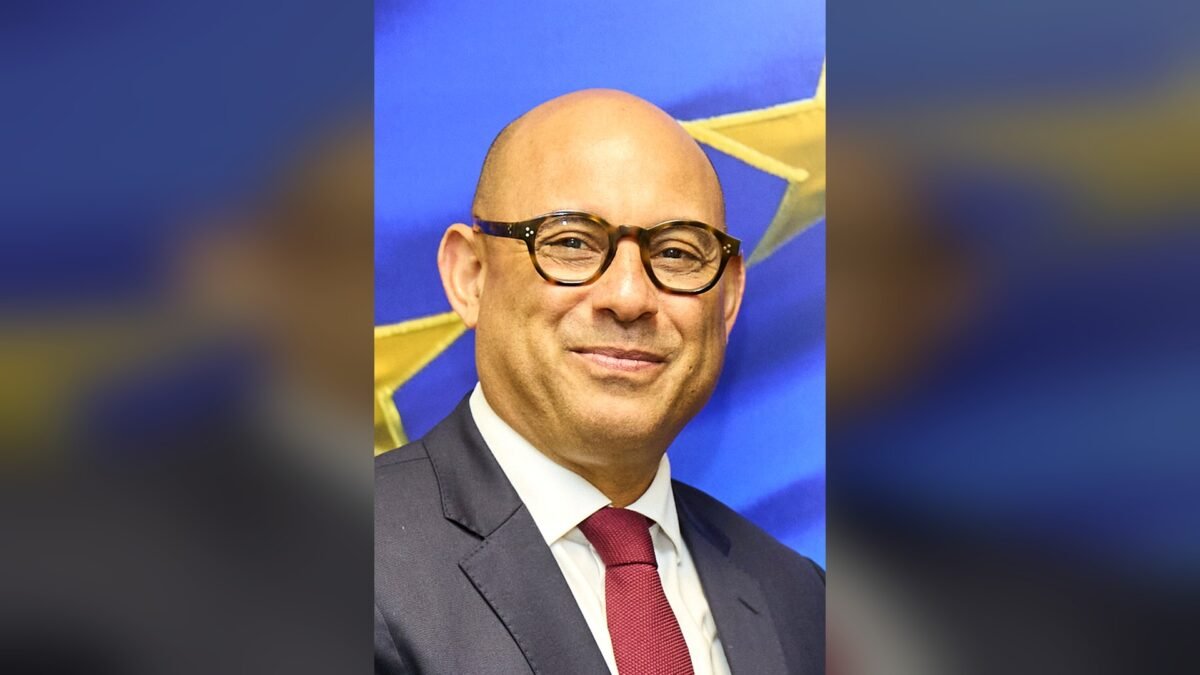
The United Nations’ top climate official warned negotiators at the COP31 climate summit on Saturday to move swiftly towards a deal and avoid “tactical delays”, as the two-week conference in Antalya entered its decisive second week with its hardest question — what, if anything, to say about fossil fuels — still unresolved.
Simon Stiell, the executive secretary of the United Nations Framework Convention on Climate Change (UNFCCC), told delegates gathered in the Turkish Mediterranean resort city that the work ahead was difficult by design, and that no country would leave with everything it wanted. “Each country has a view. Every country has a voice. Getting agreement on every word, every sentence is tough but vital work,” he said, according to Reuters. “There is no collective success without compromise from every party.”
Then came the warning that framed the week ahead. “As we head into the second week, I urge parties to move swiftly to the hardest issues and to avoid tactical delays,” Stiell said.
The intervention, delivered on Saturday 14 November as the summit reached its halfway point, landed on a conference that has spent its first week circling its central dispute rather than settling it. Major fossil fuel producers and consumers are resisting any agreement that would set firm new targets or commit countries to a shift away from oil, gas and coal, observers told Reuters, leaving the summit’s hosts — Turkey, which holds the presidency, and Australia, which leads the negotiations — facing the prospect of a final text that says a great deal about process and very little about the fuels driving the crisis.
A first draft of a deal text is expected early next week, according to Chris Bowen, Australia’s climate minister and the summit’s President of Negotiations. What that draft contains — and, just as importantly, what it leaves out — will show whether Antalya ends with a genuine agreement or with a declaration that papers over the divisions.
The stakes are not abstract. A United Nations report published last month found that the world is already on course to exceed the 1.5 degrees Celsius warming limit that scientists say should prevent the worst effects of climate change, Reuters reported. The summit is taking place against that backdrop, with the world’s biggest oil consumer, the United States, absent for the second year running, and with public climate finance pledges for the coming years running about 70 per cent lower than in 2025, according to analysis by Carbon Brief.
A summit at its halfway mark
COP31, the 31st Conference of the Parties to the UNFCCC, opened on Monday 9 November at the Antalya Expo Center and is scheduled to run until Friday 20 November. Nearly 200 countries are taking part, alongside scientists, businesses and civil society groups, in a conference its hosts have billed as an “implementation COP” — a summit meant to turn the promises of past years into practical action rather than to set new headline targets.
It is also a summit with an unusual structure. For the first time in the conference’s 31-year history, the leadership has been split between two countries. Turkey hosts the event and holds the formal presidency, with Environment Minister Murat Kurum as COP President, while Australia’s Chris Bowen chairs the formal negotiations as President of Negotiations, with exclusive authority over the negotiating process, including the drafting of texts for adoption. The arrangement was the compromise that settled rival bids from the two countries to host the summit.
By Saturday, the technical phase of the negotiations was drawing to a close, but agreement was proving elusive. Carbon Brief reported from Antalya that the closing plenary of the technical negotiations under the summit’s two subsidiary bodies had been pushed back repeatedly — first to 5pm, then 6pm, then 8pm local time — as chairs worked through a long list of items on which disagreement remains. Many negotiating tracks are, in Carbon Brief’s description, “mired in brackets”, the square brackets that mark text no country has yet accepted, and in some key areas there is not even a formal draft text yet.
Some tracks, including work on a just transition mechanism to support workers and communities affected by the shift away from fossil fuels, will continue into the second week. But the pattern of the first week has been one of drift: draft texts only now emerging from most negotiating tracks, and the new climate finance work programme stalled, according to Carbon Brief’s analysis.
On Friday, the two presidencies published a “summary of reflections” on a proposed cover decision — the broad political agreement that would wrap up the summit and give it its overall direction. The document gathers the issues countries have said they want included, from advancing the transition away from fossil fuels to recognising the role of forests and oceans and responding to the prospect of temperatures overshooting 1.5 degrees. None of it is agreed yet. Countries were expected to submit text proposals over the weekend, with a proper draft emerging early next week, according to reporting from the summit.
The list also covers methane, electrification, adaptation finance, loss and damage, the Brazil-led roadmaps on the fossil fuel transition and deforestation, and even a reference to a third commitment period of the Kyoto Protocol, the 1997 climate treaty. The breadth of the wish list is itself a measure of the problem: everything is on the table, and almost nothing is settled.
Asked how he viewed the progress of the talks so far, Stiell was measured. “All I can say at this stage is engagement has been constructive. We know where those natural tensions lie,” he said, according to Reuters.
The fossil fuel fault line
The tension Stiell referred to is not new, but it has sharpened at COP31. At the heart of it is a question the annual climate conferences have been wrestling with for three decades: whether nearly 200 countries can agree, in writing, to move away from the fuels that cause the warming they are meeting to address.
Major oil producers such as Saudi Arabia and Russia have traditionally resisted language constraining fossil fuels, while large developing economies such as India have opposed measures they say could limit their development and energy choices, Reuters reported — a dynamic that has compromised the outcomes of past deals. At COP31, according to observers cited by Reuters, big producers and consumers are again resisting any deal that would specify firm new targets or a shift away from oil, gas and coal.
The resistance is not only procedural. Reporting from the summit described Russia, several Arab states and a bloc of developing countries including members of the Like-Minded Developing Countries group explicitly resisting the inclusion of the presidencies’ voluntary maps and initiatives — including Brazil’s roadmaps for phasing out fossil fuels — in a consensus cover decision. The presidencies’ move to seek an overarching cover decision itself faced procedural pushback from Russia and other countries, according to reporting from Antalya.
The history here matters. At COP28 in Dubai in 2023, countries agreed for the first time to “transition away from fossil fuels” in energy systems — language that was celebrated as a breakthrough at the time, but that was deliberately framed without a deadline or a binding obligation. Every summit since has been, in part, a fight over whether to give that phrase teeth. At COP31, the fight is over whether the transition appears in the cover decision at all, and whether it is backed by the roadmaps Brazil presented as part of its COP30 presidency in Belém last year.
The pressure from outside the negotiating rooms has been loud. United Nations Secretary-General António Guterres delivered a forceful speech to the summit on Thursday urging fossil fuels to “disappear like the dinosaurs” and denouncing the profits and lobbying of the fossil fuel industry, according to reporting from the summit. The Guardian reported that Guterres tied the 1.5 degrees target directly to ending new fossil fuel infrastructure — a message that landed awkwardly with hosts whose own records on the question are contested.
Australia’s prime minister, Anthony Albanese, attended the summit and delivered a speech in which he said governments had a “solemn responsibility” to act on climate change — but which failed to mention fossil fuels at all, according to The Guardian. Albanese, who was flanked by seven Pacific island leaders at his only press conference in Antalya on Thursday, focused instead on Pacific climate vulnerabilities, renewable energy progress and funding initiatives including a A$100 million Pacific Resilience Facility. The Guardian noted that Australia has approved 38 new fossil fuel projects since 2022, a record that climate advocates say undermines its claim to climate leadership at a summit it is helping to run.
Greta Thunberg arrived in Antalya on Tuesday and called the summits “greenwashed circuses”, according to The Guardian’s live coverage of the conference. The same coverage noted that the host country was celebrating new oilfields as the summit prepared to receive world leaders from more than 90 countries for the leaders’ summit on 11 and 12 November. The symbolism was not lost on the activists and small island delegations who have spent the week arguing that the process itself is being hollowed out.
Turkey’s electrification gamble
If there is one proposal the hosts have put at the centre of their plan for the summit, it is electrification. Turkey is striving to place a proposal to expand global electrification at the centre of an eventual deal, arguing that faster electrification will cut emissions sooner by replacing fossil-fuel cars, boilers, furnaces and other equipment with electric alternatives, Reuters reported.
The proposal, known at the summit as “35 by 35”, would raise electricity’s share of final energy use to 35 per cent by 2035, from roughly a fifth today, according to reporting from Antalya. It is a target with real support in Europe and from the International Energy Agency, which sees electrification as one of the fastest routes to cutting emissions in transport, heating and industry.
But the plan has a gap that its critics have not stopped pointing out: it does not require the extra electricity to come from renewable sources. A country could, in principle, meet an electrification target while generating the additional power from coal or gas — which would move emissions from a car’s exhaust pipe to a power station’s chimney without reducing them. That omission has disappointed delegations and observers who want countries to map out their transition away from fossil fuels more clearly, Reuters reported.
The proposal’s prospects in the final text now look uncertain. Carbon Brief reported on Saturday that Australian and Turkish hopes of including the “35 by 35” electrification target in the cover text “appear to be fading”, as negotiators struggle to agree on the overarching political decision at all. What was meant to be the hosts’ flagship deliverable may end up as a voluntary pledge outside the negotiated text, or not at all.
The irony is not lost on observers. Turkey’s own energy mix still relies heavily on coal — about a third of its electricity comes from the fuel — and the government has set no date to phase it out, according to analysis published during the summit. The country’s environment minister has paired the electrification push with a large roadmap to expand wind and solar capacity, but the absence of a coal exit date has left the hosts open to the same charge levelled at Australia: that they are asking the world to move faster than they are willing to move themselves.
The finance gap
If the fossil fuel argument is the summit’s most visible divide, the finance argument may be its most consequential. Developing countries have arrived in Antalya asking for money that is predictable, public and concessional — grants and low-cost loans, not the private investment and commercial lending that dominates the headline figures. What they have found, according to Carbon Brief’s analysis, is that public climate finance pledged by developed countries for the coming years is around 70 per cent lower than in 2025.
The shortfall has sharpened divisions between wealthy and developing nations as negotiators reach the halfway point, and it is already spilling into other negotiating tracks, including early text on the proposed cover decision and the global goal on adaptation — the question of whether the summit will set a target to triple adaptation finance for countries already living with the consequences of warming.
The numbers at stake are large and, for the countries that need them most, abstract. At COP29 in Baku last year, countries agreed that developed nations would provide at least $300 billion a year in climate finance by 2035, as part of a wider Baku-to-Belém roadmap to mobilise $1.3 trillion a year from all sources by the same date. Reporting from COP31 puts the current estimate for that wider goal at roughly $1.3 to $1.41 trillion a year, driven about two-thirds by private capital — a structure that leaves developing countries asking what happens when private money does not arrive, or arrives only where it can earn a return.
The smaller funds tell the same story in miniature. The Tropical Forests Forever Fund, launched at COP30 in Belém to pay countries to keep their forests standing, had mobilised only $88 million at COP31 against a $10 billion goal, according to reporting from the summit. It still needs about $2.1 billion to reach the target by December. For the forest nations whose cooperation the fund was meant to secure, the gap between the announcement and the money is the story of climate finance in a single figure.
There has been some movement on the machinery of delivery. On Friday 13 November, the Global Implementation Accelerator — a body set up to turn climate commitments into concrete projects — formalised its governance with a steering committee and an independent expert group led by Brazil, Turkey and Australia, and set its first selection of solutions for the first half of 2027, according to reporting from the summit. It is the kind of institutional step that the hosts’ “implementation COP” framing was designed to produce. Whether it matters depends on whether the projects it selects are funded.
The absent giant
One chair at COP31 is empty, and everyone in Antalya knows whose it is. The United States, the world’s biggest oil consumer and historically its largest cumulative emitter, has skipped the talks for the second year in a row under President Donald Trump, who has called global warming a hoax and promoted the continued use of fossil fuels, Reuters reported.
The absence is not merely symbolic. The United States’ withdrawal from the Paris Agreement took effect on 27 January 2026, and the administration has since moved to leave the UNFCCC itself, submitting a formal withdrawal notification in February 2026 that is due to take effect on 27 February 2027. COP31 is therefore taking place while the United States remains legally a party to the convention, but politically and financially disengaged from it — a country still on the membership list, but not in the room.
The practical consequences are visible across the negotiations. American absence removes the world’s largest economy from the finance discussions, from the pressure to raise ambition, and from the coalition of countries that has historically pushed for stronger language on fossil fuels. It also changes the politics for everyone else: with Washington gone, the countries that remain must decide whether to fill the gap or use it as cover for their own reluctance.
The vacuum has been felt most acutely by the small island states and least developed countries, for whom the United States has at times been an unreliable but occasionally useful ally on loss and damage — the principle that countries harmed by climate change they did not cause should be compensated. With the largest historical emitter absent, the moral argument for finance rests more heavily on Europe, and the political argument for ambition rests more heavily on countries such as China, India and Brazil, whose own records are mixed.
It is worth remembering that American absence from climate talks is not new — the United States stayed out of the Kyoto Protocol, and withdrew from the Paris Agreement once before, under the first Trump administration, before rejoining under President Joe Biden. What is different this time is the direction of travel: a second withdrawal, from the convention itself, that would leave the United States outside the framework entirely. The question hanging over Antalya is whether the rest of the world treats that as a reason to press on without Washington, or as a reason to lower its own ambitions to match.
The science behind the urgency
Behind the procedural arguments in Antalya sits a body of science that has grown steadily bleaker. A United Nations report published last month found that the world is already on course to exceed the 1.5 degrees Celsius warming threshold, Reuters reported — the limit that the Paris Agreement set as the aspiration, and that scientists say should prevent the worst effects of climate change.
The United Nations Environment Programme confirmed in September that exceeding 1.5 degrees had become “inevitable”, according to reporting at the time. The Climate Action Tracker, which measures national policies against the Paris goals, found that current policies point to about 2.7 degrees of warming — a world of far more extreme heat, sea level rise and crop failure than the one the Paris Agreement was written to prevent.
That is why the cover decision matters as more than a diplomatic exercise. The presidencies’ proposed text includes recognition of the prospect of overshooting 1.5 degrees — an acknowledgement, in the language of the negotiations, that the limit the world set for itself is slipping away, and that the question is now how far beyond it temperatures will go, and for how long. Whether that recognition survives into the final text, and whether it is paired with a call to aim for the next major scientific assessment by the Intergovernmental Panel on Climate Change by early 2029, will be one of the markers of whether Antalya faced the science or looked away from it.
COP31 also formally launches the second cycle of the Global Stocktake, the process under the Paris Agreement by which countries collectively assess their progress towards its goals. The first stocktake, completed at COP28 in Dubai, produced the agreement to transition away from fossil fuels. The second will measure whether that agreement meant anything in practice — and its conclusions will shape the negotiations at the next summit and the one after that.
For the negotiators in Antalya, the science is not an abstraction. The summit is taking place in a year in which Gaza’s displaced population has faced flooding in makeshift shelters, in which the Horn of Africa and South Asia have endured another season of extreme heat, and in which the world’s oceans have continued to absorb heat at a record rate. The delegates who argue over brackets and cover decisions do so while the countries they represent are already paying for the warming that past summits failed to prevent.
Analysis: Why It Matters
The news from Antalya on Saturday was not a breakthrough. It was a warning — and warnings, in the history of climate summits, are worth reading carefully, because they usually arrive when the people closest to the negotiations can see the shape of failure before anyone else can. Simon Stiell’s intervention matters for what it says about where COP31 stands at its halfway point, and for what it implies about the week ahead. Here is what to take from it.
An “implementation COP” still has to decide something
The framing Turkey and Australia chose for this summit was deliberate: an “implementation COP”, a “COP of the future”, a conference about turning promises into projects rather than making new promises. There is a good reason for that framing. After thirty years of summits, the world has no shortage of pledges. What it lacks is delivery — emissions still rising, finance still short, adaptation still underfunded. A summit that produced working machinery, funded projects and measurable steps would be worth more than another round of soaring language.
But the framing has a trap in it, and Antalya is walking into it. “Implementation” can become a polite word for avoiding the decisions that make implementation possible. If the cover decision says nothing firm about fossil fuels, nothing binding about finance and nothing specific about adaptation, then the machinery it sets up will have nothing to implement. The Global Implementation Accelerator, the Brazil roadmaps, the electrification pledge — all of these are mechanisms, and mechanisms without mandates are decorations. Stiell’s warning about “tactical delays” reads, in that light, as a warning against a particular kind of failure: the summit that succeeds procedurally and fails substantively, and calls the procedure a success.
Electrification is the test of whether this summit can say anything real
The “35 by 35” proposal deserves more attention than it has received, because it is the clearest test of what COP31 is willing to do. Electrification is, on the merits, one of the most powerful tools available: every car, boiler and furnace that runs on electricity instead of burning fuel directly is a source of emissions that can be cleaned up at the power station rather than one by one. The International Energy Agency has made the case for years, and the target itself — 35 per cent of final energy from electricity by 2035 — is ambitious but achievable.
What makes it a test is the flaw in it. A target that does not require the electricity to be clean is a target that can be met while emissions keep rising. That is not a drafting accident; it is the compromise that made the proposal acceptable to countries that still generate much of their power from coal and gas. And now, according to Carbon Brief, even that compromised version may not make it into the cover text. If a summit cannot agree to electrify with clean power, it is hard to see what it can agree to. The fate of “35 by 35” in the draft text early next week will be the single clearest signal of whether Antalya is a negotiation or a performance.
The cover decision is where the summit will be won or lost
Most people outside the process have never heard of a cover decision, and that is part of the problem. It is the political text that sits above the dozens of technical decisions a COP produces, the document that says what the summit as a whole meant. It is where the fossil fuel language lives or dies, where the finance numbers are set, and where the ambition of the conference is recorded. When diplomats say a COP “failed”, they usually mean the cover decision failed.
That is why the fight over the cover decision at COP31 is so revealing. The presidencies circulated a “summary of reflections” — a wish list, in plain language — and the response was immediate resistance from Russia, several Arab states and a bloc of developing countries. The pushback was procedural as well as substantive: objections to the very idea of an overarching political decision, not just to its contents. That is a familiar pattern in climate diplomacy. When a country cannot win an argument on the substance, it argues about the process. The question for the second week is whether Bowen and Kurum can hold the process together long enough for the substance to be decided, or whether the cover decision collapses into a lowest-common-denominator text that offends no one and commits no one.
Absence is also a negotiating position
It is tempting to treat the absence of the United States as a hole in the summit — a missing participant, a gap to be worked around. That understates what is happening. American absence is itself a negotiating position, and it shapes the behaviour of everyone else in the room. When the world’s largest economy and largest historical emitter walks away from the table, it lowers the cost of reluctance for every other country. A government that might have been shamed into ambition can now point to Washington and ask why it should move first.
The effect is visible in the positions taken by the major producers and consumers. Saudi Arabia and Russia have always resisted fossil fuel language; India has always defended its right to develop. What has changed is that they no longer face the counterweight of an American administration pressing in the other direction. The coalition that pushed the “transition away” language through at COP28 was fragile and contingent, and one of its load-bearing members has left. Whether Europe, China and the small island states can hold the line without Washington is the unspoken question of the second week — and it is a question with implications that extend well beyond Antalya, to every climate negotiation that follows.
The clock in Antalya is the same clock as the one in the atmosphere
There is a final point, and it is the one Stiell’s warning rests on. The negotiations in Antalya operate on a human timetable: two weeks, a draft early next week, a closing plenary on Friday. The atmosphere does not. Every year in which the world fails to bend the emissions curve makes the 1.5 degrees limit harder to hold, and the science now says the limit is already slipping away. The Climate Action Tracker’s estimate of 2.7 degrees under current policies is not a forecast of what will happen if the world does nothing; it is a forecast of what will happen if the world does roughly what it is doing now.
That is the context in which “tactical delays” should be understood. In a negotiation, delay is a tactic: a way to run out the clock, to push a decision to the next summit, to trade a concession today for a promise tomorrow. In the atmosphere, delay is not a tactic; it is an outcome. Every year of delay is a year of emissions that cannot be taken back. Stiell knows this, and his intervention on Saturday was, in the end, a reminder that the two clocks — the one on the wall in Antalya and the one in the sky above it — are the same clock, and that the summit’s job is to make them agree.
What to Watch Next
- The first draft of the cover decision, early next week. Chris Bowen said he expected a draft text to emerge early in the second week. Watch whether it includes the fossil fuel transition language, the “35 by 35” electrification target, and recognition of the 1.5 degrees overshoot — and whether any of those survive in brackets or disappear entirely.
- The technical negotiations’ closing plenary. The subsidiary bodies’ closing session was delayed repeatedly on Saturday. Watch what the chairs report as agreed and what is carried forward unresolved into the ministerial week, especially on the just transition mechanism and the new climate finance work programme.
- Whether the electrification target makes the text. Carbon Brief reported that hopes of including “35 by 35” in the cover decision are fading. Watch whether it appears as a negotiated commitment, a voluntary pledge outside the text, or not at all — and whether any version requires the electricity to be clean.
- The finance numbers. With public climate finance pledges about 70 per cent lower than in 2025, according to Carbon Brief, watch whether the second week produces new commitments, a credible plan to reach the $1.3 trillion Baku-to-Belém goal, or agreement on tripling adaptation finance.
- The Brazil roadmaps. Brazil’s voluntary roadmaps on the fossil fuel transition and deforestation are in the presidencies’ reflections document. Watch whether Russia, the Arab states and the Like-Minded Developing Countries bloc succeed in keeping them out of the cover decision.
- The closing plenary on Friday 20 November. COPs almost always run over time. Watch whether the summit closes on schedule, and whether the final text is adopted by consensus or forced through over objections — the difference between a deal and a document.
- What happens after Antalya. COP31 launches the second cycle of the Global Stocktake. Watch whether the summit’s outcome gives that process something to measure, or whether the stocktake’s next report will record another two years of promises outpacing delivery.
Sources
- Reuters, “UN climate chief urges speed as COP31 confronts fossil fuel divide”, 14 November 2026
- Carbon Brief, “COP31 midway negotiations update”, 14 November 2026
- Asia Today, “COP31 Midway: Stiell Urges Speed as Fossil Talks Stall”, 14 November 2026
- Asia Today, “COP31 climate finance pledges fall 70%”, 14 November 2026
- Particle, “COP31 Hosts Seek Political ‘Cover Decision’ as Key Proposals Face Blockage”, 14 November 2026
- Lexology, “COP31 – Briefing Paper”, November 2026

About the Author — Abdul Mannan
Related Articles
SpaceX Starship Reaches Orbit on Its Boldest Test Yet as Booster Explodes Over the Gulf
SpaceX's Starship reached orbit on its boldest test yet on Friday, but the Super Heavy booster exploded over…

Google Puts Gemini 4 Hydrogen Into Search for Every User in Its Biggest Upgrade Yet
Google has rolled out Gemini 4 Hydrogen, its fast new AI model, to every Search user worldwide, calling…

Microsoft 365 Goes Dark Worldwide as Outlook, Teams and Copilot Fail in Ten-Hour Global Outage
Outlook, Teams and Copilot went down for millions of users across 74 countries on Thursday as Microsoft's own…