
Suspected Drones Over RAF Lakenheath Force US Air Force to Sound Shelter Alarm at Britain’s Largest American Base

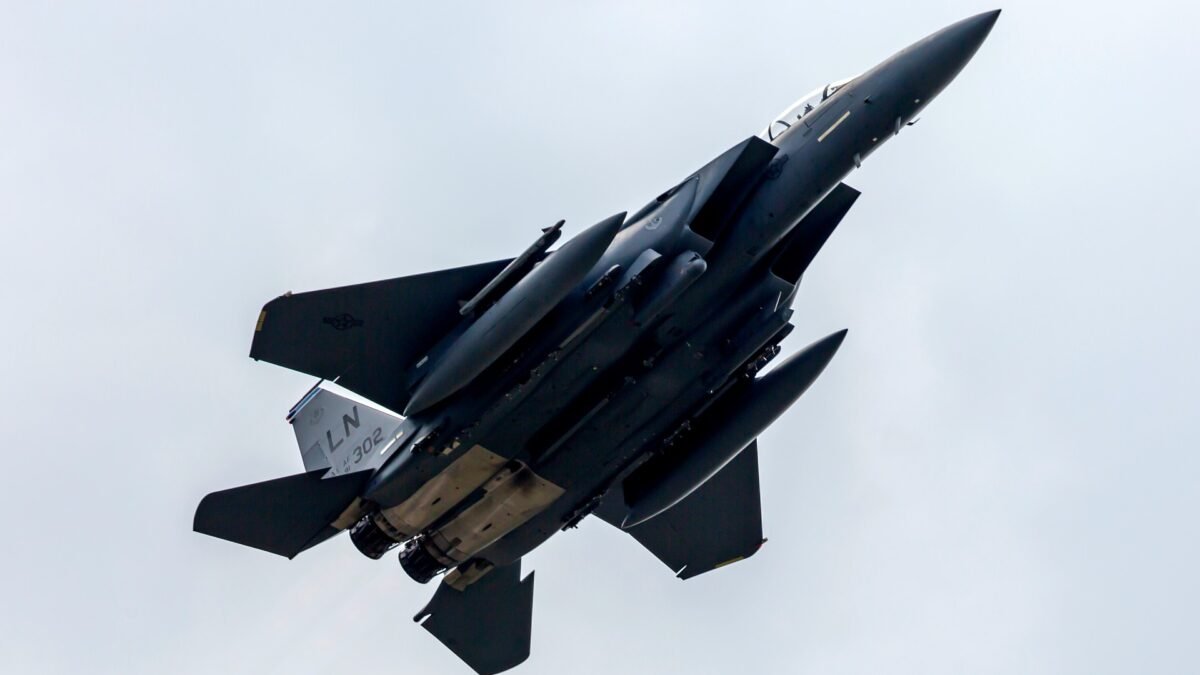
United States Air Force security forces responded to suspected unauthorised drone activity over RAF Lakenheath in Suffolk on Friday evening, sounding sirens across the base and ordering personnel to shelter in place, according to the US Air Force. No personnel, aircraft or infrastructure were affected, the air force said, and the British Ministry of Defence said later that the situation was resolved — but the authorities have not said how many drones were involved, what type they were, or who was flying them.
The incident, at the largest American fighter base in Britain, came at the end of a week in which the United States had already moved aircraft out of a nearby base, raised the security alert at two Suffolk installations to its second-highest level, and withdrawn bombers from another English airfield after a suspected plot linked to Iran. It also came almost exactly two years after a wave of unexplained drone flights over the same group of bases in November 2024 — incursions that were never explained and whose operators were never identified.
“This evening, USAF Security Forces personnel responded to suspected unauthorised drone activity over RAF Lakenheath,” a US Air Force spokesperson said on Friday, according to Reuters. “No personnel, aircraft or infrastructure were affected.”
The air force added: “We continue to work closely with our host nation counterparts to ensure the safety and security of our US service members, US and host nation civilians, contractors, and all of our families.” It urged anyone who saw anything unusual to report it to the local authorities.
Sky News reported that personnel on the base were told to shelter in place after an alert headed “REAL WORLD” was sent around the installation, and that an air-raid siren could be heard sounding at the base. Video footage posted online appeared to show sirens ringing out over Lakenheath on Friday evening, according to Sky News.
A spokesperson for the UK Ministry of Defence said: “We are coordinating with all relevant parties regarding reports of unauthorised drone activity at RAF Lakenheath this evening. USAF security forces personnel responded to the reports and the situation is now resolved. We are working closely with them to establish the facts. We will provide updates in due course.”
Nick Timothy, the Conservative MP for West Suffolk, whose constituency includes the base, wrote on social media that he had been in touch with the authorities and that “there is no threat to the public and the incident is now resolved”. He added that, given the raised threat level, he continued to encourage everyone to report anything suspicious or out of the ordinary to the authorities.
What the official statements did not say is as important as what they did. Neither the US Air Force nor the Ministry of Defence has confirmed that a drone was actually seen, how many aircraft were involved, how long the incident lasted, or whether anything was recovered. The activity is described throughout as “suspected” — the same careful word the authorities used during the 2024 incursions.
What happened on Friday evening
Residents living near RAF Lakenheath reported hearing sirens on Friday evening, according to the Daily Mail, with some describing the sound as reminiscent of wartime alerts. Reports also suggested sirens were heard at nearby RAF Feltwell in Norfolk, although the official US Air Force statement referred only to Lakenheath, and those wider reports could not be independently confirmed.
The base went into a shelter-in-place alert, a procedure that tells everyone on the installation to move to the nearest protected room and stay there until the all-clear is given. Such alerts are rare at British bases, and the sound of an air-raid siren over an English village on a Friday evening was enough to set social media alight within minutes, with footage of the sirens circulating online before any official statement had been issued.
By later on Friday evening, the position from both governments was consistent: the incident was over, nothing had been damaged, nobody had been hurt, and the investigation into what had actually been in the sky was under way. Downing Street had insisted earlier in the week that British airbases are safe and that their security is a “top priority”, according to the BBC.
The timing matters. The alert came on the same day that the base had already been operating under heightened security for weeks, and only four days after the United States began moving aircraft out of RAF Mildenhall, a few miles away. It also came as the investigation into an alleged plot at RAF Fairford in Gloucestershire continued, and as the government in London faced questions about how well Britain’s most sensitive military sites are protected against a threat that is small, cheap and very hard to stop.
The base at the centre of the alert
RAF Lakenheath, in Suffolk, is the largest US Air Force-operated base in Britain and the home of the 48th Fighter Wing, known as the Liberty Wing, which flies F-15E Strike Eagle fighter-bombers and F-35A Lightning II stealth fighters, according to the BBC. Almost 7,000 active-duty personnel are based there, making it the largest US fighter operation in Europe, according to the base’s official website.
The base has been operated by the US Air Force since 1948 and sits at the heart of American air power in Europe. Its aircraft are among the most capable in the US inventory: the F-15E is a long-range strike fighter, and the F-35A is a fifth-generation stealth aircraft. In February 2024, US Department of Defense documents indicated that facilities at Lakenheath would be prepared to house nuclear weapons, according to reporting at the time.
That combination — advanced aircraft, thousands of personnel, and a site whose strategic importance has only grown — is why a report of drones over the base is treated as a serious security incident rather than a nuisance. A drone over a fighter base can be many things: a hobbyist who has wandered into restricted airspace, a journalist or spotter pushing their luck, a criminal reconnaissance flight, or a hostile state testing the defences. The problem for the authorities is that, from the ground, all of those look much the same until the drone is found — and in the 2024 cases, the drones were never found at all.
Lakenheath said in September that it was on “Charlie alert”, the second-highest threat level that can be issued by the US Department of Defense, according to the BBC. Force Protection Condition Charlie is the level activated when intelligence indicates that terrorist activity is likely, and it brings tighter checks at the gates, more armed patrols and restrictions on movement around the base. The Times reported that Lakenheath and RAF Mildenhall had been placed under that alert level in response to a potential threat from Iran.
A week of rising tension at the American bases in Britain
Friday’s alert did not come out of nowhere. It was the latest in a sequence of security moves at the American bases in eastern England that has unfolded over the past two months, and each step has made the next one easier to understand.
On 27 September, a group of men approached RAF Fairford in Gloucestershire in white vans in the middle of the night, according to Reuters. The bombers that had been based there — aircraft that had been used in strikes against Iran — were subsequently moved out of Britain on security grounds. Police said petrol but no explosives were found during searches of the vans near the base. Two men were charged last month in relation to the incident, with prosecutors alleging that one of them had tried to assist Iranian intelligence in Britain. President Donald Trump said in October that “some threats” had led the United States to pull its bombers from Fairford. Tehran has denied involvement in the Fairford incident and rejected accusations of malign activity in Britain.
Earlier this week, at least 12 US Air Force aircraft departed the nearby RAF Mildenhall base, including two Boeing KC-135 Stratotanker aerial refuelling aircraft, with one headed towards Germany and another seen landing at Prestwick airport near Glasgow, according to the BBC. Three CV-22B Osprey special operations aircraft were also transferred from Mildenhall to Lakenheath, according to defence reporting. The Wall Street Journal reported that the refuelling aircraft were moved because of a threat from Iran.
On 9 November, RAF Lakenheath issued a public warning urging residents to report suspicious activity, including unauthorised drone operations, around the installation, according to defence reporting. The US military confirmed enhanced force protection measures at Lakenheath and Mildenhall on the same day but did not disclose what had prompted the decision, according to a report by The War Zone.
Put together, the picture is of an American military presence in Britain that has been on a war footing, in security terms, for weeks: aircraft moved, alert levels raised, the public asked to act as extra eyes and ears. Friday’s drone alert landed in the middle of that posture, which is one reason it was taken so seriously — and one reason the response was so visible.
The 2024 incursions that were never explained
For anyone who follows the bases of East Anglia, Friday evening carried an uncomfortable sense of déjà vu. Between 20 and 26 November 2024, a series of unauthorised drone flights was reported over and near four US Air Force bases in the United Kingdom — RAF Lakenheath, RAF Mildenhall, RAF Feltwell and RAF Fairford — according to Wikipedia’s account of the 2024 drone sightings. The activity persisted for several days, the drones varied in number and type, and residents of Beck Row in Suffolk, next to one of the bases, also reported sightings.
The response in 2024 was substantial. About sixty British combat troops were deployed to help defend the American bases against drones, and the Ministry of Defence deployed counter-drone systems, including ORCUS, to track and identify the operators. F-15E Strike Eagles were launched from RAF Lakenheath to investigate. The Civil Aviation Authority imposed flight restriction zones around the affected bases, and the defence minister at the time, Maria Eagle, said those responsible would be “shown the full force of the law for their illegal activities”.
None of it produced an answer. The operators were never identified, their intentions were never established, and the investigations remain open. According to The New York Times, military analysts concluded that the reported drones may have been on a surveillance mission for a state actor. An investigation by the International Institute for Strategic Studies, reported by The Times, found that the drones were likely launched from Russia’s shadow fleet of cargo ships. But no evidence has been published that would settle the question, and two years later the official position remains that the incursions are unexplained.
There was even a strange footnote. On 22 November 2024, a National Police Air Service helicopter reported emergency evasive action after being “pursued by a large drone” at close proximity. When the UK Airprox Board report was finally released in June 2025, it concluded that the helicopter crew had misidentified a Lakenheath-based F-15 — a finding that satisfied few of those who had followed the case, given the unresolved questions about the radar returns and the reported 100-foot separation.
That history is the reason Friday’s incident matters more than a single evening’s alert. The last time drones were reported over these bases, the most powerful military alliance in the world spent days trying to find them and failed. The counter-drone systems, the troops, the fighter jets and the flight restrictions did not produce an identification, let alone an arrest. If the same thing has happened again, the first question is not who did it, but whether the defences are any better at answering that question now than they were in 2024.
Europe’s year of mystery drones
Britain is not alone. Unidentified drones have disrupted airports and rattled governments across northern Europe throughout 2026, and the pattern has been strikingly consistent: a sighting, a shutdown, an investigation, and no confirmed culprit.
On 22 September, two to three large drones were seen around Copenhagen Airport, Denmark’s largest, forcing the airport to close its airspace at about 8:30 p.m. local time and halting all take-offs and landings for about four hours, according to the British News Agency. At least 35 flights bound for Copenhagen were diverted, around 50 flights were cancelled, and about 20,000 passengers were affected. Oslo Airport in Norway was disrupted on the same evening after a drone was spotted nearby, forcing traffic onto a single runway. Danish police said they could not confirm the type or number of drones, and would neither confirm nor deny a Russian origin when asked. Danish Prime Minister Mette Frederiksen described the incident as a serious attack on critical infrastructure, while the Kremlin denied any connection. Danish police later said they had no conclusive evidence that the flying objects seen over the airport were drones at all — a reminder of how thin the evidence in these cases can be.
The Copenhagen shutdown came after a summer of Russian drone and fighter jet incursions into NATO airspace, including violations over Poland and Romania, and it fed directly into a debate in Brussels about a European “drone wall” — a coordinated system of sensors and interceptors along the alliance’s eastern flank. Denmark said it planned to join discussions on the initiative.
What connects Copenhagen, Oslo and now Lakenheath is not a proven link but a shared vulnerability. A modern airfield, whether civilian or military, depends on knowing what is in the sky above it. A drone that costs a few thousand pounds can close an airport that handles tens of thousands of passengers a day, or force a fighter base to sound its sirens and send thousands of personnel into shelter. The asymmetry is the point: the defender has to be right every time, and the drone operator only has to be lucky once — or, in the case of a surveillance flight, only has to be unnoticed.
Analysis: Why It Matters
“Suspected” is the whole story
The most important word in every official statement about Friday evening is “suspected”. The US Air Force did not say drones were seen over RAF Lakenheath; it said its personnel responded to suspected unauthorised drone activity. The Ministry of Defence spoke of “reports of unauthorised drone activity”. Nobody in authority has yet confirmed that a drone was in the air at all.
That caution is not evasiveness; it is the honest position. Distinguishing a small drone from a bird, a distant aircraft, a weather balloon or a trick of the light at dusk is genuinely hard, and the 2024 record shows how often even trained observers get it wrong — including, apparently, a police helicopter crew who mistook an F-15 for a drone. But the caution has a cost. Until the authorities can say what was there, the public conversation fills with speculation, and speculation in this case runs immediately to the two explanations that dominate every drone story in Europe: Russia, or Iran.
Both are possible. Neither has been shown. The responsible position, and the one the official statements hold, is to treat the incident as unproven until the investigation produces something solid — and to judge the authorities on whether that investigation is allowed to run its course in public, rather than disappearing into the same silence that followed 2024.
A base already on its second-highest alert
Friday’s alert did not happen to a base at ease. Lakenheath has been on Force Protection Condition Charlie since September, its gates tightened and its patrols increased, because intelligence suggested a terrorist attack was likely. Aircraft had been moved out of Mildenhall days earlier. Bombers had been pulled out of Fairford weeks before that. The American presence in Britain was already braced for something.
That context cuts two ways. On the one hand, it explains the speed and scale of the response: a base on Charlie alert is primed to treat a drone report as a real threat, and a shelter-in-place order is exactly what the procedures demand. On the other hand, it raises an awkward question. If the defences were already heightened — if the alert level was already up, the public had already been asked to watch, and counter-drone systems had been deployed to these bases two years ago — why did the response still end with the same outcome as 2024: an incident declared resolved, and no drone identified?
The answer may simply be that finding a small drone at night over a large rural base is extremely difficult, and that the technology of detection has not kept pace with the technology of the drone. But that is itself a finding worth stating plainly, because it is the finding that would justify the spending and the decisions that follow.
The 2024 precedent nobody solved
The most troubling aspect of Friday’s incident is not what happened but what happened last time. In November 2024, drones flew over four American bases in Britain for days. Sixty British troops were deployed. Fighter jets were scrambled. Counter-drone systems were brought in. The Civil Aviation Authority closed the skies around the bases. And two years later, nobody knows who did it.
That failure matters for two reasons. First, it means there is no deterrent: whoever flew those drones learned that they could operate over some of the most sensitive military sites in Britain for days without being caught. Second, it means there is no baseline. When a new incident occurs, the authorities cannot say whether it matches the old pattern, because the old pattern was never attributed to anyone. Every incident starts from zero.
The official silence since 2024 may reflect an investigation that is still live, or intelligence that cannot be shared. But silence has a price. It leaves the public, and Parliament, unable to judge whether the money spent on counter-drone defences since 2024 has bought anything, and it leaves the bases themselves as the only source of reassurance — reassurance that, on Friday evening, took the form of a siren and a shelter order.
Europe’s drone problem is a test of the alliance
Look beyond Suffolk and the picture widens. Copenhagen’s airport closed for four hours in September. Oslo was disrupted the same night. Russian drones and jets have violated NATO airspace over Poland and Romania. The European Union is debating a “drone wall” along its eastern flank. None of these incidents has been conclusively attributed, and that is precisely what makes them so corrosive: each one is small enough to deny and large enough to matter.
The pattern is characteristic of what security officials call grey-zone or hybrid activity — actions that sit below the threshold of armed attack but above the level of normal peacetime behaviour, designed to probe, to unsettle and to test responses without triggering a military answer. A drone over a fighter base fits that description perfectly. It costs almost nothing, it risks almost nothing, and it forces the other side to spend money, raise alert levels, move aircraft and answer questions in Parliament.
That is why the trilateral summit planned for next week in Shenzhen, where the leaders of the United States, China and Russia are due to discuss nuclear arms, is a relevant backdrop even though it has nothing directly to do with Suffolk. The same governments that will sit around that table are the ones whose intentions are being guessed at every time an unidentified drone appears over a NATO base. The inability to attribute these incidents is not a technical footnote; it is the central strategic problem, because without attribution there is no diplomacy, no deterrence and no accountability.
What a shelter order costs
It is easy to treat Friday evening as a non-event because nothing was damaged and nobody was hurt. That would be a mistake. A shelter-in-place order at a base that houses almost 7,000 American personnel and their families is not a trivial thing. It interrupts operations, it frightens families, and it is heard — literally — by the villages around the base, where residents described sirens reminiscent of wartime alerts.
There is also a signalling cost. Every time a base sounds its sirens for a drone that may or may not have been there, it demonstrates both vigilance and vulnerability: vigilance, because the procedures worked; vulnerability, because the procedures were needed. An adversary watching will note both. So will allies, who rely on Lakenheath’s aircraft for the defence of Europe, and so will the British public, who are entitled to ask how many more evenings like this one there will be before someone can say, with evidence, what is actually happening over East Anglia.
What to Watch Next
- What the investigation finds: whether the Ministry of Defence or the US Air Force says anything more about what was actually seen — the number and type of any drones, how long they were present, and whether anything was recovered.
- Whether the alert level changes: whether Lakenheath or Mildenhall moves from Force Protection Condition Charlie to Delta, the highest level, or steps back down — and what either move would signal about the assessed threat.
- Any arrests or charges: whether anyone is detained in connection with the incident, and whether the Fairford case — in which two men have already been charged — produces any further action.
- The return of the Mildenhall aircraft: whether the KC-135 tankers and other aircraft moved out of RAF Mildenhall this week return, and how quickly, which will indicate whether the threat that prompted the move has passed.
- Counter-drone deployments: whether additional counter-drone systems or troops are sent to the Suffolk bases, and whether the government says anything in Parliament about what has been learned since the 2024 incursions.
- The official account of 2024: whether Friday’s incident prompts any fresh disclosure about the November 2024 drone flights, whose operators and intentions remain officially unexplained two years on.
- The wider European picture: whether any further drone incidents are reported over NATO airspace in the coming days, and whether the planned meeting between the American, Chinese and Russian leaders in Shenzhen produces any discussion of the unidentified flights that have become a feature of European security.
Sources
- Reuters — “US air force responds to suspected drone activity over UK airbase”
- BBC report, via EuropeSays — “US Air Force responds to suspected drone activity at RAF Lakenheath”
- Sky News — “US military responds to suspected unauthorised drone activity at UK air base”
- The Times — “US troops respond to potential drone threat over RAF Lakenheath”
- Wikipedia — “2024 drone sightings” (November 2024 incursions over UK bases)
- British News Agency — “Flights at Copenhagen and Oslo airports halted after drone sightings”

About the Author — Abdul Mannan
Related Articles

Milburn Calls for Legal Guarantee of a Job or Training for Every Young Person in Radical Welfare Overhaul
Alan Milburn has called for a legal 'opportunity guarantee' for young people, alongside a sweeping overhaul that would…
Sirens Sound at RAF Lakenheath as US Forces Respond to Suspected Drone Activity
US Air Force security forces responded to suspected unauthorised drone activity over RAF Lakenheath on Friday evening, sounding…
Piddington Vows to Take the Government to Court Over 1,256-Man Asylum Centre After Rayner Approval
The village of Piddington has vowed to take the government to court over plans to house 1,256 asylum…