
UN Says Gaza’s Deadly Winter Flooding Was Preventable as 226,000 Displaced People Face a Fourth Winter in Tents

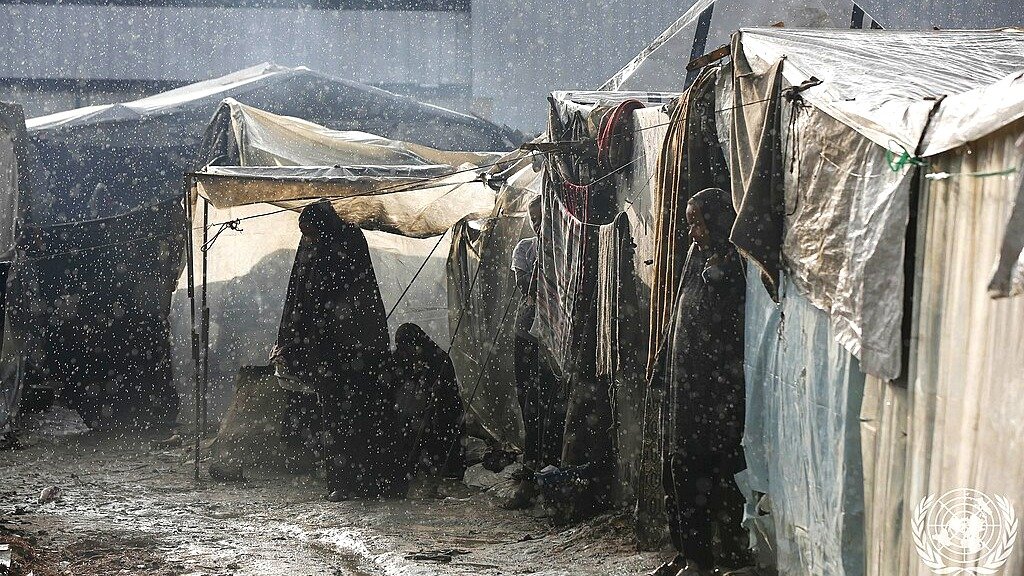
Heavy rain that began falling on the Gaza Strip on 6 November has turned the first storm of winter into a humanitarian disaster for the hundreds of thousands of displaced Palestinians living in tents, with the United Nations reporting that more than 46,000 families — around 226,000 people — have been affected and more than 40,000 shelters damaged or destroyed. The United Nations’ humanitarian leadership in the territory has said bluntly that the suffering was preventable, and on Saturday the European Union added its voice, urging Israel to guarantee immediate and unrestricted humanitarian access.
According to the United Nations Office for the Coordination of Humanitarian Affairs (OCHA), the Site Management Cluster’s early-warning system recorded about 473 weather-related incident reports between 6 and 9 November. Initial estimates indicated that more than 46,000 households, or approximately 226,000 people, may have been affected by rainfall and flooding. The reports covered more than 40,000 damaged shelters, including over 9,000 reported destroyed beyond repair, alongside damage to 960 toilets and nine health facilities. More than 5,000 families were reported to have spent nights without any shelter at all, after their accommodation was inundated and they were forced to move again.
UNICEF said at least six people, including children, were killed in the weekend’s rains. Five of them — three children and two women — died when a sandy embankment collapsed onto tents at the Al Berka reservoir, west of Deir al-Balah, according to OCHA, citing Gaza’s Civil Defense. An infant was also reported to have drowned. Gaza’s government media office said at least 70,000 tents had been flooded within 12 hours of the first rain, a figure that has not been independently verified.
The scale of the exposure is staggering. According to OCHA, about 65 per cent of Gaza’s population — around 1.4 million people — are living in tents or makeshift accommodation. The UN estimates that about 950,000 displaced people are living in flood-prone areas, and of those, 400,000 are in areas at very high risk of flooding, nearly half of them children. In al-Mawasi, the coastal area in the south where more than 900,000 displaced people are sheltering, according to Al Jazeera, rain had been falling since Friday night and water levels at several shelter sites rose by 30 to 40 centimetres.
“This is the first day of rain, and of course we are already flooded,” displaced resident Olfat Magdoub told Reuters. Another resident, Rafiq Ghattas, told Reuters he had no resources left: “We have no resources, no tarpaulins, no tents and no one is checking on us,” he said, standing barefoot in a large pool of rainwater. Gaza’s Civil Defense said it had received 1,500 distress calls from displaced residents in the first hours of the storm, and three abandoned houses collapsed without causing injuries.
The scale of the damage
The flooding struck a population that had already lost almost everything. Families whose homes were destroyed during the war have spent months, and in many cases years, living under canvas and plastic sheeting in low-lying areas and on sandy ground, where water accumulates quickly and the soil itself can give way. Drainage channels are damaged, engineering equipment is scarce, and the pumps, sandbags and heavy machinery needed to clear floodwater are in desperately short supply.
OCHA’s situation report of 13 November recorded the damage in stark terms. The 473 alerts logged between 6 and 9 November pointed to more than 40,000 shelters damaged and over 9,000 destroyed beyond repair. In its earlier report of 8 November, OCHA had recorded more than 6,000 shelters destroyed and 17,400 damaged by midnight on 7 November, with more than 3,900 families left without shelter at that point. The figures grew as the rain continued and as more sites reported in. OCHA stressed that all of the figures remain preliminary and require further assessment and verification.
The damage went far beyond tents. The Water, Sanitation and Hygiene Cluster reported that water levels in the Sheikh Radwan lagoon had risen by nearly 1.5 metres, while pumping systems struggled to manage the accumulated water. Stormwater mixed with sewage leaking from damaged networks, exposing residents to contaminated water, particularly in low-lying areas and densely populated displacement sites. OCHA warned that a further intense rainy period could cause the lagoon to overflow, worsening the risks. Fifteen dewatering pumps were in use by water and sanitation teams, and blocked sewer lines, manholes, stormwater basins and drainage canals were cleared at 60 locations, benefiting an estimated 30,000 families. But the agency said plainly that the available pumps, sandbags and other materials were not sufficient to cover all needs.
The response that did reach people was real but small against the scale of the damage. Between 7 and 9 November, partners assessed the needs of 3,240 households in 87 sites and supported 749 of them. Between 2 and 9 November, shelter partners distributed items to 10,690 households, including 10,591 tarpaulins, 1,419 sealing-off kits, 439 relief housing units, 173 tents, 601 kitchen sets, 3,033 winter clothing kits, 533 mattresses, 166 blankets and 30,000 mats. Site management partners installed sandbags and sand barriers and dispatched more than 700,000 flour sacks and 50,000 sandbags to priority sites. Against more than 40,000 damaged shelters, however, 173 tents is a measure of how far the response falls short.
The rain also disrupted the fragile flow of aid itself. According to the Logistics Cluster, 262 UN and partner trucks carrying humanitarian supplies were manifested for entry into Gaza between 2 and 8 November, but only 228 were offloaded on the Israeli side of the Kerem Shalom crossing — a fall of around 42 per cent compared with the previous week. OCHA attributed the decline mainly to the suspension of the Egyptian corridor by the Israeli authorities, who reportedly cited concerns over smuggling, with no trucks offloaded from Egypt between 3 and 8 November. Reduced aid volumes available to partners because of funding constraints also played a part.
Children killed as a sandbank collapsed
The deadliest single incident of the storm came on the evening of Sunday 8 November, when rescue workers were unable to revive three children and two women who were killed when a sand embankment collapsed on a camp for displaced people in Deir al-Balah, in central Gaza. The collapse happened at the Al Berka reservoir, west of the city, where tents had been pitched on sandy ground beside the water. According to OCHA, citing Gaza’s Civil Defense, five displaced people were killed, including three children and two women, and one person was injured. UNICEF, reporting the same incident, said a woman and three children aged four, five and eight were among the dead.
It was a death that summed up the danger of the ground itself. Displaced families have been pushed onto sandy, low-lying land because it is what is available, and saturated sand can collapse without warning. OCHA’s 13 November report identified at least 4,000 buildings as high-risk based on available assessments, and said families living nearby needed to be monitored and moved to safe accommodation. Gaza’s Civil Defense said it had been able to respond to only 218 of the 2,166 distress calls it received, according to a report published on Saturday cited by Le Monde, because its vehicles and equipment had been destroyed during the war. Hundreds of vehicles, including bulldozers and water pumps, were destroyed, municipal and civil defence officials said, according to Reuters.
The storm did not pause the war. OCHA reported that, according to Gaza’s Ministry of Health, 22 Palestinians were killed in conflict-related incidents and 90 injured between 3 and 9 November, bringing the total number of reported casualties since the October 2025 ceasefire agreement to 1,613 fatalities and 5,833 injuries. On the night of 11 November, an Israeli airstrike hit the surgery building of Nasser Hospital in Khan Younis, killing six people, including a child and a surgeon, according to Médecins Sans Frontières. Gaza’s Health Ministry says more than 74,600 people have been killed in Gaza since Israel began its assault after the Hamas-led attacks of 7 October 2023, in which about 1,200 people were killed in southern Israel.
“Preventable” — the UN’s blunt accusation
On Friday 13 November, the Humanitarian Country Team in the Occupied Palestinian Territory — the forum that brings together the heads of UN agencies and international and Palestinian non-governmental organisations — issued an urgent appeal that did not mince its words.
“The devastating impact of the latest rainstorm in Gaza was preventable. Children and adults were killed, critical services suspended, and thousands of family shelters flooded, swept away, or torn apart – not by the storm alone, but by policy decisions,” the statement said.
The team recalled that months ago the humanitarian community had presented a plan to help Palestinians prepare for the 2026-2027 winter season. The plan set out what would be delivered — shelter, improved health and protection services, drainage and sandbag reinforcement, and support for people choosing to relocate from dangerously damaged buildings and flood-prone displacement areas — and what needed to enter Gaza to make it possible: tents, cement, warm clothes, blankets, sandbags and safe heaters; pumps, generators, fuel, engine oil and spare parts; equipment to pump out water, remove debris and clear explosive ordnance; oxygen concentrators, laboratory equipment, vaccines, antibiotics and medicines.
“As the Occupying Power, Israel is obliged to ensure the basic needs of the local population, including the supplies essential for their survival. Yet Israeli policies continue to obstruct the entry of critical items as well as access to most of Gaza’s land, including areas away from the shoreline that are less prone to flooding,” the statement said. “Incoming supplies face multiple approval requirements, limited crossing capacity and unpredictable or narrow delivery windows that delay their entry.”
The appeal called on the Israeli authorities “to immediately ensure that Palestinians in Gaza have access to life-saving supplies. Expedite their entry in sufficient quantities. Let them in every day, through every available crossing. Lift any restrictions. Unblock any obstacles. Enable the repair of water and wastewater networks. Let all humanitarian partners operate – UN agencies, international organizations, and Palestinian NGOs alike. Allow meaningful commercial activity.” It also called on member states to use their influence to ensure these steps are taken swiftly and to provide the necessary humanitarian funding without delay. “Lives are at stake,” it concluded.
The UN’s deputy spokesperson, Farhan Haq, cited the statement at the UN’s noon briefing on 13 November, and UN News reported the appeal the same day. The language was unusually direct for a body that normally weighs every word, and it reflected a frustration that had been building for months: the plan existed, the supplies existed, and the storm was forecast. What did not exist, in the UN’s view, was the access.
150,000 tents waiting 50 kilometres away
The most striking figure in the UN’s appeal was not a casualty count but a distance. Although funding has fallen far short of what is needed, more than 150,000 tents procured by humanitarian partners and member states are outside Gaza, ready for dispatch. Most are in Al-Arish, in Egypt, just 50 kilometres from Khan Younis.
“Inside Gaza, each rainstorm destroys more tents, requiring yet more replacements; the needs are growing,” the Humanitarian Country Team said. “And providing longer-lasting shelter requires even more funding, approvals and access. Therefore, figures on incoming supplies do not mean that people’s needs have been met. They have not. Success must be measured not by approvals, but by whether people are receiving the assistance they need.”
The gap between what is needed and what is available inside Gaza is enormous. According to figures cited by OCHA, the Shelter Cluster estimated that ahead of the cold and rainy season Gaza needed approximately 121,000 tents, 561,000 plastic sheets, 57,000 emergency shelter kits and 1.7 million mattresses, alongside tens of thousands of other essential household items. As of 1 November, available stocks inside the Gaza Strip stood at approximately 2,800 tents, 76,000 plastic sheets and 4,993 mattresses, with no emergency shelter kits in stock at all.
Some supplies were in the pipeline — about 2,000 tents, 71,000 plastic sheets and 3,100 emergency shelter kits purchased and awaiting entry, and around 59,000 tents, 703,000 plastic sheets, 13,000 emergency shelter kits and 33,000 mattresses at procurement or supply-chain stages. But OCHA warned that some deliveries were expected to be delayed until the second half of the winter season because of funding constraints, lengthy procurement processes and restrictions affecting entry. For families whose tents are torn apart by each storm, a delivery in the second half of winter is a delivery that arrives too late.
The money is short as well. Estimated requirements for winter preparedness and response stand at approximately 267.9 million US dollars, with a funding gap of 186.5 million dollars — close to 70 per cent of the total — even after accounting for supplies already in procurement and delivery pipelines. The shortfall is restricting partners’ ability to secure materials, improve displacement sites, provide equipment for flood response and support families whose accommodation keeps sustaining repeated damage.
The shortage is already visible in household budgets. OCHA reported increases in the prices of some shelter materials, including plastic sheeting, following the rainfall. Some families have reportedly resorted to borrowing money to obtain materials needed to repair and protect their accommodation — debt taken on by households that lost their belongings during displacement and depend on food and cash assistance to survive.
Europe adds its voice
On Saturday 14 November, the European Union urged Israel to guarantee immediate and unrestricted humanitarian access to the Gaza Strip following the severe flooding. In a statement issued in Brussels, the EU called on Israeli authorities to facilitate the work of humanitarian organisations operating across the territory, ensure the sustained delivery of essential supplies and reopen all border crossings. It also stressed the importance of providing the resources required to support recovery efforts.
The appeal came as heavy rainfall, which began on 6 November, continued to expose displaced families to increasingly difficult living conditions as winter approaches. Relief organisations have warned of growing public health risks: standing water, potential contamination of sanitation networks and shortages of emergency equipment could increase the threat of disease, particularly among children, older people and other vulnerable groups.
The EU statement landed alongside the UN’s appeal as part of a widening international pressure campaign. It also followed the unveiling this week of the Gaza Executive Board, the body intended to oversee the next phase of the Trump administration’s peace plan for the territory — a development this site reported on 14 November. The board’s arrival has not, so far, changed conditions on the ground for the families in the tents.
Israel’s response
Israel’s Coordinator of Government Activities in the Territories (COGAT), the military agency that coordinates aid, has said that preparations were strengthened ahead of the adverse weather conditions, in coordination with international organisations. Israeli authorities maintain that they have facilitated the entry of essential supplies, including tents, blankets and equipment intended to improve sanitary conditions for displaced populations.
COGAT said that among other equipment, 12 sewage vacuum trucks for the International Committee of the Red Cross had arrived in Gaza, and that 91,000 tents and more than 8,200 trucks carrying tarpaulins, blankets and winter clothing had entered Gaza in recent months. The Israeli authorities also reject accusations that restrictions have excessively obstructed humanitarian assistance, arguing that such criticism overlooks Hamas’s responsibility for the situation.
Hamas, for its part, blamed Israel for not allowing shelters and construction materials into Gaza. COGAT did not immediately comment on that accusation, according to Reuters.
The two accounts cannot both be complete. Tents have entered Gaza in large numbers, according to COGAT, and yet the UN says only 2,800 tents were in stock inside the Strip on 1 November and 150,000 more are waiting in Egypt. Part of the explanation lies in the arithmetic of destruction: each storm destroys tents faster than they can be replaced, and the need — 121,000 tents by the Shelter Cluster’s estimate — dwarfs both the stock and the flow. Part of it lies in what is counted: the UN’s appeal warned explicitly that figures on incoming supplies “do not mean that people’s needs have been met”. The dispute is not only about numbers. It is about whether the pace and the conditions of entry match the pace of the rain.
A health system running on empty
The flooding arrived on top of a health system already stretched to breaking point, and the rain is making people sicker. Between 27 September and 31 October, health authorities recorded 294 suspected cases of viral meningitis and 119 suspected cases of bacterial meningitis, according to figures cited by OCHA on 13 November. Of the 202 cases individually documented by 5 November, 77 per cent involved children under one year of age. Laboratory testing confirmed ten bacterial cases. The Health Cluster linked the increase to overcrowding in tents and schools, deteriorating shelter and sanitation conditions, and exposure to unsafe water.
Medicine shortages are severe. Data from Gaza’s Ministry of Health indicated that approximately 42 per cent of medicines were at zero-stock level during October, including around 55 per cent of essential chemotherapy medicines and 73 per cent of supplies for open-heart surgery and cardiac catheterisation. Laboratory testing materials for kidney and liver function, electrolyte levels and diabetes were also short, as were supplies used in dialysis and paediatric treatment.
Capacity for the youngest patients is critically low. The Ministry of Health reported that approximately 90 paediatric beds remained operational in Gaza and North Gaza, compared with around 350 before the escalation. According to OCHA’s 5 November report, occupancy rates in neonatal units reached 151 per cent in September, while occupancy in special-care neonatal units stood at 199 per cent. Approximately 63 per cent of deliveries were classified as high-risk pregnancies, and the Health Cluster said an additional 123 to 179 neonatal beds would be required during the final quarter of the year.
Water insecurity compounds every health risk. A survey by the Water, Sanitation and Hygiene Cluster in early October found that 85 per cent of households assessed were experiencing moderate to severe water insecurity, and 66 per cent reported receiving fewer than six litres of drinking water per person per day. With floodwater mixing with sewage, the risk of waterborne disease rises sharply, and with acute respiratory infections, waterborne diseases and hypothermia all expected to increase this winter, the Health Ministry has highlighted paediatric inpatient capacity as a major concern.
Food is also thinning. OCHA’s 22 October report said food security partners had reached approximately 1.3 million people with food assistance in September, compared with around 2.1 million in January, and humanitarian partners anticipated that monthly assistance would fall to fewer than one million people from October, following the suspension of some food parcel and flour distributions. Food rations covered around 50 per cent of minimum caloric requirements, with most families relying on a rotational distribution system.
Schools and safe spaces under water
The storm reached into the places that are supposed to give children some stability. About 109 of the more than 600 learning spaces operating across the Gaza Strip, serving an estimated 66,000 pre-school and school-age children, were affected by rainfall and flooding, according to OCHA. At least 5,500 children remained unable to access learning because their learning spaces were damaged or inaccessible, as of 10 November. The impacts included flooded classrooms, rainwater leaking through tents, the collapse of some structures and damage to educational equipment. Nineteen displaced households took shelter in six temporary learning spaces, forcing learning activities there to be suspended altogether. At least 55 learning spaces serving around 55,000 children were flooded, according to an earlier OCHA assessment.
Protection services were hit as well. Rain damaged 15 safe spaces, child-friendly spaces and psychosocial support tents, forcing the suspension of activities. Sewage overflow closed some child protection service points. The collapse of a safe space for women and girls at Palestine Camp Stadium in Gaza City disrupted access for more than 200 women to specialised services addressing gender-based violence. Protection field teams could barely reach some sites during the rainfall, and people were often unable to reach service points at all.
The children most exposed are the ones with the least protection: younger children, children with disabilities, children in female-headed households, and unaccompanied children. They face cold, damp conditions, illness and distress, and their needs include winter clothing, dry bedding, adequate nutrition, regular medical examinations and psychosocial support. Around 1.2 million people, including more than 560,000 children, are living in critical or catastrophic shelter conditions, according to the UN.
Analysis: Why It Matters
1. The storm was forecast; the failure was not
The most damning word in the UN’s appeal was “preventable”. Winter in Gaza is not a surprise. The rain arrives every year, the tents are known to be inadequate, and the humanitarian community drew up a winter plan months in advance, listing exactly what was needed and where it should go. The storm that began on 6 November did what storms do. What turned it into a disaster, in the UN’s account, was a series of decisions about what could enter Gaza, how fast, and through which crossings. When the UN says the impact was caused “not by the storm alone, but by policy decisions”, it is making a claim about responsibility, not about meteorology — and it is a claim that will be argued over for months. But the underlying fact is not in dispute: the plan existed before the rain, and the rain arrived before the plan was carried out.
2. A tent is not a home, and a fourth winter proves it
This is the fourth winter of the crisis, according to UNICEF, and the fourth time displaced families have faced rain and cold under canvas. A tent that survives one winter is a shelter; a tent that must survive four, patched and re-patched, is a statistic waiting to happen. The numbers tell the story: 121,000 tents needed, 2,800 in stock. Even if every one of the 150,000 tents waiting in Al-Arish crossed tomorrow, the need would be met only briefly, because each storm destroys more tents and the requirement grows. The deeper question is whether temporary shelter can ever be an answer to a displacement that has lasted years. The UN’s appeal hints at the answer when it says access to longer-lasting shelter “must not be made conditional on political progress”. Tents are an emergency measure. Four winters in, the emergency has become the condition of life.
3. The arithmetic of aid has become the argument itself
Both sides in this dispute now argue with numbers, and the numbers do not agree. COGAT says 91,000 tents entered Gaza in recent months. The UN says 2,800 were in stock on 1 November. Both figures can be true at once: tents enter, tents are distributed, tents are destroyed, and the stock at any given moment is small. That is precisely why the UN’s appeal insisted that “figures on incoming supplies do not mean that people’s needs have been met” and that “success must be measured not by approvals, but by whether people are receiving the assistance they need”. The argument has shifted from whether aid enters to whether it arrives in the right quantities, at the right time, in the right places — and to who gets to judge that. When a family borrows money to buy plastic sheeting because the tarpaulin did not arrive, the approval statistics have failed, whatever they say.
4. The children are paying first, as they always do
Every indicator in OCHA’s report points the same way: the youngest are absorbing the worst of this winter. Three-quarters of the documented meningitis cases are infants under one. Neonatal units are running at up to 199 per cent occupancy. Paediatric beds have fallen from 350 to 90. More than 560,000 children are living in critical or catastrophic shelter conditions. Five thousand five hundred children cannot get to school because their classrooms flooded. These are not side effects of the storm; they are the storm’s main effect, measured in the bodies least able to withstand it. A winter that kills children through cold, contaminated water and collapsed sand is a winter that will leave its mark long after the rain stops, in stunted growth, interrupted schooling and untreated illness.
5. The ceasefire did not end the emergency
The ceasefire agreement of October 2025 was supposed to offer respite, and its second phase — which was to allow, from January 2026, the unrestricted entry of humanitarian aid — has never materialised, according to Le Monde. Since the ceasefire, OCHA reports 1,613 further fatalities and 5,833 injuries. The new Gaza Executive Board unveiled this week may yet change the governance of the territory, but governance is not shelter, and a board meeting does not dry a mattress. The flooding is a reminder that a ceasefire is a pause in the fighting, not a repair of the damage, and that the humanitarian emergency in Gaza now has a momentum of its own — driven by destroyed infrastructure, blocked supplies and a funding gap of 186.5 million dollars. Until the second phase of the ceasefire delivers what it promised, each winter will arrive as a new emergency laid over the last one.
What to Watch Next
- Whether the 150,000 tents move: the clearest test of the UN’s appeal is whether the tents stockpiled in Al-Arish begin entering Gaza in large numbers, every day and through every available crossing, as the Humanitarian Country Team demanded — and whether the Egyptian corridor, suspended from 3 to 8 November, reopens.
- The next storm: OCHA has warned that a further intense rainy period could cause the Sheikh Radwan lagoon to overflow, worsening contamination risks. Winter in Gaza lasts for months, and the first storm was only the beginning.
- The funding gap: with 186.5 million dollars — about 70 per cent of the winter response budget — still missing, watch whether donors close the gap after the UN’s appeal, or whether the shortfall forces further cuts to food and shelter distributions.
- Health indicators: meningitis cases, respiratory infections and hypothermia among children will show within weeks whether the flooding has seeded a wider public health crisis, and whether medicine stocks recover from the 42 per cent zero-stock level.
- The EU’s follow-through: Brussels has called for all border crossings to reopen. Watch whether the statement is followed by concrete diplomatic pressure, and whether Israel’s coordination agency changes its entry procedures in response.
- The Gaza Executive Board: the newly unveiled board is meant to oversee the next phase of the peace plan. Its first real test will be whether it can unlock the longer-lasting shelter and unrestricted aid that the plan’s second phase promised.
- Schooling and protection: with 5,500 children already unable to reach their learning spaces and 15 safe spaces damaged, watch whether education and protection services are restored before the next storm, or whether the disruption becomes permanent for another generation of children.
Sources
- UN Office for the Coordination of Humanitarian Affairs — Humanitarian Situation Report, 13 November 2026
- Humanitarian Country Team, Occupied Palestinian Territory — Urgent appeal to expedite the entry of winter supplies into Gaza, 13 November 2026 (via ReliefWeb)
- UN News — “Lives are at stake”: Humanitarians call for swift entry of winter supplies in Gaza, 13 November 2026
- European Union statement on Gaza floods and humanitarian access, 14 November 2026
- United Network for Humanity Observatory — Gaza: Winter Deepens Humanitarian Needs Amid Funding Shortfalls, 14 November 2026
- Le Monde — Gaza residents despair after torrential rains flood tens of thousands of makeshift shelters, 9 November 2026

About the Author — Abdul Mannan
Related Articles
Iran Warns of ‘Immediate’ Retaliation at the UN as Gulf States Demand Compensation for War Damage
At a tense UN Security Council session, Iran warned any renewed US-Israeli attack would bring an 'immediate and…

Netanyahu Publicly Rebukes Trump’s Gaza Executive Board as Phase Two of the Peace Plan Begins
Benjamin Netanyahu has publicly objected to the make-up of Donald Trump's new Gaza Executive Board, saying it was…

Trump Says Gulf Allies Asked Him to Hold Off New Iran Strikes as He Claims He Could End the War in Three Days
Donald Trump has said Saudi Arabia, Qatar, Kuwait, the UAE and Bahrain asked him to hold off large-scale…