
Trump Says Gulf Allies Asked Him to Hold Off New Iran Strikes as He Claims He Could End the War in Three Days

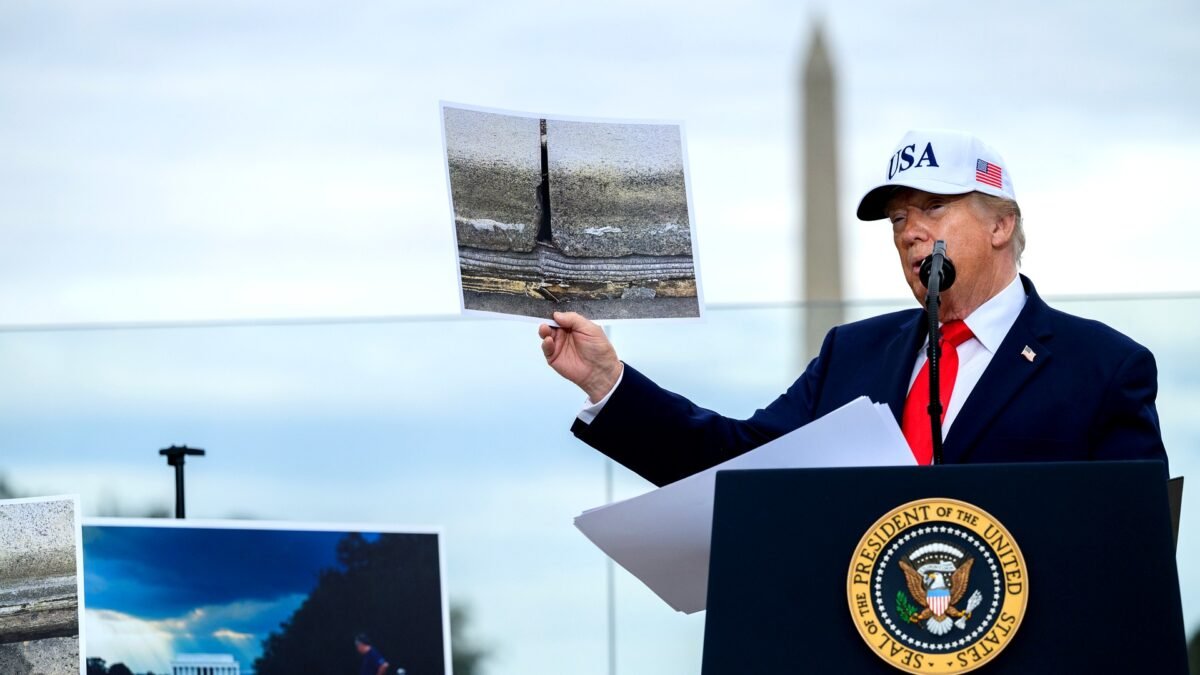
US President Donald Trump has said that five Gulf states asked him to hold off on further large-scale attacks on Iran, revealing that he would already have ordered heavier strikes if they had not intervened, even as he claimed he could end the war in three days.
In an interview with the broadcaster Stephen A. Smith at the White House, released on Thursday 12 November, Trump named the five countries one by one: Saudi Arabia, Qatar, Kuwait, the United Arab Emirates and Bahrain. All five, he said, would rather he kept the current level of military and economic pressure than escalate the conflict further.
“Saudi Arabia has asked me to please just let it be the way it is now for a while,” Trump said, according to Al Jazeera. “Qatar, Kuwait, UAE, Bahrain. All of them would rather, would much prefer the waiting period.”
He made no secret of his own impatience with that request. “I’m not sure I agree with it,” he said. Asked whether he would have launched additional attacks without those requests, he replied: “Yes, I would.”
Trump also repeated his claim that the United States could destroy Iran’s energy infrastructure, bridges and manufacturing facilities within three days if it chose to. “In one day their energy is gone. In one day their bridges are gone. And in one day their manufacturing capability is gone. It would only take me three days,” he said.
He added that he was holding back “at the request of the nations that I’m looking to protect”, and said of Iran: “So they’ve asked me to do that and I’m doing that. I’m not sure I agree with it, but we’ve taken them largely out.”
The disclosure is the clearest public account yet of who is setting the pace of the war, now in its ninth month. It came on the same day that Trump told a second interviewer, Hugh Hewitt, that the United States had no need of a deal with Iran at all, and hours before Iran’s Revolutionary Guards claimed they had destroyed an American early-warning radar in Bahrain — one of the five states Trump had just named.
None of the five governments has confirmed Trump’s account of their request, or denied it. The only version of the request on the public record is his own.
No deal needed, Trump says
In the interview with Hewitt, also recorded on Thursday, Trump argued that economic pressure and the continued naval blockade were already driving Iran towards collapse, and that a negotiated settlement was unnecessary.
“We don’t need a deal with Iran,” he said, in remarks reported by the Daily News Cycle. “We control the Gulf in terms of the Hormuz Strait. We control it. Totally control it.”
He was equally blunt about what would bring American strikes back. Asked whether he would hit Iran again if it threatened American allies or shipping in the Strait of Hormuz, he said he would act immediately. “If I saw things going the other way, I would do that,” he said.
That warning had already been issued once this week. On Wednesday, Trump posted on Truth Social that the United States had Iran’s money, “hundreds of billions of dollars”, and “we’ve got their Strait”, and said he would strike Iran again with no hesitation if it threatened shipping or American allies, according to CNBC and Fox News.
Trump also acknowledged in the interviews that the war had cost his party at home. Rising petrol prices caused by the conflict contributed to the Republicans’ defeat in the midterm elections, he said, while defending his decision to attack Iran. The midterm vote took place on Tuesday 3 November, and Trump had delivered remarks at the Lincoln Memorial Reflecting Pool the day before, on 2 November.
Iran claims a strike on Bahrain hours later
Within hours of the interviews being released, Iran’s Islamic Revolutionary Guard Corps said early on Friday 13 November that its aerospace force had struck and destroyed a US military early-warning radar in Bahrain, in what it called a response to an “enemy” air attack on a telecommunications tower in Sirik, on Iran’s southern coast.
The statement was carried by the Guards-affiliated Fars news agency and the semi-official Tasnim news agency, and reported by Iran’s official IRNA news agency. “In response to the enemy’s aerial aggression against a telecommunications tower in Sirik, IRGC Aerospace Force fighters targeted and destroyed the American aggressors’ early-warning radar on the island of Bahrain a few hours ago,” the statement said.
The Guards called the operation “a serious warning” to end what they described as a series of aerial provocations and oil smuggling in the Strait of Hormuz, and said their aerospace force remained ready to engage without limits if the provocations continued.
The claim could not be independently verified. The Guards gave no details of the weapons used or of any damage, and there was no immediate comment from Washington or from Manama. The Associated Press reported that it could not independently verify the claim, and Reuters reported that Washington and Manama had not immediately commented.
According to Reuters, it was the first time since early September that Iran had claimed an attack on American military assets in a Gulf country. Bahrain hosts the headquarters of the US Navy’s Fifth Fleet, making its military installations central to American naval operations across the Middle East.
The Guards also said that a liquefied petroleum gas tanker had struck a mine and exploded while trying to sail through the Strait of Hormuz, after ignoring repeated warnings while transiting the eastern part of the strait. That claim, too, could not be independently verified, and there was no immediate report of the incident from the United Kingdom Maritime Trade Operations, the military agency that monitors incidents at sea.
The pattern is familiar from earlier in the war. Iran destroyed the enclosures protecting US radar systems at Naval Support Activity Bahrain within the first two days of the war in late February, according to reporting at the time, and has repeatedly claimed strikes on American radar and air defence systems in the kingdom since then, including in July.
The Sirik strike that preceded it
According to IRNA, the port city of Sirik, in Hormozgan province on Iran’s southern coast, came under enemy fire on Thursday morning, when a telecommunications tower was hit. The Guards presented their claimed Bahrain strike as a direct answer to that attack.
Neither the United States nor any other government has publicly claimed the Sirik strike. The Guards described it as an American attack, but that attribution is theirs alone, and no independent confirmation has been published.
Sirik sits on the Iranian shore of the Strait of Hormuz, the narrow waterway through which a large share of the world’s seaborne oil passes. It is the same coastline where American forces struck Qeshm Island on 2 November, in what officials described at the time as a defensive action, and where Iran’s navy and Revolutionary Guards have repeatedly warned ships not to pass without Tehran’s approval.
Houthi attacks widen the war to Saudi Arabia
The Bahrain claim is only the latest front in a war that has widened well beyond the Strait of Hormuz. On Thursday, Yemen’s Houthi group said it had launched a fresh wave of drone and ballistic missile attacks against Saudi oil infrastructure and military facilities, as fighting between the Houthis and government forces intensified in southern Yemen near the strategic Bab al-Mandab Strait.
Houthi military spokesperson Yahya Sarea said in a series of statements on social media that the group had launched a drone targeting the Saudi oil company Aramco in Riyadh, and another targeting Pumping Station No. 7 along Saudi Arabia’s East-West oil pipeline, about 330 kilometres west of Riyadh. He added that a ballistic missile had targeted an oil facility in Yanbu, a major oil hub on the Red Sea coast.
The group also said it had targeted a military cargo aircraft at Sharurah Airport in the southern Najran region with a drone, and King Khalid Air Base in Khamis Mushait with a ballistic missile. In total, the Houthis claimed twelve operations on Thursday: six using ballistic missiles against Saudi troops deployed in Yemen, and six combining missiles and drones against oil infrastructure, a military aircraft and an air base on Saudi territory.
Sarea claimed the operations had achieved their objectives, but provided no details of damage. The claims could not be independently verified, and Saudi authorities had not immediately commented on the reported attacks or provided details of possible casualties or damage, according to Reuters and Xinhua.
The Saudi-led coalition said its air defences had intercepted and destroyed two Houthi drones, one in the Riyadh region and another in the oil-rich Eastern Province. Coalition spokesperson Major General Turki al-Malki announced the interceptions in a statement carried by the Saudi Press Agency.
Sarea also dismissed as fabricated a Saudi claim that two missiles had been intercepted over Mecca. Saudi civil defence had said the two ballistic missiles were intercepted and destroyed on Wednesday, with debris falling in the Mecca region, including in Sabuhah village. The Houthis have repeatedly denied targeting Mecca and Medina, Islam’s two holiest cities.
The pipeline at the centre of the claims matters far beyond Saudi Arabia. With the conflict disrupting oil flows through the Strait of Hormuz, Riyadh has rerouted about four million barrels per day of crude via the East-West Pipeline to Yanbu, equivalent to about 4 per cent of global supply, according to Reuters. The pipeline has spared Saudi Arabia, the world’s biggest oil exporter, from the brunt of the wartime shutdown of the strait that has crippled exports from its neighbours.
Airlines suspend Saudi flights as the UN acts on Yemen
The Houthi campaign against Saudi aviation and energy targets has now disrupted international air travel to the kingdom for weeks. Several airlines extended their flight suspensions on Thursday.
Indian carrier Akasa Air suspended all flights to and from Riyadh and Jeddah until 30 November. IndiGo extended its Riyadh and Dammam suspensions to the same date, while services to Jeddah and Medina remain cancelled until 21 November. Air India and Air India Express suspended services to Riyadh, Jeddah and Dammam until 14 November.
European carriers also extended restrictions. KLM cancelled flights to Riyadh and Dammam until 27 November, while British Airways postponed the resumption of its London to Riyadh route until 11 January 2027. Etihad Airways suspended flights to Riyadh and Dammam until 19 November, while Oman’s SalamAir extended cancellations to 30 November.
The disruptions followed repeated Houthi attacks targeting Saudi airports, energy facilities and other infrastructure, including King Khalid International Airport in Riyadh, where Saudi air defences have intercepted missiles and drones more than once in recent days.
On the same day, the United Nations Security Council unanimously renewed financial and travel sanctions related to Yemen, while Britain called for tighter restrictions on components used by the Houthis to manufacture weapons.
British Ambassador Sarah MacIntosh said the resolution strengthened enforcement of the existing arms embargo and addressed the group’s reliance on dual-use components and precursor chemicals. Britain would work with Security Council members to establish a list of dual-use items subject to additional restrictions, she said.
MacIntosh also warned that Yemen’s humanitarian crisis was worsening, with more than 22.3 million people requiring assistance and protection, and recent fighting having displaced more than 330,000 people. The council also called for the immediate and unconditional release of UN, humanitarian, civil society and diplomatic personnel detained by the Houthis. The UN said more than 70 of its personnel were being held by the group in October.
Yemen’s internationally recognised government welcomed the renewed sanctions but criticised the Security Council for not designating the Houthis as a terrorist organisation. Presidential Leadership Council chair Rashad al-Alimi told China’s Middle East envoy Zhai Jun that the Houthis had exploited de-escalation efforts. “There can be no peace with a group that claims a divine right to rule and challenges the state’s exclusive authority,” a statement cited by Yemen’s government said.
Saudi Arabia’s Foreign Minister, Prince Faisal bin Farhan Al Saud, met Zhai Jun in Riyadh to discuss the Houthi attacks and diplomatic efforts to prevent further escalation.
A pause, not a peace
Trump’s disclosure that he is holding off at Gulf allies’ request fits a pattern of sudden pauses and restarts that has defined the war’s diplomacy all week. On Tuesday, he announced on Truth Social that the American operation to move stranded ships through the Strait of Hormuz, codenamed Project Freedom, would be paused for a short period.
“We have mutually agreed that, while the Blockade will remain in full force and effect, Project Freedom (The Movement of Ships through the Strait of Hormuz) will be paused for a short period of time to see whether or not the Agreement can be finalized and signed,” he wrote.
The distinction matters. No ceasefire has been formally declared and no peace agreement has been signed. The war, which began on 28 February when the United States and Israel launched joint strikes on Iran, is now in its ninth month, and the blockade of Iranian ports that Washington imposed in April, lifted in June and reinstated in July remains in force.
Diplomacy has continued in parallel with the fighting. Trump met Qatar’s Prime Minister, Sheikh Mohammed bin Abdulrahman Al-Thani, in Washington on Monday 9 November, and Qatar has been mediating between the two sides. Iran has proposed ending its blockade of the Strait of Hormuz in exchange for an end to the American blockade, the lifting of some sanctions and a halt to the bombing. US Secretary of State Marco Rubio called those conditions “outrageous and ridiculous”.
Foreign ministers of the G7 group of nations issued a joint statement on the Strait of Hormuz, the Red Sea and Bab al-Mandab on 11 November, after meeting in Paris on 9 and 10 November.
Nor is this the first time Trump has said Gulf rulers asked him to stop. On 18 May, he wrote on Truth Social that the rulers of Qatar, Saudi Arabia and the Emirates had asked him to call off an attack “scheduled for tomorrow”. That, too, was presented as a pause, not an end.
Israel prepares as Iran warns Europe
The Gulf pause sits alongside preparations for a possible resumption of the war on another front. Israel’s security cabinet ordered the military on Wednesday 11 November to step up preparations for a possible attack on Iran, according to the public broadcaster KAN, which warned that the directives “could lead it to carry out activities that could trigger a war”.
Senior security officials told KAN that the army was keeping up preparations in line with political decisions, and that gains made in Iran would erode the longer the stalemate lasted without military action or an agreement. On Thursday, KAN reported that US Central Command had told Israeli military officers in the United States to prepare for the possibility that the war could resume, and that Gulf states had received a similar message from an unnamed American official. Central Command told Al Jazeera the reports were “mere speculation”.
Tehran has answered with warnings of its own. Mohsen Rezaei, secretary of Iran’s Supreme National Security Council, said that if the United States launched another war against Iran, every military base involved in the aggression, “from West Asia to Europe, will be a legitimate target for Iran’s lethal strikes”. “No safe distance. No safe haven. No immunity,” he said.
Iran’s parliament speaker, Mohammad Baqer Ghalibaf, told Al Jazeera on Wednesday that the Strait of Hormuz would “never return” to its pre-war status, that “the ball is now in the American court”, and that a “lack of trust in the United States” was blocking a deal.
The oil market has registered every turn. Brent crude jumped about 3 per cent on Thursday to about 95.82 dollars a barrel, and West Texas Intermediate rose about 2.6 per cent to 88.74 dollars, according to the Associated Press, after Trump’s remarks about Iran. The rise followed a week in which the price had already climbed on the back of the tanker attacks and the renewed threats.
Analysis: Why It Matters
The allies’ veto is the real story
The most important sentence in Trump’s interview is not the boast about three days. It is the admission that five allied governments are, for now, deciding how far America goes. Saudi Arabia, Qatar, Kuwait, the United Arab Emirates and Bahrain are the countries most exposed to Iranian retaliation. Their ports, their oil terminals, their desalination plants and the American bases on their soil are all within range of the missiles and drones Iran and its allies have already used. They have every reason to prefer pressure to bombardment, and they have now used their leverage to slow the president down.
That is a remarkable reversal of the usual picture of American power in the Gulf. For decades, Washington has been the protector and the Gulf states the protected. Now the protected are telling the protector to wait, and the protector is saying so in public, and saying he is not sure he agrees. The admission is honest, but it is also a signal to Tehran: the pause is conditional, it is resented by the man who granted it, and it can be withdrawn.
It also exposes a tension inside the American position. Trump presents the blockade and the economic pressure as a success that is already bringing Iran to its knees. If that were the whole story, there would be no need for the allies to ask for restraint, and no need for him to complain about being held back. The very fact that he frames the pause as something imposed on him suggests that the military option is still very much alive in his mind.
The three-day boast is leverage, not a plan
Trump’s claim that he could destroy Iran’s energy, bridges and manufacturing in three days should be read as a message, not a military assessment. No serious analyst believes a country of 90 million people, with a dispersed nuclear programme, a large missile arsenal and a record of absorbing eight years of war with Iraq, can be broken in three days of bombing. What the claim does is set a price: it tells Tehran that the cost of refusing a deal is total, and tells the Gulf allies that the restraint they asked for is costing them nothing in American resolve.
It is also a familiar Trump negotiating move. He has made similar claims before, about ending wars in a day, and then used the threat of escalation to extract concessions. The difference now is that the threat is being made in the middle of an actual war, where both sides have already fired, and where a miscalculation on either side could turn a threat into a catastrophe. Boasts are cheap in peacetime. In the ninth month of a war, they carry a weight their author may not intend.
A pause is not a peace
Nothing that happened this week amounts to a settlement. Project Freedom was paused, not ended. The blockade remains in full force. No ceasefire has been declared, no agreement has been signed, and Iran’s proposal for a mutual lifting of blockades was dismissed by Washington as outrageous. The war continues at sea, where tankers are still being hit, in the air, where drones and missiles are still flying over Saudi Arabia, and on land in Yemen, where fighting has displaced hundreds of thousands of people.
What exists instead is a holding pattern, and holding patterns are unstable. The Guards’ claimed strike on Bahrain, hours after Trump spoke, is a reminder that the other side is not holding still. Iran has every incentive to demonstrate that American restraint is not the same as American control, and that it can reach American assets even in the countries that asked for the pause. Whether or not the radar was actually destroyed, the claim itself is a form of pressure, aimed at Washington, at Manama and at the other four capitals that asked Trump to wait.
Bahrain shows where the pressure lands
Bahrain is the smallest and most exposed of the five states Trump named. It hosts the Fifth Fleet, it sits a short missile flight from Iran, and it has been one of the strongest critics of Tehran. It is also the state where Iran has repeatedly claimed to have hit American radar, including in the first days of the war and again in July. That repetition is itself the point. Iran keeps returning to Bahrain because Bahrain is where American power in the Gulf is most visible and most vulnerable at the same time.
The fact that the claim cannot be verified does not make it unimportant. In this war, claims are weapons. The Didamar Island attack earlier this month was confirmed by Reuters sources but disputed by Oman over the damage. The tanker explosions in the Strait of Hormuz have produced conflicting numbers from every side. Each claim forces the other side to respond, to deny, to investigate, to reassure allies, and each response consumes time and credibility. The truth of any single claim matters less, in the short term, than the pattern it belongs to: a steady, deniable pressure on the Gulf states that asked for the pause.
The clock is the real negotiator
Behind all of this is a deadline that no one has announced but everyone can see. The war is in its ninth month. The American public is paying higher petrol prices, and Trump has admitted that those prices helped cost his party the midterms. The Gulf states are absorbing missile and drone attacks on their airports and oil facilities, and their airlines are cancelling flights. Iran’s economy is under a blockade that Washington says is working, but its leadership shows no sign of surrendering, and its parliament speaker says the Strait of Hormuz will never return to its pre-war status.
None of these pressures is sustainable indefinitely. The Gulf states asked for a waiting period, but they did not say how long it should last. Trump agreed to wait, but he said he was not sure he agreed. Iran says it is ready to engage without limits if the provocations continue. Something has to give, and the longer the pause lasts, the more each side will test how far it can go without breaking it. The next test may not be a statement. It may be a strike that no one can deny.
What to Watch Next
- Any response from Washington or Manama to the Guards’ claim about the Bahrain radar, and any satellite imagery or independent reporting that confirms or contradicts it.
- Whether the five Gulf states confirm, deny or simply ignore Trump’s account of their request, and whether any of them publicly distances itself from it.
- Whether Trump repeats the three-day claim or escalates it, and whether his administration sets any public deadline for the pause.
- The next round of Houthi claims against Saudi targets, and whether the coalition confirms damage to the East-West Pipeline, the Yanbu facility or Aramco sites in Riyadh.
- Whether airlines extend their Saudi flight suspensions further, and whether any carrier resumes services, as a signal of how the industry reads the risk.
- Israel’s security cabinet meeting on Sunday 15 November, the first in-person meeting since 5 October, and any decisions it takes on preparations for a possible strike on Iran.
- Whether the paused Project Freedom operation resumes, and whether any agreement on the Strait of Hormuz is actually signed, as Trump suggested on Tuesday it might be.
Sources
- Al Jazeera, via Shafaqna: Trump says Gulf allies asked him to hold off on further Iran strikes
- TASS, via Daily Imroz: Trump says US holding off tougher Iran measures at Gulf request
- Trends MENA: Iran targets radar in Bahrain as Trump says Gulf states called for pause in strikes
- Associated Press, via The Oldham Times: Iran’s Revolutionary Guard ‘destroys US radar in Bahrain’
- Reuters: Yemen’s Houthis say they attacked pumping station on Saudi Arabia’s East-West oil pipeline
- Xinhua, via People’s Daily: Houthis claim attacks on Saudi oil, military targets amid intensified fighting in Yemen

About the Author — Abdul Mannan
Related Articles
Israel Orders Military to Step Up Preparations for a Possible New Strike on Iran as Tehran Warns Retaliation Could Reach Europe
Israel's security cabinet has ordered the military to step up preparations for a possible new strike on Iran,…
Houthis Deny Targeting Mecca as Saudi Arabia Intercepts Missiles Aimed at Riyadh and the Holy City
Saudi air defences intercepted Houthi cruise missiles and drones aimed at Riyadh, Mecca and other regions on Wednesday,…
Iran Attacks Navigation Systems on Oman’s Didamar Island in the Strait of Hormuz as Oman Disputes the Damage
Iran says it destroyed navigation systems on Oman's Didamar Island in the Strait of Hormuz, but Oman disputes…