
US Diesel Falls Below $6 a Gallon for the First Time in Two Months as Fuel Costs Ease

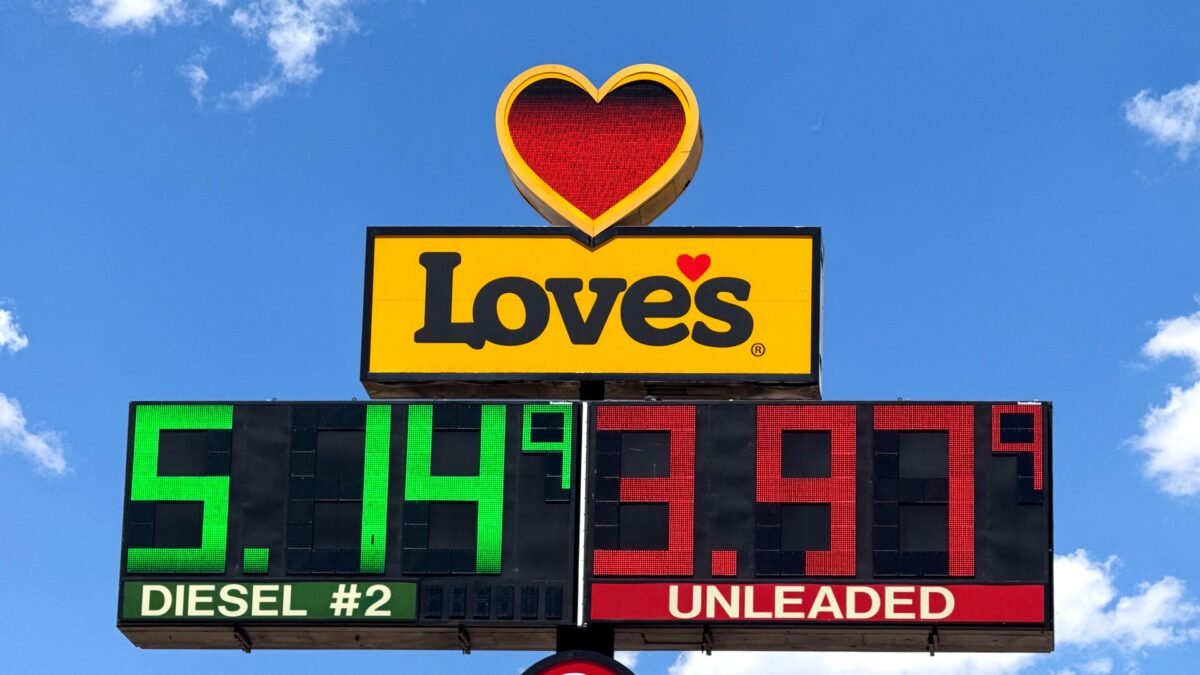
American diesel prices have fallen below $6 a gallon for the first time in two months, offering the first real relief to truckers, farmers and businesses after a surge that pushed fuel to record highs and helped shape the outcome of this month’s midterm elections. According to fuel price tracker GasBuddy, the national average retail price of diesel stood at $5.998 a gallon on Saturday 14 November, slipping under the $6 mark after spending more than nine weeks above it.
The fall marks a sharp turn from the peak of the crisis. Diesel broke the record set after Russia’s full-scale invasion of Ukraine in 2022 when it reached $5.820 a gallon on 3 September, according to Reuters. It topped $6 a gallon on 10 September and kept climbing to a record $6.519 on 22 September. In California, where refining capacity is constrained and fuel specifications are stricter than in the rest of the country, prices briefly exceeded $10 a gallon.
The retreat has been driven by two forces working together: a steep fall in crude oil prices and the normal softening of fuel demand as autumn sets in. Brent crude futures are down 18.5 per cent over the past two weeks, according to Reuters, and fell below $90 a barrel on 10 November for the first time since 31 August. Gasoline has followed diesel lower, dropping below $4 a gallon this month for the first time since 10 August, according to GasBuddy data.
The official weekly figures tell the same story of a steady slide. The US Energy Information Administration (EIA) put the national on-highway diesel average at $6.127 a gallon for the week of 9 November, down 16.5 cents on the week. It was the third consecutive weekly fall in the EIA survey, after $6.352 in the week of 26 October and $6.292 in the week of 2 November. Regular gasoline fell 15.8 cents in the same week to $3.995 a gallon. Even so, the EIA figures show diesel is still $2.29 a gallon dearer than a year ago, a reminder of how far prices still have to fall before the crisis can be called over.
For the millions of Americans whose livelihoods depend on diesel, the move below $6 matters far beyond the pump. Diesel powers almost every lorry that carries goods across the United States, most farm machinery, and much of the construction and mining equipment on which the economy runs. When diesel is expensive, the cost ripples through everything: freight rates rise, food gets dearer, and inflation climbs. Elevated diesel prices have been a key driver of transportation and freight costs, and have boosted overall inflation, causing pain for consumers, farmers and businesses, according to Reuters.
A two-month squeeze finally loosens
The diesel surge began in earnest in early September, when a series of supply shocks collided at once. The US-Israeli war against Iran disrupted oil supplies from the Middle East, while Ukraine’s systematic attacks on Russian refineries stymied production, according to Reuters. The two shocks hit a market that was already tight: American refineries were running at 96 per cent of capacity in the third quarter, with less capacity available than in 2019, according to FreightWaves, and distillate stocks were 13 per cent below the five-year average in late September. On the East Coast, stocks were 32 per cent below the average.
The squeeze was visible in the price at every stage of the supply chain. On 9 November, the SONAR truck stop diesel index compiled by FreightWaves stood at $6.23 a gallon, up 65 per cent from $3.78 a year earlier. At seven miles to the gallon, that works out at about $0.89 a mile in fuel for a long-haul lorry. The EIA’s weekly national average for the same week was $6.127, roughly ten cents lower, because the two series measure different things: the truck stop index tracks the daily price paid at forecourts, while the EIA survey is a weekly average that lags the market.
The regional picture was even harsher. The EIA put diesel on the West Coast at $7.110 a gallon in the week of 9 November, and in California at $7.897. The Gulf Coast, by contrast, averaged $5.741, and the Lower Atlantic $5.694. The gap reflects how far fuel has to travel, how much refining capacity sits nearby, and how strict each state’s fuel rules are. California’s brief excursion above $10 a gallon in September showed what happens when all three of those pressures hit at once.
The fall from the peak has been gradual rather than dramatic. Diesel did not collapse; it eased, week by week, as crude oil fell and the autumn demand season arrived. The EIA recorded three straight weekly declines before the GasBuddy reading finally pushed the national average below $6 on Saturday. It is the kind of slow, grinding improvement that rarely makes headlines, but it is exactly the kind that matters to the people who buy fuel by the hundred gallons.
Why diesel surged — and why it is falling now
To understand why diesel rose so far and so fast, it helps to understand what diesel actually is. A 42-gallon barrel of crude oil yields only about 12 gallons of diesel, according to FreightWaves. The rest becomes gasoline, jet fuel, heating oil and other products. That means diesel supply depends not just on how much crude the world produces, but on how much of it refineries choose to turn into diesel, and on how much refining capacity exists at all.
That refining capacity has been the bottleneck all year. The diesel crack spread — the difference between the wholesale price of diesel and the cost of crude, which measures the refining margin — was $2.51 a gallon on 9 November, against an average of $0.87 in January and February, according to FreightWaves. In other words, the profit a refiner makes from turning crude into diesel has roughly tripled this year. Crude oil is now only about 35 per cent of the price a trucker pays at the pump; refining is the largest single piece.
The reason is a shortage of refined product, not a shortage of crude. The International Energy Agency puts Middle East refined product exports at 1.9 million barrels a day, against 4.7 million before the war, according to FreightWaves. The closure of the Strait of Hormuz and the blockade in the Red Sea have stretched some tanker voyages from about 24 days to 54 days. At the same time, American distillate exports topped their 2021 to 2025 highs in six of the seven months through July, pulling fuel that could have been sold at home out to foreign buyers willing to pay more.
What has changed in the past fortnight is the crude price, and the fear premium attached to it. Brent crude has fallen 18.5 per cent in two weeks, according to Reuters, and 21 per cent from its 30 October high, according to FreightWaves. The fall followed signs that the war in the Middle East might be easing: according to Reuters, President Donald Trump has told senior advisers in recent days that he may hold off on attacking Iran if the United States faces no new provocations from Tehran or the Iran-backed Houthis in Yemen. Brent dropped below $90 a barrel on 10 November, the first time since 31 August, after Mr Trump said he would hold off new military strikes against Iran and that the war could end fairly soon.
Seasonal factors are helping too. Demand typically softens in the autumn as people drive less, hurricane season winds down and the risk of Gulf Coast refinery disruptions declines, said Patrick De Haan, GasBuddy’s head of petroleum analysis. Refinery maintenance is also largely completed by November, allowing production rates to recover, he said. The combination of cheaper crude and weaker seasonal demand is what finally pushed the national average below $6.
The political price of expensive fuel
Few prices in American life are as politically charged as the price of fuel. Diesel does not just fill a tank; it fills the cost of almost everything a voter buys, from groceries to heating oil. When diesel hit record highs in September, the pain was felt far beyond the forecourt. According to Reuters, high fuel costs were a major factor in the Democrats’ gains in this month’s midterm elections, in which they took control of the House of Representatives from President Trump’s Republicans.
The administration has not been idle. It has introduced several measures aimed at easing costs, according to Reuters, including temporarily lifting federal taxes on red-dyed diesel, easing sanctions on Russian fuel, and launching an $8 billion support programme to help farmers offset higher fuel costs during the autumn harvest. Those measures, however, provided only limited relief as supply concerns caused by the ongoing Iran war continued to dominate the market, according to Reuters.
The political sensitivity of fuel prices explains why the White House has been so active. The red-dyed diesel measure matters because that is the fuel farmers use in tractors and harvesters; lifting its federal tax directly cuts the cost of bringing in the harvest. The $8 billion farmer support programme was aimed at the same problem from a different direction: if the government cannot bring the price down, it can at least help the people who have to pay it. Easing sanctions on Russian fuel was the most controversial of the three steps, because it sits uneasily with the wider policy of squeezing Moscow’s energy revenues, but it showed how far the administration was willing to go to get more refined product into the market.
The backdrop is an inflation picture that remains uncomfortable. US wholesale inflation hit 6.5 per cent in October, the highest in nearly four years, according to official figures, and fuel costs have been a major contributor. That leaves the Federal Reserve facing a difficult decision at its December meeting, with some officials openly discussing a rate rise. A fall in diesel prices, if it holds, would take some of the pressure off that decision — but only if it lasts.
What the fall means for truckers, farmers and shoppers
For the trucking industry, the arithmetic is brutally simple. A long-haul lorry that covers 120,000 miles a year at seven miles to the gallon burns about 17,000 gallons of diesel. At $6.519 a gallon, the September record, that is more than $110,000 a year in fuel. At $5.998, it is about $102,000. The difference — roughly $9,000 a truck, every year — is the difference between profit and loss for many small operators, and it is why fuel surcharges have become one of the most contested numbers in American logistics.
The problem for carriers is that the price they actually pay lags the price they see in the headlines. Many fuel surcharge tables follow a weekly index, while the real exposure is the daily truck stop price, according to FreightWaves. When prices are falling, that lag works in the carrier’s favour; when they are rising, it works against them. The gap between the truck stop price and the wholesale rack price — the FUELS spread — widened to $1.52 a gallon from $1.23 on 30 October, according to FreightWaves, as rack prices fell faster than pump prices. In plain terms, retailers have been slower to pass the fall in wholesale prices on to drivers than wholesalers have been to pass it on to retailers.
Farmers have felt the squeeze from two directions at once. Diesel powers the tractors, combines and lorries that plant and harvest America’s crops, and it also powers the lorries that carry those crops to market. The autumn harvest is the most fuel-intensive period of the farming year, which is why the administration timed its $8 billion support programme for the harvest season. A fall in diesel prices now, as the harvest winds down, still helps: it cuts the cost of moving the crop to storage and to port, and it lowers the cost of the fuel farmers need for winter work.
For shoppers, the effect is slower but just as real. Freight is embedded in the price of almost everything on a supermarket shelf, and diesel is the largest single cost in freight. When diesel falls, the pressure on food prices eases — not immediately, and not by much, but in the same direction. That is one reason the fall below $6 matters beyond the transport industry: it is one of the few pieces of genuinely good news in an inflation picture that has otherwise been getting worse.
Analysis: Why It Matters
The $6 line was psychological as much as economic
There is nothing magical about $6 a gallon. A price of $5.998 costs a trucker almost exactly the same as a price of $6.002. But round numbers matter in politics and in markets, because they are the numbers people remember and repeat. Diesel spent two months above $6, and in that time the number became shorthand for a crisis: the record highs, the $10 diesel in California, the farmers paying more to harvest than the crop was worth. Falling below $6 does not solve the problem — diesel is still more than $2 a gallon dearer than a year ago — but it breaks the spell. It gives the administration something it has not had since September: a number that points in the right direction. In a year when fuel prices helped decide an election, that is not a small thing.
Crude is falling faster than diesel — and that gap is the story
The most revealing number in this story is not the diesel price at all; it is the gap between diesel and crude. Brent crude has fallen 21 per cent from its 30 October high, according to FreightWaves, but truck stop diesel has fallen only 2.5 per cent. That is because the price of diesel is no longer mainly a story about the price of oil. It is a story about the price of refining oil into diesel, and about a world that has too little refining capacity in the wrong places. The diesel crack spread, at $2.51 a gallon against $0.87 at the start of the year, tells you that refiners are earning roughly three times as much as they were in January for turning the same barrel of crude into the same gallon of diesel. Until that spread narrows, diesel will stay expensive even if crude keeps falling. The lesson for anyone watching fuel prices is to stop watching the oil price alone. The bottleneck is downstream, in the refinery, and it will not be fixed by a cheaper barrel.
The refining bottleneck, not the oil well, sets the price
The deeper story here is about a global refining system that has been stretched to breaking point. Middle East refined product exports have more than halved, from 4.7 million barrels a day before the war to 1.9 million, according to the International Energy Agency. Tanker voyages have more than doubled in length because of the Hormuz closure and the Red Sea blockade. American refineries are running at 96 per cent of capacity, with less capacity than they had in 2019, and there is no spare plant to bring online when a refinery goes down for maintenance or an accident. Distillate stocks are 13 per cent below the five-year average, and on the East Coast they are 32 per cent below. None of this is fixed by a fall in the crude price. It is fixed by building refining capacity, by reopening shipping lanes, and by ending the wars that closed them. Those are slow, hard things. That is why the EIA’s own forecast, even after this week’s good news, still sees diesel averaging $6.05 a gallon in the fourth quarter of 2026 — barely below where it is now — and only easing to $4.80 by the fourth quarter of 2027.
Relief is real but fragile — the war premium has not gone
It would be a mistake to read this week’s fall as the end of the crisis. The forces that pushed diesel to record highs have eased, but they have not disappeared. The war in the Middle East is still going on; the naval blockade of Iran remains in place, and no agreement has been reached. Ukraine is still attacking Russian refineries. The Strait of Hormuz is still closed to much of the traffic that used to pass through it. The EIA itself cautions that Middle East flows remain fragile, so short-term volatility will exceed its monthly forecast path, according to FreightWaves. A single new attack, a single closure, a single cold snap that lifts heating demand could send prices straight back above $6. The fall below $6 is a reprieve, not a resolution. The right way to think about it is as a window: a few months in which cheaper fuel gives truckers, farmers and the Federal Reserve some breathing room, while the underlying supply problem remains unsolved.
Fuel is now a political commodity, and Washington knows it
The final lesson of the diesel surge is political. Fuel prices have always mattered to voters, but the past two months have shown just how directly they translate into political outcomes. A record diesel price in September became, within weeks, a major factor in a midterm election. The administration responded with tax relief, sanctions relief and an $8 billion support programme — measures that would have been unthinkable in quieter times. The next EIA weekly update, due on 17 November, will be watched in Washington as closely as in the trucking industry, because every cent on the diesel price is now a political number as well as an economic one. The danger for the administration is complacency: the fall below $6 makes it tempting to declare the problem solved and move on. The wiser course is to use the breathing room to address the refining bottleneck and the shipping disruption that caused the crisis in the first place. Prices fall fast when fear eases. They rise even faster when it returns.
What to Watch Next
- The EIA’s next weekly update on 17 November: the first official reading of whether the fall below $6 is holding, and whether the weekly diesel average follows the GasBuddy daily reading down.
- Brent crude: whether the 18.5 per cent two-week fall continues, or whether the price stabilises around $90 a barrel as traders weigh the risk of renewed conflict.
- The Middle East: whether President Trump’s signal that he may hold off new strikes on Iran holds, and whether the naval blockade is eased or tightened.
- Ukraine’s refinery campaign: whether attacks on Russian refining continue, and whether Moscow finds ways to restore the capacity it has lost.
- Winter heating demand: whether a cold snap lifts demand for heating oil, which competes with diesel for the same distillate supply, and pushes prices back up.
- The EIA’s forecast path: whether diesel follows the agency’s projection of $6.05 a gallon in the fourth quarter of 2026, easing to $4.80 by the fourth quarter of 2027.
- The Federal Reserve’s December meeting: whether cheaper fuel takes enough pressure off wholesale inflation, which hit 6.5 per cent in October, to change the case for a rate rise.
Sources
- Reuters — US diesel below $6 a gallon at 2-month low on easing tensions, weaker demand
- US Energy Information Administration — Gasoline and Diesel Fuel Update
- FreightWaves — Diesel 101: Why Truck Stop Diesel Is Still Above $6 a Gallon as Crude Falls
- Awaaz Punjab — US Diesel Falls to $6.127 and Gasoline Slips Below $4 in EIA Week of November 9

About the Author — Abdul Mannan
Related Articles

Italy Fines Meta €805 Million for Reading Android Users’ Photo Galleries Without Consent
Italy's data protection authority has fined Meta €805 million after finding the Facebook app accessed the photo galleries…

US Wholesale Inflation Hits 6.5%, the Highest in Nearly Four Years, as the Fed Faces a December Rate Hike
US wholesale prices rose 6.5% over the year to October, the fastest in nearly four years, leaving the…

Wall Street Ends a Wild Week Lower as Nvidia’s Slide Deepens and Chip Stocks Plunge
Nvidia fell to a fresh 52-week low on Friday as chip stocks led Wall Street lower, yet the…