
Jordan Sentences Three Men to Death Over Church Funeral Attack That Killed Nine in Karak

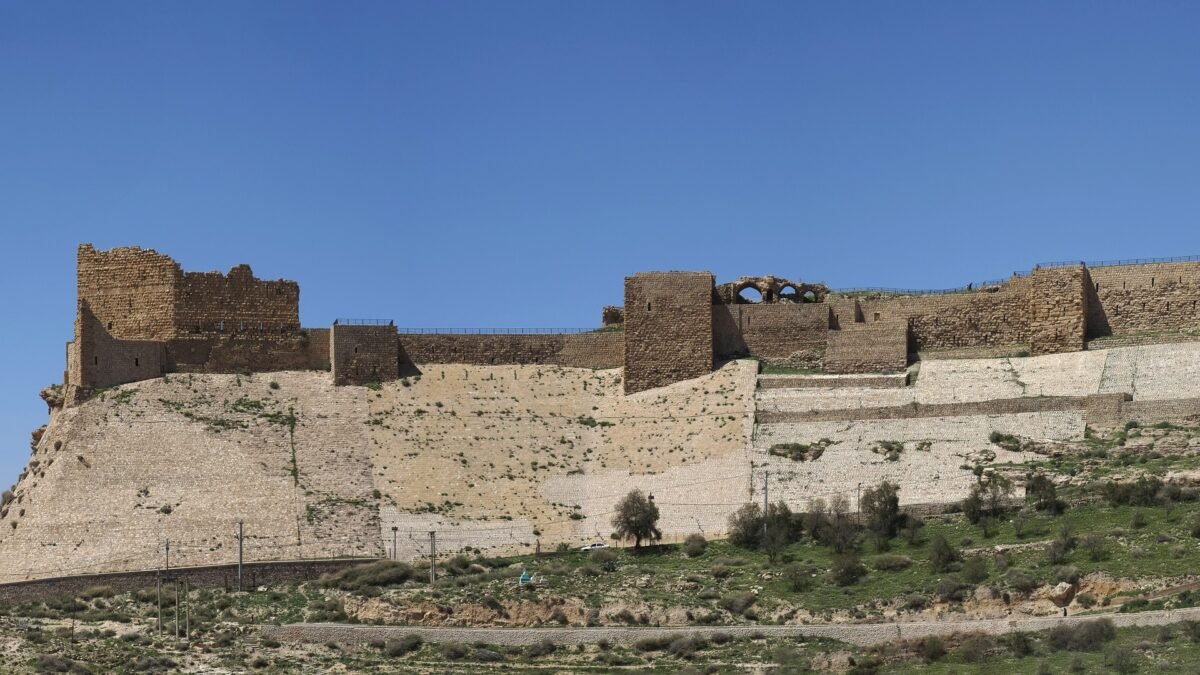
Jordan’s State Security Court has sentenced three men to death for the attack on a church funeral in the southern governorate of Karak last month that killed nine people and wounded 34 others, closing the first judicial chapter of one of the deadliest assaults on the country’s Christian minority in decades. The ruling, handed down on Sunday, comes 23 days after the shooting, and the sentences are not yet final: under Jordanian law they are subject to appeal and to automatic review by the Court of Cassation, the country’s highest court.
The court convicted the three men of carrying out terrorist acts resulting in death, possessing weapons and ammunition for terrorist purposes, and promoting the ideology of a terrorist group, according to the state news agency Petra, whose account was reported by Reuters. The men were also convicted of conspiring to mount armed attacks, and one of them was found to have provided money to finance the attack, according to a statement from Jordan’s Armed Forces carried by the BBC. Two further defendants each received six-year prison terms after one charge against them was reclassified as possession of a firearm, according to Amer Helsa, counsel for the victims’ families.
The three condemned men were identified by the authorities as two brothers and their brother-in-law, the Associated Press reported. They were arrested on 26 October, three days after the attack, following a shootout with security forces at an abandoned house in Karak. All three were wounded in the exchange, while no member of the security forces was injured, according to Jordan’s Public Security Directorate.
The speed of the proceedings is itself part of the story. The trial opened in early November, and the verdict arrived before a month had passed since the shooting. For the families of the dead and wounded, that speed will read as a state determined to answer quickly. For the men’s lawyers, and for the human rights groups that have long criticised Jordan’s State Security Court, it will raise the familiar questions about a military court trying civilians on capital charges, and about whether a 23-day path from crime to death sentence leaves enough room for a defence.
The sentences also land in a country that only this year resumed carrying out executions. Jordan hanged six men on 21 June 2026, its first executions since March 2017. Whether the three men sentenced on Sunday will ever face the gallows now depends on the Court of Cassation and on the King, whose ratification the constitution requires before any death sentence can be carried out.
The attack on a funeral in Hamoud
The attack took place on 23 October, when mourners had gathered for a Christian funeral at St. George’s Greek Orthodox Church in the village of Hamoud, in Karak governorate, about 90 kilometres south of the capital, Amman. Gunmen opened fire on the congregation. Nine people were killed and 34 wounded, according to Reuters and the Associated Press, making it one of the deadliest attacks on a Christian gathering in Jordan in recent years.
The funeral was an ordinary act of communal mourning, and that is what made the choice of target so shocking in Jordan. Christians are a small minority in the kingdom, a few per cent of a population of about 11 million, and attacks on Christian gatherings have been rare. The church in Hamoud serves a farming village in the hills south of Amman, far from the country’s political centres, and the mourners had gathered in the open, in a place where nobody expected to be a target.
The first reports spoke of at least six dead. The toll rose to nine over the following day as the wounded were counted and the dead identified. The Public Security Directorate launched a manhunt, and on 26 October it announced the arrest of the three men after the shootout at the abandoned house. The directorate said the men had been wounded in the exchange and taken into custody, and that no officer had been hurt.
Jordanian authorities described the men as followers of an extremist ideology but said they were not affiliated with an organised group, the Associated Press reported. No group claimed responsibility for the attack. That description matters, because it leaves the question of motive in a grey area: the state has presented the men as acting from extremist conviction, but it has not tied them to any network, and it has not said publicly what, if anything, connected them to the church they attacked.
King Abdullah II responded to the attack with a promise of an “iron fist” against those responsible, a phrase Jordanian leaders have used before after attacks on the kingdom’s security. The government’s message in the days after the shooting was consistent: the attack was an assault on Jordan itself, not only on its Christian citizens, and the response would be severe and swift. Sunday’s sentences are the judicial expression of that promise.
A trial that moved in 23 days
The case was tried before the State Security Court, the military court that handles terrorism, treason, espionage and drug cases in Jordan. The court includes both military and civilian judges, according to Human Rights Watch, and it has been the venue for most of the country’s terrorism trials for decades. Its procedures have long been criticised by human rights organisations, which say the court is authorised by law to conduct trials in ways that restrict defendants’ rights beyond what international human rights law permits.
The trial opened in early November, with lawyers appointed for the defendants, and moved quickly to a verdict. Three weeks from the first hearing to a death sentence is fast by any standard, and it is fast even for a court that is accustomed to moving quickly on security cases. The court heard the prosecution’s case, convicted the three men on the full range of charges, and handed down the maximum penalty available.
That speed will be read in two very different ways. For the government and for many Jordanians, it is evidence that the state can act decisively against those who attack its citizens. For the defendants’ lawyers and for outside observers, it raises the question of whether a capital trial conducted at that pace can give the defence a fair hearing, and whether the court’s institutional role — a military court, trying a case the King himself had publicly condemned — leaves room for genuine independence.
What happens next is governed by law rather than by politics, at least in form. Death sentences in Jordan receive an automatic appeal, and the Court of Cassation must review the case before any sentence can be carried out. Article 39 of the constitution states that no death sentence shall be executed except after ratification by the King. The review will examine the evidence, the conduct of the trial and the legality of the sentences, and it can confirm, reduce or overturn them. How long that takes is not fixed, and the men remain in custody while it runs its course.
The strikes across the border
The judicial story is only one half of Jordan’s response to the attack. On the same day the three men were arrested, 26 October, Jordan launched airstrikes in southern Syria against groups it said were linked to the church attack. Syrian authorities said seven people, including three children and a woman, were killed in the strikes, according to Reuters.
The strikes were a striking escalation. Jordan has carried out cross-border operations against drug smugglers and armed groups in southern Syria before, but a retaliatory strike explicitly tied to an attack inside the kingdom, launched on the day of the arrests, was a different kind of message. It told the region that Amman would answer an attack on its soil with force beyond its borders, and it told the Syrian authorities that Jordan expected cooperation against the networks it blames for the violence.
That message came at a cost. Jordan later acknowledged that its airstrikes had killed civilians in Syria, and the two countries agreed to form a joint security committee to review the incident and its consequences, Reuters reported. The acknowledgement was unusual in its candour, and the joint committee was a gesture towards managing a relationship that the strikes had strained. Syria had disputed Jordan’s account of the strikes from the start, and the civilian deaths gave that dispute a human weight that neither side could ignore.
The committee’s work is now part of the unfinished business of the attack. Its findings, if they are ever published, will determine whether the strikes are remembered as a proportionate response to a terrorist attack or as an overreach that killed the wrong people. For now, the episode sits alongside the sentences as a reminder that Jordan’s answer to the church attack was delivered in two registers at once: the courtroom and the battlefield.
A second attack, and a Christmas cancelled
The church attack did not stand alone. On 5 November, thirteen days after the shooting in Karak, a man armed with several bladed weapons stabbed a police corporal to death outside the Sri Lankan Embassy in Amman. Corporal Jawad Ali Khalaf Al-Salaita, a member of the Public Security Directorate’s diplomatic security unit, was on duty at a guard booth on Madina Al-Munawwara Street in the Sweifieh area of west Amman when he was attacked at about 12:20 in the afternoon. A second officer was wounded in the face as he intervened, and a police patrol arrested the attacker, who was also injured.
Jordan’s Public Security Directorate described the stabbing as a terrorist act and said preliminary investigations indicated the attacker had planned to target public security personnel. The government’s spokesman, Mohammad Momani, called it an assault on the prestige of the state and the rule of law. The attacker, born in 1994, had a prior terrorism conviction and had been released from prison only the previous month, according to court records cited in local reporting. The State Security Court opened an investigation, and prosecutors formally charged him on 11 November under Jordan’s Anti-Terrorism Law.
Whether the two attacks are connected is not established. The authorities have not said the Amman stabbing was coordinated with the Karak shooting, and the men involved appear to be different people with different histories. But the proximity in time, and the shared language of extremist ideology, has bound them together in the public mind, and the Council of Heads of Churches in Jordan has now bound them together in mourning as well.
The Council announced the cancellation of all Christmas celebrations this year, in solidarity with the families of ten dead: the nine killed at the church in Hamoud and Corporal Al-Salaita. Prayers, worship and pastoral duties will continue, the Council said, and it urged churches to keep any remaining Christmas observances simple and dignified, giving priority to prayer, works of mercy and social solidarity. It recommended that the Christmas tree stand as a symbol of hope, unity and peace, that candles be lit for the souls of the dead, and that a memorial space be set aside for them.
The decision is a measure of how deeply the two attacks have cut into Jordan’s Christian community. Christmas is the high point of the Christian year, and its cancellation is not a gesture the churches make lightly. It is also a measure of the solidarity the attacks have drawn from the wider country: the Council’s statement counted a Muslim police officer among the dead it mourned, and its call for prayer and mercy was addressed to a nation, not only to a congregation.
The death penalty in Jordan
The three death sentences arrive at a moment when Jordan’s use of capital punishment is itself under fresh scrutiny. On 21 June 2026, Jordan hanged six men convicted of terrorism-related or drug-trafficking charges, its first executions since March 2017, when 15 men were hanged. All six of the men executed in June had been accused of directly or indirectly causing the deaths of law enforcement or security officers, according to the Death Penalty Information Center.
Jordan’s relationship with the death penalty has swung back and forth for two decades. The country observed an unofficial moratorium on executions from 2006 to 2014, then resumed them in December 2014 by hanging 11 men convicted of murder. Two more executions followed in February 2015, days after the Islamic State murdered the Jordanian pilot Muath al-Kasasbeh, and 15 men were executed in March 2017, ten of them convicted by the State Security Court on terrorism charges. One further execution took place in 2021. Then came the nine-year pause that ended this June.
The numbers on death row are large. Jordan’s National Centre for Human Rights, the country’s official human rights institution, said 276 people were under death sentences in 2024, and Amnesty International reported at least 200 death-sentenced prisoners as of the end of 2025. Death sentences are handed down regularly; executions are not. The gap between the two is the space in which the Court of Cassation, the King and the politics of the moment operate.
The government has signalled that the gap may narrow. On the same day as the June executions, Prime Minister Jafar Hassan announced during a cabinet session that parliament intends to expand the list of capital crimes to include major drug traffickers and smugglers operating in coordination with armed groups. The announcement framed the death penalty as a tool of deterrence against terrorism and organised crime, and it was welcomed by those who see the country’s security threats as growing. Human Rights Watch, which opposes the death penalty in all circumstances, said Jordan should instead renew its moratorium and lead the region by example on rights and protection.
Executions in Jordan are carried out by hanging. They require the endorsement of the King and the Court of Cassation, and they are conducted under the supervision of the State Security Court’s Attorney General. The men sentenced on Sunday will now enter the long queue of the condemned, and their fate will depend on a review process that has, in the past, taken years to run its course — and on a political climate that, in June, turned decisively towards carrying sentences out.
Analysis: Why It Matters
Speed is the message
A verdict 23 days after the crime is not an accident of scheduling. It is a deliberate signal, and it is aimed at more than the three men in the dock. Jordan’s government has spent the last month managing a crisis that touched its Christian minority, its security forces, its border with Syria and its relationship with its own people’s sense of safety. A fast trial tells each of those audiences that the state is in control, that it can find the guilty and punish them, and that it will not let a terrorist attack become an open wound. That message has real value in a country where the public’s confidence in the state’s ability to protect them has been shaken twice in thirteen days. But speed has a price, and the price is paid in the quality of justice. A capital trial is the most consequential proceeding a court can conduct, and it is the one where haste is most dangerous. The Court of Cassation exists precisely to ask whether the haste compromised the fairness of the trial, and its review will be the real test of whether the speed was justified.
A sentence is not an execution
It is easy to read Sunday’s verdict as a conclusion, but in Jordan a death sentence is the beginning of a second, longer process. The automatic review by the Court of Cassation, the requirement of royal ratification, and the sheer number of people on death row all mean that the men sentenced on Sunday may spend years in prison before their fate is decided. That is not a technicality; it is the structure of the system, and it is the reason the death penalty in Jordan has historically been imposed far more often than it has been carried out. What has changed is the context. The resumption of executions in June, after nine years without them, means the state is now willing to carry sentences out, and the Prime Minister’s announcement that capital crimes may be expanded suggests the direction of travel. The three men sentenced on Sunday are entering a system that has recently rediscovered its willingness to execute, and that changes the stakes of the review that lies ahead.
The court itself is part of the story
The State Security Court is not a neutral backdrop to this case; it is an institution with a history, and that history is contested. Its defenders say it is the right venue for terrorism cases, that it has the expertise and the security to handle them, and that its record speaks for itself. Its critics, led by Human Rights Watch, say it is a military court that tries civilians, that its procedures restrict the rights of defendants beyond what international human rights law permits, and that its verdicts carry the weight of the state’s security apparatus rather than the independence of the ordinary judiciary. Both descriptions can be true at once, and the tension between them is not going away. Every major terrorism trial in Jordan reopens the argument, and this one, conducted at such speed and ending in three death sentences, will reopen it with particular force. The Court of Cassation’s review will be watched not only for what it says about these three men, but for what it says about the court that tried them.
The border strike is the unfinished half
The sentences close the judicial chapter of the Karak attack, but the military chapter remains open. Jordan’s airstrikes in southern Syria killed civilians, by Jordan’s own later acknowledgement, and the joint security committee agreed with Damascus has yet to report. That matters for two reasons. First, the civilian deaths are a human fact that cannot be undone by a court verdict, and the families of those killed in Syria deserve the same accounting that the families in Karak have now received. Second, the strikes were a statement about Jordan’s willingness to use force across its border, and the way they are judged will shape whether Amman does so again. If the committee’s findings are published and are honest about what went wrong, the strikes may be remembered as a costly but explicable response. If they are buried, the strikes will remain a source of grievance in southern Syria, and a reminder that Jordan’s answer to the attack was not confined to the courtroom.
A Christmas cancelled is the human ledger
The most telling fact in this story may not be a legal one. It is that Jordan’s churches have cancelled Christmas. The Council of Heads of Churches did not make that decision because it was asked to, or because the government ordered it; it made it because the community it serves has lost nine of its own, and because a police officer who died protecting an embassy has been folded into the same mourning. The cancellation is a form of witness, and it is also a form of accounting: it says that the cost of the last month cannot be measured in sentences or in airstrikes, but in the absence of celebration in homes that would otherwise be marking the year’s happiest season. The candles the Council has asked churches to light, and the memorial spaces it has asked them to set aside, are the quiet counterpart to the court’s loud verdict. Both are answers to the same violence, and both deserve to be remembered when the headlines move on.
What to Watch Next
- The Court of Cassation’s automatic review of the three death sentences, and whether it confirms, reduces or overturns them — and how long the review takes.
- Whether the King ratifies the sentences if the Court of Cassation upholds them, and whether the executions, if approved, are carried out or left pending.
- The fate of the two co-defendants sentenced to six years, and whether their convictions are also appealed.
- The findings of the joint Jordanian-Syrian security committee on the 26 October airstrikes, and whether Jordan publishes a full account of the civilian deaths.
- The prosecution of the man charged over the 5 November stabbing of Corporal Al-Salaita, and whether the State Security Court tries him on the same fast timetable.
- Whether parliament moves ahead with the Prime Minister’s proposal to expand capital crimes to major drug traffickers, and how that debate unfolds.
- How Jordan’s Christian community marks Christmas without public celebrations, and whether the mourning deepens or eases the solidarity the attacks drew from the wider country.
Sources
- Reuters — Jordan sentences three men to death over deadly church attack
- Associated Press — Jordan sentences 3 men to death over deadly church attack
- BBC News — Jordan court orders death sentences after church attack kills nine
- CathoNews — Jordan Condemns Karak Church Killers to Death
- Human Rights Watch — 6 Executed as Jordan Resumes Death Penalty
- Death Penalty Information Center — Jordan Resumes Executions After 9-Year Hiatus with the Hanging of 6 Men

About the Author — Abdul Mannan
Related Articles

Saudi Arabia Intercepts Two Houthi Missiles Aimed at Riyadh and Three Drones Over Its Oil Heartland
Saudi air defences intercepted two Houthi ballistic missiles aimed at Riyadh and three drones over the Eastern Province…
Arab and Muslim States Condemn Israel Over Nasser Hospital Strike as Katz Vows Gaza Offensive Will Continue
Foreign ministers from 18 Arab and Muslim countries have condemned Israel's strike on Gaza's Nasser Hospital, warning the…
Netanyahu Renews Call for Unity Government as Eisenkot Dismisses It as a Trick
Israel's caretaker prime minister renewed his appeal for a national unity government on Saturday, and the man tasked…